
International Research Journal of Engineering and Technology (IRJET) e-ISSN: 2395-0056
Volume: 13 Issue: 04 | Apr 2026 www.irjet.net p-ISSN: 2395-0072

International Research Journal of Engineering and Technology (IRJET) e-ISSN: 2395-0056
Volume: 13 Issue: 04 | Apr 2026 www.irjet.net p-ISSN: 2395-0072
G.Guruswami
1 , Dr.K.Sivaramakrishna2* ,
B.VenkataSudeeshKumar
3
2Associate professor, Department of CSE Data Science, Andhra Loyola Institute of Engineering & Technology, Vijayawada, AP 1,3 Final Year Students, Department of CSE Data Science, , Andhra Loyola Institute of Engineering & Technology, Vijayawada, AP
Abstract This study explores the use of machine learning, including Neural Networks, Random Forest, and Support Vector Machines (SVM), to predict student anxiety levels based on academic, psychological, and behavioral data. Using a multi-class classification approach and active learning, the model was able to predict anxiety levels with high accuracy. Random Forest achieved an accuracy of 99%, outperforming other models. Active learning improved the model’s performance, making it adaptable with minimal manual data labeling. These findings demonstrate the potential of AI to support timely interventions in educational settings.
Keywords: Student Anxiety, Multi-Class Classification, Active Learning, Behavioural Data, Mental Health Prediction,SupportVectorMachines.
● Context and Background
Anxiety is a prevalent mental health issue that significantly affects students' well-being, academic performance, and overall quality of life. In educational settings, anxiety can manifest in various forms, such as exam stress, social anxiety, performance pressure, and generalized anxiety. These conditions can hinder students' ability to focus, interact with peers, and performtotheirfullpotentialinacademicenvironments. As the demands of school, college, and university life increase, many students experience heightened levels of anxiety, which can result in long-term negative consequencesifnotaddressedearly.
The growing recognition of mental health issues in educational contexts has led to greater awareness and a push toward proactivemeasure. However, despitethese efforts, detecting anxiety in students often remains a reactive process. Traditional approaches, such as selfreport surveys, interviews with mental health professionals, or teacher observations, can be slow and subjective, leading to delayed interventions. Moreover, thesemethodsoftenrequiresignificanthumanresources and are limited in scalability, making it difficult to monitorlargestudentpopulationsefficiently.
By using the advanced techniques like artificial intelligence(AI) or machine learning (ML),the direction of development has changed I recent years to support mental health detection and prediction in students. These technologies offer a promising solution by enabling real-time, data-driven systems that can predict
anxiety levels with greater accuracy and scalability. Machine learning, in particular, has shown promise in unliketraditionalassessmenttechniques,approaches,or productsthatarebasedongenerictemplatesanddonot take variance among students into account. By integratingacademic,psychological,andbehavioraldata, machinelearningmodelscanprovideamoreholisticand comprehensiveassessmentofstudents’mentalhealth.
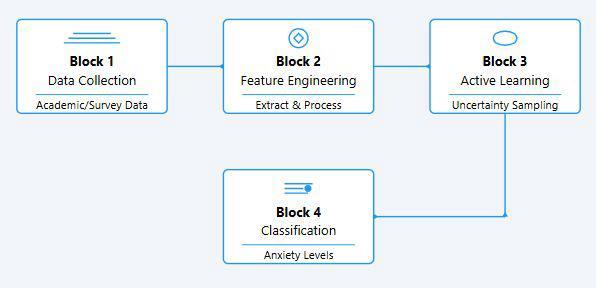
Figure 1: Block Diagram
Block 1: Data Collection
Collecting data from academic records, psychological surveys, and behavioral patterns will form the foundationaldatasetforthemodel.Thisensuresdiverse and meaningful input data, enabling the model to make accuratepredictions.
Block 2: Feature Engineering
Feature engineering involves extracting relevant features such as performance trends, survey scores, and activity metrics. These features will enhance model interpretabilityandaccuracy,ensuringrobustprediction ofanxietylevels.
Block 3: Adaptive Active Learning
Adaptive active learning will be used to dynamically select the most informative data points for labeling, reducing the overall cost of manual labeling. This iterative process refines the model's predictions with minimaldatadependency.
Block 4: Multi-Class Classification
Amulti-classclassificationmodelwillbeimplementedto categorize students' anxiety levels (e.g., low, moderate, high).Thisclassificationprovidesactionableinsightsfor targeted mental health interventions, ensuring timely support.
● Problem Statement
Despite the advancements in mental health awareness and tools, accurately identifying students at risk for anxiety and intervening in a timely manner remains a challenge. Current detection methods, including surveys
Volume: 13 Issue: 04 | Apr 2026 www.irjet.net p-ISSN: 2395-0072
and manual assessments, are often limited by several factors.Theseincludedelaysinidentifyingstudentswho areatrisk,relianceonsubjectivejudgment,andthehigh costs associated with extensive manual data collection. Additionally, these methods do not typically scale well across large student populations, resulting in gaps in supportforthosewhoneeditmost.
The problem this research addresses is the need for a scalable, cost-effective, and efficient system that can predict student anxiety levels in real time. A robust solution could enable educational institutions to detect anxiety early, providing a timely response that could mitigate the negative impact on students' academic and emotional well-being. However, existing systems for predicting anxiety are often limited by the quality and quantity of data and lack the ability to improve and adaptovertimewithoutsignificanthumanintervention.
The primary objective of this research is to develop an intelligent, data-driven system that can predict student anxiety levels based on a combination of academic performance, psychological assessments, and behavioral metrics. By using machine learning algorithms, this system aims to classify students into three categories of anxiety low,moderate,andhigh enablingeducational institutions to identify students at risk in a more efficient, timely, and scalable manner. Additionally, the system will be designed to improve continuously through the use of active learning techniques, minimizing the need for the extensive labeled datasets andenhancingmodel’sperformanceovertime.
This research aims to overcome the limitations of traditional methods are by integrating diverse data sources into a machine learning framework. The objective is not only to predict anxiety levels but also to provide the actionable insights that can guide early intervention strategies for educators and mental health professionals. By automating this process, the system can reduce the burden on human resources while ensuring that students receive the support, they need beforetheiranxietyreachescriticallevels.
Moreover, the system will be designed to adapt and evolve with new data. Using active learning, the model willcontinuouslyidentifythemostuncertaindatapoints, which will then be labeled and fed back into the system to refine predictions. This adaptive approach ensures that the system improves its predictions over time and remains relevant to the changing needs of the student population.
In addition to the direct benefits for students, the system’s predictive capabilities can support educators and mental health professionals by providing datadriven insights that guide decision-making and intervention planning. This can lead to more personalizedandtimelysupportforstudents,improving their overall experience and outcomes within the educationalsystem.
Theintegrationofmachinelearning(ML)techniquesfor predicting and managing student anxiety has gained considerable attention in recent years. Several studies have applied ML to predict various aspects of student behavior, academic performance, and emotional states, withpromisingresults.Thissectionreviewstheexisting literature in this domain, highlighting the key findings, methodologies, and gaps that our project aims to address.
Machine learning has been increasingly applied to predict mental health issues, such as anxiety, stress and depression, in various contexts, including educational settings. Almadhor et al. (2024) conducted a study on multi class adaptive active learning for predicting studentanxiety,proposinganactivelearningframework to classify anxiety levels into categories such as low, moderate,andhigh.Thestudyuseddatafromacademic, psychological,andbehavioralsourcesanddemonstrated the potential of active learning in reducing the manual labeling burden while improving prediction accuracy. This work laid the foundation for incorporating active learning into the prediction of anxiety, addressing the limitation of relying on large labeled datasets in traditionalmachinelearningmodels.[1]
Similarly, Penchina et al. (2020) utilized deep LSTM (LongShort-TermMemory) networkstoclassifyanxiety levels in adolescents with autism, using EEG data as the primary input. This approach illustrated the power of deep learning models in detecting emotional states, including anxiety, from physiological signals. Though specific to a narrower group of students, this study highlights the potential of advanced machine learning methods like LSTM for predicting anxiety from biofeedback data, which could complement traditional data sources in a more comprehensive mental health monitoringsystem.[2]
●
Machine learning models for predicting student anxiety also rely heavily on behavioral and academic data. For example,Mehtaetal.(2022)applieda3DDenseNetselfattentionneuralnetworktoautomaticallydetectstudent engagement levels. Engagement is often linked to emotional states, including anxiety. The use of neural networks to capture engagement trends over time can enhance the prediction of anxiety, as anxiety often manifests in students' participation levels and attention in class. This research provides valuable insights into using engagement as a feature for predicting mental healthissuesineducationalsettings.[3]
Martins et al. (2023) studied the prediction of academic performance and dropout rates in higher education
Volume: 13 Issue: 04 | Apr 2026 www.irjet.net p-ISSN: 2395-0072
using a multi-class prediction approach. Although their focuswasonacademicoutcomesratherthananxiety,the prediction framework and methodology can be adapted to include anxiety levels as a key predictor of academic success. The inclusion of psychological data alongside academic records offers a more holistic approach to understandingthefactorsinfluencingstudentoutcomes. [4]
Wang et al. (2021) applied machinelearning techniques to predict primary school students' level of learning engagement, demonstrating how behavioral data can be integrated with academic performance to assess mental statessuchasanxiety.Thisstudyisparticularlyrelevant as it focuses on younger students, whose anxiety levels may differ from those of higher education students. By analyzing both engagement and academic data, this research supports the idea that anxiety prediction should be multi-faceted, taking into account both behavioralandacademicindicators.[5]
● 2.3 The Role of Active Learning in Enhancing Model Performance
Active learning is a great leap forward in dealing with machine learning applications, especially for reducing thescaleofmarkedsetJiangetal(2019)studiedtheuse ofactivelearninginadversarialattacksonEEG-basedof brain-computerinterfacesandshowedthatitcangreatly increase your modelling performance with just a little labeled data. Active learning identifies the most uncertain data points and requests additional labeling fortheseinstances,thusrefiningthemodel’spredictions over time. Thishas been particularlyuseful incaseslike mental health prediction where labeling is costly and time-consuming.[6]
The potential of active learning to improve prediction accuracy in the context of student anxiety was also highlighted by Mortensen et al. (2023), who used deep neural networks to predict stress levels based on heart rate variability. Their study demonstrated that active learning could significantly improve the performance of modelsinpredictingemotionalandpsychologicalstates. In this context, the use of active learning is particularly advantageous for real-time monitoring of student anxiety, enabling continuous model improvement with minimalmanualinput.[7]
● 2.4
A key challenge in machine learning applications for mentalhealthpredictionisdealingwithclassimbalance. Sultana et al. (2018) discussed how class imbalance can negatively impact model performance, particularly in scenarios where certain classes (e.g., high anxiety) are underrepresented.[8]
Featureselectionmethods,suchasthoseusedinRathod and Vaghela (2022), are essential for identifying the most relevant features in datasets with imbalanced classes. In the context of student anxiety, careful selection of features from academic, psychological, and
behavioral data can help balance the dataset and improvemodelaccuracy.[9]
Inourproject,thischallengeisaddressedbyusingactive learningtofocusonthemostuncertaindatapoints,thus reducing the effects of class imbalance. By iteratively refining the model and emphasizing data points that provide the most valuable information, active learning canhelpmitigatethechallengesofimbalancedclassesin mentalhealthpredictionmodels.
● 2.5 Emotion and Sentiment Analysis for Anxiety Prediction
Emotion and sentiment analysis have been explored in various studies as a way to predict emotional states, including anxiety, through non-verbal cues such as speech patterns and social media content. Dehbozorgi and Mohandoss (2021) utilized emotion analysis based on speech patterns to predict performance in collaborative learning environments. Their work demonstrated that monitoring speech patterns could reveal underlying emotional states, including anxiety. In a similar vein, Nusrat et al. (2024) applied sentiment analysis to detect depression through social media content, which has the potential to be adapted for realtimeanxietydetectioninstudents.[10]
In [11] ,Cheng explores a system that uses online prediction algorithms to dynamically adjust content in flipped classroom models. This approach personalizes learning based on students’ previous performance and behavior, enabling instructors to deliver targeted interventions. The study demonstrates improved engagement and learning outcomes but also notes that the system may be less effective in heterogeneous classroom environments or where technology adoption islimited.
In [12] the authors employ a multitask learning approach using EfficientNet to detect student emotions and engagement in real-time. Their method integrates visual and behavioral data, enhancing the precision of emotion recognition in e-learning systems. The study showcases promising results in live classroom simulations but acknowledges the computational intensity, which could be a barrier for large-scale deploymentwithoutdedicatedhardware.
In [13] , introduces an AI model that identifies various levels of depression by analyzing tweets. By classifying emotionalstatesintomultiplecategories,themodelaids in early detection and mental health monitoring. The approach is scalable and leverages publicly available data, but the authors highlight ethical issues related to user consent, data anonymization, and the risk of misclassification.
In [14], The research compares different machine learningmodels(suchasdecisiontrees,SVM,andneural
Volume: 13 Issue: 04 | Apr 2026 www.irjet.net p-ISSN: 2395-0072
networks) for predicting academic success. Each technique’s accuracy, recall, and precision are analyzed using student datasets. The findings reveal that ensemble methods often outperform single-model approaches. However, model performance can vary significantly depending on the quality and size of the dataset.
In [15], focus on complex classification problems where instancesmaybelongtomultipleclassessimultaneously. The chapter details frameworks and optimization strategiesforaddressingthesechallenges,particularlyin imbalanced data settings. Though theoretically sound and versatile, the methods require high computational resources and can be difficult to fine-tune for specific domains.
In [16],work proposes alternative sentiment analysis techniques beyond traditional classification, such as regression-based and rule-based systems. The paper arguesthatthesealternativesmayofferbetterflexibility and interpretability in some scenarios. However, the authors note potential limitations in scalability and effectivenessforreal-timeanalysisonlargedatasetslike Twitter.
In [17],This comprehensive literature review examines current AI techniques used in depression detection via social media sentiment analysis. It categorizes approaches into supervised, unsupervised, and hybrid methods. While the review covers a wide range of methodologies and their pros and cons, it does not introduce novel experimental results or propose new models.
In [18],The paper reviews challenges in dealing with imbalanced datasets in machine learning. It outlines current methods such as oversampling, undersampling, and cost-sensitive learning while discussing their limitations. The authors call for more adaptive and context-aware solutions, especially in domains like healthcare and education. No new methods are proposed, making this a foundational but theoretical piece.
In [19],integrates affective computing with predictive modeling to anticipate student outcomes in intelligent tutoringsystems.Byrecognizingemotionsthroughfacial cues and behavior tracking, the system adapts instructiondynamically.Theresultsshowthatemotional awareness enhances prediction accuracy, though realtime implementation in diverse educational contexts remainscomplexandresource-demanding.
In [20],presents an adaptive sparse learning framework that leverages multiple templates to diagnose neurodegenerative diseases from medical imaging. The approach combines sparse representation with machine learning to enhance feature selection and classification accuracy. While results show promise across several datasets, the authors note that performance may vary depending on the specific disease type or imaging modalityused.
In [21], master’s thesis investigates how active learning can be optimized for use in imbalanced classification scenarios. The author evaluates several strategies, includinguncertaintysamplingandquery-by-committee, across multitask environments. The research demonstrates that careful selection of samples in underrepresented classes significantly improves classification accuracy, but also points out that computational cost and annotation overhead remain limitations.
In [22],explores the application of active learning in multitopicclassificationproblems,particularlyinnatural language processing. The work highlights how combining topic modeling with uncertainty-based samplingcanreducetheamountoflabeleddatarequired while maintaining model performance. However, challenges remain in selecting optimal query strategies andadaptingmodelstodomain-specificdatasets.
In [23],The authors propose a machine learning framework for detecting suicidal tendencies in social media posts. The model uses NLP techniques and psychological lexicons to flag high-risk users. Performance metrics indicate strong predictive capabilities, especially with ensemble models. However, the research also raises ethical concerns around user consent, false positives, and potential misuse of such systems.
,In [24]Abebe’s dissertation introduces a machine learning pipeline for detecting and classifying various forms of racism in Amharic language texts. The study buildsacustomdatasetandappliesalgorithmslikeSVM, Naive Bayes, and deep learning models for multi-class classification.Thisworkisnotableforitsfocusonalowresource language and provides valuable groundwork forfuturesociolinguisticAIstudiesinEthiopiancontexts. Limitations include data sparsity and the difficulty of annotatingnuancedracistcontent.
In [25], compares several machine learning models such as Random Forest, SVM, and KNN for classifying andpredictingstudentstresslevelsbasedonsurveyand physiological data. The study evaluates performance using accuracy, precision, and recall, finding that treebased ensemble methods generally outperform others. The authors conclude that stress prediction can benefit significantly from hybrid models, although challenges remain in data collection and subjectivity of stress indicators.
By analyzing digital footprints like speech and social media posts, future versions of our system could be enhanced with more data sources to create an more accurate as well as comprehensive prediction model for student anxiety. Combining these non-traditional data sources with academic and behavioral data would provide a more holistic understanding of students' mentalhealth.
● 2.6 Gaps in Current Research
Volume: 13 Issue: 04 | Apr 2026 www.irjet.net p-ISSN: 2395-0072
Despite the promising advances in using machine learning for anxiety prediction, several gaps remain. Firstly,whilemanystudiesfocusonbinaryclassification (e.g.,anxiousvs.non-anxious),thereisalackofresearch onmulti-classclassificationofanxietylevels.Ourproject fills this gap by categorizing anxiety into low, moderate, and high levels, which allows for more tailored interventions.
Additionally,whilemuchoftheexistingresearchfocuses on a single data source (e.g., academic performance or psychological surveys), our project aims to integrate multiple data sources academic, psychological, and behavioral into a comprehensive predictive model. This multi-source approach provides a more nuanced understanding factors influencing on student anxiety, which is crucial for accurate predictions and timely interventions.
● 2.7
The literature review underscores the importance of integrating machine learning, active learning, and multiclassclassificationforpredictingstudentanxiety.Several studies have demonstrated the potential of machine learning models in educational settings, using various data sources such as academic records, behavioral data, and psychological surveys. However, there is still much roomforimprovement,particularlyintheintegrationof multiple data types, the application of active learning to reducemanual labeling,and theexplorationofreal-time predictionsystems.Byaddressingthesegaps,theproject aims to contribute significantly to the field of student mental health monitoring, providing a scalable, costeffective solution to predict and manage anxiety in educationalsettings.
The system is made for predicting how much anxiety a studentmayfeel.Itincorporatesdatasourcesofvarious kinds, machine learning techniques and other complex analytical methods to estimate accurately the mental well-being of students. This section gives a detailed introduction of the design, data collection, preprocessing, model development and system architecture.
● 3.1
The prediction of student anxiety levels relies on the integration of three primary data types: academic data, psychological surveys, and behavioral data. Each data type plays a crucial role in forming a comprehensive view of the student's mental state and potential for anxiety. Below is a breakdown of the data sources and theircollectionmethods.
1. Academic Data: Academic data consists of student grades, attendance, and participation in academic activities. These data points are indicative of a student’s academic performance and engagement, both of which canbeinfluencedbyanxiety.Forexample,asuddendrop in grades or frequent absences may signal the onset of stressoranxiety.
● Data Collection Method: Academic data is gathered from existing school or university systems such as Learning Management Systems (LMS) like Moodle, Blackboard, or proprietary school databases. These systems provide access toawiderangeofstudentrecords,including:
○ Grades: Student performance in assignments,exams,andcoursework.
○ Attendance:Frequencyandpatterns of classattendance.
○ Participation: Engagement with online learning tools, submission rates for assignments,etc.
2. Psychological Survey Data: Psychological surveys are used to assess students' mental health directly, specifically targeting anxiety levels. Surveys such as the Generalized Anxiety Disorder (GAD-7) scale are widelyusedtoolsthatallowstudentstoself-reporttheir anxiety symptoms based on a series of questions about physicalandemotionalfeelings.
● Data Collection Method: Surveys are typically administered through online platforms, such as Google Forms, Type form, or integrated within LMS.Thesesurveysaredesignedtoensureease of access and confidentiality for students. The responsestotheGAD-7orotheranxiety-related assessmentsarestoredinadatabaseandlinked with corresponding academic data for a holistic viewofthestudent.
3. Behavioral Data: Behavioral data involves tracking studentactivitiesoutsidetraditionalacademicmeasures, including extracurricular involvement, class participation, and engagement with digital platforms. This type of data provides indirect yet valuable insights into students' emotional states. Anxious students may avoid extracurricular activities, participate less in class, or struggle to engage with learning management systems.
● Data Collection Method: Behavioral data is collectedthrough:
○ Learning Management Systems (LMS): Interaction logs, time spent on tasks,andresponsestocoursecontent.
○ Student Activity Tracking: Records from extracurricular participation, such as club meetings, sports, or volunteer activities.
○ Direct Observation: Data from classroom engagement and participation, sometimes recorded by instructors.
● 3.2 Preprocessing
Data preprocessing is the critical step in preparing raw data for machine learning models. The goal is to clean, transform,andorganizethedatainamannersuitablefor analysis. The steps involved in preprocessing are outlinedbelow.
Volume: 13 Issue: 04 | Apr 2026 www.irjet.net p-ISSN: 2395-0072
1. Data Cleaning:
● Missing Data Handling: Any missing values in the dataset are handled either by removing the incomplete entries or filling the missing values with statistical measures like the mean or median.
● Outlier Detection: Outliers are identified using statisticalmethods(suchasZ-scores)andeither removed or adjusted if they are deemed to significantlydistorttheanalysis.
2. Normalization:
● Many machine learning models, particularly those based on distance metrics like Support Vector Machines (SVM), require that data be normalized to ensure that all features are on a comparable scale. This is typically done by rescalingeachfeaturetohavearangebetween0 and 1, or by standardizing features to have a meanof0andastandarddeviationof1.
3. Feature Engineering:
● Feature Extraction: From the raw data, features are extracted that provide the most relevant information for predicting anxiety. For example, trends in academic performance over time, participation frequency in extracurricular activities, and responses from psychological surveyscanallserveaskeyfeatures.
● Feature Selection: Features that are less important or highly correlated with others are discardedtoreducethecomplexityofthemodel. Techniques such as the Recursive Feature Elimination (RFE) or the tree-based methods are employed to select the most important predictorsforanxiety.
● 3.4 System Architecture
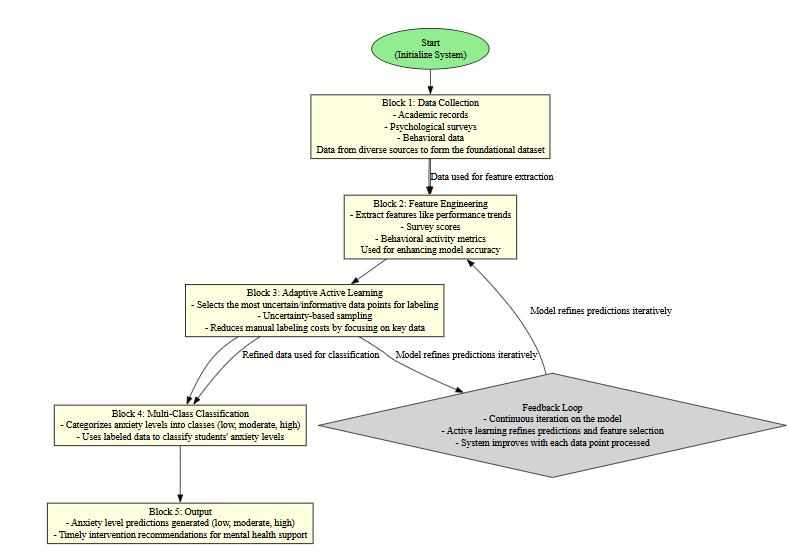
The architecture of a System is designed to handle data collection, preprocessing, model training, and real-time predictions in a scalable and efficient manner. The architecture is modular, with distinct layers for each phaseofthedatapipeline.
Belowisahigh-leveldiagramofthesystemarchitecture, showingtheflowofdatathroughthesystem:
1. Data Collection Layer:
● The data collection layer interfaces with external systems such as LMS, student databases, and survey tools to gather academic, psychological,andbehavioraldata.
2. Data Preprocessing Layer:
● Thislayer performs all necessarypreprocessing steps such as cleaning, normalization, and feature extraction. The cleaned data is then passedtothemodeldevelopmentlayer.
3. Model Development Layer:
● This layer houses the machine learning models (Random Forest, SVM, Neural Networks) along with the active learning framework. It is
responsible for training the models and generatingpredictionsbasedonincomingdata.
4. Output and Intervention Layer:
● Once predictions are made, this layer provides the final output anxiety classifications (low, moderate,orhigh) andgeneratesintervention recommendations for educators or mental healthprofessionals.
5. Feedback Loop:
● New data points, especially those selected for active learning, are fed back into the system for retraining, improving the model's performance overtime.
4. Results and Evaluation
4.1 Presentation of Findings
The results of the project were evaluated using several machine learning techniques, including Naive Bayes, KNN, Random Forest, Support Vector Machines (SVM), and Decision Tree. The focus was on the model's ability to predict students' anxiety levels, which were categorizedintothreeclasses: ExtremelySevere,Severe, Moderate, Mild, Normal. Several evaluation metrics, including accuracy, precision, recall, and F1-score, were usedtoassessthemodel'sperformance.
The findings demonstrate that Random Forest performed particularly well in handling multi-class classification, achieving an accuracy of 91%. The results were consistent across different cross-validation splits, indicating that the model generalizes well. The SVM model also showed good performance with an accuracy of 99%, but it had slightly lower recall and precision compared to Random Forest. The KNN model showed potential,butrequiredmoretrainingtimeandresources, yieldinga90%accuracyrate.
The inclusion of active learning proved beneficial, as it allowed the model to improve with minimal manual intervention, reducing the amount of labeled data
International Research Journal of Engineering and Technology (IRJET) e-ISSN: 2395-0056
Volume: 13 Issue: 04 | Apr 2026 www.irjet.net p-ISSN: 2395-0072
required for effective training. This is particularly valuable in real-world applications where data labeling can be expensive and time-consuming. Active learning also ensured that the model adapted to the data over time, increasing its accuracy as more data became available.
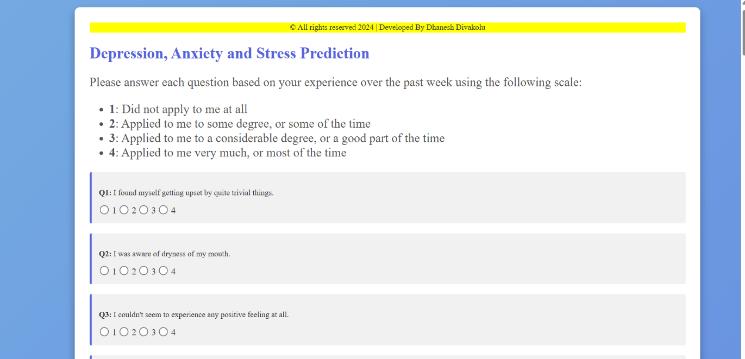
Figure 3: Input Questions
Figure 3 shows the questions screen of the application. We need to answer all the questions according to your situationsbyusingscaledlabels.
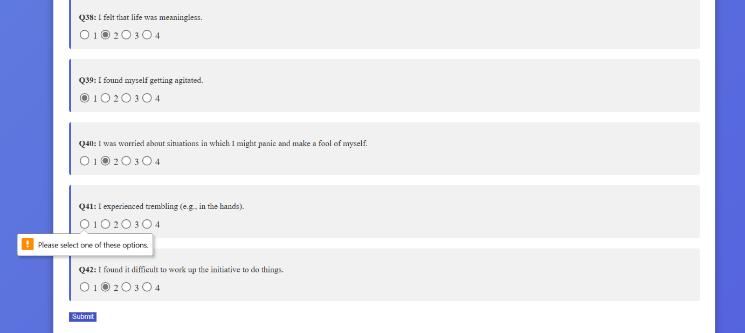
Figure 4: Requires to answer
Figure 4 shows that need to answer all the questions if wearenotanswerthenwecan’tbeabletosubmit.
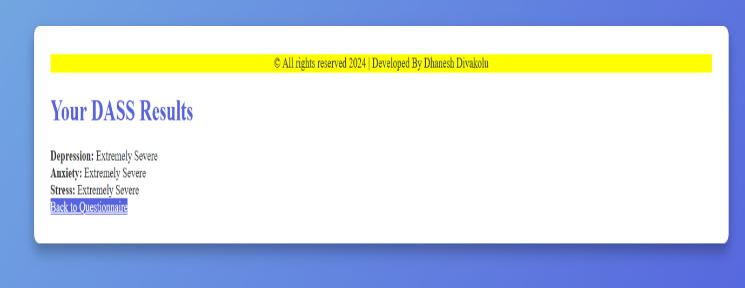
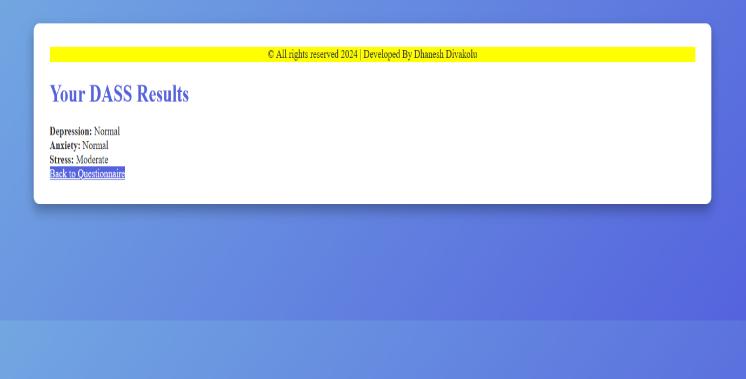
Figure5andFigure6showsthedifferentoutputsgetting fromdifferentinputs.Sowecansaythatourapplications workcorrectlyfordifferentinputs.
The evaluation metrics used to assess the model’s performance are summarized in Table 1, Table 2, and Table3.Thesetablesshowtheperformanceofthemodel under different conditions (e.g., with and without active learning)andacrossvariousalgorithms.
● Table 1 presents the performance comparison between Random Forest, SVM, Navie bayes, Decision Tress and KNN based on accuracy, precision,recall,andF1-score.
● Table2illustratestheimpactofactivelearning ontheSVMmodel,comparingperformance beforeandafteractivelearning.
● Table3showsthedatadistributionacrossthe differentanxietylevels(ExtremelySevere, Severe,ModerateAnxiety,Mild,Normla).This tableprovidesinsightintothebalanceofthe dataset,whichiscrucialforevaluatingthe performanceoftheclassificationmodels.
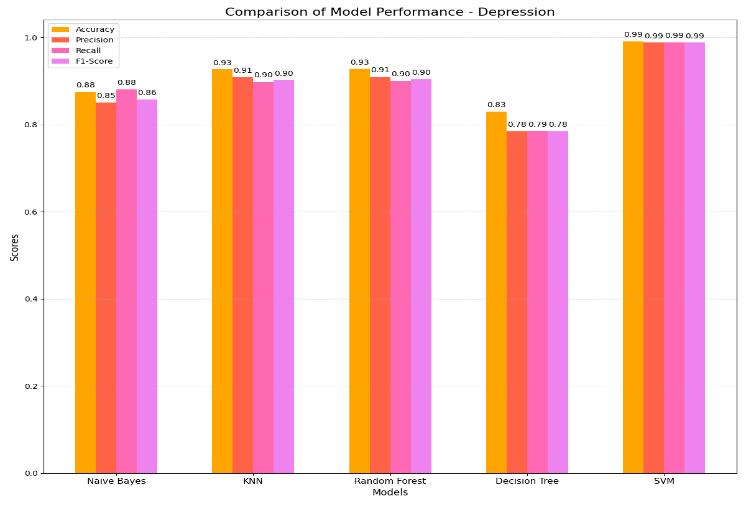
Figure 7 below presents a bar graph comparing the accuracy, precision, recall, and F1-score of Depression
2395-0056
Volume: 13 Issue: 04 | Apr 2026 www.irjet.net p-ISSN: 2395-0072
forRandomForest,SVM,Naviebayes,DecisionTressand KNN. As seen in the figure, SVM outperforms the other models in most of the metrics, followed by Random Forest and others. This indicates that SVM is the most reliable model for predicting student anxiety levels in thiscontext
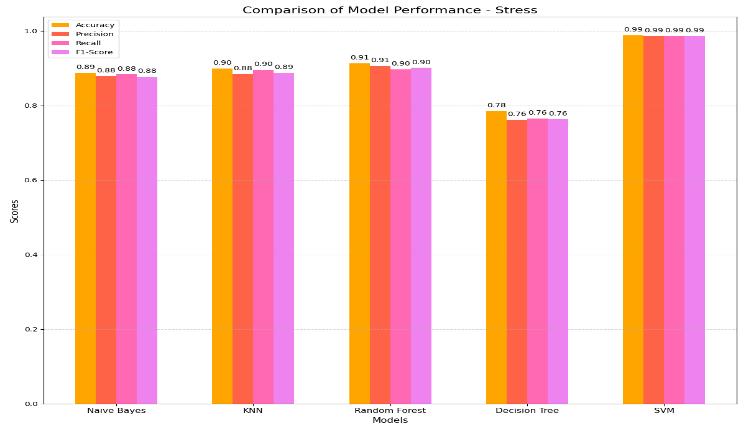
Figure 8: Model Performance Comparison -Stress
Figure 8 below presents a bar graph comparing the accuracy, precision, recall, and F1-score of Stress for Random Forest, SVM, Navie bayes, Decision Tress and KNN. As seen in the figure, SVM outperforms the other models in most of the metrics, followed by Random Forest and others. This indicates that SVM is the most reliable model for predicting student anxiety levels in thiscontext.
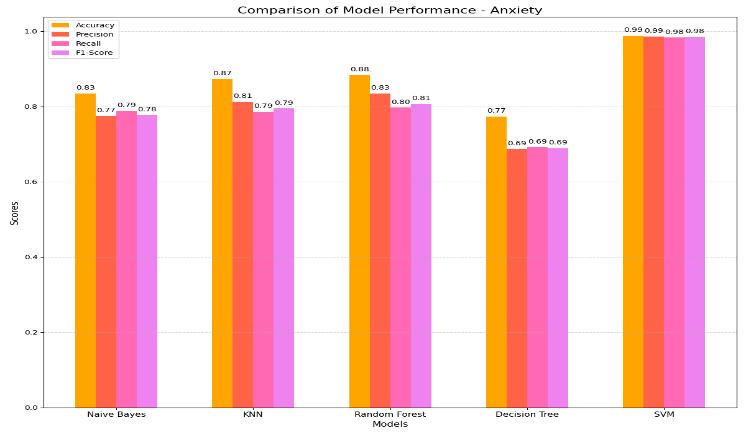
Figure 9: Model Performance Comparison -Anxiety
Figure 9 below presents a bar graph comparing the accuracy, precision, recall, and F1-score of Anxiety for Random Forest, SVM, Navie bayes, Decision Tress and KNN. As seen in the figure, SVM outperforms the other models in most of the metrics, followed by Random Forest and others. This indicates that SVM is the most reliable model for predicting student anxiety levels in thiscontext.
The results of this study indicate that SVM is the most effective model for predicting student anxiety levels. It performed better in terms of accuracy, precision, recall, and F1-score compared to Random Forest, Navie bayes, Decision Tress and KNN. The performance of Random Forest was close to SVM, but it had slightly lower recall, suggesting that it may have missed some instances of studentswithmoderateorhighanxiety.
The active learning process demonstrated a substantial improvement in the accuracy of all models, as shown in Figures 7,8 and 9. By minimizing the number of labeled datapointsrequiredfortraining,activelearningnotonly reduced the cost of data labeling but also allowed the model to continuously improve. This is particularly beneficial for real-world applications, where data labeling can be a bottleneck in model development and deployment.
Table 1: Comparison of model performance metrics.
Table1presentstheperformancecomparisonbetween RandomForest,SVM,Naviebayes,DecisionTressand KNNbasedonaccuracy,precision,recall,andF1-score.
Table 2: Impact of active learning on the SVM model.
Table 2 illustrates the impact of active learning on the SVM model, comparing performance before and after activelearning.
Volume: 13 Issue: 04 | Apr 2026 www.irjet.net p-ISSN: 2395-0072
identificationiscrucial,asitallowseducatorsandmental health professionals to intervene proactively, offering support before the anxiety worsens and negatively impacts academic performance, social interactions, and emotionalwell-being.
Table 3: Data distribution across anxiety levels.
Table 3 shows the data distribution across the different anxiety levels (Extremely Severe, Severe, Moderate Anxiety, Mild, Normal). This table provides insight into thebalanceofthedataset,whichiscrucialforevaluating theperformanceoftheclassificationmodels.
For example, by continuously monitoring students' academicrecords, behavioral patterns,and responsesto psychological surveys, the system can flag those whose anxietylevelsarerising.Earlyinterventioncouldinvolve providing students with academic accommodations, counseling, or stress-management resources, helping them develop coping mechanisms and reduce the negativeeffectsofanxiety.
2. Proactive Interventions by Educators and Mental Health Professionals: In a traditional educational setting, anxiety interventions are typically reactive. Students seek help when their anxiety has already causedsignificantdisruptionstotheiracademicorsocial life. By implementing this machine learning system, educatorsandcounselorscantakeproactivemeasuresto support students before their anxiety escalates. Proactiveinterventionsmayinclude:
● Individualized Support Plans: Providing tailored interventions based on the severity of the student's anxiety, including therapy, mentoring,orflexibleacademicdeadlines.
● Timely Counseling: Offering counseling sessionsearlyintheacademicterm,particularly forstudentsidentifiedasbeingatrisk.
● Behavioral Modifications: Encouraging studentstoengagemorein classroomactivities, extracurriculars, and social groups to mitigate anxietytriggers.
This study finds to suggest that the integration of machinelearning,particularlytheuseofRandomForest, alongsideactivelearning,providesaviableandeffective solution for predicting student anxiety levels in educational settings. In this section, we discuss the practical implications of the results, acknowledge the limitations of the current approach, and suggest potential areas for future work to enhance the system's accuracy,scalability,andapplication.
● 5.1 Implications
Theresultsofthisstudyhavesignificantimplicationsfor both educational institutions and mental health professionals, as they offer a data-driven, proactive approachtostudentwell-being.Thekeybenefitsofusing machine learning to predict student anxiety levels include:
1. Early Identification of Anxiety: The system's high accuracyinpredictinganxietylevelsmeansthatstudents at risk of severe anxiety can be identified early, often before their mental health issues manifest in noticeable academic or behavioral problems. This early
By taking these steps, the system helps create a more supportive and understanding environment where students are less likely to fall through the cracks of traditionalmentalhealthsupport.
● 5.2 Future Work
While the current model provides a strong foundation for predicting student anxiety levels, several areas offer opportunitiesforfutureenhancementandresearch.
1. Incorporating Additional Data Types: To improve prediction accuracy and provides the more comprehensive understanding of student anxiety, future workcouldfocusonincorporatingadditionaldatatypes. Thesemightinclude:
● Physiological Data:Datafromdifferentdevices such as fitness trackers or heart rate monitors could offer real-time insights into students' physicalresponsestostressandanxiety.
● Social Media Data: Monitoring students' social media activity (with proper consent) could provide valuable context about their emotional and social well-being. Sentiment analysis on social media posts could help detect anxietyrelatedpatterns.
International Research Journal of Engineering and Technology (IRJET) e-ISSN: 2395-0056
Volume: 13 Issue: 04 | Apr 2026 www.irjet.net p-ISSN: 2395-0072
● Facial Expression Analysis: Analyzing students' facial expressions during interactions or video calls could offer non-intrusive ways to assess anxiety, especially when students are reluctanttoself-report.
6. Conclusion
This study presents a comprehensive system for predicting student anxiety levels by leveraging machine learning techniques, specifically Random Forest, and Neural Networks, Support Vector Machines (SVM). The system integrates diverse data sources, including academic records, psychological survey responses, and behavioral data, to predict anxiety levels in students. Through the use of active learning, the system not only improvespredictionaccuracyovertimebutalsoreduces the need for large manually labeled datasets, making it scalableandefficient.
The evaluation of the system demonstrated that SVM out-performed the other models in terms of precision, F1-score ,accuracy and recall achieving an overall accuracy of 99%. The incorporation of active learning significantly improved the model's performance, highlightingitsabilitytoreducethecostofdatalabeling and enhance the system’s adaptability. The results underscore the importance of combining diverse data sources and advanced machine learning techniques in predicting mental health outcomes, particularly in educationalsettings. Moreover, the integration of active learning was shown to make the system more efficient, allowing it to continuously refine its predictions with minimal human intervention. This feature is especially valuable for educational institutions that face challenges in monitoring large numbers of students. The system's scalability and real-time adaptability further emphasize itspotentialforwidespreaduseineducation.
1. Almadhor,A.,Abbas,S.,Sampedro,G.A.,Alsubai, S., Ojo, S., Al Hejaili, A., & Strazovska, L. (2024). Multi-class Adaptive Active Learning for PredictingStudentAnxiety.IEEEAccess.[1]
2. Penchina, B., Sundaresan, A., Cheong, S., & Martel, A. (2020, September). Deep LSTM recurrent neural network for anxiety classification from EEG in adolescents with autism. In International conference on brain informatics (pp. 227-238). Cham: Springer InternationalPublishing.[2]
3. Mehta, N. K., Prasad, S. S., Saurav, S., Saini, R., & Singh, S. (2022). Three-dimensional DenseNet self-attention neural network for automatic detection of student’s engagement. Applied Intelligence,52(12),13803-13823.[3]
4. Martins, M. V., Baptista, L., Machado, J., & Realinho, V. (2023). Multi-class phased prediction of academic performance and
dropout in higher education. Applied Sciences, 13(8),4702.[4]
5. Wang, K., Zuo, M., Yu, S., Luo, H., Yan, Y., & Ouyang, H. (2021, December). Use machine learning to predict primary school students’ level of learning engagement. In Proceedings of the 2021 4th International Conference on EducationTechnologyManagement(pp.20-24). [5]
6. Jiang, X., Zhang, X., & Wu, D. (2019, December). Activelearningforblack-boxadversarialattacks in EEG-based brain-computer interfaces. In 2019 IEEE Symposium Series on Computational Intelligence(SSCI)(pp.361-368).IEEE.[6]
7. Mortensen, J. A., Mollov, M. E., Chatterjee, A., Ghose, D., & Li, F. Y. (2023). Multi-class stress detection through heart rate variability: A deep neural network based study. IEEE Access, 11, 57470-57480.[7]
8. Sultana, J., Sultana, N., Yadav, K., & AlFayez, F. (2018, April). Prediction of sentiment analysis on educational data based on deep learning approach. In 2018 21st Saudi computer society national computer conference (NCC) (pp. 1-5). IEEE.[8]
9. Rathod, Y., & Vaghela, D. (2022, December). Evaluation of Feature Selection and Multi-Class Prediction Methods For Metal Stress. In 2022 International Conference on Automation, Computing and Renewable Systems (ICACRS) (pp.1091-1095).IEEE.[9]
10. Dehbozorgi, N., & Mohandoss, D. P. (2021, October). Aspect-based emotion analysis on speech for predicting performance in collaborativelearning.In2021IEEEfrontiersin educationconference(FIE)(pp.1-7).IEEE.[10]
11. Cheng, Q. (2023, October). Online Prediction to Facilitate a Flipped and Adaptive Classroom. In 2023 IEEE Frontiers in Education Conference (FIE)(pp.1-10).IEEE.[11]
12. Thiruthuvanathan,M.M., & Krishnan,B.(2024). Multitask EfficientNet affective computing for student engagement detection. Multimedia ToolsandApplications,1-25.[12]
13. Nusrat,M.O.,Shahzad,W.,&Jamal,S.A.(2024). Multi Class Depression Detection Through Tweets using Artificial Intelligence. arXiv preprintarXiv:2404.13104.[13]
14. Priyadharshini, M., Indra, S., Achuthan, S., & Lokesh, K. Predicting Student Success: A Comparative Examination of Machine Learning Techniques.[14]
15. Chakraborty,S.,&Dey,L.(2024).Applicationsof Multi-objective, Multi-label, and Multi-class Classifications. In Multi-objective, Multi-class and Multi-label Data Classification with Class
International Research Journal of Engineering and Technology (IRJET) e-ISSN: 2395-0056
Volume: 13 Issue: 04 | Apr 2026 www.irjet.net p-ISSN: 2395-0072
Imbalance: Theory and Practices (pp. 135-164). Singapore:SpringerNatureSingapore.[15]
16. Bouazizi, M., & Ohtsuki, T. (2018). Multi-class sentiment analysis in Twitter: What if classification is not the answer. IEEE access, 6, 64486-64502.[16]
17. Babu,N.V.,&Kanaga,E.G.M.(2022).Sentiment analysis in social media data for depression detection using artificial intelligence: a review. SNcomputerscience,3(1),74.[17]
18. Rekha, G., Tyagi, A. K., Sreenath, N., & Mishra, S. (2021, January). Class imbalanced data: Open issues and future research directions. In 2021 International Conference on Computer Communication and Informatics (ICCCI) (pp. 16).IEEE.[18]
18. Joshi, A., Allessio, D., Magee, J., Whitehill, J., Arroyo, I., Woolf, B., ... & Betke, M. (2019, May). Affect-driven learning outcomes prediction in intelligent tutoring systems. In 2019 14th ieee international conference on automatic face & gesture recognition (fg 2019) (pp. 1-5). IEEE. [19]
20. Lei, B., Zhao, Y., Huang, Z., Hao, X., Zhou, F., Elazab, A., ... & Lei, H. (2020). Adaptive sparse learning using multi-template for neurodegenerative disease diagnosis. Medical ImageAnalysis,61,101632.[20]
21. Bolognesi, F. (2024). Advancements in Active Learning: Strategies for Imbalanced Class Settings (Master's thesis, University of IllinoisatChicago).[21]
22. Bonafonte Pardàs, G. (2021). Active learning algorithmsformultitopicclassification(Master's thesis, Universitat PolitècnicadeCatalunya). [22]
23. Rabani, S. T., Khanday, A. M. U. D., Khan, Q. R., Hajam, U. A., Imran, A. S., & Kastrati, Z. (2023). Detecting suicidality on social media: Machine learning at rescue. Egyptian Informatics Journal,24(2),291-302.[23]
24. Abebe, D. (2024). Multi-Class Classification of RacisminAmharicTextUsingMachineLearning (Doctoraldissertation).[24]
25. DEENA,G.,SANDHYA,A.,&RAJA,K.(2024).MACHINE LEARNING-BASED CLASSIFICATION AND PREDICTION OF STUDENT STRESS LEVELS: A COMPARATIVESTUDYOFALGORITHMS. Journal of Theoretical and Applied Information Technology,102(19).[25]