

International Research Journal of Engineering and Technology (IRJET) e-ISSN: 2395-0056
Volume: 13 Issue: 03 | Mar 2026 www.irjet.net p-ISSN: 2395-0072
MICROWAVE ACCELERATED OXIDATION OF
ETHYLCYCLOHEXANECABOXYLATE BY DITERTIARY BUTYL CHROMATE IN ORGANIC MEDIA
Shubhankar Aich¹, Anil Kumar Delta²
¹Assistant Professor, Department of Chemistry, Marwari College Ranchi
²Associate Professor, University Department of Chemistry, Ranchi University, Ranchi ***
Abstract: Microwave irradiation has significantly affected the field of organic synthesis and has emerged as a valuable method for facilitating rapid and efficient chemical transformations. In this study, we investigated the oxidation of ethylcyclohexanecarboxylate using di-tertiary-butyl chromate (TBC) under microwave irradiation in various organic solvents, including tetrahydrofuran (THF), 1,4-dioxane, and dichloromethane (DCM). The reaction mixtures were prepared by combining the substrate solution with TBC in appropriate ratios, followed by stirring and microwave irradiation for specific durations. The resulting products were characterized using a combination of chemical and instrumental techniques, including elemental analysis, Fourier transform infrared (FTIR) spectroscopy, differential thermal analysis (DTA), thermogravimetric analysis (TGA), and mass loss patterns. Our findings demonstrate that this microwave-assisted approach aligns with the principles of green chemistry and offers a sustainable and efficient route for the oxidation of ethyl cyclohexane carboxylate.
Keywords: Di-tertiary-butyl chromate (TBC), Ethylcyclohexanecarboxylate, Tetrahydrofuran (THF), Dichloromethane (DCM), and Microwave heating.
1. INTRODUCTION
Microwave-assisted organic synthesis (MAOS)1_2 and microwave-induced organic reactions (MIOR)3 have revolutionized organic chemistry by offering sustainable and efficient synthetic approaches. These techniques align with green chemistry4-5 principles,reducereactiontimes,improveyields,andminimize wastegeneration.Theconceptofmicrowave dielectricheating,introducedbySpencer6 in1947,wasappliedtoorganicsynthesisinthepioneeringworkofGedyeet.al 79 in1986.Sincethen,thefieldhasflourished,withover2000researcharticlesdemonstratingtheversatilityofmicrowaveassisted techniques. A comprehensive review by P. Lindstrom et al 10. highlighted the advantages of MAOS and MIOR, includingsignificantlyreducedreactiontimes,improvedproductyields,andminimalwastegeneration.Thesetechniques areattractivealternatives11 totheconventionalheatingmethods.
In this study, we explored the oxidation of ethylcyclohexanecarboxylate12 using di-tertiary-butyl chromate13 (TBC) under microwave irradiation. TBC, a robust and versatile oxidant, has been extensively studied since its introduction by OppenaurandH.Oberrauch14 in1949.Theproductsofethylcyclohexanecarboxylatehavethepotentialtoserveasligands fortheformationofCrcomplexesinvariousoxidationstates.
Ethylcyclohexanecarboxylate,an alicyclicester,isa colourlessliquid with a characteristic odour.It isusedasa flavouring agent15_16 and an intermediate or scaffold for the synthesis of bioactive molecules17_20 in pharmaceutical chemistry. By oxidizing ethyl cyclohexane carboxylate with TBC under microwave irradiation, we synthesized and characterized chromium complexes21_23 in lower oxidation states. This approach expands the scope of ethyl cyclohexane carboxylate chemistryanddemonstratestheversatilityofTBCasoxidizingagent24_25 .
2. MATERIALS AND METHODS
All chemicalsused in this study were of analytical reagent (A.R.)grade and were procured from commercial sourcesand used as received. Ethyl cyclohexane carboxylate, chromium (VI) oxide, tertiary butyl alcohol, tetrahydrofuran (THF), 1,4dioxane, dichloromethane (DCM), acetone, silver nitrate, potassium persulfate, ammonium iron (II) sulfate (Mohr's salt), potassiumdichromate,andbariumdiphenylamine-1-sulfonatewereused.
The oxidant di-tertiary-butyl chromate (TBC) was synthesised in situ through the dissolution of a precisely weighted quantityofchromium(VI)oxidein10mloftertiarybutylalcohol.Ethylcyclohexanecarboxylate(2ml.)wasdissolvedin10 ml of tetrahydrofuran (THF), 1,4-dioxanloromethane (DCM) in a rigorously cleaned and desiccated beaker under continuous magnetic stirring at room temperature. The substrate-to-oxidant molar ratios were 1:1, 2:1, and 3:1, respectively.ThereactionmixturewasirradiatedinaSamsunghouseholdmicrowaveovenG-273V(20L,2450 MHz,and
International Research Journal of Engineering and Technology (IRJET) e-ISSN: 2395-0056
Volume: 13 Issue: 03 | Mar 2026 www.irjet.net p-ISSN: 2395-0072
150 W) for various oxidation times. Thermometric measurements were conducted to assess the exothermic and endothermic natures of the reaction by recording the initial and final temperatures of the reaction mixture. The isolated productsweresubsequentlywashedwithacetone,meticulouslydried.
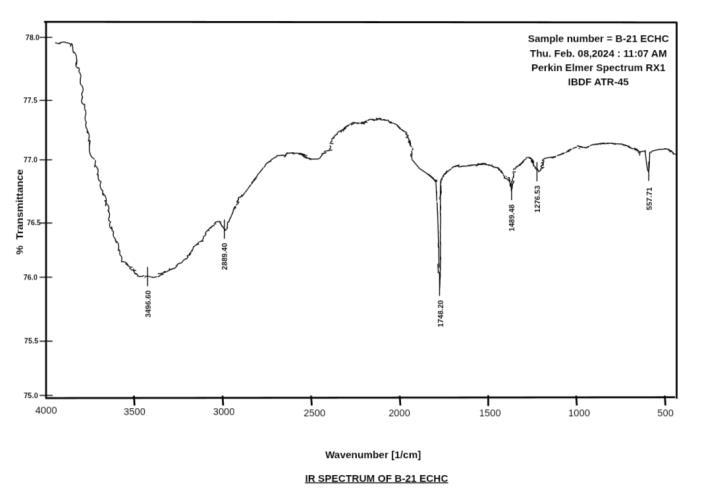
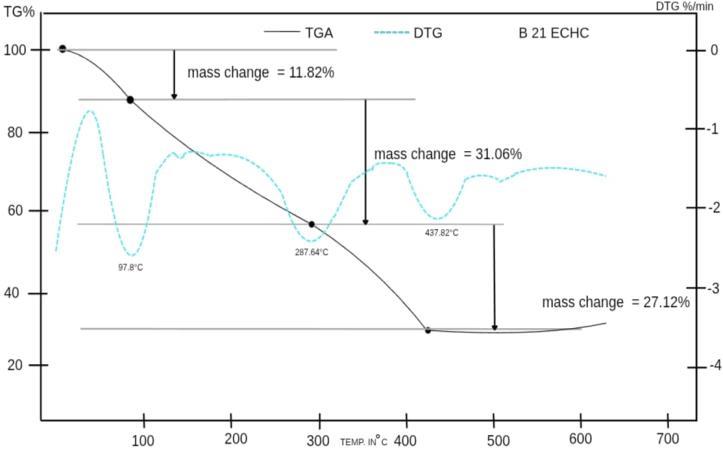
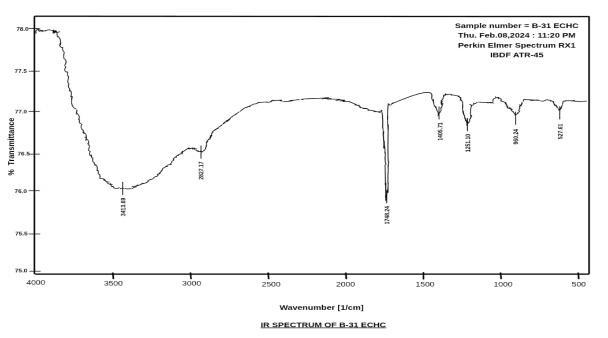
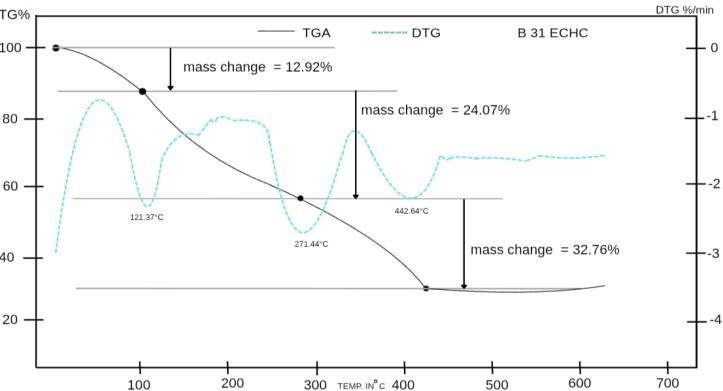
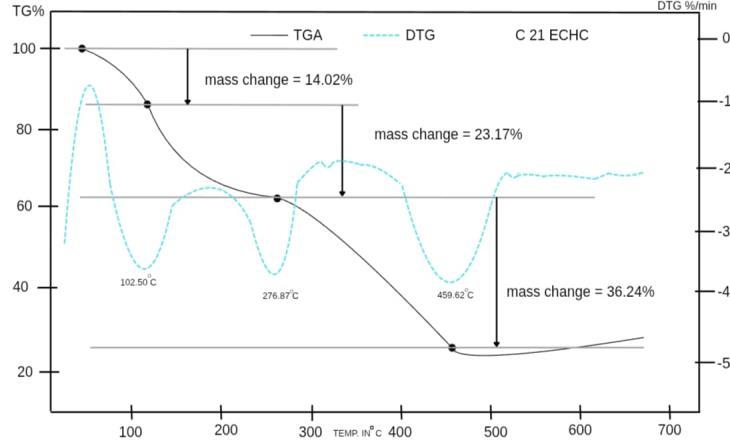
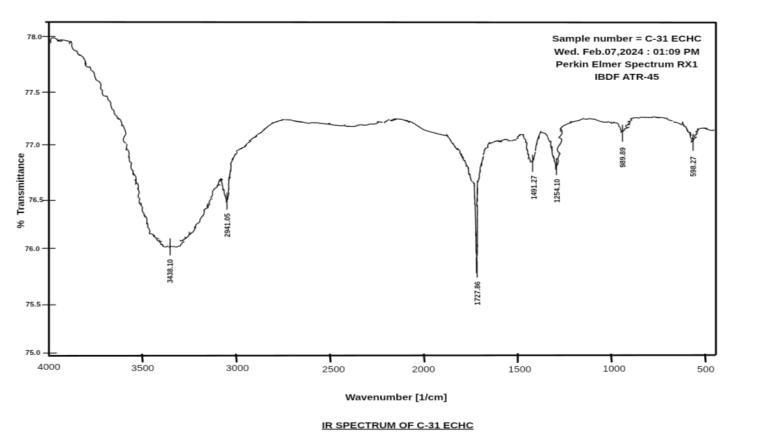
labelled A11ECHC, A21ECHC, A31ECHC, B11ECHC, B21ECHC, B31ECHC, C11ECHC, C21ECHC, C31ECHC, and stored for further analytical and spectroscopic characterization. The percentage compositions of carbon and hydrogen were determined using a EUROVECTOR E-3000 elemental analyser. The chromium content was subsequently quantified by volumetrictitrationusingpotassiumpersulfate,potassiumdichromate,andMohr'ssaltsolutions.Theoxygencontentwas calculated by subtracting the percentages of carbon, hydrogen, and chromium from 100. The empirical formulae for the complexeswerededucedfromtheelementalanalysisdata.Fouriertransforminfrared(FTIR)spectraoftheproductswere recorded on a PerkinElmer Fourier transform infrared spectrometer (FTIR4000-450 cm-1). Thermogravimetric and differentialthermalanalyses(TG-DTA)ofthecompoundswereperformedusingaPerkinElmerDiamondTG-DTAsystem. The samples underwent a controlled heating process at a constant heating rate of 10°C /min, progressing from ambient temperaturetoafinaltemperatureof700°C.Thecharacterizationdataforallsynthesizedproducts,includingFTIRspectra, TG-DTAthermographsandcorrespondinganalyticaldatainTables1-3aresummarised.
3. ETHICAL COMPLIANCE
This research project involved human participants and was conducted in accordance with the approval granted by the EthicsCommitteeoftheUniversityDepartmentofChemistry,RanchiUniversity.
4. RESULTS AND DISCUSSION
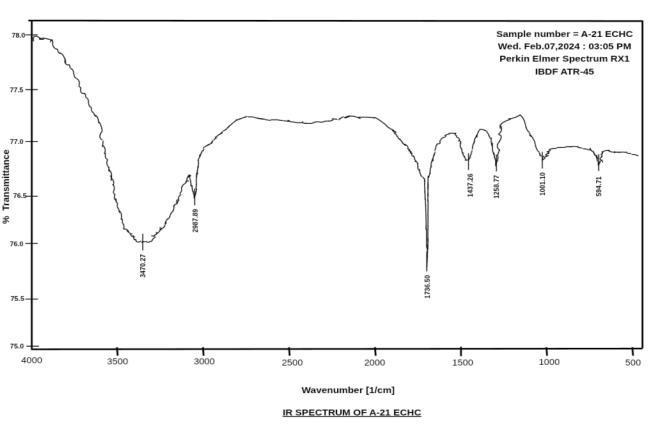
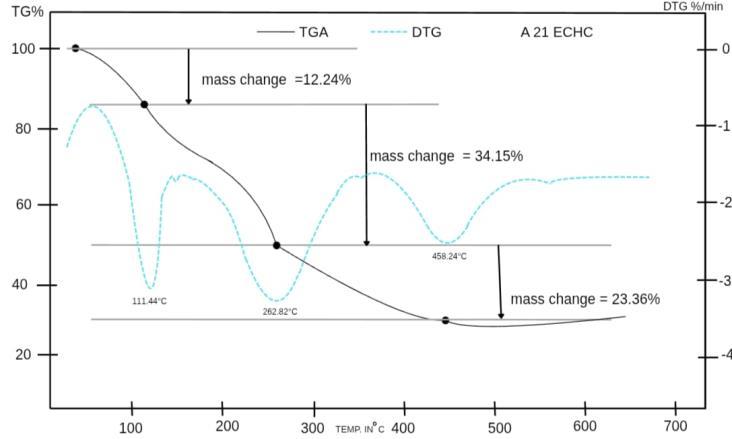
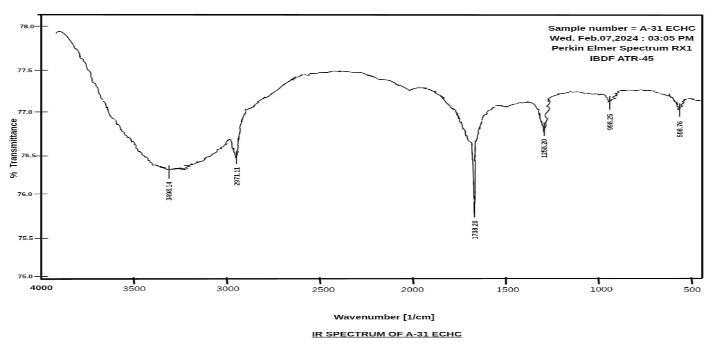
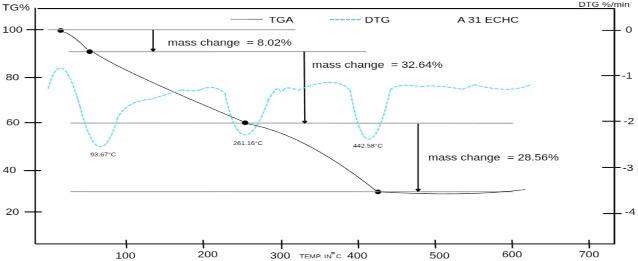
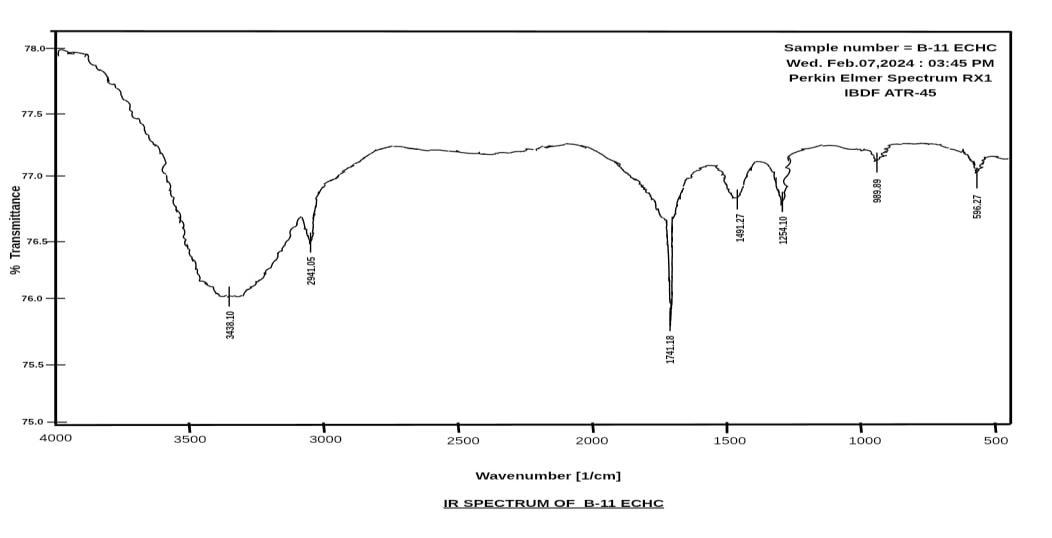
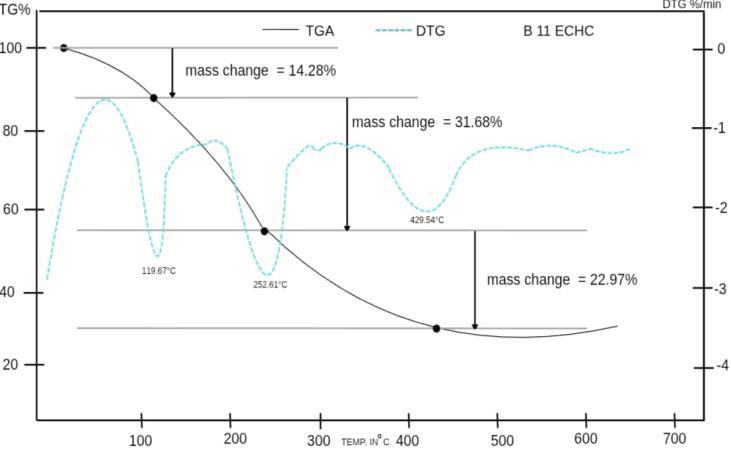
The exhaustive analytical data presented in Tables 1, 2, and 3, and FTIR, TG-DTA graphs encompassing physical parameters, elemental analysis, and proposed chemical formulations, respectively, coupled with the FTIR, TGA-DTA graphicalrepresentations,facilitatethederivationofseveralpertinenttechnicalconclusionspertaining tothesynthesisof chromium-ethylcyclohexanecarboxylate (ECHC) complexes. A meticulous examination of these datasets enables a comprehensive understanding of the complexation process, thereby permitting inferences to be drawn regarding the structuralandcompositionalattributesoftheresultantchromium-ECHCcomplexes.
Volume: 13 Issue: 03 | Mar 2026 www.irjet.net
Table 2: Product formulation– I
Table 3: Product formulation– II
International Research Journal of Engineering and Technology (IRJET) e-ISSN: 2395-0056
Volume: 13 Issue: 03 | Mar 2026 www.irjet.net p-ISSN: 2395-0072
2C9H22O19
9. C31 ECHC
2C9H22O17
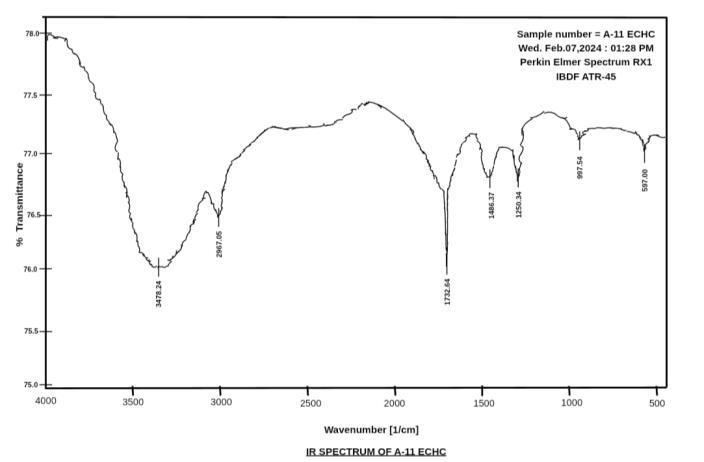
(i)FTIR Spectrum of A11 ECHC
(iv) TG-DTG Thermograph of A21 ECHC ECHC 8. C21 ECHC
(iii)FTIR Spectrum of A21 ECHC
3 2(CH3COOH)(HOOCCH2 COOH)(HOOCCOOH)(H2O)4
FTIR, TG-DTG THERMOGRAPHS
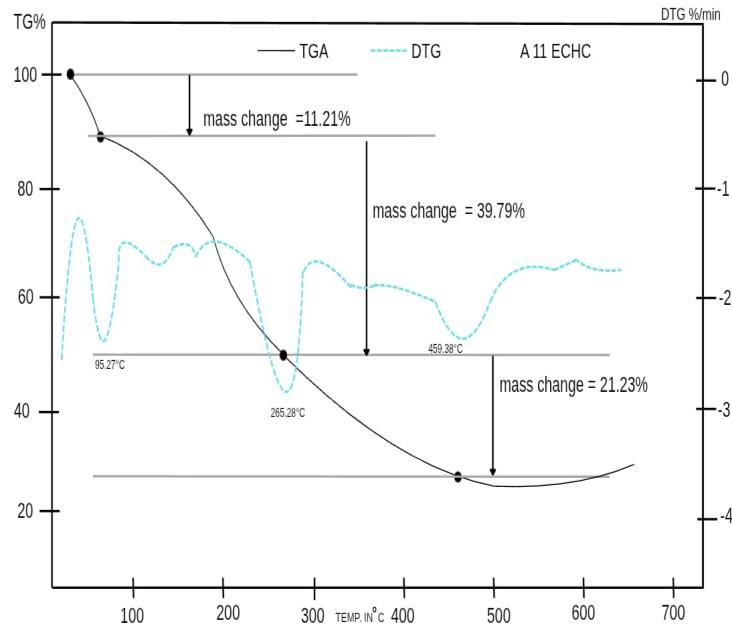
(ii) TG-DTG Thermograph of A11 ECHC
International Research Journal of Engineering and Technology (IRJET) e-ISSN: 2395-0056
Volume: 13 Issue: 03 | Mar 2026 www.irjet.net p-ISSN: 2395-0072
International Research Journal of Engineering and Technology (IRJET) e-ISSN: 2395-0056
Volume: 13 Issue: 03 | Mar 2026 www.irjet.net p-ISSN: 2395-0072
International Research Journal of Engineering and Technology (IRJET) e-ISSN: 2395-0056
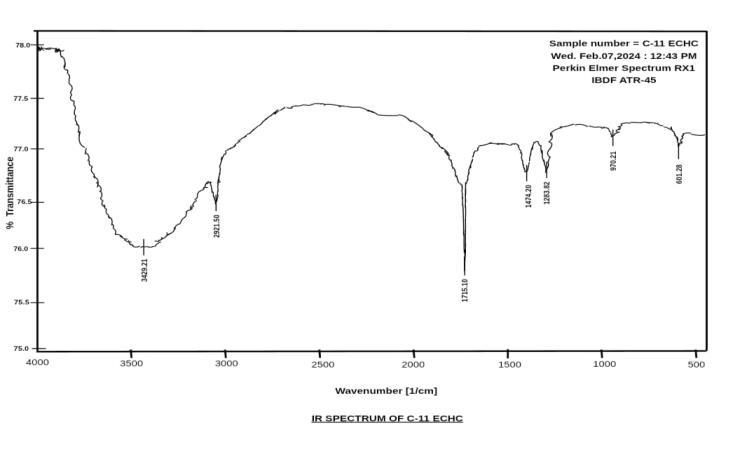
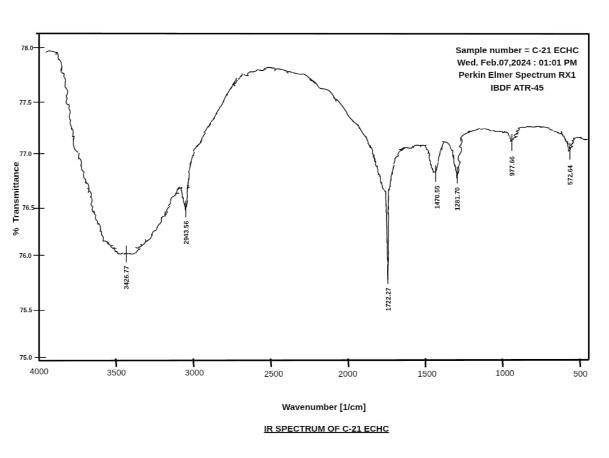
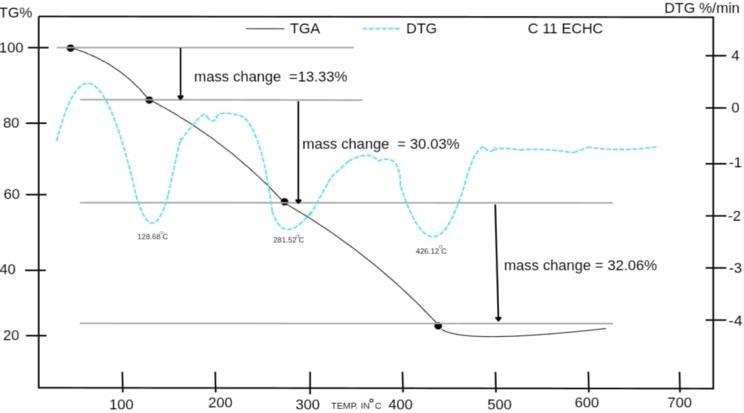
-DTG Thermograph of
Volume: 13 Issue: 03 | Mar 2026 www.irjet.net p-ISSN: 2395-0072 © 2025, IRJET | Impact Factor value: 8.315 | ISO 9001:2008 Certified Journal | Page1543
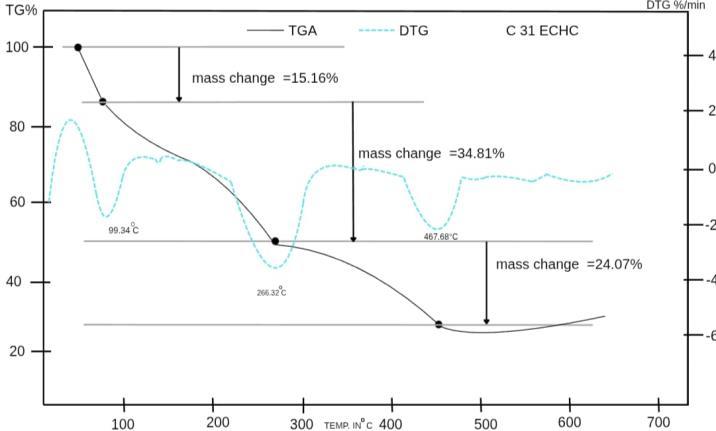
Fig (xviii) TG-DTG Thermograph of C31EC
International Research Journal of Engineering and Technology (IRJET) e-ISSN: 2395-0056
Volume: 13 Issue: 03 | Mar 2026 www.irjet.net p-ISSN: 2395-0072
ine complexes exhibiting distinct physical properties, including colour and solubility, were obtained after the oxidationofethylcyclohexanecarboxylatewithTBCindifferentsolvents.
AsshowninTable3,thecommonoxidationproductsformedduringtheprocessincludedformicacid,aceticacid, oxalicacid,malonicacid,succinicacid,glutaricacid,adipicacid,carbondioxide,andwater.
A comparative study of the reaction kinetics revealed notable discrepancies in the thermodynamic behaviour. Specifically, reactions conducted in 1,4-dioxane exhibited endothermic characteristics, whereas analogous reactionsperformedinalternativesolventsdemonstratedexothermicproperties.
Dichloromethane (DCM) was the most efficient solvent for mass production. It yielded the highest product weight(upto2.86g)withtheshortestmicrowaveexposuretime(40–52s).
Among the solvents tested 1,4-Dioxane was the least efficient medium, requiring the longest irradiation times (72–85 s) and producing the lowest yields (as low as 0.89 g). This suggests that the coordination process is significantlymorefavourableinchlorinatedorether-basedsolventswithlowerboilingpointsundermicrowave conditions.
TheratiooftheECHCsubstratetochromiumoxidantdictatesboththeyieldandfinalmetaldensity.
In every solvent system (THF, Dioxane, DCM), the 1:1 ratio consistently produced the highest yield. Increasing theratioto3:1ledtoasignificantdecreaseinproductrecovery.Thisindicatesaninverseyieldrelationship.
Interestingly, although higher ratios (3:1) produced less total mass, they generally resulted in a higher Cr percentage (Cr%) in the final complex (peaking at 22.70% for Sample B31ECHC). This implies that a higher relativeconcentrationoftheoxidantleadstoamoremetal-concentratedcoordinationenvironment.
Table 3 presents a fascinating look at the proposed chemical structures. The formulations suggest that these arenotsimplebinarysaltsbutcomplexpolynuclearchromium(III)species:
MostformulationsarecentredaroundaCr2O3 orhydroxy-bridgedframework.
The products appeared to incorporate a variety of ligands, including acetic acid (CH3COOH), carbon dioxide (CO2), and water molecules (H2O). The presence of CO2 in the formulations (e.g., in A11ECHC and B11ECHC) suggests that some atmospheric fixation or decarboxylation of intermediates may occur during the microwave process.
Almost all stable products are hydrates (containing H2O or (H2O) n, which correlates with the high oxygen percentages(oftenexceeding50%)observedinTable2.
The colours range from light green to dark brown. Generally, the " green " variants (A31ECHC, B21ECHC, B31ECHC,C31ECHC)arecorrelatedwithhigherchromiumconcentrationsandspecificcoordinationgeometries.
Most products are insoluble in water. Only the 1:1ratios in THF and DCM (A11ECHC, C11ECHC, C21ECHC) showed"sparing"solubility. Thissuggeststhatasthemetal-to-ligandratioshiftsorthereactiontimeincreases, thecomplexesbecomemorepolymericandhydrophobic.
Future research may involve recrystallizing the products in a suitable solvent and examining the resulting crystalstogainfurtherinsightintotheirpropertiesandstructures.
5. CONCLUSION
The oxidation of ethylcyclohexanecarboxylate with di-tert-butyl chromate (TBC) in various solvents under various conditions yielded a diverse range of products and exhibited interesting trends. Overall, the oxidation of ethylcyclohexanecarboxylatewithTBCisacomplexreactioninfluencedbymultiplefactors,includingthesolvent,oxidant ratio,andreactiontime.Understandingthesefactorsiscrucialforoptimizingthereactiontoobtainspecificproductsand minimizeunwantedby-products.
6. DATA AVAILABILITY STATEMENT
Thedatapresentedhereinweregeneratedusingonlytheexperimentalprocedures.
7. ACKNOWLEDGMENTS
TheauthorsacknowledgethecooperationandassistanceprovidedbyBITMesra,andSAIFLucknow,whichfacilitatedthe testingandanalysisofthesamples.
Authors Contributions:
[Author 1]: Conceptualization, methodology, software, validation, formal analysis, investigation, resources, data curation, writing(originaldraftpresentation),andfundingacquisition.
International Research Journal of Engineering and Technology (IRJET) e-ISSN: 2395-0056
[Author2]:Conceptualization,methodology,visualization,supervision,validation,formalanalysis,investigation,resources, datacuration,writing(reviewandediting),andprojectadministration.
Funding:
Theresearchersdidnotreceiveanyexternalfundingforthisstudy.
Conflict of interest:
Theauthorsdeclarethattheyhavenoconflictsofinterest.
8. REFERENCES:
1. Kappe, C. O. "Microwave-Assisted Chemistry." In "Microwave-Assisted Organic Synthesis," pp. 1-19. Springer,2013.
2. Dela Hoz,A., et al.(2011). Microwave-AssistedOrganic Synthesis:ACritical Review.Tetrahedron, 67(2), 283-303.
3. Singh, M. S., & Singh, A. K. (2019). Microwave-Induced Organic Reactions: A Review. Journal of Chemical Research,43(10),557-562.
4. The twelve principles of Green Chemistry’ United States Environmental Protection Agency. 2006 Retrieved
5. Lahoz, Antonio De, Diaz-Ortiz, Angel and Prieto, Pilar, Microwave assisted green organic synthesis in alternativeenergysourcesforgreenchemistry,2016pp.1-33.
6. Spencer,P.,"MethodofTreatingFoodstuffs,"USPatent2,495,429,1950.
7. Gedye, R., Smith, F., Westaway, K., Ali, H., Baldisera, L., Laberge, L., & Rousell, J. (1986). The use of microwaveovensforrapidorganicsynthesis.TetrahedronLetters,27(3),279-282.
8. Gedye, R. N., & Wei, J. B. (1998). Microwave-assisted organic synthesis: A review. Canadian Journal of Chemistry,76(5),525-532.
9. Gedye,R. N.,&Rank, W.(1999).Microwave-assistedorganicsynthesisinsolvent-freeconditions.Journal ofChemicalResearch,Synopses,(10),542-543.
10. Lindstrom, P., Tierney, J., Wathey, B. and Westman, J. "Microwave Assisted Organic Synthesis-a Review," Tetrahedron,vol.57,no.45,pp.9225-9283,2001.
11. Katre, Sangita; Study of oxidation of chromic acid with chromium complexes by classical and green approach;DerChemicaSinicia,2014,5(6)PelagiaResearchLibrary,pp48-50.
12. ethylcyclohexanecarboxylate-Wikidatahttps://share.google/Qpb1WE3SYYKyFd04i
13. Wheeler, J.M., "Ditertiary Butyl Chromate: A Versatile Oxidant," Journal of Chemical Research, vol. 2001, no.10,pp.432-433,2001.
14. Oppenaur, R.V. and Oberrauch, H. "Oxidation of Amines with Di-tert-butyl Chromate," Journal of the AmericanChemicalSociety,vol.71,no.10,pp.3421-3424,1949.
15. Adams, T. B.,et.al. (1996). “The FEMA GRAS assessment of alicyclic substances used as flavour ingredients.” Food and Chemical Toxicology, 34(8), 763–828 https://doi.org/10.1016/s02786915(96)00051-8
Volume: 13 Issue: 03 | Mar 2026 www.irjet.net p-ISSN: 2395-0072 © 2025, IRJET | Impact Factor value: 8.315 | ISO 9001:2008 Certified Journal | Page1545
International Research Journal of Engineering and Technology (IRJET) e-ISSN: 2395-0056
Volume: 13 Issue: 03 | Mar 2026 www.irjet.net p-ISSN: 2395-0072
16. Geithe, C., et al. (2016). "The Broadly Tuned Odorant Receptor OR1A1 is Highly Selective for Key Food Odorants." Chemical Senses,42(3),181–193.
17. Park, H. G., et al. (2018). "Stereoselective synthesis of functionalized cyclohexane carboxylates as precursorsforGABA-receptorligands."JournalofOrganicChemistry,83(14),7542–7551.
18. Kandemir, H., et al. (2024). "Synthesis and biological evaluation of novel cyclohexanecarboxamido hydrazonesaspotentantimicrobialagents."MedicinalChemistryResearch,33,112–125.
19. Bodor, N., & Buchwald, P. (2000). "Soft Drug Design: General Principles and Recent Applications." MedicinalResearchReviews,20(1),58–101.
20. "Synthesisandbiologicalevaluationofnovelcyclohexanecarboxamidohydrazonesaspotentantimicrobial agents." Medicinal Chemistry Research,33,112–125.
21. Ling, L., Chen, C., Luo, M., & Zeng, X. (2019). "Chromium-Catalyzed Activation of Acyl C–O Bonds with MagnesiumforAmidationofEsterswithNitroarenes."OrganicLetters,21(6),1912–1916.
22. Steiman,T.J.,&Uyeda,C.(2015)."ReagentsforReductiveTransitionMetalCatalysis."ChemicalScience,6, 2327–2337.
23. Zeng, X. (2013). "Recent Advances in Chromium-Catalyzed Carbon–Carbon Bond-Forming Reactions." ChemicalSocietyReviews,42(13),5658–5671.
24. Katre, Sangita and Pandey, H.O. A Green approach to oxidation of succinic acid by chromium (VI) based complexes functioning as oxidant in International Journal of green chemistry and Bioprocess 2013 3(3) pp.3032.
25. Katre,SangitaD.RecentAdvancesintheOxidationReactionsofOrganicCompoundsusingChromium(VI) ReagentsinRes.J.Chem.Environ.Vol.24(1)January(2020).