
International Research Journal of Engineering and Technology (IRJET) e-ISSN: 2395-0056
Volume: 12 Issue: 06 | Jun 2025 www.irjet.net p-ISSN: 2395-0072
International Research Journal of Engineering and Technology (IRJET) e-ISSN: 2395-0056
Volume: 12 Issue: 06 | Jun 2025 www.irjet.net p-ISSN: 2395-0072
Abhijeet Patale1, Shubham Phate2, Sushil Bodade3, Prof. Mrs. Kalpana Patil4
1Abhijeet Patale, Dept. of civil engineering, JSPM’s RSCOE Tathawade, Pune, Maharashtra, India.
2Shubham Phate, Dept. of civil engineering, JSPM’s RSCOE Tathawade, Pune, Maharashtra, India.
3Sushil Bodade, Dept. of civil engineering, JSPM’s RSCOE Tathawade, Pune, Maharashtra, India
4Kalpana Patil, Professor, Dept. of civil engineering, JSPM’s RSCOE Tathawade, Pune, Maharashtra, India
Abstract - The manufacturing of eco-friendly concrete bricks usingplastic wastefoundthatthedualchallenge.thatis reducing the increased pollution and decreasing the environmental impact of commonly used construction materials. This creative solution involves mixing of recycled plastic waste into concrete brick production. The partial replacement for Coarse aggregates or as a supplementary binder material. Firstly, wecollect theplasticwasteandclean of plastic waste. which are then shredded into small pieces. These plastic materials are blended into the concrete mix along withcement, aggregates, glass powder andwater.With the careful consideration given to achieving an optimal balance between compressive strength, durability, and ecofriendly construction practices. Additives or chemicals is used to increasing the bonding between plastic and cementitious materials.
The resulting eco-friendly concrete bricks offer several advantages. Such as it is lower in weight, resistance to water absorption and better thermal insulation as compared to conventionalconcretebricks. Theuseofplasticwastereduces theextractionofnaturalresources likesandandgravel,hence theyminimizeenvironmentaldegradation.theseprocesshelps to mitigate greenhouse gas emissions due to plastic incineration and traditional cement manufacturing process. The testing such as of compressive strength test, durability test, water absorptions test, and thermal properties to ensure the bricks are capable with building standards. These bricks are particularly suitable for the non-load-bearing structures, paving blocks, partition wall and lightweight construction elements. this method demonstrates a scalable and costeffective solution for addressing global environmental and infrastructure challenges.
Key Words: Sustainable, Plastic waste, compressive strength, Economic, Eco-Friendly Concrete Brick
1.INTRODUCTION
Thegrowingpollutionovertheenvironmentaldegradation andresourcedepletionhavebeenemphasizedtheneedfor sustainableconstructionpracticesandtheinnovativewaste managementsolutions.Nowadaysoneofthemostpressing environmental issues is the plastic waste disposal, which accumulatesthemostofthequantitiesduetoitisthenonbiodegradable in nature, leading to extreme ecological
consequences. Continuously, the construction industry is significant contributing to resource consumption and environmentalpollution,theuseoftraditionalmaterialslike concrete,whichhasahighlycarbonfootprint.Manufacturing eco-friendlyconcretebricksbyincorporatingplasticwasteis the concept of offers a promising solution to both the challenges.Thisapproachistheplasticwasteconvertinto the valuable material for construction industry, and the environmental impact will be reduced while conserving natural resources like sand and grit aggregates. we transformingtheplasticwasteintoaintegralcomponentof the concrete bricks, this innovation promotes the sustainability and reduces the strain on landfills site, and providesacost-effectivealternativesolutiontoconventional buildingmaterials.Theinitiativereflectsacommitmentto thecirculareconomyprinciplesandopensnewavenuesfor more environmentally responsible infrastructure developmentproject.
This paper explores the development of concrete bricks consistingpulverizedplasticandglasswastematerialasa sustainable alternative solution to the traditional constructionmaterials.Theincreasingoftheaccumulationof plasticandglasswaste,thisstudyaimstotheenhanceofthe wastemanagementandreducestheenvironmentalpollution and improving the brick properties such as compressive strength by integrating these materials into construction. Comparethecompressivestrengthandthewaterabsorption testbetweenconventionalconcretebricksandbrickswhich containrecycledplasticandglasswaste.Thisstudyusesthe M20gradeconcretewithamixproportionofa1:1.5:3anda watertocementproportionof0.5.Variousmixesarecreated by replacing Grit aggregate with different percentages of plastic(5%,10%,15%,20%)andaconstant5%glasswaste. Bricksofsize200x100x100mmarecastedandtestedafter the 7, 14, and 28 days of various tests like a Compressive strength,Waterabsorptiontest.Inthisstudyweconclude that 15% plastic and 5% glass waste replacement in concretebricksisoptimal,balancingstrength,durability,and environmentalbenefits.[1]
These studies conclude that the various mechanical and physical properties of the bricks through tests like compressionstrengthandwaterabsorptiontest.Theyshow the results that plastic-based bricks have zero water absorption.itimprovedcompressivestrengthcomparedto
International Research Journal of Engineering and Technology (IRJET) e-ISSN: 2395-0056
Volume: 12 Issue: 06 | Jun 2025 www.irjet.net p-ISSN: 2395-0072
traditional red bricks and concrete bricks. This study concludesthattheplasticbricksisaneffective,economical, andsustainablealternativesolutiontoconventionalconcrete bricks.Thesebricksarereducingenvironmental pollution andalsodecreasetheconsumptionuseofnaturalresources like clay, sand, etc. However, the researchers are experienced that the need for greater awareness and acceptance of plastic bricks in the construction sector to maximizetheirbenefits.[2]
This paper consists of innovative approaches and the sustainable use of plastic waste in a traditional concrete brick. such as PET and HDPE plastic waste in a cement concretebrickstoenhancetheirvariouspropertiesbricks. HDPEouterformedPETintermsandofstrengthofthermal performance.Theoptimalmixproportionwasachievingby thesubstitutingGritaggregateswith7.5%HDPEforthebest mechanicalbehaviorofconcretebrickandwith20%HDPE for maximum thermal resistance. While compressive and tensilestrengths improved upto7.5%HDPEsubstitution, higherlevelsresultedindiminishedperformance.[3]
Thestudyistheresultsindicatethatthebricksmadefrom recycled plastic and glass waste gives satisfactory compressive strength and water absorption levels within acceptable limits. But, wider industry adoption remains a challenge, it requiring more awareness and acceptance amongbuilders.Theauthorsconcludethattheusingwaste materials in construction is a promising step toward sustainabledevelopmentofconstructionsectors,reducing landfill waste and promoting eco-friendly practices in constructionsectors.[4]
Thispaperexploresthattheutilizationofplasticwasteand glasswasteinconcretebrickproductionisthesustainable alternative solution to conventional bricks. the increasing environmental pollution regarding plastic waste and the necessity for alternative material construction in sectors. Various studies have been demonstrated that the incorporatingplasticandglasswasteinconcreteimproves sustainability while increasing compressive strength. The authorsreviewedpreviousresearchonrecycledmaterialsin constructionsectors,notingthatwhilesomepropertieslike compressivestrengtharecomparabletotraditionalbricks, waterabsorptioncharacteristicsanddurabilityneedfurther studyforthesolution.[5]
Thispaperexplorestheinnovativeapproachtotherecycling plasticwastebyincorporatingitintomanufacturingofbrick. This study highlighted to the environmental hazardous plasticwaste,particularlyHDPEwasteandPETwaste,which decreasetothesoilfertilityandincreasemarinepollution. To address the issue of plastic waste the researchers experimentwithvariouscompositionsofplasticwasteand aggregatestocreateeco-friendlyplasticbricksanditisalso eco-friendly.Theirmethodologyisinvolvedtocollectingand processingtheplasticwastematerial,meltedit,andmixingit
with materials like stone dust, river sand, and red soil to makebricks.[6]
2. OBJECTIVES
1. To improve compressive strength of plastic used concretebrick
2. Tooptimizetheintegrationofplasticwasteinconcrete plasticbrick
3. Toreducethenaturalsandbyreplacingglass
4. Toproduceeconomicconcretebrick byusingwaste material
3. METHODOLOGY
Collection and Preparation of Materials for concrete brick using plastic waste.
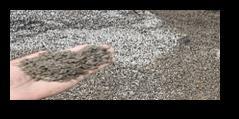
Plastic Waste: Collect the plastic waste such as polyethylene terephthalate (PET) and high-density polyethylene (HDPE), or low-density polyethylene (LDPE). Clean the collected plastic waste and shreddeditinshreddingmachine.theplasticcutinto smallpiecesforpropermixinginconcretebrick.
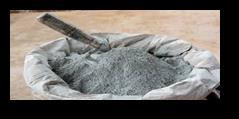
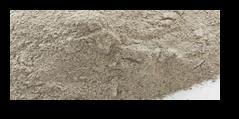
OtherMaterials:Collectcement,sand,Gritaggregates, flyash,orothersupplementarymaterialslikeglass powder.Andpreparetheconcretemixaccordingto theproportion.
MaterialusedforPlasticBrick
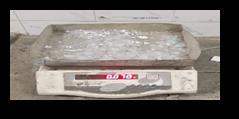
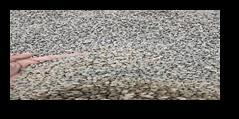
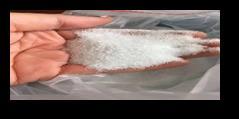
International Research Journal of Engineering and Technology (IRJET) e-ISSN: 2395-0056
Volume: 12 Issue: 06 | Jun 2025 www.irjet.net p-ISSN: 2395-0072
Mix Design
ThemixdesignispreparedbyusingtheIndianStandard (IS)codemethodfornominal concreteandensuringa proper balance between strength and workability of concrete.
ReplacementLevels:Plasticwasteandglasspowderis incorporatedatdifferentreplacementlevelssuchas5%, 10%and15%byweightofthematerials.
Table -1: Mixdesign
Data:
BrickSize=190×90×90
Mixproportionofconcrete=1:1.5:3(Cement:Sand:Grit Aggregate)
Gradeofconcrete=M20
Water-CementRatio=0.5
CuringMethod=Watercuring
AggregateType=GritAggregate
Replacement:1.10%cementreplacedbyflyash2.5% sand replaced by crushed glass powder 3. 15% Grit aggregatereplacedbyshreddedplasticwaste
Plastic Processing
Plastic mixing with Other Materials: Combine the shreddedplasticwaste,glasspowderandflyashwith sand, cement, or other additives to create a homogenousmixtureofaconcrete.
Casting and Molding
Pour the prepared mixture of concrete mix into the brick moulds. Using compression techniques to achieve the uniform density and strength of plastic brick.
Compact the material by using tamping rod or vibration table to eliminate air gaps and improve bondingbetweenmaterial.
Curing
Allowthemoldedbricksforcuringnaturallyinwater for 24 hour and after that allow it in a controlled environment to achieve the required strength. A
normalcuringperiodis7–28days,dependingonthe materialusedformoldingabrick.
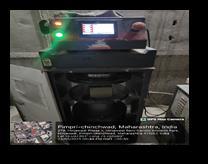
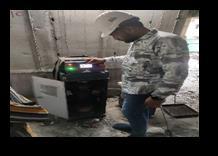
1. CompressiveStrengthTest
2. Waterabsorptiontest
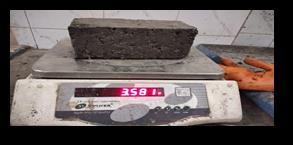
3. Weighttest
Table no 2: Compressivestrength
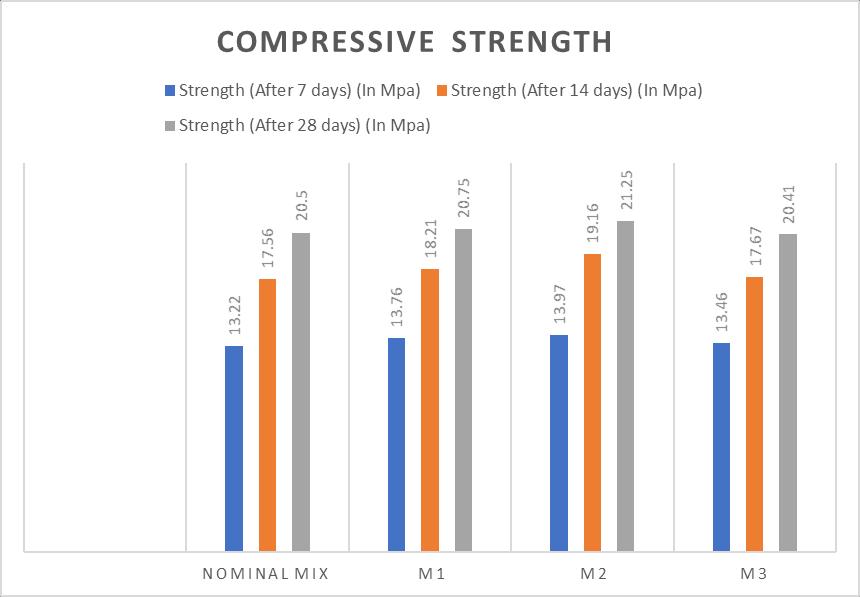
-1:Compressivestrength
International Research Journal of Engineering and Technology (IRJET) e-ISSN: 2395-0056
Volume: 12 Issue: 06 | Jun 2025 www.irjet.net p-ISSN: 2395-0072
Table no 3: Waterabsorptiontest
Table no 7: Totalcost(M3)
Cost Calculation
DensityofConcrete:2400kg/m³
Weightofonebrick=VolumeofBrick×Densityof Concrete hencetheWeightofonebrick=0.001539×2400=3.581 kg≈3.69kg
GivenMixRatio:1:1.5:3(Cement:Sand:GritAggregate) Totalparts=5.5parts
Table no 4: Totalcost(M0) Material
Table no 5: Totalcost(M1)
Table no 8: FinalCostperBrick
FinalCostperBrick
Table no 6: Totalcost(M2)
Recycledplasticwasteisthewidelydiscussedsustainable alternative solution in construction materials. This study focusesontheeffectiveuseofwastematerials,particularly plastic and glass, which are commonly discarded and contribute to environmental pollution. By searching these wasteproductsfromlocalscrapmarkets,thesestudyaimsto promoteeco-friendlypracticesintheconstructionindustry sector. Various laboratory tests such as compressive strengthtestsandwaterabsorptiontests,hasconductedto evaluatethestructuralanddurabilitypropertiesofplastic andglasscontainbricks.
The result indicates that the optimal replacement ratio of 10%flyash,5s%glasswaste,and15%plasticwasteinplace oftraditionalGritaggregateprovidesthegoodbalanceofthe strength and durability. This combination increases the brick’s sustainability while maintaining its mechanical performance. But, the exceeding of these replacement percentagesnegativelyimpactsthecompressivestrengthof the brick and making it less suitable for load-bearing
International Research Journal of Engineering and Technology (IRJET) e-ISSN: 2395-0056
Volume: 12 Issue: 06 | Jun 2025 www.irjet.net p-ISSN: 2395-0072
applications. The findings highlight the potential use of plasticandglasswasteasviablesubstitutesinconstruction materialsandofferingboththeenvironmentalbenefitsand economic feasibility. Incorporating such plastic and glass wastematerialsinproductionofbrickreducesthelandfill waste and decreases the utilization of a natural resources such as sand, and contributes to sustainable construction. Further studies can be exploring the mix proportions, enhancingdurability,andoptimizinglarge-scaleproduction ofplasticbrickstoencouragebroaderadoptionofrecycled materialsintheconstructionindustry. Conclusioncontentcomeshere
[1] A.S.A.B.P.A.J.AkhilMathaiVarkey,"Developmentof ConcreteBrickUsingRecycledPlasticandGlassWaste," International Journal of Engineering Research & Technology(IJERT),vol.11,no.02,2023.
[2] K.S.M.P.L.P.U.S.R.S.Kognole1,"UtilizationofPlastic wasteforMakingPlasticBricks,"InternationalJournal of Trend in Scientific Research and Development (IJTSRD),vol.3,no.4,2019.
[3] K.D.M.I.a.I.E.YaraEl-Metwally1*,"Optimizationof plasticwasteintegrationincementbricks,"Journalof EngineeringandAppliedScience,p.13,2023.
[4] A.F.Ikechukwu,"Strengthanddurabilityperformance of masonry bricks produced with crushed glass and meltedPETplastics,"sciencedirect,vol.14,2021.
[5] R. Kumar, "A review on utilization of plastic waste materials in bricks manufacturing process," sciencedirect,vol.46,2021.
[6] [1]AnubhavVerma,"ManufacturingofBrickbyWaste Plastic,"InternationalJournalofEngineeringResearch inMechanicalandCivilEngineering,vol.9,no.6,p.5, 2022.
[7] S. C. I. A. F, "Strength and Durability Performance of Masonry Bricks Produced with Crushed Glass and Melted PET Plastics," Case Studies in Construction Materials,vol.14,2021.
[8] R.N.S.M.R.Singh,"IncorporationofGlassandPlastic Waste into Alkali-Activated Mill Residue Bricks," sceincedirect,vol.14,2022.
[9] N.K.Koppula,"FabricationandExperimentalAnalysis of Bricks Using Recycled Plastics and Bitumen," Incorporation of Glass and Plastic Waste into AlkaliActivatedMillResidueBricks,vol 7,no.13,2024.
[10] J Schuster,"AnEvaluationoftheUseofPlasticWastein the Manufacture of Plastic Bricks," Discover Civil Engineering,vol 9,no.7,2024.
[11] A M Varkey, "Development of Concrete Brick Using RecycledPlasticandGlassWaste,"InternationalJournal ofEngineeringResearch&Technology,2023.
[12] S.-L Mak,"AReviewonUtilizationofPlasticWastesin Making Construction Bricks," IOP Conference Series: EarthandEnvironmentalScience,vol 14,no.2,2021.
[13] I. R. P. Kumar, "Utilization of Waste Plastic in ManufacturingofBricks,"SolidStateTechnology,vol 63,no.4,2020.
[14] F.I.Aneke,"DurabilityAssessmentandMicrostructure of High-Strength Performance Bricks Produced from PETWasteandFoundrySand,"Materials,vol.14,no.2, 2021.
[15] N K.Koppula,"FabricationandExperimentalAnalysis ofBricksUsingRecycledPlasticsandBitumen,"Journal ofCompositesScience,vol.7,no.3,2023.
[16] M E Rahman,"UtilizationofBlendedWasteMaterials inBricks,"Technologies,vol 6,no.1,2018.