
International Research Journal of Engineering and Technology (IRJET) e-ISSN: 2395-0056
Volume: 12 Issue: 03 | Mar 2025 www.irjet.net p-ISSN: 2395-0072
International Research Journal of Engineering and Technology (IRJET) e-ISSN: 2395-0056
Volume: 12 Issue: 03 | Mar 2025 www.irjet.net p-ISSN: 2395-0072
Duaa J. Dheaa1 , Abdullah A Khader2 , Mohammed M. Hamied3
1,2,3 Department of medical Physics , College of Sciences, Al-Mustaqbal University , 51001, Babylon, Iraq
Abstract - Ultraviolet (UV) sterilization is an effective disinfection method widely used in healthcare, water treatment, and air purification systems. This study explores the mechanisms of UV sterilization, particularly the role of ultraviolet-C (UVC) radiation in disruptingmicrobialDNAand RNA, preventing the replication of bacteria, viruses,andfungi. The research highlights the historical evolution of UV sterilization, its applications in modern industries, and its increasing relevance in infection control, particularly during the COVID-19 pandemic. This research aims to provide a comprehensive analysis of UV sterilization technology, its benefits, limitations, and future prospects in enhancing public health and industrial hygiene. Findings suggest that while UV sterilization is a powerfuldisinfectiontool,furtherinnovations are required to optimize its efficiency, safety, and accessibility in diverse settings.
Key Words: UltravioletRadiation,Sterilization,healthcare
1.INTRODUCTION
Ultraviolet (UV) sterilization is a disinfection method that usesshort-wavelengthultravioletlight(UVC)todestroythe DNAorRNAofmicroorganisms.WhenexposedtothisUV light,bacteria,viruses,andfungidisruptedandthismadeas unable to replicate or infect, effectively neutralizing them [1]
Thismethodishighlyvaluedforitsefficiency,asitdoesn’t involve harmful chemicals and leaves no residue. UV sterilization is eco-friendly and widely adopted for applications requiring high levels of hygiene, such as hospitals,foodprocessing,andwatertreatment[2].Theuse ofUVlightforsterilizationstartedintheearly1900swhen scientistsdiscoveredthatitcouldkillgermslikebacteriaand viruses[3].In1903,ascientistnamedNielsFinsenshowed that UV light could treat certain skin diseases, winning a NobelPrizeforhiswork.Soonafter,peoplebeganusingUV light to clean water [4]. In 1910, a city in France used UV light to disinfect its water supply, making it safe to drink. ThiswasoneofthefirstbigusesofUVsterilization[5] Also, UV sterilization can be found in everyday life, i.e. many people use small UV devices to clean things like toothbrushesandmobilephones.FactoriesuseUVlightto sterilizemedicaltoolsandpharmaceuticalproducts.It’salso used in heating and cooling systems to keep air clean. UV sterilizationispopularbecauseitisfast,doesn’tuseharmful
chemicals,andleavesnoresidue,makingitsafeforpeople andtheenvironment[6]
Ultraviolet sterilization is an one of essential tool in healthcare for maintaining cleanliness and preventing the spreadofinfections.
• Hospitals; use UV light to sterilize surgical instruments, patient rooms, and high-touch surfaces like doorhandlesandbedrails.Inoperatingrooms,UVrobots aredeployedtoensurethoroughdisinfection,especiallyin hard-to-reach areas, fig. 1. This method is particularly effectiveincombatingantibiotic-resistantbacteriasuchas Methicillin-resistantStaphylococcusaureus(MRSA),which aredifficulttoeliminateusingtraditionalcleaningmethods [7].
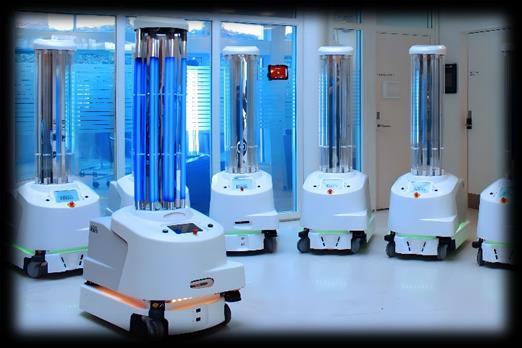
Fig -1:Ultravioletsterilizationbyrobotsindeferent departmentinhospital[8].
TheeffectivenessofUVsterilizationdependsonseveral factors that determine how well the UV light reaches and neutralizesmicroorganisms,including;
• Distance: one of the most critical factors which deepenedwhopersonwasneartosource[9].
• Intensity:theUVlightdecreasessignificantlyasthe distance from the light source increases. For effective
International Research Journal of Engineering and Technology (IRJET) e-ISSN: 2395-0056
Volume: 12 Issue: 03 | Mar 2025 www.irjet.net p-ISSN: 2395-0072
sterilization,thelightsourceneedstobepositionedasclose tothetargetsurfaceorareaaspossible[10].
• Time: exposure time is another key factor in efficiency. Longer exposure ensures that microorganisms receiveenoughUVradiationtodamagetheirDNAorRNA, effectivelykillingorinactivatingthem.However,excessive exposuremaydegradecertainmaterials,suchasplasticor rubber. The cleanliness of surfaces also impacts UV sterilization[11]
The sterilization device contains a UV-C light source (usually low-pressure mercury lamps or tubes).When the deviceisturnedon,theUV-Clightemittedfromtheselamps ortubesisdirectedtowardthemedicalinstruments.
- When microorganisms such as bacteria and viruses are exposedtoUV-Clight,theyabsorbitsenergy,whichaffects their DNA (Deoxyribonucleic Acid) or RNA (Ribonucleic Acid). This interaction causes damage to their genetic material,preventingthemfromreproducingormakingthem unabletocauseinfections.
-UVlightcausesthebreakdownofchemicalbondswithin theDNAorRNAmoleculesofmicroorganisms.Thisdamage totheirgeneticmaterialhaltsthereproductionprocessof themicroorganisms,effectivelyeliminatingthem.
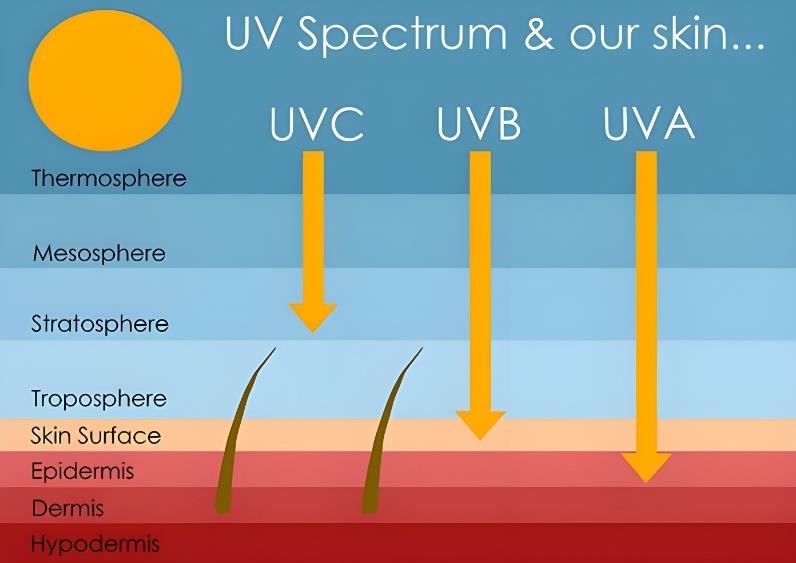
TheUVlightisdividedintothreemaintypesdeepenedon itswavelengthtoUVA,UVB,andUVCwhichwasexplainin table(1-1)andfig(1-1).
Table -1: Table(1-1):categoryofultravioletlightwith theircharacteristics[12].
/ Applications
reach toearth
Reachesthe Earth'ssurface naturally Limited sterilizationpower; primarilyusedfor cosmeticpurposes (e.g.,tanningbeds) andminor damage Causesskin tanning,aging,
sunburn andsomeDNA
sterilization;used invitaminD synthesisandUVB lampsforcertain therapies damage
Highlyeffectivefor sterilization;used inwatertreatment, airpurification,and surfacedisinfection bydamaging DNA/RNA
Partiallyreaches theEarth's surface
Doesnot naturallyreach theEarth's surface;blocked bytheozone layer
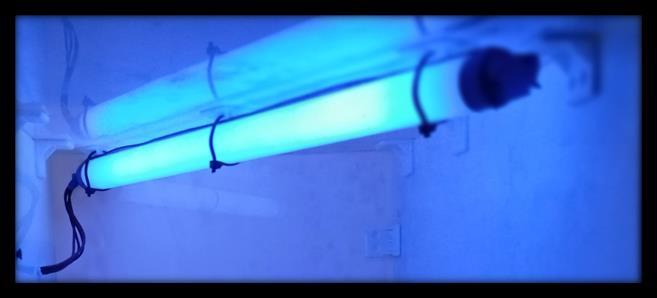
a- UV-C lamps or tubes.
Low-pressuremercurylampsortubesaretheprimarysource ofultraviolet(UV-C)radiationinthedevic.
b-Sterilization chamber or treatment room
It contains an open sterilization chamber where medical instrumentsareplaced.
Afterthetextedithasbeencompleted,thepaperisreadyfor thetemplate.DuplicatethetemplatefilebyusingtheSaveAs command,andusethenamingconventionprescribedbyyour conferenceforthenameofyourpaper.Inthisnewlycreated file,highlightall ofthecontentsandimportyourprepared textfile.Youarenowreadytostyleyourpaper.
International Research Journal of Engineering and Technology (IRJET) e-ISSN: 2395-0056
Volume: 12 Issue: 03 | Mar 2025 www.irjet.net p-ISSN: 2395-0072
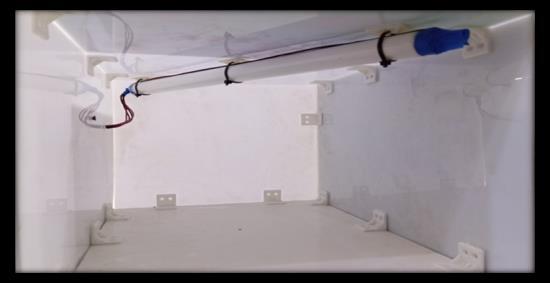
treatmentroom C- LED display and control unit.
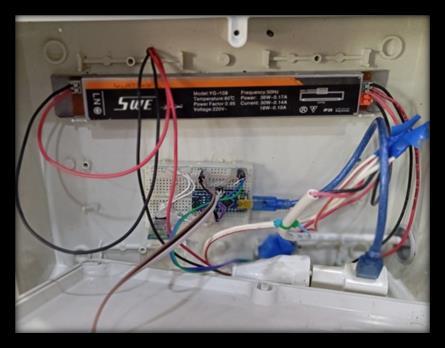
Fig-5: controlunit
TheUVSterilizationProcess:
*Placinginstrumentsinthesterilizationdevice:Themedical instruments are placed in the designated UV sterilization device.
* Proper light exposure: Ensure that all surfaces of the instruments needing sterilization are exposed to the UV light.
*Turningonthedevice:Thedeviceisactivated,andUV-C raysareemitted.
TheUVsterilizationprocessisaneffectiveandsafemethod for disinfecting medical instruments. By placing the instrumentsinthedesignatedsterilizationdevice,ensuring all surfaces are properly exposed to the UV light, and activatingthedevicetoemitUV-Crays,harmfulgermsand microbesareeffectivelyeliminated.Thisprocessprovidesa highlevelofcleanlinessandsterilization,helpingtoreduce the risk of infections and enhancing patient safety in healthcaresettings.
ACKNOWLEDGEMENT
Iwouldliketoexpressmysinceregratitudetoallthosewho havesupportedandcontributedtothesuccessfulcompletion
ofthisprocess.Specialthankstothemedicalprofessionals and researchers who continue to advance sterilization methods, ensuring the safety and well-being of patients. I alsoappreciatethemanufacturersofUVsterilizationdevices for their innovation in providing effective solutions for disinfection.Lastly,Iamthankfulforthevaluableinsights providedbycolleaguesandexpertsinthefield,whichhave greatly contributed to my understanding of this essential process
[1] Turtoi, M. (2013). Ultraviolet light potential for wastewater disinfection. Annals of Food Science and Technology,14(1),153-164.
[2] Otto,C.,Zahn,S.,Rost,F.,Zahn,P.,Jaros,D.,andRohm,H. (2011).Physicalmethodsforcleaninganddisinfection ofsurfaces.FoodEngineeringReviews,3,171-188.
[3] Koca, N., Urgu, M., and Saatli, T. E. (2018). Ultraviolet light applications in dairy processing. Technological approachesfornovelapplicationsin dairyprocessing, 1,1-20.
[4] Jarrett, P., and Scragg, R. (2017). A short history of phototherapy, vitamin D and skin disease. Photochemical and Photobiological Sciences, 16, 283290.
[5] Gibson, J., Drake, J., and Karney, B. (2017). UV disinfection of wastewater and combined sewer overflows. Ultraviolet light in human health, diseases andenvironment,267-275.
[6] Linden,K.G.,Hull,N.,andSpeight,V.(2019).Thinking outsidethetreatmentplant:UVforwaterdistribution system disinfection. Accounts of chemical research, 52(5),1226-1233.
[7] Steinberg,J.P.,Denham,M.E.,Zimring,C.,Kasali,A.,Hall, K. K., and Jacob, J. T. (2013). The role of the hospital environmentintheprevention ofhealthcare-associated infectionsbycontacttransmission.HealthEnvironments ResearchandDesignJournal,7(1),46-73.
[8] Khanna,S.,andSrivastava,S.(2022).TheEmergenceof AI based Autonomous UV Disinfection Robots in Pandemic Response and Hygiene Maintenance. InternationalJournalofAppliedHealthCareAnalytics, 7(11),1-19.
[9] Bellia,L.,Bisegna,F.,andSpada,G.(2011).Lightingin indoor environments: Visual and non-visual effects of lightsourceswithdifferentspectralpowerdistributions. Buildingandenvironment,46(10),1984-1992.
[10] Chen,J.,Loeb,S.,andKim,J.H.(2017).LEDrevolution: fundamentals and prospects for UV disinfection
International Research Journal of Engineering and Technology (IRJET) e-ISSN: 2395-0056
applications. Environmental Science: Water Research andTechnology,3(2),188-202.
[11] Gray, N. F. (2014). Ultraviolet disinfection. In Microbiologyofwaterbornediseases.617-630
[12] Wang,Y.,Marling,S.J.,McKnight,S.M.,Danielson,A.L., Severson,K.S.,andDeluca,H.F.(2013).Suppressionof experimental autoimmuneencephalomyelitisby300–315nmultravioletlight.Archivesofbiochemistryand biophysics,536(1),81-86.
[13] Roy, C., and Gies, P. (2017). UVR and Short‐Term Hazards to the Skin and Eyes. Non‐ionizing Radiation Protection: Summary of Research and Policy Options, 47-66.
BIOGRAPHIES
Volume: 12 Issue: 03 | Mar 2025 www.irjet.net p-ISSN: 2395-0072 © 2025, IRJET | Impact Factor value: 8.315 | ISO 9001:2008
Lecture doctor in al mustaqbal universityservesasaplatformfor intellectualgrowth,collaboration, and the sharing of knowledge, all contributing to the overall developmentofstudentsasfuture leadersintheirrespectivefields.
|