
International Research Journal of Engineering and Technology (IRJET) e-ISSN: 2395-0056
Volume: 13 Issue: 03 | Mar 2026 www.irjet.net p-ISSN: 2395-0072
International Research Journal of Engineering and Technology (IRJET) e-ISSN: 2395-0056
Volume: 13 Issue: 03 | Mar 2026 www.irjet.net p-ISSN: 2395-0072
Abstract - The COVID-19 pandemic has resulted in the massive generation of biomedical waste (BMW) and plastic waste (PW). This sudden spike in BMW and PW has created challenges to the existing waste management infrastructure, especially in developing countries. Safe disposal of PW and BMW is essential; otherwise, this virus will lead to a waste pandemic. This paper reviews the generation of BMW and PW before and during the COVID- 19 pandemic, the regulatory framework for BMW management, policy interventions for COVID-19-based BMW (C-BMW), the capacity of BMW treatment and disposal facilities to cope with the challenges, possible management strategies, and perspectives in the Indian context. This study indicated that policy intervention helped minimize the general waste treated as C-BMW, especially during the second pandemic. Inadequacy of common BMW treatment facilities’ (CBMWTFs) capacity to cope with the BMW daily generation was observed in some states resulting in compromised treatment conditions. Suggestions for better management of BMW and PW include decontamination of used personal protective equipment (PPEs) and recycling, alternate materials for PPEs, segregation strategies, and use of BMW for coprocessing in cement kilns. All upcoming CBMWTFs should be equipped with higher capacity and efficient incinerators for the sound management of BMW. Post-pandemic monitoring of environmental compartments is imperative to assess the possible impacts of pandemic waste.
Key Words: PPE, Bricks, Biomedical waste, masks, recycle, waste management
Maharashtratoppedthecountryinthegenerationofbio-medicalwasteat8,317tonnesbetweenJune2020andJune2021, accordingtoadocumentsubmittedbytheMinistryofEnvironment,ForestandClimateChangeinLokSabha.
This is a quantum leap from 2019-20 when only 62.3 tonnes of bio-medical waste was generated. The report states that India generated 56,898.4 tonnes of Covid-19 Bio-Medical Waste (BMW) between June 2020 and June 2021. Maharashtra wasfollowedbyKerala(6,442tonnes),
Gujarat(5,004),TamilNadu(4,835),Delhi(3,995),Uttar Pradesh(3,881)andKarnataka(3,133). The bio-medical waste increased with the rise in hospitalizationsinmanystatesduringthesecond waveanditspeak during Maythis year. PPE kits,glovesandmasksformthebulkoftheCovidwaste.
Wastesarematerialsthatarenotneededandarenotusableeconomicallywithfurtherprocessing.Itmaybeintheformof solid,liquid,orgas.Theyoriginatefromhumanactivitiessuchasagriculture,industry,domesticactivitiesetc.Accordingto theorigin,wasteisclassifiedasdomestic,industrial,commercial,clinical,construction,nuclear,andagricultural.According topropertieswasteisclassifiedasinert,toxic,andinflammable.Ifthesewastesremainuntreated,itleadstoair,water,soil orsolidwastepollution.Hence,solidwastemanagementisvery essential.
In an affluent society, the per capita consumption is very high and people discard many items regularly, which increase solidwastetoalargeextent.
1.1 Brick 2.0
The used masks are collected in bins and are kept isolated for over 72 hours. The masks are carried to the factory and emptied in a disinfectant chamber. Here, the masks are left for about 4 to 5 hours in order to eliminate any active microorganisms. The masks are then shredded and mixed with paper sludge and binder (adhesive). The mixture is then placedinabrick-shapedmould.Thesebricksareimmediatelytakenoutofthemouldanddriednaturally(airorsundry). The produced bricks contain about 52 % of PPE material, 45% of paper sludge and 3% adhesive. This brick is 3 times strongerthanthenormalbakedbricks.
Thesebricksaremadeinthedimensionsof20x10x5cm.About7kgofbiomedicalwasteisusedtomake2sq.ft.ofbricks. ThesebricksarewaterandfireresistantandalsocostonlyRs.4perpiece.
International Research Journal of Engineering and Technology (IRJET) e-ISSN: 2395-0056
Volume: 13 Issue: 03 | Mar 2026 www.irjet.net p-ISSN: 2395-0072
HousingSocietiescancollectusedfacemasksandsendtothefactory.Hospitalssendtheirwastethroughcertifiedmedical wastedisposers.Boththesewastesundergospecifictreatmentbeforetheyareconvertedintobricks.
PPE material (chemically known as Polyphenylene Ether) is manufactured by Engineer in standard stock shapes for machining and is extruded in sheets and rods. PPE polymer exhibits unusually low moisture absorption because of its inherent composition. Therefore, good electrical insulating properties are achieved over a wide range of humidity and temperature conditions. Chemical attack from water, most salt solutions, acids and bases is also minimal with PPE material.
PPE MATERIAL PROPERTIES AND SPECIFICATIONS
Goodelectricalinsulatingproperties
Longtermdimensionalstability
Superiorimpactstrength
Lightweight
Thermoformablecapability
Goodhydrolyticstability
TYPICAL PPE APPLICATIONS
Mechanicalengineering
Foodprocessing
Conveyingtechnology
Automotiveparts
Electricalengineering
Homeappliances
CHARACTERISTICS OF PPE
Themajorcharacteristicsoftheseassetsare:
o They are acquired for use in the operations of the business -theyarenotforsale.Iftheyarenotused in normal businessoperations,theyshouldnotbeclassifiedasproperty,plantandequipment.
o They are long-term in nature and normally subject to depreciation. These assets represent a bundle of future economicbenefitsthatwillbereceivedbythecompanyoverthelivesoftheassets.Theinvestment(cost)inthese assetsisallocated,throughdepreciationchargesfortheyearsofeconomicbenefitstheyprovide.
o Theypossessaphysicalsubstancethatis,theyhaveaphysicalformthatcanbeseenandtouched.
The world was facing a major crisis in the past two years where everyone was locked up in their homes because of the coronavirus.ItwasmademandatorytousefacemasksandPPEkitsoutsideourhouses.Andafterusageofthismasksand PPE kits proper disposal was an issue. Proper management of such waste is not done appropriately. The Covid-19 pandemichasresultedinanincreaseinbiomedicalwasteinthestate,worryingenvironmentalexpertsasthegenerationof biomedicalwasteperdayhasgoneupby5.5tonseverydayto23,500kgperdaynowfromaround18,000kgin2019.So, theconceptofmakingsuchbricksfrommasksandPPEkitsisbasicallytoutilizesuchwasteinordertoreducethewaste and consume it for a better purpose which will help society, also it will have a great contribution to the construction industry.
Inthismodernizinggrowthoftheworld,everythinghastakenaleapregardingfinancialexpensesandmanyotherthings. Theconstructioncostsalsohaverisenfromasitwasbefore.Inconsiderationofsuchissues,thismanufacturingofbricks willhelptheconsumersabetterfinancialstate,aswellasthesociety,willbebenefitedfromit.
India generates 62 million tons of waste each year. About 43 million tons (70%) are collected of which about 12 million tonsaretreatedand31milliontonsaredumpedinlandfillsites.
International Research Journal of Engineering and Technology (IRJET) e-ISSN: 2395-0056
Volume: 13 Issue: 03 | Mar 2026 www.irjet.net p-ISSN: 2395-0072
With changing consumption patterns and rapid economic growth, it is estimated that urban municipal solid waste generationwillincreaseto165milliontonsin2030.
2.1 Processes involved in manufacturing of bricks.
So,thefirstdifficultywashowtocollectmasksandPPEkitasitisourmainingredientintheproject. First,wethoughtthat wewouldbeabletocollectmasksforourpersonalusei.e.,fromourfamilymembers.Butlaterweknewthiswouldtakea lot of time. Then we requested hospitalstoprovideus withtheusedmasksand PPEkitbut they denied itas itwasvery riskytohandletheinfectedmasksandPPE.Aftersomerequestsfromourfamilydoctor,theyprovideduswiththeunused PPEkitwhichwaslaternotusedbythedoctorsastheofpatientswasdecreasing.Butthecollectionofmaskswasstillan issue.So,wewentbigfromcollectingmasksonlyfromourhometocollectingthemfromoursociety.
Weput thenoticeofourprojectandwene edonlysurgical masks on the society notice board and everyone supported ourideaandhelpeduscollectthemasks.Laterwemadeourowndustbinandplaceitneartheelevatorsotheycandispose oftheirmasksattheendoftheday.Thispracticewasstartedinmid-Febandcontinuedfor2months.
Thevery nextstepwas todisinfect the masks. Forthis we took a bucket and placed masks in it and added water till the masks was totally immersed in the liquid and the we added antiseptic disinfecting liquid which is available in every medicalstoreandkeptitsideforatleast72hrs.
After that, we made moulds forcasting the bricks and theimensionwe used was 20*10*10 slightly biggerthan our brick size. The material we used to make our mould was an MS sheet of 0.5mm thickness which is lightweight and easy for handling and cutting. This making of Mould was carried out in the college workshop where all the equipment was availablelikeahammer,sheetcuttingmachine,heavy-dutyclamp,andspot-weldingmachine.
Othermaterial whichwerequiredtomake brick wasbinder(cement),sand,oilandnewspaper,admixture.This material was collected from the site. Our first step in the making of bricks was to shred the masks and PPE kit. the shredding of masksandPPEwasdonemanually.
Butwhenwemadeourfirsttrialbrickthesizeofthemaskwastoobigandaswecanseefromthepicturethemaskwas seenonthesurfaceandwasnotbondedproperlywiththebinderandpapersludge thatwelaterchange theprocessand tryto shred PPE byvegetableshredder. Themaskswe receive were perfectlyshredded butasmaskswere gettingstuck the process was very slow so again, we change the process and started doing it with scissors into very fine pieces. Shreddingpaperwasnotadifficulttask.Weaddedwatertothepapertillthepaperisimmersedandthentryingittomake papersludgebymixingitmanually.Thesludgewemadewasverygoodbutasweweredoingitmanuallytheprocesswas taking a lot of time. Then we shifted from manual mixing to automatic mixing. We used a drill machine and attached bladestoshredpaperintosmallpiecesandthenaperfectlyfinepapersludgewasready.
As mentioned earlier in our first trial brick we first took the masks and then added binding material and at the end, we addedpapersludge.So,theresultwasnotthatgoodaswecanseefromthepicturethematerialswerenotproperlymixed. So,inourtrial 2brick,wefirsttookpapersludgeandadded bindingmaterial toitmixingitproperlybyhand andatthe end,weaddedshreddedmasks.Theresultofthismethodwasverygoodandlaterwestartedexecutingourbricksbatchwise. Before placing the mixturein the mould, we applied oil in the mould so the brick will be removed from the mould easily.Afterthemixturewasready,weplacedthemixtureinthemouldin3 layersandhandcompacteditineverylayer. Thenkeepitsetfor5-6hrs.Afterthebrickissetproperlyandtooktheshapeofthemould.Removeitfromthemouldand sun-driednaturallyfor48hrs.
Thedifferentproportionsweusedtoseethepossibilitiesaffectingthepropertiesofthebrick.
o Forpapersludge–10%=100gms
o Cement–5%=200gm
o Sand–5%=150gms
International Research Journal of Engineering and Technology (IRJET) e-ISSN: 2395-0056
Volume: 13 Issue: 03 | Mar 2026 www.irjet.net p-ISSN: 2395-0072
o Masks–10%=50gms WecategorizethebricksT1(trial1brick),T2(trial2brick),B1(batch1brick),B2(batch2brick),B3(batch3brick).
T1 BRICK
Mask–20%(dry)=100grams
Papersludge–70%=700grams
Binder–5%=150grams
T2 BRICK
Mask–20%(wet)=100grams
Papersludge–70%=700grams
Binder–5%=200grams
Sand–5%=150grams
B1 BRICK
Mask–20%(wet)=100grams
Papersludge–70%=700grams
Binder–5%=200grams
Sand–5%=150grams
Admixture–30ml(plasticizer)
B2 BRICK
Mask–30%(wet)=150grams
Papersludge–60%=600grams
Binder–5%=200grams
Sand–5%=150grams
Admixture–30ml(plasticizer)
B3 BRICK
Mask–10%(wet)=50grams
Papersludge–80%=800grams
Binder–5%=200grams
Sand–5%=150grams
Admixture–30ml(plasticizer)
2.2 TESTS PERFORMED
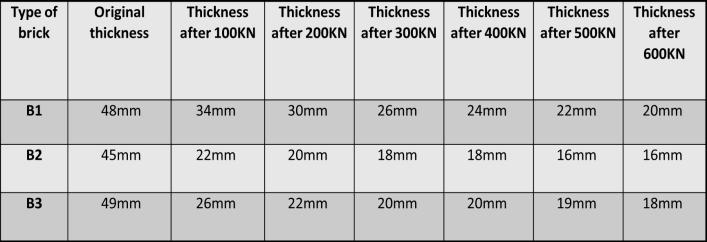
1. Compaction Test
Acompactiontestwasperformedonthebricks.ThistestwasperformedonaUniversalTestingmachine Initially,wenoted downthethicknessofthe brick of eachbatchandgraduallystartedloadingwith100KNupto600KN andtheresultswegotarebelow:
2. Drop Test
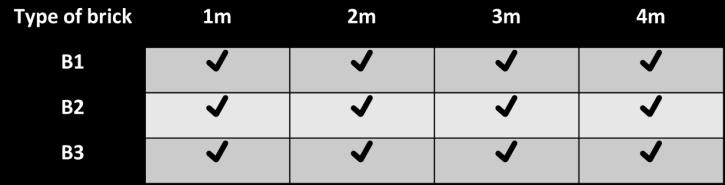
Thedroptestwasperformedmanuallyinwhichwedropped eachbrickfromeachbatchfromaheightof1m,2m,3mand 4m.Weobservedthatevenafterfallingfrom4mofheightthebrickdidn’tbreakalsoifwefurtherdroppeditfromaheight ofmorethan4mitwouldalsohavesurvived.Theresultsofthedroptestareasfollows:
International Research Journal of Engineering and Technology (IRJET) e-ISSN: 2395-0056
Volume: 13 Issue: 03 | Mar 2026 www.irjet.net p-ISSN: 2395-0072
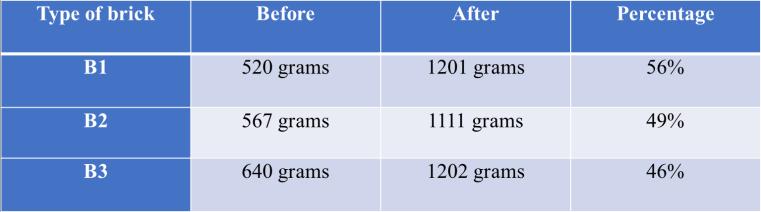
Inthis,wesoakedeachbrickinwaterfor24hoursinwhichwerecordedtheweightofthe brick beforesoakingandafter soakingandwegotthefollowingresults:
Fire resistance tests are intended to assess the performance of elements of construction for their load- bearing or fire separatingproperties–usuallytermedtheir fire resistance – for their regulated use in buildings. We performed this by burningthebricksfromasinglesurfaceandafterawhileweobservedthatthebrickdidn’tcatchfirebutaspapersludge wasinvolvedintheprocesshencethebrickwasdeterioratingaftersometime.
Afterallthesuccessfulresultsfoundfromallthetests.WefoundoutthattheBrickfrombatch1wastheidealorthebestof alltheproportionsweassumedandperformed. Thisbrickthatwemadeislightweight,easytohandle,canresistagreat amount of compaction, gave us an excellent result in water absorption, and was able to survive the drop test in which it was dropped from a height of more than 4m. Also, the fire test performed on the brick gave us satisfactory results Another advantage of this brick that we would like to mention is that this brick is not brittle in nature but gives a great strengthsoifanystructuretendstobendoveraperiodwewouldgetanideathatitneedstoberepairedormaintainedis neededitwon'tdirectlycollapseitwouldusakindofwarningregardingtherepairs
Thisbrickcanbeusedinpartitionwalls,compoundwalls,anunimportantstructureorinanystructureinwhichwedon't wanttoinvestmuch. Asweknowthatthisbrickhasalowdensityandhenceporosityofthebricksarehigh. Due to this water absorption of the bricks is also high. So, the future extension of the project will be to make this brick water-resistant. If the water-resistant ability becomes successful then this will simultaneously affect in the increase of compressivestrengthofthebricks. Ifbio-medicalwasteisusedintheconstructionfieldafterrecyclingtheconstruction costoftheprojectwillbedrasticallyreducedwithoutaffectingthequalityofthestructure.
Ifthisprojectiscarriedoutonalargescale,notonlypollutioncausedduetotheincinerationwillbeminimal,butalsothe constructioncostofthestructureisreduced.Brick2.0canbethefutureoftheconstructionindustryifproperawarenessis spreadamongthepeople.
International Research Journal of Engineering and Technology (IRJET) e-ISSN: 2395-0056
Volume: 13 Issue: 03 | Mar 2026 www.irjet.net p-ISSN: 2395-0072
1. MinistryofEnvironment,Forest,andClimateChange.NewDelhi:Biomedicalwastemanagementrules;March. 2016:1–63.
2. Chand S, Shastry CS, Hiremath S, Joel JJ, Krishnabhat CH, Mateti UV. Water, sanitation, hygiene and biomedicalwastedisposalinhealthcaresystem:areview. Biomedicine.2020;40:14–19, 01.
3. Us Census Bureau Current Population. https://www.census.gov/popclock/print.ph =p?component counter. AccessedSeptember25,2020.
4. Worldometer.Coronaviruscases.https://www.worldometers.info/coronavirus/.AccessedNovember9,2020.
5. Ramteke S, Sahu BL Novel coronavirus disease 2019 (COVID-19) pandemic: considerations forthebiomedical waste sector in India. Case Studies in Chemical and Environmental Engineering. https://doi.org/10.1016/j.cscee.2020.100029.
6. AnwerM,FaizanM.SolidwastemanagementinIndia underCOVID19pandemic:challengesandsolutions.IntJ EngResTechnol.2020;9:368–373,06.
7. Ranjan MR, Tripathi A, Sharma G. Medical waste generation during COVID-19 (SARS-CoV-2) pandemic and its management:anIndianperspective.AsianJournalofEnvironment&Ecology.2020;13(1):10–15.
8. NDTV Report on Biomedical Waste. https://swachhindia.ndtv.com/coronavirus-pan demic- exposes-brokensystem-of-bio-medical-waste- management-experts-dis cuss-the-issue-and-solutions- 49427/. Accessed November10,2020.
9. CentralPollutionControlBoard.https://cpcb.nic.in/.AccessedNovember10,2020.
10. Daily Guardian on Biomedical Waste. https://thedailyguardian.com/biomedical -waste- management-in-thetime-of-coronavirus/.AccessedNovember 10, 2020.
2026, IRJET | Impact Factor value: 8.315 | ISO 9001:2008 Certified Journal | Page1036