
International Research Journal of Engineering and Technology (IRJET) e-ISSN:2395-0056
Volume:13Issue:04|Apr2026 www.irjet.net p-ISSN:2395-0072

International Research Journal of Engineering and Technology (IRJET) e-ISSN:2395-0056
Volume:13Issue:04|Apr2026 www.irjet.net p-ISSN:2395-0072
Yash Paraskar 1 , Sushrut Morde2 , Aarohi Gholve3 , Ziya Attar⁴, Nitish Das⁵
¹²³´ Student Authors, Department of Computer Science MIT ADT University, Pune, India µ Faculty Advisor, Department of Computer Science MIT ADT University, Pune, India ***
Abstract - Log analysis is an important part of keeping an eye on systems, keeping them safe, and working in DevOps. But traditional methods depend a lot on manual inspection and rule-based systems, which are not very efficient and can’t be changed. This paper introduces LOG x, an AI-driven log analysis platform that employs extensive language models to automate the classification of logs, the identification of root causes, and the creation of incident reports. The system uses a quantized Gemma 2B model to make inference faster and lets you see and report on structured PDFs. Experimental observations indicate that the proposed system enhances both accuracy and efficiency relative to traditional methods, rendering it suitable for implementationincontemporarycomputing environments.
Key Words: Log analysis, Large Language Models, Incident Response, DevOps, Root Cause Analysis, ModelQuantization
1.INTRODUCTION
Modern software systems constantly make huge amounts oflogsthatareveryimportantforkeepinganeyeonhow the system works, finding bugs, and spotting possible security threats. As systems become more complicated, the amount and variety of log data grow a lot, making it hardtoanalyzebyhand.
Engineers and system administrators often spend a lot of time trying to figure out what logs mean, which slows down incident response and makes it more likely that important problems will be missed. Traditional log analysis methods depend on rules that have already been setandpatternmatchingtechniques.Thesemethodsdon’t work well with systems that change and grow over time. These methods don’t work well when log messages have relationships with other messages, and they don’t work wellwhentheyencounternewsituations. This paper presents LOG x, an intelligent log analysis systemthatutilizeslargelanguagemodelstoautomatelog classification, root cause analysis, and incident report generation. The system is made to be easy to use, make thingsmoreefficient,andgiveyouusefulinformationthat youcanacton.
People have done a lot of research on log analysis in the areas of system monitoring and cybersecurity. Early methods used rule-based systems that relied on patterns that people had to define by hand to find mistakes and problems.Thesemethodswork well forproblemsthatare alreadyknown,buttheyaren’tveryflexibleandneedtobe updatedallthetimetostayuseful.Later,machinelearning methods were added to make systems more adaptable by findingpatternsinolddata.Thesemodels weresomewhat successful at classifying and finding anomalies, but they often needed a lot of feature engineering and labeled datasets. Deep learning methods improved performance evenmorebyautomaticallylearningrepresentationsfrom raw data. However, they still had trouble with understanding and reasoning in context. The rise of large language models has greatly changed how we do natural language processing by making it possible to understand and reason in context. These models offer a promising solutionforloganalysisbyinterpretinglogsinawaythatis similar to how people think, which gets around the problemswithtraditionalmethods.
LOG x’s architecture is a layered pipeline that makes sure log data is processed quickly and can be scaled up. The systemstartswithaninputinterfacewhereuserscansend in log data as plain text or in structured formats like CSV files.
A preprocessing module takes this input and cleans and normalizes it to get rid of inconsistencies and get it ready for analysis. Then, the processed data is sent to the core inference engine, which is based on a large language model. The model looks at the logs and figures out what theymeanincontext.Italsofindspatternsthatshowwhat kind of events are happening and how bad they are. This method doesn’t rely on preset rules like traditional systems do, so it can change to fit new and unknown log patterns.
International Research Journal of Engineering and Technology (IRJET) e-ISSN:2395-0056
Volume:13Issue:04|Apr2026 www.irjet.net p-ISSN:2395-0072
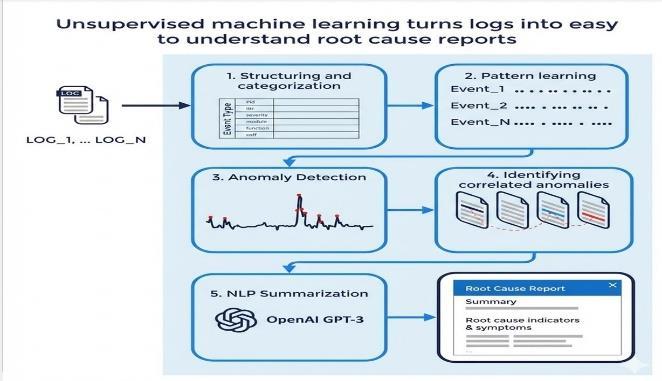
An interpretation module then processes the analysis results and pulls out important information, such as classification,rootcauses,andsuggestedfixes.Finally,the output is shown on a web page, and the system lets you makestructuredreportsinPDFformat.
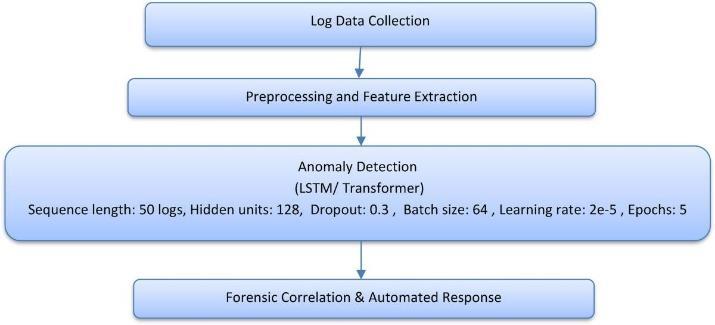
TheworkflowofLOGxisastep-by-stepprocessthatturns raw log data into useful information. At first, the user enters information through the interface, and then the systemprocessesthedatatomakesureitisconsistent.The largelanguagemodelthenanalyzesthecleanedlogs,doing semantic interpretation and classification. By looking at howthedataisrelatedtoeachother,themodelfiguresout whattypeofeachlogentryisandwhatmighthavecaused it. After that, the results are put together in a way that makes sense, with explanations and possible fixes. The system combines the information from multiple logs to make a complete incident report. The workflow also has visualizationtoolsthatletusersseetrendsandpatternsin logdata.
The methodology used in LOG x is based on using large language models’ ability to understand context. The first step is preprocessing,whichcleans upthelogsand makes themconsistentbygettingridofnoiseandotherproblems. Thisstepmakessurethatthedatathatwasenteredcanbe analyzed.Afterthelogshavebeencleaned,theyaresentto
the language model, which uses inference to look at the textineachentry.Themodel findspatterns,relationships, and oddities that show what kind of log it is. The system usesthisanalysistogivetheproblema classificationlabel and a natural language explanation. Root cause analysis looks at dependencies and contextual clues in the logs to figure out what might have gone wrong. The model also makestroubleshootingstepsthatgiveyouusefuladviceon howtofixproblems.Thismethoddoesawaywiththeneed towriterulesbyhandandletsthesystemadapttonewlog patternsonthefly.
Python and the Flask framework are used to build the backend of the LOG x system. Using transformer-based architectures, large language models can be combined. Py Torchistheframeworkthatdoesthemathbehinditall.We use efficientlibraries thatcan handlelargeamountsoflog data to do data processing tasks. Model quantization techniques are used to make things work better and use less computing power. Using 4-bit quantizationcuts down on memory use a lot while still keeping accuracy at an acceptable level. The system also has modules for making reportsandvisualizations,whichmakeiteasiertouseand giveusersafullpicture.
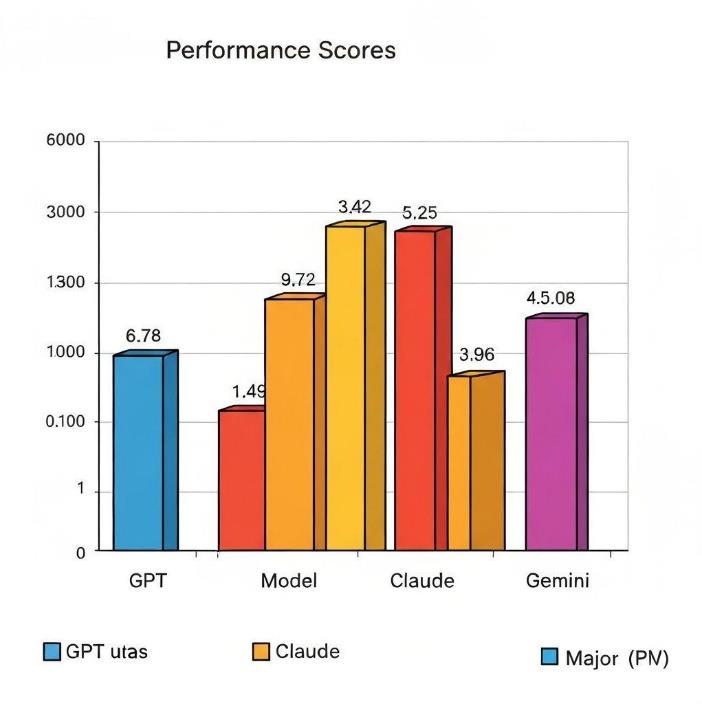
Fig.3.PerformanceComparison
Weusedadatasetwithdifferenttypesoflogentries,such as errors, warnings, and informational messages, to test how well LOG x worked. The assessment concentrated on classificationprecisionand thecaliberofderivedinsights. Theresultsshowthatthesuggestedsystemisverygoodat tellingthedifferencebetweendifferenttypesoflogs.Using large language models helps us better understand the
International Research Journal of Engineering and Technology (IRJET) e-ISSN:2395-0056
Volume:13Issue:04|Apr2026 www.irjet.net p-ISSN:2395-0072
meaning of logs, which leads to more accurate classification than traditional methods. Also, the explanations and troubleshooting steps that were made werefoundtobeusefulandrelevantinreal-lifesituations. The system also strikes a balance between efficiency and performance. While large language models consume higher computing resources, the use of quantization methodsmake
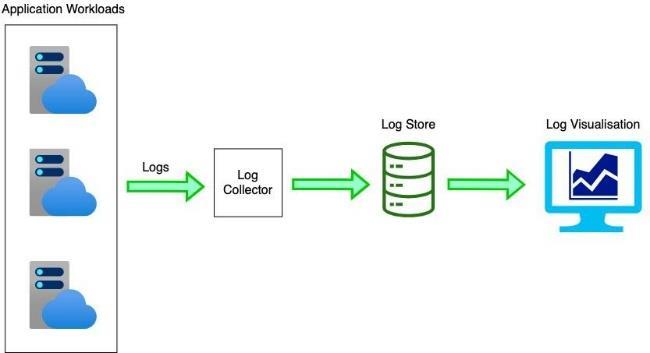
Fig.4.LogVisualizationDashboard
LOG x visualization module helps analyze log trends in a veryintuitivemanner.Usingthedataprovided,LOG xwill create visual representations, which help identify how frequentcertainlogsoccur.Thismakesiteasyforauserto spot errors and any kind of abnormal behavior in the system.
In this research paper, LOG x was developed as an AI based tool that can be used for automating log analysis and incident responses. The application of large language models enables the system to eliminate the shortcomings of previous systems based on rules and offers more intelligentsolutionsbyprovidingmeaningfulexplanations and insights. The findings show that LOG x can effectively contribute to the improvement of both accuracy and user experience. Further development of the system is expected to address issues related to its real-time nature andenterpriseintegration.
[1]HuggingFace,"TransformersDocumentation."
[2]PyTorch,"PyTorchDocumentationandTutorials."
[3] Google, "Gemma: Open Models Based on Gemini ResearchandTechnology."
[4] S. He, J. Zhu, P. He, and M. R. Lyu, "Experience Report: System Log Analysis for Anomaly Detection," IEEE 27th International Symposium on Software Reliability Engineering(ISSRE),2016.
[5]A.Vaswanietal.,"AttentionIsAllYouNeed,"Advances in Neural Information Processing Systems (NeurIPS), 2017.
[6] T. Dettmers, A. Pagnoni, A. Holtzman, and L. Zettlemoyer, "QLoRA: Efficient Finetuning of Quantized LLMs,"arXivpreprintarXiv:2305.14314,2023.
2026, IRJET | Impact Factor value: 8.315 | ISO 9001:2008 Certified