¹
International Research Journal of Engineering and Technology (IRJET) e-ISSN: 2395-0056

Volume: 09 Issue: 09 | Sep 2022 www.irjet.net p-ISSN: 2395-0072
¹
International Research Journal of Engineering and Technology (IRJET) e-ISSN: 2395-0056
Volume: 09 Issue: 09 | Sep 2022 www.irjet.net p-ISSN: 2395-0072
.
First Author, Assistance Professor, Department of Civil Engineering, P. R. Pote ( Patil ) College of Engineering and Management, Amravati
² - Second Author, PG Student, M.E Transportation Engineering and Management, Dr. Rajendra Gode Institute of Technology and Research, (SGBAU) Amravati ³ - Third Author, Professor and Head, Civil Engineering Department, Dr. Rajendra Gode Institute of Technology and Research, (SGBAU) Amravati
4 – Fourth Author, Assistant Professor, Civil Engineering Department, Dr. Rajendra Gode Institute of Technology and Research, (SGBAU) Amravati ***
Abstract - Pavements are expected for the smooth, protected and orderly entry of traffic, Pavements are by and large named adaptable and unbending Pavements
Adaptable Pavements are those which have are for the most part named adaptable and unbending Pavements
Adaptable Pavements are those which have low flexural strength and are adaptable in their primary activity under loads. Unbending Pavements are low flexural strength and are adaptable in their primary activity those which have essential flexural strength and flexural inflexibility. The significant advancement inthe auto versatile innovation has come about weighty moving burdens on the current expressways for streamlining of the vehicle cost. The current streets which are planned in view of the thumb rules can't take special care of the weighty wheel loads bringing about the crumbling of the current streets. In the venture report, an endeavor is made to plan a street at Paratwada, in light of the standards of Pavement plan. On the current arrangement of the street, soil tests are gathered for the assurance of soil attributes like consistency limit, strainer examination, CBR values and so on, Based on this the thickness of Pavement (flexible)is planned. The arrangement of the streets is likewise planned and fixed by studying and evening out. The absolute street length being 497 meters of which, on segment is 247m, other is 200m and the thirdarea is 50m.
For financial and effective development of interstates, rightplanofthethicknessofPavementsforvariousstates of traffic and sub-grades is fundamental. The study of Pavement configuration is moderately new. In India, already street outside was planned on a few level headed informationhowevermoreontheexperienceofthestreet engineer.AfewerraticthicknessesofthePavementswere utilized which lead to exorbitant disappointments and wastage as at times, the thickness of Pavements was lacking and in different cases costly. As there could be no legitimate plan measures, the development of streets was pretty much uneconomical in practically all cases. Consequently sensible strategy for planning and
ascertaining the outside layer thickness based on assessment of traffic loads and bearing limit of sub-grade andsoon.
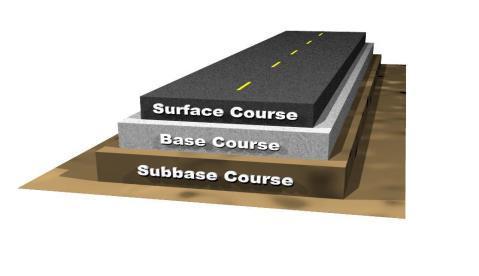
Pavementisa planneddesignlaidonanarea,expected to support vehicular traffic. The capability of Pavement is to communicate burdens to the sub-base and under lying soil. Presently a day's Flexible Pavements contain sand and rock or squashed stone compacted with a cover of bituminous material, like Pavementic tar or Pavementic oil. Such Pavement has sufficient versatility to retain shocks.
Basedonthestructural behavior,pavementsaregenerally classifiedintothefollowingthreecategories:
Flexiblepavement
Rigidpavement
Pavement:
Adaptable Pavements are those which are adaptable in their primary activity under the heaps. A few significant elementsofthesePavementsare:
1.Ithasnoflexuralstrength,
International Research Journal of Engineering and Technology (IRJET) e-ISSN: 2395-0056
Volume: 09 Issue: 09 | Sep 2022 www.irjet.net p-ISSN: 2395-0072
2.Itreflectsthedeformationoflowerlayers, 3.It will transmit the vertical compressive stress to bottom layers by grain to grain transfer, Design procedureofFlexiblepavementusingIRCmethod Flexiblepavementsconsistofthefollowingcomponents: 1.Soilsubgrade 2.Subbasecourse 3.Basecourse 4.Surfacecourse 2.2 Rigid Pavement:
1. ThePavementloadisatlasttakenbysoilsubgrade andthusfornosituationitoughttobeoverfocused andtop50cmlayerofsoilsubgradeoughttobeall aroundcompactedatO.M.C.
2. Common strength testsusedforevaluationofsoil subgradeare:
a. CaliforniaBearingRatiotest
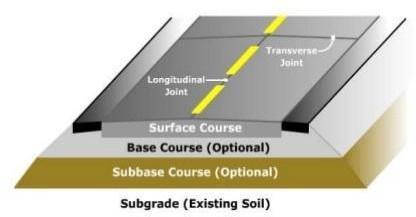
Rigid pavements are those which possess noteworthy flexuralrigidity. 1.Itpossessesflexuralstrength 2.Load transfer is by the way of slab action and it distributesthewheelloadtoawiderareabelow 3.Flexural stresses will be developed due to wheel load temperaturechangesSurvey
Rigidpavementconsistsofthefollowingcomponents: 1.CementConcreteslab 2.Basecourse 3.Soilsubgrade
1. At the point when fortified materials like pozzolanic concrete, lean cement or soil concrete are utilized, then the Pavement layer has impressively high flexural strength than the normal adaptable Pavement is known as a semiinflexiblePavement.
2. These materials have low protection from effect and scraped spot and are in this manner utilized withadaptablePavementsurfacecourse.
2.4.2
b. Californiaresistancevaluetest c. Tri-axialcompressiontest
d. Platebearingtest
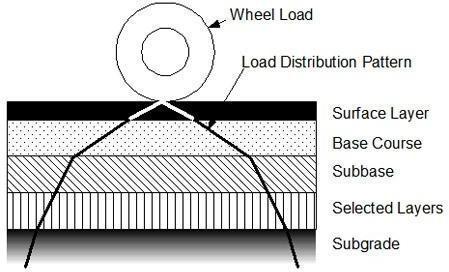
These are broken stone totals. It is alluring to utilize more modest size evaluated totals at sub base course ratherthan rock stones. Base andsub basecoursesare utilized under adaptable Pavements principally to further develop load supporting limit by dissemination ofburdenthroughalimitedthickness.
Basecoursesareusedunderrigidpavementsfor: a.Preventingpumping b. Protectingthesubgrade
2.4.3 Wearing Course:
Purpose behind this course is to give smooth riding surface. It opposes pressure applied by tires and takes up mileage because of traffic. It additionally offers watersnugness.
The dependability of wearing course is assessed by Marshaling solidness test where in ideal percent of bituminous material is worked out in light of steadinessthickness,voidsinmineraltotal(VMA)and voids loaded up with bitumen (V F B). Plate Bearing test are likewise in some cases made use for hoisting thewearingcourseandthePavementingeneral.
2022, IRJET | Impact Factor value: 7.529 | ISO 9001:2008 Certified Journal | Page296
International Research Journal of Engineering and Technology (IRJET) e-ISSN: 2395-0056
Volume: 09 Issue: 09 | Sep 2022 www.irjet.net p-ISSN: 2395-0072
Pavementconfigurationcomprisesoftwosections:
1. Mix plan of material to be utilized in every Pavementpartlayer
2. ThicknessplanofthePavementandthepartlayer
The different variables to be considered for the plan of Pavementare: 1. Designwheelload 2. Subgradesoil 3. Climaticfactors 4. Pavementcomponentmaterial 5. Environmentalfactors
Traffic and Loads following up on Pavement are thought about while planning an Pavement. Loads cause stresses, distortions, and removals in structures Analysis of their belongings is done by the strategies for primary examination. Over-burdening might cause primary disappointment, and consequently underlying disappointmentoughttobeeitherviewedasintheplanor stringently controlled. The various sorts of burdens followinguponstreetsareasperthefollowing: 1. Contactpressure. 2. Repetitionofloads. 3. Wheelload. 4. Axleconfiguration.
Thetirepressureisasignificantelement,asitdecidesthe contact region of the wheel to the Pavement surface. Despite the fact that the state of the contact region is curved, a round region is frequently considered for purposeofeffortlessnessinexamination.
The impact of traffic on Pavement, not just rely upon the size of the wheel load, yet additionally on the recurrence oftheheapapplication.Eachheapapplicationcauseafew distortion and the complete twisting is the summation of every one of these. Consequently, present day plan dependsonalloutnumberofstandardaxles.
The following significant variable is the wheel load it decides the profundity of the Pavement expected to guarantee that the sub grade soil isn't fizzled. The pressure disseminationand diversion insidean Pavement areaffectedbywheeldesign.
The Standard Axle thought about is Single Axle with Dual wheel80KN,whereSinglewheelloadis20KN.
Adaptable Pavements are liked over concrete substantial streets as they enjoy an extraordinary benefit that these can be reinforced and worked on in stages with the development of traffic and furthermore their surfaces can be processed and reused for restoration. The adaptable Pavements are more affordable additionally concerning introductoryventureandupkeep.AlbeitRigidPavementis costly yet have less upkeep and having great plan period. ThemonetarypartiscompletedfortheplanPavementofa segmentbyutilizingtheoutcomesgotbyplanstrategyand theirrelatingpartlayerthickness.
SaurabhJain,Dr.Y.P.Joshi,S.S.Goliya:Thispapertalks abouttheplantechniquesthataregenerallybeingfollowed and inspects the "Plan of inflexible and adaptable Pavements by different strategies and their expense investigationbyeverystrategy"
D. S. V. Prasad and G. V. R. Prasada Raju : This paper examines the exhibition of adaptable Pavement on far reachingsoilsubgradeutilizingrock/flydebrisassubbase coursewithsquandertireelasticasabuildingupmaterial. Itwasseenthatfromtheresearchcentertestaftereffectsof direct shear and CBR, the rock sub base shows better execution when contrasted with fly debris sub base with various rates of waste tire elastic as supporting material. Cyclic burdentestsarelikewisecompletedintheresearch center by putting a roundabout metal plate on the model adaptablePavements.Itwasseenthatthegreatestburden conveying limit related with less worth of bounce back avoidancegotforrocksupportedsubbasecontrastedwith flydebrisbuiltupsubbase.
Thethreesoiltestsareutilizedinthereview.FortheseSoil samples1,2,3aretheIndexandEngineeringpropertiesare resolved are organized in the Table.1.The soil protuberanceswerebrokenintopiecesandsievedthrough 4.75mm sifter and afterward dried in broiler at 1050c for 24 hours. The dirt are named I.S Classification system(IS 1498-1970).
International Research Journal of Engineering and Technology (IRJET) e-ISSN: 2395-0056
Volume: 09 Issue: 09 | Sep 2022 www.irjet.net p-ISSN: 2395-0072
Description Sample 1 Sample2 Sample3
D10 0.18 0.075 0.09 D30 0.4 0.22 0.26 D60 0.65 0.89 0.9 Uniform Coefficient(CU) 3.61 11.86 10 Coefficient of Curvature(CC) 1.367 0.725 0.834
Liquid limit 38.5 26.5 25.5 Plastic limit 22.2 21.05 19.32 Plasticity index 16.3 5.45 6.18
Free swell index 80 80 72
Specific gravity 2.2 2.2 2 Maximum Dry Density (g/cc)
1.678 1.91 2.05
Optimum Moisture Content (%) 10.63 8.1 11.5
Table 1: PropertiesofSoil
4.1 Experimental Programme & Discussion
Three samples of soils had been collected in the locationofthe Paratwadasite(work).
4.1.2 Types of Soil Test: The different types of tests conducted on the samples are; 1. Indexproperties
4.2
325 300 275 250 225 200 175 150 125
Sample 1 Sample 2 Sample 3 0 1 2 3 4 5 6 7 8 9 10 11
Penetration in (mm)
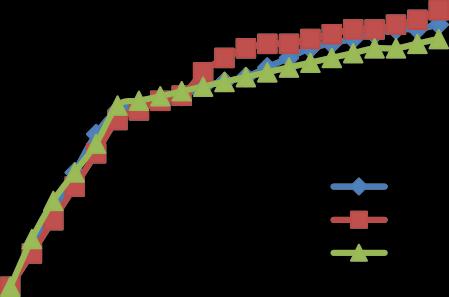
Graph 1: CBRvaluesofSampleA,SampleB,SampleC (Soaking)



Method:
1. The soil tests are taken and their ideal dampness still upintheairbyProctor'sthicknesstestforlightcompaction.
2. The soil test is then compacted in CBR shape for ideal thicknessandtheformisdrenchedfor3days.
3. The CBR test is then performed to get the CBR values forthedirtsubgrade
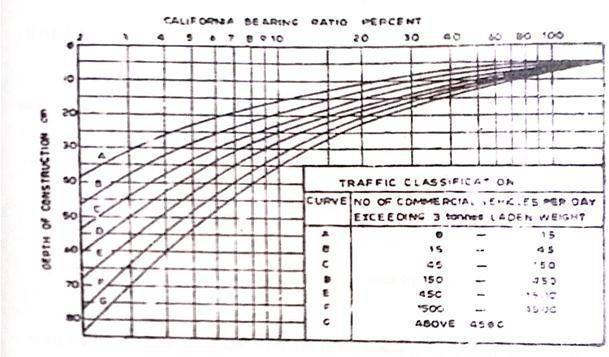
Figure 4: CBRDesignchart
Typeofmaterial SuggestedCBRvalue(%) Gravel 25 Roadmetal 55
Table 2: CBRvaluesof SampleA,SampleB,SampleC(Soaking)
Sample 1:
CBRcorrespondingto2.5mmpenetration =(74.4/1370)×100=5.4%
Assume,AverageDailyTraffic(ADT)=300Annualrate ofgrowthoftraffic(r)=8%
Timetakenforpavementconstruction(n)=1yearNo. ofvehiclesfordesign(A)=P(1+r)(n +10)
International Research Journal of Engineering and Technology (IRJET) e-ISSN: 2395-0056
=300(1+8/100)(1 + 10)
=699.49 vehicles/day =700 vehicles/day
Sample 3:
CBR corresponding to 2.5mm penetration =(77.8/1370) ×100=5.8%
Thus40cmofpavementmaterialsisrequiredto coverthenaturalsoilsubgradehaving5.4%CBR value.Therefore,thethicknessofbaseandsubbase coursesare12.5cmand22cmhavingCBRvalue55% and25%usingthedesignchart.
Assume, Average Daily Traffic (ADT) = 300Annual rateofgrowthoftraffic(r)=8%
Timetakenforpavementconstruction(n)=1yearNo.of vehiclesfordesign(A)=P(1+r)(n + 10)
=300(1+8/100)(1 + 10)
TheCBRvaluesforthegravelandroadmetalare assumedasfollows
Description Sample1 Sample2 Sample3
CBR value of 2.5mm 14.36% 13.59% 14.756%
CBR value of 5.0mm 11.13% 12.426% 11.12%
Table 3:TheSuggestedCBRValuesofSample1forType ofmaterial
CBR corresponding to 5 mm penetration = 4.91% Assume, Average Daily Traffic (ADT) = 300 Annual rate ofgrowthoftraffic(r)=8%
Time taken for pavement construction (n) = 1 year No.ofvehiclesfordesign(A)=P(1+r)(n + 10)
=300(1+8/100) (1 + 10) =699.49vehicles/day =700vehicles/day
Thus 45cmofpavement materials is required to cover thenaturalsoilsubgradehaving4.9%CBRvalue.
Therefore, the thickness of base and sub base courses are 13cm and 25cm having CBR value 50% and 25% usingthedesignchart.
The CBR values for the gravel and road metal are assumedasfollows:
Typeofmaterial SuggestedCBRvalue(%)
Gravel 25 Roadmetal 50
Table 4: TheSuggestedCBRValuesofSample2for Typeofmaterial
=699.49vehicles/day =700vehicles/day
Thus38cmofpavementmaterialsisrequiredtocover thenaturalsoilsubgradehaving5.8%CBRvalue.
Therefore,thethicknessofbaseandsubbasecourses are11cmand22cmhavingCBRvalue47%and25% usingthedesignchart.
The CBR values for the gravel and road metal are assumedasfollows:
Typeofmaterial SuggestedCBRvalue(%)
Gravel 25 Roadmetal 47
Table 5: TheSuggestedCBRValuesofSample3forTypeof material
Inthistaskwork,anendeavorismadetoconsolidatemost recentmethodsofmathematicalplan,Pavementplanfora street for a current state which 2 km away from Paratwada.
• The IRC details depend on levelheaded reasoning, the proposedstreetisprotectedinbothgeometricsaswell as Pavement plan. It is likewise proposed to plan an adaptable Pavement by Group Index technique and CBR strategy.
• Afewadditional techniquesareaccessibleintheplanof adaptable Pavement, which are greatly exceptional like California opposing worth strategy, Mc leod technique, Tri-pivotal strategy and Burnister strategy. In light of the limits of time and degree, just GI technique and CBR strategyareembraced
Volume: 09 Issue: 09 | Sep 2022 www.irjet.net p-ISSN: 2395-0072 © 2022, IRJET | Impact Factor value: 7.529 | ISO 9001:2008 Certified Journal | Page299
[1]“HighwayEngineering”byS.K.KhannaandC.E.G.Justo
[2]“HighwayEngineering”byT.D.Ahuja
[3] “Estimation and costing in civil engineering” by B.N.Dutta
[4] “Soil mechanics and foundation engineering” by K.R.Arora
[5]“Surveying”byK.R.Arora
[6]“Surveying”byB.C.Punmia
[7]“IRC 37-2001”: Guidelines for the design of flexible pavements.
International Research Journal of Engineering and Technology (IRJET) e-ISSN: 2395-0056 Volume: 09 Issue: 09 | Sep 2022 www.irjet.net p-ISSN: 2395-0072 © 2022, IRJET | Impact Factor value: 7.529 | ISO 9001:2008 Certified Journal | Page300