International Research Journal of Engineering and Technology (IRJET) e-ISSN: 2395-0056

Volume: 09 Issue: 09 | Sep 2022 www.irjet.net p-ISSN: 2395-0072
International Research Journal of Engineering and Technology (IRJET) e-ISSN: 2395-0056
Volume: 09 Issue: 09 | Sep 2022 www.irjet.net p-ISSN: 2395-0072
Prof. Dr. Gouri Patil1, S. Kaneez Rabiya Quadri
1,2Dept. Of CSE Engineering, Guru Nanak Dev Engineering College, Karnataka, India ***
Abstract - Networks of wireless sensors are deployed in harshenvironments.Their mainadvantagesareflexibility and low cost. But they may face many shortcomings that lead to the need to improve data accuracy. Many artificial intelligence techniques have displayed outstanding performance in error detection and diagnosis. Recently, machine learning has grown into a potent method based on artificial intelligence to solve the failure difficulty with WSN. Deep learning approach is been introduce for fault awareness. Deep learning neural networks (artificial neural networks) use a combination of data inputs, weights, and biases to try to replicate the human brain. These components cooperate to correctly identify, categorise,anddescribeitemsinyourdata.
Key Words: WSN, Sensor, Deep Learning, CNN, ANN, LSTM
The term "wireless sensor network" (WSN) extends to a group of unconnected sensor devices connected by a wireless channel. These are structures of understanding that work closely with the environment. They are designed for very limited tasks. Basically, the sensor is real-world apparatus that records information on a realworld thing, process, or change in temperature or pressure. WSN has real-time monitoring potential and is already implemented in military applications, health monitoring, industrial applications, environmental monitoring, etc. WSN limits include node power and disk spacelimits.
Wireless sensor networks can now support a range of identification applications because to recent developments in wireless communication and embedded computing.. Utilizing wireless sensor networks to support a variety of monitoring and control applications such as environmental monitoring, industrial sensing, and traffic control. Environmental monitoring, industrial sensors, traffic sensors, and other small, low-power radio devices are all included in a WSN. Small, low-power wireless devices are frequently used in crowded or isolated areas andmakeupasignificantportionofWSNs.Variousmobile and inescapable applications constantly collect and process data from the physical world, providing data on detected situations or opportunities in great detail. In particular, The benefits of information sparsity, global optimality, and broad applicability make SVM a desirable classificationapproach.
WSNs are prone to failure because they are routinely installed in high-risk, unmonitored, inaccessible environments.Theseconditionscanbefurthercategorised intoseveralgroups.
•softwareerrors;
•Hardwarefailureand
•Communicationfailure.
In conjunction with the information gathered, The followingdescriptionsperhapsutilisedtoclassifyerrors.
• Gain Error: when the rate of change of the acquired data is different from the expected value. • Stuck on Error: When there is nochange in thesetofcollected data.
•OutofRange: Whenanobservationfallsoutside the expectedrange.
• Peak error: when the estimated time series's excess beyond the time series' projection is greater than the predictedtrendofchange.
• Noise error: when randomly distributed numbers areaddedtotheexpectedvalue.
• Data Loss Error: When a certain amount of data is missing from the collected values during a certain time interval. • Random error: This is an error in whichtheobserveddataisunbalanced.
To identify various problems that can occur in wireless sensor networks, we employ a variety of algorithms and deeplearningtechniquesinourstudy.
There have been significant advancements regarding wirelesssensor networksandtechnologies recently. They are mainly used for communication. Communication betweendifferentdevicesis wiredor wireless,sotherisk offireandexplosionoverthenetwork isincreasing every day. Identification and reduction of fraud are the main priorities when it comes to secure communication. As a result, testing of exposure and penetration prevention techniques has become an important part of the engineering field. Using an exposure and intrusion prevention system, we can identify and then report normal and unusual user activity. Therefore, For wireless sensor networks, it is essential to use deep learning and machinelearningtocreateanefficientintrusiondetection and mitigation system. In this piece, a trial involved and evaluating the effectiveness of several deep learning and
International Research Journal of Engineering and Technology (IRJET) e-ISSN: 2395-0056
Volume: 09 Issue: 09 | Sep 2022 www.irjet.net p-ISSN: 2395-0072
machine learning for malware detection and mitigation systems. The performance estimation of these techniques wasperformedbyexperimentsperformedontheWSN-DS dataset. Comparative evaluation shown by deep learning classifications is better penetration exposure results than machinelearningtechniques.
Using deep learning to detect Wireless sensor network faultscanariseforanumberofreasons.WSNsareusedin risky, unattended and inaccessible environments, making themmoresusceptibletopoweroutages.Theseerrorsfall intothreegroups:software errors,hardwarefailures,and communicationerrors.
Error detection in WSN faces many challenges due to the followingreasons:
• The facilities and resources at the node level are very limited, which forces the nodes to use classifiers because theydonotrequirecomplexcomputations.
• Sensor nodes are installed in hazardous environments, forexample.athome,indoors,inwarzones,inhurricanes, earthquakes,etc.
•Theerrordetectionprocessmustbeaccurateandfastto avoid any loss, for example, the process must determine the difference between the abnormal and the normal, so that it can be lost in the event of a collection. Collecting wrongdatacanleadtoerroneousresults.
WSNs are built with many sensor nodes connected and sharing the information collected by them. Administering a network that is so vast and intricate requires scalable and efficient algorithms. Also, for some reason, WSNs can change dynamically and require a redesign of the entire network architecture. This may sometimes require changes to routing strategy, location of specific nodes, interlayerdesign,etc.Algorithmsformachinelearningare required to deal with such situations. With ML, machines learn on their own without human intervention or any kindofreprogramming.MLalgorithmscanaccuratelytest complex data at node speed. The foundation of WSN is constituted of ML algorithms, which have the capacity to deliveroptimumsolutionsthroughself-learning.
•Poweroutagesarereportedinthe WSNforanumberof reasons. One of the reasons could be the location where the WSNs are deployed. Reliance on sensor nodes' batteries, hardware and software failures, as well as
required topology changes can be other reasons. The multi-error detection classifier might not be able to be foundbytheexistingsystem.
• Due to resources being scarce, it can be challenging to identifytheseerrors.,theharshenvironmentinwhichthe WSNisdeployed,ortheseparationoffailedandnon-faulty nodes
Dataiscollectedfromtwooutdoormulti-stepsensors.Itis temperature and humidity data detected. Each vector consistedofdatacollectedatthreeconsecutivecasest0,t1 and t2, and each case was constructed from two temperature measurements and two humidity measurementsT1,T2andH1,H2.Then,differenttypesof errors (lag, boost, freeze, out of bounds, spike and data loss) are randomly caused at different rates (10%, 20%, 30%, 40%) and 50%). A total of 40 datasets were assembled with a set of 9566 tests (vectors) and 12 dimensions for each set. Data sets labeled with a target column are marked as one for normal testing and -1 for outliers.
Networks of wireless sensors are deployed in harsh environments. Their main advantages are flexibility and low cost. But they may face many shortcomings that lead to the need to improve data accuracy. Many artificial intelligence techniques have displayed outstanding performance in error detection and diagnosis. Recently, machine learning has grown into a potent method based on artificial intelligence to solve the failure difficulty with WSN. In this essay, For defect awareness, a deep learning techniquewasintroduced.
Errordetection mechanismsareconsideredto be ofgreat importance to ensure the normal operation of WSNs. To preventlossandclearlyindicatetheconditionofthedata, they must be precise and quick. However, due to the sensor's restricted properties, faults are challenging to detect.Themechanismofanomalydetectionhasbeenthe subject of numerous studies from various perspectives. Few approaches are distributed, centralized, or hybrid. Theyarebasedondynamics,auto-detection,andmachine learning. Artificial intelligence is implemented through machine learning, which gives systems the capacity to autonomously learn from the past and get better. Classification is a frequently often used strategies. to data mining, It is a part of artificial intelligence. It clearly dividesdataintodifferentcategoriesandhelpsindecision
International Research Journal of Engineering and Technology (IRJET) e-ISSN: 2395-0056
Volume: 09 Issue: 09 | Sep 2022 www.irjet.net p-ISSN: 2395-0072
making. According to data details, there are three classes ofmachinelearningtechniques:
SupervisedLearning:Dataminingstrategiesareappliedto datalabeledwithpredefinedclasses.
Unsupervised learning: Approaches applied to unlabeled data.Dataisclassifiedwithoutpriorknowledge.
Semi-supervised learning: Here, both unsupervised and supervisedlearningarecombined.
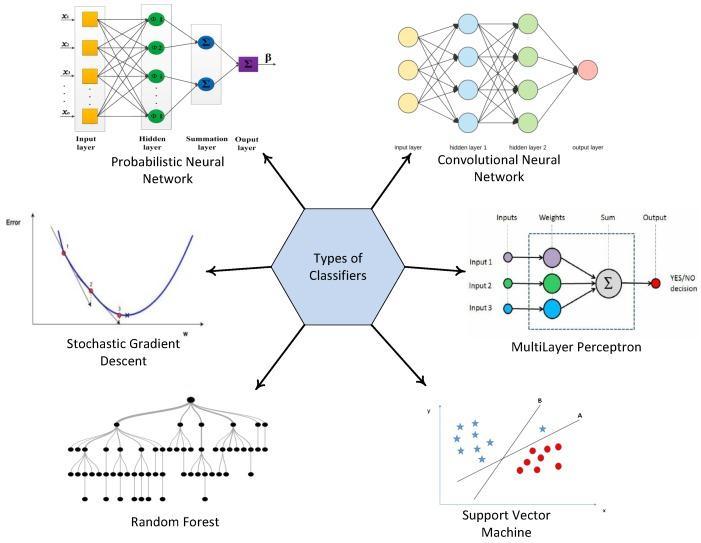
For fault detection, Convolutional Neural Network, Artificial Neural Network (ANN), Decision Tree (DT), LSTM and Random Forest (RF) classifiers, are used to classifythesenseddataintotwocases,i.e.normalcasesor abnormalcases.
3.2.2
Fig.3.2 DecisionTree
Individualdecisiontreesarecombinedtocreatearandom forest, and finally, each decision tree votes in making the correctpredictionfortheconcernedproblem.
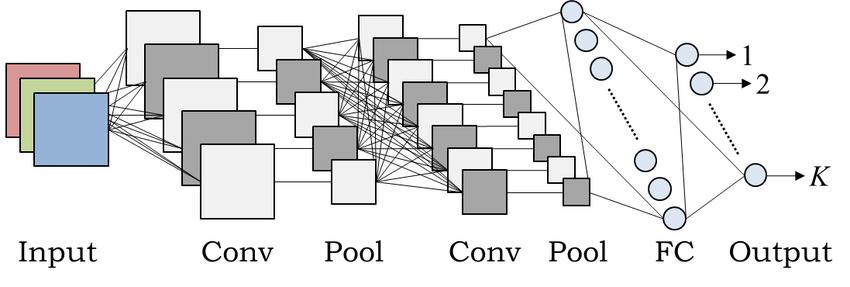
AdeeplearningmethodcalledIntegrated NeuralNetwork (ConvNet/CNN) can process photos as input, assign importance (weights and assimilable biases) to other aspects/objectsimagesandcandistinguishbetweenthem. Preprocessing requirements in ConvNet are much lower thaninotherclassificationalgorithms.
Classification is a two-step process, a learning step and a prediction step, in machine learning. During the training phase, the model develops based on the given training data. In the prediction step, the model is used to predict the response to the given data. Decision trees are straightforward and often used classifications algorithms tounderstandandinterpret.
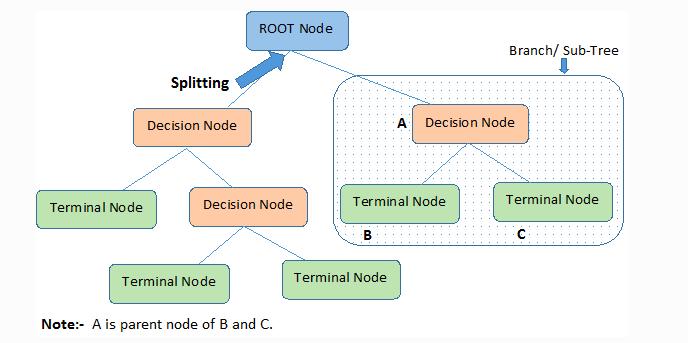
Fig.3.4Convolutionalneuralnetworkarchitecture
3.2.4
A good way to think of a NN is as an aggregate function. Yougiveitaninputanditgivesyouanoutput.
Three parts make up the architecture of the basic NN. Theseare:
Units/Neurons. Connections/Weights/Parameters. Prejudices.
To create a basic NN architecture, you require all of the aforementionedcomponents.
International Research Journal of Engineering and Technology (IRJET) e-ISSN: 2395-0056
Volume: 09 Issue: 09 | Sep 2022 www.irjet.net p-ISSN: 2395-0072
Fig.3.5ArtificialNeuralNetworkArchitecture
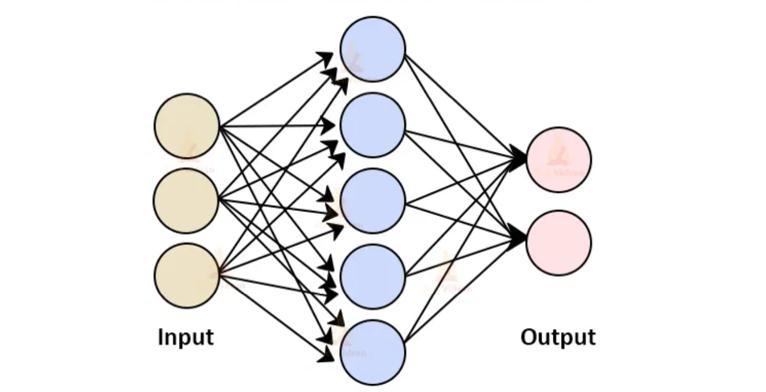
Neural networks are a set of algorithms that closely resemble the human brain and are designed to recognize patterns. Through automated perception, categorization, or grouping of unprocessed inputs, they evaluate sensory data.Theyareabletoidentifythedigitalpatternsfoundin the vectors that must be used to transform all real data (such as pictures, sounds, texts, or time series)
Fig.5.2Snapshotofgettingoutputforfaultdetection
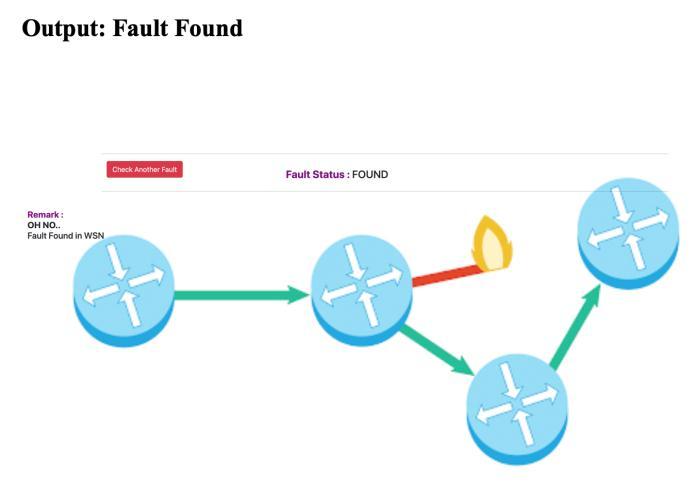
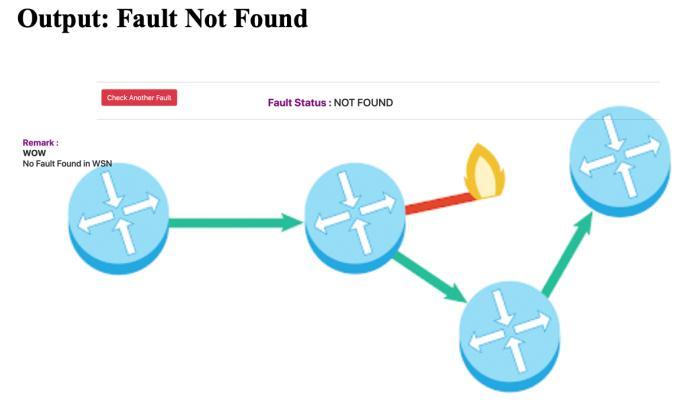
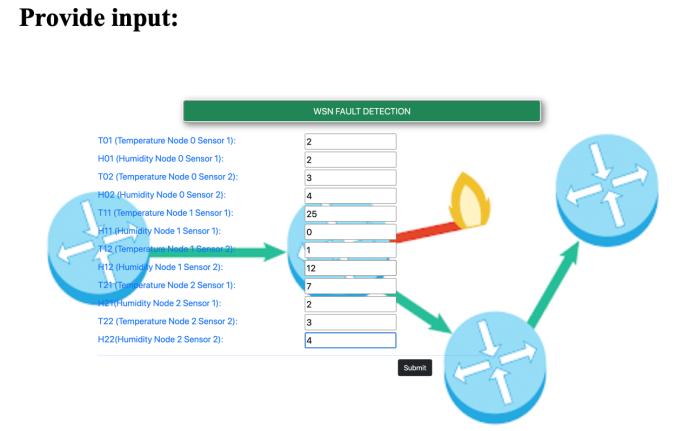
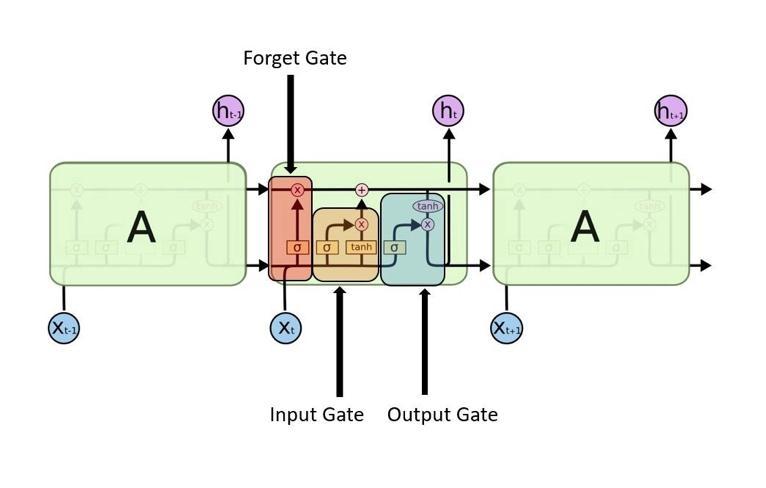
Fig.3.5LSTMArchitecture
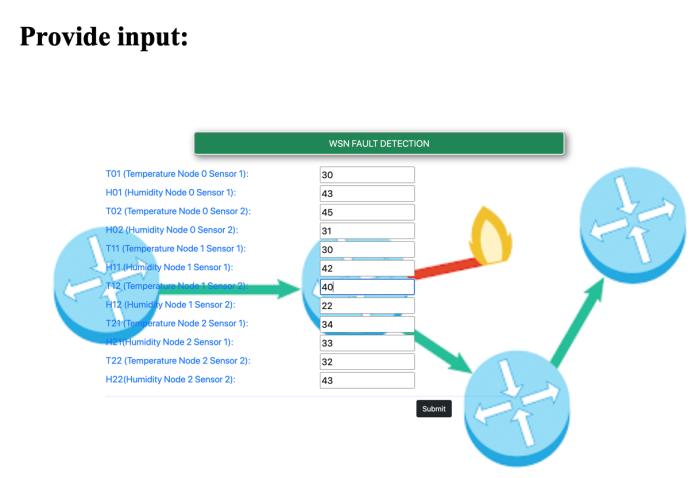
Fig.5.1Snapshotofprovidinginputforfaultdetection
Fig.53Snapshotofprovidinginputforfaultdetection
Fig.5.4Snapshotofgettingoutputforfaultdetection
Theresearchworkforthisprojectisprecededbyadataset preparationblock.Theinsightmakesupthedatasetvector ����,whichconsistsofhertwowatermeasurementsH1and H2 and two temperature measurements, T1 and T2, are
International Research Journal of Engineering and Technology (IRJET) e-ISSN: 2395-0056
Volume: 09 Issue: 09 | Sep 2022 www.irjet.net p-ISSN: 2395-0072
present three times in succession. Two errors with differenterrorrates(10%,20%,30%,40%,and50%)are theninsertedintotherecord:aspikeerrorandadataloss error. Next, six classifiers, ANN, CNN, KNN, DT, RF, and LSTM applied to outdoor data collected from multi-hop WSNs. Classifiers are scored based on four different performancemetrics.
In future work, we will use the same classifier to predict thenext errorinthedata anddevelopan erroravoidance mechanism. In addition, we will work on WSN failure detection to accurately identify and subsequently detect failures at the sensor (node) level. The sturdiness of the algorithm can also be confirmed by expanding the sensor count. This helps us understand her WSN's resilience to attacks.
1. "Wireless sensor network survey," B. Mukherjee, D.Ghosal,andJ.Yick,ComputerNetworks,volume. 52,2008,pp.2292-2330.
2. R.A.ShaikhandM.Thaha,"Anexaminationoffault detecting algorithms in wsns," Journal of Network and Computer Applications, vol.78, no.3,2017, pp. 267–287.
3. "Fault detection in wsns by SVM classifier," IEEE Sens. J., no.18, pp.340-347,2017. Moulahi, S. Zidi andB.Alaya
4. "A Data_Driven_Design for Fault Detection of Wind_Turbines Using Random Forests and XGboost," IEEE Access, vol. 6, pp. 21020-21031, 2018. D. Zhang, L. Qian, B. Mao, C. Huang, B. Huang,andY.Si
5. Probabilisticneuralnetworks:aquickintroduction oftheoryimplementationandapplication,Elsevier, 2020,pp.347–367.M.Behshad,T.Amirhessam,M. B.Anke,andG.H.Amir.
6. "AReviewofMLBasedFaultDetectionAlgorithms inWSNs,"SumanAvdheshYadav.
7. Agarwal, A., Sinha, V. K., & Palisetty, R. (2019). Performance analysis and FPGA prototype of variable rate GO-OFDMA baseband transmission scheme.Wireless Personal Communications,108,785–809.
2022, IRJET | Impact Factor value: 7.529 | ISO 9001:2008 Certified