International Research Journal of Engineering and Technology (IRJET) e-ISSN:2395-0056

Volume: 09 Issue: 09 | Sep 2022 www.irjet.net p-ISSN:2395-0072
International Research Journal of Engineering and Technology (IRJET) e-ISSN:2395-0056
Volume: 09 Issue: 09 | Sep 2022 www.irjet.net p-ISSN:2395-0072
1 , Nitesh Gohil2 , Vinay Bhatkar3
1Student, Department of Mechanical Engineering Thakur College of Engineering and Technology Mumbai, India
2Student, Department of Mechanical Engineering Thakur College of Engineering and Technology Mumbai, India
3Asst. Professor, Department of Mechanical Engineering Thakur College of Engineering and Technology Mumbai, India***
Abstract Concrete is a highly reliable construction material when it comes to building structures. Given its ability to resist high compressive forces, it has its set of deficiencies too. Crack formation is one such failure of the material that science has still not been able to solve. This phenomenon of microcrack formation significantly affects the lifecycle, reliability of the concrete. It becomes crucial to formulate new ways to increase the life of a concrete structure. Result of which was the creation of self-sensing concrete. This paper extensively reviews various approaches to understand self-healing concrete. In addition to that, it explores the shortcomings of the bacterial approach and suggests a fungal approach as it is far more progressive, reliable, and potent of taking the research of Self-Sensing Concrete ahead.
Index Terms—Self Healing Concrete, Concrete, Self Sensing, Smart Concrete, Autogenous Healing, Concrete Reinforcement, Structure Longevity, Bacterial Regeneration
Concrete isa composite material thatconsists ofa curated mixtureofcement,roughaggregates,andfineaggregates.Itis one of the most commonly used building components in today’s age. Usage and application of concrete explain that it can resist the compressive forces subjected due to the load effectively. Even though it is one of the most major constructionmaterials,itcannothandletensionwell
[1]. Upon inducing a certain amount of tension on concrete structures, they begin to form micro-cracks. This micro crack formation directly affects the durability of the concreteandoftenresultsinareductionofthestrengthofthe structure. Upon researching further, it was found that along with other factors like pH level of the atmosphere and the amountofloadsubjectedonconcretenegativelyaffectsit,the permeabilityoftheconcretewasoneoftheleadingcausesof the concrete structure failure. Due to an increase in the
permeability of the concrete the water easily pass through
theconcrete and comeinthecontactwiththe reinforcement of the concrete structure and after some time corrosion starts, due to this strength of the concrete structure will decrease [2] and cracks will be introduced. Due to accession in the permeability of the concrete, the water smoothly advances through the concrete and get in contact with the reinforcement of the concrete structure and subsequently, corrosion begins due to the aforementioned strength of the concrete structure will drop so it will be required to restore thecracks[3].
SmartMaterialTechnologystandsastherecentlyemerging fieldofresearchwhichhasaverywidescopeinthedomainof civil infrastructure and development, in terms of the future. Thesecertainapproachesalwaystendtoimprovetheoverall life, longevity, durability, decreasing the failure rate, and considerably enhancing reinforcements. The result of which isanewlyenhancedconceptwithaconcreteapplication[4].
Smart concrete represents the development direction of concrete from high strength and high performance to multifunctionality and intelligence. Self-sensing concrete is a kind of smart concrete that has attracted wide attention from academia and industry [4]. Self-healing concrete therefore can be defined as the concrete possessing a remarkable ability to repair the cracks the structure has developed. Due to very low tensile strength, we often get to see the crack formation in the concrete. These cracks also damage the durabilityfactoroftheconcretestructuresinceitpavesaway for reacting substances to get introduced. If micro-cracks grow to the reinforcement, the reinforced material experiencescorrosion.Itbecomesvitaltohealthecrack.The sustainabilityandthedurabilityandlifecycleoftheconcrete will increase due to self healing technique. [5] [6] Based on the repair capacity of the concrete, it is mainly because moistureandairenterthestructure,andapartofthecement particles undergoes hydration reaction. The precipitates accumulate and block the cracks. This method has a significantly low recovery rate [7]. The Precipitation of
International Research Journal of Engineering and Technology (IRJET) e-ISSN:2395-0056
Volume: 09 Issue: 09 | Sep 2022 www.irjet.net p-ISSN:2395-0072
calcium carbonate has been found out to be the most significant factor controlling the self healing of concrete. [8] [9] Each classical healing model consisted of autogenously healing capabilities of the concrete but with enough research,manychemicalapproachesweredeveloped;wherein certain chemicals and the leading reactions become the self-healing agents. With more research, the more recent studies follow up an approach of using the products and majorlythebacteriaitselfastheself-healingagent.Inseveral published studies the potential of calcite precipitating bacteria for concrete or limestone surface remediation or durability improvement was investigated. [10] The mechanism of bacterially mediated calcite precipitation in laterstudieswasprimarilybasedontheenzymatichydrolysis of urea. One noteworthy drawback of this method is that in turn, it introduces the environmental nitrogen in excess. [11] Hence, what can be understood of the self-healing conceptintoday’sdateisthatitishealingorrecoveryofatthe veryleastone property of the concrete that may decrease the chancesof failure in that structure. However, majorly we will studythecrackformationandlater,thehealingofthe micro-cracks using multiple approaches. Therefore, with the mention ofcracksalone,itisunderstoodthatthefactor in which healing will take place will be the permeability property of the structure [10]. The permeability of thestructure with smaller crack will be less than that of a largercrack[12][13].
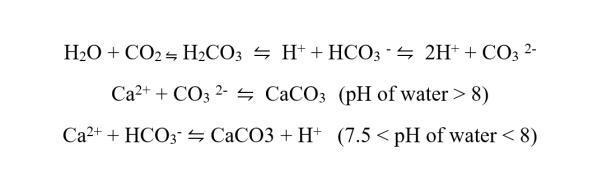
Autogenous healingisthetypeofhealingthatispromoted inherently by the concrete itself without the help of any external factors such as additives. Autogenous healing is promoted by the presence of dry cementite material which canstillrehydratetoreactandfillthecrackorbytheformation of Calcium Carbonate (CaCO3) or Calcium Hydroxide (Ca(OH)2).Crackscanalsobefilledduetotheswellingofthe cementitesurface.AutogenousHealingrequiresthepresence of moisture and the absence of tensile strength to facilitate the filling of micro-tears in the concrete. This method works for tears ranging from 50µm to 150µm with full recovery being possible under 50µm after wet-dry cycles. [14] Autogenous and natural self-healing happens because of the crystallization of calcium carbonate. In the reaction, CO2 emerges from the air and the calcium ion Ca2+ is derived fromconcrete.Thereactionsinvolvedare:[15]
Ideastodevelopself-healingconcreteusing microcapsules have been in rounds after White et al. proposed the idea of healingpolymercompositesusingmicrocapsules[16].
Microcapsules are micron-sized particles having a shell that encapsulatesaglueorasolvent.Differentmicrocapsulesacting as a resin and hardener as a two-part epoxy system can also be used. Such capsules can be mixed with the aggregate and the cement mix to form a mixture that contains a percentage of liquid resin that can flow in the cracks developedintheconcreteafterundergoingcyclicstresses.As suggested by H.M. Andersson et al. in Self Healing Polymers and compos-ites, Poly Urea-Formaldehyde, Polyurethane Microcapsules, and Grubbs’ catalyst inside wax protected microspheres as discussed by White et al. can be used. Selfhealing using microcapsules seems a viable method to prolong concrete life. Microencapsulated walls show greater healing capability than conventional walls as studied by AlTabbaa et al. in the UK fields study. The microcapsules used comprised of sodium silicate as the cargo embedded in an emulsionwithmineraloil[17].
Biological organisms employ a vascular structure that can transportnecessaryfluidstomaintainthetemperature,assist in aerobic activity, and supplant necessary healing to keep thetis-suesalive.Asimilarnetworkingtechniquecanalsobe applied in the concrete structure, so that once the crack formation takes place, the binder material can supply resin, thereby recovering the lost strength of the concrete. [18]. Resin-filled hollow fibers provide an advantage against microcapsules since they can provide structural reinforcement to the specimen. Instead of being spread randomly like the microcapsules, they can be integrated as requiredatplacesthataremorepronetofailure.Also,unlike microcapsules, hollow fibers do not leave empty spaces which increases the stress concentration. However, they prove to be costly and time-consuming to embed into the product as compared to the microcapsules. Hollow Glass Fibrescan be embeddedintotheconcretetoprovidehealing abilityasdiscussedin[19].AHollowGlassFibrebetween30100µm with hollowness around 50% was embedded with
International Research Journal of Engineering and Technology (IRJET) e-ISSN:2395-0056
Volume: 09 Issue: 09 | Sep 2022 www.irjet.net p-ISSN:2395-0072
glass fiber reinforced plastic to emulate self-healing. The repair agent flows into the damaged zone when cracks are formedduetoloading.
Biological Approach makes use of bacteria that are Alkali resistantandcanformsporestofillthecavitythatiscreated afterdamage.Bacteriaaptforthepurposeinclude B. cohnii, B. pseudofirmus,and B. sphaericus.H.M.Jonkersetal.[11]
[15] studied the viability of bacteria incorporated concrete. Portland cement was mixed with tap water and B. cohnii bacteria spores. The specimen recovered at room temperature. The specimen contained 1-10 ×108 spores per cm-3 of concrete with dimensions of 4 cm ×4 cm ×4cm. The survivalratewasthenobservedbyestimatingthenumberof viable bacteria present by the MPN (most probable number) method.Itwasfoundthatfortwosizeclassesof0.01-0.1µm and0.1-1µm,anabundanceinthequantityfromlargerpores inspecimenscuredfor3-7dayswasobservedascomparedto the smaller pores cured for 28 days. The majority of added organiccompoundsresultedinsignificantlyreducedstrength developmentexceptfortheadditionofcalciumlactatewhich didnotsubstantiallyaffectthecompressivestrength.
Along with the known bacterium above mentioned, B. cohnii, B. pseudofirmus, and B. sphaericus, some other type of bacteria are also used to fulfill other roles which are always required while considering self-healing. Certain bacterium like B. pasteurii, Deleya Halophila, Halomonasrurihalina, Myxococcus Xanthus, and B. megaterium are majorly used for crackhealingprocesses.B.sphaericusisusedasanagentfor surface treatment [20]. Often, when a lot of time is passed whichsurpassesthefunctioningtimeoftheselectedbacteria, the bacterial spores lay dormant. When cracks occur, and water finds its way in, the dormant bacterial spores will be activated and form calcium carbonate to heal the crack.. As thecrackheals,thebacteria within,willbedeactivated.With time, the environmental conditions turn in the favor of the spore; these spores can be activated again. For the cracks which pre-exist, spore or bacterial culturecan be introduced [21].Thestudyonself-healingconcreteislimitedtobacteria only[11][21][22-35].
Foraslongasthe overall progressof self-healing concrete is concerned, the research has extensively been focusing on the bacteria meditated approach alone. But it is to be noted that, there is a far better approach available which in itself becomes the scope of this research. To begin considering
fungi as the potential candidate for self-healing research, thefollowingareafewreasons:
• Therehasbeenlittlesuccessconcerninglong-termselfhealingefficacy.
• Therehasbeenlittlesuccessconcerningtherepairof widecracksorrapidcrackrepair.
• Incorporation of healing agents i.e., Bacterial spores resultinthelossofconcretecompressivestrength[36].
Decade-long researches have been supporting the bacterium approach to an extent that there is next to no informationavailableonthegenomesoffungithatrepresent or possess such a self-healing capability. There are a few logicallyresearchedintuitiveconceptsthatjustmightbeable to support a scientific view that the paradigm shift supports fungiasthenextcandidateforself-healingresearch.Thefirst and foremost point naturally becomes that ‘Fungi mediated self-healing concrete may possess long term self-healing capacity[36].Certainspeciesoffungihaveevolvedtheability toadapttoarangeofso-calledextremeenvironments,where few other microorganisms could survive [37]. According to Magan (2007), many different species of fungi can grow in alkaline environment. For example, Paecillomyces lilacimus and Chrysosporium spp.arebothalkaliphilicandabletogrow verywellatpH-valuesbelow11.Geneticallyengineeredfungi arealsoconsideredasimportantcandidatesforself-healing concrete[38].
Fungi-mediated self-healing concrete may heal wider cracks within shorter periods [36]. Fungi generally grow either in the yeast-like form or possessing filamentous structure. The cells of filamentous fungi grow hyphae, creatingabranchednetcalled mycelium.Itiswidelybelieved that filamentous fungi possess distinctive advantages over othermicrobialgroupstobeusedinavarietyofapplications of bio-mineralization-based technologies due to their superior cell wall-binding capacity and extraordinary metaluptake capability [36] Incorporation of Healing Agents, i.e., Fungal Spores and Nutrients, Could Lead to No Negative ConsequencesonConcreteCompressiveStrength[36].
With the extensive study carried on Self Healing Concrete forthepastdecade,ithasbeenobservedthatthemajorityof researchwasdoneonlyonbacterialapproachandthefungal approachwasleftunexplored.Thebacterialapproach, which maybesuperiortotheNaturalandChemicalapproach,hasa considerable amount of limitations that no longer can be
International Research Journal of Engineering and Technology (IRJET) e-ISSN:2395-0056
Volume: 09 Issue: 09 | Sep 2022 www.irjet.net p-ISSN:2395-0072
overlooked. The overall speed of progress is hindered solely
duetolimitingtheperspectivetothebacterialapproach.The scope must be extended to the fungal approach, given its extraordinarymineralizationtechnique.
[1]Milan, Sneha, 2018,’Experimental Study on Strength Characteristics of Self–Healing Concrete with Fly Ash’, IRJET,vol06,issue06,pp.1
[2]Use of bacteria to repair cracks in concrete by Kim Van Tittelboom a, Nele De Belie a,*, Willem De Muyncka, b, WillyVerstraeteb.,2008.
[3]Willemetal.,2008
[4]Self-Sensing Concrete in Smart Structures. http://dx.doi.org/10.1016/B978-0-12-800517-0.000113
[5]Abrams D. Autogenous healing of concrete. Concrete 1925;27(2):50. Dry C. Matrix cracking repair and filling usingactiveandpassivemodesforsmarttimedreleaseof chemicalsfromfibersintocementmatrices.SmartMater Struct1994;3(2):118–23
[6]Tittelboom KV, Belie ND. Self-healing in cementitious materials-areview.Materials2013;6:2182–217
[7]Wei Wang, 2019, ‘Research Status of Self Healing Concrete’, IOP Conf. Series: Earth and Environmental Science218(2019)012037
[8]EdvardsenC.Waterpermeabilityandautogenoushealing ofcracksinconcrete.ACIMaterJ1999;96:448–54
[9]HearnN. Self-sealing, autogenous healing, and continued hydration: what is the difference? Mater Struct 1998; 31:563–7
[10] Virginie Wiktor, 2011, ‘Quantification of crackhealing in novel bacteria-based self-healing concrete’, CementandConcreteComposites
[11] Jonkers HM, Thijssen A, Muyzer G, Copuroglu O, SchlangenE.Applicationof bacteriaasself-healingagent for the development of sustainable concrete. Ecol Eng 2010;36:230–5
[12] RapoportJ,AldeaCM,ShahSP,AnkenmanB,KarrAF. Perme-abilityofcrackedsteelfiber-reinforcedconcrete.J MaterCivilEng2002;14(4):355–8P
[13] Hoseini M, Bindiganavile V, Banthia N. The effect of mechanical stress on the permeability of concrete: a review.CemConcrCompos2009;31:213–20)
[14] Zwaag, Sybrand. Self Healing Materials, Delft, Springer,2007
[15]Qureshi, Tanvir, and Abir Al-Tabbaa. Self-Healing Concrete And Cementitious Materials. 2021, https://www.intechopen.com/books/advancedfunctional-materials/self-healing-concrete-andcementitious-materials.
[16] White, S. R., Sottos, N. R., Geubelle, P. H., Moore, J. S., Kessler, M. R., Sriram, S. R., . . . Viswanathan, S. (2001). Autonomic healing of polymer composites. Nature, 409(6822),794–797.doi:10.1038/35057232
[17] Al-Tabbaa,A.,Litina,C.,Giannaros,P., Kanellopoulos, A., & Souza, L. (2019). First UK field application and performance of microcapsule-based self-healing concrete.Constructionand BuildingMaterials,208,669–685.doi:10.1016/j.conbuildmat.2019.02.178
[18] Trask,R.S.,Williams,H.R.,&Bond,I. P.(2007).Selfhealing polymer composites: mimicking nature to enhance performance. Bioinspiration& Biomimetics, 2(1),P1–P9.doi:10.1088/1748-3182/2/1/p01
[19] Self Healing Fibre-reinforced Polymer Composites: AnOverview
[20] Salmabanu, Suthar, 2015, ‘A Review on Self Healing Concrete’,JournalofCivilEngineeringResearch2015,pp. 53-58)
[21] EPOfilms,2018.Jin,Congruietal.”Fungi:ANeglected CandidateForTheApplicationOfSelf-Healing Concrete”. Frontiers In Built Environ-ment, vol 4, 2018. Frontiers Media SA, doi:10.3389/fbuil.2018.00062. Accessed 11 July2021
[22] Fortin, D., Ferris, F. G., and Beveridge, T. J. (1997). Surface-mediated mineral development by bacteria. Rev. Mineral.35,161–180.
[23] Stocks-Fischer,S.,Galinat,J.K.,andBang,S.S.(1999). Microbiolog-ical precipitation of CaCO3. Soil Biol. Biochem.31,1563–1571.
[24] Bang,S.S.,Galinat,J.K.,andRamakrishnan,V.(2001). Calcite precip-itation induced by polyurethaneimmobilized Bacillus pasteurii. Enzyme Microb. Technol. 28, 404–409. doi: 10.1016/S0141-0229(00)00348-3
International Research Journal of Engineering and Technology (IRJET) e-ISSN:2395-0056
Volume: 09 Issue: 09 | Sep 2022 www.irjet.net p-ISSN:2395-0072
[33] Ersan, Y. C., De Belie, N., and Boon, N. (2015a). Microbially induced CaCO3 precipitation through Bang, S. S., Lippert, J. J., Yerra, U., Mulukutla, S., and Ramakr-ishnan, V. (2010). Microbial calcite, a bio-based smartnanomaterialinconcreteremediation.Int.J.Smart Nano Mater. 1, 28–39. doi: 10.1080/19475411003593451
[25] Ramachandran, S. K., Ramakrishnan, V., and Bang, S. S. (2001). Remediation of concrete using microorganisms.ACIMater.J.98,3–9.doi:10.14359/10154
[26] Dick,J.,DeWindt,W.,DeGraef,B.,Saveyn,H.,Vander Meeren, P., De Belie, N., et al. (2006). Bio-deposition of a calcium carbonate layer on degraded limestone by Bacillus species. Biodegradation 17, 357–367. doi: 10.1007/s10532-005-9006-x
[27] Ramakrishnan, V. (2007). “Performance characteristics of bacterial concrete: a smart biomaterial,” in Proceedings of the 1st International Conference on Recent Advances in Concrete Technology (Washington,DC),67–78.
[28] De Muynck, W., De Belie, N., and Verstraete, W. (2010). Microbial car-bonate precipitation improves the durability of cementitious materials: a review. Ecol. Eng. 36,118–36.doi:10.1016/j.ecoleng.2009.02.006
[29] Jonkers, H. M., and Schlangen, E. (2009). A two component bacteria-based selfhealing concrete,” in ConcreteRepair,RehabilitationandRetrofittingII,edsM. G. Alexander, H. D. Beushausen, F. Dehn, and P. Moyo (Boca Raton, FL: CRC Press, Taylor and Francis Group), 119–120.
[30] Van Tittelboom, K., De Belie, N., Van Loo, D., and Jacobs, P. (2011). Self-healing efficiency of cementitious materials containing tubular capsules filled with healing agent. Cem. Concr. Comp. 33, 497–505. doi: 10.1016/j.cemconcomp.2011.01.004[31]Jonkers,2011
[31] Wang, J., Van Tittelboom, K., De Belie, N., and Verstraete, W.(2012). Use of silica gel or polyurethane immobilized bacteria for selfhealing concrete. Constr. Build. Mater, 26, 532–540. doi:10.1016/j.conbuildmat.2011.06.054
[32] Wang,J.Y.,Snoeck,D.,VanVlierberghe,S.,Verstraete, W., and De Be-lie, N. (2014b). Application of hydrogel encapsulated carbonate precip-itating bacteria for approaching a realistic self-healing in concrete. Con-str. Build. Mater. 68, 110–119. doi: 10.1016/j.conbuildmat.2014.06.018Wang,J.Y.,Soens,H., Verstraete, W., and De Belie, N. (2014a). Self-healing concrete by use of microencapsulated bacterial spores. Cem. Concr. Res. 56, 139–152. doi: 10.1016/j.cemconres.2013.11.009
denitrification:anoptimizationstudyinminimalnutrient environment. Biochem. Eng. J. 101, 108–118. doi: 10.1016/j.bej.2015.05.006
[34] Khaliq, W., and Ehsan, M. B. (2016). Crack healing in concrete using various bio influenced self-healing techniques. Constr. Build. Mater. 102, 349–357. doi: 10.1016/j.conbuildmat.2015.11.006 [36] Seifan et al., 2016
[35] Zhang, J., Liu, Y., Feng, T., Zhou M. Zhou, A., et al. (2017).Immobilizingbacteriainexpandedperliteforthe crack self-healing in concrete. Constr. Build. Mater. 148, 610-617doi:10.1016/j.conbuildmat.2017.05.021
[36] Jin, Congrui et al. ”Fungi: A Neglected Candidate For The Application Of Self-Healing Concrete”. Frontiers In Built Environment, vol 4, 2018. Frontiers Media SA, doi:10.3389/fbuil.2018.00062.Accessed11July2021
[37] Magan,2007
[38] Lamb et al., 2001; Caracuel et al., 2003a,b; Nobile et al.,2008;Penalvaetal.,2008;Hervas-Aguilaretal.,2010.