International Research Journal of Engineering and Technology (IRJET) e-ISSN: 2395-0056

Volume: 09 Issue: 09 | Sep 2022 www.irjet.net p-ISSN: 2395-0072
International Research Journal of Engineering and Technology (IRJET) e-ISSN: 2395-0056
Volume: 09 Issue: 09 | Sep 2022 www.irjet.net p-ISSN: 2395-0072
1 Professor and HOD, Dept. of CSE, G. Narayanamma Institute of Engineering and Technology, Telangana, India. 2Student, Dept. of CSE, G. Narayanamma Institute of Engineering and Technology, Telangana, India ***
Abstract - The Internet of Things (IOT) is a growing and disruptive technology with standards emerging for wireless communication between sensors, actuators, and gadgets in everyday human life. With the development of IOT systems, it is obvious that the medical industry needs a technology system for providing health care to those with disabilities. This paper describes a voice-activated wheelchair convertible bed prototype that was created especially for bedridden individuals. The goal of this study is to design, develop, and build a voice-controlled wheelchair cum bed that can be moved using voice commands. Additionally, this bed allows the patient to turn to the side. The patient can choose to sleep on their left or right side by using separate mechanisms on the left and right sides of the bed. Additionally, using voice commands, the bed may be transformed into a chair position. There are two stages to the bed's design and development. A bed with movable parts is designed first. The addition of a side-turning mechanism later improves this design. Secondly, voice instructions can be used to control wheelchair movement by using the input provided. A wheelchair that has been designed includes an automated obstacle detection system that uses ultrasonic sensors to stop the wheelchair as soon as an obstruction suddenly blocks its path. To plan and evaluate bed operations and positions, computer modeling, simulation, fabrication, and testing are used. Both immobile patients and their caretakers would benefit much from this device. Therefore, the created voice-controlled wheelchair cum bed may offer simple access for individuals with physical disabilities and provide automated protection from an obstacle collision if any voice command error occurs.
Healthmonitoringisessentialtoourdailylives.Theuseofvariousspecializedsensorsinhospitalshasincreasedrecently becauseofeffortstoenhancepatientoutcomesandoverallconstructionefficiency.Modernhospitalbedsservemorepurposes thansimplyprovidingsleepingspaceforpatients.Tomakethepeoplewhoarebedriddenmorecomfortableandatease.The voice-controlledwheelchairconvertiblebedthatcanbeoperatedviavoicecommandsisdescribedintheproposedsystem along with its design and prototype development. The bed has unique characteristics that set it apart from other beds. Moreover, the bed may be transformed into a chair position using voice instructions. Therefore, this study proposes a wheelchairthatmaybeoperatedbytheuser'ssimplevocalinstructionsanddiscussesthedesignanddevelopmentofavoicecontrolledautomaticwheelchair.Additionally,thecreatedwheelchairhasultrasonicsensorsthatcandetectobstructionsand haltthewheelchair'smotion.Theuserswillbemoresecureasaresult.
This study presents a medical care bed with the Internet of Things technologies. A bed designed specifically for hospital patients or other people who need specific forms of treatment, controlled by a button, voice commands, or phone apps. Common features include adjustable height for the entire bed, for the head and feet, adjustable temperature, adjustable pressure,voicecommand,andprogramstorunbothfamiliesusingsensorsandmonitoringthepatient'sbodytemperature. Thisgroupoftraitsisdistinctiveinthatitcaterstoboththeconvenienceandcomfortofpatientsaswellasthecomfort of medicalprofessionals.[1].
Asmartbedisamedicalbedthatisapartofanincreasinglyprotectivepatient-carehabitat.Raspberrypiisinterfacedwitha steppermotorusingamotordrivercircuitandisthenbroughtforwardwithanaudioinput.Theaccuracyofdetectingthevoice commandswasfoundtobetroublesome.Wirelesscommunicationcanbeahindrancetothepatient[2].
Voicerecognitionsoftwareinavarietyoflanguagesisusedtoregulatewheelchairmovement.Thewheelchairmaystopor pausewhenanobstructionorbarrierispresentinfrontofitbecauseoftheobstacle-detectingtechnology.Thelevelofuser safetyisraisedbythisstrategy.Iftheuserdoesnotadjustwithvoicecontrol,thewheelchairsystemadditionallyhasakeypad option.Onlylargeobstructionsaredetectedbytheobstacledetectionsystem[3].
International Research Journal of Engineering and Technology (IRJET) e-ISSN: 2395-0056
Volume: 09 Issue: 09 | Sep 2022 www.irjet.net p-ISSN: 2395-0072
Inorder,thedesignandimplementationofanelectricchairforpatientsthatcanascendstairssuccessfully,automaticcontrolis used.ThechairreceivesaninputofDCvoltageandisaround125×88cmandweighs90kg.Hydraulicelectricalmechanical jacks,DCmotors,andelectriccontrolcircuitsareamongtheelectromechanicalcomponents.Whenthereisnoclimbingofstairs itworksnormallywhereaswhenthemachineisfacingasetofstairs,thefirststairthatthemachinetouchesactivatethemotor andclimbupstairs.Asaresult,thestabilityissueisaddressedinthispaperusinghydraulicjacksthatemployanglemeasuring tools[4].
Thisproposedmedicalbedismeanttosolvetheissueofrottenskinand/orulcersandtheinabilitytoreachthebathroom througha unique designthatrotatesthepatientand providesan innovativedesignedlavatoryforcleansing. Byusingan androidtabletconnectedtotheArduinomicrocontrollerviaBluetooth,thecaretakercanrotatethebedineitherdirectionto movethepressureawayfromthebackofthepatientandcontroltheslidinglavatorytostartcleansing[5].
Theevolutionofavoiceacknowledgment-basedsmartwheelchairsystemforphysicallyimpairedpeoplewhocan'thandlethe wheelchairbytheirhandisspokeninthispaperwherethepatientcandrivethewheelchair-usingvoiceinstructionsandthe regionofthepatientcanbepursuedusingtheGPSmoduleinthewheelchairthattrailsandsendstheinformationtomobile phoneapplicationbymethodsforFirebase.VoicerecognitionmoduleVR3isusedtorecordtheuser'svoiceandseethatvoice holds fast to the bearings of the patient. As this system simultaneously offers voice-recognized wheelchair, motor speed control,hindrancearea,andtheGPSfollowingoftheuserutilizingtheandroidapplicationinaperfectworld,itwillbeafruitful systemforhandicappedpeopletheworldover[6].
Thisprojectaimedtodesignabedthatcanbeconvertedintoawheelchairthatcanbereliedonbyrunningvoicecommands. Thevoice-controlledwheelchairconvertiblebedismadeupofthefollowingcomponents:
Voicecaptureandidentificationarebothfeaturesofthe EasyVR shield3.0.Theuser'svoiceinstructionsare enteredand recordedinthevoicerecognitionmodule,andthevoicecapturemoduleusesacomparisonbetweentheuser'svoicecommands andtherecordedvoicecommandstoidentifythevoicecommands.Therearenoadditionalrequirementsforthelanguagesof voicemodule.Inessence,itmaybeanylanguage,includingEnglish,Thai,oranyregionaldialect.However,thepronunciation usedtotrainthesystemshouldbeasliketheactualpronunciationaspossible.Thespeechmodulereceivesvoicecommands fromthemicrophoneandpassestheresultsfromthevoicerecognitionmoduletothemicrocontrollertoconvertthevoice commands.
AmicrocontrollerboardcalledArduinoUNOisbasedontheATmega328P.Itcontainssixanaloginputs,a16MHzceramic resonator,fourteendigitalinput/outputpins(sixofwhichcanbeusedasPWMoutputs),aUSBport,apowerjack,anICSP header,andaresetbutton.
Aservomotorisatypeofrotaryactuatorormotorthatoffersmoreaccuratecontroloverangularposition,acceleration,and velocitythanaconventionalmotorcan.Itusesastandardmotorandconnectsasensortoittoprovidepositionfeedback.It movesthebedposition.
TheL298NisadualH-BridgemotordriverwhichallowsspeedanddirectioncontroloftwoDCmotorsatthesametime.The modulecandriveDCmotorsthathavevoltagesbetween5and35V,withapeakcurrentupto2A.
TwoDCmotorsareemployedforthemotionofthewheelchair.TherightrearwheelisconnectedtooneDCmotor,whilethe leftrearwheelisconnectedtotheother.Theoperatingvoltageandpowerare24Voltsand350watts,respectively.
International Research Journal of Engineering and Technology (IRJET) e-ISSN: 2395-0056
Theelectricalvoltagesof5V,9V,and12Vareusedtosupplytothemicrocontrollersystem,theservomotor,andthemotor speedcontrolmodule,respectively.
Forautomaticobstacledetection,twoultrasonicsensors(HC-SR04)areused.Theultrasonicsensorsdetectthenearbyobject byproducingabriefultrasonicpulseandreceivingthereturnedecho.Thedistancetoanitemisevaluatedusingtheamountof timeneededforthepulsesignaltogothereandbacktotheultrasonicsensor.
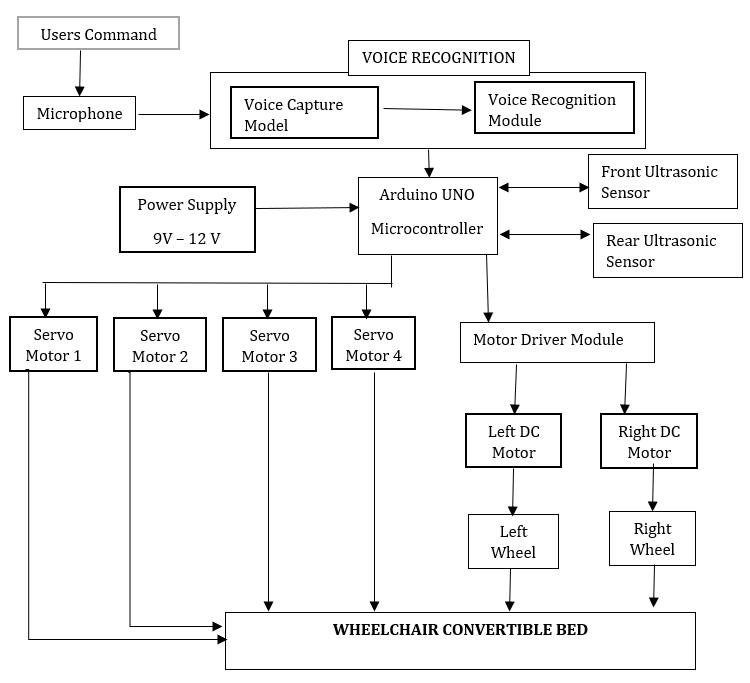
Figure1representstheschematicdiagramofthevoiceautomatedwheelchairconvertiblebed.
Figure 1: Schematicdiagramofthevoiceautomatedwheelchairconvertiblebed.
Theproposedsystemconsistsoftwophases:
a.MovementofBed b.MovementofWheelchair
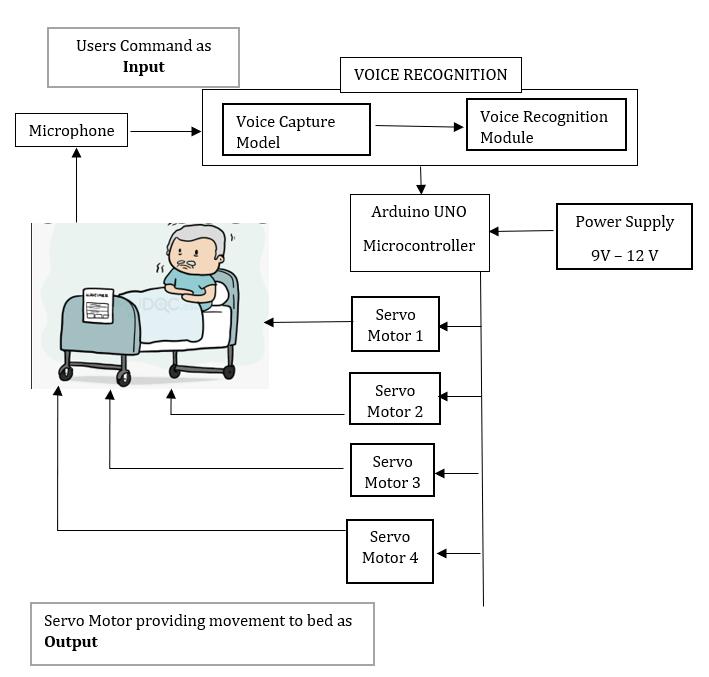
Theideaistodesignabedthatcanbereliedupontoconductvoiceorderssothatitcanbeusedincarefacilities,homes,and hospitals.Belowisaschematicdiagramthatshowshowthedesignedsystemfunctions.Therearesevendistinctcategoriesof instructions for moving the bed: rest, wake, sit, up, down, lift, and fall. Figure 2 represents the schematic diagram of the movementofthebed.Themicrophonepicksuptheuser'svoiceordersandconvertsthemintoelectricalimpulses.Thevoice modulereceiveselectricalimpulsesanddigitizesandstoresthemastemplatestorepresentusercommands.Initially,users voicemustbetrainedtoutilizetheestablishedsystembeforethatcommandissavedinthevoicemodule.Whenauserissuesa commandtothesystem,thespeechmodule,ifthecommandmatchesonethathasalreadybeensaved,sendstheoutputtothe microcontroller.Thenservomotorwillperformthespecifiedfunction.
Volume: 09 Issue: 09 | Sep 2022 www.irjet.net p-ISSN: 2395-0072 © 2022, IRJET | Impact Factor value: 7.529 | ISO 9001:2008 Certified Journal |
International Research Journal of Engineering and Technology (IRJET) e-ISSN: 2395-0056
Volume: 09 Issue: 09 | Sep 2022 www.irjet.net p-ISSN: 2395-0072
Figure 2: Schematicdiagramforthemovementofbed.
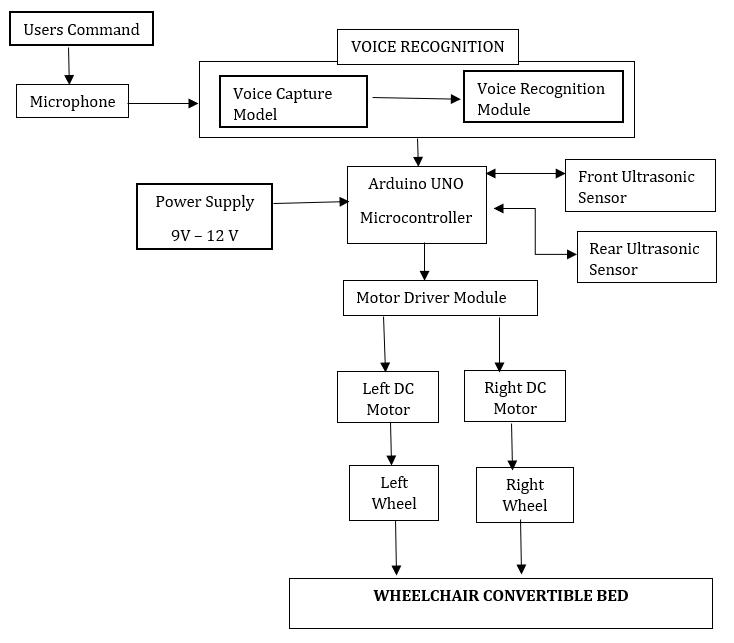
A wheelchair is a device that is used for mobility purposes. The developed system enables disabled patients to lead life independently without external assistance and without moving out of bed. The proposed voice-controlled wheelchair convertiblebed'sschematicdiagramisshowninFigure3,respectively.Amicrophoneisusedtoreceivespeechcommands from the user and transform them into electrical impulses. Electrical signals are transmitted to the voice module, which digitizesandstoresthevoicesignalsastemplatestorepresentusercommands.Beforethatcommandissavedinthevoice module,theuser'svoicemustfirstbetrainedtousetheestablishedsystem.Ifthecommandgivenbytheusermatchesonethat hasbeenpreviouslystored,thespeechmodulesendstheoutputtothemicrocontrollerwhentheuseroffersthecommandto thesystem.Thefrontandrearultrasonicsensors'outputsignals arealsosenttothemicrocontroller,whichservesasan obstacledetectionsystem.Theoutputofthemicrocontrollerisconnectedtothemotorspeedcontrolmoduleandtheservo motors.L298nmotordrivermoduleisusedtoregulatetherotationoftheDCmotorsthatprovideforwardandbackward movementofthedesignedwheelchair.Abatteryisutilizedtosupplytheoperationalvoltagesofthemotorspeedcontrol module,servomotors,andthemicrocontrollersystemwhichare5V,9V,and12V,respectively.
International Research Journal of Engineering and Technology (IRJET) e-ISSN: 2395-0056
Volume: 09 Issue: 09 | Sep 2022 www.irjet.net p-ISSN: 2395-0072
Figure 3: Schematicdiagramforthemovementofwheelchair.
Theprototypeofavoice-automatedwheelchairconvertiblebedisdevelopedasshowninfigures4and5
Figure 4: Prototype of developed Bed.
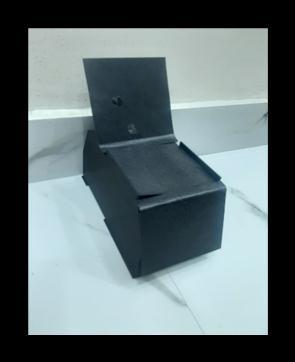
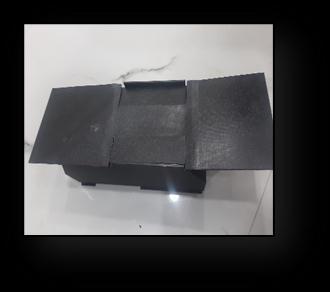
Figure 5: Bed converted to wheelchair
Theinteractionsbetweentheuservocalinstructions,microprocessor,motordrivermodule,andmotorsareestablishedto assesstheperformanceoftheproducedwheelchaircumbed.Tables1and2showtheoutcomesoftheinteractionbetweenthe micro controller, motor driver module, and motors upon activation by the user's voice commands. Whenthedesignedsystemissuppliedwithvoltage,thesystembeginstooperate.Themachinethenentersstandbymodewhile itwaitsforavoiceinstructiontoactivateit.Bothservomotors(1&2)willbeat0degreesduringtheRestcommand.Servo motoronewillbeata35-degreeanglefortheWakecommand.Servomotors1and2willbeat60degreesand90degrees, respectively,forSitcommand.WhereasServomotorthreewillbeat40degreesfortheUpcommandand0degreesforthe DowncommandandServomotorfourwillbeat35degreesfortheLiftcommand,and0degreesfortheFallcommand.
International Research Journal of Engineering and Technology (IRJET) e-ISSN: 2395-0056
Volume: 09 Issue: 09 | Sep 2022 www.irjet.net p-ISSN: 2395-0072
TABLE 1: Interaction of user voice commands and servo motors for the movement of the bed.
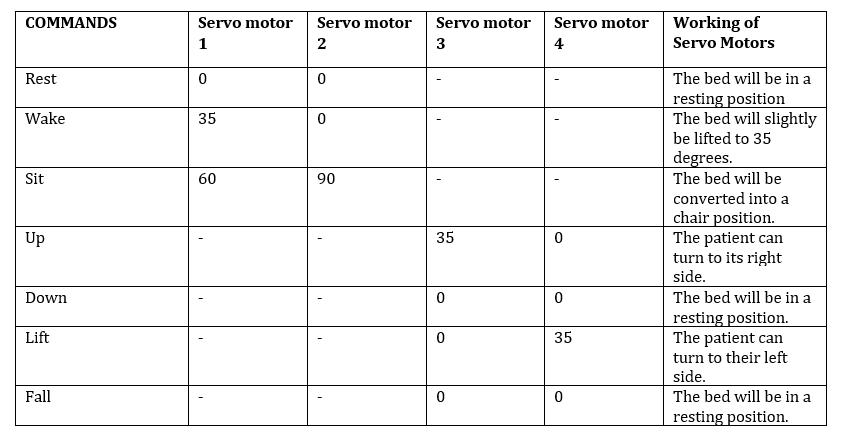
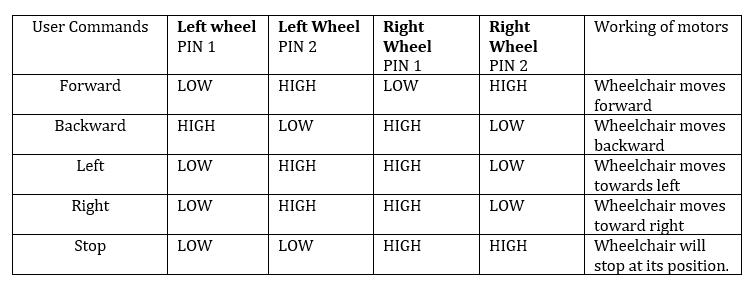
TABLE 2: Interaction of user voice commands, motor driver module, and motors for the movement of a wheelchair.
Therearefivedifferentmotions:forwardmotion,backwardmotion,leftmotion,rightmotion,andstopmotion.Thewheelchair drivesaheadwhentheforwardinstructionisgiven,andtherightandleftDCmotorsalsomoveforward.TherightandleftDC motorswillmoveintheoppositedirectioninresponsetothebackwardcommand.Leftmotormovesforwardinresponseto the left command while the right motor moves backward. Whereas right motor moves forward in response to the right command,whereastheleftmotormovesbackward.Bothmotorswillstoprotatinginresponsetothestopcommand.Whenany obstructionsaredetected,thewheelchair'sfrontandbackultrasonicsensorswillsuddenlystopbothmotorsfrommoving.The wheelchairsystemwilleitherendorreturntostandbymode.
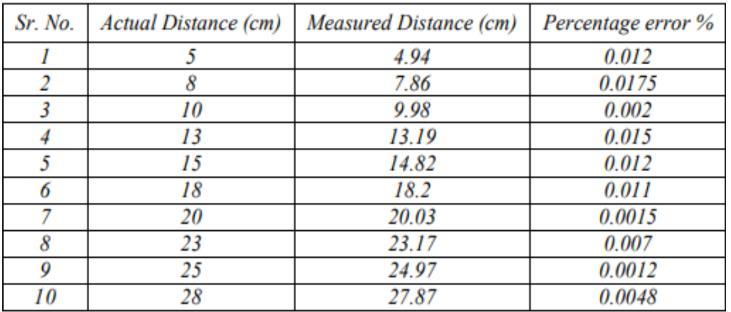
Table3describesthedistancemeasuredusingobstaclesensor. Thereisa substantial distancemeasuredbetweenActual distanceandMeasuredDistance.
International Research Journal of Engineering and Technology (IRJET) e-ISSN: 2395-0056
Thebedisdevisedusingtheresultsofmultiplestudiesandresearch.Thisbedwillbenefitpatientsaswellastheelderlyand thosewithspecialneedsworldwidebymeetingdemand.Thebedcanmove,respondtovoiceordersfromtheuser,andadjust tothepatient'svariousmovements,whichlowerstheriskofinfectionandpneumonia.Consideringthat85percentofback problems among nurses are caused by dealing with patients, an automatic bed might make life a little simpler for them. Individualssufferingfromphysicaldisabilitieswhoareunabletoregulatetheirmotions,particularlywiththeirarmsand hands,aremademoreindependentbecauseofthewheelchaircumbed.Therefore,thedevelopedvoice-controlledwheelchair cumbedcanprovideeasyaccessforpeoplewithphysicaldisabilitiesandoffermoresafetyduetoautomaticprotectionfrom obstaclecollisions.
[1]19thinternationalconferenceonSciencesandTechniquesofAutomaticcontrol&computerengineering(STA),Sousse, Tunisia,March24-26,2019
[2]IgnacioGhersi,MarioMarinoandMonicaTeresitaMiracles,Smartmedicalbedsinpatient-careenvironments,Ghersietal. BMCMedicalInformaticsandDecisionMaking(2018)18:63.IEEE
[3]M.V. Bramhe,N.Vijay,K.B.Rao,P.Bisen, R.Navsalkar,and T.Bajganiya,“Voice Controlled WheelchairforPhysically DisabledPerson,”InternationalJournalofAdvancedResearchinElectrical,ElectronicsandInstrumentationEngineering,vol.6, no.2,2017,pp.940-948
[4] Abdal-RazakShehab ''Design and Implementation Electrical Wheelchair for Disable Able to Stairs Climbing by Using HydraulicJack'',IOSRJournalofElectricalandElectronicsEngineering.Volume7,Issue3.e-ISSN:2278-1676,PP82-92
[5] Tawfik, Ahmed Hamdan, Abdulrahman Azzam and Yahya Ibrahim PublishedOnlinein2018.
[6]Moucary,"MedBed:SmartMedicalBed",2017FourthInternationalConferenceonAdvancesinBiomedicalEngineering (ICABME).
[7]THE2NDINTERNATIONALCONFERENCEONSCIENCEANDINNOVATEDENGINEERINGIOPConf.Series:MaterialsScience andEngineeringIOPPublishingDOI:10.1088/1757-899X/854/1/012045,2020.
[8]InternationalConferenceonCommunicationandSignalProcessing,July28–30,2020,IndiaKalimuthukumarSakthivel, PradeebaThavamani,RameshwarChandrasekhar,MohamedsheikmydeenIsmail,VishnuvarthananGovindarajandSakthivel Sankaran.
[9] International Journal of Recent Technology and Engineering 8(4), Voice Actuated Hospital Bed, DOI:10.35940/ijrte. C5882.118419.
[10] Android-based Smart Bed, Seema Rajput, Shivani Ghasti, Vaishnavi Giramkar, Aditi Jadhav, DOI: http://doi.org/10.5281/zenodo.3525696.
Volume: 09 Issue: 09 | Sep 2022 www.irjet.net p-ISSN: 2395-0072 © 2022, IRJET | Impact Factor value: 7.529 | ISO 9001:2008 Certified Journal | Page632
International Research Journal of Engineering and Technology (IRJET) e-ISSN: 2395-0056
Volume: 09 Issue: 09 | Sep 2022 www.irjet.net p-ISSN: 2395-0072
Dr.M.SeethareceivedB.TechfromNagarjunaUniversityin1992,M.S.fromBITS,Pilaniin1999 andPh.DinComputerScienceandEngineeringintheareaofimageprocessinginDecember2007 from Jawaharlal Nehru Technological University, Hyderabad. She is currently working as a ProfessorandHead,DepartmentofCSEinGNITS,Hyderabad.Shehasvastteachingexperienceof 26 years and worked in reputed colleges including CBIT, Hyderabad and Bapatla Engineering College, Bapatla. Her areas of research include Image processing, Soft Computing, Artificial Intelligence,DataMiningandOptimizationAlgorithms.

FarahAnjumreceivedB.Techdegreein2020fromShadanWomenscollegeofEngineeringand Technology. She is currently in final year M.Tech student of G.Narayanamma Institute of Technology&ScienceandworkingasaAssociateSoftwareEngineeratThomsonReuters.Her primaryresearchinterestisInternetofThingsinHealthcare.