International Research Journal of Engineering and Technology (IRJET) e-ISSN: 2395-0056

Volume: 09 Issue: 09 | Sep 2022 www.irjet.net p-ISSN: 2395-0072
International Research Journal of Engineering and Technology (IRJET) e-ISSN: 2395-0056
Volume: 09 Issue: 09 | Sep 2022 www.irjet.net p-ISSN: 2395-0072
1M. Tech Scholar, Dept of ECE, BMSCE, Bengaluru, Karnataka, India
2Assisstant professor, Dept. of ECE, BMSCE, Bengaluru, Karnataka, India ***
Abstract -Internet of Things (IoT) is an answering technology to several problems of the agriculture it not only helps to get the sensory readings of the physical parameters but also helps to interconnect those information over the internetusingspecificprotocols.Thispaperdiscussregarding the use of IOT in agriculture for smart farming and also focuses on some of Image processing techniques for leaf disease detection . The sensors integrated helps in detecting the moisture of the soil, pH of the soil, temperature in atmosphere and also humidity in atmosphere. Images of the plant leaves are collected from the field and then Preprocessing based on Gaussian filter is carried out on the image, aftersegmentationdiseaseidentificationisdoneusing the fast R-CNN, faster R-CNN and Mask R-CNN methods, then the best method for identification is chosen among the three methods by comparing the results from the three models.
Key Words: smartagriculture,Deeplearning,fast R-CNN, fasterR-CNNandMaskR-CNN
Agricultureplaysanimportantroleintheeconomyofevery country. Crop produced by farmers must be in a proper condition to achieve expected profit. Advancements in technologymustbeusedinthisdomaintosaveandmake products market ready. But due to continuous change in weatherandlackoftechnologyaccessinthisfield,farmers are facing a huge challenge to protect their produce from differentdiseasesthatareunexpectedandoccurredatany time. In smart agriculture, a variety of data from various sources are combined. Sensors for agriculture and farmingcanmeasureanumberofdifferentparameters For instance,amultitudeofenvironmentalfactorsmightaffect crophealth.Tounderstandvariationswithinandbetween fields,the establishment of a financially viable, environmentally responsible farming system is aided by smart agriculture. The Internet of Things (IoT) is fundamentallywhatpowerstheAgricultureCyber-Physical System(A-CPS)(IoT).Duetoitsacceptanceandadvantages, IoThasevenenteredtheagriculturalindustry.Themajority of current research in "smart agriculture" focuses on increasing food production. Soil moisture sensor, temperature sensor, humidity sensor and pH sensor are connectedtoraspberrypithroughArduinonanotocollect the sensory data from the field and then they are further usedforcroprecommendation.
Traditionalwayofdiseasedetectionisbasedonobservation andtimeconsumingwhichrequiresexpertstobepresenton the field. Sometimes misdiagnosis of many diseases may cause harm to crops, products and consumers who are consuming the product. Artificial Intelligence (AI) plays a significantroleineveryverticallikeagriculture. AIcanbe usefultosolvemostcommonissuesinagriculture.Itcanbe usedtoidentifyvariousleafdiseasesinanearlystage.Using automaticplantleafdiseasedetectionmethodsfarmerswill get help to reduce their losses and to improve the productivity.WehaveusedDeepLearningtechniquewhich isasubsetofAItodetecttheleafdiseaseinanearlystage. Nowadays,ConvolutionalNeuralNetworksareconsidered astheleadingmethodforobjectdetection.Inthispaper,we considered detectors namely Fast Region-Based ConvolutionalNeuralNetwork(FastR-CNN),FasterRegionBased Convolutional Network (Faster R-CNN) and Mask Region-BasedConvolutionalNetwork(MaskR-CNN).Eachof the architecture should be able to be merged with any featureextractordependingontheapplicationorneed.We considersomeofthecommercial/cashcrops,cerealcrops, and vegetable crops and fruit plants such as tomato, bell pepper,tomatoetc imagesoftheseleavesareselectedfor ourpurpose.
Withtheaidofmachinelearningalgorithms,weareableto make precise decisions and analyze data collected from sensors, processed on the server, and assessed. The data detected by the sensor from crop yield for various characteristicssuchashumidity,temperature,precipitation, pHquality,andsoonisstoredbyIoTsystemsandthenused to forecast plant types that have a direct impact on crop development,after that aprediction choice is made to forwardtotheenduserforfurtheractionthatwillhelpthe enduser.Thissystemwillalsodefineacroppedimageofa plant using image processing and feature extraction algorithms. For photos gathered as a dataset, an optimizedCNN model is created and used. The goal of optimizationistoincreasethesystem'spredictionaccuracy andtheclassificationoftruepositivesamples.RaspberryPi receivesthesensordatagatheredbyArduinonano,andkmean algorithm is then applied to the data for crop recommendation.
International Research Journal of Engineering and Technology (IRJET) e-ISSN: 2395-0056
Volume: 09 Issue: 09 | Sep 2022 www.irjet.net p-ISSN: 2395-0072
Here, we take some of the papers related to smart agricultureandPlantleafdiseasesdetection usingvarious advancedtechniquessomeofthemareshownbelow,
In paper[1], The author of this research suggests a solarenabled smart agriculture system with crop disease predictiontohelpfarmersmaketheirworkeasierandmore profitable.Thesolarsensornodeismadeupofadesigned soil moisture sensor, a DHT11 sensor, and an embedded cameramodule.Thesoilmoisturelevelsassistinautomating theirrigationwaterpump,andcrop-relatedcamerapictures are transferred to the ThingSpeak cloud for storage and subsequentprocessing.
Inpaper[2],theauthorofthispaperhastakenintoaccount allofagriculture'sissuesandhighlightedtheimportanceof numeroustechnologies,particularlyIoT.Wirelesssensors, UAVs,cloudcomputing,andcommunicationtechnologiesare all thoroughly covered for this purpose. A fuller understandingofrecentresearchinitiativesisalsogiven.
In paper[3], An Internet of Things (IoT)-based control systemforimprovingfarminginruralareasispresentedby the author The control system's various parts and improvementsarereviewedandexaminedfromallangles, including testbed evaluation. Better energy, latency, and throughput performance has been obtained with the IoT MACandroutingsolution.
Inpaper[4],theauthorspresentafasterregion-basedCNNbased method (Faster Regional-CNN) for detection of smallerobjects.Usingtheconceptoftwo-stagedetection,the author proposes a new and improvedloss function for regressionof boundingboxesinthepositioningstageand uses bilinear interpolation to enhance the RoIpooling operation to address the issue of positioning deviation, In the recognition step, the author uses improved nonmaximum suppressionmethod to prevent loss of overlapping objects and multi-scale convolution features fusiontoincreasetheinformationinthefeaturemap.
Inpaper[5],theauthorssuggestedthat Whenusedforthe purpose of rust quantification, the Mask Regional-CNN outperformedconventionalimageprocessingmethods.The extensivesetofparametersthatmustbetunedpresentsone of the difficulties in employing Mask R-CNN; the author's studylookstuningoftheparametersautomatically.Forthe firsttime,hyper-parametertuningand geneticalgorithmon theMaskRegional-CNNatthisscaleareusedinthisstudy (GA).
a.
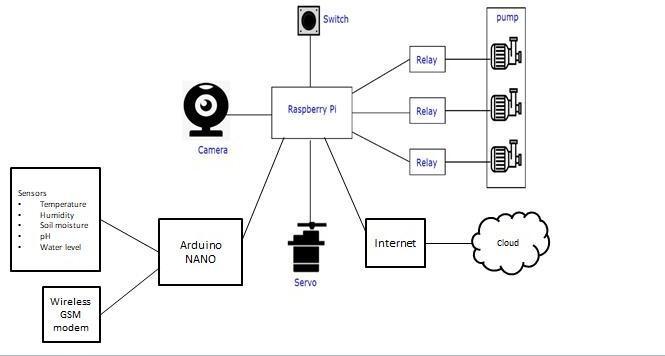
Theblockdiagramconsistsofawebcamera,raspberrypi, pressswitch,soilmoisture,andtemperatureandhumidity sensors.Thecameramodulecapturestheimageoftheleaf; thecapturedimageisgivenasaninputtotheraspberrypi module for further image processing and then compared withtheimagespresentinthedatabaseusingtheoptimized CNNalgorithm.Theresultsfromtheimageprocessingare senttothemobilephoneviainternet.Andfurtherafterthe successful detection of disease the plants have to be providedwithsuitablepesticidestoavoidanyfurtherspread ofdiseasesobasedonthediseasedetectedsuitablepesticide willbeintelligentlychosenbythesystemandsprayedtothe plantusingRelayandwaterpumps.
Based on the sensory data sensed by sensors irrigation controlisalsodone,thatiscertainthresholdwillbesetfor allthephysicalparametersandifthesenseddataisbelow thatthresholdorabovethatthresholdthen thewaterwillbe supplied to the agriculture land based on the current environmentalrequirements.
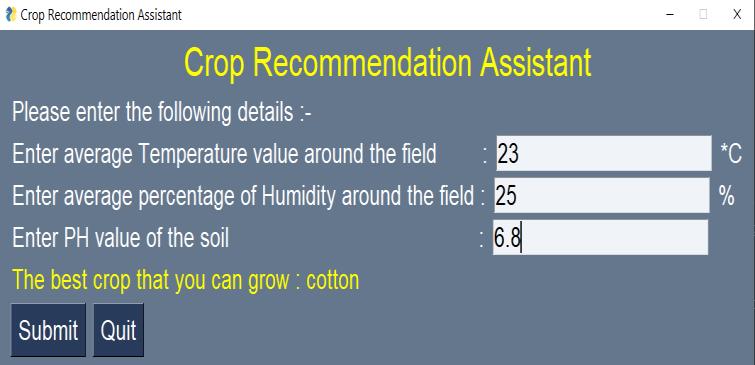
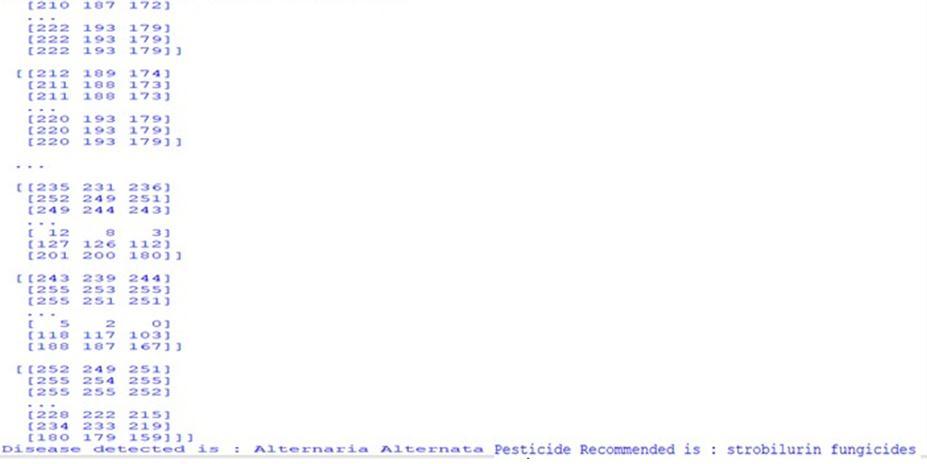
The optimized CNN algorithm among the 3 algorithms is choosenfinallyandtheoutputresultfromthemodelalong withthesuitablepesticidetobesprayedissentasmessage tothefarmerusingFast2SMSapi.Thecroprecommendation isdonebyconsideringthesensorydatathataresensedin thefarmandbasedonthosevaluesasuitablecropthatcan begrownisrecommendedthedataflowdiagramforthatis giveninnextsub-section.
International Research Journal of Engineering and Technology (IRJET) e-ISSN: 2395-0056
Volume: 09 Issue: 09 | Sep 2022 www.irjet.net p-ISSN: 2395-0072
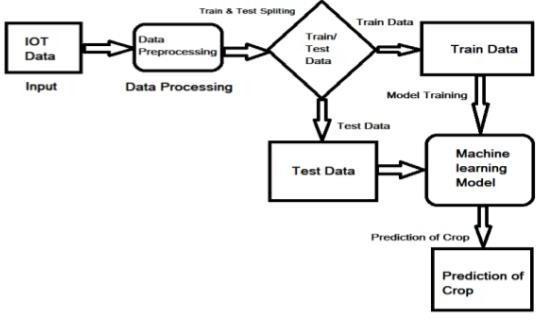
The methodology of machine learning is used to forecast cropyieldsinordertomaximizecropprofitability.Figure2 demonstratesthestreamofestimationoftheexpectedcrop yield As shown in the previous flow diagram, sensors are installed on the farm to detect data related to humidity, temperature, precipitation, and pH. K-mean algorithm is usedtocharacterizesenseddata.
c. Image Processing
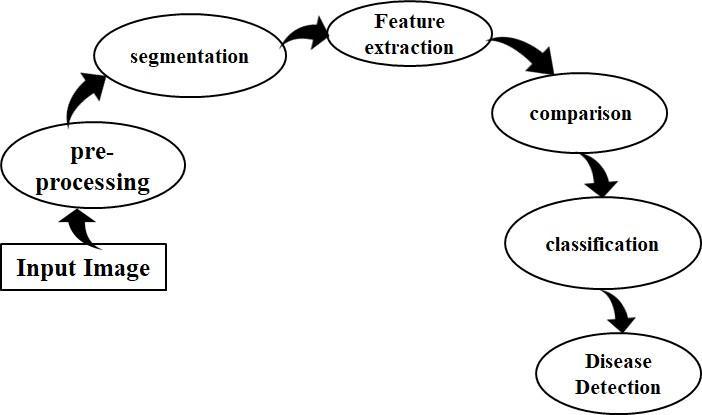
Input:TheLeafimagedatasetareimplementedasinput. Theinputimagesaretakenintheformat.jpgor.png
Preprocessing: The collected images are subjected to preprocessing.In the Preprocessingstep imageresize andnoiseremovalisperformed.
Segmentation: In the Segmentation process, the followingCNNareimplemented.
o FastR-CNNAlgorithm
o FasterR-CNNAlgorithm
o MaskR-CNNAlgorithm
ItisbasedonROIAlgorithmusingBoundingBox.
Classification: In this step to implement the SVM classifierisused,toidentifydiseasedornot
PerformanceEstimation:In thisstep,wecananalyses someperformancemetrics.
d. Fast vs Faster vs Mask R-CNN
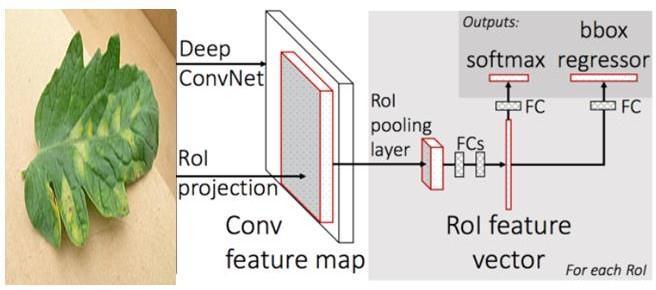
TheapproachissimilartotheR-CNNalgorithm.But,instead offeedingtheregionproposalstotheCNN,wefeedtheinput imagetotheCNNtogenerateaconvolutionalfeaturemap. Fromtheconvolutionalfeaturemap,weidentifytheregion ofproposalsandwarpthemintosquaresandbyusingaRoI poolinglayerwereshapethemintoafixedsizesothatitcan be fed into a fully connected layer. From the RoI feature vector, we use a softmax layer to predict the class of the proposedregionandalsotheoffsetvaluesforthebounding box.
Fig -4: LayerdiagramofFastR-CNN
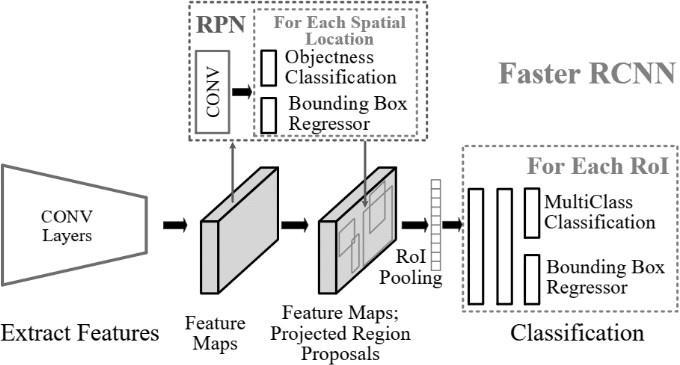
ItissimilartoFastR-CNN,theimageisprovidedasaninput toaconvolutionalnetworkwhichprovidesaconvolutional featuremap.Insteadofusingselectivesearchalgorithmon thefeaturemaptoidentifytheregionproposals,aseparate network is used to predict the region proposals. The predicted region proposals are then reshaped using a RoI poolinglayerwhichisthenusedtoclassifytheimagewithin the proposed region and predict the offset values for the boundingboxes.
Fig -5: LayerdiagramofFasterR-CNN
International Research Journal of Engineering and Technology (IRJET) e-ISSN: 2395-0056
Volume: 09 Issue: 09 | Sep 2022 www.irjet.net p-ISSN: 2395-0072
Region proposal is an area where objects can possibly be found.ItusesCNN tofindregionsofinterestusing binary classifiers. CNN layers of Regressor plot bounding box around possible objects and later by finding Intersection over Union we can decide which boxes possibly contain regionsofinterest.RegionofInterest(ROI)canbecalculated by dividing area of intersection by area of union.Once regionsofinterestgetfinalized,thenextstepistohaveROI Pooling.ThisstepgetsinputfromCNNasafeaturemapand Region of interests from regressor. ROI pooling is used to extractfixedsizewindowsfromfeaturemapsthatishelpful toextractlabelsasafinaloutput.Itwillproducefixedsize featuremapfromdifferentsizeregionsusingmaxpooling.
MaskR-CNNwasbuiltusingFasterR-CNN.WhileFasterRCNN has 2 outputs for each candidate object, a class label andabounding-boxoffset,MaskR-CNNistheadditionofa third branch that outputs the object mask. The additional mask output is distinct from the class and box outputs, requiringtheextractionofamuchfinerspatiallayoutofan object. Mask R-CNN is an extension of Faster R-CNN and works by adding a branch for predicting an object mask (RegionofInterest)inparallelwiththeexistingbranchfor bounding box recognition. Mask R- CNN adopts the same two-stageprocedurewithanidenticalfirststage(whichis RPN).Inthesecondstage,inparalleltopredictingtheclass andboxoffset,MaskR-CNNalsooutputsabinarymaskfor eachRoI.
leafdatasetwasdividedintotwopartsthatistrainingand testingforpredictingtypeofdisease.The80%ofthedata waspassedtoallthesethreeR-CNNmodelfortrainingwith batchsize32andepochs50
Fig -6: LayerdiagramofMaskR-CNN
DATASET: The PlantDoc dataset is used, PlantDoc is a dataset of 2,569 images across 13 plant species and 30 classes(diseasedandhealthy)forimageclassificationand objectdetection.Thereare8,851labels.
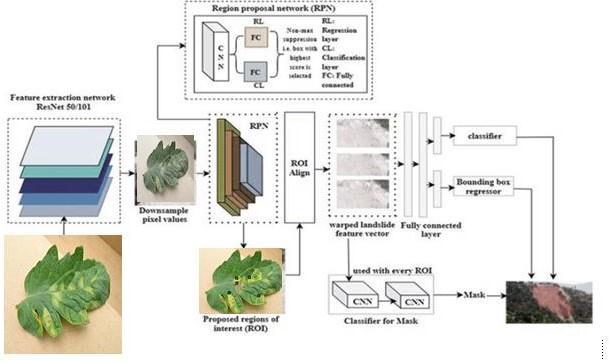
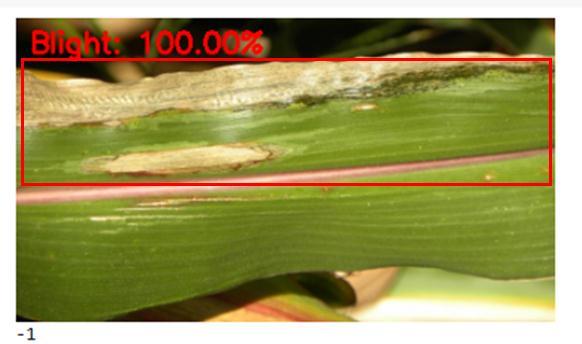
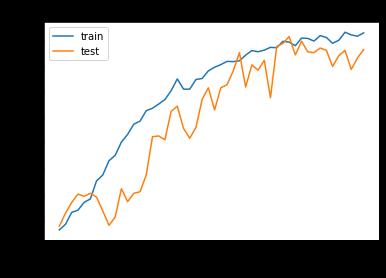
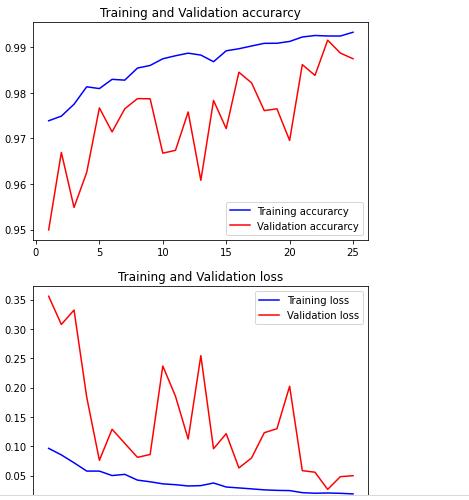
Fig -7: ModelaccuracyandlossgraphforFastR-CNN
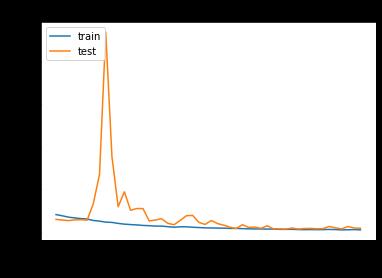
Fig -8:
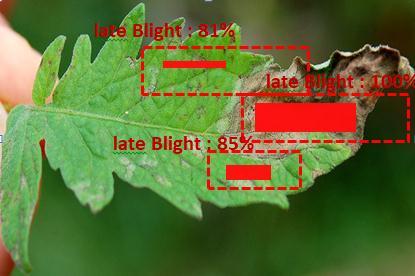
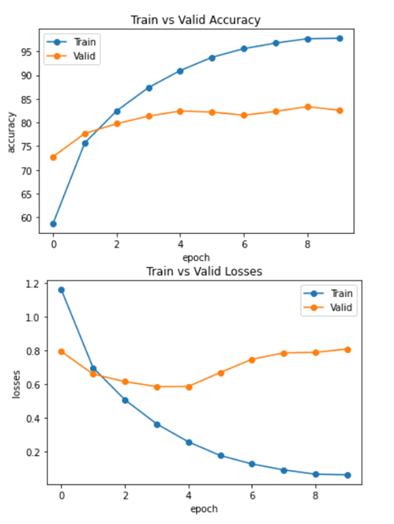
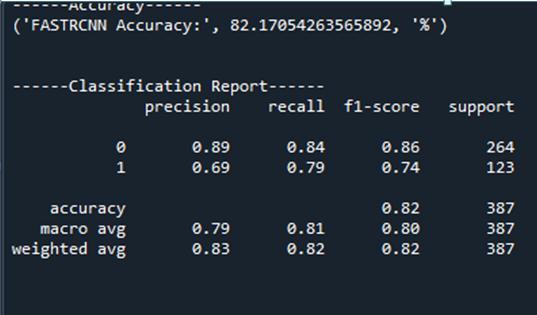
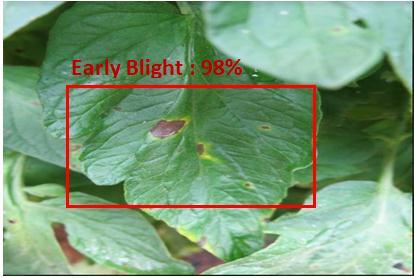
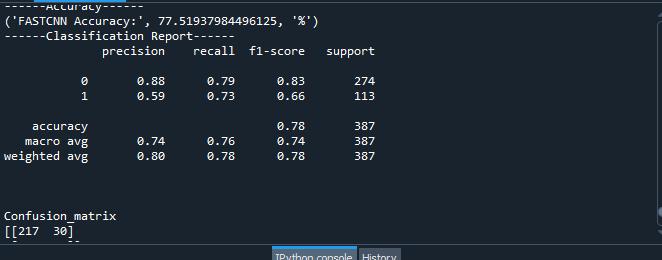
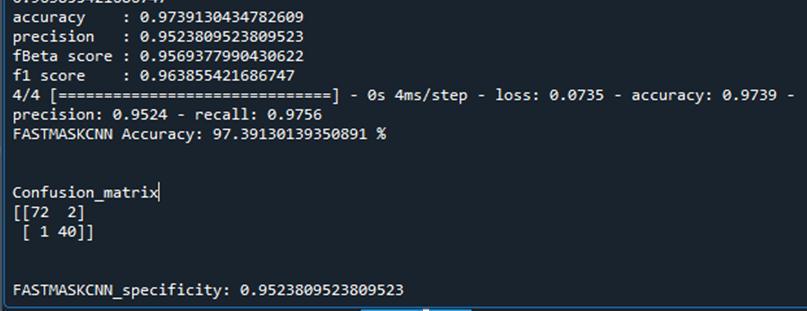
TheperformanceanalysisofFastR-CNNisprovidedinthe belowfigure
International Research Journal of Engineering and Technology (IRJET) e-ISSN: 2395-0056
International Research Journal of Engineering and Technology (IRJET) e-ISSN: 2395-0056
Volume: 09 Issue: 09 | Sep 2022 www.irjet.net p-ISSN: 2395-0072
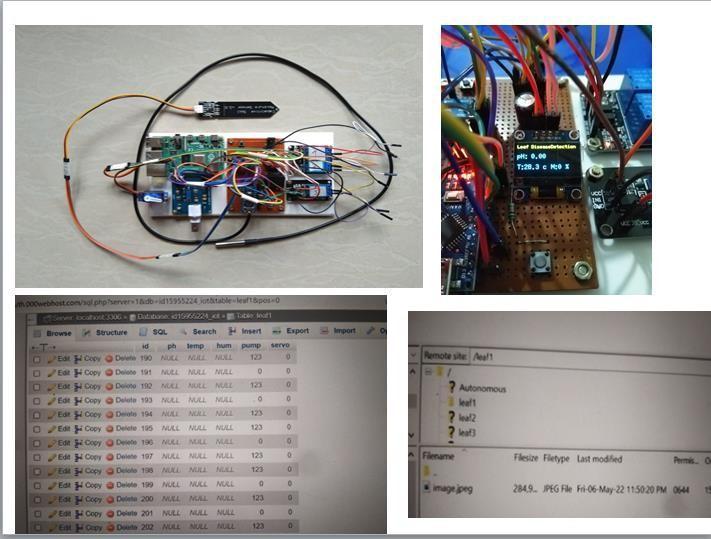
Fig -18: figureofsystemandsensorreadings
RESULT COMPARISON
Method Accuracy Precision f1score
FastR-CNN 90.32 88 83
FasterR-CNN 93.65 89 86 MaskR-CNN 96.5 95 95
Inthispaper,aoptimizedCNNamongtheFastR-CNN,Faster R-CNN and Mask R-CNN for plant disease detection is selected. According to the provided performance analysis result we can say that Mask R-CNN is having a highest accuracy of 97.39%. so we can say that mask R-CNN is suitableforplantdiseasedetectionamongthethreemodels. Thesensorydatacollectedfromtheagriculturelandisfedto thecroprecommendationmodelandsuitablecropthatcan begrownintheagriculturelandissuggestedbythek-mean algorithmmodel.Thepesticidethathastobesprayedisalso suggestedbasedonthediseasedetected.
[1] VenkannaUdutalapally,SarajuP.Mohanty,Vishal PallaganiandVedantKhandelwal.―sCrop:ANovel Device for Sustainable Automatic Disease Prediction, Crop Selection, and Irrigation in Internet-of- Agro-Things for Smart Agriculture,‖ IEEESENSORSJOURNAL,VOL.21,NO.16,AUGUST 15,2021.
[2] Muhammad Ayaz , Mohammad Ammad-uddin, ZubairSharif,AliMansour,andEl-hadiM.Aggoune. ―Internet-of-Things(IoT)-BasedSmartAgriculture: TowardMakingtheFieldsTalk,‖IEEEAccess,vol.7, pp.129551–129583,2019.
International Research Journal of Engineering and Technology (IRJET) e-ISSN: 2395-0056 Volume: 09 Issue: 09 | Sep 2022 www.irjet.net p-ISSN: 2395-0072
[3] N.Ahmed,D.De,andI.Hussain.―InternetofThings (IoT)forsmartprecisionagricultureandfarmingin ruralareas,‖IEEEInternetThingsJ.,vol.5,no.6,pp. 4890–4899,Dec.2018.
[4] ChangqingCao,BoWang,WenruiZhang,Xiaodong Zeng,XuYan,ZhejunFeng,YutaoLiu,AndZengyan Wu.―AnImprovedFasterR-CNNforSmallObject Detection,‖ in IEEE Access, vol. 7, pp. 106838106846,2019,doi:10.1109/ACCESS.2019.2932731.
[5] M.Gerber,N.Pillay,K.Holan,S.A.WhithamandD. K.Berger,"AutomatedHyper-ParameterTuningof a Mask R-CNN for Quantifying Common Rust Severity in Maize," 2021 International Joint ConferenceonNeuralNetworks(IJCNN), 2021,pp. 1-7,doi:10.1109/IJCNN52387.2021.9534417.
[6] S.T.Cynthia,K.M.ShahrukhHossain,M.N.Hasan, M. Asaduzzaman and A. K. Das,―Automated Detection of Plant Diseases Using Image Processing and Faster R-CNNAlgorithm,‖2019 International Conference on Sustainable TechnologiesforIndustry4.0(STI),2019,pp.1-5, doi:10.1109/STI47673.2019.9068092.
IRJET | Impact Factor value: 7.529 | ISO 9001:2008 Certified