International Research Journal of Engineering and Technology (IRJET) e-ISSN: 2395-0056

Volume: 09 Issue: 08 | Aug 2022 www.irjet.net p-ISSN: 2395-0072
International Research Journal of Engineering and Technology (IRJET) e-ISSN: 2395-0056
Volume: 09 Issue: 08 | Aug 2022 www.irjet.net p-ISSN: 2395-0072
Tanagawade T S1 , Tande S N2
1PG Student, Dept. of Civil Engineering, Walchand College of Engineering, Sangli, Maharashtra, India, 416415 2Professor, Walchand College of Engineering, Sangli, Maharashtra, India, 416415 ***
Abstract - An attempt is made to compare response of various forces acting on tall buildings. For the calculation of dynamic wind load gust factor method is used as per IS 875Part3-2015. The spread sheet for static wind load, dynamic wind load, static equivalent earthquake load were made to find the force on each story. The data of spread sheet is then used as input for the analysis of the tall buildings.Thebuilding was modelled and the analysis was carried out. Extended 3D Analysis of Building System (ETABS) software is used for the analysis. This finite element analysis software is utilized to create model and to perform analyses. Fourteen models from G+16 to G+50 story are used for this comparative study. Also buildings with different aspect ratios are considered for analysis. The results are expressed in terms of storydrift,Story force and story displacements. Also analysis is performed on buildings rested on sloping ground having square and rectangular plan configuration. This comparative study reveals that with increase in number of stories of building response of dynamic wind load is nonlinear parabolic in nature on other hand response of static wind is linear in nature.
Key Words: Gust factor, ETABS, dynamic wind, tall buildings, aspect ratio, sloping ground.
InIndiaaswellasotherurbanareasoftheworld, high-risestructureswithnumerousstoriesarebeingbuilt.In ahigh-risebuilding,thewindisamajorloadthatmustbe takenintoaccountforthestructures'safetyandusability. Additionally, it's important to comprehend essential consequences and evaluate how dynamically a structure behavesinaccordancewithspecifiedstandards.Thereare twodifferentkindsofforcesthatstructuresmustwithstand. Acontinuouswindflowwithaconstantvelocityproduces thestaticwindforce,whilewindgustsproducethedynamic windforce.Agustisabrief,20-secondspikeinwindspeed that occurs suddenly. This typically happens when wind gustsofatleast16knotsarepresent.Awindgusttypically occurseverytwominutes.Elasticbendingandtwistingofa structure are mostly caused by the static wind effect. Dynamic analysis of the structure is crucial for tall, longspan, and slender structures because wind gusts create varying stresses on the structure that result in significant
dynamicmotions,includingoscillations.Windhasbeenthe causeofanumberofstructuraldisastersinIndia.
The higher stories of multi-story structures may trembleasaresultoflateralloadsbroughtonbythewind thataffectsthem.Thiseffectmayhavebeenbroughtonby wind at higher stories, as wind intensity rises with increasingheight.Thewindspectrumdemonstrateshowthe shiftingwindpressuresaffectnature.Thereisachancethat the tall building construction machine's fundamental frequencyandthewindfrequencyarerelated.Thestructure will eventually collapse if the wind energy it absorbs is greater than the energy it dissipates through structural damping.Ifthishappens,theoscillation'samplitudewillrise andthestructurewillbecomeaerodynamicallyunstable.
Primarily, there are two methods for dynamic wind load analysis. The first one is the wind tunnel testing and the secondistheGustfactormethod.Windtunneltestingisthe most accurate method used to calculate wind loads on all types of structures. But this method is very costly. So it is mostly used for irregular structural shapes and complex geometries.Ontheotherhand,thegusteffectivenessfactor methodismoreaccurate,especiallywhenusedtocalculate thewindloadsontall,flexibletowersandslender,flexible structures. Also IS-875 PART-III) suggests use of the Gust factormethodfordynamicwind.
1. Formulationofproblemstatement,developmentof methodology, and possible validation with high qualityresearcharticle.
2. To assess structural response of tall buildings for dynamic wind load in different terrain categories usinggusteffectivenessfactormethod.
3. Tocomparetheresultsofstaticwindloadanalysis and dynamic wind load analysis of tall buildings withdifferentaspectratios.
4. To evaluate the effects of dynamic wind load on buildings rested on sloping ground with different planconfiguration(squareandrectangular).
International Research Journal of Engineering and Technology (IRJET) e-ISSN: 2395-0056
Volume: 09 Issue: 08 | Aug 2022 www.irjet.net p-ISSN: 2395-0072
Table -1: Detailsofmodels
Model No No of stories
Plan Dimension ( )
Plan Area ( )
Ground Condition Aspect Ratio
1 G+20 25X35 875 Flat 1.4
2 G+30 25X35 875 Flat 1.4
3 G+40 25X35 875 Flat 1.4
4 G+50 25X35 875 Flat 1.4
5 G+40 35X35 875 Flat 1
6 G+40 40X30 1200 Flat 1.5
7 G+40 50X25 1250 Flat 2
8 G+40 60X20 1200 Flat 3
9 G+16 25X35 875 Flat 1.4
10 G+16 25X35 875 slope 1.4
11 G+16 25X35 875 slope 1.4
12 G+16 30X30 900 Flat 1
13 G+16 30X30 900 slope 1
14 G+16 30X30 900 slope 1
Gradeofsteel:Fe500
Gradeofconcrete:M40
Floortofloorheight:3.5m
Shearwallthickness:250mm
Slabthickness:150mm
Model No No of stories Columnsize Beamsize (mm) Floor Size(mm)
1 G+20 15-20 600X600 300X500 8-14 750X600 1-7 900X600
2 G+30 21-30 750X750 300X600 11-20 900X750 1-10 1050X750
3 G+40 28-40 750X750 300X600 15-27 950X750 1-14 1100X750
4 G+50 35-50 800X1000 350X750 18-34 1000X1000 1-17 1200X1000
5 G+40 28-40 800X800 300X700 15-27 1000X800 1-14 1200X800
6 G+40 28-40 800X800 300X700 15-27 1000X800 1-14 1200X800
7 G+40 28-40 800X800 300X700 15-27 1000X800 1-14 1200X800
Table -3: Membersizesandproperties
Model No No of stories Columnsize Beamsize (mm) Floor Size(mm)
8 G+40 28-40 800X800 300X700 15-27 1000X800 1-14 1200X800
9 G+16 12-16 600X600 300X500 7-11 750X600 1-6 900X600
10 G+16 12-16 600X600 300X500 7-11 750X600 1-6 900X600
11 G+16 12-16 600X600 300X500 7-11 750X600 1-6 900X600
12 G+16 12-16 600X600 300X500 7-11 750X600 1-6 900X600
13 G+16 12-16 600X600 300X500 7-11 750X600 1-6 900X600
14 G+16 12-16 600X600 300X500 7-11 750X600 1-6 900X600

1.Wind
BasicWindSpeed:50m/s
TerrainCategory:II
2.
International Research Journal of Engineering and Technology (IRJET) e-ISSN: 2395-0056
Volume: 09 Issue: 08 | Aug 2022 www.irjet.net p-ISSN: 2395-0072
SoilType:II
ImportanceFactor:1 K1&K3:1
SoilType:II
SeismicZone:III
SeismicZoneFactor:0.16
ResponseReductionFactor:5 ImportanceFactor:1
BasicWindSpeed:50m/s
SoilType:II
TerrainCategory:II
ImportanceFactor:1 K1&K3:1
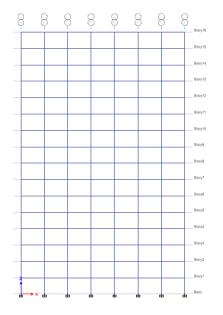
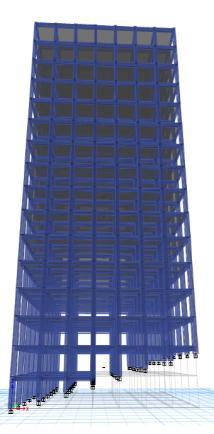
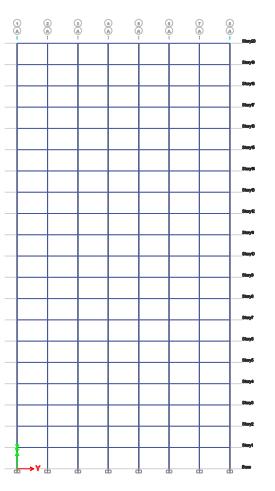
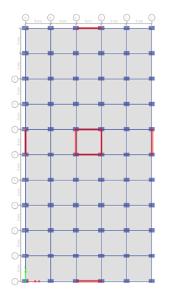
Fig -1: Planviewsofmodel1to4
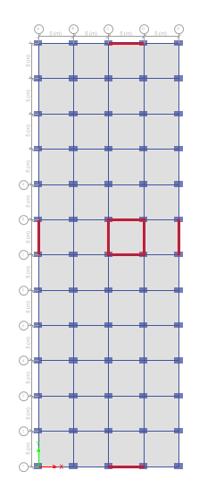
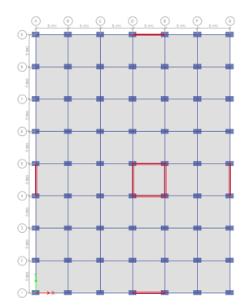
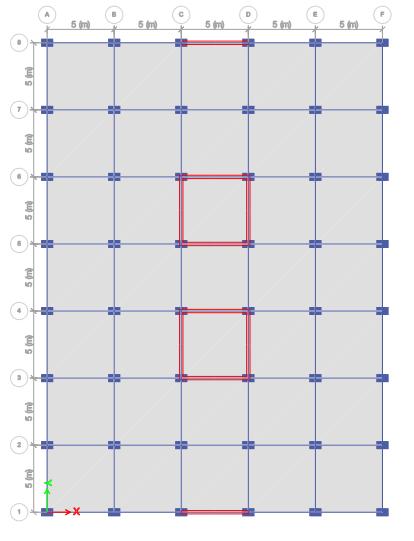
Fig -3: Planviewsofmodel5to8
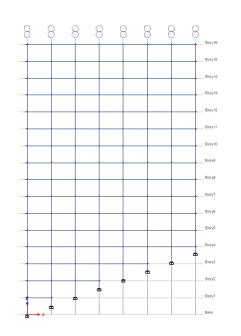
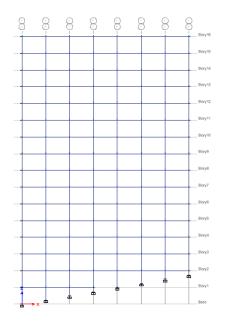
Fig -4: 3Dviewsofmodel9to11
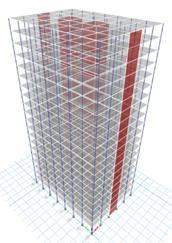
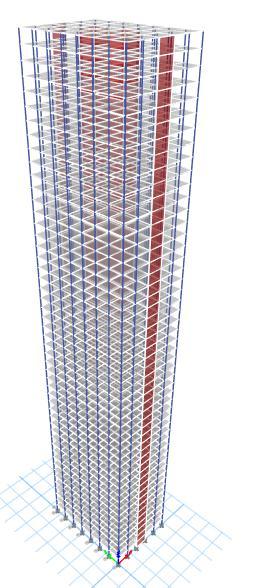
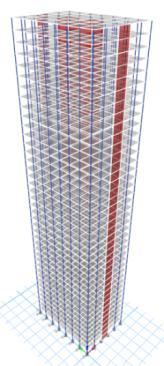
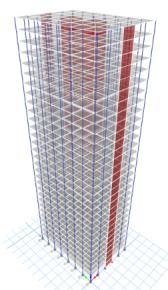
Fig -5: 3Dviewsofmodel9to11
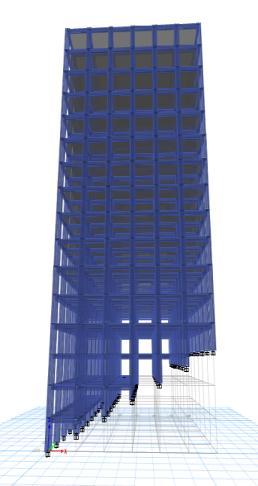
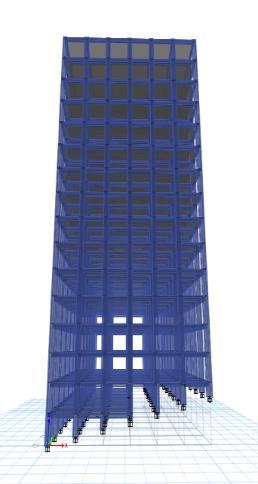
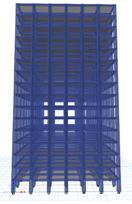
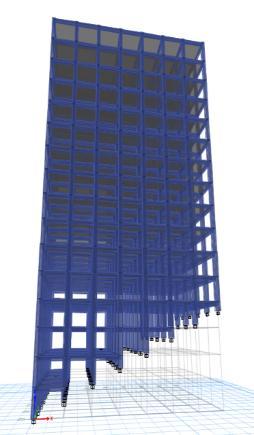
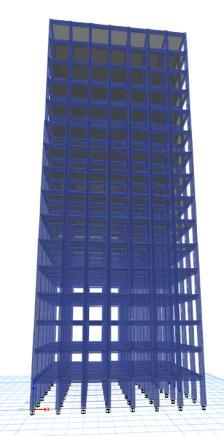
Fig -2: 3Dviewsofmodel1to4
Fig -6: 3Dviewsofmodel12to14
International Research Journal of Engineering and Technology (IRJET) e-ISSN: 2395-0056
Volume: 09 Issue: 08 | Aug 2022 www.irjet.net p-ISSN: 2395-0072
7.1 Response of buildings with increase in number of stories (model 1 to 4)
Chart -5: StoryDisplacementformodel3alongXaxis
Chart -1: StoryDisplacementformodel1alongXaxis
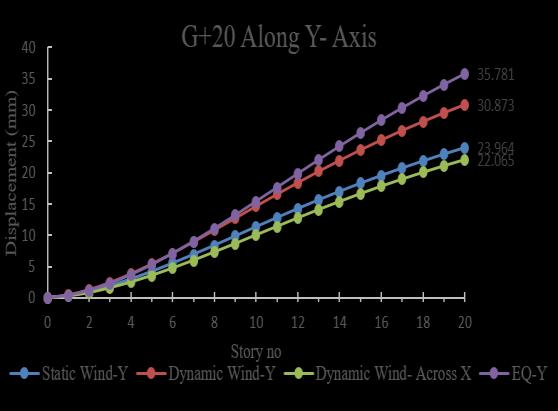
Chart -2: StoryDisplacementformodel1alongYaxis
Chart -6: StoryDisplacementformodel3alongYaxis
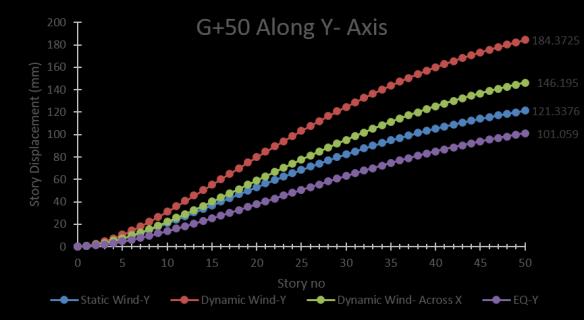
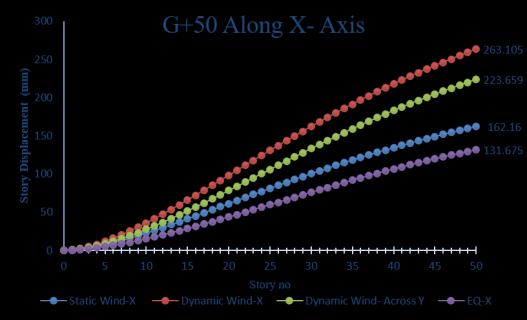
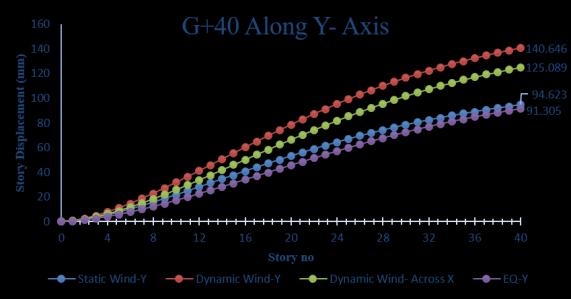
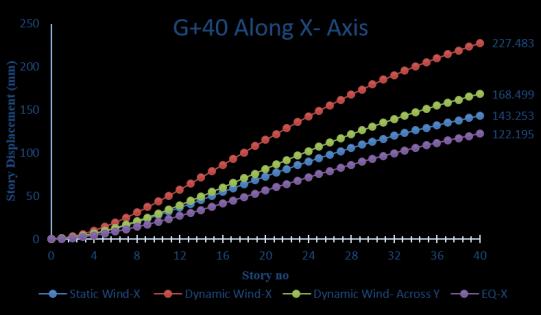
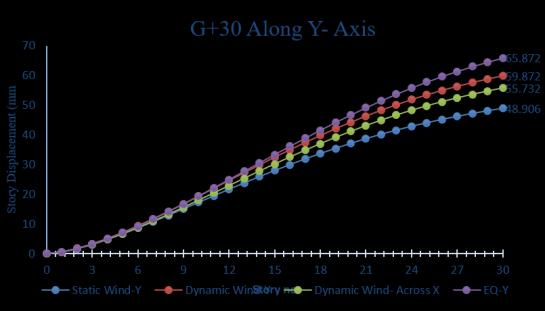
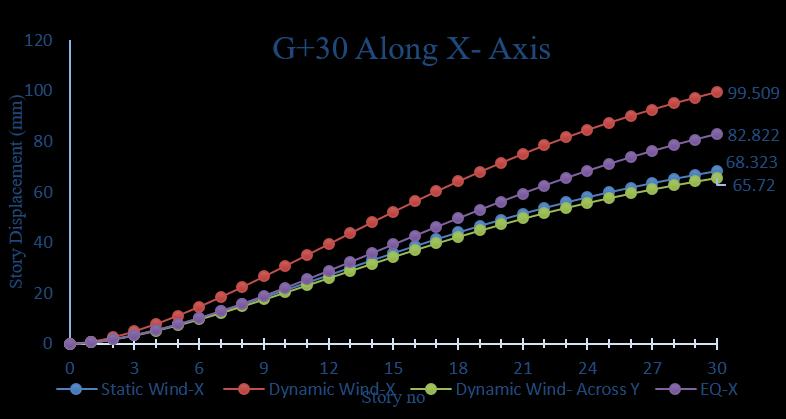
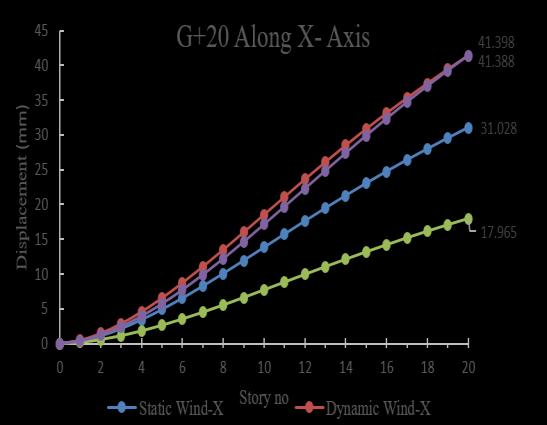
Chart -3: StoryDisplacementformodel2alongXaxis
Chart -7: StoryDisplacementformodel4alongXaxis
Chart -4: StoryDisplacementformodel2alongYaxis
Chart –8: StoryDisplacementformodel4alongYaxis
International Research Journal of Engineering and Technology (IRJET) e-ISSN: 2395-0056
Volume: 09 Issue: 08 | Aug 2022 www.irjet.net p-ISSN: 2395-0072
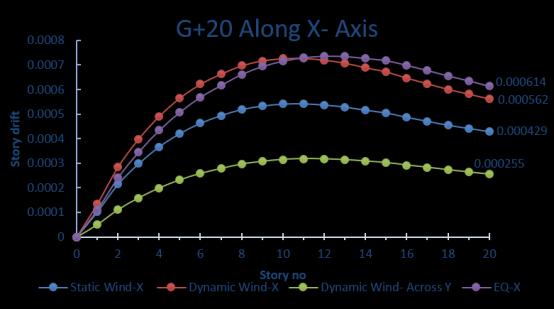
Chart -9: StoryDriftofmodel1alongXaxis
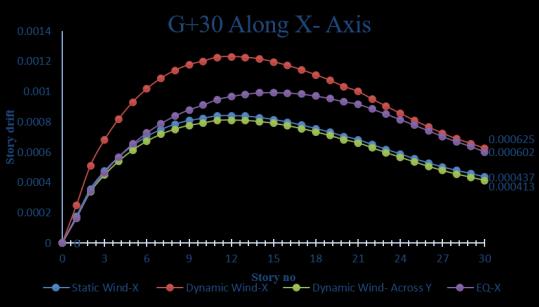
Chart -13: StoryDriftofmodel3alongXaxis
Chart -10: StoryDriftofmodel1alongYaxis
Chart -14: StoryDriftofmodel3alongYaxis
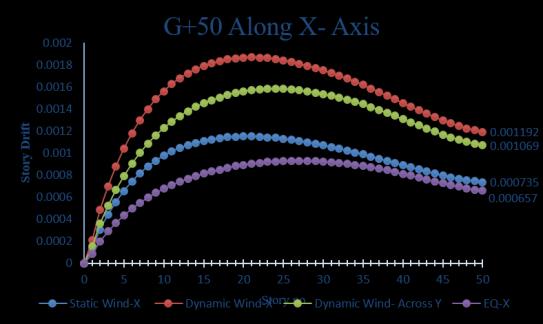
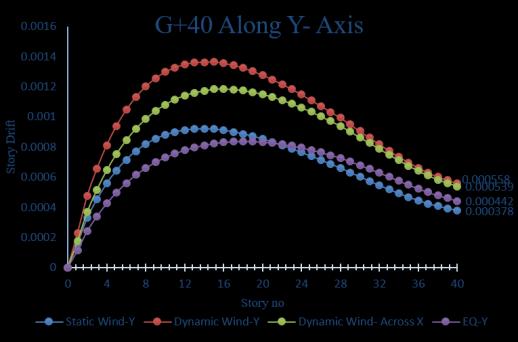
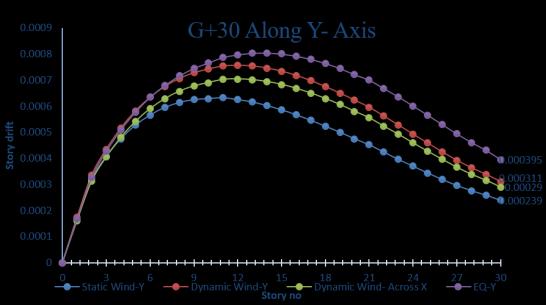
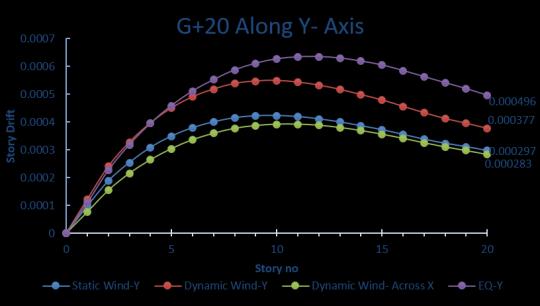
Chart -11: StoryDriftofmodel2alongXaxis
Chart -15: StoryDriftofmodel4alongXaxis
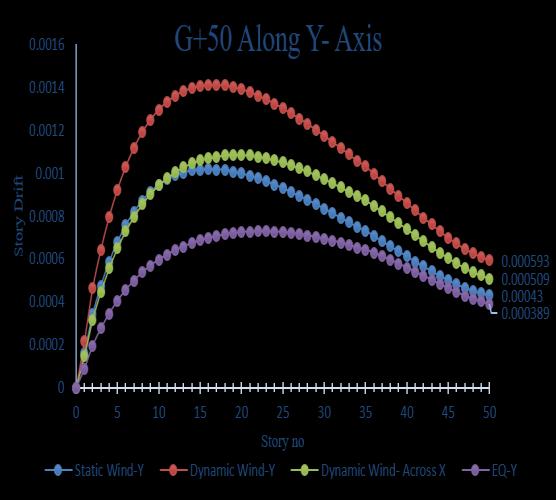
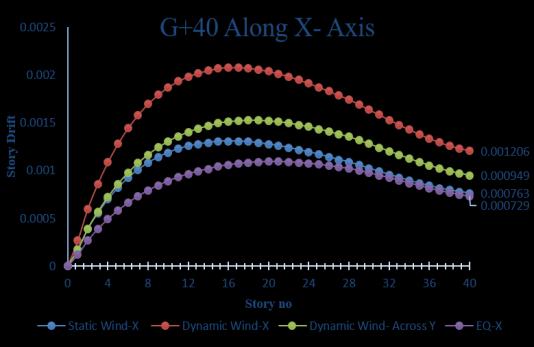
Chart -12: StoryDriftofmodel2alongYaxis
Chart -16: StoryDriftofmodel4alongYaxis
International Research Journal of Engineering and Technology (IRJET) e-ISSN: 2395-0056
Chart -17: StoryForceofmodel1alongXaxis
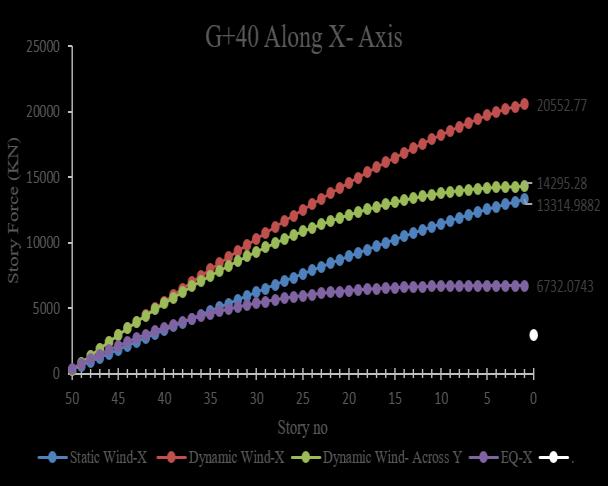
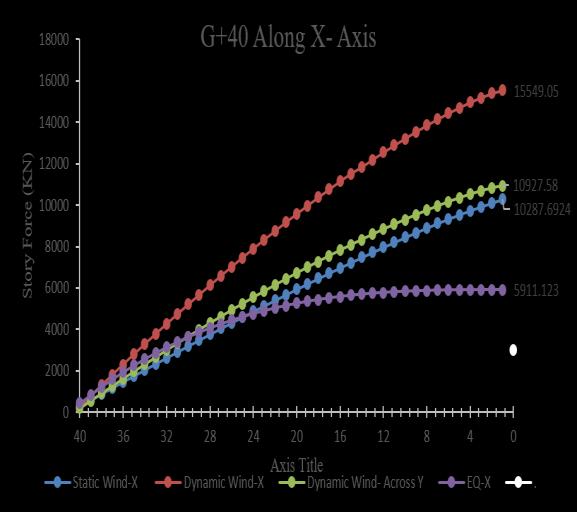
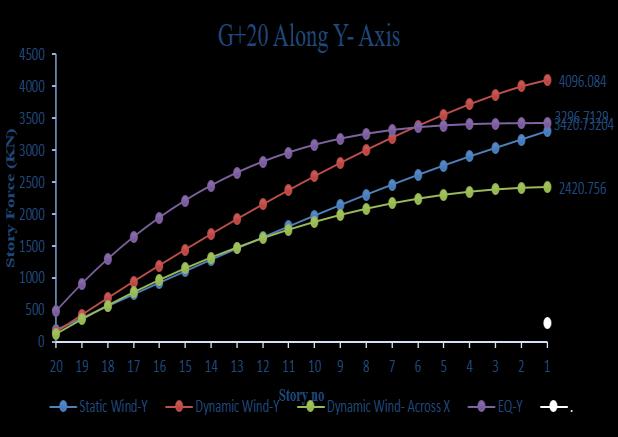
Chart -21: StoryForceofmodel3alongXaxis
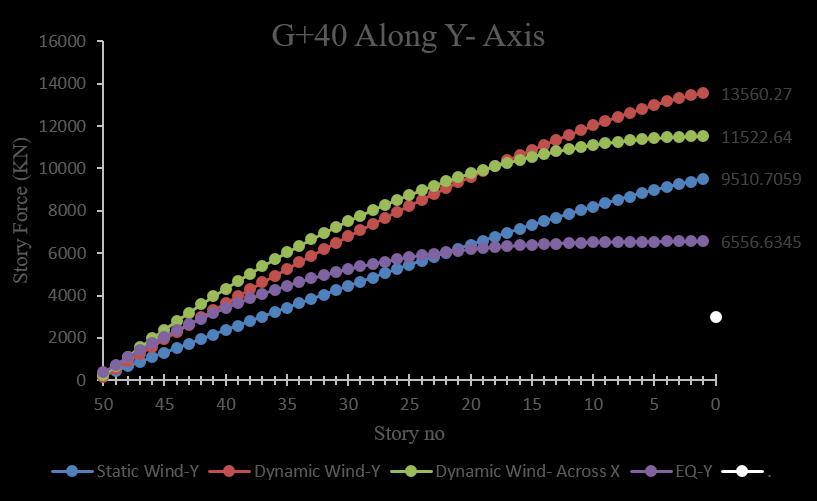
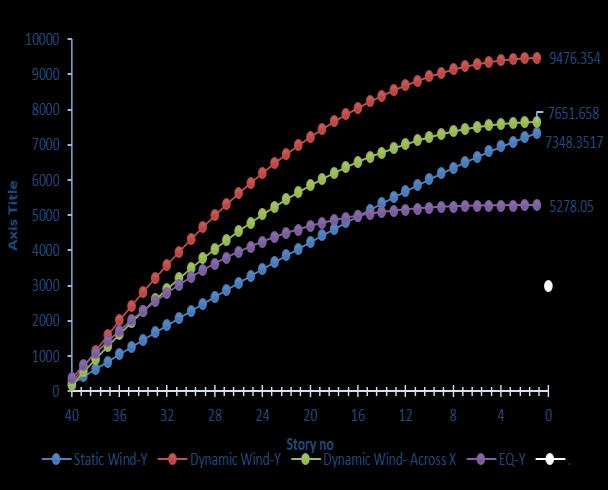
Chart -18: StoryForceofmodel1alongYaxis
Chart -22: StoryForceofmodel3alongYaxis
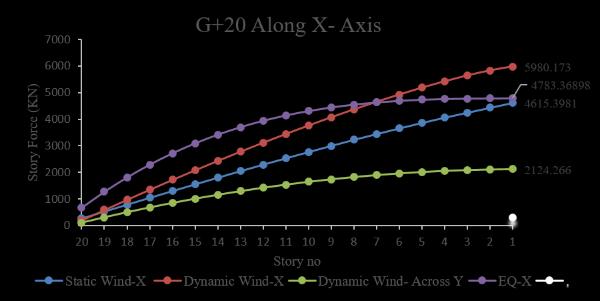
Chart -19: StoryForceofmodel2alongXaxis
Chart -23: StoryForceofmodel4alongXaxis
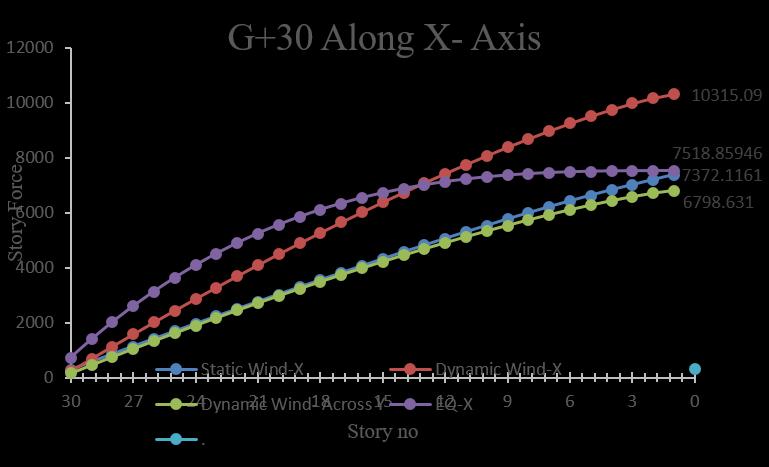
Chart -20: StoryForceofmodel2alongYaxis
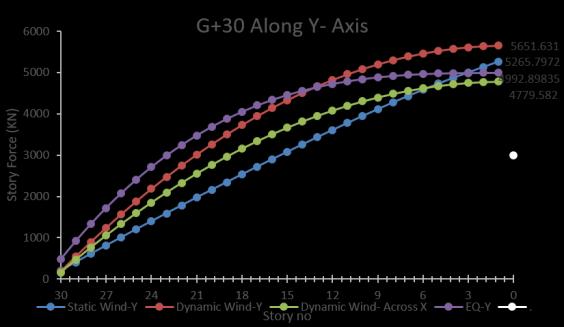
Chart -24: StoryForceofmodel4alongYaxis
Volume: 09 Issue: 08 | Aug 2022 www.irjet.net p-ISSN: 2395-0072 © 2022, IRJET | Impact Factor value: 7.529 | ISO 9001:2008 Certified Journal | Page349
International Research Journal of Engineering and Technology (IRJET) e-ISSN: 2395-0056
Volume: 09 Issue: 08 | Aug 2022 www.irjet.net p-ISSN: 2395-0072
Table -4: Max.Storydisplacementw.r.t. Xaxis
Max.Storydisplacement(mm) w.r.t.alongXdirection
Model W-X DW-X Along DW-Y Across EQ-X
G+20 31.028 41.40 17.97 41.388
G+30 68.343 99.51 65.72 82.822
G+40 143.25 227.48 168.50 122.2 G+50 162.16 263.12 223.66 131.68
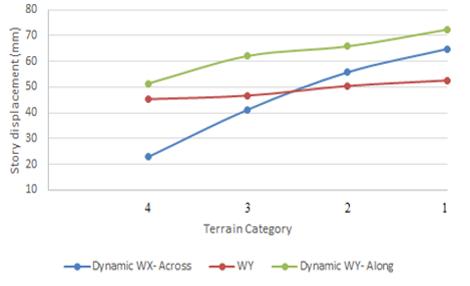
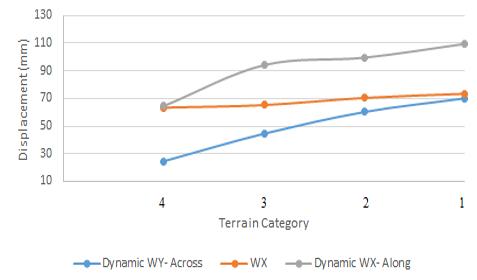
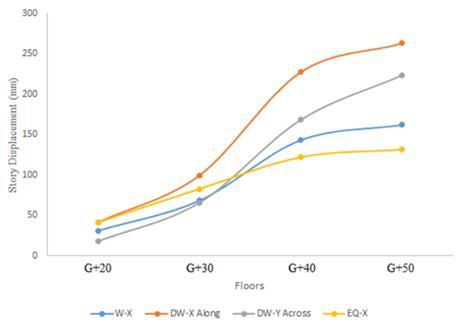
Table -6: VariationalongXdirection
Terrain Category WX Dynamic WX-Along Dynamic WY-Across 1 7339 10946 7008 2 6832 9951 6572 3 6522 9414 4459 4 6339 6462 2468
Chart -25: Max.Storydisplacementw.r.t.Xaxis
Table -5: Max.Storydisplacementw.r.t.Yaxis
Max.Storydisplacement(mm) w.r.t AlongYdirection
Model W-Y DW-Y Along DW-X Across EQ-Y
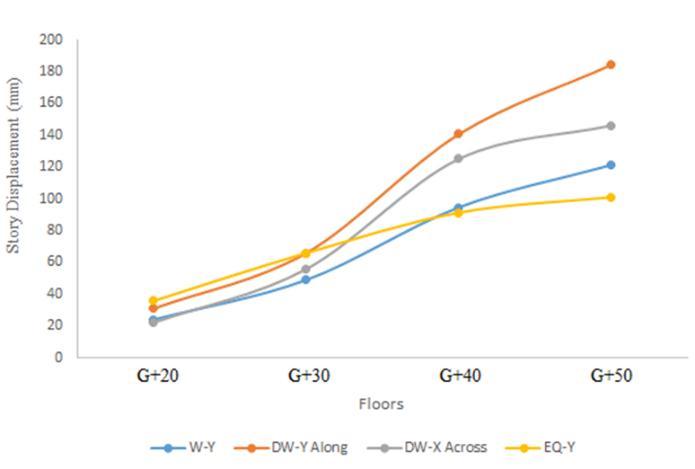
G+20 2396 3087 2207 35781 G+30 48.91 65.82 55.73 65.872 G+40 9462 14065 12509 91305
G+50 12134 18437 14620 10106
Chart –27: VariationalongXdirection
Table -7: VariationalongYdirection
Terrain Category WY Dynamic WYAlong Dynamic WX-Across 1 5258 7235 6482 2 4891 6582 5573 3 467 6209 4124 4 4531 5136 2283
Chart -28: VariationalongYdirection
Chart -26: Max.StorydisplacementYaxis
International Research Journal of Engineering and Technology (IRJET) e-ISSN: 2395-0056
Volume: 09 Issue: 08 | Aug 2022 www.irjet.net p-ISSN: 2395-0072
Table -10: VariationofstoryforcesalongXaxis
Table -8: VariationofdisplacementalongXaxis
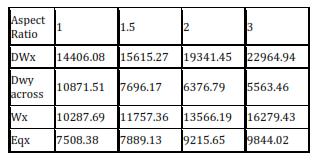
AspectRatio 1 1.5 2 3
DWx 11432 13722 17694 22561
Dwyacross 104.15 82.63 67.74 50.58 Wx 77.92 97.74 118.61 153.2 Eqx 9085 10607 13192 15733
Chart -29: VariationofdisplacementalongXaxis
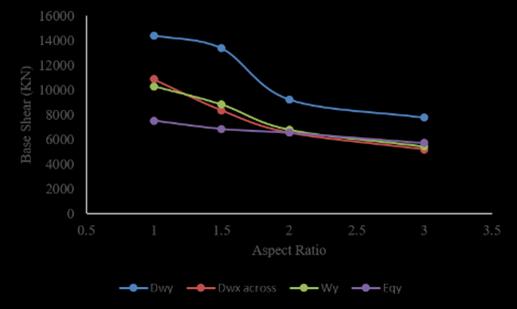
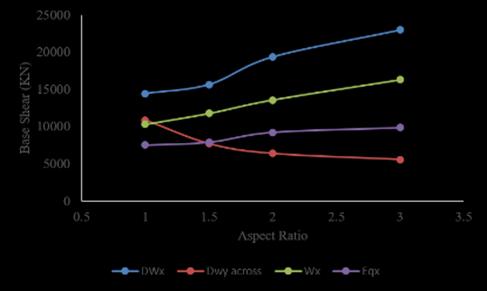
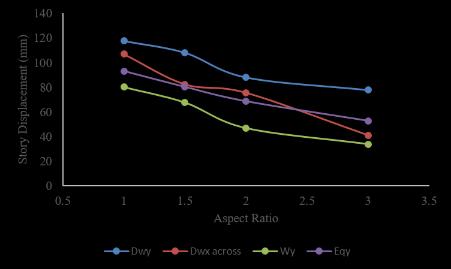
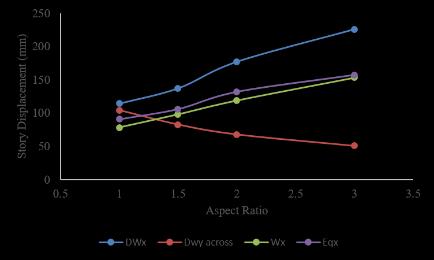
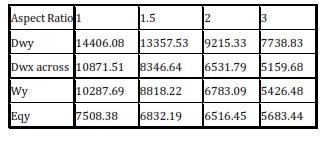
Table -9: VariationofdisplacementalongYaxis
AspectRatio 1 15 2 3 Dwy 11767 10809 8802 7768 Dwxacross 10706 8244 756 4103 Wy 80.22 67.68 46.82 33.71 Eqy 9306 8022 6862 5273
Chart -31: VariationofstoryforcesalongXaxis
Table -11: VariationofstoryforcesalongYaxis
Chart -30: VariationofdisplacementalongYaxis
value:
Chart -32: VariationofstoryforcesalongYaxis
International Research Journal of Engineering and Technology (IRJET) e-ISSN: 2395-0056
rested on sloping ground.
A. Buildings with rectangular plan area:
building
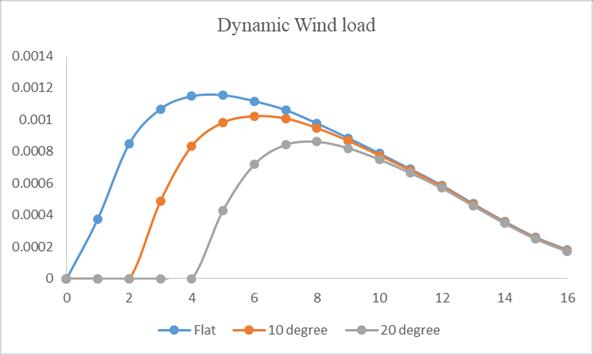
Chart -33: Variationofdisplacementfordynamicwindload
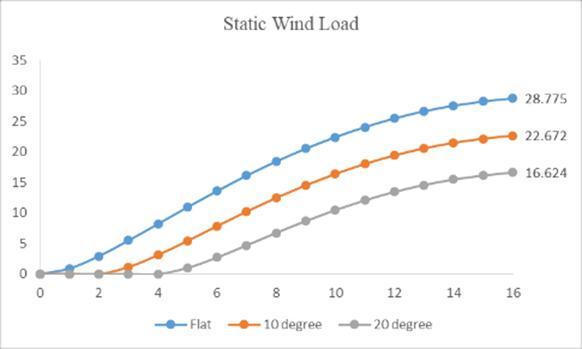
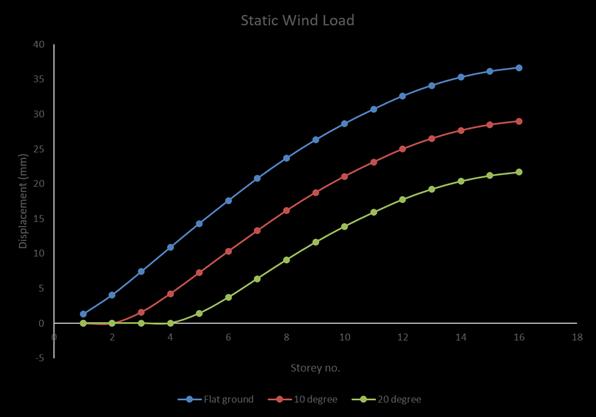
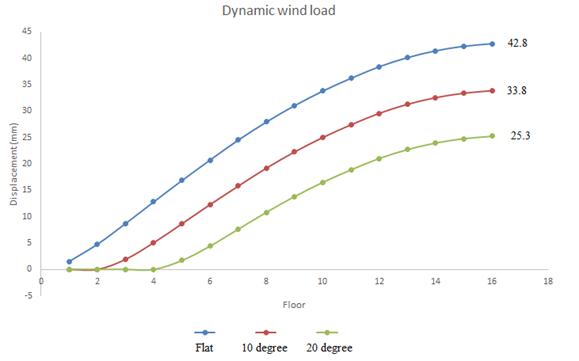
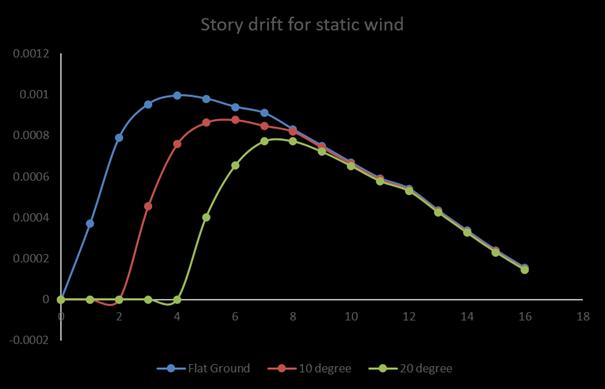
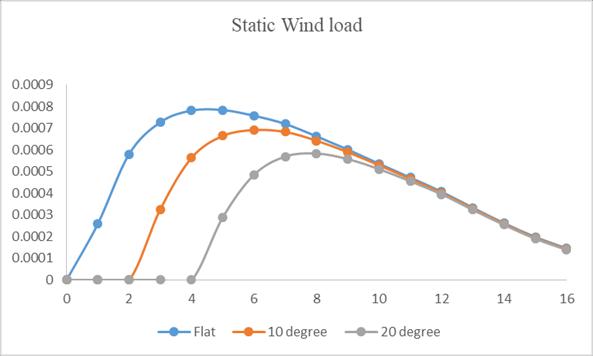
Chart -36: Variationofstorydriftforstaticwindload
B. Buildings with square plan area
Chart -34: Variationofdisplacementforstaticwindload
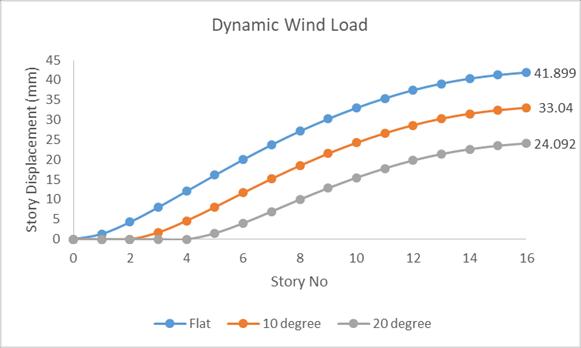
Chart -37: Variationofdisplacementfordynamicwindload
Chart -35: Variationofstorydriftfordynamicwindload
Volume: 09 Issue: 08 | Aug 2022 www.irjet.net p-ISSN: 2395-0072 © 2022, IRJET | Impact Factor value: 7.529 | ISO 9001:2008 Certified Journal | Page352
Chart -38: Variationofdisplacementforstaticwindload
International Research Journal of Engineering and Technology (IRJET) e-ISSN: 2395-0056
Volume: 09 Issue: 08 | Aug 2022 www.irjet.net p-ISSN: 2395-0072
v. Rateofincreaseofstorydisplacementswithchange interraincategoryfordynamicwindloads(along andacross)ishigherthanstaticwindload.

vi. The displacement and story force values of all modelschangeswithchangeinaspectratioofshear wall.
vii. As aspect ratio increases, displacement and story force values are increasing along X direction for static wind load, dynamic wind load along x directionandstaticequivalentearthquakeload.
viii. As aspect ratio increases, displacement and story force values are reducing along x direction for dynamicwindloadacrossYaxis.
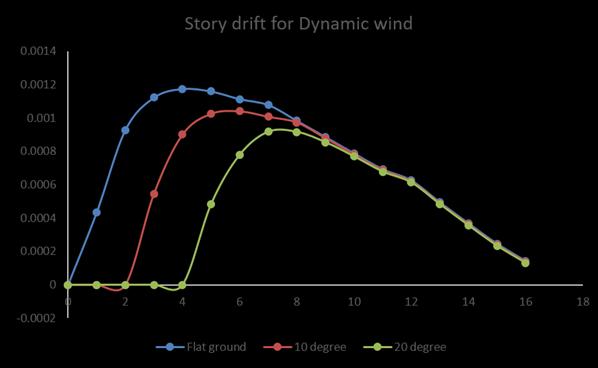
Chart -39: Variationofstorydriftfordynamicwindload
ix. As aspect ratio increases, displacement and story forcevaluesare reducingforall theloadsalongY direction

x. While comparing story displacement values for building rested on flat ground, building rested on slope, and building rested on slope, buildingrestedonflatgroundgivesmaximumvalue forbothsquareandrectangulararea.
xi. Thereisnostorydisplacementorstorydriftupto the storyforbuildingrestedon slopeand uptothe storyforbuildingrestedon slope duetoassignmentoffixedsupportuptothatstory.
Chart -40: Variationofstorydriftforstaticwindload
i. Dynamic wind force in along wind direction is dominantloadcomparedtoallotherforcesacting ontallbuildings.
ii. Static equivalent earthquake load is dominant for lowriseaswellasmid-risebuildingsandbecomes leastdominantasweincreaseheightbuilding.
iii. The graph of Story forces for static wind load is linearlyvaryinginnaturewhilethegraphofStory forces for along dynamic wind load, static equivalent earthquake load are nonlinear and parabolicinnature.
iv. Uptocertainheightresultsstaticwind forces are higherthanthatofacrossdynamicwindforcesand afterwards across dynamic wind forces becomes dominantoverstaticwindforces
xii. While we compare response of building with rectangular and square plan area, both analysis givesresponsesofsimilartrends
[1] OguzUzol,OzgurKurc(2012),“EstimationofWind Loads on Tall Buildings through Wind Tunnel Testing”, Structural and Earthquake Engineering Laboratory,DepartmentofCivilEngineering,METU, Ankara,ConferencePaper.
[2] Fabio Minciarelli, Massimiliano Gioffre, Mircea Grigoriu,EmilSimiu,(2001),“Estimatesofextreme wind effects and wind load factors: influence of knowledge uncertainties”, Elsevier Engineering Structures.
[3] Seungho Lee, Sooyong Kim, Soon-Duck Kwon (2020),“AComparativeStudyofWindTunnelTests and Design Codes in Evaluation of Along Wind Effects on Towers”, Hindawi research journals & papers,Volume2021,ArticleID8818057.
International Research Journal of Engineering and Technology (IRJET) e-ISSN: 2395-0056
Volume: 09 Issue: 08 | Aug 2022 www.irjet.net p-ISSN: 2395-0072
[4] Yi Liu, Gregory A. Kopp , Shui-fu Chen (2019), “Effectsofplandimensionsongustwindloadsfor high-rise buildings”, Elsevier, Journal of Wind Engineering&IndustrialAerodynamics194(2019) 103980
[5] I Srikanth, Vamsi Krishna (2014). “Study on the EffectofGustLoadsonTallBuildings”,International Journal of Structural and Civil Engineering Research,vol.3,no.3.
[6] H. Valer, L. Costin, Mircea Degeratu (2006), “NumericalandExperimentalInvestigationofWind InducedPressuresonaTallBuildinginBucharest”, The 13th International Conference on Fluid Flow Technologies Budapest, Hungary, September 6-9, 2006.
[7] Lin-lin Zhangb, Jie Lia,, Yongbo Pengb (2008), “Dynamic response and reliability analysis of tall buildingssubjecttowindloading”,Elsevier,Journal ofWindEngineeringandIndustrialAerodynamics 96(2008)25–40
[8] B.Shobha1, Dr.H.SudarsanaRao, Dr. Vaishali.G.Ghorpade(2018). “EffectofWindLoad on Low, Medium, High Rise Buildings in Different TerrainCategory”,Int.JournalofTech.Innovation inModernEngineering&Science,Vol.4,Issue02.
[9] AslamHussain,RajivGandhi(2014),“WindAnalysis ofBuildingFramesonSlopingGround”,Int. Journal ofScienceandResearchPublications,vol.4,iss.5.
[10]Prof. Sarita Singla, Taranjeet Kaur, Megha Kalra, Sanket Sharma, (2012) “Behaviour of R.C.C. Tall BuildingsHavingDifferentShapesSubjectedtoWind Load”, Proc. of Int. Conf. on Advances in Civil Engineering2012,DOI:02.AETACE3.17
[11]Anupam Rajmani, Prof Priyabrata Guha (2015), “AnalysisofWind&EarthquakeLoadforDifferent ShapesofHighRiseBuilding”,InternationalJournal ofCivilEngineeringandTechnology,Volume6,Issue 2,pp.38-45.
[12]Prof. Sarita Singla, Taranjeet Kaur, Megha Kalra, Sanket Sharma, (2012) “Behaviour of R.C.C. Tall BuildingsHavingDifferentShapesSubjectedtoWind Load”, Proc. of Int. Conf. on Advances in Civil Engineering2012,DOI:02.AETACE3.17