International Research Journal of Engineering and Technology (IRJET) e-ISSN: 2395-0056

Volume: 09 Issue: 08 | Aug 2022 www.irjet.net p-ISSN: 2395-0072
International Research Journal of Engineering and Technology (IRJET) e-ISSN: 2395-0056
Volume: 09 Issue: 08 | Aug 2022 www.irjet.net p-ISSN: 2395-0072
1Master of Technology, Electrical Engineering (Power System), KNIT Sultanpur, UP, India 2Professor, Department of Electrical Engineering, KNIT Sultanpur, UP, India 3 Assistant Professor, Department of Electrical Engineering, KNIT Sultanpur, UP, India ***
Abstract - Transport electrificationisgainingpopularityas a technique to enhance the effectiveness, efficiency, and longevity of transportation networks. While EVs might aid in de-carbonization efforts, thelow-voltagedistributionnetwork may experience technical difficulties due to the increased demand for electricity. Using probabilistic load flow, we can put a number on the inherently unpredictable effects of electrification on transportation. When dealing with the probabilistic uncertainties brought on by fluctuating EV charging patterns, Monte Carlo-based simulation is used. Standards for power quality fluctuations (voltage drop, voltage imbalance factor, and voltage sag) are monitored while high-power charging (up to 11 kW) is considered at the residential level. Because of the importance of identifying the anticipatedrepercussionsduetohighEVchargerproliferation at household locations, this work focuses on the Irish and UK, distributionsystemoperator's-transmissionsystemoperator's viewpoints. The findings show that 40% of all residential consumers may safely connect electric vehicles to the distributionnetworkusinga 3.68 kWcharger, withnoimpact to power quality. In addition, if EVs are restricted to the beginning and centre of the network, their spread can be accelerated by as much as 100 percent (relative to the feeder substation transformer). There is a limitation due to the voltage imbalance factor for greater charger capabilities (up to 11 kW).
Key Words: D-FACT, power, Electric vehicle, network distribution,controlofpowerflow.
Morewidespreadusageofelectricityintransportationmight reducedemandforfossilfuelsandconsequentemissionsof greenhouse gases. Similar to the challenges the transportationsectorhaswithscheduling,theintroduction ofelectriccarsmightintroduceadditionalcomplicationsto theplanningandadministrationofpowernetworks,where supplyanddemandmustbematchedonaminute-to-minute basis(EVs).Conventionalenergygridsarebeingforcedto undergoa majormakeoverasmoreandmorelow-carbon technologies (LCTs) emerge at the distribution level. Distribution-stage consumers 'presume' an active role beyondpassivelyconsuming.Transmission-leveltechnical effects from LCTs, such as electric vehicles (EVs) offering
ancillaryservices,maybecommunicatedtothedistribution level.
TSOandDSO(distributionsystemoperator)collaborationis requiredhere.Asensiblelineofactionwouldbetolookat distribution-levelsolutionsthatmayhelpalleviatetechnical worries.Inordertomitigatetheimpactoftechnicalfaultson theTN,theDSOhastobeawareofthepenetrationlimitsof LCTswellinadvanceoftheirmanifestation[1].Ifyouknow this,youcanestimatehowmanyindividualsmaybeaffected by technological problems. The impact of distribution networks(DNs)ontransmissionnetworks(TNs)cannotbe accurately monitored in real time due to a lack of observability at the DN level [2]. DSO operations and planningtacticsareinfluencedbyuncertaintiesassociatedto LCTs, especially when using present assets. This research considersseveralintensitiesofEVchargingtofindthebest waytouseexistinginfrastructure.
Severalresultsaregeneratedusingamathematicalmodelof the network's response to the addition of EV chargers. A probabilisticresearchisconductedtoascertainthenumber ofconsumersaffectedbyacertainpenetrationlevelinorder to establish conclusions on the maximum EV penetration thataDNcansupportwithoutsufferingtechnicalchallenges.
The vast majority of researchers who have contributed to thebodyofpublishedworkassesstheperformanceofDNsin termsof fluctuationsinPQ, includingvoltageloss,voltage imbalance,cableloading,andotherfactors.Therehaveonly beenafewofstudiesdonetomeasuretheperformanceof networks in terms of severe condition occurrences like voltage sag and voltage swell. The authors combine the realistictopologyoftheIrishDNwiththeusageofanMCSin ordertoforecasttheeffectofPQchangesandoccurrencesof EVchargingonthelegacygrid.Thisfillsagapinthestudyas wellasmakesacontributiontothefield.Thistechniqueis intendedtoprovideassistancetotheDSOintheprocessof evaluatingthe effectthatvariousEVchargershaveonthe network. The various voltage measurements are investigated,whichenablesabettercomprehensionofthe variouselectricvehicle(EV)chargersandtheconsequences theyhaveonthenetwork.Thisworkcanfurtherfacilitate novel approaches for DSOs to implement an energy
International Research Journal of Engineering and Technology (IRJET) e-ISSN: 2395-0056
Volume: 09 Issue: 08 | Aug 2022 www.irjet.net p-ISSN: 2395-0072
transitiveframeworkfeaturingthepresenceofutility-owned electric vehicles; as a novel planning model based on programming, which is suitable to properly utilise their existing(andfuture)assets.Thisworkcanalsohelpfacilitate novel approaches for DSOs to implement an energy transitiveframeworkfeaturingthepresenceofutility-owned EVs.
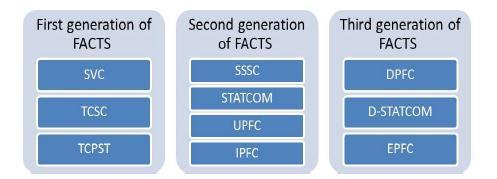
Theconventionalmethodthatisusedbythepowersystem has been subjected to a number of alterations as a direct resultofthehugeincreaseinpowerconsumptionthathas occurredoverthecourseofthepreviousfewdecades.We willbeabletosatisfytheneedforenergyifweareableto enhance the amount of power flow that is being managed nowthattheFACTScontrollerhasbeenconstructed.These devices improve the capacity of power transfer up to the thermal limit and make more efficient use of the power transmissionlinesthathave alreadybeeninstalled.These devices have the capability of effectively modifying the properties of the transmission line [15], such as the impedance,busvoltage,andphaseangle.
studyapplyingmanydifferentoptimizationmethodologies in order to determine the best way to distribute DSTATCOM.Onlyarelativelylimitednumberofauthorshave researched the impact that may be created in DS by strategicallydeployingDVRandSSVRresources.Asidefrom this, there have only been one or two authors who have analysedUBRDSwiththeinstallationofDVRorSSVR.Other than that, there isn't much research available. Up to this time,theDVR/SSVRallocationprocessinMDShasnotbeen madepublicbyanyofthewritersworkingontheproject.In this article, a suggestion for the most effective UPQC allocation technique as well as a comparison with DSTATCOMareprovided.UPQCiscapableofdeliveringbetter results in comparison to D-STATCOM in terms of voltage profile improvement, decrease in line losses, and annual savings in energy consumption. These benefits may be achievedviatheuseofUPQC.WheninvestigatingBRDS,the overwhelmingmajorityofthestudieshavereliedentirelyon UPQC. On the other hand, UPQC has not yet been used to carry out studies on either UBRDS or MDS. As a direct consequenceofthis,thereis anurgentneedtoexplore,in additiontoUPQCallocation,notjustUBRDSbutalsoMDS. Theoverwhelmingmajorityofcontributorshaveconducted their own separate investigations into their DG and UPQC assignments.Despitethis,RDSandMDS,inadditiontothe distribution of DG and UPQC, have not been investigated together up to this moment. There has been no research done to this day to identify how the probabilistic load impactstheallocationofuniqueD-FACTSdevicesorhowit affects DG and D-FACTS devices simultaneously. This is because there has never been a need to find out this information.
After studies research paper related to project work, the summaryofallresearchworkaregivenbelow:
[1] Gupta, Ashwani: the researchers drew the following findings after looking at all of the available studies on the spreadofDGandD-FACTSequipmentinDS:However,there isscopeforresearchexpansioninbothUBRDSandMDS,and themajorityoftheresearchersfocusedtheirattentiononthe distributionofDGwithinthebalanceddistributionsystem. The most efficient method of disseminating D-STATCOM insideBRDSisthesubjectofadebatethatfollows.Thereis nomentionofaresearchhavingbeenconductedonMDSor UBRDSincombinationwithD-STATCOM.Beforemakingan accurate evaluation of DS, one must first carry out a costbenefitanalysisandthengetintouchwithD-STATCOM.In addition to this, it is essential to carry out a comparative
[2] Haley: TheresearchthatwasdoneontheEVindustry revealedthattherearenowjust0.01%ofautomobilesinthe UnitedStatesthatareelectricvehicles.Thisinformationwas gleanedfromtheoutcomesofthestudythatwascarriedout (EVs). Moreover, there are a great many disadvantages connectedwithelectricvehiclesforbuyers,whichprohibits EVsfromachievingthesamedegreeofmarketpenetration as their rivals. The most obvious negatives are the steep price tag, the limited distance that can be travelled on battery power, and the extended period of time that is required to fully charge the battery. As a consequence of governmentincentives,electricvehicles(EVs)arebecoming moreaccessibletocustomers;nevertheless,thesesubsidies willnotbeavailableforanunlimitedamountoftime.Rather, theironlypurposeistoencouragetheearlydevelopmentof electric vehicles in the hope that prices for such vehicles wouldbecomemoreaffordableinthenot-too-distantfuture. Despite this, there are a variety of economic and political factorsthatmaymakeitunlikelythatthecostwilldecrease intheverynearfuture.ThefactthatChinahasamonopoly on the production of rare earth minerals is a topic that is generatingasignificantamountofconcern.Electricvehicles (EVs) provide a lot of advantages, one of which is an improvedfueleconomy.Accordingtoaninitialevaluationof
2021, IRJET | Impact Factor value: 7.529 | ISO 9001:2008 Certified Journal | Page2048
International Research Journal of Engineering and Technology (IRJET) e-ISSN: 2395-0056
Volume: 09 Issue: 08 | Aug 2022 www.irjet.net p-ISSN: 2395-0072
theeffectivenessofthemethodsusedtodeliverenergyby bothtypesofvehicles,itwasfoundthatgasoline-powered vehicles (GV) use approximately 25 percent more energy thanelectricvehicles(EVs),whichledtotheconclusionthat EVs may save somewhere in the neighbourhood of 25 percent more energy than GVs. Despite the fact that the efficiency estimates were not especially accurate, they neverthelessrevealedthatitishighlylikelythatelectriccars utilise less energy than gasoline-powered vehicles do. Electriccarshavethepotentialtosignificantlyreducecarbon emissionsaswellastherateatwhichfossilfuelsarebeing depleted. However, in order to take full advantage of this benefit, a greater percentage of nuclear or renewable resourceenergygenerationshouldbeutilised.
[3] Noor et.al: Electriccarshaveabigpossibilitytobecome the method of transportation of the future while simultaneouslysavingtheglobefromtheloomingtragedies thataretheconsequenceofglobalwarming.Thisisbecause electricvehiclesdonotproduceanyharmfulemissions.They provide a viable alternative to conventional automobiles, which operate on fossil fuels and are seeing their supply dwindle as the world moves away from them. This page presents a detailed investigation of the several electric vehicle(EV)models,configurations,energysources,motors, powerconversion,andchargingsystemsthatarepresently on the market. We started with the most significant technologies that were discussed in each category and moved on to describing the characteristics of those technologies. The effects that electric vehicles have in a varietyofindustrieshavealsobeeninvestigated,ashavethe vastopportunitiesthatEVspresentforthedevelopmentof anenergyinfrastructurethatisbothmoreeffectiveandless harmfultotheenvironment.ThisisbecauseEVsareableto workinconjunctionwithsmartgridsandmakeitsimplerto incorporaterenewableenergysources.Theshortcomingsof electric cars (EVs) that are now on the market have been discussed, along with some possible solutions to these problemsthatmaybeimplemented.Inadditiontothat,the most up-to-date control algorithms and optimization methodologies have been included into the design. This article is a concise overview of the current state of the electric car industry. Following the analysis of ongoing tendencies and prospective pathways for the industry's progressinthefuture,the resultsofthisparticulararticle wereusedtoprovideaconciseoverviewofthewholepiece ofwriting.Thispaintedaveryclearpictureofthesectorand highlightedtheareasthatneedmoreexamination.
[4] Kang: inordertorelievesomeofthestrainthatisbeing putonthepowergridbydecentralisedsourcesofrenewable energy,weneedtofindasolutionthatincorporatesbothof theseconcepts.Boththefirstandsecondchapterscovered andbroughtattentiontothreeareaswheretheresearchwas lacking,andtheyareasfollows:Thereisaneedforamethod that is both effective and efficient for the diagnosis of network stress for smart home appliances in order to
effectively install a distributed and decentralised DSM system.Thisisnecessaryinordertoensurethatthesystem willfunctionasintended.Thequestionofwhattheidealsize oftheEHWTiswhenitisconsideredinisolationwithinDSM hasnotbeenthoroughlyinvestigatedtotheextentthatithas beenthoughtaboutingreatdetailwithintheframeworkof combinedhotwatersystemsthatmakeuseoftanksthatare heatedbyavarietyofenergysources.Thisisincontrastto thelevelofconsiderationthathasbeengiventothequestion when it is considered within the context of combined hot watersystemsthatmakeuseoftanksthatareheatedbya variety of energy sources This is in spite of the fact that, within the context of combined hot water systems, a significant deal of consideration has been given to the questionofhowlargetheEHWTshouldbe.Therehasnot beenathoroughresearchintowhetherorwhetherabottomupnetworksimulationtechniqueiscapableofbeinglinked withanintelligentEWHTmodel.Thisisdespitethefactthat thisquestionhasbeenaskedonseveraloccasions.
[5] Ahmad: Atthepresent,therearearound9000electric cars operating on the roads in Hungary; however, it is anticipatedthatthisnumberwillsignificantlyincreaseinthe nottoodistantfuture.Thequestionthathastobeaddressed, then, is how many electric cars can be supplied by the infrastructurethatisalreadyinexistence.Thewidespread adoption of electric cars on the current grid might have substantial negative impacts, such as an increase in peak demand, an overloading of transformers, and increased power losses. These are only some of the potential consequences.Inadditiontothis,thereisapossibilitythatit maycausepowerqualityconcernsinsidethegrid,suchas under-voltage conditions, harmonics, and voltage and currentprofiles.Asaconsequenceofthis,itisvitalforusto studythemanysolutionsthatareavailabletousinorderto lessen the effects of this. We modelled a small grid in the DigSilentpowerfactorysoftwareandconnectedafewhome loadsandelectriccarloadsinordertorunthesimulations. Thiswasdonesothatwemighthaveabetterknowledgeof the effects that charging electric automobiles have on the low voltage grid. We do an unbalanced load flow analysis andatimesweepanalysisinordertoestablishtheloading thatisbeingplacedonthetransformeraswellasthevoltage andcurrentprofilesthatarebeingproducedbytheloads.In anticipation of the day when there will be a substantial number of electric autos on the road, we were able to simplify the analysis of the results thanks to the scripting capabilities of the Python programming language. After conductingtheresearchandutilisingtheboxandwhisker plot,wecametotherealisationthatthetransformerthatis utilised in our grid is overloaded. This indicates that the transformerspendsthevastmajorityofitstimefunctioning ataloadinglevelthatisgreaterthanonehundredpercentof its capacity. The drop in voltage along the bus bar that is fartherawayfromtheexternalgridislargerthanthelossin voltage along the bus bar that is closest to the grid. It has beenbroughttoournoticethattheaveragevoltagelossat
International Research Journal of Engineering and Technology (IRJET) e-ISSN: 2395-0056
Volume: 09 Issue: 08 | Aug 2022 www.irjet.net p-ISSN: 2395-0072
eachofthebusbarsfallssomewhereintherangeof0.96pu to0.99pu.Thisinformationmaybefoundinthefollowing sentence: In addition, the current loading is, in the vast majorityofcases,lessthansixtypercentofitscapacity;but, therearetimeswhenitisextremelyclosetoreachingone hundred percent of its capacity. Further simulations on a largenumberofelectriccarsaresomethingthatcanbedone in order to gain a more accurate image of the loads that transformersareunderandthevoltageproblemsthatthey face.
[6] Arsalan: inregardstothemanyphasesthatthecharger goes through. An MCS has been chosen as the suitable instrumentbecauseoftheprobabilisticnatureofEVs.This hasledtotheinstrument'sselection.Evaluatingthepresent assets of the DN allows for the determination of the maximumamountofstressthatitisabletobearintermsof thepenetrationofelectricvehicles(EVs).Asaresultofthe increased EV load, the DN is likely to encounter power quality issues, such as a reduction in line voltage and variableunbalancefactors(VUFs),asstatedbytheresults. FromtheperspectiveoftheDSO,ownersofelectricvehicles areonlyentitledtousea3.68kWchargerinsidetheconfines oftheirownprivateresidences.Accordingtotheconclusions oftheresearch,fortypercentoftheproliferationofelectric carsinthenetworkdoesnotresultinanysortoftechnical issueinrespecttotheEN50160standard.Thisinformation wasgleanedthroughtheexaminationofthesituation.Itis vital to first assess the breadth of the technological difficultiesthatarehurtingthenetworkinordertocomeup with any type of solution to the problem. This network is capable of supporting a 40% penetration of electric cars without requiring any further network upgrades or mitigationmeasurestobeimplemented.Distributionservice organisations (DSOs) need to be proactive in defining the limits of their networks since it is inescapable that the numberofelectriccarsandthenumberofchargingstations for electric vehicles will continue to expand. In the frameworkofDNdesign,itisabsolutelynecessarytotake into consideration the extreme circumstances that might possiblyarise.Whentheconditionsareasterribleasthey possibly can be, the voltage level drops to 0.88 p.u. If the voltage level of 0.88 p.u. is maintained for more than a minutewithoutchanging,thereisachancethatthenetwork may become unstable. When planning the layout of the distributiongrid,whomeverisinchargeofthenetworkhas to make sure they remember to take into consideration a number of potential catastrophes. The research does not takeintoconsiderationthepossibilityofachargingsystem thatmakesuseofsmartchargingortimesequencing.The smartchargingmethodshavealotofpotential,butitmaybe difficult to put them into practise because the communication protocol that is required to monitor load demand is so complicated. Although the smart charging methods have a lot of potential, it may be difficult to put themintopractise.It'spossiblethatspecialiseddevices,such a static VAR compensator (SVC) or a static synchronous
compensator,mightprovideotherkindsofsolutionsinstead (STATCOM).Althoughtheyarecostly,itispossibletoobtain apromptresponsefromthem.
An increase in the voltage imbalance is brought on by unbalancedloading,whichinturnbringsaboutanincrease inthevoltageimbalancebroughtonbyincreasedcharging rates. The VUF of the system as a whole goes through a significant amount of change, which may lead to serious violations with respect to 7 and 11 kW chargers and may alsohaveadditionalrepercussions.Inconclusion,theeverincreasingnumberofEVsthroughoutthesystemcreatesa significantnumberofsignificantchallengesaboutthequality assurance of the PQ. According to the results of this probabilistic analysis, VUF is still the primary concern, althoughvoltagelevelbreachesprovidealesserdegreeof difficulty. This research has the potential to serve as a method for assessing the potential effects that would be broughtaboutbythewidespreadinstallationofEVchargers intherealandoperationalnetwork.Calculatingthepotential consequencesofthemanydifferentEVchargerratingsthat are now available on the market is now possible for us thankstotheuseofthistechnology.
ThePLFmethodhastheabilityto provideresultsthatare accuratetoacertaindegree.[Caseinpoint:][Caseinpoint:] Ontheotherhand,iftheprobabilitydistributionoftheinput values and the range of mathematical modelling are not exact,oneofthepotentialdifficultiesofusingthisstrategyis thattheconclusionmaybemeaningless,whichisoneofthe potential drawbacks of using this approach. One of the possibledrawbacksofusingthisapproachisthepresenceof thisone.TheMCSshavethepotentialtotakeupalotoftime becauseoftheircomplexity.Whencalculatingtheoutcome ofascenario,theamountoftimerequiredwillincreasein proportion to the level of complexity of the model that is beingapplied.Inaddition,inordertomaintainanacceptable levelofuncertaintyabouttheresults,itmayberequiredto explore a large number of different alternatives [9]. It is possible to utilise techniques that are known as variance reductionapproaches[9]inordertoreducetheamountof distinctscenariosthatareused ineachsimulation.This is something that can be done. In the next phase of our research,wewillinvestigatethemanydifferentwaysthat PLFmaybeincludedintotimesequencecharging.
[7] Junjie: Distributionnetworksarediscoveringthatthey are being put up against new hurdles as an increasing numberofelectriccarsarelinkedtotheelectricalgrid.The increasingprevalenceofelectriccarshasdirectlyledtothe emergenceofthesedifficulties.Congestionissuesmayarise at a number of various locations and points throughout distribution networks, and this may be a problem in a varietyofdifferentcircumstancesdependingonthespecifics ofthesituation.Thethermalrestrictionsofthelines,aswell as those in the HV/MV power transformers, are probably going to be theones thatgive engineersthemost trouble.
IRJET | Impact Factor value: 7.529 | ISO 9001:2008 Certified Journal |
International Research Journal of Engineering and Technology (IRJET) e-ISSN: 2395-0056
Volume: 09 Issue: 08 | Aug 2022 www.irjet.net p-ISSN: 2395-0072
Thehierarchicalmanagementstructurethatispresentedin this study includes both the distribution system operator (DSO) and the electric cars fleet operator. (EV FO). In the contextofthisdiscussion,amarket-basedanalysisservesas alensthroughwhichanexaminationofthenegotiationthat takes place between EV FO and DSO in settings where congestion is present is carried out. In this section, it is explained how the negotiation architecture that was designed for the multi-agent platform JACK takes into accountnotonlytheagentforthepowermarketoperator butalsotheagentfortheownersofelectricvehicles.JACK wasdesignedsothatmultipleagentscanworktogetherona singleplatform.
[8] Masoud: Develop two distinct incremental voltage controlalgorithms,eachofwhichshouldhaveaconvergence conditionthatiseasiertomeetthantheotherone's.Oneof thesemethodsshouldbebasedonasub-gradient,whilethe other should be a pseudo-gradient that provides a lesser degree of implementation complexity. The sub-gradientbased approach should be the one to use. Both of these algorithms have to be the same in every other aspect in ordertobeconsideredequivalent.Wecompareandcontrast thesetwoapproachesintermsofthedegreeofconvergence thatisneededofthemandthepaceatwhichtheyconverge ona solution.Inaddition to this,wegothroughthe many ways in which eachofthese approachesoverlap with one another.
[9] Rosario: During the course of our investigation, we discoveredthatoneofthekeygroundsofcontentionabout the validity of hybrid energy systems was the cost of the ultracapacitors. This was brought to our notice when we were doing this study. Despite the fact that doing an economic analysis was not a part of the scope of the research, it was abundantly clear that this was the circumstancethathadarisen.Onthebasisofthishypothesis, which states that the use of ultra capacitors would be restricted due to cost concerns, a number of conclusions regardingthefutureofthistechnologymaybederived.One oftheseconclusionsstatesthattheuseofultra capacitors wouldbelimitedduetothefactthattheyaresoexpensive. However, in the end, each of these research papers concludes by arguing that the technology is unfavourable duetohowexpensiveitis.Therearecurrentlyanumberof researchpapersthatareavailablethatspeakopenlyabout how well ultra capacitors would perform as peak power mitigationdevicesforelectriccars.Evenifthepriceofultra capacitorsisbroughtdowntoanincrediblylowlevel,there willstillbeasignificantamountofoverheadintheformof metals and other passive components within the power electronicsarchitecturethatisconnectedwiththem.Thisis thecaseevenifthepriceofultracapacitorsisbroughtdown toanextremelylowlevel.Thisisthesituationregardlessof whetherornotthepriceofultracapacitorsisreducedtoan unimaginably lowlevel. The publishedresearchdevotesa smaller portion of its focus to this issue in comparison to
other areas. Figures should include the power electronics overheadthatisfundamentallyrequiredtoleveragetheuse of ultra capacitors in electric vehicles in order to make it easier to conduct an analysis of the costs associated with ultra capacitor applications. This will make it possible to analyse the costs more accurately (EVs). In terms of the powerelectronicsinfrastructure,anextrafactorthathasto betakenintoaccountinadditiontothecostperkilowattis theweightperkilowatt.Thisisbecausethetwofactorsare directly related to one another. According to a recent calculation of power electronics metrics (which was used with permission), these statistics are around 5 kW/kg @ £12/kWatthecurrenttime1.Itisanticipatedthatbythe year2020,thesefigureswillhaveincreasedto14.1kW/kgat £1.8/kW.Thisgrowthisanticipatedtotakeplace.Inpointof fact, this demonstrates the aspects of the economic assessmentthatneedtobeaddressed,andasadirectresult, theargumentsinfavouroffurtherPESdesignoptimization aresupported.
[10] Rui: MATLABwasusedtoconstructamodelofelectric batteriesthatisanexactreplicaoftherealthing.Thismodel was then subjected to rigorous testing to determine its viability.Thismodelhasbeenutilisedinordertoanalysethe naturalvariationthatoccursintheterminalvoltageaswell as the power output of the battery throughout both the charginganddischargingcycles.Thisvariationwasfoundto be significant enough to warrant analysis. In order to integrate the electric car batteries with the distribution network, the idea of a rapid charging station for electric vehicleshasbeendeconstructed,andafullsimulationmodel oftheoperationofthestationhasbeenbuilt.Thiswasdone in order to facilitate the integration of the electric car batterieswiththedistributionnetwork.Theintegrationof thebatteriesfortheelectricvehicleswasthemotivationfor thisaction.Apresentationhasbeengivenonthesubjectof modellingawindturbineusingDFIG,whichwasthetopicof the presentation. During the process of constructing the simulation model, crowbar protection was taken into consideration.Thisisduetothefactthatawindgenerator hastobeable tocontinue functioning despiteissues.Asa direct result of the fact that the results of the simulation shown that the crowbar protection enables fault ridethrough for the DFIG wind turbine, it is essential that the voltage of the DC-link capacitor be maintained within an acceptablelevelatalltimes.Thecrowbar'sjobistodissipate the excess active power and stop the DC-link capacitor voltagefromdevelopingneedlessly,bothofwhichmightlead toagreaterrotorcurrentflowingthroughtheRSC.Itsother jobistopreventtheDC-linkcapacitorvoltagefromgrowing unnecessarily.Anotheraspectofitsfunctionistoensurethat thevoltageacross the DClink capacitor does notincrease unnecessarily.Thisisaccomplishedbyavoidinganincrease thatisnotrequiredinanyway.Itisgenerallyagreedupon thatthemostsignificantcontributionthathasbeenmadeby thisbodyofresearchistheinvestigationoftheinteractions thattakeplacebetweencharging stations for electriccars
International Research Journal of Engineering and Technology (IRJET) e-ISSN: 2395-0056
Volume: 09 Issue: 08 | Aug 2022 www.irjet.net p-ISSN: 2395-0072
andtheactivedistributiongrid.Thisistheconsensusheldby the majority of those who have participated in the discussion.[Furthercitationisrequired]Inthischapter,we examinedthepossibilitythatchargingstationsforelectric vehiclescouldprovidevoltagesupportfortheoperationsof distribution networks, thereby improving the fault-ridethrough of wind turbines that are located nearby. These charging stations would need to be equipped with the capability to manage the flow of electricity in both directions.Inadditiontothefactthatthecontrolparadigm hasbeenshowntobeviable,simulationshaveshownthatit isalsoeffective.Inadditiontothefactthatitisfeasible,this is a benefit. As a consequence of this, the voltage support that is provided by EV charging stations has a significant potentialtobedevelopedasanadditionalservicewithinthe operationsofsmartdistributiongrids.Thiswouldbearesult ofthesmartdistributiongridshavingagreatercapacityto accommodate additional services. There are a variety of approachesthatmaybeusedtoachievethisgoal.
[11] Jun: In order to stop electric cars from becoming a strain on distribution networks, it is necessary to have a comprehensivestrategyforchargingaswellasanintelligent controlsystem.Thisisamust.Ifthisisdone,itwillmakeit possibletostopelectricautomobilesfromputtingastrainon the power distribution networks. It is possible that it will provide the regulators of the energy system with information that will assist them in formulating and reviewing EV policies that will stimulate the adoption of distributed PV and electric cars. This possibility exists becauseitispossiblethatitwilloffersuchinformation.This is a potential outcome. There are many different market participantsinvolvedintheenergysector,andsomeofthese market actors can have an interest in expanding the potentially profitable commercial prospects presented by pricing services. The following are examples of possible market participants:Theresultsofthisinquiry,aswell as anyconclusionsandsuggestionsthatmaybederivedfrom thoseresults,aregoingtobereportedinthenextchapter. Theseresultswillalsobepublishedinfull.Inaddition,ithas beensuggestedthatfurtherresearchofasimilarkindtothe one that is now being carried out should be carried out concurrentlywiththestudy.
[12] Jian:Ithasbeendiscoveredthatthetransformeristhe keyobstaclethatmustbeovercomeinorderforelectriccars intheregiontobecharged.Evenifthetransformerpower capacityandthebaseloadcouldbeabletoplacealimiton the penetration level of charging for electric vehicles, the ambienttemperaturewouldstillbeabletohaveaninfluence on it. In this scenario, the charging capacity of the dump charging pattern, also referred to as the simultaneous chargingpattern,iscalculatedbyutilisingboththefactorof accelerationageingandthefactorofequivalentageingofthe transformer.Bothofthesefactorsrelatetotheageingofthe transformer. This is done for the reason that the dump charging pattern, which is also referred to as the
simultaneouschargingpattern,isused.Aspartofalargerscaleinitiativetoincreasethenumberofchargingstations locatedinresidentialareas,optimumchargingprocedures forelectricvehiclesarenowbeingdevelopment.Becauseit takesintoconsiderationboththedrivingbehavioursandthe constraintsofthetransformer,thevariablechargingrateis used in the optimization process. This allows for optimal results. It is possible to greatly increase the capacity for charging if, rather than rebuilding the essential infrastructure,achargerwith6.6kWthatisdesignedforuse withtheHondaFitisusedastherepresentativecharger.In thesimulationofthefeederload,thescenarioinwhichthe charging is not balanced will result in more power losses thanthesituationinwhichthechargingisbalancedwould produce.
I arrived to this conclusion after reading a few research papersontheuseofD-factinelectriccars.Thesestudiesled metotherealisationthatD-FACTSdeviceshadthecapability to execute comprehensive power flow control. The advantagesthatD-FACTSdeviceshaveintermsoflineflow control, decrease in loss, and voltage regulation are as follows:Theapplicationthatappearstohavebeenthemost successful is the one that controls the flow of the line, followedbytheapplicationthatcontrolstheloss,andthen theapplicationcontrolsthevoltage.Ithasbeenshownthat these methods are ubiquitous, and they may be used to locatemoresuitableD-FACTSapplicationsandtosolvefor the appropriate line impedance values. Both sensitivity analysisandoptimizationareincludedintothemethodology of the solution. As suitable applications are developed, incremental D-FACTS device deployments may be carried outinlocationsthathavebeendeterminedtobethemost successful in satisfying the demands that have been identified.
1. AtmaRamGuptaandAshwaniKumar,“Deployment of Distributed Generation with D-FACTS in DistributionSystem:AComprehensiveAnalytical” 2019, IETE JOURNAL OF RESEARCH https://doi.org/10.1080/03772063.2019.1644206
2. Paul Haley “Effect of electrical vehicles on residential distribution systems” 2012, Louisiana State University and Agricultural and Mechanical College
3. Fuad Un-Noor 1, Sanjeevikumar Padmanaban 2,*, LucianMihet-Popa3,MohammadNurunnabiMollah 1andEklasHossain4,“AComprehensiveStudyof Key Electric Vehicle (EV) Components, Technologies, Challenges, Impacts, and Future DirectionofDevelopment”2017, Energies 2017, 10,
International Research Journal of Engineering and Technology (IRJET) e-ISSN: 2395-0056 Volume: 09 Issue: 08 | Aug 2022 www.irjet.net p-ISSN: 2395-0072
1217; doi:10.3390/en10081217 www.mdpi.com/journal/energies
4. Ren Kang “Appliance-level Demand Side ManagementforPowerNetworkStressMitigation” 2016, Department of Engineering Science UniversityofOxford
5. SeerinAhmad“IMPACTASSESSMENTOFELECTRIC CAR CHARGING ON LV GRIDS” 2019, Budapest UniversityofTechnologyandEconomics Facultyof ElectricalEngineeringandInformatics Department ofElectricalPowerEngineering
6. Arsalan Zaidi “Impact Assessment of High-Power DomesticEVChargingProliferationofaDistribution Network” 2020, IET Generation, Transmission & Distribution
7. JunjieHu“Controlstrategiesforpowerdistribution networkswithelectricvehiclesintegration”2014, KongensLyngby.
8. MasoudFarivar“OptimizationandControlofPower Flow in Distribution Networks” 2016, California InstituteofTechnologyPasadena,California
9. LeonCRosario“PowerandEnergyManagementof Multiple Energy Storage Systems in Electric Vehicles” 2007, Cranfield University, DCMT Shrivenham Swindon, Wiltshire, SN6 8LA, United Kingdom
10. RUISHI“TheDynamicImpactsOfElectricVehicle Integration On The Electricity Distribution Grid” 2012, Electrical and Computer Engineering The UniversityofBirmingham
11. Jun Su “Smart Management of Electric Vehicles CharginginDistributionNetworks”2020, Schoolof Engineering,ComputerandMatehmaticalSciences, AucklandUniversityofTechnology
12. Jian Xiong, B. Eng. “Impact Assessment of Electric Vehicle Charging on Power Distribution Systems” 2014, Electrical and Computer Engineering Ottawa-Carleton Institute for Electrical and ComputerEngineeringCarletonUniversity Ottawa, Ontario
13. S.L.Judd,andT.J.Overbye,"AnevaluationofPHEV contributions to power system disturbances and economics," in Proc. 2008 40th North American Power Symposium, pp.1-8.
14. X.Yu,“ImpactsassessmentofPHEVchargeprofiles on generation expansion using national energy
modeling system,” in Proc. 2008 IEEE Power and Energy Society General Meeting - Conversion and Delivery of Electrical Energy in the 21st Century, pp.1-5.
15. K.Schneider,C.Gerkensmeyer,M. Kintner-Meyer, and R Fletcher, “Impact assessment of plug-in hybrid vehicles on Pacific Northwest distribution systems,” in Proc. 2008 IEEE Power and Energy Society General Meeting, pp.1-6.
16. S.RahmanandG.B.Shrestha,“Aninvestigationinto the impact of EV load on the electric utility distribution system,” IEEE Trans. Power Delivery, vol.8,pp.591-597,Apr.1993.
17. J.deHoog,T.Alpcan,M.Brazil,D.A.Thomas,andI. Mareels, “Optimal Charging of Electric Vehicles Taking Distribution Network Constraints Into Account,” IEEE Trans. Power Systems, vol.PP,pp.111,May,2014.
18. P. Richardson, D. Flynn, and A. Keane, “Optimal charging of electric vehicles in low-voltage distribution systems,” IEEE Trans. Power Systems, vol.27,pp.268-279.Feb.2012.
19. J. de Hoog, D. A. Thomas, V. Muenzel, D. C. Jayasuriya, T. Alpcan, M. Brazil, and I. Mareels, “Electric vehicle charging and grid constraints: Comparingdistributedandcentralizedapproaches,” in Proc. 2013 IEEEPowerandEnergySocietyGeneral Meeting, pp.1-5.
2021, IRJET | Impact Factor value: 7.529 | ISO 9001:2008 Certified Journal |