International Research Journal of Engineering and Technology (IRJET) e-ISSN:2395-0056

Volume: 09 Issue: 08 | Aug 2022 www.irjet.net p-ISSN:2395-0072
International Research Journal of Engineering and Technology (IRJET) e-ISSN:2395-0056
Volume: 09 Issue: 08 | Aug 2022 www.irjet.net p-ISSN:2395-0072
1,2Department of Biotechnology and Bioinformatics, North Eastern Hill University, Shillong ***
Abstract: Free radicals and oxidants give rise to a phenomenon known as oxidative stress; this is a harmful process that can negatively affect several cellular structures, such as membranes, lipids, proteins, lipoproteins and deoxyribonucleic acid (DNA) [13–18]. Oxidative stress emerges when an imbalance exists between free radical formation and the capability of cells to clear them. Antioxidants are substances that can neutralize the free radicals by donating and electron, this neutralizing effect helps protect the body from oxidative stress. Studies have shown that Polygonum glabrum has proved to contain high concentrations of antioxidants and can possibly be implemented in preventing and treating oxidative stress related ailments. This review is an effort to study the antioxidative properties of Polygonum glabrum, and how it may help as a medicine to tackle different ailments caused by oxidative stress in the body and to shed a light into the importance of medicinal plants and to update the phytochemical data of the plant
Keywords: Antioxidant, polygonum glabrum,radicals
Oxidation is a process defined as the loss ofelectronsduring a reaction by amolecule,atomorion, which may occur spontaneouslyorartificially.Duetovariousbiologicalprocesses,thislossofelectronscanoccurincellsandtissueswhich maybeharmfulifnotcontrolled.Biologically,certaindamagesoncellsandtissuesarecausedbyunstablemolecules,free radicals, produced in the body as a reaction to environmental condition, certain food materials, stress and other factors. Thesesubstancesaretermedasoxidantsandfreeradicals.
Whenanoxygenmoleculesplitsintosingleatomswith unpairedelectrons,theyare calledfree radicals. Whenatomsare moleculesgainorloseelectronsduetovariousmetabolicactivitiesandotherfactors,thesefreeradicalsarereleasedinthe body.[1,2] Electrons like to be in pairs, so these free radicals, scavenge the body to seek out other electrons so they can become a pair. Free radicals are formed naturally in the human body when exercise is performed or when the body metabolizefoodandconvertsitintoenergyandbyexposuretocigarettesmoke,pollutionandsunlight [3].
Superoxide radicals (O2 •−), hydrogen peroxide (H2O2), hydroxyl radicals (•OH), and singlet oxygen (1O2) are commonly definedreactiveoxygenspecies(ROS);theyaregeneratedasmetabolicby-productsbybiologicalsystems [1, 2] WhenROS productionincreases,theystartshowingharmfuleffects onimportantcellularstructureslikeproteins,lipids, andnucleic acids [4] Alargebodyofevidencesshowsthatoxidativestresscanberesponsible,withdifferentdegreesofimportancein the onset and/or progression of several diseases (i.e. Cancer, diabetes, metabolic disorders, atherosclerosis, and cardiovascular diseases) [5] ROS are mainly produced by mitochondria, during both physiological and pathological conditions,thatis,O2 •− canbeformedbycellularrespiration [6]
ROSproductionbasicallyreliesonenzymaticand nonenzymaticreactions.EnzymaticreactionsabletogenerateROSare those involved in respiratory chain, prostaglandin synthesis, phagocytises, and cytochrome P450 system [7–17]. Even no enzymaticreactionscanberesponsibleforfreeradicalproduction,thatis,whenoxygenreactswithorganiccompoundsor whencellsareexposedtoionizingradiations.Noenzymaticfreeradicalproductioncanoccuraswellduringmitochondrial respiration [12,13,and16] .
Free radicals are generated from both endogenous and exogenous sources. Immune cell activation, inflammation, ischemia, infection, cancer, excessive exercise, mental stress, and aging are all responsible for endogenous free radical production Exogenousstimulantsforfreeradicalproductionincludeenvironmentalpollutants,heavymetals(Cod,Hg,BP, Fe, and As), certain drugs (cyclosporine, tacrolimus, gentamycin, and bleomycin), chemical solvents, cooking (smoked
e-ISSN:2395-0056
Volume: 09 Issue: 08 | Aug 2022 www.irjet.net p-ISSN:2395-0072
meat, used oil, and fat), cigarette smoke, alcohol, and radiations [12–22] When these exogenous compounds penetrate the body,theyaredegradedormetabolized,andfreeradicalsaregeneratedasby-products.
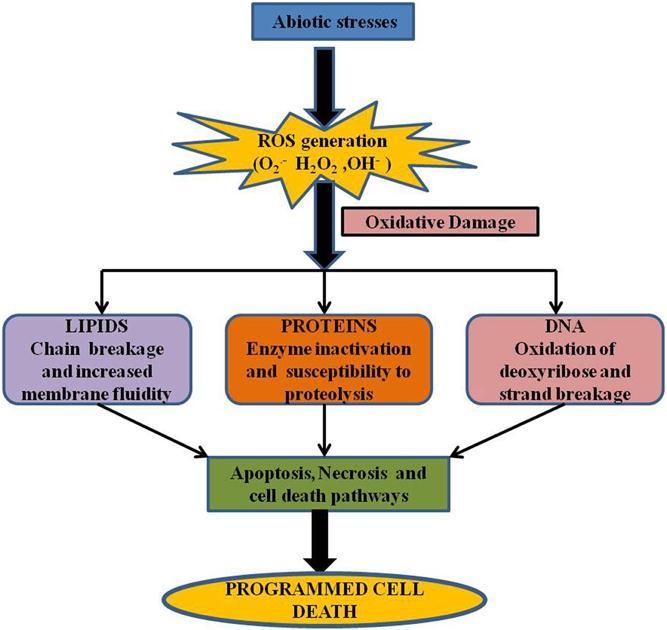
Freeradicalsinteractchemicallywithcellcomponentssuchas DNA, RNA,Lipids,proteinsandtakeawaytheirelectrons tobecomestabilizedandsubsequentlycausesdamagetotheDNA,RNA,LipidsandProteins.Thisalsodestabilizesthecell componentmoleculeswhichthenseekandtakeawayelectronfromanothermolecule,thereforetriggeringalargechainof freeradicalreactions [4, 5].
When maintained at low or moderate concentrations, free radicals play several beneficial roles for the organism. For example, they are needed to synthesize some cellular structures and to be used by the host defence system to fight pathogens. In fact, phagocytes synthesize and store free radicals, in order to be able to release them when invading pathogenic microbes have to be destroyed [13, 18]. Free radicals are also involved in a number of cellular signalling pathways [15–17].Free radicals play a key regulatory role in intracellular signalling cascades, in several cell types such as fibroblasts, endothelial cells, vascular smooth muscle cells, cardiac myocytes, and thyroid tissue. Another physiological activityoffreeradicalsistheinductionofamitogenicresponse [15,16] Summarizing,freeradicals,whenmaintainedatlow or moderate levels, are of crucial importance to human health but an imbalance of free radicals and antioxidants in the humanbodycanalsotriggeroxidativestressleadingtoproblemssuchastissueandcelldamage.
As stated before, if in excess, free radicals and oxidants give rise to a phenomenon known as oxidative stress; this is a harmfulprocessthatcannegativelyaffectseveralcellularstructures,suchasmembranes,lipids,proteins,lipoproteinsand deoxyribonucleicacid(DNA) [13–18] Oxidativestressemergeswhenanimbalanceexistsbetweenfreeradicalformationand the capability of cells to clear them. For instance, an excess of hydroxyl radical and peroxy nitrite can cause lipid per oxidation, thus damaging cell membranes and lipoproteins. This in turn will lead to malondialdehyde (MDA) and conjugated diene compound formation, which are known to be cytotoxic as well as mutagenic. Being a radical chain reaction,lipidperoxidationspreadsveryquicklyaffectingalargeamountoflipidmolecules [22]. Proteinsmayaswellbeing damaged by oxidative stress, undergoing to conformational modifications that could determine a loss, or impairment, of theirenzymaticactivity[17,22]
If not strictly controlled, oxidative stress can be responsible for the induction of several diseases, both chronic and degenerative,aswellasspeedingupbodyagingprocessandcauseacutepathologies(i.e.,traumaandstroke).
1.5 Oxidative stress: When the human body is unable to process and remove free radicals efficiently, Oxidative stress occurs.Thiscanharmcells,tissuesandbody function[6] .Oxidationisanaturallyoccurringprocessandplaysaroleinthe processofaging.Anothersourceofreactiveoxygenundernormalconditionsinhumansistheleakageofactivatedoxygen frommitochondriaduringtheprocessofoxidativephosphorylation [23, 24, 25]Oxidationdamageishighlydependentonthe acquired defects in enzymes involved in the redox-mediated signaling pathways. Research and scientific evidence shows thatoxidativestresscanleadtovariouschronicconditionsincluding cancer,diabetes,cardiovasculardiseases etc [3].The body'simmuneresponsesystemcanalsocauseoxidativestresstemporarily.Ifoxidativestressisuncontrolled,itcanalso lead to acceleration of aging process and cause various ailments [7].Some reactive oxidative species (ROS) can act as cellularmessengerinredox signaling.Henceoxidativestresscancausedisturbances innormal cell signalingmechanism. The electron transport chain consumes up to 90% of total oxygen (O2) taken up by the cells. During this process, as by products, Reactive Oxygen Species (ROS) are generated for the partial four-electron reduction of O2 to produce water molecule,thelastelectronacceptorintheATPgenerationprocess.
International Research Journal of Engineering and Technology (IRJET) e-ISSN:2395-0056
Volume: 09 Issue: 08 | Aug 2022 www.irjet.net p-ISSN:2395-0072
Some conditions link to oxidative stress include cancer, Alzheimer’s disease, Parkinson’s disease, high blood pressure, atherosclerosis,inflammatorydisorders,chronicfatiguesyndrome,asthma,maleinfertilityetc.[8,9].Reactiveoxygenspecies cansometimesalsobebeneficialforthehumanbody,astheyareusedbyimmuneresponsesystemasawaytoattackand destroy pathogens. The hypothesis of oxidative stress highlights the role of antioxidant defenses as an important componentoftheoverallredoxbalanceoftheorganism.
Antioxidants are substances that can neutralize the free radicals by donating and electron, this neutralizing effect helps protect the body from oxidative stress [10]. Examples of such antioxidants include Vitamin A, C and E. Antioxidants come fromseveraldifferentsources,anantioxidantproducednaturallyinthebodyis Glutathione [11].Antioxidantscanprevent orslowdownthedamagecausedbyfreeradicals,unstablemoleculestocellsandtissues.Someantioxidantslessenorstop the formation of free radicals, and some “scavenge” to remove free radicals before they do damage, or work to repair damage once it has been done.[12].Some common antioxidants are vitamins C and E, beta carotene, andselenium; many others are phytochemicals, such as quercetin and other flavonoids; enzymessuch as glutathione-transferees, peroxidase andsuperoxidedismutase.[13].Antioxidantshavebeenknowntopreventvariousdiseasescausedbyoxidativestress.The degrading effects of oxidants in the body can be cancelled out by antioxidants. With years of research the role of antioxidants in the treatment and prevention of various diseases was recognized. This lead to a worldwide search for plantspossessingantioxidativeproperties.
e-ISSN:2395-0056
Volume: 09 Issue: 08 | Aug 2022 www.irjet.net p-ISSN:2395-0072
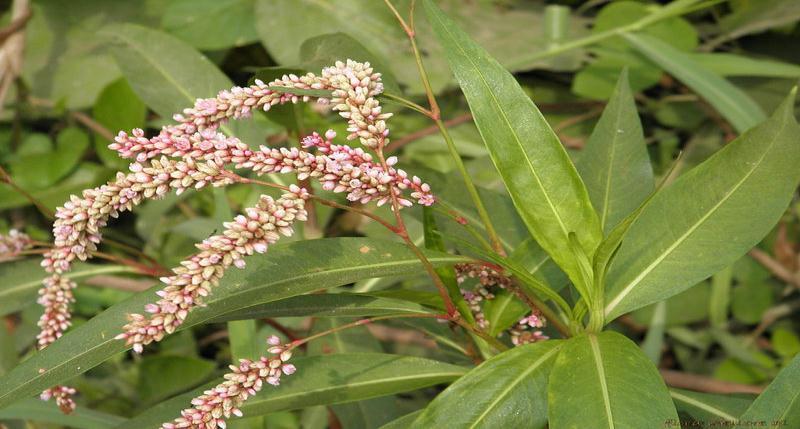
Plantsbelievedtopossesstheseattributesarescreenedtofindoutvariouspharmacologicalproperties.Plantsofthegenus of species polygonum have been used all over the world for its medical properties. In this study, the plant species Polygonum glabrum L hasbeenselectedforitsreportofhigh antioxidativecapabilities. Polygonum glabrum isaperennial plantcommonlyknownasdenseflowerknotweed.Itisamphibiousandgrowsinorclosesbywaterbodiessuchasrivers and the ditches. Polygonum glabrum L is found all over the world, regions including Africa, Pacific Islands, North South America,Bahamas,Iran,Bangladesh,Pakistanetc.itis alsofoundtoabundantlygrowinEastAsiancountries pneumonia, colicpainandthepasteisappliedoncuts andwounds [17] Polygonum glabrum L belongstothefamily polygonaceae and Genus polygonum [18] It is 34 feet high and erect glabrous with dilated nodes. Stems have an extension of 5 – 15 centimeters in length and have a reddish colour, rooting is also generally seen in the nodes. Leaves are simple alternate and stipulate with leaf apices narrowly acuminate. Leaves are lanceolate or oblong lanceolate with petiole of 8-9 millimetersinsize.FlowersaregenerallyseeninthemonthofJunetheyarebisexualandpedicillate.Flowersarewhiteor pinkwithpartedpetalshaving6-8stamens,2stylesandconnate. [19,20,21]
ThisreviewisanefforttostudytheantioxidativepropertiesofPolygonumglabrum,andhowitmayhelpasamedicineto tackledifferentailmentscausedbyoxidativestressinthebodyandtoshedalightintotheimportanceofmedicinalplants andtoupdatethephytochemicaldataoftheplant.
Thepreliminaryphytochemicalscreeningformethanolextractoftheplantareperformedfortheidentificationofvarious plantconstituentsnamelyalkaloidsflavonoids,sterols,tripterpenes,Saponinsandcoumarins.PreliminaryScreeningwas carriedoutusingtechniquesdescribedby Martinez et al. 1999, Sofowora, 1993 and Harborne, 1998.[26,27,28]
1.8.1 Detection of Alkaloids- [29]
Extractswherebasifiedwithammonia,extractedwithchloroform.Extractsweredissolvedindilutehydrochloricacidand filtered.Theacidlayerobtainedwastestedforalkaloids.
1.8.1.1 Wagner’s test (IodineinPotassiumIodide):
The acid layer was treated with few drops of Wagner’s reagent. Formation of reddish brown precipitate indicates the presenceofalkaloids.
1.8.1.2 Dragendroff’s reagent (PotassiumBismuthIodide):
TheacidlayerwastreatedwithfewdropsofDragendroff’sreagent.Formationofreddishbrownprecipitateindicatesthe presenceofalkaloids.
International Research Journal of Engineering and Technology (IRJET)
e-ISSN:2395-0056
Volume: 09 Issue: 08 | Aug 2022 www.irjet.net p-ISSN:2395-0072
1.8.2 Detection of flavonoids- [29]
1.8.2.1 Potassium hydroxide (5%) test-
Toonemlofextractonemlof5%potassiumhydroxidewasadded.Formationofbrightyellowcolourindicatespresence offlavonoids.
1.8.2.2 Aluminum chloride (5%) test
Extract was treated with 5% aluminum chloride, which showed formation of yellow colour indicating the presence of flavonoids.
1.8.3 Detection of Sterols [29]
Extractsweredissolvedinchloroform,filteredandtestedforsterolsandtriterpenes
1.8.3.1Salkowski test
Tothechloroformsolution,fewdropsofconc.Sulphuricacidwereaddedandallowedtostand,appearanceofredcolour inlowerlayerindicatesthepresenceofsterols.
1.8.3.2 Liebermann-Burchard
Fewdropsofaceticanhydridewereaddedandmixedwellinthechloroformsolution.1mlofconcentratedsulphuricacid wasaddedfromthesidesofthetesttube,appearanceofreddishbrownringindicatesthepresenceofsterols.
1.8.4 Detection of triterpenes [29]
1.8.4.1 Salkowski test:
Tothechloroformsolution,fewdropsofconcentratedSulphuricacidwasadded,shakenandallowedtostand,appearance ofgoldenyellowcolourindicatesthepresenceoftriterpenes.
1.8.4.2 Liebermann-Burchard:
Few drops of acetic anhydride was added and mixed in chloroform solution. 1 ml of concentrated sulphuric acid was addedfromthesidesofthetesttube,appearanceofdeepredcolourindicatesthepresenceoftripterpenes.
1.8.5 DETECTION OF TANNINS[29]
1.8.5.1 Ferric chloride test:
Afew dropsof 1% neutral ferricchloride solution were addedto the extract,formation of blackish blue colour indicates thepresenceoftannins.
1.8.5.3 Lead acetate test:
Afewdropsof aqueous basicleadacetate solution wereaddedtotheextract.Reddish brownbulkyprecipitate indicates presenceoftannins
1.8.6 Detection of saponins[29]
1.8.6.1 Foam test:
Smallamountofextractwasshakenwithlittlequantityofwater,iffoamproducedpersistsfor10minutes;it indicatesthe presenceofsaponins.[29]
International Research Journal of Engineering and Technology (IRJET) e-ISSN:2395-0056
Volume: 09 Issue: 08 | Aug 2022 www.irjet.net p-ISSN:2395-0072
[29]
1goftheextractwaskeptwithwaterinatesttube,coveredwithpapersoakedinNaOHthendilutedandboiled.Yellow fluorescenceobservedafterexaminationunderultra-violetlampindicatespresenceofcoumarins
TABLE 1-Yieldpercentageofextractofphytochemicalsofeachpartofplant(methanolextract) [29]
Methanol extract of plant part
Yield %
Leaves 2.8 Stems 2.4 Flowers 2.2 Rootbarks 0.7
Table 2:Phytochemicalscreeningofdifferentpartsof Polygonal glabrum. [29] Key: _: indicates absence of the constituents, +: low concentration, ++: moderate concentration, +++: high concentration.
Leaves Stems Flowers Root Adventitious roots
Alkaloids +++ +++ ++ ++ + Flavonoids +++ +++ ++ ++ ++ Sterols ++ - ++ - ++ Triterpenes ++ - ++ ++Tannins +++ +++ +++ +++ +++ Saponins + ++ + -Coumarins +++ ++ + ++ +
1.9.1 Evaluation by DPPH assay:
Evaluationofantioxidative activitiesofPolygonum glabrum wascarriedoutbyDPPH(2,2- diphenyl-1-1-picryl-hydrazylhydrate)assay.DPPHfreeradicalmethodisbasedonelectrontransferwhich producesavioletsolutioninethanolandis reducedinthepresenceofanantioxidantmoleculegivingacolourlessethanolsolution.Thismethodhasbeenusedwidely for antioxidant activity [30]IC50 (efficient concentration) value is used for interpretation of results. The IC50 value was calculatedforeachoftheextractandthestandard. TheresultsareshowninTable3
TABLE 3: RadicalScavengingActivitypercentage(RSA%)of Polygonum glabrum extractsusingDPPHassay [29]
EXTRACT (Methanol)
%RSA ± SD IC50 ± SD (mg/ml)
66.3±0.19 3.193±0.03 Stems 61.4±0.09 2.524±0.01 Flowers 91.6±0.03 4.134±0.It01 Root-barks 81.2±0.04 3.809±0.06
Leaves
AdventitiousRoot 85.0±0.01 1.361±0.01 Standard 91.1±0.02 3.13±0.02
e-ISSN:2395-0056
Volume: 09 Issue: 08 | Aug 2022 www.irjet.net p-ISSN:2395-0072
The results show that extracts of Polygonum glabrum have hydrogen donor compound, scavenging DPPH free radical at varyingrates.Inmethanolextractstested,extractofflowershadDPPHradicalscavengingactivities(91.6±0.03%,IC50 = 4.134 ± 0.01 mg/ml), adventitious-roots methanol extract (85.0±0.01%, IC50 = 1.361± 0.01 mg/ml) and root-bark methanolextract(81.2±0.04%,IC50 =3.809±0.06mg/ml).IC50 concentrationandtheantioxidantcapacityhaveinversely proportional values, adventitious-roots methanol extract (IC50 = 1.361 ± 0.01mg/ml) was found to have the highest antioxidantcapacitywhencomparedwithstandard(3.13±0.02mg/ml)
FRAP(FerricreducingAntioxidantpower)assaywasusedtoevaluatetheantioxidantactivityofleafextractsof Polygonum glabrum. The FRAP assay depends upon the reduction of Ferric (Fe3+) to ferrous (Fe2+) ion at low pH. This causes formation of a coloured ferrous probe complex from a colourless probe complex. FRAP assay is used to evaluate antioxidativeactivitiesofnaturalproductsbecauseitissimpleandeasytoperformandisreproducible [31]
Table 4:FRAPassayevaluationofleafextract[32]
Extract FRAP □EC(mM/mg) Leaves 3.88±0.02ab Control(Ascorbicacid)* 3.88±0.02ab
□
Ferric reducing ability of plasma; EC: equivalent concentration; (mM/mg)- mM Fe2+ per mg dry weight of plant extract. ⁎ Positive controls.
The following data was obtained, which shows that extracts of Polygonum glabrum L has Ferric to Ferrous reducing capacity.Inmethanolleafextractstested,theyshowedFRAPassaycapability. [32]
Oxidationisaprocesswhichoccursinthebodynaturallyorduetoartificialreasonsandcausesdetrimentaleffectsonthe human body. Due to the action of free radicals and Reactive Species of Oxygen, Nitrogen, Hydrogen etcetera in the body, whichultimatelylead tooxidativestress,causingvariousailments. Researchersare implementingnewstrategiestohelp prevent and treat these diseases by experimenting on the antioxidant properties of medicinal plants. Plants of the genus Polygonum haveprovedtopossesshighantioxidativecapabilitiesandhaveprovedtobeasteppingstoneintodiscovering betterwaystohelppreventandtreatvariousdiseasesrelatedtooxidativestress.
Studieshave shown that Polygonum glabrum hasprovedto containhigh concentrations ofantioxidants andcan possibly be implemented in preventing and treating oxidative stress related ailments. Also by way of phytochemical screening experiments research studies shows that Polygonum glabrum contains secondary metabolites such as alkaloids, flavonoids,sterols,tripterpenes,Saponinsandcoumarinswhichcausesantioxidanteffectsandotherbeneficial medicinal effects. It is observed that Polygonum glabrum lives up to its claims on being a beneficial medicinal plant with its high antioxidanteffects.Henceamorein-depthresearchshouldbedoneonsuchplantstotapintothebenefitstheycanprovide forthepossibilityofdiscoveringpotentialnewdrugsortoactasanalternativetoprescribedpharmaceuticalmedicine.
1. HalliwellB,GutteridgeJMC.Freeradicalsinbiologyandmedicine.4th.Oxford,UK:ClarendonPress;2007.
2. YoungI,WoodsideJ.Antioxidantsinhealthanddisease.J.Clin.Pathol.2001;54:176
3. ValkoM,LeibfritzD,MoncolaJ,CroninMD,etal.Freeradicalsandantioxidantsinnormalphysiologicalfunctionsand humandisease.Review.Int.J.Biochem.CellBiol.2007;39:44–84
4. DrogeW.Freeradicalsinthephysiologicalcontrolofcellfunction.Review.Physiol.Rev.2002;82:47–95.
International Research Journal
Engineering
Technology (IRJET) e-ISSN:2395-0056
Volume: 09 Issue: 08 | Aug 2022 www.irjet.net p-ISSN:2395-0072
5. Genestra M. Oxyl radicals, redox-sensitive signalling cascades and antioxidants. Review. Cell Signal. 2007;19:1807–1819
6. FreiB.Reactiveoxygenspeciesandantioxidantvitamins.LinusPaulingInstitute.OregonStateUniversity.1997.
7. López-OtínC.,BlascoM.A.,PartridgeL.,SerranoM.,KroemerG.(2013).Thehallmarksofaging.Cell.153,1194–1217. 10.1016/j.cell.2013.05.039
8. TanB.L.,NorhaizanM.E.,HuynhK.,HeshuS.R.,YeapS.K.,HazilawatiH.,etal.(2015a).Waterextractofbrewers'rice inducesapoptosis inhuman colorectal cancercellsviaactivationofcaspase-3andcaspase-8anddownregulatesthe Wnt/β-catenin downstream signaling pathway in brewers' rice-treated rats with azoxymethane-induced colon carcinogenesis.BMCComplemen.Altern.Med.15:20510.1186/s12906-015-0730-4
9. Liu Z., Zhou T., Ziegler A. C., Dimitrion P., Zuo L. (2017). Oxidative stress in neurodegenerative diseases: from molecularmechanismstoclinicalapplications.Oxid.Med.Cell.Longev.2017:252596710.1155/2017/2525967
10. Halliwell B. How to characterize an antioxidant- An update. Biochem Soc Symp. 1995;61:73–101. [PubMed] [Google Scholar][Reflist]
11. PompellaA,VisvikisA,PaolicchiA,DeTataV,CasiniAF(October2003)."Thechangingfacesofglutathione,a cellular protagonist".BiochemicalPharmacology.66(8):1499–503.doi:10.1016/S0006-2952(03)00504-5.PMID14555227.
12. Halliwell B. How to characterize an antioxidant- An update. Biochem Soc Symp. 1995;61:73–101. [PubMed] [Google Scholar][Reflist]
13. Levine M, Ramsey SC, Daruwara R. Criteria and recommendation for Vitamin C intake. JAMA. 1991;281:1415–23. [PubMed][GoogleScholar][Reflist]
14. Kadel C, Jain AK. Folklore claims on snakebite among some tribal communities of Central India. Indian Journal of TraditionalKnowledge.2008;7(2):296-299.
15. Shiddamallayya N, Azra Yasmeen, Gopakumar K. Medico-botanical survey of kumar parvatha kukke subramanya, Mangalore,Karnataka.IndianJournalofTraditionalKnowledge.2010;9(1):96-99.
16. SoudahminiE,GaneshM,Senthil PL,MadhuC,Divakar.Herbal remediesofMadugga tribesofSiruvaniforest,South India.NaturalProductRadiance.2005;4(6):492-499.
17. KocheDK,ShirsatRP,SyedImran,Mohd.Nafees,ZingareAK,DonodeKA.EthnomedicinalSurveyofnagzirawildlife sanctuary,DistrictGondia(M.S.)India-PartII.EthnomedicinalLeaflets.2008;1(8):532-537.
18. ChopraRN,NayarSL,ChopraIC.GlossaryofIndianMedicinalPlants.Firsted.CSIR,NewDelhi.1956;199-200.
19. Sundara Raghavan C, Arora CM. Chromosome numbers in Indian medicinal plants-II. Proceedings of the Indian AcademyofSciences.1958;47(6):352-358.
20. Maharajan M, Rajendran A. Taxonomic studies on selected species of the genus Polygonum (polygonaceae) in south india.JournalofScience.2014;4(3):144-148.
21. Nizar K, Mishra S, Tiwary MP, Singh PN, Kumar V. Antidepressant activity and brain neurotransmitters study of PolygonumglabrumWilldinrodents.JournalofHerbalMedicineandToxicology.2007;1(2):73-79.
22. Martinez,A.,Valencia,G.andMarcha fitoquimica. (1999).Phytochemical screening methods:InManual deprácticas deFarmacognosiayFitoquímica.1steditionMedellin:UniversidaddeAntioquia,Am.J.Res.Comm.,59-65.
23. ValkoM,LeibfritzD,MoncolaJ,CroninMD,etal.Freeradicalsandantioxidantsinnormalphysiologicalfunctionsand humandisease.Review.Int.J.Biochem.CellBiol.2007;39:44–84.
International Research Journal of Engineering and Technology (IRJET) e-ISSN:2395-0056
Volume: 09 Issue: 08 | Aug 2022 www.irjet.net p-ISSN:2395-0072
24. DrogeW.Freeradicalsinthephysiologicalcontrolofcellfunction.Review.Physiol.Rev.2002;82:47–95.
25. Genestra M. Oxyl radicals, redox-sensitive signalling cascades and antioxidants. Review. Cell Signal. 2007;19:1807–1819
26. Martinez,A.,Valencia,G.andMarcha fitoquimica.(1999).Phytochemical screening methods:InManual deprácticas deFarmacognosiayFitoquímica.1steditionMedellin:UniversidaddeAntioquia,Am.J.Res.Comm.,59-65.
27. Sofowora,A.(1993).Medicinal PlantsandTraditional MedicinesinAfrica.Chichester John, Willey& SonsNew York 256.
28. Harborne, J. B. (1998). Phytochemical Methods. A guide to modern techniques of plant analysis. Chapman and Hall, London,pp125.
29. Nidal Ibrahim Jalal Awad, B. Sc. (Honours) in Botany, Faculty of Science, University of Khartoum, 2011, Chemical ProfileandsomeBiologicalActivitiesofExtractsfromPolygonumglabrumL.
30. Kitts,D.D.,Yuan,Y.V.,Wijewickreme, A.N.,andHu,C.(2000).AntioxidantpropertiesofaNorthAmericangingseng extract.Mol.Cell.Biochem.,203:1-10.
31. Benzie,I.,Strain,J.,1996.Theferricreducingabilityofplasma(FRAP)asameasureofantioxidanttpower”:theFRAP assay.AnalyticalBiochemistry239,70–76.
32. A.M. Muddathir a,⁎, K. Yamauchi a, I.Batubara b, E.A.M. Mohieldin c, T. Mitsunaga a, Anti-tyrosinase, total phenolic contentandantioxidantactivityofselectedSudanesemedicinalplants