
International Research Journal of Engineering and Technology (IRJET) e-ISSN: 2395-0056

Volume: 09 Issue: 08 | Aug 2022 www.irjet.net p-ISSN: 2395-0072
SELF-HEALING CONCRETE OR BIO-CONCRETE ASSISTANT PROFESSOR ER. SONIA, ASIF CHOUDHARY
1 Asif Choudhary
2 Er. Sonia Dept. of Civil Engineering DBU PUNJAB,
3 Professor Er. Shivani Thakur, Dept. of Civil Engineering, Desh Bhagat University, Punjab,***
Abstract - Onageneral observation, wehaveatendency to find that area unit cracks in concrete construction once a whileofconstructionanditsvalueofrepairandinsomecases not possible. To beat if we have a tendency to area unit attending to study of self-healingconcrete. The study was dispensed on a microorganism based mostly on selfhealing concrete exploitation B microorganism. A tested terriblyusefulfortheconstructionofsturdystructures,and it conjointly improved the properties of concrete and maintenance value is reduced, and by experimentation regarding autonomous self-healing mechanism with the assistanceoforganicchemistrymethod.Duringthismetabolic conversion canhappenand crack protection, can get stuffed which can be beneficial in the surroundings case. Reconstructionand maintenancevaluereduction.
Key Words: Self-healing concrete, Terribly, Sturdy structure, Autonomous,
1. INTRODUCTION
Thecrackformationmaybeausuallydetermineddevelopmentin concretestructures.thoughsmallcrackformationhardlyaffects structural properties of constructions, hyperbolic porousness thankstosmallcracknetworkingmightconsiderablyscaleback thesturdinessofconcretestructuresthankstotheriskofingress ofaggressivesubstancessignificantlyinwetenvironments.soas toextendthecustomarilydeterminedself-producedcrack-healing potential of concrete, specific healing agents are incorporated withintheconcretematrix.Theaimofthisstudywastoquantify thecrack-healingpotentialofaselectedandnoveltwo-component bio-chemicalself-healingagentembeddedinporousenlargedclay particles, that act as reservoir particles and replace a part of regular concrete aggregates. Upon crack formation, the twocomponentbiochemicalagentconsistingofmicroorganismspores andthesaltsquarewasmeasuredfreefromtheparticlebycrack ingress water. future bacterially mediate carbonate formation ends up in the physical closure of small cracks. Experimental resultsshowedcrack-healinguptozero.46mm-widecracksin microorganismconcretehoweversolelyuptozero.18mm-wide cracksaufaitspecimensonceonehundreddayssubmersionin water.Thatthedeterminingdoublingofcrack-healingpotential wassothankstothemetabolicactivityofmicroorganismswas supported by gas profile measurements that unconcealed O2 consumption by bacteria-based however not by management specimens.wetendtothusconcludethatthisnovelbio-chemical
self-healingagentshowspotentialforsignificantlyincreasingthe sturdinessaspectsofconcreteconstructionsinwetenvironments.
2. MECHANISM OF SELF HEALING
The small cracks that area unit developed within the concretethankstotheoverdonetensileforcesprovidethe location for self-healing via microorganism activities. The microorganismsporesandcalciumlactatethatareaunitused as the healing agents, act because of the precursors throughoutthemethod.Thesporesinconjunctionwiththe calcium lactate area unit are embedded and kept into the expandedclaypelletsconsistingofporesandbubbles.These pelletsareaunitsarethendistributeduniformlythroughout the concrete throughout the blending method. Whenever crevices area unit fashioned in such concrete, the pellets rupture therefore material possession the microorganism sporesandchemicalprecursorout.ThewetandOentersuch small cracks furnishing favourable surroundings for the multiplicationofthemicroorganism.R.Spink,inawritingfor Guardian,commentsontheattention-grabbingnatureofthe healing method. it's solely with the arrival of concrete nemesisfreshwateroratmosphericallywetoozyintocracks. Thatthe microorganismstarts toprovide thesedimentary rockthateventuallyrepairsthecracks.Inconcretecracksup to zero.2mm wide area unitwell autogenously. Suchsmall cracksareaunitacceptableasthesedon'tdirectlyinfluence thesecurityandstrengthofconcrete.Thein-builtbacteriabasedself-healingmethodwasfoundtohealcracksfullyup tozero.5mm.Oandwater,whichwereliablefordegrading thestandardofconcrete,currentlytriggerthemethod.
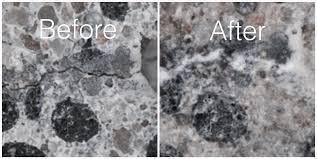
Fig.1andFig.2showthebeforeandafterthehealing process
International Research Journal of Engineering and Technology (IRJET) e-ISSN: 2395-0056
Volume: 09 Issue: 08 | Aug 2022 www.irjet.net p-ISSN: 2395-0072
3. PREPARATION OF BACTERIAL CONCRETE
Bacteria area unit added to the concrete combine in suspension state and it should meet sure criteria. Microorganisms used as self-healing agents ought to be ready to survive high alkaline atmosphere of concrete for longdurationsandbereadytokindspores(highlyresistant structures)withstandingmechanicalforcesthroughoutthe concrete mix. A microorganism concrete combines ready victimizationalkali-resistantsoilmicroorganismBacilliJC3 alongside nutrients from that the microorganism may probably manufacture spar primarily based bio-minerals. Thegenuseubacteriumhasbeenfoundtothrivethehighalkaline atmosphere of concrete because of its extraordinarilythickouterplasmamembranethatpermits them to stay viable till an acceptable atmosphere is accessible to grow. they'd become active once the cracks kindontheconcretesurfacepermittingwatertoenterinto thestructure.ThisdevelopmentcancutbackthepHofthe concrete atmosphere wherever the incorporated microorganism becomes activated. An organic compound primarily based on nutrients equipped alongside microorganism content in suspension helps in manufacturingsparcrystals.
1. Combinationofharmlessbacteria’s-BacillusSphaericus and Portius Vulgarius area unit reaching to be wont to offer sensibleresult.
2. forcreatingBioconcrete,microorganismanswersare goingtobeused.
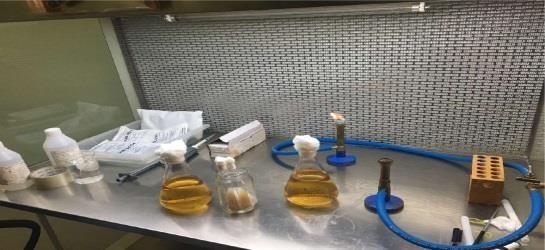
3. Preparationofmicroorganismansweraregoingtobe done primarily by adding twelve.5 g of nutrients growth to five00milroundshapeflaskcontainingwaterandit'slined.
4. AcolonyofAssociateinNursinglongculturewon’tto doinoculatethirtymilsofmediainanexceedingly250milround shapeflask.
5. Thecultureisthenreachingtobeincubatedat37ocfor twenty-fourhrs.
within the concrete matrix returning to bear with ingress water. The microorganism primarily based self-healing methodhasbeenfoundtohealcracksfullyuptozero.5mm width.Onthesurfaceofmanagementconcrete,carbonateare fashionedthankstothereactionofgreenhousegasgiftwith hydroxide gift within the concrete matrix in line with the subsequentreaction:
CO2+Ca(OH)2→CaCO3+water
Thecarbonateproductionduringthiscaseisdistributed thankstotherestrictedquantityofgreenhousegasgifts.As Ca(OH)2 could be a soluble mineral, it gets dissolved in comingintoaself-healingfuseoutofthecrackwithinthesort of leach. The self- healing method in microorganism incorporatedconcreteisfaradditionaleconomicalthanksto theactivemetabolicconversionofmetallicelementnutrients bythemicroorganismgiftinconcrete:
Ca(C3H5O2)2+7O2→CaCO3+5CO2+5H2O
Here carbonate is made directly thanks to microbic metabolismandconjointlyindirectlythankstoautogenously healing.Thismethodleadstoaneconomicalbacteria-based crackwaterproofingmechanism.Ureolyticmicroorganism, BacillussubtilisJC3will precipitateCaCO3withinthehigh alkalic surroundings by changing organic compounds into ammoniumionsandCarbonate.TheAmmoniadegradationof the organic compound will increase the hydrogen ion concentration regionally and promotes the microbic deposition of carbonate as spar crystals in exceedingly metallicelement-madesurroundingswaterproofingthecrack andmaintainingthehydrogenionconcentrationofconcrete.
5. REVIEW OF LITERATURE
RECENT ADVANCES ON SELF HEALING OF CONCRETE. SCHLANGEN, H. JONKERS, S. QIAN & A. GARCIA earthenware UNIVERSITY OF TECHNOLOGY, MICROLAB, DELFT, Netherlands
4. WORKING PRINCIPLE OF SELF HEALING PROCESS
In concrete structures, the small cracks up to zero.2millimetrewidesquaremeasurecuredautogenously thankstotheassociationofnon-reactedcementparticlesgift
Inthispaperansummaryisgivenofrecentdevelopments obtained in analysis on self-healing of cracks in cement primarily based materials and asphalt concrete. At earthenware University varied comes ar running to check self-healing mechanisms. the primary project that's mentioned is microorganism Concrete, within which microorganismarmixedinconcrete,whichwillprecipitate sparinaverycrackandthereuponcreateconcretestructures watertightandenhancesturdiness.inaverysecondproject hybrid fiber bolstered cementations materials ar studied whichwillautomaticallyrepaircracksoncetheyoccur.The lastprojectdelineateduringthispaperisontheraveningof porousasphaltconcreteandthewaytohealthisinjuryby incorporatingembeddedmicrocapsulesorsteelfibers.The stateoftheartendsupinallcomesshowthat self-healing isn'tsimplyamiracle,howevermaterialsisdesignedforit.
International Research Journal of Engineering and Technology (IRJET) e-ISSN: 2395-0056
Followingarthefindings:
1. Thewatertightnessofthestructureredoubled.
2. Theendurancesturdinessincreased.
3. Raveningofporousasphaltconcreterenewal.
DEVELOPMENT
OF A BACTERIA-BASED SELF HEALING
CONCRETE HENK M. JONKERS & ERIK SCHLANGEN earthenware UNIVERSITY OF TECHNOLOGY, school OF applied science AND GEOSCIENCES/MICRO workplace, DELFT, Kingdom of The Netherlands.
Concrete structures typically show some self-healing capability,i.e.thepowertohealorsealfreshlyshapedmicrocracks.Thispropertyisespeciallythankstothepresenceof non-hydratedexcesscementparticleswithinthematrixof thematerial,thatbeardelayedorsecondaryassociationupon reactionwithingresswater.duringthisresearch,wehavea tendency to develop a replacement style of self-healing concrete{inthat|duringwhichwithinwhich}microorganism mediatetheassemblyofmineralswhichquicklysealfreshly shaped cracks, a method that concomitantly decreases concrete permeable Ness, and therefore higher protects embeddedsteelreinforcementfromcorrosion.Initialresults showthattheadditionofspecificorganicmineralprecursor compoundsandspore-formingalkaliphilicmicroorganismas self-healingagentsproducesuptoa hundred.Isizedspar particles which may probably seal micro- to even largersized cracks. more development of this bio-concrete with considerably redoubled self-healing capacities would represent a replacement style of sturdy and property concretewithalargevaryofpotentialapplications.
• Followingarthefindings:
1.microorganismmediatetheassemblyofminerals.
2.quicklyhealcracks.
3. Decreasespermeablenessandcorrosion.
4. Introductionofrecentadvancedpropertyconcrete
Ramakrishnan,R.K.Panchalan,andS.S.Bang:hasrevealed apaperonmicroorganismConcreteaConcreteforthelonger termthatsaysatypicalsoilbacteriawasaccustomedinduce sparprecipitation.thissystemisveryfascinatingasaresult of the mineral precipitation evoked as a results of microorganismactivities,ispollutionfreeandnatural.The effectivenessofthissystemwasevaluatedbycomparisonthe compressive strength and stiffness of cracked specimens remediated with microorganism and people of the management specimens (without bacteria). Experimental investigation was additionally conducted to work out the strengthreturncapability(modulusofrupture)ofcracked beams remediated with totally different concentrations of microorganism.Thispaperadditionallypresentstheresults ofasturdinessstudyoncementmortarbeamstreatedwith
microorganism,exposedtoalkalescent,sulfateand freezethaw environments. totally different concentrations of microorganismwereusedfortheinvestigation.itabsolutely wasfoundthattheemploymentofmicroorganismimproved thestiffness,compressivestrength,modulusofruptureand sturdiness of concrete. Scanning microscope (SEM) was accustomeddocumenttheroleofmicrobiologicallyevoked mineral precipitation in rising the strengthand sturdiness aspectsofconcrete.
C. C. Gavimath, B. M. Mali, V. R. Hooli, J. D. Mallpur , A. B. Patil , D.P.Gaddi, C.R.Ternikar : has revealed a paper on potentialapplicationofmicroorganismtoboostthestrength ofcementconcretewithinwhichthepotentialapplicationof microorganismspeciesi.e.B.subtilistoboostthestrengthof cementconcreteisstudied.Heretheyneedcreatedashotto includedormanthoweverviablemicroorganismwithinthe concretematrixwhichisabletocontributetothestrengthof theconcrete.Waterthatenterstheconcretecanactivatethe fivedormantmicroorganismthatsuccessivelycanprovide strengthtotheconcretethroughthemethodofmetabolically mediate carbonate precipitation. Concrete, however, is thanks to its high internal hydrogen ion concentration, relative waterlessness and lack of nutrients required for growth, a rather hostile surroundings for common microorganism, however there ar some extremophilic reproductivestructureformingmicroorganismcouldalsobe able to survive during this artificial surroundings and increase the strength and sturdiness of cement concrete. during this study they found that incorporation of reproductivestructureformingmicroorganismofthespecies eubacteria won't negatively have an effect on the compressiveandsplitenduringnessofthecementconcrete.
A. Surendran and S. John Venison: haverevealedaJournal onincidenceandDistributionofMosquitocidalBinSoilthat saysBisoneamongtheeffectivebiolarvicidestoregulate Culexspeciesandalsotheobservanceofthelarvalcondition iscrucialtoavoidresistancedevelopment.dipterousinsect larvicidalactivityofB.subtiliswasassessedbyuninflected themfromecologicallytotallydifferentsoilhabitatsinand aroundDevakottaioftheprovinceinSouthRepublicofIndia. The isolated organisms were confirmed as B-supported organic chemistry characterization and microscopic observations.
Thirumalaichettiar: has revealed a paper on microorganism concrete says a unique technique in remediating cracks and fissures in concrete by utilizing microbiologically evoked spar (CaCo3) precipitation is mentioned. Microbiologically evoked spar precipitation (MICP) may be a technique that comes beneath a broader classofsciencereferredtoasbiomineralization.it'samethod bythatlivingorganism’skindinorganicsolids.B,atypicalsoil bacteriawillinducetheprecipitationofspar.
Volume: 09 Issue: 08 | Aug 2022 www.irjet.net p-ISSN: 2395-0072 © 2022, IRJET | Impact Factor value: 7.529 | ISO 9001:2008 Certified Journal | Page954
International Research Journal of Engineering and Technology (IRJET) e-ISSN: 2395-0056
Volume: 09 Issue: 08 | Aug 2022 www.irjet.net p-ISSN: 2395-0072
6. METHODOLOGY
Cement - Cement is a binder material, Ordinary Portland Cement (OPC) of 53 grade was used. The physical and chemicalpropertiesofcementareasperIS:456-2000.
Fine aggregate - River sand passing through 4.75mm IS sieveandconfirmingtozone-1ofIS:383-1987wasused.The specificgravitywasfoundtobe2.3
Coarse aggregates -Itiscrushedstonesofamaximum size20mmandretainedon4.75mmISsieves.TestasperIS: 2386-1963isused.
Water- Potablewaterhasbeenusedforcastingconcrete specimens.Thewaterisfreefromoils,acids,andalkalis.
Micro-organism -Bacteria from genus Bacillus species “BacillusSubtilis”isrodshaped,formatoughprotectiveend spores allowing it to tolerate extreme environmental conditions. When a concrete structure is damaged, water start to seep through the cracks and the spores of the bacteriastarttogrowoncontactwithwaterandnutrients.It can adjust to alkaline condition of concrete for the production of calcium carbonate. It can withstand high pressureandconsumessurplusoxygen,thuspreventingsteel corrosion.ThereactionalsocausesanincreaseofpH from neutral to alkaline conditions forming bicarbonate and carbonateions,whichprecipitatewiththeCalciumionsinthe concrete to form Calcium Carbonate minerals. Thefurther crystallizationoftheCalciumCarbonatemineralshealsthe poresandcracksintheconcrete.
7. OBJECTIVES AND SCOPE OF SELF-HEALING CONCRETE
OBJECTIVES:
1) Toincreasethelifetimeofconcrete
2) Toincreasethecompressivestrengthofconcrete.
3) Toincreaseasflexuralstrengthofconcrete.
4) Todecreasetheimpactofworldwarmingandlayer depletion.
5) Todecreasemaintenancevalue.
6) To develop self-healing of bio concrete mistreatmentbiological-basedmostlytechniques.
SCOPE OF PROJECT:
The use of microorganism concrete in Civil Engineering becomeprogressivelyinstyle. Fromsweeteninginthe sturdinessofCementousmaterialstoimprovementinsand from repair of rock monuments, waterproofing of cracks remedy sturdy bricks, microorganism concrete has been successfulinoneandeveryoneThisevery onetechnology will offer ways that for low value and sturdy roads, high strength buildings with bearing capability, long-lasting stream banks, erosion hindrance of loose sands and low-
value sturdy housing. Another issue in standard building materials is the high production of greenhouse gases and highenergyconsumedthroughouttheproductionofthose materialsandthesegreenhousegasesresultsinheating.The high construction value of building materials is another downside in such cases. These drawbacks have junction rectifiertouseofnovel,eco-friendlyself-healingandenergy economicaltechnologywherevermicrobessquaremeasure used the remedy of building materials and sweetening withinthesturdinesscharacteristics.
8. ADVANTAGES AND DISADVANTAGES OF SELFHEALING CONCRETE
ADVANTAGES
1) Improvementincompressivestrength.
2) Reductioninpermeableness.
3) Reductionincorrosionofsteel.
4)Increasetheservicelifetimeofstructurethanexpected life.
5)Ithelpsinreducingthemaintenanceandrepairpriceof structures.
DISADVANTAGES
1)Costofmicroorganismconcreteisdoublethatof standardconcrete.
2)Investigationofcalciteprecipitationisexpensive.
9. APPLICATIONS OF SELF-HEALING CONCRETE
1) Construction of underground retainers for Hazardouswastematerials.
2) Constructionofbuildingsinaseismiczoneandhigh rusestructure.
3) Waterretainingstructure.
10. CONCLUSIONS
1) Microorganismconcretetechnologyhaswell-tried tobehigherthanseveralstandardtechnologiesasa resultofitseco-friendlynature,self-healingtalents crease in sturdithe ness of assorted building materials.
2) The work of numerous researchershasimproved ourunderstandingoftheprospectsandlimitations of biotechnological applications on building materials.
3) Improvementofcompressivestrength,reductionin permeableness,waterabsorption,andstrengthened corrosionareseeninnumerouscementationsand stonematerials.
2022, IRJET | Impact Factor value: 7.529 | ISO 9001:2008 Certified Journal | Page955
International Research Journal of Engineering and Technology (IRJET) e-ISSN: 2395-0056
Volume: 09 Issue: 08 | Aug 2022 www.irjet.net p-ISSN: 2395-0072
4) In microorganisms, the concrete connectivity of poresisdisturbedduetothepluggingofporeswith sparcrystals. Sinceinterconnectedporesarea unit vital for permeableness; The water permeability is diminished in bacterium-treated specimens.
5) Cementation by this methodology is incredibly straightforwardandconvenientforusage.
6) This can presently offer the basis for high-quality structures that can be price effective and environmentallysafehowever,additional work is needed to over the practicableness of this technologyfromacheapandsensibleviewpoint.
7) The application of microorganism concrete to construction could additionally alter some of the present construction processes and revolutionize thewaysinwhichnewconstructionprocesses.
REFERENCES
1) Abdullahi, M., Al.Mattarneh, H.M.A. and Mohammed, B.S. “Statistical modeling of light weight concrete mixtures”, European Journal of Scientific Research, Vol. 31, No. 1, pp. 124-131, 2009.
2) ACI-213R-87 - Guide for structural Lightweightaggregateconcretepp-213R-12,1999.
3) Aggarwal, P., Aggarwal, Y. and Guptha, S.M. “Effect of Bottom ash as replacement of Fine aggregates in concrete”, Asian Journal of Civil Engineering(Buildingand Housing),Vol. 8,No.1, pp.49-62,2007.
4) Ambily, P.S. and Rajamane, N.P. “Studies on comparativesegregationphenomenoninpolymer concretes with granite and sintered fly ash aggregates”,Proceedingsof5thAsianSymposiumon PolymersinConcrete,Vol.2,pp.503-512,2006.
5) Andrew Short and William Kinnirberg, Asia Publishing House,pp.20-31,1963.
2022, IRJET | Impact Factor value: 7.529 | ISO 9001:2008 Certified Journal |