International Research Journal of Engineering and Technology (IRJET) e-ISSN: 2395-0056

Volume: 09 Issue: 08 | Aug 2022 www.irjet.net p-ISSN: 2395-0072
International Research Journal of Engineering and Technology (IRJET) e-ISSN: 2395-0056
Volume: 09 Issue: 08 | Aug 2022 www.irjet.net p-ISSN: 2395-0072
1M.Tech, Civil Engineering, Lucknow Institute of Technology, Lucknow, India.
2Assistant Professor, Civil Engineering, Lucknow Institute of Technology, Lucknow, India. ***
Abstract - The most often utilised building material worldwide is cement concrete. Because it offers exceptional workability and can be moulded to any shape, it is widely used. Ordinary cement concrete has a very low tensile strength, a little amount of ductility, and negligible fracture resistance. microcracks inside the concrete that cause brittle failure. Modern civil engineering projects must fulfil specific structural and durability standards since each structure serves a specific purpose, making modifications to conventional cement concrete a must. It has been discovered that adding certain types of fibres to concrete at particular percentages enhances the structure's mechanical characteristics, durability, and serviceability. It is already well-established that Steel Fiber Reinforced Concrete's (SFRC) high resistance to cracking and fracture propagation is one of the material's key characteristics. By altering the quantity of fibres in concrete, the influence of fibres on the strength of concrete for M 20 grade has been investigated in this work. By cement volume, fibre content was adjusted by 0.50 percent, 1 percent, and 2 percent. In order to test the compressive strength, cubes measuring 150 mm x 150 mm x 150 mm and beams measuring 750 mm x 100 mm x 100 mm were cast. Before being crushed, each specimen was cured for 7, 14, and 28 days. Steel fibre reinforced concrete shows a noticeable gain in strength after 7 days, 14 days, and 28 days of curing, according to research on the outcomes of fibre reinforced concrete with various fibre percentages. The ideal fibre content was determined to be 1% for both the flexural strength of the beam and the compressive strength of the cube. Additionally, it has been noted that when the fibre content rises to its ideal level, concrete strength improves. The Slump Cone Test was used to gauge concrete's workability. The findings of the Slump cone test showed that workability decreases as fibre content increases.
Key Words: (Concrete, Discreteconcrete,road,Utilization of discreteconcrete,polyethylenefibre.
Topreventcrackingcausedbyshrinkageoftheplastic,fibres aretypicallyusedinconcrete.Additionally,theylessenthe permeability of concrete, which in turn lessens water leakage. In concrete, fibres increase impact, abrasion, and shatterresistance.Theytightencontroloverfracturewidth, minimise the need for steel reinforcement, and increase longevity. Fibers increase structural strength and freezethawresistance.Precastliningsegmentsreinforcedmerely with steel fibres are used in the majority of tunnelling
projects.Thegoalistooffersuggestionsforfibrereinforced concreteconstructionsliketunnelsandbridgesintermsof durability and input to service life models. if the mortar binderorconcretematrixhasalargerelasticmodulusthan thefibres.Theyassistincarryingtheburdenofraisingthe material's tensile strength. According to "ACI committee 544," steel fibre reinforced concrete is used as a supplementalmaterialtoavoidcracking,enhanceresistance to impact or dynamic loading, and prevent material disintegration.Fibersusedinconcretehavethecapacityto absorbmoreenergy.
Pavements made of fiber-reinforced concrete are more effectivethanthosemadeofregularcementconcrete."FRC isdefinedascompositematerialconsistingofdiscontinuous, randomly distributed, evenly spaced short length fibres reinforced concrete." Steel, polymer, or natural materials may be used to make the fibres. In contrast to reinforced cementconcrete,whichisofferedforlocalstrengtheningof concreteintensionregions,FRCisthoughttobeamaterial withsuperiorqualities.Steelandorganicpolymerfibreslike polyesterorpolypropylenearethemostcommonfibresused incementconcretepavements.
Giulio Natta and the German chemist Karl Rehn first polymerisedpropylenetoacrystallineisotacticpolymerin March1954.TheItaliancompanyMontecatinibeganmass producing isotactic polypropylene as a result of this groundbreaking discovery in 1957. Syndiotactic polypropylene was also first synthesised by Natta and his coworker.
Polypropylene is one of the cheapest and abundantly availablepolymers. Polypropylene fibres are resistant to mostchemicalattacks.Itsmeltingpointishigh(about165 degrees centigrade). So that it can withstand a working temp,as(100degreecentigrade)forshortperiodswithout detrimenttofibreproperties.
International Research Journal of Engineering and Technology (IRJET) e-ISSN: 2395-0056
Volume: 09 Issue: 08 | Aug 2022 www.irjet.net p-ISSN: 2395-0072
Anefforttoalterthefiber'ssurfaceinanefforttoenhanceits performance. The extruded fibre was successfully coated withathinlayerofAluminumOxidesolgel,butthepull-out performanceofthesecoatedfibresinconcretematriceswas subpar.Thishappenedasaresultofthecoatinglayerand fiber's adhesive bonding failing during testing. Fiber characteristics were improved by adding silica fume (SF) powder during the fibre extrusion process. The SF coextruded fibre possessed unique surface roughness, elasticity,andappearance.Theextrudedpolymer'sshiftin huewasequallyintriguingtosee.
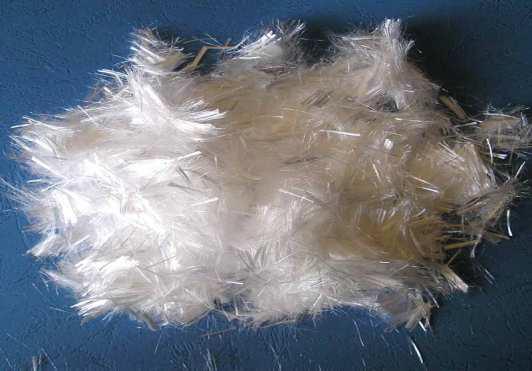
Figure-1: Polypropylenefiber
In this review paper, we have studied about the discrete fiber,andconclusionaregivenbelow:
Kanalli et.al: PFRChasadvantagesovertraditionalconcrete pavement.Polyesterandpolypropylenearetwoexamplesof polymeric fibres that are employed because they are affordableandcorrosion-resistant.ForPFRCtooperateatits best, special design considerations and construction techniques are needed. Due to reduced maintenance and rehabilitation costs, PFRC is 30-35 percent less expensive than flexible pavement while having a 15-20% higher startingcost.Roadnetworksinabig,rapidlygrowingnation likeIndiaprovideresourcemovementandcommunication, whichinturnpromotesgrowthanddevelopment.
Becauseresistancetochange,nomatterhowminor,disrupts oursociety,weareneverwillingtoaccepteventhebest.It's timetopushthroughtheobstaclesandaimforthesummits. ThePFRCoffersfreshhopeforimprovingandglobalisingthe standard of the "True Indian Roads" and changing their appearance.
Ricky: Polypropylene chips might be converted into polymerfibreusingthelaboratorymixingextruder(LME) and the Randcastle fiberline (RFL) drawing apparatus. Reliance Industries provided the raw materials for the PP chips and transported them directly from their manufacturingfacilityinIndia.Usingatwo-stagemethod,a fibre with the desired diameter of 0.5 mm was produced. AccordingtoChapter3,theextrusionprocessutilisingLME producedanamorphousstatefibrewithagreaterdiameter, whilethedrawingprocessusingRFLproducedacrystalline state fibre. To ensure the quality and homogeneity of extruded fibre, machine parameters were improved. However,itwasfoundthatthedelayeddrawingprocedure hadanimpactontherateoffibrecreation.
However,theenhancementofthefiber'ssurfaceproperties was the most crucial component. During the extrusion process, silica fume particles effectively mixed with the polymertocreateanamorphousfibrewitharoughsurface. Thecrystallinefibres'surfacestilldisplayedthisproperty. Pull-out tests showed that the bonding ability of SF coextrudedPP(SFPP)fibreinconcretematrixwasnoticeably superiorthanthatofregularPP(RPP)fibre.Theenhanced surface roughness of the fibre and probable pozzolanic response were credited with this improvement. The presenceofsilica onthefiber'ssurfacewasverifiedusing SEM.
Rakesh et.al: Thefollowingarethemainresultsthatwere drawn from the experimental work: Multifilament fibre is less effective than fibrillated fibre at reducing concrete settlement.Atthesamefibrecontent,ithasalesssignificant impactonslumpreductionthanmultifilamentfibre.The28day compressive strength of concrete is not adversely affected by the inclusion of multifilament and fibrillated fibre. Concrete drying shrinkage is better controlled by fibrillated fibre than by multifilament fibre. In terms of developing abrasion resistance, concrete with fibrillated fibre performs similarly to concrete having multifilament fibre.Concretepavementsmaybebuiltusingconcretethat hasbeenreinforcedwithpolypropylenefibrillatedfibre.
Ahmad: Theresultsofthe materialtestmadeitclearthat addingfibrestoplainconcretehadasignificantimpactonits mechanicalperformanceintermsofcompressivestrength, splittensilestrength,andflexuralstrength.Theperformance improvedasthepercentageoffibresincreasedfrom0.5to 2.0, and the SFRC 2.0 percent performed best of these volumefractions.Theadditionof2.0%fibresledtoa 44.1 percentimprovementinflexuralstrength.Additionally,the strength of the split tensile and compressive components also rose by 53.3 and 4.8 percent, respectively. Since the fibres span fissures, increasing concrete's capacity to withstandtensileloads,theirimpactonflexureandtensile strengthwasmorenoticeableandeffective.
Steelfibrecontentshouldideallybe2.0percentsinceithasa significantimpactonmechanicalperformance.Additionally, theliteraryandbusinesscommunityviewthe2.0percentas a workable and economical percentage. However, greater volumefractionshavealsobeeninvestigatedforultra-high
International Research Journal of Engineering and Technology (IRJET) e-ISSN: 2395-0056
Volume: 09 Issue: 08 | Aug 2022 www.irjet.net p-ISSN: 2395-0072
performanceconcrete,whichisanextremelybrittlematerial incomparisonto standard plainconcrete,upto 3 percent and in some cases 5 percent. It should be noted that this numberoffibresreducestheconsistencyandworkabilityof the concrete, which might be undesirable. As a result, it would be crucial to employ additives to improve the workability. In conclusion, it is thought that using 2.0% fibresbyvolumeofconcreteisasufficientamount.
Mansi, Kartik: One of the most significant and practical characteristicsforthebuildingofroadsisthecompressive strength of bituminous mix. Bitumen is largely used in structuralapplicationstoresistcompressiveloads.Because of this, the qualities of various mix elements that go into generating bituminous mixtures are often quantified in terms of compressive strength. The findings show that addingfibrehada considerable impactonthebituminous mix's characteristics. It is evident that for improving the propertiesof bitumenfrom thepenetrationtestresults of conventional bitumen & Bitumen with Nylon Fiber that & BitumenwithNylonFiberhashighestpenetrationvaluewith 109cmand fromthe ductilitytestresultsofconventional bitumen&BitumenwithNylonFiberthat&Bitumenwith Nylon Fiber has lowest penetration value with 14 cm. Although the results of the current investigation clearly indicatethatnylonfibreinfluencesbitumenproperties,itis deemed necessary to expand the current studies using varioustypesofaggregateandbindersinordertodrawthe precise conclusion that the relationships hold true regardlessoftheconstituenttypes.
Shrikant: Ithasbeennotedthatastheproportionofsteel fibres increases, the workability of steel fibre reinforced concretedecreases.Compressivestrengthkeepsrisingasthe proportion of steel fibre increases until it reaches its maximumlevel.Onepercentwasdiscoveredtobetheideal fibrepercentageforsteelfibrereinforcedconcrete.Withan increaseinfibrecontent,concrete'sflexuralstrengthkeeps risinguntilitreachesitsmaximumlevel.Onepercentwas discoveredtobetheidealnumberforsteelfibrereinforced cement concrete's flexural strength. The plain cement concrete specimens had a normal fracture propagation patternduringtesting,whichresultedinthebreakingofthe beamintotwopieces.However,theaddingofsteelfibresto concretecausesthecrackingtostop,whichcausesSFRCto behave ductilely. Although the compression and flexural strengthsofflatcrimpedsteelfibrefor28daysareslightly lower than those of hooked steel fibre, they nevertheless havealowercost(26%)thanhookedsteelfibre.
Ayyappan et.al: Theengineeringbehaviourofsoil-flyash mixtures was significantly influenced by the presence of fibres. The following are the main findings of our investigation on the engineering behaviour of soil-fly ash mixes with fibre reinforcement. Due to the inclusion of fibres,themoisture-densityrelationshipofsoil-flyashmixes wasdramaticallyimpacted.Inflyashandsoil-flyashmixes,
theMDDrisesandtheOMCfalls.Thesoil,however,exhibits alesspronouncedreversaltendency.
Thepeakcompressivestrengthandductilityofsoil-flyash specimenswerebothimprovedbythefibreinclusion.The UCSoftheunreinforcedspecimensdetermineshowmuch theUCSofsoil-flyashspecimensincreases.AstheUCSinthe unreinforced condition declines, the relative gain in UCS rises.
Whileenhancingtheductilityorenergyabsorptioncapacity of soil-fly ash specimens, an increase in fibre length decreaseditscontributiontopeakcompressivestrength.For allsoil-flyashspecimens,therelativeadvantageoffibreson CBRvaluesonlyrisesbyupto1.00percentbydryweight andlengthupto12mm.Accordingtothefindingsofastudy onrandomlyorientedfibrereinforcedsoil-flyashmixes,the bestperformancewasobtainedusing12mmfibresatthe idealdosageof1.00percentbydryweightofthemixtures.
Sirisha et.al: Over the past seven or eight years, performance concrete has experienced amazing growth. Practically all continents have come to adopt high performance concrete. The technical community seems to have agreed on a broad definition of high performance concrete. Such a definition is predicated on the concrete meeting specific performance standards or qualities for a particularapplicationthatareotherwiseimpossibletoget fromregularconcreteasacommodityproduct.Itisrequired toemployfibreinvariousapplications.TheuseofHP-SFRC is still primarily used in the construction of high-rise structuresandlong-spanbridges.InEuropeandJapan,itis usedmoreforbridgesthanforbuildings,butintheUS,itis utilisedmoreforbuildingsthanforbridges.However,things are evolving. HPC is increasingly being used in structures today.Concretedurabilityisbecomingmoreimportantthan concrete strength. High strength concrete is frequently utilised for purposes other than those requiring strength because of its high level of durability. The mechanical characteristicsofhighandveryhighstrengthconcreteswith andwithoutfibresandtheirstructuralapplicationscontinue to be the subject of much investigation. Several national codesofpractisearenowincorporatingthefindingsofthis research.Onthebehaviour oftheconcreteatanearlyage and its connection to long-term performance, additional knowledgeisneeded.Twonotablerecentadvancementsin thefieldofhighperformancefibrereinforcedconcreteare the Slurry Infiltrated Mat Concrete (SIMCON) and the developeddeliverymechanismfornon-metallicfibres.The use of continuous fibre reinforcement for enhancing concrete's behaviour has seen substantial interest and development. Forprestressedandnon-prestressedconcrete applications,fibrereinforcedpolymers(FRP),alsoknownas fibrereinforcedplastic,arebeingrecognisedasasubstitute foruncoatedandepoxy-coatedsteelreinforcement.Western nations have seen an increase in the use of compact reinforcedconcreteandreactivepowderconcrete(Ductal).
2022, IRJET | Impact Factor value: 7.529 | ISO 9001:2008 Certified Journal | Page662
International Research Journal of Engineering and Technology (IRJET) e-ISSN: 2395-0056
Volume: 09 Issue: 08 | Aug 2022 www.irjet.net p-ISSN: 2395-0072
Finally,onlylaboratoriesandresearchfacilitiesinIndiaare using these high performance new generation fibre concretes.Toseeitinaction,manyyearswillpass.
Sayyed et.al: Direct shear experiments, unconfined compression testing, and traditional triaxial compression testshaveshownthattheadditionofdiscretefibrestothe soil increases shear strength and decreases post-peak strength loss. The peak shear strength, postpeak strength decrease,axialstraintofailure,and,insomesituations,the stress-strain behaviour can all be greatly improved by discrete,randomlydispersedfibreinclusions.Additionally, fibre inclusions hinder the compaction process, which lowersthemaximumdrydensityofreinforcedspecimensas theirfibrecontentincreases.Withfibrereinforcement,the strength losses brought on by in-service saturation are greatlydecreased.Overall,itisimportanttonotethatthere hasbeenlessstudyontheuseoffibreswithcohesivesoils. Although it has been noted that fibre reinforcement increasesthestrengthofcohesivesoils,furtherresearchis requiredtofullyassessthisreinforcementsinceitisunclear how loads are transferred across the interface between fibres and clayey soils. The combined impact of fibre and variouschemicalbinders(suchasflyash,cement,lime,poly vinylacetate,polyvinylalcohol,andureaformaldehyde)on granularorclayeysoilshaslatelyattractedtheattentionof severalresearchers.Theprimaryexplanationisthatwhile chemicalbindersincreasesoilstability,theyalsoreducethe soil'sductilenature.Inthisapproach,fibresaidinlowering the composite soil's brittleness factor. As a result, a brittleness factor with a scale of 1 to 0 where 0 denotes fully ductile behavior was established in this study. The authorscometotheconclusionthatthethreemainexecutive issueswiththeshortcompositesoilmanufacturingarethe absence of scientific standards, clumping and balling of fibres,andadherenceoffibretosoil.
Theadvantagesofshortfibrecompositesoilsarethatthey arereadilyavailable,affordable,quickandsimpletouse,and practicalinallweathersituations.Theuseoffibresinsoil reinforcement has several technical advantages, such as preventing the development of tensile cracks, increasing hydraulicconductivityandliquefactionstrength,decreasing thermalconductivityandbuildingmaterialweight,reducing thetendencyofexpansivesoilstoswell,andreducingsoil brittleness. The use of natural and/or synthetic fibres in geotechnical engineering has also demonstrated to be practicalinsixdisciplines,includingpavementlayers(road construction), retaining walls, earthquake engineering, railwayembankments,slopeprotection,andsoil-foundation engineering.
Ravindra et.al: A cement-bound road base with fibre reinforcement has the potential to perform better by extendingthebase'sfatiguelifeandstrengtheningitsability to withstand reflective cracking of the asphalt. The experimentsalsoshowthathardenedSFRCC'squalities,such
flexural strength, are noticeably superior to those of traditional RCC. Therefore, it is possible to recommend positively the use of steel fibre for efficient pavement construction.
James et.al: InPortlandcementconcrete,naturallyoccuring reinforcing elements can be employed successfully as reinforcement. For poor nations, natural fibre reinforced concrete is ideal since it may be used for inexpensive construction. The usage of indigenous materials must be stronglypursuedbyresearchers,designengineers,andthe buildingsector.Naturalfibrereinforcedconcreteisafeasible alternativeforcost-effectivetechnicalsolutionstoarangeof issues, and it has to be thoroughly explored and utilised. Asbestos has been effectively replaced by wood fibres obtainedfromtheKraftprocess,whichofferverydesirable performance-to-costratios,inthemanufactureofthin-sheet cement productsincludingflatandcorrugated panelsand nonpressurepipes.
Manoj, Ganesh: The volume fraction of 0.2 percent, 0.4 percent, 0.6 percent, 0.8 percent, and 1 percent of Polypropylenefibre,Polyvinylalcoholfibre,andRecron3s fibre combinations were used to make the M35 grade of synthetichybridfibrereinforcedconcreteusinga0.41water tocementratio.ThecompressivestrengthofPP0.4percent, PVA0.4percent,andRecron0.6percent,thetensilestrength ofPP0.4percent,PVA0.4percent,andRecron0.6percent, andtheflexuralstrengthofPP0.4percent,PVA0.4percent, andRecron0.6percentwereobservedtobeobtainedasthe maximumstrength,thenthestrengthswilldecreaseasthe fibrecontentincreases.
Deepa et.al: Theresultsofvariouslaboratoryinvestigations are listed below, and they are discussed as follows: It is understoodthataddingfibrestotheconcretemixinfluences new concrete's slump value, compressive strength, and flexuralstrength.Thetableshowshowthepresenceofsteel fibre influences the hardened qualities of concrete mix, includingits28-daycompressivestrength.Itisclearthatthe compressivestrengthofconcretemixesincreasesuptothe additionof1%steelfibresbeforegraduallydecliningafter that.Whilethecompressivestrengthofamixwith2%steel fibresishigherthanthatofamixwith1%steelfibres,from an economic standpoint, it is much more expensive. The addition of steel fibre demonstrates a consistent improvementinflexuralstrengthwithanincreaseinsteel fibrecontent.Themaximumistwopercent,althoughfrom aneconomicstandpoint,twopercentmixcostsmorethan onepercentmixdoes.Becausethemodulusofelasticityof the specific mix increases as the fibre content does, it is observedthattheradiusofrelativestiffnessincreaseswith an increase in fibre content in concrete mixes up to 1 percent,reaching338378.48kg/cm2forR3mixes,whichis higherthanthevalueofR0mixes,whichisonly317411.4 kg/cm2. Higher compressive strength and a solid matrix bond,whichcausethebondtoendurelessstrainforagiven
2022, IRJET | Impact Factor value: 7.529 | ISO 9001:2008 Certified Journal | Page663
International Research Journal of Engineering and Technology (IRJET) e-ISSN: 2395-0056
Volume: 09 Issue: 08 | Aug 2022 www.irjet.net p-ISSN: 2395-0072
load, are the major causes of this rise. The ideal slab thickness, or 1 percent of fibre, is being reached since mechanicalqualitiesoffibrerelyonfactorsincludingfibre form,quantity,andaspectratio.Theratioofthecorrugated fiber'slength(30mm)tothicknessdeterminestheaspect ratio,whichiscalculatedashavingavalueof42.(0.7mm). Theoutcomeindicatesthat,whencomparedtoconventional concrete,thethicknessachievedat1percentisoptimal,or 33.5 cm (37 cm). According to the experiment, the proportion of fibres increases together with the concrete section's capacity to withstand temperature stress. As temperature stress is primarily influenced by the area's temperature difference, concrete's modulus of elasticity, thermalexpansioncoefficient,andcoefficientoftemperature differential. Here, the practical coefficient of thermal expansionandtemperaturedifferentialareconstant,butthe elastic modulus and concrete mix have changed, and the valueofthecoefficientoftemperaturedifferentialhasalso changed because it depends on the value of the radius of relativestiffness,whichhasdecreasedbyupto1%.Thereis a variation in the stress caused by temperature change. Accordingtotheexperiment,thecornerregionexperiences themoststresssinceitisdiscontinuousinbothdirections. Wheelload,slabthickness,radiusofcontactarea,andradius of relative stiffness are the key factors influencing corner stress.
Vijay: Steel and polypropylene fibres can be added to conventionalconcretetoenhanceitsmechanicalproperties. We can draw the conclusion that steel and polypropylene fibrescanbeusedtoincreasethedurabilityofconventional concrete. The ideal dose for polypropylene fibres is 0.3 percent,whereastheidealdosageforcrimpedsteelfibresis 1.5 percent. Compared to polypropylene fibres, concrete reinforcedwithcrimpedsteelfibresperformsbetter.
Krushna et.al: Concrete'sductilityandload-carryingability werebothincreasedbytheinclusionoffibreinreinforced concrete. In comparison to the other two mixes, which contain3%eachofpolyesterandpolypropylenefibre,the compressivestrengthofregularconcreteislower.Thesplit tensile strength and flexural strength tests are also equivalent.Comparedtopolypropylenefibre,polyesterfibre has a higher strength. It is less expensive and ought to be practical. Polyester and polypropylene fibre were used without any workability issues. Concrete with fibre reinforcementisresistanttocrackinganddistortion.
Shilpa, Mrudula: Maximum flexural and compressive strength can be attained with very little cost increase by combining0.3percentpolypropylenefibres,2%steelfibres, and 0.3 percent synthetic fibres. It is simple to study the differencesbetween regular concrete andfibre reinforced concreteafterslabshavebeencastandhavehadtimetocure for 28 days. The crack arresting phenomena shown is noticeably amplified when 0.3 percent of polypropylene fibresareaddedtoregularconcrete.
TheNormalConcreteMixhasalowercompressivestrength than the other three mixes, but the Polyester and Polypropylene Concrete Mix has the highest compressive strength.Normalconcretehadalowerflexuralstrengththan the other three mixes, however mixtures containing both polypropylene and polyester and 0.5 percent polyester exhibited a significant improvement in flexural strength. Onlytheconcretewith5%polyesterfibreandtheblendof polypropyleneandpolyesterenhancedthestrengthofthe normalconcretemix,whichhasalowersplittensilestrength than the other three. When polyester fibre was added to concrete,thestrengthincreasedsignificantlycomparedto polypropylenefibre.Thestrengthincreaseinconcretemixes containing polyester fibre and those containing both polyester and polypropylene fibre is not significantly different.
[1]K.SrinivasaRao,S.RakeshKumar,A.LakshmiNarayana. 2013. “Compression of Performance of Standard Concrete and Fiber Reinforced Concrete exposed to Elevated Temperature”inAmericanJournalofEngineeringResearch (AJCR),Vol.2,Issue3.
[2]K.VamshiKrishna,J.VenkateswaraRao.July-Aug2014. “Experimental Study on Behavior of Fiber Reinforced Concrete for Rigid Pavement” in (IOSR) Journal of MechanicalandCivilEngineering,Vol.11,Issue4,Version6.
[3]NatarajaM.C,DhangNandGuptaAP.1998.“SteelFiber Reinforced Concrete under Compression” in the Indian ConcreteJournal26[3]PP353-356.
[4] R. Fanguetro, M. Dearaujo. 2008. “Application of PolyesterandPolyamidesinCivilengineering.
[5]OH.BH,Dark,D.G,Kin,J.C,Chol,Y.C.2005.“Experimental and Theoretical Investigation on Post cracking Inelastic Behavior of Synthetic FRC Beam” in Cement and Concrete Research,35,389-39
[6] Halrorsen, T., Concrete Reinforced with Plain and DeformedSteelFibers,ReportNo.DOT-TST76T-20.Federal Railroad Administration, Washington, D.C., 71 p. (Aug., 1976).
[7] Patel Shweta, Rupali Kavilkar.May 2014. “Study of Flexural Strength in Steel Fiber Reinforced Concrete” in InternationalJournalofRecentDevelopmentinEngineering andTechnology,ISSN2347-6435Volume2,Issue5.
[8]RudreshANandPShashank.June-2018.“Experimental Study on Strength of Fiber Reinforced Concrete for Rigid Pavements”inInternationalResearchJournalofEngineering andTechnology(IRJET),Volume:05Issue:06.
2022, IRJET | Impact Factor value: 7.529 | ISO 9001:2008 Certified Journal |
[9] Job Thomas and Ananth Ramaswamy. MAY 2007. “MechanicalPropertiesofSteelFiber-ReinforcedConcrete” in JOURNAL OF MATERIALS IN CIVIL ENGINEERING,DOI: 10.1061/(ASCE)0899-1561(2007)19:5(385).
[10] S.A Kanalli, Ramu Palankar, Bharath Kumar, Praveen Kumar, PrakashS.K. Jan-2014.“COMPARATIVE STUDY OF POLYMER FIBRE REINFORCEDCONCRETE WITH CONVENTIONAL CONCRETE PAVEMENT” in IJRET: International Journal of Research in Engineering and Technology,Volume:03Issue:01.
[11] Cengiz, O.Turanli, L. (2004) “Durability of polypropylenefiberinPortlandcementbasedcomposites” UniversityofSurrey,Guildford.UnitedKingdom.
[12]PritiAPatel,Dr.AtulDesaiandDr.JatinDesai.JanuaryMarch 2012. “Evaluation of engineering properties for polypropylene fiber reinforced concrete” in International journalofAdvancedEngineeringtechnology,volume3,Issue 1’
[13] Rakesh Kumar, Pankaj goel and Renu mathur “SuitabilityofconcretereinforcedwithSyntheticfibersfor the construction of pavement” Third International Conference on Sustainable Construction Materials and Technologies.
[14] Chintan Patel, Kishan Patel, Prof. Manjurali, I. Balya , Prof.VikrantA.Patel“PerformanceEvaluationofPolymer Fiber“RECRON-3S”inPavementQualityConcrete”
[15]AshourS.A.,MahmoudK.andWafaF.F.Nov.-Dec.1997. “InfluenceofSteelFibersandCompressionReinforcement on Deflection of High-Strength Concrete Beams” in ACI StructuralJournal,V.94,No.6,pp.611-624.
[16]JCIStandardSF-4,MethodofTestsforFlexuralStrength andFlexuralToughnessofFiber-ReinforcedConcrete,Japan Concrete Institute Standards for Test Methods of Fiber ReinforcedConcrete,Tokyo,Japan,1984.
[17] N. Banthia and R. Gupta, “Influence of polypropylene fiber geometry on plastic shrinkage cracking in concrete,” Cement and Concrete Research, vol. 36, no. 7, pp. 1263–1267,2006.
[18] Cenk Karakurt, Ahmet Turap Arslan. (2017). “PROPERTIES OF CONCRETE PAVEMENTS PRODUCED WITHDIFFERENTTYPEOFFIBERS”inJournal ofTurkish Chemicalsociety,JOTSCB.2017;1(sp.is.2):17-24.
[19]ACECommittee544,State-of-the-ArtReportonFiber ReinforcedConcrete,ACIConcreteInternational,4(5):9-30 (May,1982).
[20]Craig,R.J.,StructuralApplicationsofReinforcedFibrous Concrete,ACIConcreteInternational,6(12):28-323(1984).
International Research Journal of Engineering and Technology (IRJET) e-ISSN: 2395-0056 Volume: 09 Issue: 08 | Aug 2022 www.irjet.net p-ISSN: 2395-0072 © 2022, IRJET | Impact Factor value: 7.529 | ISO 9001:2008 Certified Journal | Page665