International Research Journal of Engineering and Technology (IRJET) e-ISSN: 2395-0056
Volume: 09 Issue: 07 | July 2022 www.irjet.net p-ISSN: 2395-0072
International Research Journal of Engineering and Technology (IRJET) e-ISSN: 2395-0056
Volume: 09 Issue: 07 | July 2022 www.irjet.net p-ISSN: 2395-0072
1Civil Engineer. Professor, Department: Ordenamiento Territorial y Construccion, Facultad de Ingeniería Agricola Universidad Nacional Agraria La Molina, Lima Perú. 2Agricultural Engineer, Independent researcher ***
The evaluation of the environmental impact generated by rigid pavements and flexible pavements is proposed by studying the variation of the surface temperature, through an environmental approach, whose climatic impact is generated from the effect of the placement of rigid and flexible pavements. There are economic justifications for deciding to use any of the traditional track materials (made from asphalt and / or concrete), however, there is no sustainable justification, with reference to heat generation for this decision. It is intendedtodemonstratethatrigidpavements(concrete) generate less environmental impact than flexible pavements (bituminous material), based on the analysis of surface temperature as an environmental variable, through the study of temperature variation, in addition to the relationship and / or influence of green areas on these temperature differentials. Temperature measurements of up to 30ºC have been taken in the asphalt packs, which contribute to an increase in the temperature of the environment in the area involved, whichwas17.6ºConaverage.Infuturestudies,variables such as traffic, reflectance, construction processes and others can be included that would present us with a more complex panorama for the choice of "friendly" pavingalternativeswiththeenvironment.
Keywords:Environmentalimpact,HeatIsland,Flexible pavements,Rigidpavements
Se plantea la evaluación del impacto ambiental que generan los pavimentos rígidos y los pavimentos flexibles mediante el estudio de variación de la temperatura superficial, a través de un enfoque ambiental, cuyo impacto climático se genera a partir del efectodelacolocacióndepavimentosrígidosyflexibles. Existen justificaciones económicas para decidirse a emplear cualquiera de los materiales tradicionales en
pistas (hechas a partir de asfalto y/o concreto), sin embargo, no existe una justificación sostenible, con referenciaalageneracióndecalorparaestadecisión. Se pretende demostrar que los pavimentos rígidos (de concreto) generan menos impacto ambiental que los pavimentos flexibles (material bituminoso), partiendo del análisis de la temperatura superficial como variable ambiental, mediante el estudio de variación de la temperatura,ademásdela relacióny/oinfluencia delas áreas verdes en estos diferenciales de temperatura. Se han tomado mediciones de temperaturas hasta de 30ºC enlascarpetasasfálticas,lascualesaportanelevaciónde temperaturadelmedioambienteenlazonainvolucrada, que fue de 17.6ºC en promedio. En futuros estudios, se puede incluir variables como tráfico, reflectancia, procesos constructivos y otros que nos presentarían un panorama más complejo para la eleccióndealternativas depavimentación“amigables”conelmedioambiente. Palabras clave: Impacto ambiental, Isla de calor, Pavimentosflexibles,Pavimentosrígidos.
In Peru there is a stage of growth in different important areas for development; This growth is reflected in fields such as the productive, industrial, economic and construction sector, which leads to the well being of its population, we are talking about: canals, reservoirs, buildings,tracks,roads,etc. However,thisgrowthinthe construction sector leads us to reflect, how many of theseconstructionsaffectthecareoftheenvironmentin theshort,mediumandlongterm?
There is a growing demand for vehicular circulation routes, generally, new lanes are proposed, repairs of others.
Regarding environmental evaluations, generally with few research on the subject, there is a phenomenon of
© 2022, IRJET | Impact Factor value: 7.529 | ISO 9001:2008 Certified Journal | Page 442
 Carlos Alberto Bravo Aguilar.1* Manuel Aristides Hernández Salazar.2 *Correspondence author
International Research Journal of Engineering and Technology (IRJET) e-ISSN: 2395-0056
Volume: 09 Issue: 07 | July 2022 www.irjet.net p-ISSN: 2395-0072
heattransfertotheatmosphere,relatedtothesurfaceof thepavementandthematerialusedfortheroadfinishes. Currently, both in Lima and in the rest of the country, thereisan increaseinthepercentageof trafficvolumes, cars and a large percentage of medium and heavy duty vehicles. The construction of roads is required to cover this demand. However; how many of these road constructionprojectswilltakeintoaccountthepotential negativeeffectsoftheuseofcertaintraditionalmaterials thatare"unfriendly" totheenvironment?Inaddition,to having a negative economic impact in the medium and longtermduetotheiruse?
This makes us think about the technical problems of these projects, the lack of technical support for making decisions on the use of asphalt pavements versus concreteones.
The purpose of this article is to evaluate the environmental impactgeneratedbyconcretepavements and asphalt pavements by studying the variation in surfacetemperatureatdifferenttimesoftheday.
Within the study, effects such as the "heat island" are exposed; phenomenon that is very important in environmentally correct and sustainable constructions, however,inmostroadstudiesitisnotconsidered.
To understand the heat island effect, a complementary analysis must be made of the influence of buildings and structures adjacent to pavements, and how these elements contribute or not to the absorption and dissipation of heat. Specialists such as Villanueva Solís, Ranfla and Quintanilla Montoya (2012), point out that thedispersedgrowthofcities,aswellasheatislands,has direct implications for air quality, public health, energy managementandtheurbanplanning.
In the world, this problem has become one of the main challenges related to the urbanization process, since the increase in temperature associated with heat islands tends to exacerbate the aforementioned problems (Tan, et. al., 2010). In addition, regarding pavements, the author Yunus (2009) indicates the importance of analyzing and demonstrating that rigid pavements (pavements made of concrete) generate less environmental impact compared to flexible pavements (pavements made of bituminous material) through the study of temperature variation, the influence of green areas on these temperature differentials should also be included.
1.1 Locationofareaofstudy.
The study was carried out in Peru, province of Lima, district of Magdalena del Mar; The studies have been
carried out in two areas of the district, which include streets with rigid pavements, with flexible pavements and gardens. The data has been taken at different times ofthedayinthesamelocation,duringJune.
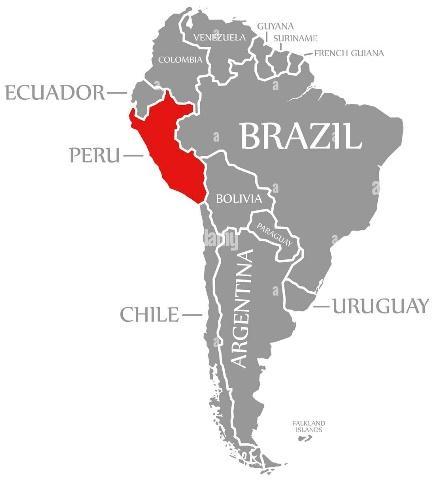
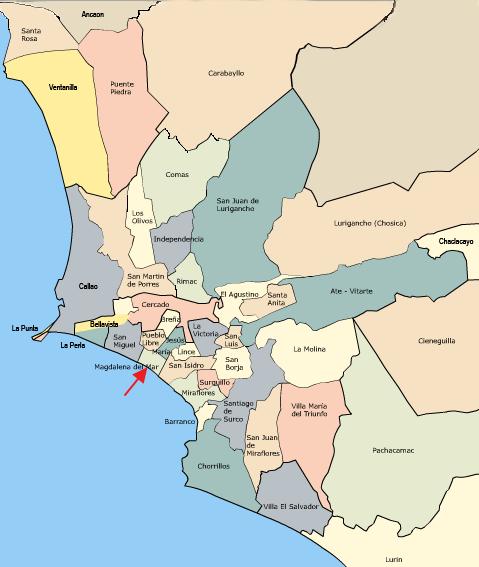
Fig1. MapofsouthAmericaandPerú
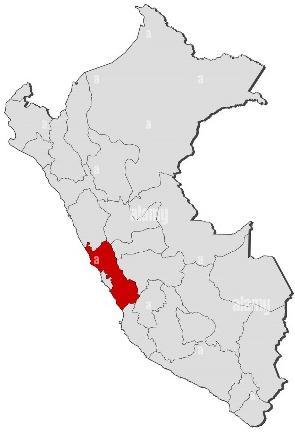
Fig2. MapofPeru.
Fig3. Limadistrictmap
International Research Journal of Engineering and Technology (IRJET) e-ISSN: 2395-0056
Volume: 09 Issue: 07 | July 2022 www.irjet.net p-ISSN: 2395-0072
Generalobjective
o Evaluate the environmental impact of heattransfertoatmospherebyconcrete pavements and asphalt pavements, studying the variation in surface temperature.
Specificobjectives
o Evaluatepossibleenvironmentalimpact of global warming by concrete and asphaltpavements
o Assesstheinfluenceofgardensinurban areas, close to pavements, compared to urbanheatislands.
A pavement is a structure that allows the transit of vehicles and can be made up of one or several superimposedlayers.
Rico and Del Castillo (1999), indicate that the main functions that a pavement must fulfill are to provide a uniformrollingsurface,ofappropriatecolorandtexture, resistant to the action of traffic, weathering and other harmful agents, as well as adequately transmit to the lower layers the efforts produced by the loads imposed bytraffic.Inaddition,itmustberesistanttoweardueto the abrasion produced by the tires and have good drainageconditions.
3.3
According to the Ministry of Transport and Communications (2013), the flexible pavement is a structure composed of granular layers (subbase, base) and, in the surface, a layer made up of bituminous materials such as: binders, aggregates and, if applicable, additive. It is mainly considered as a finishing layer on granular layers: asphalt mortar, two layer surface treatment, micro pavements, asphalt macadam, cold asphalt mixtures and hot asphalt mixtures. A scheme of theflexiblepavementisshowninfigure4
Fig.4. flexiblepavementsscheme
The main structural element in this type of pavement consists of a concrete slab that rests directly on the subgrade or on a layer of selected granular material calledasubbase.
The need to use the subbase arises only if the subgrade doesnothavethenecessaryconditionstoresisttheslab and the loads on it; that is, that it does not act as an adequatesupport.
Rigidpavement will beconsideredinanyofitsformsor modalities (plain concrete slabs with joints, reinforced concreteslabswithjoints,soil cement,roller compacted concrete,etc.).Figure5showsastructuralschemeofthe concretepavement.
According to Baird (2001), the most abundant gases on earthareNitrogen(N)andOxygen(O).Inaddition,there are others such as nitrogen dioxide and carbon dioxide, which allow heat to pass into the interior but do not allowittogoout.Thisproducesthewarmingofnotonly the earth, but also the atmosphere. This phenomenon is calledthegreenhouseeffect.
The earth is colder than the sun, therefore it cannot return the energy received by it in the form of light and heat, but rather through infrared radiation, which is absorbed by greenhouse gases, thus heating the entire surface.Moreover,ifthegreenhouse effectdid not exist,
International Research Journal of Engineering
Technology (IRJET) e-ISSN: 2395-0056
Volume: 09 Issue: 07 | July 2022 www.irjet.net p-ISSN: 2395-0072
it is more than certain that there would be no life on earth as weknow it since it would be 30 degrees colder thantoday.
CO2 Carbondioxide.Itsexcesswouldaccentuate greenhouse effects
N2O Nitricdioxide.Itisconsideredapowerful greenhouse effectgas
HFC Hydrofluorocarbonsare refrigerantgaseswhose moleculescontainhydrogen,fluorine andcarbon atoms.Theyare usedforairconditioningmachines.
CFC Chloro-Fluoro-Carbonsare refrigerantgaseswhose moleculescontainchlorine,fluorine andcarbon atoms.Theyalsodamage the ozone layer.
PFC The emissionof perfluorocarbonsproducesa greenhouse effect.
HCFC Theyare refrigerantgaseswhose moleculescontain hydrogen,chlorine,fluorine andcarbonatoms.They alsodamage the ozone layer.
SF6 The emissionof sulfurhexafluoride producesa greenhouse effect.
Importanttoknow:
The gasesmentionedinthe table have alastingeffectonour atmosphere.Several centuriesaftertheiremission,abouta quarterof these will still be presentinthe atmosphere.In addition,whenthese are presented,the radiationthatisreturned tospace will be less,whichwill cause the increase inheatof the earthandair.Thislaterwouldcause importantclimaticchanges suchasthe meltingof the poles,droughts,floods,increased rainfall,sealevel wouldrise,etc.
Source:IPCC1996 Table1. Greenhousegas.
Idrobo and Hernández (2009) point out that the urban heat island is an urban phenomenon of heat accumulation. The specialists Villanueva Solís, Ranfla and Quintanilla Montoya (2012) complement the definition, which is the difference in temperature between the urban area and its surroundings. Likewise, itisthe resultoftwodifferent butassociated processes; the first and most important, the modification in the groundcoverasaresultoftheurbanizationprocessthat transforms the surfaces with impermeable materials such as asphalt and concrete. The second refers to activities in the city, mainly transport and industry, due to thermal emissions that contribute to urban heating (Oke,2009).
According to Peña (2007), the study of the urban heat island, in its beginnings, was approached by sciences such as geography and urban climatology. However, in recent years, interest has been aroused in other branches of science for the study of this phenomenon, suchasdisciplineslinkedtothestudyofclimatechange, duetothefactthatthepresenceoftheurbanheatisland contributestotheincreaseofcarbondioxideemissions.
The present investigation was developed by the sectors, avenuesandstreets,ofthe district “MagdalenadelMar” , provinceofLima,Peru.
Theschemeoftheworkusedwasthefollowing:
·Bibliographicsearchonthesubject.
·Choiceofstrategicdistrictforthestudy.
· Location of areas to work, through a mapping of the representativeareasofthedistrict.
·Developmentofthemethodologyanddatacollectionin theplace.
·Informationprocessing.
·PreparationandissuanceofPlans
·Analysisoftheobtainedresults.
·Recommendations/Conclusions. ·Draftingoffinaldocument.
Themethodologythatwasusedincludestheobservation of the work area, followed by data collection (taking of temperature on the surface of pavements and gardens next to the streets) and the complete analysis of the results taken from measurements in different hours of the day: (morning and evening). The methodology is indicatedinamethodologicaldesign(seefigure6)
There are statistical, programming, drafting and evaluation tools (see Table 1), that will lead us to conclusions.
International Research Journal of Engineering and Technology (IRJET) e-ISSN: 2395-0056
Volume: 09 Issue: 07 | July 2022 www.irjet.net p-ISSN: 2395-0072
Item TOOL Detail
Previous study of the primary data based on analysis of doubtful data through the hydrographers, frequency tables. Adjustment of these data with correlation and regression techniques, flowcharts, Thiessen polygons and isohyets curves. 2 Programing tools MS.VisualBasic 3 Processingtools
presence of high pedestrian traffic, presence of lightorheavyloadvehicles,etc.).
1 Statisticaltools
Measurement of temperatures in asphalt pavement,concretepavementandgardens,four times a day. The taking of temperature was carried out with laboratory thermometers in approximately7minutespertaking.
Quantitative and qualitative analysis from the datatakeninthemeasurement.
Generationofchartsandgraphsthattechnically showthegeneratedstudy.
MS. Excel, MS. Word, MS Power Point 4 Validationtools MS.Excel
Table2. Researchtools
The research was descriptive (deductive), since it is limited to writing delimited characteristics of the group of elements studied, making comparisons with other groups.
In turn, it was longitudinal since it studies the variables overaperiodoftimethatcanbecontinuousorperiodic. Which in turn is considered prospective, since they are orientedtothestudyofeventsthatareabouttooccur.
For this study, temperature in pavement Surface and time,werethemainvariables.
Theprocedurefordataanalysiswas:
Search of bibliography specializing in the subject.
Interpretationandconclusion,fromtheanalysis of statistical tables and graphs. It is valid to mention that the interpretations and conclusions must be validated by bibliography relatedtothetopic.
Drawn of isotherm plans that show the temperaturephenomenoninthestudyareas.
It should be noted that all the graphic charts, plans and photos presented in this document, have been obtained duringthedevelopmentoftheresearch.
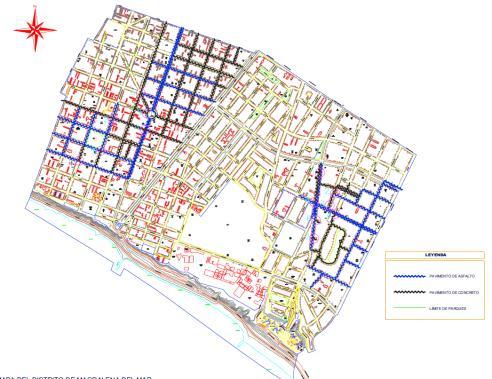
In the urban map of the district of Magdalena del Mar; Two strategic areas of the district were taken. One of themintheeasternpartofthedistrictandanotherinthe westernpart.
Each of the zones was sub divided into various sectors, whereeachofthemhasaflexiblepavementzone,arigid pavementzoneandgardens.
In each of these sectors, a surface temperature of pavements has been taken, four times throughout the day, taken with a laboratory thermometer, for a period of 7 minutes. The first measurement was made to an Asphalt Road, the second measurement to a Concrete Road, and the third measurement to a garden zone (naturalvegetation).
District selection and determination of areas to study.The determination of thezonesisrelated not only to the type of material used for its construction(asphaltand/orconcrete),butalso to the presence of particular elements that it mayhavearoundit(tall buildingsthatgenerate shadows, presence of nearby vegetation,
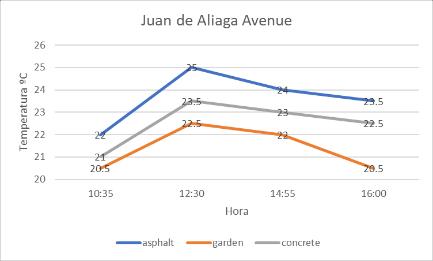
The measurements gave us different temperatures, which in turn were graphed, which reveal the temperature taken vs. the hour of measurement. It is worth mentioning that the name "Asphalt" refers to the areacoveredbyanasphaltroad,thename"Green"refers totheareacoveredbyagreenarea(naturalvegetation), and the name "Concrete" refers to refers to the area coveredbyaconcreteroad.
International Research Journal of Engineering and Technology (IRJET) e-ISSN: 2395-0056
Volume: 09 Issue: 07 | July 2022 www.irjet.net p-ISSN: 2395-0072
Inthisfirstarea,wetook7samplingpointsfromwhich3 data were collected (one on the surface of the flexible pavement, one on the rigid pavement and one on the green area), at 4 moments of the day. These measurements were made in June, during the day The averageatmospherictemperaturewas17.9°C.
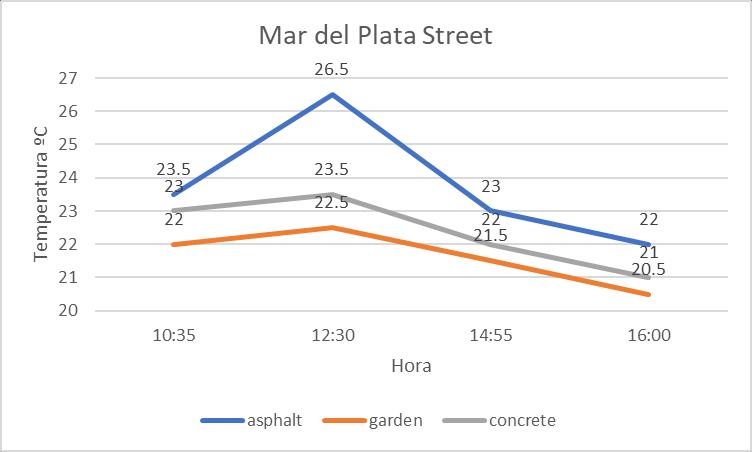
In general, asphalt pavement temperatures are higher than concrete pavement temperatures, and both are lower than landscape temperatures. However, we have some anomalous data on asphalt pavements that, at some times, are lower than concrete pavements, due to the fact that vehicles have been parked in the data collection area, or the shadow of some buildings is projected.
Fig.7. Magdalenadelmardistrictmap. Dataobtained
Cª
Cª
Fig8. MeasurementJuandeAliagaAv.
Cª
23.5
75.2
24.0
77.0
25.0
71.6
22.0
20.5
71.6
22.0
72.5
22.5
68.9
74.3 Garden
20.5
22.5
73.4
23.0
74.3
23.5
69.8
68.9 Concrete
21.0
22.0
74.3
23.5
74.3
23.5
70.7
72.5 Asphalt
21.5
20.0
69.8
21.0
72.5
22.5
68.0
71.6 Garden
20.0
22.0
73.4
23.0
73.4
23.0
69.8
68.0 Concrete
21.0
22.0
74.3
23.5
77.0
25.0
72.5
71.6 Asphalt
22.5
20.0
69.8
21.0
71.6
22.0
68.0
71.6 Garden
20.0
22.0
73.4
23.0
75.2
24.0
70.7
68.0 Concrete
21.5
21.0
72.5
22.5
74.3
23.5
68.9
71.6 Asphalt
20.5
20.0
69.8
21.0
71.6
22.0
66.2
69.8 Garden
19.0
21.0
71.6
22.0
73.4
23.0
71.6
68.0 Concrete
22.0
21.5
73.4
23.0
75.2
24.0
75.2
69.8 Asphalt
24.0
19.0
70.7
21.5
72.5
22.5
71.6
70.7 Garden
22.0
22.5
73.4
23.0
74.3
23.5
74.3
66.2 Concrete
23.5
22.0
73.4
23.0
79.7

26.5
74.3
72.5 Asphalt
23.5
20.5
70.7
21.5
72.5
22.5
71.6 Garden
71.6
22.0
21.0
71.6
22.0
74.3
23.5
73.4
68.9 Concrete
Table3. Dataofstudyarea1
23.0
21.0
76.1
24.5
80.6
27.0
76.1
69.8 Asphalt
24.5
19.0
68.9
21.0
75.2
20.5
71.6
24.0
77.0
22.0
25.0
74.3
69.8 Garden
75.2
23.5
24.0
66.2 Concrete
Mar del plata St. Juan de Aliaga St.
69.8 6 7
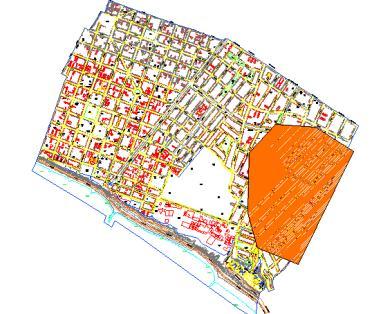
Fig9. MeasurementMardelPlataSt.
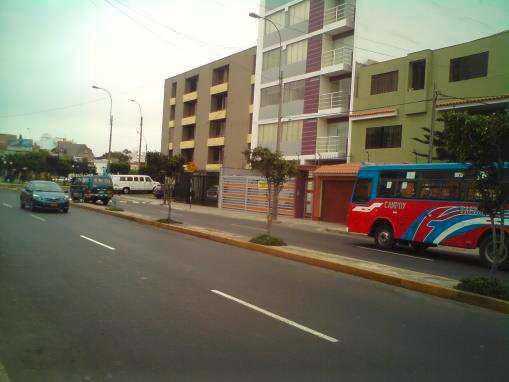
Photo1. Datainasphaltsurface
International Research Journal of Engineering and Technology (IRJET) e-ISSN: 2395-0056
Volume: 09 Issue: 07 | July 2022 www.irjet.net p-ISSN: 2395-0072
The different measurements made in the corresponding areas show us that shadows generatedbytreesingreenareas andbuildings, lowers the temperature generated on both asphaltandconcretesurfaces.
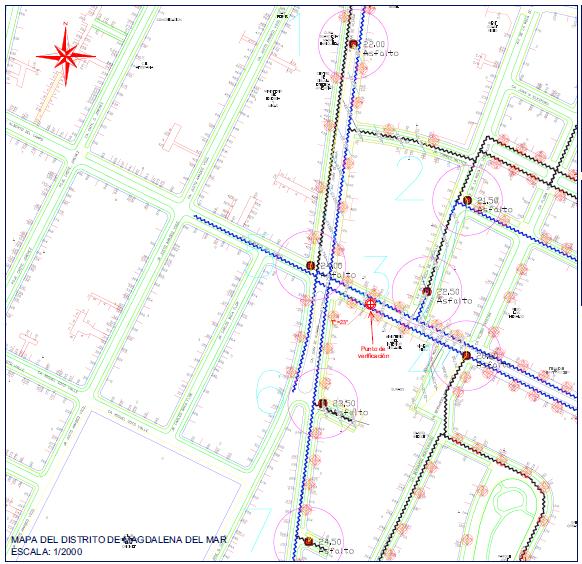
Theresult,fromthegenerationofisotherms,showsthat with the measurement of a group of points taken strategically, it is possible to have an idea of the generationofheatthatoriginatesinunreviewedareas.
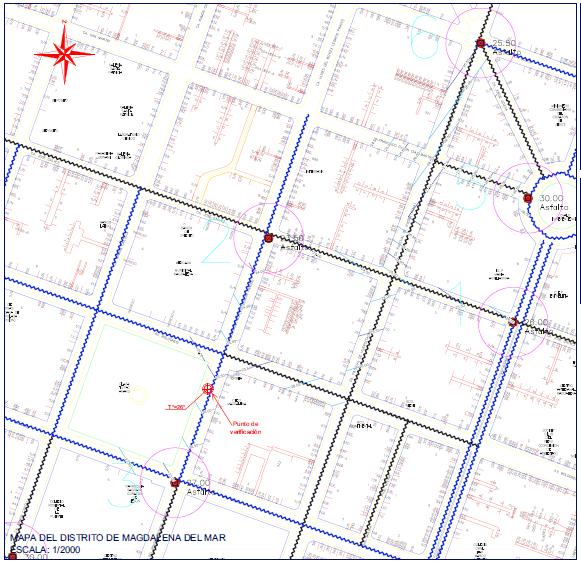
"Verification points" were taken at certain points in the compromisedarea,thusverifyingthatthemeasurement, indicated by the thermometer, was within the range of temperaturesgeneratedbytheisotherms.
In appendix 1, are included some isotherm plans, as a resultsofthisinvestigation.
There is an environmental impact generated by rigid pavements and flexible pavements in the urban environment. Faced with both alternatives, it is concluded that the concrete pavement has a lower effect of heat generation, comparedtotheasphaltpavement;whichcould potentially generate thermal islands or urban heatislands(UHI).
The generation and use of isothermal curves, as a temperature prediction tool, is demonstrated with the generationofaccompanyingmaps.Itisconvenienttosay that the use of this tool would generate other potential research works related to sampling, orientation and interpretation of unmeasured areas from points taken strategically.
& Ortíz, L. S.f. Diseño de isolíneas y uso del pre mapa.Ed.rev.Madrid,ES.1989.S.e.s.p
Amador, J., & Alfaro, E. (2009). Métodos de reducción de escala: aplicaciones al tiempo, clima, variabilidad climática y cambio climático. Revista Iberoamericana de Economía Ecológica, 39 52
Barros Pozo, M. (2010). Modificaciones Térmicas en la Ciudad de Lima: Análisis de la Presencia de la Isla de Calor Urbana. Tesis Ing. Lima,PE.UNALM.s.p.
Capelli de Steffens, A; Píccolo, MC; González, JH; Navarrette, G. 2001. La isla de calor estival en Temuco, Chile. Papeles de Geografía, no. 18: 49 60.(ISSN:0213 1781).
Theenvironmentalimpact,describedabove,has a negative nature by raising the atmosphere temperature; it generates a thermal gradient with respect to the environment. The heat originated by the pavements contributes to the riseintemperatureoftheareainvolved.
Construcción & Vivienda Comunicadores S.A.C. 2009. La importancia de escoger árboles adecuadosparaparquesyavenidasysumanejo, elcasodeLima.Ed.rev.Lima,PE.s.n.t.
EUPAVE (European Concrete Paving Association). 2011. La contribución de los pavimentosdehormigóna lareduccióndelCO2 del transporte. Ed. rev. s.l., BE. EUPAVE Bélgica.32p.
In reference to the previous conclusion, it is possible to say that the surface temperature produced by a green area regulates the temperature compared to asphalt and concrete pavements; both possibilities in an area with characteristicsofequaltimeandequalincidence of heat. The fundamental role played by vegetation areas is to attenuate the high temperaturescausedbysolarincidence.
Idrobo, MA; Hernández, FL. 2009. Islas de Calor Urbano ICU. s.e. Valle del Cauca, CO. Consultado 17 feb. 2013. Disponible http://giper.univalle.edu.co/productos/ISLAS% 20DE%20CALOR%20URBANO%20ICU.pdf
Jianguo Tan, Y.; Zheng, X. Tang, C.; Guo, L.; Li, G. Song, X.; Zhen, D.; Yuan, A.; J. Kalkstein, F.; Li y
International Research Journal of Engineering and Technology (IRJET) e-ISSN: 2395-0056
Volume: 09 Issue: 07 | July 2022 www.irjet.net p-ISSN: 2395-0072
Chen, H. 2010. The urban heat island and its impact on heat waves and human health in Shanghai. Int J Biometeorol, 54:75 84. DOI 10.1007/s00484 009 0256 x
Ministerio de Medio Ambiente. 2013. Sistema Nacional de Información Ambiental (SINIA). Ed. rev.SantiagodeChile,CH.S.p.76
Ministerio de Vivienda, Construcción y Saneamiento (MVCS). 2006. Reglamento Nacional de Edificaciones RNE. Ed. rev. Lima, PE.S.p.
Ministerio de Vivienda, Construcción y Saneamiento. 2010. Norma técnica peruana CE. 010 pavimentos urbanos. S.E. Lima, PE. Ed. (s) SENCICO (Servicio Nacional de Capacitación paralaIndustriadelaConstrucción).P13 30.
Montejo, A. 2006. Ingeniería de pavimentos. Ed (3ra). Bogotá, CO. Ed. Universidad Católica de Colombia.P4 5.
Moreno García, MC. 1999. Climatología urbana. 1a. Ed. Barcelona, ESP, Ediciones Universitat de Barcelona.80p(ISBN:848 33 8127 3)
Oke,T.R.2009.Boundarylayerclimates:Second edition. 2. New York, NY: Routledge. ISBN: 978 0 415 04319 9
Programa de las Naciones Unidas para el Medio Ambiente (PNUMA). 2011. Boletín del PNUMA América Latina y el Caribe. Ed. rev. s.l., Panamá, PA.S.p.77
Rens, L. s.f. Pavimento de Hormigón: Una Alternativa Inteligente y Sostenible. Ed. rev Febelcem,BE.EUPAVE Bélgica.S.p.
Vázquez Dovale, F. 2006. Influencia de la temperaturaenlasmedicionesde longitudyángulo.S.e.LaHabanaCU.s.e.2V.s.p.
Villanueva Solis, J; Ranfla, A. Y Quintanilla Montoya, AL. 2012. Isla de Calor Urbana: Modelación Dinámica y Evaluación de medidas de Mitigación en Ciudades de Clima árido Extremo. s.e. Santiago, CL. Consultado 16 feb. 2014. Disponible http://www.scielo.cl/pdf/infotec/v24n1/art03. pdf
Voogt,JA.2008.Islasdecalorenzonasurbanas: Ciudades más calientes (en línea). S.l. América InstituteofBiologicalSciences.Consultadoel19 de abr. 2009. Disponible en: http://www.actionbioscience.org/esp/ambiente /voogt.html.
1. Distributionofasphaltpavementsandconcrete pavementsinstudyarea.
2. Datacollectionpointsinsector1andisothermal curves
International Research Journal of Engineering and Technology (IRJET) e-ISSN: 2395-0056
Volume: 09 Issue: 07 | July 2022 www.irjet.net p-ISSN: 2395-0072