International Research Journal of Engineering and Technology (IRJET) e ISSN: 2395 0056

Volume: 09 Issue: 07 | July 2022 www.irjet.net p ISSN: 2395 0072
International Research Journal of Engineering and Technology (IRJET) e ISSN: 2395 0056
Volume: 09 Issue: 07 | July 2022 www.irjet.net p ISSN: 2395 0072
1M. Tech, Structural Engineering, Ghousia College of Engineering, Ramanagara, Karnataka, India 2Assistant Professor, Dept. of Civil Engineering, Ghousia College of Engineering, Ramanagara, Karnataka, India 3Prof. & HOD, Dept. of Civil Engineering, Ghousia College of Engineering, Ramanagara, Karnataka, India ***
Abstract - Shear walls are vertical structural elements designed to withstand lateral loads suchasthoseinduced by wind and earthquakes. Shear walls are a type of construction in which they provide all of the horizontal load resistance. Shear walls provide the required lateral strength and stiffness to resist horizontal forces, making them a structurally effective option for stiffening a structure. Shear walls are often built at the foundation level and run the length of the building. The current thesis project's goal is to investigate seismic reactions (storey displacements, storey drift, the fundamentaltime period and base shear) of a typical G+10 residential complex with and without shear wall and with various percentages of openings (25%, 50% and 75% ) in shear wall located in different seismiczones(forZoneII,III,and IV) by Equivalent lateral force analysis and Response Spectrum Method using ETABS.
Key Words: Shear wall, storey displacements, storey drift, base shear, ETABS, etc
Shear walls are vertical structural elements designed to withstandlateralloadssuchasthoseinducedbywindand earthquakes.Shearwallsareatypeofconstructioninwhich they provide all of the horizontal load resistance6. Shear wallsprovidetherequiredlateralstrengthandstiffnessto resisthorizontalforces,makingthemastructurallyeffective optionforstiffeningastructure.Shearwallsareoftenbuiltat thefoundationlevelandrunthelengthofthebuilding.They are frequently supplied along the length and breadth of a structure,andarelocatedonthesidesor organizedinthe shapeofacore.Shearwallsmayhaveoneormoreapertures forpracticalpurposes[1]
In terms of size and placement, shear walls are critical. Structures must be symmetrically constructed in plan to reduce the effect of twisting. Buildings with adequately planned and specified shear walls have performedwellinpriorearthquakes[2].Strongearthquakes in the past have indicated that shear wall damages and certainfailureprocessesarereliantonanumberoffactors, including the plan shape, wall and opening dimensions,
reinforcement and openings arrangement, site condition, earthquake type, and strain rates. Even if certain failure mechanisms have been thoroughly researched, there are always more to be discovered [3]. In terms of size and placement, shear walls are critical. They must reduce the effectoftwistinginbuildings.
Shearwallsaremostcommonlyfoundonthesides ofbuildingsorintheformofacorethathousesstairwells and elevators. Building shear walls provide the essential lateral strength and stiffness to resist horizontal stresses, makingthemastructurallyviableoptionforstrengthening thestructure[4].Theycanbeseenonboththeoutsideand inside of structures, and they usually run the length and width of the structure. Shear walls are vertical structural components that are used to protect tall structures from lateralloadsinducedbywindandearthquakes.Toprotect againstearthquakes,thestructurehasreinforcedconcrete shear walls. These can be used to improve the seismic responseofastructure.Theemploymentofashearwallina constructiontoproduceabendingmoment.
Forpracticalreasons,shearwallsmayhaveoneor moreapertures,suchasdoors,windows,andothertypesof openings.Thesizeandplacementoftheaperturesmaydiffer depending on their function. Shear barriers are critical in terms of size and location. Buildings with adequately plannedand specifiedshear wallshaveperformed well in priorearthquakes[5]
Shear barriers require extra consideration in seismically active areas. Previous earthquakes protected evenstructureswithasufficientnumberofwallsthatwere notspeciallyconstructedforseismicperformance(buthad adequatewidelydispersedreinforcement).Shearwallsare effectiveinreducingearthquakedamagetostructuraland non structural elements, both in terms of cost and effectiveness(likeglasswindowsandbuildingcontents)[6].
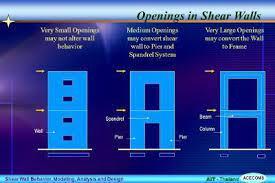
Fig 1Differenttypeofopeningsinshearwall
Foranalysisandstudypurpose15Modelsarecreated withcorrespondingdimensionandanalyzedforZoneII,III, andIVinETABS.
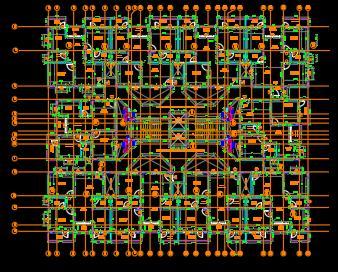
Fig 3ArchitectureplanofRegularMODEL SL.NO Properties Dimension
BuildingPlan 33.7mx26.47m
ColumnC1 300mmx900mm
ColumnC2 300mmx750mm
BeamB1 300mmx750mm
BeamB2 300mmx600mm
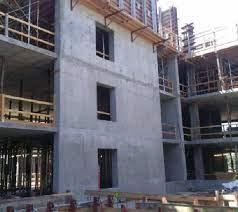
Fig 2openinginshearwall
ToAnalyzethestructureusingETABS.
Themainobjectiveofthisstudyisto comparethe regularRCCbuildingwithandwithout shear wall andwith25%,50%,and75%openinginshearwall underseismicloading.
Tostudythebaseshear,storeydisplacement,storey drift, and time period under “Equivalent lateral force”&“Responsespectrumanalysis”
Tostudythebaseshear,storeydisplacement,storey drift, and time period of the building with and without shear wall and with 25%, 50% and 75% openings in shear wall for Zone II, III, and IV in ETABS.
Comparisonofeffectofopeningsinregularmodel, model without opening in shear wall, model with 25%opening,50%opening&75%openinginshear wallmodel.
Gradeofconcrete M25
Gradeofsteel Fe500
Densityofconcrete 25KN/m3
Densityofbrick 11KN/m3
Modulusofelasticityofconcrete 28.5KN/mm2
ModulusofelasticityofSteel 210,00N/mm2
International Research Journal of Engineering and Technology (IRJET) e ISSN: 2395 0056
Volume: 09 Issue: 07 | July 2022 www.irjet.net p ISSN: 2395 0072
Design loads : The loads which have been used for the modellingareasfollows:
Self weightofthestructure
Floorfinish
Wallload
Typicalliveload
Roofliveload
Seismicload
1. DeadloadasperIS:875(PartI) 1987
2. Frommasonrywalls 4.3kN/m 3
3. LiveloadasperIS:875(Part II) 1987
i)Liveloadonfloor 3.00kN/m2
ii)Liveloadonroof 1.50kN/m2
3. Earthquakeload.IS:1893 2016
i) Zonefactor 0.1
ii) Zonefactor 0.16 iii) Zonefactor 0.24
Soiltype II
Importancefactor 1
TimeperiodinXdirection 0.6second
TimeperiodinYdirection 0.67second
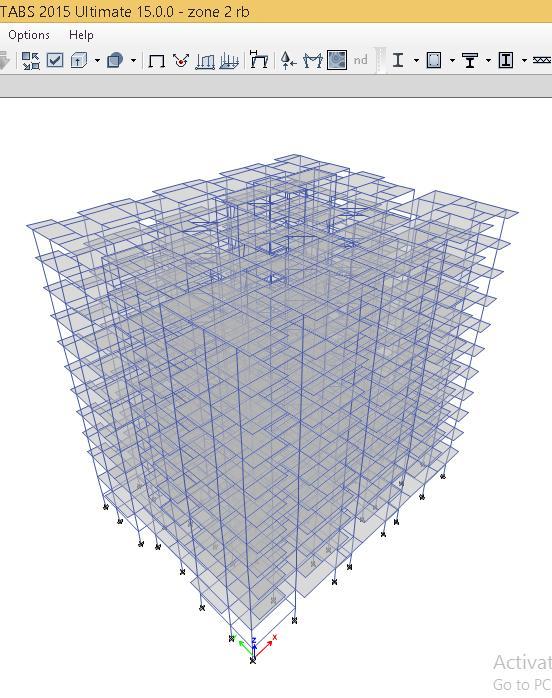
Fig 5EtabsRegular3DMODEL
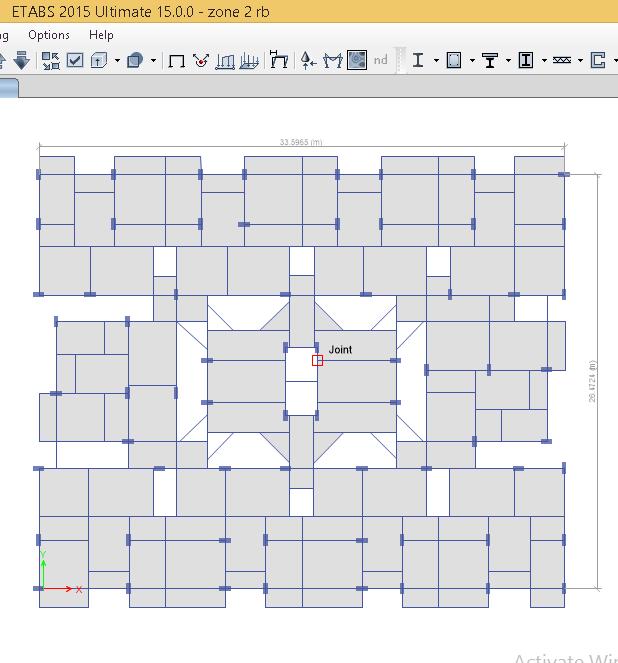
Fig 4 Etabs plan of Regular MODEL
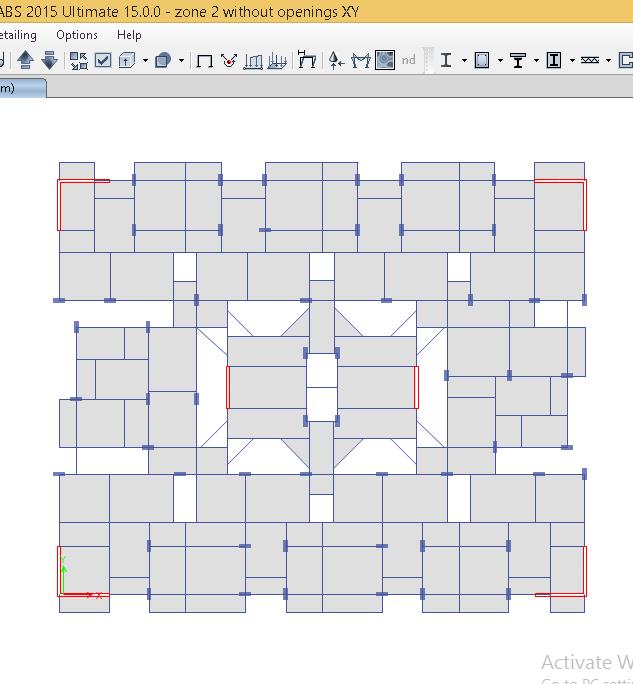
Fig 6 Etabsplanofregularmodelwithshearwall
2022, IRJET | Impact Factor value: 7.529 | ISO 9001:2008 Certified
International Research Journal of Engineering and Technology (IRJET) e ISSN: 2395 0056
Volume: 09 Issue: 07 | July 2022 www.irjet.net p ISSN: 2395 0072
Fig 7 Etabs 3Dmodelof regularmodelwithshearwall
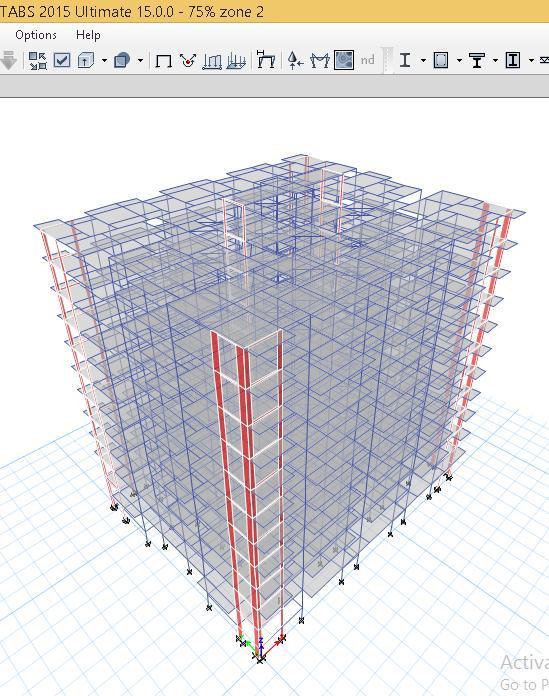
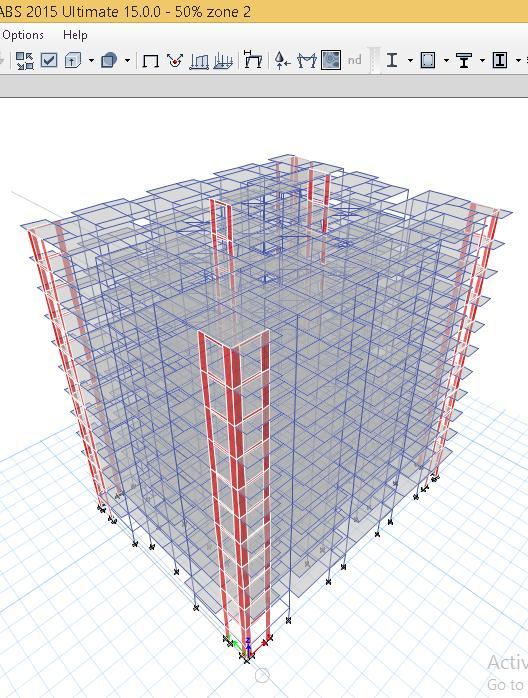
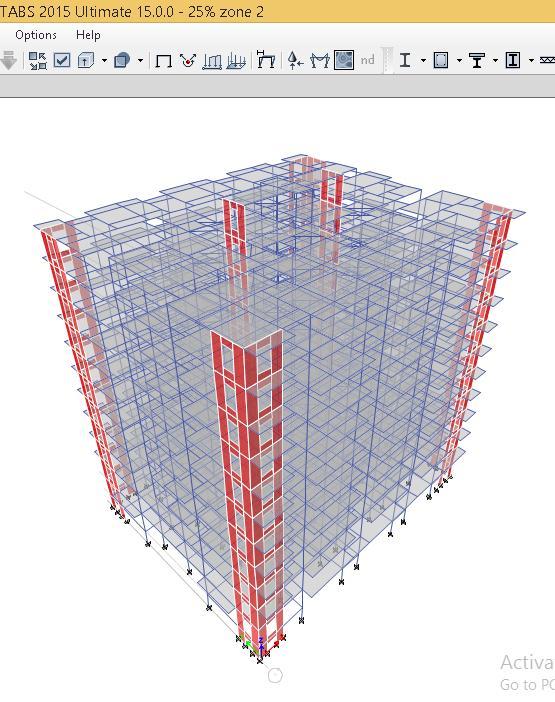
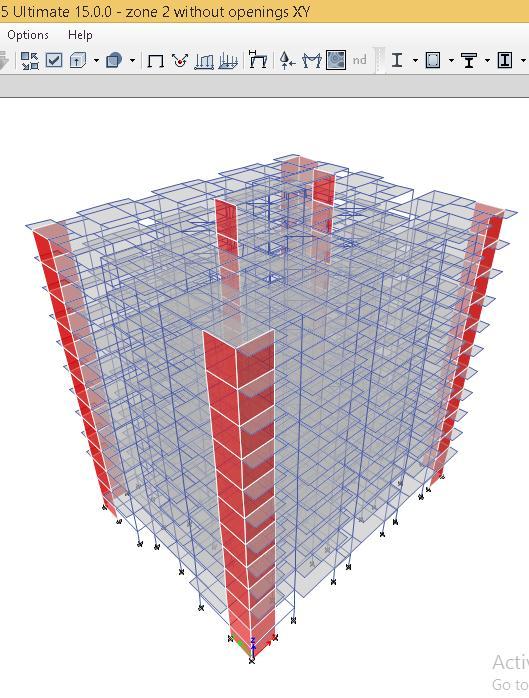
Fig 9 Etabs 3Dmodelwith50%openinginshearwall
Fig 8Etabs 3Dmodelwith25%openinginshearwall
Fig 10 Etabs 3Dmodelwith75%openinginshearwall
Thischaptergivestheseismicanalysisresultsforallofthe modelsthatwereevaluatedinthemodelstudypresented
2022, IRJET | Impact Factor value: 7.529 | ISO 9001:2008 Certified Journal
International Research Journal of Engineering and Technology (IRJET) e ISSN: 2395 0056
Volume: 09 Issue: 07 | July 2022 www.irjet.net p ISSN: 2395 0072
inChapter3.Withthehelpofrelevanttablesandfigures, theresultsandcommentsarethoroughlyexamined.
BycomparingtheXandYdirections,themaximumvaluesof displacements are recorded. The displacement values of variousmodelsareacquiredbyexposingthemtoEquivalent lateralforceanalysisandresponsespectrumanalysis,which reveals the maximum displacement. The tabulated results arealsoshowninagraph,asseeninFig.11
Table1:MaxDisplacementfordifferentEarthquakeZones inXdirectionEquivalentlateralforce(EQXinmm)
ZONE S
REGU LAR MODE L
WITHO UT OPENI NGIN SHAER WALL
25% OPENI NGIN SHAER WALL
50% OPENI NGIN SHEAR WALL
75% OPENI NGIN SHEAR WALL
ZONE II 32.8 18.5 19.9 26.1 28.1
ZONE III 52.5 29.3 31.8 41.7 45.4
IV 78.7 44.4 47.7 62.5 67.4
Table 2:MaxDisplacementfor differentEarthquake ZonesinYdirectionEquivalentlateralforce(EQYinmm)
ZONES REGU LAR MODE L
WITHO UT OPENI NGIN SHAER WALL
25% OPENI NGIN SHAER WALL
50% OPENI NGIN SHEAR WALL
75% OPENI NGIN SHEAR WALL
Thebiggestreductioninlateraldisplacementisshowninthe model without opening in the shear wall model along X direction,accordingtothedisplacementdata.
80
70
60
50
40
30
20
10
ZONE 2 ZONE 3 ZONE 4
Fig 12Displacementvariationgraph
RB SW 25 50 75
ZONEII 28.90 18.5 19.2 23.6 25.1 ZONEIII 46.2 29.8 30.7 37.8 40.6 ZONEIV 69.3 44.3 46 56.7 60.2 0
Thebiggestreductioninlateraldisplacementisshowninthe model without opening in the shear wall model along Y direction,accordingtothedisplacementdata.
Table3:MaxDisplacementfordifferentEarthquakeZones (ResponsespectruminXdirection)(SPECXinmm)
ZONE S
REGU LAR MODE L
WITHO UT OPENI NGIN SHAER WALL
25% OPENI NGIN SHAER WALL
50% OPENI NGIN SHEAR WALL
75% OPENI NGIN SHEAR WALL
ZONE II 30.1 15.7 16.5 21 23
ZONE III 48.1 24.9 26.5 33.7 37.1
ZONE IV 72.3 37.6 39.7 50.5 55.3
International Research Journal of Engineering and Technology (IRJET)
e ISSN: 2395 0056
Volume: 09 Issue: 07 | July 2022 www.irjet.net p ISSN: 2395 0072
Thebiggestreductioninlateraldisplacementisshowninthe model without opening in the shear wall model along Y direction,accordingtothedisplacementdata.
Table5:MaxStoreyDriftvaluesfordifferentZonesinX directionEquivalentlateralforce(EQXinmm)
ZON ES REGULA R MODEL
WITHO UT OPENIN GIN SHAER WALL
25% OPENIN GIN SHAER WALL
50% OPENIN GIN SHEAR WALL
75% OPENIN GIN SHEAR WALL
ZON EII 0.00125 0.00064 0.00067 0.00088 0.00096
Fig 13Displacementvariationgraph
Thebiggestreductioninlateraldisplacementisshowninthe model without opening in the shear wall model along X direction,accordingtothedisplacementdata.
Table4:MaxDisplacementfordifferentEarthquakeZones (ResponsespectruminYdirection)(SPECYinmm)
ZONES REGU LAR MODE L
WITHO UT OPENI NGIN SHAER WALL
25% OPENI NGIN SHAER WALL
50% OPENI NGIN SHEAR WALL
75% OPENI NGIN SHEAR WALL
ZONEII 22.8 15.1 15.6 18.9 20 ZONEIII 36.5 24.7 24.9 30.3 32.4 ZONEIV 54.8 36.2 37.3 45.4 48.1
ZON EIII 0.00199 0.00101 0.00107 0.00140 0.00154
ZON EIV 0.00299 0.00153 0.00160 0.00210 0.00231 0
Fig 15Storeydriftvariationgraph
According to the storey drift data, the model without opening in the shear wall along the X direction has the greatestreductioninstoreydrift.
International Research Journal of Engineering and Technology (IRJET)
e ISSN: 2395 0056
Table6:MaxStoreyDriftvaluesfordifferentZonesinY directionEquivalentlateralforce(EQYinmm)
ZON ES
REGULA R MODEL
WITHO UT OPENIN GIN SHAER WALL
25% OPENIN GIN SHAER WALL
50% OPENIN GIN SHEAR WALL
75% OPENIN GIN SHEAR WALL
ZON EII 0.00099 0.00062 0.00064 0.0008 0.00086
ZON EIII 0.00158 0.00099 0.00103 0.00128 0.00138
0.0035
0.003
0.0025
0.002
0.0015
0.001
0.0005
rb wsw 25 50 75
0
0.003
0.0025
0.002
0.0015
0.001
0.0005
ZONE 2 ZONE 3 ZONE 4
Fig 16Storeydriftvariationgraph
RB SW 25 50 75
ZON EIV 0.00238 0.00149 0.00154 0.00192 0.00206 0
zone 2 zone 3 zone 4
Fig 17Storeydriftsvariationgraph
According to the storey drift data, the model without opening in the shear wall along the X direction has the greatestreductioninstoreydrift.
Table8:MaxStoreyDriftvaluesfordifferentZones (ResponsespectruminYdirection)(SPECYinmm)
ZON ES
REGULA R MODEL
WITHO UT OPENIN GIN SHAER WALL
25% OPENIN GIN SHAER WALL
50% OPENIN GIN SHEAR WALL
75% OPENIN GIN SHEAR WALL
ZON EII 0.00084 0.00052 0.00054 0.00066 0.00072
ZON EIII 0.00134 0.00085 0.00086 0.00106 0.00115
According to the storey drift data, the model without opening in the shear wall along the Y direction has the greatestreductioninstoreydrift.
Table7:MaxStoreyDriftvaluesfordifferentZones (ResponsespectruminXdirection)(SPECXinmm)
ZON ES
REGULA R MODEL
WITHO UT OPENIN GIN SHAER WALL
25% OPENIN GIN SHAER WALL
50% OPENIN GIN SHEAR WALL
75% OPENIN GIN SHEAR WALL
ZON EII 0.00125 0.00056 0.00059 0.00076 0.00087
ZON EIII 0.00199 0.00089 0.00095 0.00122 0.00138
ZON EIV 0.003 0.00136 0.00143 0.00182 0.00209
ZON EIV 0.00201 0.00125 0.00129 0.00159 0.00173
0.0025
0.002
0.0015
0.001
0.0005
0
zone 2 zone 3 zone 4
Fig 18Storeydriftsvariationgraph
rb sw 25 50 75
Volume: 09 Issue: 07 | July 2022 www.irjet.net p ISSN: 2395 0072 © 2022, IRJET | Impact Factor value: 7.529 | ISO 9001:2008 Certified Journal |
International Research Journal of Engineering and Technology (IRJET) e ISSN: 2395 0056
Volume: 09 Issue: 07 | July 2022 www.irjet.net p ISSN: 2395 0072
According to the storey drift data, the model without opening in the shear wall along the Y direction has the greatestreductioninstoreydrift.
Table9:TimeperiodvaluesforModelsdifferentzones (inseconds)
ZON ES
REGUL AR MODEL
WITHO UT OPENIN GIN SHAER WALL
25% OPENI NGIN SHAER WALL
50% OPENI NGIN SHEAR WALL
75% OPENI NGIN SHEAR WALL
ZON EII 1.736 1.29 1.321 1.484 1.548
ZON EIII 1.736 1.295 1.321 1.484 1.553
ZON EIV 1.736 1.29 1.321 1.484 1.548 0 0.2 0.4 0.6 0.8 1 1.2 1.4 1.6 1.8 2
zone 2 zone 3 zone 4
Fig 19 variationintimeperiod.
RB SW 25 50 75
Table10:BaseshearvaluesforZoneII,III,IValongX direction(EQXinKN)
ZON ES
REGULA R MODEL
WITH OUT OPENIN GIN SHAER WALL
25% OPENIN GIN SHAER WALL
50% OPENIN GIN SHEAR WALL
75% OPENIN GIN SHEAR WALL
ZON EII 2886.47 3109.93 3046.35 2843.78 2822.89
ZON EIII 4618.17 4922.84 4883.9 4549.48 4530.75
Accordingtothenaturaltimeperioddata,themodelwithout openingintheshearwallhasthegreatestreductionintime periodforoneoscillation
Base shear is a measurement of the highest predictedlateralforcecausedbyseismicgroundmotionat thestructure'sbase.Theregularmodelhasfewerloadsthan the other models since the base shear value is exactly relatedtotheweightofthebuilding.Thesoilconditionsat the site, as well as the proximity to probable seismic sources, are used to calculate base shear. The base shear valuesforthebestmodelareshowninthetablebelow.
ZON EIV 6932.79 7463.82 7325.85 6824.04 6787.84 0 1000 2000 3000 4000 5000 6000 7000 8000
zone 2 zone 3 zone 4
Fig 20Graphofvariationinbaseshear.
rb s w 25% 50 75
Thehighestreductioninbaseshearisshowninthe modelwitha75percentopeningintheshearwallalongthe Xdirection,accordingtotheresultsofbaseshear.
Table11:BaseshearvaluesforZoneII,III,IValongY direction(EQYinKN)
ZON ES
REGULA R MODEL
WITH OUT OPENIN GIN SHAER WALL
25% OPENIN GIN SHAER WALL
50% OPENIN GIN SHEAR WALL
75% OPENIN GIN SHEAR WALL
ZON EII 2585.35 2784.51 2734.10 2547.02 2528.76
ZON EIII 4136.56 4480.10 4374.56 4074.07 4070.96
ZON EIV 6209.82 6682.83 6561.84 6112.83 6077.81
2022, IRJET | Impact Factor value: 7.529 | ISO 9001:2008 Certified Journal
International Research Journal of Engineering and Technology (IRJET)
e ISSN: 2395 0056
Volume: 09 Issue: 07 | July 2022 www.irjet.net p ISSN: 2395 0072
Asthepercentageofopeninginshearwallincreases thedisplacementofthebuildingwillalsoincreases.
The maximum displacement is less for the model without opening in the shear wall in X and Y directionscomparedtotheotheropenings.
Themaximumdisplacementobtainedforthemodel withoutopeningintheshearwallinXdirectionis 18.5mmandformodelwith25%openinginshear wallis19.9mm.
Fig 21variation graphforbaseshear.
Thehighestreductioninbaseshearisshowninthe modelwitha75percentopeningintheshearwallalongthe Xdirection,accordingtotheresultsofbaseshear.
Inthisstudy,aG+10storeystructurewithregular andshearwallopeningswasexaminedfordifferentzones (zoneII,zoneIII,and zoneIV)forEquivalentlateralforce analysisand ResponseSpectrumMethod
ForzonesII,III,andIV,aregularmodelwithdead load,liveload,andearthquakeloadingisused.
For zones II, III, and IV, a shear wall model with deadload,liveload,andearthquakeloadingisused.
For zones II, III, and IV, a model with a 25% apertureintheshearwallincludesdeadload,live load,andearthquakeloading.
The displacement of the building increases with increaseinzonefactors.
Theconstructionwithshearwallwithoutopening hasashortertimeperiod,asshowninthegraphsandtables oftimeperiodsinthefindingssection.Itisworthnotingthat inabuildingwiththeshearwallmodel,thetimeperiod of the building is around 25.69% shorter than in a regular modelforzoneII.
3.2.3 Storey drift (for both Equivalent lateral force analysis and Response Spectrum Method)
Thehighestreductioninlateraldriftisshowninthe model with shear wall without opening in shear wallmodelalong XandYdirections,accordingto thedriftdata.
The drift value is more for zone IV compared to zoneIIandzoneIII.
Aszonefactorincreasesdriftvaluealsoincreases.
For zones II, III, and IV, a model with a 50% apertureintheshearwallincludesdeadload,live load,andearthquakeloading.
It also increases with increase in percentage of openinginshearwall.
ForzonesII,III,andIV,amodelwitha75percent apertureintheshearwallincludesdeadload,live load,earthquakeloading.
For displacement, storey drift, time period, and base shear, all of the above models with three zones were examinedforEquivalentlateralforceanalysisand Response SpectrumMethod.Thefollowingresultswereobtainedafter acomparisonwasmadebetweenthem.
The base shear value along X and Y direction for 25%openingintheshearwallislesscomparedto withoutopeningintheshearwall.
Base shear values decreases with increase in the percentage of opening in shear wall for different earthquakezones.
We canobservedthatthemodel without opening shows higher base shear values compared to the modelwithvaryingpercentageofopenings.
International Research Journal of Engineering and Technology (IRJET) e ISSN: 2395 0056
Volume: 09 Issue: 07 | July 2022 www.irjet.net p ISSN: 2395 0072
By studying the behavior of models with distinct zones in dynamic earthquake loading. The model with shear wall withoutopeningsshowntoproducethebestresults.When compared to a regular model, it tends to shorten the time period,lateraldisplacement,andstoreydriftinboththeX andYdirectionsbyasignificantmargin.
In all zones, the model without openings in the shear wall results in less displacement, drift, and timeperiodthantheothermodels.
KIRAN S, CompletedBachelordegree in Civil Engineering from Ghousia CollegeofEngineering,Ramanagara, Karnataka under VTU in the year 2020,PresentlypursuingM.techin Structural Engineering in Ghousia CollegeofEngineering,Ramanagara, Karnataka,UnderVTU.

Modelswithahigherpercentageofopeningshave less base shear than models with a lower percentageofopenings.
Thebuilding'sdisplacement,drift,andtimeperiod aredirectly relatedtotheopeningintheshearwall.
[1] Swetha,K.S.,andP.A.Akhil."EffectofOpeningsinShear Wall." International Research Journal ofEngineeringand Technology (IRJET) Volume 4(2017).
[2] Khatami,SeyedM.,AlirezaMortezaei,andC.Barros Rui."Comparingeffectsofopeningsinconcreteshear wallsundernear faultgroundmotions."In 15th World Conference on Earthquake Engineering.2012.
[3] AarthiHarini,T.,andG.SenthilKumar."BehaviorofRC Shear Wall with Staggered Openings under Seismic Loads."International journal for research in emerging science and technology 2,no.3(2015):91 96.
[4] Kankuntla, Ashok, Prakarsh Sangave, and Reshma Chavan."Effectsofopeningsinshearwall." IOSRJournal of Mechanical and Civil Engineering (IOSR JMCE) 13,no. 1(2016):1 6.
[5] Mohan,Abhija,andS.Aarathi."ComparisonofRCShear Wall with Openings in Regular and Irregular Building." International Journal of EngineeringResearch & Technology (IJERT) Vol 6(2017).
[6] Borbory,Ehsan."Openingseffectsinreinforcedconcrete shear walls; a literature review on experimental and finiteelementstudies."(2020).
[7] Itware,VishalA.,andDrUttamB.Kalwane."Effectsof openings in shear wall on seismic response of structure."Journal of Engineering Research and Applications 5,no.7(2015):41 45.
Mr. UMMER FAROOQ PASHA, B.E from BMSECE, M.tech structural Engineering., from SKSJIT, Assoc. Mem.IEI.,Asst.ProfessorinDept.of civilEngineering,GhousiaCollegeof Engineering. Previously worked as Structural Design Engineer in Span Design, Bangalore. Published 7 internationaljournalpapers.
Dr. N S KUMAR, Graduated in the year1985fromMysoreUniversity, M.E.inStructuralEngineering.,inthe year1988fromBangaloreUniversity and earnedhisPhD fromBangalore University during the year 2006 under the guidance of Dr. N Munirudrappa, the then Chairman and Prof. UVCE, Faculty of Civil Engineering, Bangalore University. Presently, working as Prof. & HoD, Department of Civil Engineering, Ghousia College of Engineering, Ramanagaram and completed 31 yearsofteaching.Heisinvolvedinthe Research field related to the behaviour of Composite Steel Columns and Nano Materials for a decade. To his credit, over 150 publications,andtravelledabroadfor hisresearchpresentationsincluding world conferences too. Also, more than3PhD'scompletedandongoing 5are working under hisguidance.
Also,authoredmorethan 8books to hiscredit.