International Research Journal of Engineering and Technology (IRJET) e-ISSN: 2395-0056

Volume: 09 Issue: 07 | July 2022 www.irjet.net p-ISSN: 2395-0072
International Research Journal of Engineering and Technology (IRJET) e-ISSN: 2395-0056
Volume: 09 Issue: 07 | July 2022 www.irjet.net p-ISSN: 2395-0072
1Prof. Rakesh Kumar, 2Mr. Raj R. Pimpalkar, 3Mr. Nikhil A. Veer, 4Mr. Sourab Patil
1Assistant Prof., Department of Civil Engineering, Anantrao Pawar College of Engineering & Research, Pune, India
2, 3, 4 UG Students Department of Civil Engineering, Anantrao Pawar College of Engineering & Research, Pune, India ***
Abstract Coal is an important source of energy and also used for power generation. The coal is extracted from the coal mines and then used for the power generation. Basically coal is the primary source used for cement production, carbon fibers and foams, medicines, tars, synthetic petroleum based fuels, and home and commercial heating The mining industry operates through a sequence of stages: exploration, discovery, development, production and reclamation. After the excavation of coal the excavated soil remains unused and heaps and heaps of soil is just piled up on site. After the full service of coal mine at the time of mine closing this soil can be used for backfilling. But the service period of coal mines can range between 5 70 years. So the piled excavated soil either can be used for backfilling or can be used in construction. So proper tests are carried out on the coal soil which determine whether the soil can be used for backfilling or is good to be used in construction. The reuse of this coal soil is a great step towards saving soil and environment.
Key Words: Geological investigation, Coal mines, Backfilling.
At present, the power sector in India is dominated by coal. Coalcurrentlyaccountsformorethan50%oftotalprimary commercialenergysupplyinthecountryandforabout70% of total electricity generation. Coal is likely to remain a key energysourceforIndia,foratleastthenextfewdecades,as India has significant domestic coal resources (relative to otherfossilfuels)andalargesetofexistinginstalledbaseof coal based electricity capacity, although recent experiences havethrownintosharprelieftheuncertaintiesandconcerns regarding the adequacy of coal supplies to satisfy the growinghungerforpower.
The coal based power, local environmental and social challenges relating to coal mining, processing, and use are becoming more pressing. In India also problems of mining wastearethereandhundredsofhectaresofareaaroundthe mine are used for dumping of overburden and low grade ore. The top soil which is very important for agricultural purpose is lost in huge quantity. As per Indian rule the heightofthedumpedoverburdencannotbemorethan60m, so, large areas are acquired for dumping of these overburdenandlowgradeores.
After discussing with our helpful and supportive guide Prof. RakeshKumarandtakingpermissionletterofsitevisitfrom collegewedecidedtotakeasitevisittotheMAKARDHODKA COAL MINE situated in the Nagpur district, Bopeshwar, Maharashtra 441203. This is the highest coal making company in Maharashtra. This coal mine is runned by the WESTERNCOALLTD.NAGPUR.Webookedtheticketsforthe trainandbeganourjourneythiswasaveryinterestingspeed pacedjourney.Wegotalotofinformationregardingthecoal mines and backfilling in coal mines which was the main purpose of our project. This visit was arranged by resp. Sudhir Giradhar sir (Coal mine supervisor) they were very helpfultousandweresupportivewithinthecoalminesrules andregulations.
WewereprovidedwithoneguidenamedMr.SandeepGupta (sector1mineincharge).Heansweredsomeofourquestions and some of our question were solved by Google. The coal productionfromtheminesisaround2.73millionmetrictons per year and our state Maharashtra is top 10 from the list producing12.963 billion metric tons.Exceptcoal minesalso have minerals like sulfur, salts, limestone, clays, barite, and industrial diamonds. COAL, COPPER, GOLD, GRAVEL AND IRON ORE are mined from the mines creating reserves for the country. The mines excavated waste is used for undergroundfilling,backfillingandclosingofcoalminesand also used for construction purposes and layered around the unevensurface.
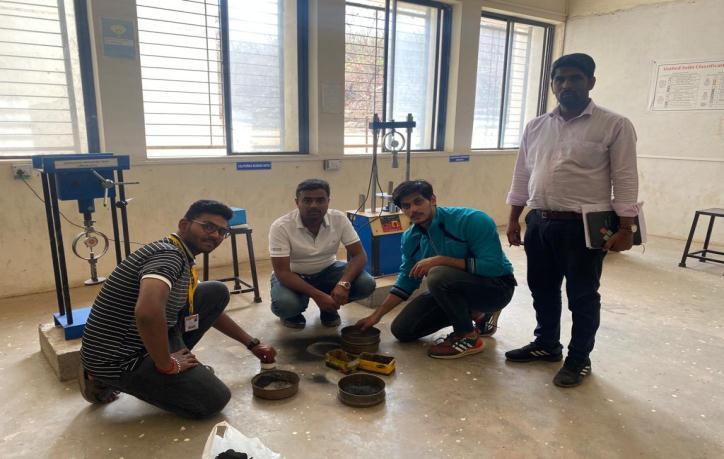
This project is intended to perform various laboratory tests to help to evaluate the suitability of coal refuse as a backfilling/stowing material. These include the following tests:
International Research Journal of Engineering and Technology (IRJET) e-ISSN: 2395-0056
Volume: 09 Issue: 07 | July 2022 www.irjet.net p-ISSN: 2395-0072
Plasticity: Since plasticity affects the strength and permeability characteristics of a sample, its assessment are necessary.
Compaction Test: Compaction can considerably increase sample densities in comparison with the densities of the loosesamples.
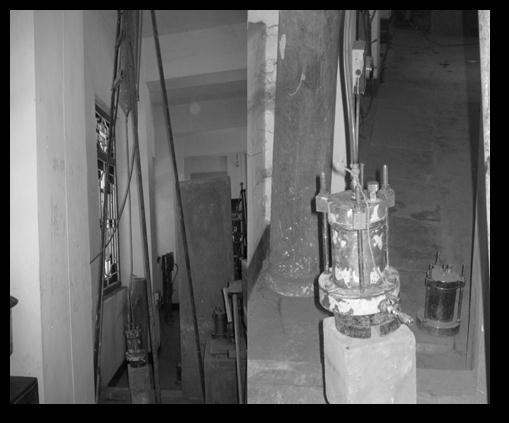
PermeabilityTest: Theabilityoftheinsitufilltodissipate pore pressure is affected by its permeability characteristics whichinturnareaffectedbythepercentageoffineparticles inthefill.
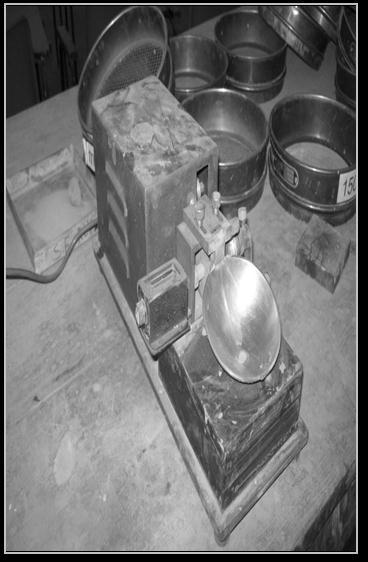
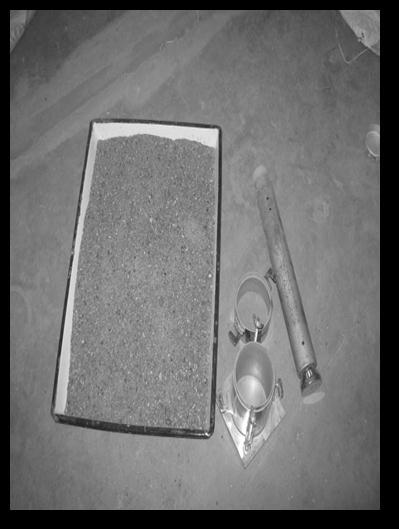
Particle Size Analysis: To illustrate the concept of particle size distribution (PSD) the details about the experimental setupsandprocedureshavebeenpresentedhere.
Table1.Resultsofliquidlimitofcoalsoil
Table2.Resultsofplasticlimitofcoalsoil 2.2 PERMEABILITY TEST
Fig2.Permeabilitytestapparatus



Table3.Resultsofpermeabilitytestofcoalsoil

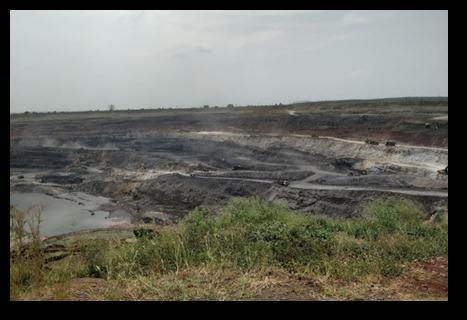


AfterdiscussingwithourhelpfulandsupportiveguideProf. RakeshKumarandtakingpermissionletterofsitevisitfrom college we decided to take a site visit to the MAKARDHODKACOALMINEsituatedintheNagpurdistrict, Bopeshwar, Maharashtra 441203. This is the highest coal makingcompanyinMaharashtra.
This coal mine is runned by the WESTERN COAL LTD. NAGPUR.Webookedtheticketsforthetrainandbeganour journeythiswasaveryinterestingspeedpacedjourney.We got a lot of information regarding the coal mines and backfillingincoalmineswhichwasthemainpurposeofour project.Thisvisitwasarrangedbyresp.
Sudhir Giradhar sir (Coal mine supervisor) they were very helpful to us and were supportive within the coal mines rules and regulations. We were provided with one guide named Mr. Sandeep Gupta (sector 1 mine incharge). He answered some of our questions and some of our question weresolvedbyGoogle.
The coal production from the mines is around 2 million metric tons per year and our state Maharashtra is top 10 fromthelistproducing12.963billionmetrictonnes.Except coal mines also have minerals like sulfur, salts, limestone, clays,barite,andindustrialdiamonds.
COAL, COPPER, GOLD, GRAVEL AND IRON ORE are mined fromtheminescreatingreservesforthecountry.Themines excavated waste is used for underground filling, backfilling and closing of coal mines and also used for construction purposesandlayeredaroundtheunevensurface.
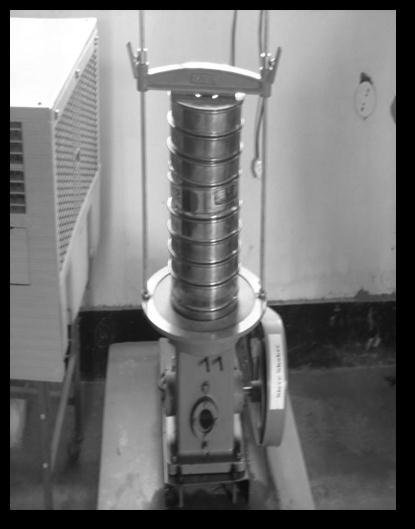
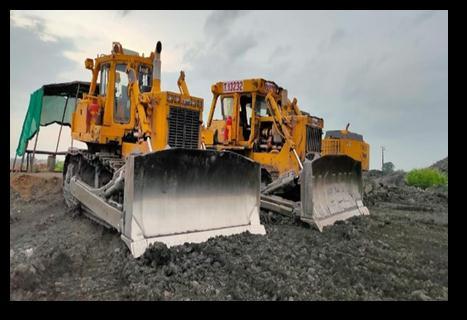
Fig6.Levellingofunevenlandusingcoalsoil
1.Thecoalrefusemayexperiencewettinganddryingcycles during and following placement which can degrade the particles and subsequently alter the fill’s mechanical properties. Slake durability testing qualitatively assesses the resistance offered by weak rocks such as shales, mud stones, silt stones and other clay bearing rocks to weakening and disintegration when subjected to two standardcyclesofwettinganddrying.
2. Resistance to slaking is significant since it can be expected that degradation of the refuse will reduce its strengthandpermeability.
3. Therefore, it is felt that it would be desirable for coal refuse to be used as stowing material to have at least mediumdurability
(LIQUID LIMIT PLASTIC LIMIT) Theexperimentalresults show that the liquid limit for the sample of mine 1 lies in low compressible zone, These samples are very low and medium compressible and could be termed very slightly plastic.
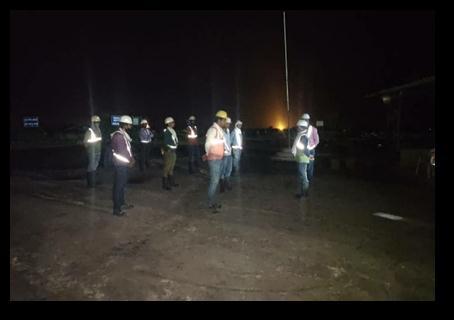
Fig7.Workingatcoalminesector1
Sponsor:WesternCoalfieldsLimited
Parentcompany:CoalIndiaLimited
Location:Bopeshwar,nearUmrerinNagpurDistrict, Maharashtra,India
GPScoordinates:20.865366,79.285604(exact)
Status:Ongoing
Capacity:2.0milliontonnesperannum
Production:2milliontonnes(2020)
TotalResource:Ongoing
MineableReserves:52.863(Proven,2019)
CoalType:Mineralandresource
MineSize:660.70ha
MineType:Surface
(COMPACTION TESTING) It could be observed from the testresultsthatthemaximumdrydensityvariesfrom1.901 Mg/m3 to 2.207 Mg/m3. When compared with the compacted densities of sand (which varies between 1.7Mg/m3 and 2.2 Mg/m3) which has been successfully usedashydraulicstowingmaterialinIndia,itcouldbeseen that the refuse from the mine 1 can be suitably used as a backfillingmaterial.
(PERMEABILITY TEST) From the experimental results it may be observed that the samples for mine 1 has the requiredpermeabilityandissuitableforbackfilling.
(SIEVE ANALYSIS) From the experimental results it may be observed thatthesamplesformine1 hasresidual angle of friction less than 300and so they are not preferred for fillingpurposes.
1. Geotechnical tests were performed for the coal mine refuse samples of MAKARDHODKA COAL MINE to evaluate the suitability as filling material. Standard Proctor Compaction test, Permeability test and Liquid and Plastic limit and sieve analysis were conducted on the sample collectedfromvisitedcoalmine.
2. Geotechnical investigation and analysis is an important study in assessing the suitability of coal mine refuse for backfilling.
International Research Journal of Engineering and Technology (IRJET)
e-ISSN: 2395-0056
3. The results of the performed test will help in determiningtheadverseenvironmentaleffects.
4.Theexcavatedcoalsoilcanbeusedforbackfilling,laying on uneven grounds, construction purposes, idol making, agriculturalpurposes,etc.
[1]Arioglu, E, 2008, “Engineering properties of cemented aggregate backfill”, Proceedings of the International Symposium on Mining with Backfill, Publisher: A.A. Balkema,Netherlands,pp.3 8.
[2]ASTMD4644 87,1998,“StandardTestMethodforSlake DurabilityofShalesandSimilarWeakRocks”.
[3]Cernica, John.N.,1995, Geotechnical Engineering Soil Mechanics,JohnWiley&Sons,NewYork.
[4]Chugh, Y.P., Deb, D., Biswas, D., 2000, “Underground placement of coal processing waste and coal combustion byproducts based paste backfill for enhanced mining economics”, Mining in 21st Century, Proceedings of 19th WorldMiningCongress,NewDelhi,pp.1327 1341.
[5]Daniels W. Lee, 2022, “Effects of soil thickness on re vegetation of acidic Appalachian coal refuse”, Meeting of the American society of mining and Reclamation, ASMR, 2005,pp255 266.
[6]Dixit, J.P, Raju, N.M, 2011, “Evaluation of stability of backfillfaces”,ProceedingsoftheInternationalSymposium on Mining with backfill, Publisher: A.A. Balkema, Netherlands,pp.341 348.
[7]Karafakis, M.G, Bowman, C.H, Topuz, E., 2007, “Characterization of coal mine refuse as backfilling material”,Geotechnical and geological Engineering, Vol.14, pp.29 150.
[8]Mongenstern, N. R. and Eigenbrod, K.D., 1974, “Classification of argillaceous soils and rocks”, Journal of Geotechnical Engineering Division, Vol. 100, pp. 1137 1157.
[9]Palarski, J., 2005, “Underground utilization of waste on Poland”, Mining in 21st Century, Proceedings of 19th WorldMiningCongress,NewDelhi.
[10]Sahu, H.B. and Gupta, Vipul., 2008, “Characterization of coal mine refuse for backfilling in mines”, Proc. of Emerging Trends in Mining and Allied Industries,”, February2 3,pp.314 319
[11]Singh, A, and Chowdhary, G.R., 1994, Soil Engineering in Theory and Practice.: CBS Publishers and Distributors, NewDelhi.
Volume: 09 Issue: 07 | July 2022 www.irjet.net p-ISSN: 2395-0072 © 2022, IRJET | Impact Factor value: 7.529 | ISO 9001:2008 Certified Journal | Page2890
[12]Sowers, G.F., 1979, Introductory Soil Mechanics and Foundations, Macmillan,NewYork.
[13]Thomas, E.G, 2014, “Characteristics of cemented deslimed mill tailing fill prepared from finely ground tailing”, Mining with backfill, Publisher: A. A. Balkema, Netherlands,pp.31 37
[14]Venkatramaiah,C.1993,GeotechnicalEngineering,New Age International, New [Delhi. Vorobjev, B.M. and Deshmukh R.T., 1966, Advanced Coal Mining, Asia Publishing
[15]Geological Investigation House, London. 2016, “Geological investigations of various types of soil samples bydifferentmethods”.
[16]Wray, W.K., Measuring Engineering Properties of Soil, 1986,PrenticeHall,EnglewoodCliffs,NewJersey.
[17]Salem Z., Hamouri K., Djemaa R., Allia K., 2008, “Evaluation of landfill leachate pollution and treatment”, Desalination,Vol.220,pp108 114.
[18]Yilmazet.al.,KesimalA.,ErcidkiB.,2019,“Evaluationof acidproducingsulphidic”.