International Research Journal of Engineering and Technology (IRJET) e ISSN: 2395 0056

Volume: 09 Issue: 07 | July 2022 www.irjet.net p ISSN: 2395 0072
International Research Journal of Engineering and Technology (IRJET) e ISSN: 2395 0056
Volume: 09 Issue: 07 | July 2022 www.irjet.net p ISSN: 2395 0072
1 PG Scholar ,Department of Electronics and Instrumentation Engineering, Odisha University of Technology and Research (OUTR), Bhubaneswar ,India 2 Assistant Professor Department of Electronics and Instrumentation Engineering, Odisha University of Technology and Research (OUTR), Bhubaneswar ,India ***
Abstract: Wirelesssensornetworkshavegainedpopularity becausetheyhavethepotentialtocompletelytransforma variety of facets automation in the transportation and healthcareindustries,aswellasenvironmentalmonitoring and conservation, manufacturing, and commercial asset management. The number of nodes in a wireless sensor networkislargeranginginnumberfromafewtothousands, eachofwhichisconnectedtoasinglesensor.Lifetimeand energyusageisthisnetwork'smostdifficultassignment.The mostwidelyrecognisedroutingmethodsforwirelesssensor networksarecluster basedonessincetheyincreasenetwork longevityanduselessenergy.Numerousprotocols,including LEACH,Multi hop LEACH,LEACH V,LEACH C,andOLEACH C, have been created.. To enhance the functionality of the LEACH Cprotocol,wewillconcentrateonanoptimization technique based on pollination, commonly known as OLEACH C.ThePBOtechniqueisusedforclusteringinWSN. Theclusterheadwillbedeterminedbywhichnodehasthe mostenergyremaining.Theclusterheadwillbechosenby thedistancebetweentwonodesiftheirenergiesareequal. Basedonwhichnodeisclosesttothebasestation,theCH will be decided. The optimal CHs that ensure routing optimizationwiththeleastamountofenergyconsumption andtheleastexpensivecommunicationlinesbetweennodes inside of each other are chosen using the OLEACH C protocol.
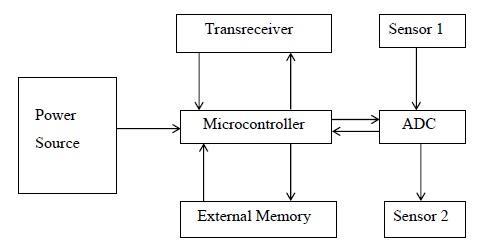
theonlytypesofexternalmemory.InWSN,thebasestation (BS), which may serve as an internet gateway, or other sensors,areconnectedviathetransceiver
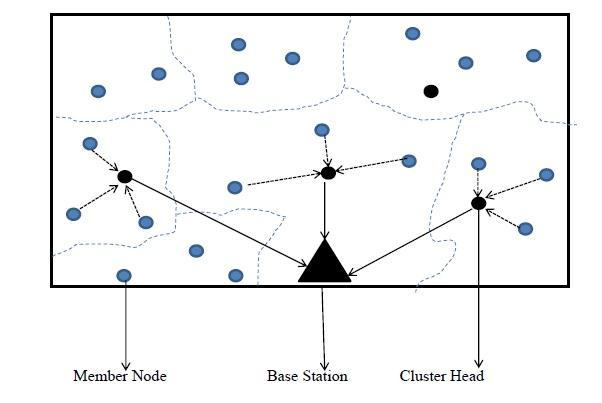
Cluster basedroutingisoneofthevariousprotocols,andit usesamechanismfordataaggregationtosaveenergy.Data aggregationistheprocessofcollectingdatafromallsensor nodes and sending it to the aggregator. Data aggregation algorithms'majorgoalistocollectandaggregatedatainan energy efficientwaytoextendnetworklifetime Noneofthe nodes in a wireless sensor network can directly communicate with the base station. A sensor node, also called a "cluster head" (CH), gathers information from nearbynodes,combinesit,andthentransmitstheresulting informationtothebasestation.
KeyWords: LEACH,Multihop-LEACH,LEACH-V,LEACH-C, OLEACHC
The creation of intelligent environments for data collectionandtransmissionthatrelyonsensorydatafrom theactualworldismadepossiblebythewidespreaduseof wireless sensor networks (WSNs). Figure 1 depicts the fundamentalconstructionofasmartsensor.Thebatteries arereferredtoasthepowersource.Thesensornodesoften havearestrictedbatterycapacity.Atthemoment,sensors canreplenishtheirenergythroughvibration,temperature differential,orsolarsources.Themicrocontrolleranalyses theinformationandoperatesthevariouspartsofthesensor node'scapabilities.On chipmemoryandflashmemoryare
International Research Journal of Engineering and Technology (IRJET) e ISSN: 2395 0056
Volume: 09 Issue: 07 | July 2022 www.irjet.net p ISSN: 2395 0072
Upuntilnow,alteringtheMAClayerandnetworklayer hasbeenthemainmethodofreducingenergyloss.Thereare twoadditionalpressingissues:howtoarrangethecluster headsoverthegridandhowmanyclusterswouldbepresent inanetwork.Thenetwork'slifespanwillbeextendedand energylosswillbedecreasediftheclusterheadsareplaced correctlyoverthegridandenoughclustersform.
Routing is one of the greatest issues WSNs face. The key factorscontributingtothecomplexityofroutingprotocolsin WSNsincludethedynamicnatureofnodes,computational overhead, lack of a standardised addressing scheme, self organization,andthelimitedtransmissionrangeofsensor nodes. The battery life of the sensor nodes is limited. The initialbatterycapacityofthesensornodesdictateshowlong thenetworkwilllastbecauseoftheenvironmentinwhich they are located, where batteries are typically non replaceableandnon rechargeable.Severalroutingmethods arenowavailableforWSNs.Thehierarchicalarchitectureof theflat,hierarchical,andlocation based routingprotocols enablestheuseofhigherenergynodesfordataprocessing andtransmissionandlowerenergynodesforenvironment sensing.Asaresult,ahierarchyofnodeswithhighandlow energy.LowEnergyAdoptiveClusteringHierarchyisabasic energy efficient hierarchical routing technique (LEACH). NumerousprotocolshavedevelopedfromLEACHwiththe helpofvariousupgradesandtheapplicationofcutting edge routing algorithms. Energy efficient, well defined routing protocols include LEACH, LEACH Centralized (LEACH C), LEACH V, Multi Hop LEACH, and Optimized LEACH C. (OLEACH C).Hierarchicalroutingsystemsseparateseveral clustersintodistinctnetworknodes.Eachclusterhasanode thatfollowstheleadingrule.Inclusteringroutingsystems, Cluster Heads (CHs) are the only nodes that can speak directlytotheBS[2].Normalnodesmustcommunicateto closerCHsasaresult,whichdramaticallylowerstheirlong distancetransmissionoverhead.
Oneof thefirsthierarchical routingsystemsfor WSNs, LEACHcompressesdatabeforesendingittothebasestation tosaveenergyandincreasethenetworklifetime.
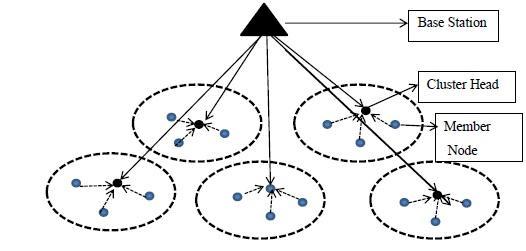
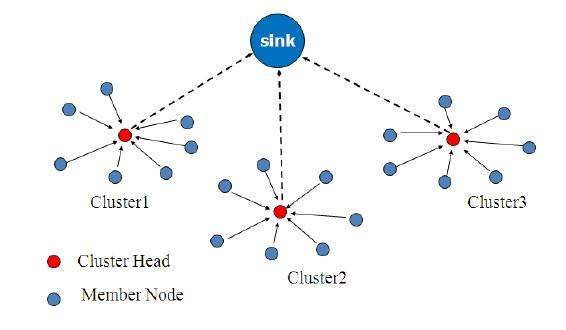
SensornodesclustertogetherinLEACH,asdepictedinfigure 2.1.Foreachround,LEACHundertakesself organizingand re clustering tasks. One sensor node serves as the cluster head(CH)foreachcluster,andtheothersensornodesserve as the cluster's member nodes. Data is gathered from all nodesbyCHs,whothencombinethedatatheyhavereceived andsendallusefulcompressinformationtoBS.Dueofthese newtasks,CHusesupmoreenergyandwillquicklyperishif itcontinuestobeCH,asisthecasewithstaticclustering.To solvethisissue,LEACHusesrandomisedCHrotation,which preserves individual node batteries. LEACH prolongs networklifetimewhilealsominimisingenergyconsumption bycompressingdatabeforesendingittoBS.Everyiteration oftheLEACHprocessnormallyconsistsoftwostage.These arethesetupphaseandthesteadystatephase.
Duringsetup,clustersandCHsareconstructed.Tomanage all the nodes, several clusters are employed. Some nodes independently select themselves as CHs without seeking inputfromothernodes.TherecommendedpercentagePand theCHs'historicalperformanceasCHsareusedtoselectthe CHs. Every node that wasn't a CH in the prior 1/p rounds generatesanumberbetween0and1,andifthatnumberis lowerthantheT(n)threshold,thatnodebecomesaCH.The valueoftheThresholdestablishedbythisformula
If nbelongstoG,thenT(n)=P/1 p*(rmod1)p 0,Otherwise
Here,Gstandsforthegroupofnodesthatweren'tpickedas clusterheadsinthefirst1/prounds,whereprepresentsthe projectedpercentageofclusterheads.ortheroundthatis nowunderway.Afterthesubsequent1/prounds,nodesthat becomeCHsinthecurrentroundwillremainCHs[1].This meansthattheenergywilldisperseuniformlythroughout thenetwork andthateach nodewill behavesimilarlytoa CH.
In the steady state phase, data transfer happens. Once a candidate has been chosen, each CH will broadcast an advertisementmessagetotheothernodesviatheCSMAMAC protocol.Bycomparingreceivedsignalstrengthindication, non CHschoosetheirclusterheads.Thenon CHnodesbegin gatheringdataandsendingittotheCHonceforeachTDMA framethatisprovidedtothem.Thenodeisthoughttoalways havedatatosendinthisscenario.Thenodeentersasleep stateinordertoconserveenergyuntilthenexttimeslotis approved. Data from cluster nodes must be continuously receivedbytheCH,whichrequiresthatitsreceiverbeturned on.CHcombinesallofthedatabeforetransmittingittothe basestation.
Figure 2.1-LEACH Protocol
International Research Journal of Engineering and Technology (IRJET) e ISSN: 2395 0056
Volume: 09 Issue: 07 | July 2022 www.irjet.net p ISSN: 2395 0072
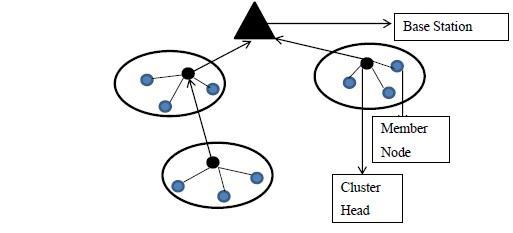
AnotherimprovedLEACHextensiontoimproveWSNenergy efficiency is multi hop LEACH. Another distributed clusteringroutingprotocolismulti hopLEACH.Thesection 3.1 description of Multi Hop LEACH communication architecture.LikeLEACH,CHrotatesinanarbitrarymanner. The optimal route with the lowest energy consumption is selectedusingMulti HopLEACH.Keepoveralldistancefrom BStointermediateCHasoneoftheselectioncriteriasince distance substantially correlates with energy dissipation. Consequently, the route with the fewest hops between sourceCHanddestinationBSispicked.
Eachnodecommunicatesthebasestationinformationabout its location, node ID, and energy condition during the LEACH Centralizedsetupphase.TheCentralControlmethod isusedbyBStospecifyCHsandnon CHnodes.Thecentral control algorithm is used by BS to compare each node's energytoapredeterminedaverageenergylevel.Ifanode's energyisbelowthenorm,BSclassifiesitasamembernode. The node IDs of these nodes are broadcast to all network nodesbyBS,whoselectsthemasthenodeswiththehighest potentialnumberofCHs.Minimizingthedistancebetween membernodesandCHsistheaimofBS.LEACH Clessens membernodeenergydissipationinthismannerbecauseof theclosetransmissiondistancebetweenthemandCH[4]. Compared to the distributed control method, this central controlmethodologyyieldssignificantlysuperiorclustering. TheunderlyingideaofLEACH Centralizedmeansthateach node can compute its energy, is aware of its location, and maybroadcastthisinformationtoCHevenwhiletheBSis remotefromthenode.Asaresultofnodes'abilitytoalter theircommunicationrangeforintra clusterandinter cluster communication to accommodate varying transmission powerlevels.
TheMulti hopLEACHprotocolprimarilytakesintoaccount inter cluster and intra cluster multi hop communication. Thisprotocolhastheadvantageofallowingsensornodesto expandinside the monitoredarea of the network.Thus, it exhibitsitscapacityforscalabilityandflexibility.Withouta doubt,throughputishigherthanthatoftheLEACHprotocol
IntheV LEACHprotocol,theclusteralsohasavice CHSince thedatafromtheclusternodesalwaysreachestheBS,there isnolongeraneedtoelectanewCHeachtimetheexisting CHdies.Theentirenetworklifespanwillbeextended.
TolowerenergyusageandincreasethelifetimeoftheWSN network, a new version of LEACH C has been suggested. BelowisaschematicthatillustratestheOptimizedLEACH C (OLEACH C)procedure.Alistofnodesindecreasingorderof energyiscompiledbythebasestationwhenusingLEACH C, usingasortingalgorithm.Theclusterheadforthecurrent roundwillbechosenasthenodewiththegreatestamountof energy remaining. The protocol is functioning effectively overall. The LEACH C technique does have certain drawbacks,though.Theclusterheadwillbedeterminedby thenode'sidratherthanbydistanceiftwoormorenetwork nodes have the same energy level. Therefore, the effectivenessof the current LEACHmethodology won't be considerably improved by this strategy. It costs more and consumesmoreenergy.
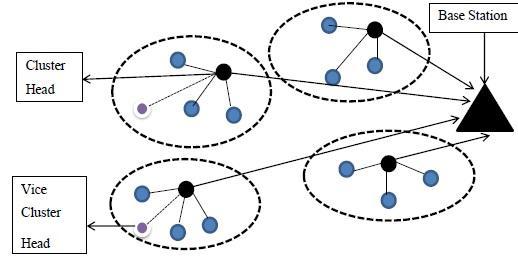
Figure3.2demonstrateshowViceClusterHead,analternate Cluster Head, is used by V Leach. The Vice Cluster Head succeedsthedeceasedClusterHead[3].Thenetworkrapidly startsutilisinglessenergyuntilitcompletelyshutsdownif theViceClusterHeadfailstoprovidearepair
In the proposed study, a methodology for selecting the clusterheadwillbedevelopedusingthePBO(pollination
International Research Journal of Engineering and Technology (IRJET) e ISSN: 2395 0056
Volume: 09 Issue: 07 | July 2022 www.irjet.net p ISSN: 2395 0072
based optimization) optimization technique, in which the clusterheadnodesareselectedbasedontheirenergyand distance.Ifthereisatieinenergybetweenthetwonodes thatcanbechosenastheclusterhead,theclusterheadwill bepickedbasedondistanceratherthanID.Basedonwhich nodeisclosesttothebasestation,theCHwill bedecided. With the suggested system paradigm, the current LEACH protocol's cost, network, and energy efficiency can all be significantlyincreased.
By utilising the optimization technique known as pollination based optimization, the suggested work improves the LEACH C protocol. The pollination based optimization(PBO)methodincreasesnetworklifetimeand reducesnodeenergyusage.Pollinationbaseoptimization, themost recentpopulation basedoptimizationtechnique, imitates flower pollination procedures. With regards to optimization, integer programming, wireless sensor networks,etc.,thePBOalgorithmisapplied.ThePBOtriesto encourageplantreproductionandthe"survivalofthefittest" principle.Theprocessofpollinationessentiallyentailsthe transferofpollenfromaflower'smalestigmatoitsfemale stigma, resulting in plant reproduction. There are two methodsforpollinatinganobject:
1..Selfpollination
2.Crosspollination
BSstandsforbasestation,AEfornetworkaverageenergy,C Hforclusterhead,CMforclustermember,anddistianddistj fornodes'distancesfrombasestation,accordingtothefollo wingsuppositions.
Nisthetotalnumberofnodeswhenthesetofenergyfromal lnodes,E,istakenintoaccount.
(a)EachnodeupdatestheBSwithitspositionandenergylev el.
(b)BSestimatestheAEofthenetworkandonlylabelsthe nodeswithhigherenergy(AE,CM,N,CH,E).
1.I1 2.WhileI<=N 3.If(Ei>AE)then 4.CH(i)=True 5.Else 6.CM(i)=True 7.Endif
8.For(j=1;j<N;j++)
9.If(Ei=Ej) 10.i++then 11.ApplythePBOalgorithm 12.If(disti<distj)fromBS,then 13.CH(i)=True 14.Else 15.CH(j)=True 16.Endif 17.Endif 18.Endwhile
Todoanalyticalcomparisons,itisessentialtounderstand theradiomodelassumptionthattheenergy efficientrouting algorithmsemploy.Eachroutingprotocolmakesanumber of assumptions about radio uniqueness.. The energy efficiency of routing protocols significantly varies due to thesevariousfactors.
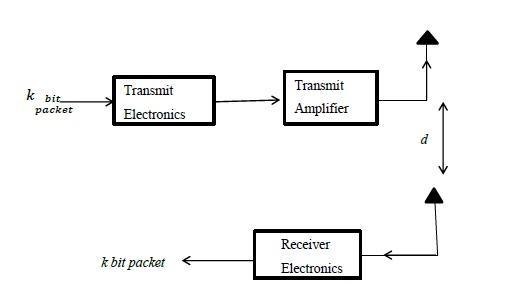
Weemployaneasy to understandfirstorderradiomodel,as showninFig.4.1,inwhichthetransmitterdissipatesenergy todrivetheradioelectronics,aswellasthepoweramplifier andreceiver.
andtoreceivethismessage,theradioexpends
International Research Journal of Engineering and Technology (IRJET) e ISSN: 2395 0056
Volume: 09 Issue: 07 | July 2022 www.irjet.net p ISSN: 2395 0072
Table 4.2 Comparison based on data aggregation, homogeneity, mobility and hop count
LEACH Yes Yes FixedBS Single
Tables4.1and4.2compare theLEACH,Multi hopLEACH, LEACH V, LEACH C, and Optimized LEACH C procedures. Accordingtoperformanceanalyses,bothroutingmethods exhibitmanyofthesamebehaviours.Allroutingprotocols aggregate data, are homogeneous, and operate at predetermined bit rates (BS). For CH selection, the distributed algorithms LEACH, Multi hop LEACH, and LEACH V are used. For CH selection, LEACH C employs a centralcontrolmechanism.Weemployamechanismbased onpollinationforOptimizedLEACH CThedistancebetween BS and CHs is one hop in the routing protocols LEACH, LEACH V, LEACH C, and Optimized LEACH C; it may be several hops in Multi Hop LEACH .The LEACH protocol allows for some scaling. Multi Hop LEACH scales the best thanks to the multi hop communication option for CHs, while LEACH C, LEACH V, and Optimized LEACH C also support good scaling. Compared to Multi hop LEACH and LEACH V,theLEACHprotocolusesmoreenergyinefficiently. LEACH CandOptimizedLEACH C,ontheotherhand,offer exceptionallyhighenergyefficiency
Table 4.1 Comparing based on routing protocol type, CH choice, scalability, and energy efficiency
MULTI HOP LEACH Yes Yes FixedBS Multi LEACH V Yes Yes FixedBS Single LEACH C Yes Yes FixedBS Single OPTIMIZED LEACH C Yes Yes FixedBS Single
WeconstructawirelesssensornetworktovalidateOLEACH functionality.C'sThesimulationoftheoutcomeswasdone usingtheMATLABsoftware.Nodesareinitiallyintroduced intothenetwork.Nodesarefixedinnumber.selectingthe simulation'sparameters.
The list of requirements for simulating various LEACH protocolswithencryptiontechniquesisprovidedbelow.
Parameter Value
NetworkSize 100m*100m
Totalno.ofnodes 100 Numberofroundsatmost 10,000 Initialenergy 0.75J P(CHpercentage) 0.1J Energyrequiredtoconvey eachbit(ETX) 50nJ/bit energyrequiredtoreceive eachbit(ERX) 50nJ/bit
Model of the energy of emptyspace(Efs) 10pJ/bit
Multipathmodel'senergy (Emp) 0.0013pJ/bit
Aggregation of Data and Energy(EDA) 5nJ/bit
AccordingtoFigure5.1,thenetworkconsistsof100nodes. Thenodesareevenlydispersedthroughouta100mby100m area. The nature of each node taken into consideration is homogeneous. Every operation in the network uses a sizeablepercentageofthenodes'energy.
International Research Journal of Engineering and Technology (IRJET) e ISSN: 2395 0056
Volume: 09 Issue: 07 | July 2022 www.irjet.net p ISSN: 2395 0072
Figure 5.1(100 nodes Network)
WirelessSensorNetworkinFigure5.1with100nodes
In this case, 100 nodes are formed over a 100m*100m region.
The base station is located at BS (50,50). 2. Results of the LEACHprotocolanalysis
Figure5.2TheLEACHprotocol'salivenodev/sroundplotis displayed in Figure 5.2. About 90% of nodes survive the protocol's 2200 rounds, or almost all nodes. One of the currentpractisesisthis.
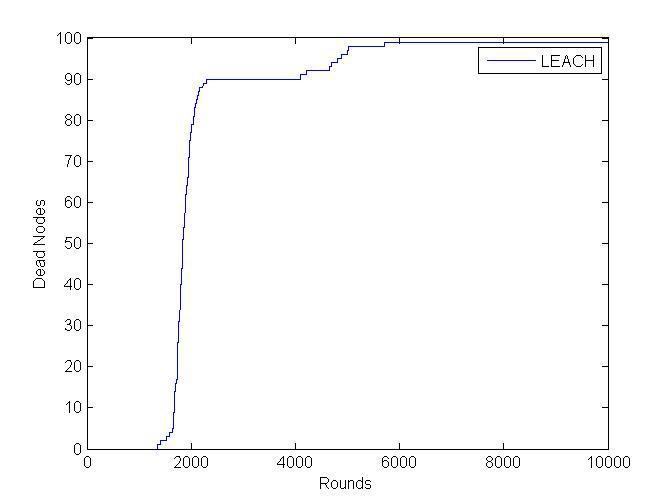
Figure 5.3- LEACH protocol Dead nodes v/s rounds plot
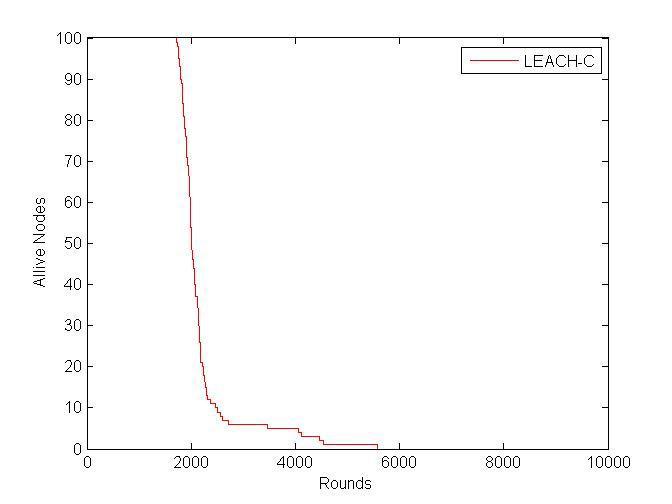
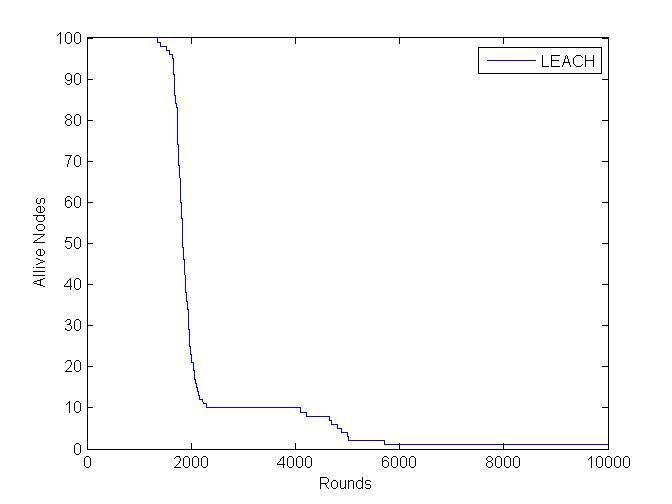
Fig.5.4displaysthealivenodev/sroundplotfortheLEACH Cprotocol.Nearlyallnodesarestillinfunctioningafter2700 rounds.ItyieldsbetterresultsincomparisontotheLEACH protocol, which calls for nodes to communicate for 2200 cycles
Figure 5.2- LEACH protocol live nodes vs. rounds plot
Figure 5.3 depicts the LEACH protocol's dead nodes v/s roundplot.Thenoderunsoutofroundsafter1500.Between 1900and2200rounds,the50thandlastnodesperish.
Figure 5.4 LEACH C protocol live nodes vs. rounds plot
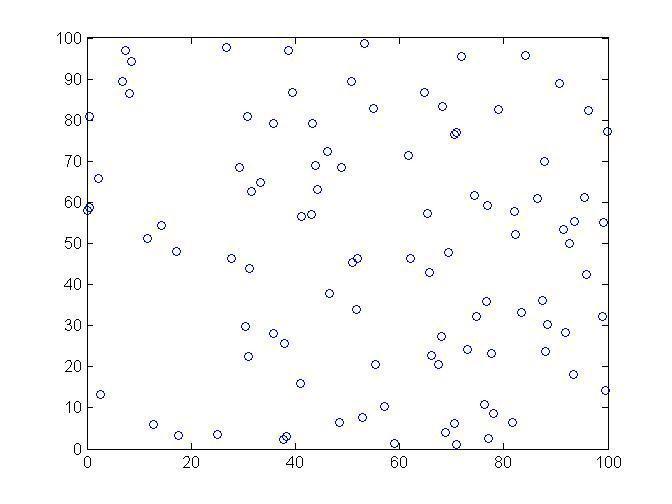
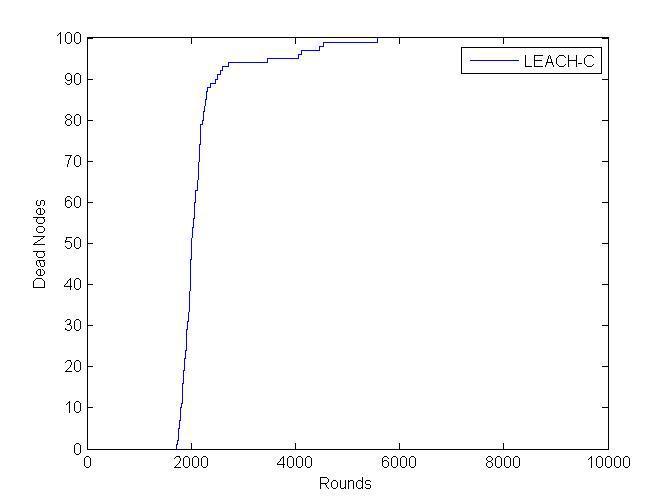
Figure5.5depictsthedeadnov/sroundplotfortheLEACH Cprotocol.Thefirstandlastnodesdiebetween1700and 2700 rounds. After around 2200 cycles, the LEACH protocol'slastnodeexpired.Therefore,LEACH Cperforms betterthantheLEACHprotocol
International Research Journal of Engineering and Technology (IRJET) e ISSN: 2395 0056
Volume: 09 Issue: 07 | July 2022 www.irjet.net p ISSN: 2395 0072
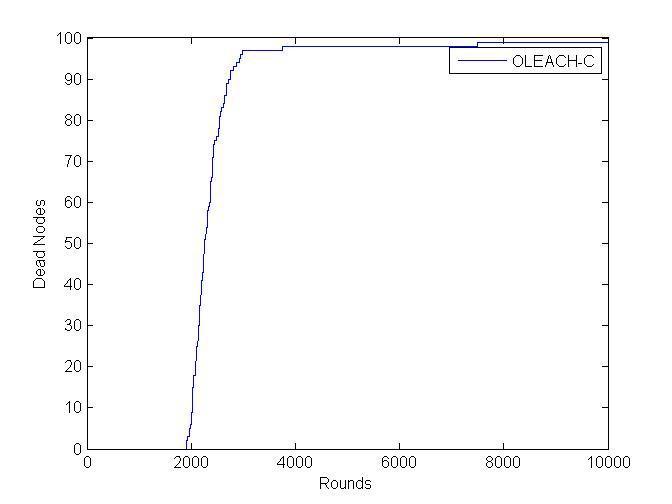
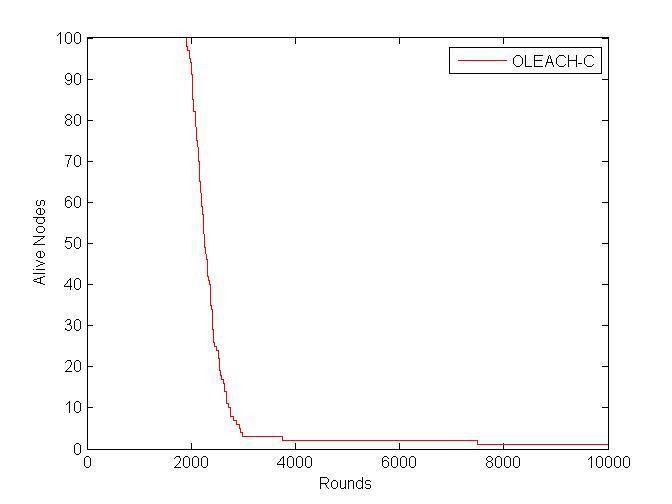
TheOLEACH Cprotocol,whichisthebestofthethreeshown inFig.5.6,allowsallnodestocommunicatefor3200cycles. When choosing the cluster head, this technique takes the remainingenergyandthedistanceintoaccount.
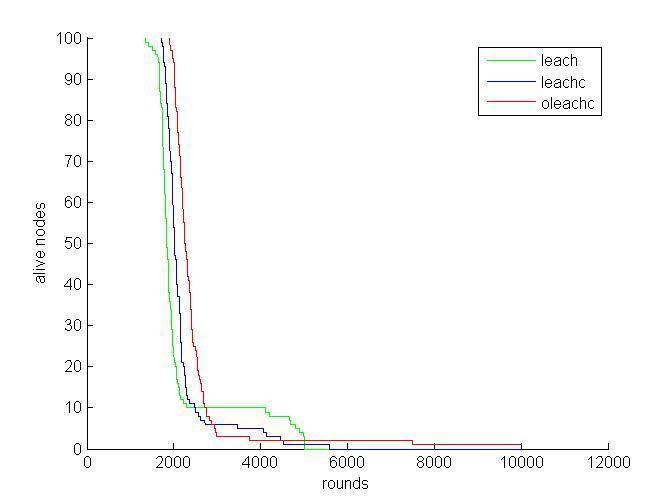
The comparison of the LEACH, LEACH C, and OLEACH C protocols is shown in Fig. 5.8. Cluster creation causes the LEACHprotocoltoloseenergysincemoreenergyisrequired becauseclustersformaftereachround.However,thebase stationformstheLEACH Cclusters,whereastheOLEACH C clustersareformedbasedonresidualenergyanddistance utilisinganoptimizationmethodknownasPollinationBased Optimization(PBO)
Figure5.7displaysastudyofthedeadnodesvs.roundsplot fortheOLEACH Cprotocol.Around1950roundslater,the first node expires. Between 2000 and 3200 rounds pass beforethetenthandlastnodespassaway.Thefactthatthis protocolcancommunicateforupto3200roundsmakesit thebestonewe'vediscussedsofar.
In Fig. 5.9, dead nodes for the LEACH, LEACH C, and OLEACH C protocols are contrasted. When compared to othermethods,OLEACH Cproducesbetteroutcomes.Here, the first node runs out of rounds after roughly 1950. In LEACHandLEACH C,theinitialnodeexpiresafter1500and 1700cycles,respectively.
International Research Journal of Engineering and Technology (IRJET) e ISSN: 2395 0056
Volume: 09 Issue: 07 | July 2022 www.irjet.net p ISSN: 2395 0072
Thepackettransmittedtothebasestationsinresponseto the specified round is shown in Fig. 5.10. The OLEACH C protocolsendsmoredatatobasestationsandclusterheads than the LEACH and LEACH C protocols, which extends networklifetimeandlowersenergyusage.
The OLEACH C protocol therefore extends the life of the wirelesssensornetworkbyselectingtheclusterheadbased ontheirremainingenergyaswellasdistanceandattaching the cluster nodes according to the distance to the ideal clusterhead.Withtheleastamountofenergyconsumption and the most affordable communication connections betweennodes,theOLEACH Cprotocolandotherenergy efficient communication protocols for wireless sensor networksselecttheidealCHstoensurerouteoptimization.
Figure 5.10 Rounds plotting the proposed OLEACH C against various existing protocols are broadcast to BS packets.
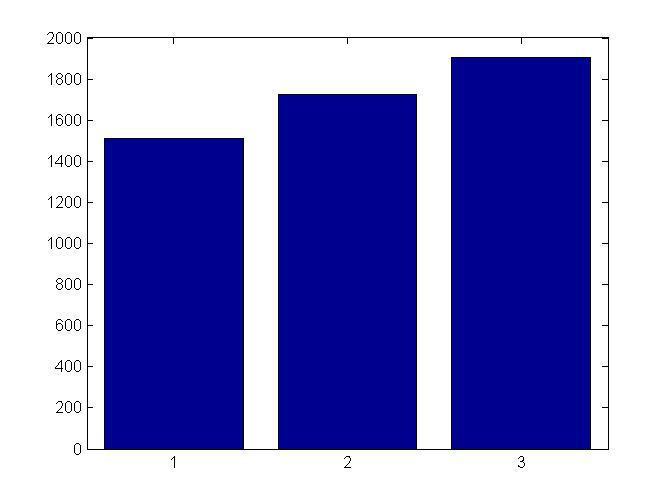
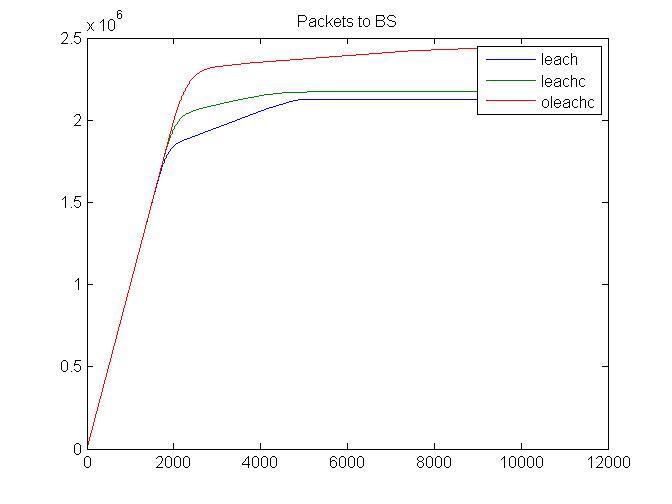
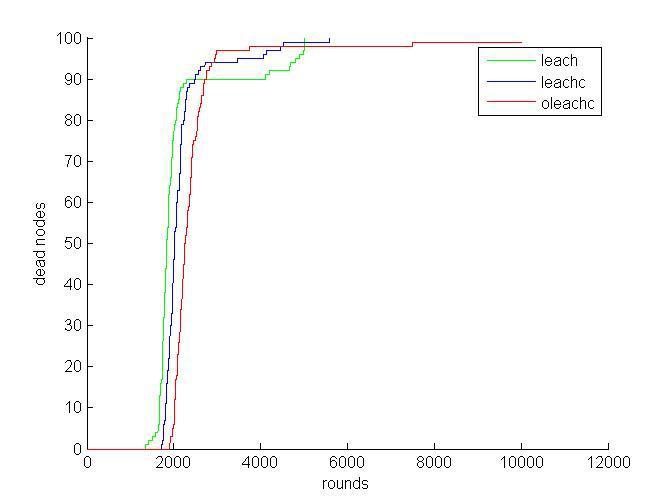
Figure5.11comparesthenetworklifetimeoftheOLEACH C protocoltothatofotheractiveprotocols.Thefirstdeadnode fortheLEACH(1),LEACH C(2),andOLEACH C(3)protocols hasbeenusedasthebasisforthiscomparison.Figureshows thatcomparedtoolderprotocols,theproposedOptimized LEACH Cprotocolprovidesalongernetworklifetime.
Due to the limited energy resources available, one of the majorissueswhiledevelopingroutingprotocolsforWSNsis howtouseenergyeffectively.Theroutingprotocol'smain goalistomaintainthesensors'usefulnessforaslongasis practical while simultaneously prolonging the network's lifespan.Themajorityoftheenergyusedbythesensorsis usedforsendingandreceivingdata.Asaresult,toincrease the lifespan of individual sensors and, by extension, the network as a whole, routing algorithms created for WSNs must be as energy efficient as is practicable. We have discussednumerousLEACH basedtechniquesinthiswork. Thisstudy'sprimarygoalwastoevaluatetheeffectiveness ofvariousenergymanagementandthroughput improving strategies. With the use of analytical comparison and the outcomesof Weexaminedthedurabilityanddatatransfer characteristics in our simulation .Because it chooses the cluster head by taking into account the node's remaining energy and distance, the proposed OLEACH C protocol outperformstheexistingLEACH,Multi hopLEACH,LEACH V, and LEACH C protocols, according to the simulation results. These processes still need to be refined. The establishment phases of all routing systems should be improvedbythedevelopmentofdistributedandcentralised algorithms.Applicationstandardsalsoneedtobeimproved for the electronics of sensor nodes, deployment management,andthechoiceofeffectiveandefficientrouting protocolsforWSNs,amongmanyotherareas.
International Research Journal of Engineering and Technology (IRJET) e ISSN: 2395 0056
Volume: 09 Issue: 07 | July 2022 www.irjet.net p ISSN: 2395 0072
FutureworkonenergyefficiencyattheMAClayerandthe viabilityoftheseprotocolsinheterogeneousenvironments are both priorities for us. Only two dimensions for node position are taken into consideration in the proposed protocolbecausenodesaredeployedonthesamesurfacein this case. Future study will concentrate on simulating the outcomeswhiletakingintoaccountthethirddimension.
[1] N. Nasri, A. WEI, A. Kachouri, S. E. Khediri , "A New Approach for Clustering in Wireless Sensors Networks,‖ International Workshop on Wireless Networks and Energy Saving Techniques (WNTEST), vol.32,pp.1180 1185,Elsevier2014.
[2] N. Jamal . A. Karaki and A. E. Kamal, "Routing Techniques in wireless sensor networks," in International Workshop on Wireless Networks and EnergySavingTechniques(WNTEST),2009.
[3] R. V. N. Sindhwani, "V LEACH: An Energy Efficient Communication,"vol.2(2),2013.
[4] M. Tripathi,, M.S. Gaur, V. Laxmi and R.B. Battula, ― EnergyEfficientLEACH CProtocolforWirelesssensor Network,‖ In computational intelligence and informationtechnology,pp.402 405,IET2013.
[5] V.A. Geetha , P.V. Kallapurb, S. Tellajeera, Clustering in Wireless Sensor Networks: Performance Comparison of LEACH & LEACH C Protocols Using NS2,‖ Procediatechnology,vol.4pp.163 170,Elsevier 2012.
[6] M. Tripathi,, M.S. Gaur, V. Laxmi and R.B. Battula, ― EnergyEfficientLEACH CProtocolforWirelesssensor Network,‖ In computational intelligence and informationtechnology, pp.402 405,IET2013
[7] R.M.B HaniandAA Ijjeh, ASurveyonLEACH Based Energy Aware Protocols for Wireless Sensor Networks,‖ JournalofCommunications vol.8(3),pp. 192 206,2013.
[8] H.M. Abdulsalam, B.A. Ali, A. AlYatama, E.S. AlRoumi, Deploying a LEACH DataAggregationTechniquefor AirQualityMonitoringinWirelessSensorNetwork,‖ The 2nd International Workshop on CommunicationsandSensor Networks, vol 34, pp 499 504,Elsevier2014.
[9] ]Altakhayneh,WalaaA.,etal."Clusterheadselection usingPBOalgorithmin wirelessnetwork." 2019IEEE 14th Malaysia International Conference on Communication(MICC).IEEE,2019.
2022, IRJET | Impact Factor value: 7.529 | ISO 9001:2008 Certified Journal