International Research Journal of Engineering and Technology (IRJET) e ISSN: 2395 0056

Volume: 09 Issue: 07 | July 2022 www.irjet.net p ISSN: 2395 0072
International Research Journal of Engineering and Technology (IRJET) e ISSN: 2395 0056
Volume: 09 Issue: 07 | July 2022 www.irjet.net p ISSN: 2395 0072
1. M Tech Graduation Student, Dept. of Civil Engineering, East Point College of Engineering and Technology, Bangalore, India
2. Professor, Dept. of Civil Engineering, East Point College of Engineering and Technology, Bangalore, India ***
Abstract Composition of a typical household drawing roomhaschangeddrasticallyinrecentpastwiththeadvent ofseveralpetroleumproductsbasednewermaterialsinthe furnitureandpunishmentindustry.Inthisbackgrounditis proposed to examine the nature of fire risks and its escalationinmoderndrawingroomswithspecificattention tothecontributionofincreasedcompositionandnatureof flammablesubstances.Aqualitativestudywillbeconducted tounderstandtheimpactofmaterialpropertiesonthefire behavior.Existingnationalbuildingcodewillbestudiedand theprescribedfireprotectiontechniquesformaterialswill beunderstood.Quantifythecontributionofnewermaterials tofireriskincrease(intermsofincreaseinfireloadand/or smoke production rate) compared to older punishment materials.Understandthefireprotectiontechniqueslikefire retardant coatings etc., being employed in the furnishing industry.Thereisanincreaseof15%moreconcreteworkin Modern Building compared to Conventional Building as it usesclaytiles.ItisobservedthatfireloadduetoPlasticand Wood is relatively more compared to other items. The emergency exit plan has been inserted or executed. Developedatechniquetoassessthefireriskandsuggested possibleoptionstobringdowntheenhancedfirerisksdueto newermaterialsusedinresidentialenclosures.Emergency Fireescaperoutesarealsosuggestedforbothtypeofhouse.
Keywords: Fire Load, Fire Safety, Calorific value, fire growth,heatrelease,combustion.
India is a land of many diversities and the second largest populatedcountryinthewholeworld.Thedemandforsafe house construction is on rise. Use of Energy efficient materialsinsteadofnaturalresourcesisencouraged.Typeof building considered (as per bureau of Indian standards: residentialbuilding):“GroupA” Fireresistanthousesneed to be designed for safety of people. Project calculates fire load of a building based on fire load density and wood equivalent. Comparison of fire load between old and new buildingisdonehighlightingtheareaofimprovement(exit plan,criticallocations).Thefireriskinmodernbuildingsis relativelymorecomparedtoanoldbuildingsofsamesize. The main reason is usage of high flammable materials in furniture's,gasolineandelectronicgadgets.
Thefireloadofmaterialisdependentona numberof materialpropertiessuchas: Density(ρ) Specificheatatconstantpressure(Cp); AmbientTemperature(T∞); ThermalConductivity(k); IgnitionTemperature(Tig)
Incipient stage: Invisibleproductsofcombustion aregivenoff,novisiblesmoke,flameorheatisstill notpresent.
Smoldering stage: Theburningprocessisreferred to as smoldering if it is sluggish and flameless. Smoke, the byproduct of combustion, is now apparent.Thereisstillnoflameorheat.
Flame stage: Today,thereisfire.Thereisn'tmuch heat,butitfallsofffairlyimmediately.
Uncontrolled stage: (Heat stage) Largevolumesofheatandsmokearenowcreated. Uncontrolledheatispresent,andthefireismoving acrossspaceveryquickly.
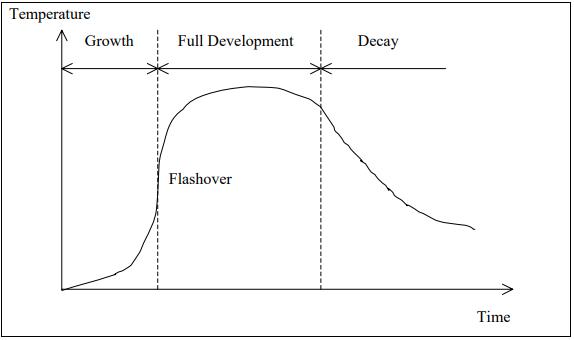
Duringthedevelopmentstage,whenthecombustible surfacesareexposedtomoreheat,theintensityofthefire
International Research Journal of Engineering and Technology (IRJET) e ISSN: 2395 0056
Volume: 09 Issue: 07 | July 2022 www.irjet.net p ISSN: 2395 0072
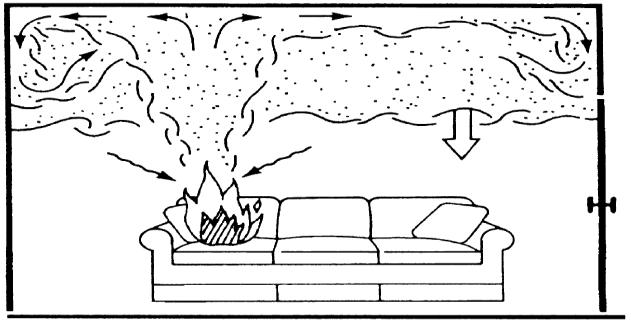
increases. At this point the type of fuel surfaces burning oftencontrolstherateofcombustion.Aftertheelectricflash, thefireentersthefullgrowthphase,commonlyreferredto as“full chamberengagement,”whenthetemperatureofthe upper layer reaches approximately 600 °C (Fig.1). At this point, all flammable materials in the room start burning strongly and the temperature rises rapidly. Although the availableventilationcontrolstherateofcombustionatthis point, the surface area of the fuel can sometimes have an effect.
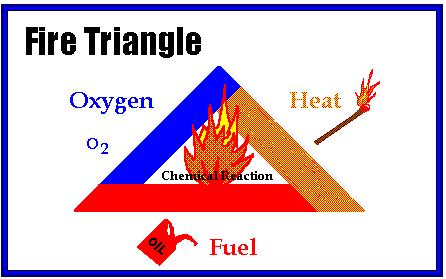
Heat, fuel, and oxygen are the three things a fire requires. These three factors combine to help a fire begin andspread(Fig2).Afirewill,however,gooutandceaseto beahazardifoneofthethreecomponentsistakenaway.
1. Enoughheatto raise the material to its ignition temperature
2. Enoughoxygentosustaincombustion
3. Thechemical,exothermicreactionthatisfir
4. Somesortoffuelorcombustiblematerial.
Toanalysethefireinabuildingweneedtoidentify, characterise and quantity design fire. The burning characters(Heatrelease,ignitionandflametemperature of combustible material in the building need to be quantified for a building). Factors like orientation of building, nearby occupancy and wind flow at the buildingsitealsoinfluencesthefireload.Howeverthese factorsarenotconsideredforthepresentproject.
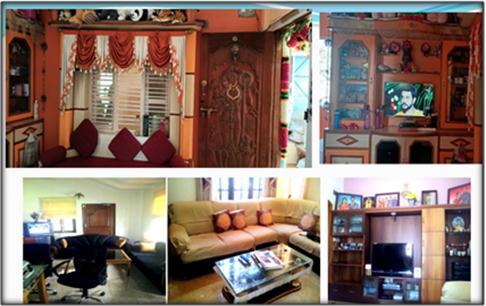
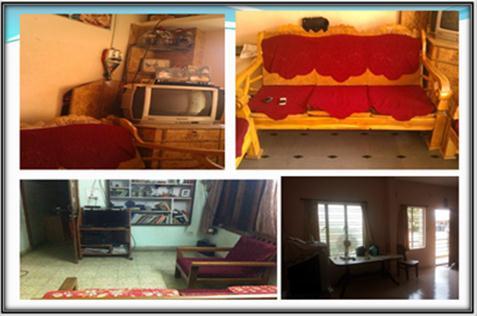
Theentireheatenergy(MJ)thatmaybereleasedby a building's full combustion is known as the total fire load. Currently, two buildings with two bedrooms, a livingspace,akitchen,andabathroomarethoughttobe onasitewithalmostthesamesize.
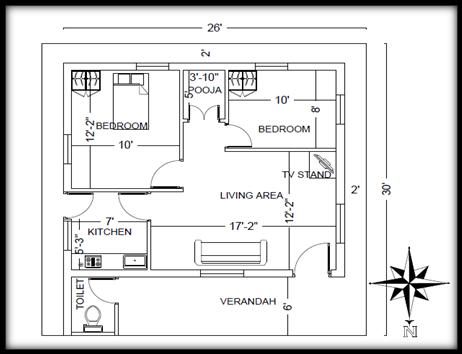
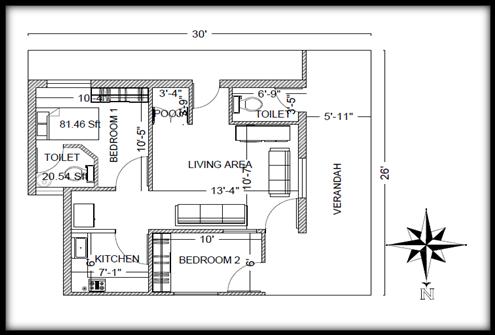
TheobjectiveistocomparefireloadformodernHousewith ConventionalHouseidentifycriticalfirepointsandsuggest energyexitplan.Basedontheliteraturereviewforfireload calculationwehaveadoptedinventorymethod.
Theseassumptionsare:
1. Consistentdistributionofcombustiblesthroughout thestructure.
2. Spreadoffireinallcombustiblematerials.
3. Duringa fire,everycombustible material ina fire celliscompletelyburnt.
4. Fire load can be calculated based on the calorific contents of different materials with mass of combustiblematerials
FireLoad(qc)iscalculatedbasedonEq(1)belowwhichis basedoncombinationofinventoryandweighingmethod.
qc=Mv × Hv…….Eq (1)
Where,
qc =Fireload(MJ/m²)
Mv=Totalmassofthecombustiblematerials(kg)= ×Volume
International Research Journal of Engineering and Technology (IRJET) e ISSN: 2395 0056
Volume: 09 Issue: 07 | July 2022 www.irjet.net p ISSN: 2395 0072
0
4 Cotton foam 15.49 25.15 1.2 467
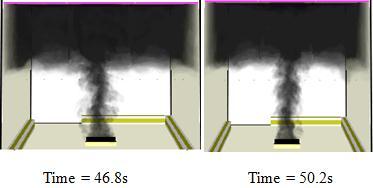
A curved roof structure shows less smoke deposition, indicatingtheeffectofhighmassflow(theareaaroundthe baseoftheflameissmoke free).Roofconstructionmaterials takeadvantageofthehighertemperatureofgasexitingat the roof exhaust due to increased drift in case of height increase.
5 Plastic 35 940 36 1184 400 6 Book 19 10 190 7 TV 25 26 625 8 Paper 20 1201 0.00832 20 9 Gas cylinder 46 1.898 14.94 1304 10 Electric Item 19.6 45 882
11 Cotton 16.01 80 35 4482 8
12 Concret e 7.5 2500 24.84 4657 50
Total Fire Load of Modern Building 2,035,532.962 MJ
Thefireloadcalculationinmodernhouseclearlyshowsthat Wood,ConcreteandPlasticconstituteshighestamongstall the material and constitutes around 93% of the total Fire Load.
Table 4: List of material with fire load calculation of Conventional House
Fig 8: SmokeGenerationwithdifferenttime
Thedataobtainedthroughthemethodsofcalculationwas descriptivelyanalyzed.Followingthedataanalyzecriteria, the fire risk status of the case study buildings was collectivelycomputedusingthematrixfor evaluatingfire risklevel showninTable4.Below,theresultsarepresented.
Table 3: List of material with fire load calculation of Modern House
Sl. no Materia ls Calorif ic Value (MJ/kg )
Density( kg/m3) Total Volume (m3)
Sl. no Materi als Calorific Value (MJ/kg)
Density( kg/m3) Total Volu me (m3)
Fire Load (MJ)
1 Plywoo d 18.9 941.16 2.14 38066. 15
2 Teak wood 20 650 3.86 50180
Fire Load (MJ)
1 Ply wood 18.9 650 7.877 1401 31
2 Teak wood 20 941.16 8.65 1129 34
3 Leather 20 1000 4.2 8400
3 Gunny bags 20.8 924 4 76876. 8 4 Cotton foam 15.49 25.15 0.5 194.78 5 Plastic 35 940 18 59220 0 6 Book 19 10 190 7 TV 25 0.200 72 5.018 8 Paper 20 1201 0.000 832 19.984 9 Gas cylinde 46 1.898 14.94 1304.3 8
International Research Journal of Engineering and Technology (IRJET) e ISSN: 2395 0056
r(2no) 10 Electri cItem 19.6 15 294 11 Cotton 16.01 80 10 12808 12 Concre te 7.5 2500 8.612 1 1,61,47 6.8 13 Clay tiles 2.5 1200 78.04 234,12 0
Total Fire Load of Conventional Building 1,167,735.82 MJ
ThefireloadcalculationinConventionalhouseclearlyshows thatWood,concreteandPlasticconstituteshighestamongst allthematerialandconstitutesaround72%ofthetotalFire Load
18secbasedonaveragevelocityofescapeas2Km/hrand escapingamaximumdistanceof17m
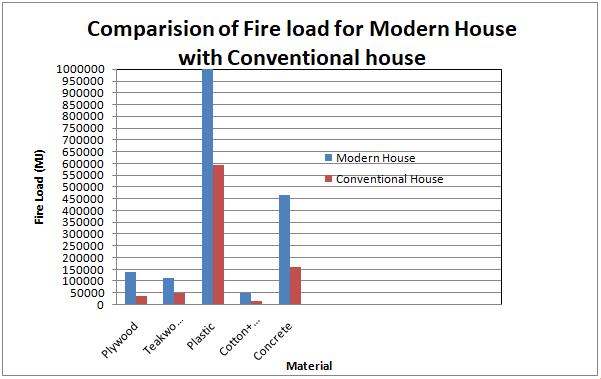
Fig 9: ComparisonofFireLoad
(Fig9)ShowingthatfireloadduetoPlastic,Concreteand Wood is relatively more in modern house compared to Conventionalhouse.
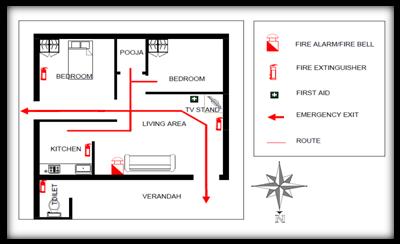
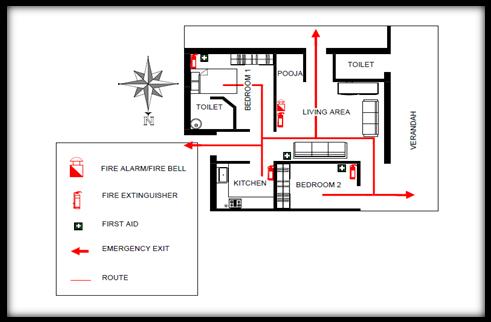
Fireplanshelptoreducethetimeneededtoescape(TNE) fromafiresituation.AreductionoftheTNEcanincreasethe safetymarginfortheoccupantsandpeopleexposedtoafire.
SuggestionstoImproveFireSafetyofBuildings 1. Fireresistantmaterials
The red lines show the path of emergency exit for the modern house in case of emergency. The maximum time neededtoescape(TNE)fromafiresituationiscalculatedas
The red lines show the path of emergency exit for the modern house in case of emergency. The maximum time neededtoescape(TNE)fromafiresituationiscalculatedas 15secbasedonaveragevelocityofescapeas2Km/hrand escapingamaximumdistanceof14m
Based on the above studies following Fire resistance measures(BS4422part2)forthebuildingaresuggestedfor bothconventionalandmodernhouse.
Electrical conductors are needed to be protected thermally.
Use of flame proof switches and fire alarms at critical locations
Use of fire resistance glass which is wired glasses. Wired glassdoesn’tbreakupandisshatter proof.
Useoflessconcreteandreplacingitwithfireresistant alternativeslikehollowblock,tiles(Earth)etc.
Alltypesofwoodproductsshouldcontainfireresistant paints.
Volume: 09 Issue: 07 | July 2022 www.irjet.net p ISSN: 2395 0072 © 2022, IRJET | Impact Factor value: 7.529 | ISO 9001:2008 Certified Journal |
International Research Journal of Engineering and Technology (IRJET) e ISSN: 2395 0056
Itisrecommendedtousefireresistancematerialwith insulationmateriallikeRefrasilcloth(silicafiber),glass fiber,Aramid,Kevlar,Proban.
1. Themainaimofourprojectiscomparisonbetweenold residentialandnewresidentialdrawingrooms.
2. The fire load of a modern residential building is 2,035,532.96 MJ and for the conventional building is 1,167,735.82MJ.Comparingtheconventionalbuilding, Modernresidentialbuildinghavinghigherfireloadthan old.
3. There is an increase of 15% more concrete work in ModernBuildingcomparedtoConventionalBuildingas itusesclaytiles.
4. ItisobservedthatfireloadduetoPlastic,Concreteand Woodisrelativelymorecomparedtootheritems.
5. The critical fire points are 3 in No’s in Modern House (Fig16)and2inNo’sinConventionalHouse(Fig18).
6. Red lines show the path of emergency exit for the CONVENTIONAL and MODERN house in case of emergency.Themaximumtimeneededtoescape(TNE) from a fire situation is calculated as 15sec from conventional house as compared to 18sec in Modern house
7. Fire resistancemeasuresto beadoptedaresuggested forbothconventionalandmodernbuilding
1. Ahrens M Home structure fires. National Fire Protection Association, Quincy Fire and security authority, Non combustible building materials.(2010)
2. Council Inc., p 891G.B. Menon, Commentary on National Building Code (Part 4) Fire and Life Safety(2009).
3. KatterMFirelossintheUnitedStatesduring2009. NationalFireProtectionAssociation,Quincy(2010).
4. KirbyB.R.,“BritishSteelDataontheCardingtonFire Tests,”Technicalreport,BritishSteel,2000.
5. Manish Nigam, Fire Load Calculation on Hospital BuildingsinIndia,IJEDR|Volume4,Issue2|ISSN: 2321 9939©2016
6. NationalBuildingCodeofIndia2016(NBC2016)
7. National building code (Part 4) life and safety, (2005).
8. NBC CODE (Part 4) Annexe A, clause 3.1.8 for calorific values of materials and typical values of fire load densities, table 25 and table 26 , page number 62.(2016)
9. NFPA557,Standardfordeterminationoffireload foruseinstructuralfireprotectiondesign(2020)
10. SESHA PRAKASH N, Manual of Fire Safety of CBS Publishers&DistributorsPvt.Ltd,(2011).
11. ValidationofProtection.ByEhabZalok,Ph.D.,P.Eng. Carleton University Methodologies to Determine FireLoadforUseinStructuralFire,(2009).
Volume: 09 Issue: 07 | July 2022 www.irjet.net p ISSN: 2395 0072 © 2022, IRJET | Impact Factor value: 7.529 | ISO 9001:2008 Certified Journal |