A Case Study of Reducing Waste Electrical and Electronic Equipment Specific Focus on Rewa and Satna
ABHISHEK TIWARI1 , NITIN YEDMEWAR2
1
ABHISHEK TIWARI PG Scholar (Industrial Engg. & Management)2
Nitin Yedmewar (Asst. Prof.)Assistant Professor, Dept. of Mechanical Engineering, Takshshila Institutes of Engineering & Technology, Jabalpur, (M.P) ***
Abstract- The dramatic development in electronic waste (e squander) including end of life electrical and electronic gear has arisen as a significant ecological concern. E waste reusing, which includes an efficient assortment of e waste and its treatment for reusing helpful materials, offers a significant apparatus to limit the raising pile of e waste, supplement the lack of a few essential assets, and back the economy. A comprehensivemethodologyincorporatinggottentothe next level item plan and reusing rate and insignificant emanation of dangerous e waste toxins to the climate is required. In this research, we talk about the valuable open doors and requirements, and procedures for further developed e waste on the board. Further, we feature the new worldwide pattern in the e waste age and give an outline of the e waste reusing process and the effect of e waste toxins on human wellbeing A couple of techniques that can be carried out to make e waste reusing an effective and more secure interaction havebeenexaminedinRewaandSatnacity Forthedata collection, the cycle interview strategy was coordinated. For the underlying three characterizations, 10 respondents were picked and observed results and concerns thought between people about e waste management system and thoughts were gotten from these classes and taken conversed with from few mechanicsandscrapmerchants.
KEYWORDS: E Waste, E waste Management, Recycles, Sustainablee wastemanagement,WEEE,

1. INTRODUCTION
Fastprogressionsinscienceandinnovationchangedthe fields of data and correspondence in the late 20th century,settingoffemotionalchangesinthemodernand financiallandscape,thosehavegoneonintothemid 21st century. Thusly, new Information Communication and Technology (ICT) items and other e items are persistently being presented into the market, and more seasoned items quickly become out of date. The volume of e waste is developing quickly. A new United Nations College(UNU)reportassessedthat46.4MTofe wasteis produced around the world consistently. The UNEP has anticipated that by 2021 the amount of disposed of
PCs will increment multiple times over current levels, and that of disposed of cell phones, multiple times over the year 2007 levels, in India. Electrical and Electronic Equipment (EEE) put available in the area expanded by 10% from 2.9 Mt in 2010 to 3.2 Mt in 2019.The ISRI has announced that, India produces roughly 2.7 million tons of e waste yearly, and that 70% of the complete e waste comes from 10 Indian states[7].What's more, while the worldwide build yearly development rate (CAGR) of e waste is expected to be 24.5% over these thirteen years, the rates for India for the time of 2015 2019[8].
MOTIVATION OF THIS THESIS
ThecasualreusingofWEEEinIndiaseriouslyaffectsthe common territory and the well being of unprotected employeesinthewasteadministrationarea,aswellasin regions promptly encompassing the e waste handling area. Obviously, there is a basic requirement for manageable e waste reusing. Indian administrations have given and authorized regulations also, guidelines forbidding the unlawful importation and casual reusing of WEEEs, and laid out assortment, taking care of, and treatment frameworks for naturally sound reusing. Few investigations on e waste assessment, forecast, and the board have been completed in a couple of years; there havebeenrelativelyrestrictedexaminationsonWEEEin India. Along these lines, in this exploration, we primer assessed the administration of waste electronic and electrical equipment (WEEE) in India. For this hypothesis. It is to sort out how it starts, accumulated, and chose electronic waste to reuse and reuse in Rewa and Satna city, this proposition breaks down the influential factors, which incite how electronic waste changesareanelectronicdevicetobereused.
EFFECTS OF E WASTE ON ENVIRONMENT:
Theharmfulpartscontainedinwastemanagementcount onuponthekindofEEE.Also,theemanationofharmful parts and their subsidiaries into climate is reliant of the technique utilized for handling and reusing. Different metals and natural mixtures are added to the EEE in follow amounts for different purposes, for example, to
grant mechanical backing and strength, upgrade electrical and warm conductance, protection from fire and enduring circumstances, and other added benefits. Being implanted in EEE, these parts force negligible unfriendlyimpactsonhumanwellbeingwhentheEEEis unblemished.Nonetheless,uponoutflowintotheclimate through reusing exercises, for example, destroying, size decrease,andconsumingorwarmingthesegetdelivered intotheclimate.
E WASTE TOXICITY TO HUMAN BEINGS:
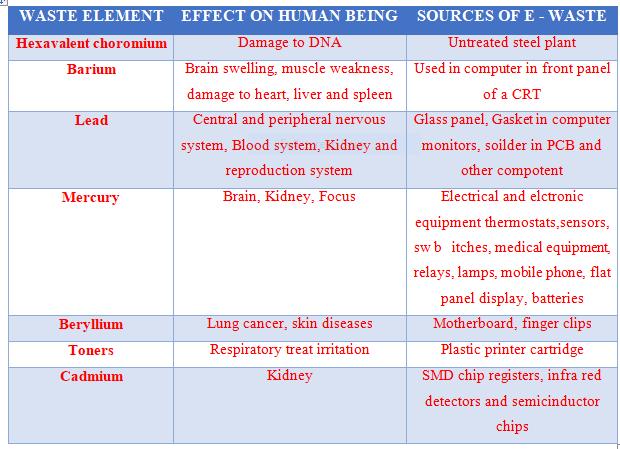
E waste reusing without proper measures to restrict environmentalcontaminationcanchangeitupofnatural and inorganic poisons like weighty metals, polycyclic fragrant hydrocarbons (PAHs), polychlorinated biphenyls (PCBs), brominated fire retardants (BFRs), perfluoroalkyl and polyfluoroalkyl substances (PFASs), polychlorinated dibenzo p dioxins (PCDDs) into the environment which can unfavorably influence human wellbeing. This section talks about openness to e waste poisons and the components of their poisonousness. Epidemiological discoveries featuring wellbeing results in e waste laborers and populace occupying close by areastodestinationsofe wastereusing(generallyinthe casualenvironments)arelikewisegiven.
Table 1. Different Electrical and Electronic devices and produced waste
for extraction of valuable and uncommon earth metals. Inany case, ofwasteisn’t just a wellspring ofimportant materials, yet in addition of an assortment of harmful synthetics transmitted during its handling and reusing. For example, unsafe substances present in waste material (Pb, Hg, As, Cd, PCBs; essential discharge), or those delivered as side effects during handling and reusing(dioxinsandfurans,PAHs;auxiliaryoutflow)are of incredible worry for climate as well as human wellbeing. A comprehensive methodology that incorporates assortment of all classifications of e waste upon end of valuable life and reuse them altogether, so no materials get wasted, is expected for reasonable e wastetheboard[9].
HEALTH CONSEQUENCES OF E-WASTE EXPOSURE
Thewell beingeffectofe wasteopennessonpeoplehas been mostly surveyed through assessing openness and impact biomarkers, and analysis of grimness design among uncovered and control populaces. A thorough record of the well being complications of directness to different poisons related to e waste reusing has been givenbyinaprecisesurvey.Throughevaluatinglevelsof e waste poisons and their subordinates in serum, blood, lineblood,placenta,meconium,andsoforth,ithasbeen recommended that openness to e waste poisons might influence thyroid capacity (as obvious by adjusted degrees of serum thyroid animating chemical, tri iodothyronine furthermore, tetra iodothyronine in the uncoveredgathering(Grantetal.,2013).
MAJOR CHALLENGES IN EFFECTIVE MANAGEMENT OF E WASTE:
Electronic parts, for example, printed circuit sheets, realistic and memory cards, hard drives, and links and connector which are normally utilized in contraptions likePCs andcell phoneshavebeen the favoredhotspots
E WASTE RECYCLING METHODS
In the cutting edge period of fast innovative advances, a lot of e waste has been amassed from the expanded
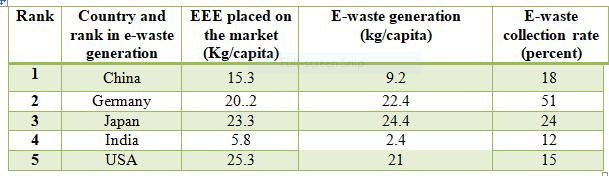
creation of EEE that go to e waste upon the finish of its valuable life. Powerful procedures are required both at the creation stage and after use for earth sound administration of the e waste. Reusing is a significant device to control the rising stacks of e waste; nonetheless, sub par practices of reusing are adding to the increment in the degrees of poisonous contaminations in the environment. The ongoing worldwide pattern in waste the executives (casual handling of 82.6 % of worldwide e waste in 2019) have become unsustainable and require a complex methodology for an all encompassing arrangement. A bettercomprehensionofthee squanderassortmentand thereusingprocessisanimportantinterfacetowardthis path. This segment talks about in a word the proper techniques for e waste assortment and formal recycling processforcollectionofsignificantmetalsfrome waste.
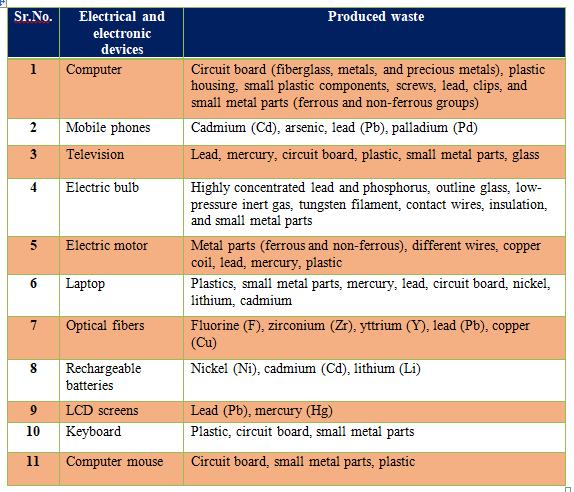
Table 3 E waste contents, its effect and sources
Source:CSE2020
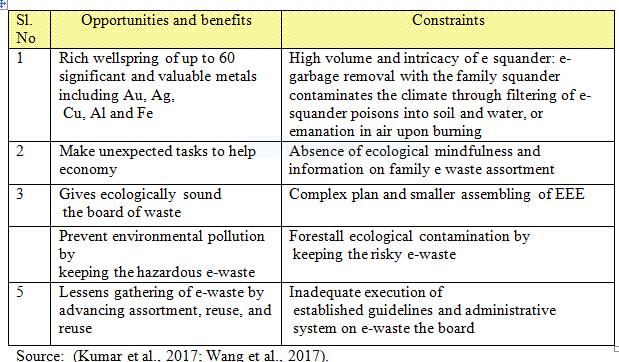
Measure of WEEE and the wide assortment of materials they frequently contain (numerous possibly harmful to the two people and the climate) has zeroed in on how WEEE is dealt with and can be forestalled. The conceivableunfavorablewellbeingandnaturaloutcomes ofinappropriatetreatment andactivityofWEEE(e.g.,in China, India, USA, and so forth) has further touchy conversation corresponding to the administration of WEEE.[10]
Table 4. Opportunities and Limitations of E Waste Framework
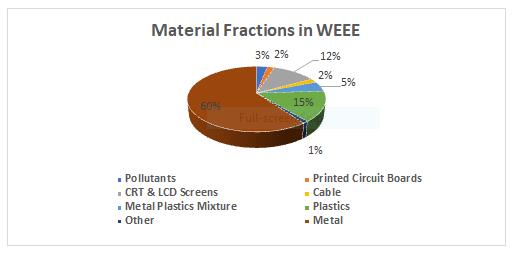
Figure 1: MaterialFractioninWEEE
2. LITERATURE REVIEW
Zhang et al.2012: In this literature review author presentsanauditofsoilpollutioncomingaboutbecause of e squander reusing exercises, with an extraordinary spotlight on China, where numerous pieces of informationhavebeengatheredfor10years.Soilsinthe e waste regions are in many cases debased by weighty metals and natural mixtures, fundamentally polycyclic sweet smelling hydrocarbons (PAHs), polybrominated diphenyl ethers (PBDEs), polychlorinated and polybrominated biphenyls (PCBs and PBBs), dechlorane inadditionto(DP),hexabromocyclododecanes(HBCDs), polychlorinated and polybrominated dibenzop dioxins (PCDDs and PBDDs), and polychlorinated and polybrominateddibenzofurans(PCDFsandPBDFs),This audit features the dire requirements for 1) portrayal of contamination status in every one of the nations where e waste are reused, 2) research on destiny and poisonousness of toxin combinations, and 3) advancementofconsolidatedproceduresandtechniques to remediate farming fields and problem areas of pollution.
Shashi and Sunil (2020). In this research author is portrayed the essential intercessions adjusting existing guidelines which are critical for a reasonable E waste esteem chain, got assets, cultural prosperity, diminished naturaleffectsandingeneralsupportableturnofevents. Besides, the purpose has made critical strides and drafted rules and regulations every once in a while, still an enormous piece of the populace in India knows nothingaboutthetermE wasteanditsadministration
Agarwal Vernika et al. (2020): In this paper, the writer has described that is vital to screen the advancement as well as the disappointments to guarantee all around informed choices are carried out for e squander the executives. Even though, there exist numerous stages exist to manage the e waste issues, however, the idea of Artificial Intelligence can support quicker and more powerful e waste executives. The idea of Artificial Intelligence is generally a more up to date idea which
used different methods for isolation into reusing of e waste.
E WASTE POLICY AND REGULATION
Singh. A et al. (2016) The Policy will resolve all issues goingfromcreationandexchangetoconclusiveremoval, including innovation moves for the reusing of electronic waste. Clear administrative instruments, satisfactory to control both lawful and unlawful products and imports of e squanders and guarantee their naturally solid administration ought to be set up. There is likewise a need to address the provisos in the predominant legitimate edge work to guarantee that e waste from created nations are not arriving at the country for removal. The Port and the Customs specialists need to screen these viewpoints. The guidelines ought to preclude the removal of e waste in civil landfills and empowerproprietorsandgeneratorsofe wastetoreuse the waste properly. Fabricates of items should be made monetarily, genuinely, and legitimately liable for their items Approaches and guidelines that cover Design for Climate and better administration of limited substances might be carried out through measures, for example, Explicititemreclaimcommitmentsforindustry.
RECYCLERS OF E WASTE IN INDIA
FORMAL SECTOR




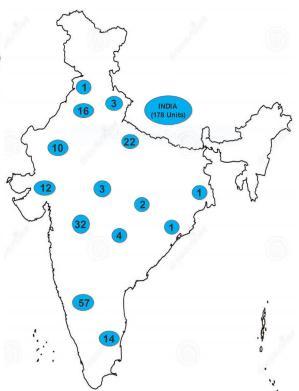
In India, conversely, there are at present 178 conventional e squander reusing/destroying units perceivedbyCPCB,utilizingrobotized,semi robotizedor manual tasks; these are situated in various states as displayed in Fig. 4. They're all out reusing limit announced as "438085.62 MTA" (Metric Ton per Annum)[30].
INFORMAL SECTOR
Observational examinations have shown that on the grounds that disposed of gadgets contain valuable materials like copper, gold, and silver numerous casual reusing yards have jumped up in non industrial nations And the progression of e squander into the casualarea isquickerin nationslikeIndia,asa resultof simpletosetupandworkatalittleprofit[37].
MAIT GTZ (2015): examined that main a little amount (5%)ofe wasteinthesenationscompassestoapproved recyclers, and the excess (95%) is either handled by unapproved recyclers (the casual area) , exchanged, or renovated and afterward offered to distant regions. The rising metal costs have made unapproved e waste reusing one of the job choices, as it offers all gatherings of residents an amazing chance to get involved at different phases of e waste the board. After the e waste is gathered at the ground level (a source station) it is moved to a family studio for arranging and destroying, andsignificantmaterialsandpartsaresold.Thesecasual areas separate every one of the reusable materials, including metals, from the e byproduct, utilizing crude or unrefined techniques. Every one of the remaining materialsisthendisposedofonopenland,orblendedin withotherstrongwaste.
Figure 2: FormalE WasteRecycling/DismantlingUnits inDifferentStatesinIndia(B:178Units)
3. RESEARCH METHODOLOGY
Thestandardofanexaminationistoevaluatehowmuch electronic waste is produced in Rewa with the cooperation of the connected nearby piece merchants. Electrical and electronic waste is similarly an assorted expansion to the rising hazardous waste stream. Electrical and electronic waste is the deficiency of electrical and electronic hardware, which is respectably a flow expansion of destructive waste, is unite fast attention all through the world as the volume made is expanding rapidly. All electrical and electronic gear (EEE), toward the finish of its valuable life, adds to the flow of electronic waste. Yet, the current valuation of measure of EE, waste created in Rewa is a test to communicate a record of e waste in the city regarding restricted and precluded piece retailers. Various techniques for the evaluation of waste have been determined. It has been seen that the real and predictable insights on electrical and electronic waste, the commodity of general and business data of e waste at present isn't accessible in Rewa city. Scarcely any investigations need to expect to recognize the commitment of various nearby piece wholesalers of e waste in the city. The review was led by the field visit andthe assortment of rudimentaryinformationina few issues of the city and upheld by examination and auxiliary information. The device utilized for the study was open finished questions, unapproved and casual inquiries,andconversations.
SURVEYING TECHNIQUE
Toknowthelayoutoftheadvancementandunloadingof electrical and electronic waste, a study should be expected to done in “Rewa and Satna city" province of
MadhyaPradesh.Thereviewprocedurewasactedintwo stagesgivenbelow.
1. Collectionofsecondarydata 2. Primarydatacollection&analysis










SAMPLE SIZE ACCORDING TO CHANGED MARKET LOCATION
Electronic and Electrical item display area proprietor/retailer. Some piece seller/merchant of e waste was additionally evaluated and discoveries are acquired
Portable and embellishments display area proprietor/retailer.
Fortheinvestigationwerecognizedasamplesizeof 10 suppliers from following commercial group according to firm size, owner of showroom, marketplacelikevenders,retaileretc.
SECONDARY DATA:
electrical and electronic correspondence items in Jabalpur city and assess by the estimation with rate utilized domestic device, which is the primary component to the age of electronic waste. The level of the family that has these articles in Rewa is displayed below.
Table 5: Percentage of Household Possessing Different Products

PRIMARY DATA:
The essential information was created by getting sorted out an overview, and likewise, demonstrate what is going on of e waste in Rewa city. In the wake of obtaining the outcome from beneficiary examinations was finished. The review procedure begins through enthusiasm for various display area proprietors/retailers having a few items information. Theseallarearrangedintothreeclassesandoutofevery classification have eight display area proprietors/retailers were chosen and directed a meeting.Theclassesaregivenbelowasfollows.
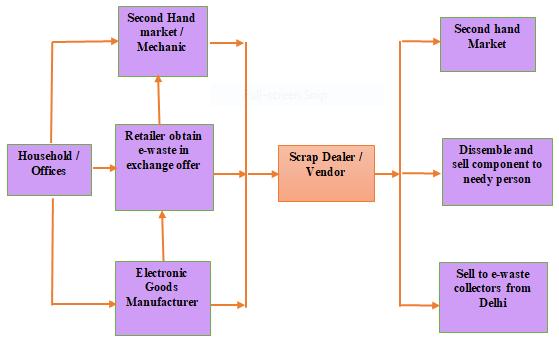
Figure 6: CurrentscenarioofFlowofE wasteinRewa andSatnaCity
Inthismodel correctionwasmadebyintroductiondoor to door collection of e waste by government sanctioned activity and recycling of e waste in government approved reutilizing Centre. In this approach household and retailer are forced to give the e waste generated or collected by them to government authorized activities. This activity will recycle the e waste in environment friendly manner. The scrap dealer is also following the same process as a retailer and the responsibility of government should also offer business support to scrap dealerfortheirsurvival
DATA COLLECTION, ANALYSIS AND RESULTS:
The review conduct fundamentally has three focuses to bedistinguishedwhichare
Responsiveness about electrical and electronic wasteanditsassociationamongmerchants. Usage of item gotten under replaced from purchaser. Idea/proposalaboutwastetheboard. Theresultfromscrapprovidersorretailers.
Further a few unexpected results were gathered which are:
RecyclerofE wasteinRewaandSatna.
Results of survey conducted in an IT firm regardinge wastemanagement
Resultshowingmodelsofe wastemanagementforRewa andSatnacity.
ANALYSIS OF DATA:
Theinformation worriedaboutresponsivenessfromthe variousretailersinterrogatinginregardstoriskyimpact concerning electrical and electronic waste and its association. As indicated by his responses we sorted three gathering retailers as having profound information,shallowinformation,andnoinformation.
Table 6.Understanding & Knowledge among Businesses on e-waste management
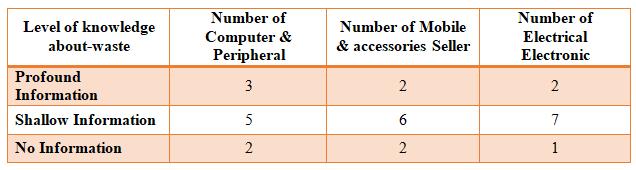
AND PERIPHERAL SELLERS:
ELECTRICAL & ELECTRONIC GOODS SELLER
The finding obtained from Electrical and Electronics supplier is summarized in table and result is shown in graph
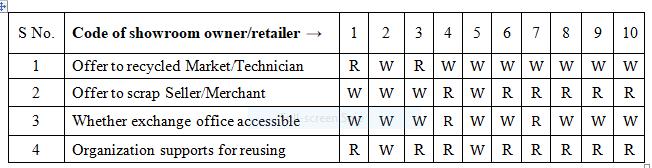


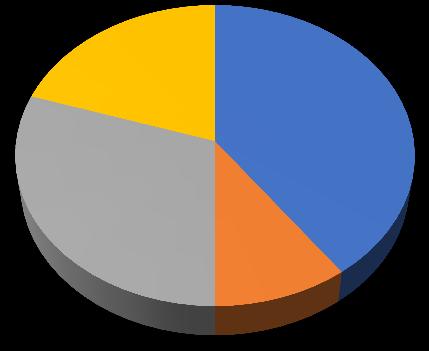
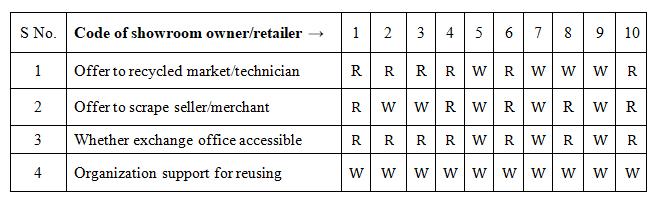
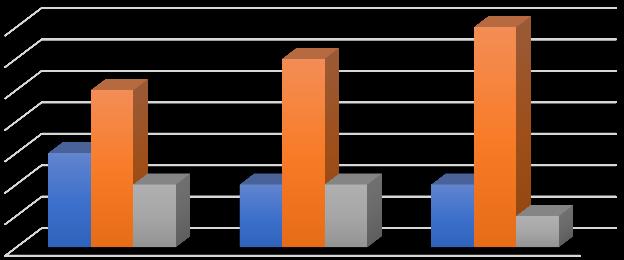
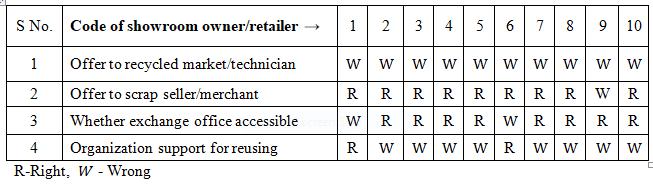
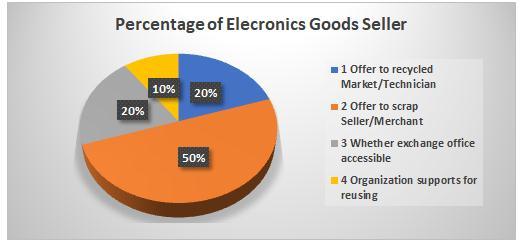
PHONE &
The end accomplished from Cell telephone and extras retailer is explained in table and result is displayed in diagram.
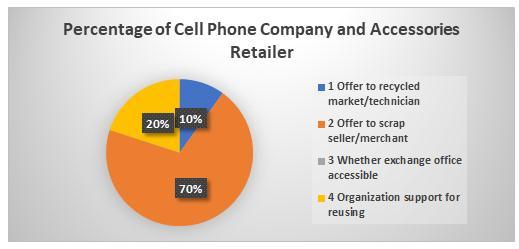
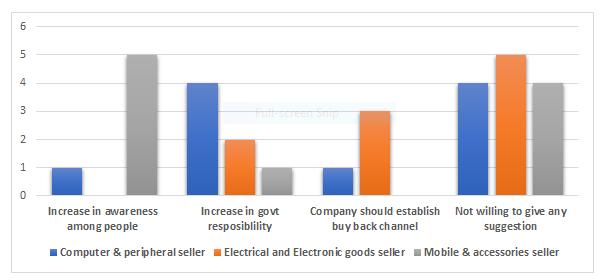
RESULT ON THE BASIS OF SUGGESTION GIVEN BY DIFFERENT PRODUCT RETAILERS:
All through this study, different item retailers convey remarkable explanations and ideas laid out on their experience of e squander. In light of the thoughts table containing not at all like proposals is planned as displayedbeneath.Asdisplayedgivenbelow
waste units do not have adequate infrastructure facility for recycling, which in fact is the second driver of e waste collection. The limitation of the research work is that the numbers of recyclers, gatherers, what’s more, and dismantlers aren’t uniform to draw powerful outcomes.Moreover,thereviewshowsthatlandfillisthe as they were chosen for scrap removal. The casual area rehearses outside burning. The further review should likewise be possible to decide how much e squander is created, gathered, and reused, thinking about variety in the item lifetime and innovation, as anticipated in Quantifyingtheprogressionsofwastecouldhelptowork ontherecuperationofauxiliaryunrefinedcomponents.
5. OUTCOME AND SUGGESTIONS
Figure 11: RateWiseConveyanceofVenderas IndicatedbyTheirIdea
4.CONCLUSION
The quick development and quicker change in modules of electrical and electronic gear are a significant issue thatupgradesthemeasureofe wasteage.Theriskyidea ofe wasteisoneofthequicklydevelopingclimateissues of the world. The mass population of Rewa city spends their cash on buying various sorts of electrical and electronic things to keep up with their superficial point of interest. The essential information gathers from interviews with different monetary classes of families, and different classifications of business elements and foundationsproposethattheageofe wasteinRewacity isgoing to expandstep bystep. Thevastmajorityofthe e waste produced from business elements and organizations usually trade the waste creating things fromtheapprovedorganizationswhichacceptthethings as such under repurchase conspire. Our analysis shows that the absence of familiarity with natural authority is thebestlimitationinthecollectionofwastefollowedby the absence of assortment framework, occupants' conduct, and cost. The most un influencing component tothee wasteassortmentisthedistanceamongageand reusing units. The appropriate investigation further emphasizes that the amount also, kind of e waste is a higher priority than the distance between their organization and the assortment point. The case concentratesonan organization thatgetsjust 10% of e wasteasanalyzedwiththeirreusinglimit.Moreover,the results show that data security is a crucial driver for enhancing e waste collection. It also plays a critical role in building trust between e waste collectors and waste holders. The case study validates it since they have regularcustomersofe wastewhichareconcernedabout data security. The case study further reveals that the e
Inaddition,theoutcomesshowthatinformationsecurity is an urgent driver for improving e waste assortment. It additionally assumes a basic part in building trust between e waste authorities and waste holders. The contextual investigation approves it since they have normal clients of e waste who are worried about information security. The contextual investigation further uncovers that the e waste units don't have sufficient foundation offices for reusing, which truth be told is the second driver of e waste assortment Moreover, the research work shows that a landfill is an optionforscrapdisposal.Itisseenthatthevastmajority ofthepopulaceheredoesn'tknowaboute wasteandits unsafe effect on human well being and climate. for example, the e waste ought not to be found on our premisesandweare notlegitimatelybotheredabout its disposal and it's the effect on the nearby open. The record of e waste age should be kept up with by the Municipal Corporation ofthecityandawareness raising projects and exercises on issues connected with the ecologically strong administration (ESM), wellbeing and security parts of e waste to support better administration practices ought to be executed for variousobjectivegatheringsandonmasspremises
TheIndiangovernmentoughttointhismannertakethe drive to channelize e waste to formal recyclers, as 95% of e squander goes to the casual area. It will help recyclerstogetanadequateamountofe waste,whichis basictothereusingorganization.
REFERENCES
1. S. L. Adigun. (2012) ‘Humanitarian challenges and opportunities’, IEEE Global humanitarian technologyConference,pp.66 70.
2. D.S. Khetriwal, P. Kraeuchi, M. Schwinger. (2005) ‘A comparison of electronic waste recycling in Switzerland and in India’, Environmental Impact Assessment Review, Elsevier ScienceDirect25,pp.492 504.
International Research Journal of Engineering and Technology (IRJET) e ISSN: 2395 0056 Volume: 09 Issue: 07 | July 2022 www.irjet.net p ISSN: 2395 0072
3. E waste statistics Guidelines on classification, reportingandindicators.(2015)‘UnitedNations University, IAS SCYCLE, Bonn (Germany)’, 51 pages (ISBN Print: 978 92 808 4553 2) (with C.P.Balde).
4. R. Widmer, H. Oswald Krapf, D., Sinha Khetriwal, M. Schnellmann and H. Böni. H. (2005) ‘Global perspectives on e waste,’ Environmental Impact Assessment Review’, vol. 25,pp.436 458.
5. WangYLuoC,Li,J.,H.,Li,X.,&Zhang,G.(2011) ‘Characterization of PBDES in Soils and vegetation n site near an e waste recycling site in China’, Environmental Pollution, 159(10), 2443 2448.
6. UNEP. Sustainable Innovation and Technology Transfer Industrial Sector Studies Recycling from E waste to Resources; 2009.(https://unu.edu/media relations/releases/un publishes first regional e waste report for commonwealth of independent states and georgia.html)
7. ISRI 2015. E SCRAP BEAT, Your Source for ESCRAP Recycling news, updates & trends, Institute of Scrap Recycling Industries, Inc., (http://www.isri.org/docs/default source/electronics recycling newsletter/escrapbeat winter 2015.pdf)
8. Nandi J. Electronic companies and pollution boards flout e waste rules: Report.1 July2014. http://timesofindia.indiatimes.com/home/envir onment/pollution/ Electronic companies and pollution boards flout e waste Report/articleshow/37584922.cms;2014.
9. Orlins, Sabrina; Guan, Dabo (2016). 'China's toxic informal e waste recycling: local approachestoaglobalenvironmentalproblem’,
10. JournalofCleanerProduction,Vol.114,p.71 80.
11. Ongondo, F.O, Williams, I.D, Cherrett. T.J, Kidlington: Elsevier Ltd. (2011) ‘Waste management(Elmsford)’,Vol.31(4),p.714 730.
12. Kai Zhang., Jerald L., Schnoor Eddy Y. Zeng. (2012) ‘E Waste Recycling: Where Does It Go from Here?’, American Chemical Society (ACS) 46,10861 10867.
13. D de Oliveira., José Francisco de Oliveira Neto. Maisa Mendonça Silva. (2020) ‘E Waste
Mistakenly Disposed of as Recyclable Waste’ A casestudyfromBrazil.
14. Wang. Z. Zhang, B. Yin, J. Zhang, X. (2011) ‘Willingness and behavior towards e waste recycling for residents in Beijing city, China’, Journal of Cleaner Production19 (9 10), 977 984.
15. Hua Zhong, (2014), ‘Design for E waste Recycling Deposit System and Expense MechanisminChina’,IntechEurope.
16. Jian, Li. Shanshan, Z. (2010) ‘Study e waste management based on EPR System’, International Conference on E Business and E Government.
17. Wang, Wenhua,.Tian, Yihui,. Zhu, Qinghua,.Zhong, Yongguang(2017).'Barriers for household e waste collection in China: Perspectives from formal collecting enterprises in Liaoning Province’, Journal of cleaner production,153(),299 308.
18. Ackah. M. (2017) ‘Informal E waste recycling in developing countries: review of metal (loid)s pollution, environmental impacts and transport pathways' Environmental science and pollution research’,24(31),24092 24101.
19. Kumar.S. Singh,R.Singh,D.(2013)‘Electronics waste Management' International Journal of Environmental Engineering and Management ISSN2231 1319’,Volume4,Number4,pp.389 396.
20. Ghanshyam Singh, S, Biswas, A. (2020) ‘E waste Management in India: Challenges and Agenda, CentreforScienceandEnvironment’,(CSE).
21. Singh. A., Pancha. R., Naik. M. (2020) ‘Circular economy potential of e waste collectors, dismantlers, and recyclers of Maharashtra: a case study’, Environmental Science and PollutionResearch.
22. Tiwari. D. Dhawan. N. (2014) ‘International Journal of Environmental Research and Development’, ISSN 2249 3131 Volume 4, Number3,pp.253 260.
23. Singh.A, Gaurav.N, Verma.R, Garg.K (2016).'Primary inventorization of electronic waste in Rewa Madhya Pradesh’, Journal of medicinalplantsstudies,.vol,4(5),p.86 91.
International Research Journal of Engineering and Technology (IRJET) e ISSN: 2395 0056 Volume: 09 Issue: 07 | July 2022 www.irjet.net p ISSN: 2395 0072
24. Kumar. R. Verma, A. Rajput, N. (2017) ‘E waste management in India formal vs. informal sectors’, International Journal of Recent Advances in Multidisciplinary Research Vol. 04, Issue08,pp.2720 2726.
25. Arya.S. Kumar,S. (2020) ‘E wasteinIndiaata Glance: Current Trends, Regulations, Challenges and Management Strategies’, Journal of Cleaner Production.
26. Wang W. Tian Y. Zhu Q. Zhong Y. (2017) ‘Barriers for household e waste collection in China: Perspectives from formal collecting enterprises in Liaoning Province’, Journal of CleanerProduction,Ref:JCLP9329.
27. Neha Garg. (2019) ‘E waste management in India:astudyofcurrentscenario’,International Journal of Management, Technology and EngineeringVolume9,2791 2803.
28. Maria Ceballos, D. and Dong. Z. (2016) ‘The formal electronic recycling industry: Challenges and opportunities in occupational and environmental health research’, Environment International,95,157 166.
29. Unger.N.Beigl.P.Höggerl.G.Salhofer.S.(2017) ‘The greenhouse gas benefit of recycling waste electrical and electronic equipment above the legal minimum requirement’, Journal of Cleaner Production,164,1635 1644.
30. A. Jayapradha. (2015) ‘Scenario of E waste in India and application of new recycling approachesforE wastemanagement’,Journalof Chemical and Pharmaceutical Research, 7(3):232 238.
31. Central Pollution Control Board. List of Registered E Waste Dismantler/Recycler in the country, Central Pollution Control Board, New Delhi; 2014. 〈http://cpcb. nic.in/List_of_E waste_Recycler_as_on_29.12.2016.pdf〉 [Accessed20January2017].
32. Anon (2018). ‘Electrical & Electronics ManufacturinginIndia’,NECTechnologiesIndia Private Limited and Associated Chambers of CommerceofIndia(ASSOCHAM).
33. Agarwal, V. Goyal, S. Goel. S. (2020) ‘Artificial Intelligence in Waste Electronic and Electrical Equipment Treatment: Opportunities and Challenges’, International Conference on
Intelligent Engineering and Management (ICIEM),526 529.
34. UNEP. Sustainable Innovation and Technology Transfer Industrial Sector Studies Recycling from E waste to Resources; 2009 (https://unu.edu/media relations/releases/un publishes first regional e waste report for commonwealth of independent states and georgia.html)
35. ISRI 2015. E SCRAP BEAT, Your Source for ESCRAP Recycling news, updates & trends, Institute of Scrap Recycling Industries, Inc.,( http://www.isri.org/docs/default source/electronics recycling newsletter/escrapbeat winter 2015.pdf)
36. Grant, Kristen; Goldizen,Fiona C; Peter D; Brune,Marie Noel; Neira,Maria; van den Berg,Martin; Norman Rosana E(2013).'Health consequences of exposure to e waste: a systematic review’, The Lancet Glob Health, 1(6),e350 e361.
37. Li J, Yu K, Liu L. (2009). 'Implementation of Progress of China WEEE’, Asia Electrical and Electronic Green Society International Conference,Bangkok,Thailand,20 25;
38. MAIT GTZE WasteAssessmentinIndia:Specific Focus on Delhi; 2007. 〈http://weeerecycle.in/publications/reports/G TZ_MAIT_ewaste_Assessment_Report.pdf〉 [Accessed23March2015].