International Research Journal of Engineering and Technology (IRJET) e ISSN: 2395 0056

Volume: 09 Issue: 07 | July 2022 www.irjet.net p ISSN: 2395 0072
Integrated Health App
Namratha V Patil 1 , Ayaan Beig2, Aman Doshi 3 ,Bhaskar K H4 , Prof. Divakara N5
1,2,3,4 BTech. Student, JSS Science and Technology University, Mysore, Karnataka, India 5Assistant Professor, Sri Jayachamarajendra College of Engineering, Mysore , Karnataka, India ***
Abstract - Integrated health apps are accessible to users at all the time and at all the places. Health apps have become a part of the movement towards mobile health programs inhealth care.Our proposedwork isto develop an Integrated Health Application to create a convenient and easy to use application for users. Our application can replace the current system in addition to a couple of extra features. The scope primarily consists of three health features. It includes functionalities like Heart Disease Prediction using ML, Skin Cancer Classification using Deep Learning and Tracking and notifying about real time Covid 19vaccineavailability.
Key Words: Heart Disease, Skin Cancer, Covid 19, React Native, SVM, CNN
1. INTRODUCTION
We are building an Integrated Health Application to create a convenient and easy to use application for users, ourapplicationcanreplacethecurrentsysteminaddition toacoupleofextrafeatures.Inourintegratedappwehave aimed at Tracking and notifying about real time Covid 19 vaccine availability along with Heart Disease Prediction System using ML and Skin Cancer Classification using DeepLearning.
This app provide users, information about availability of vaccine doses in the particular district/city or area with givenpincodeandtheagegrouponaparticulardate.The results will show the vaccination centers related to the searchwiththenumberofdosesleft,whetheritispaidor freeifitisopentoallagegroupsetc.Theuserscancontrol thenotificationandalerts. Further,the usercanviewthe location of vaccination centers on the map which are indicatedbythepins,andalsodownloadcertificatesusing mobilenumberandreferenceid.
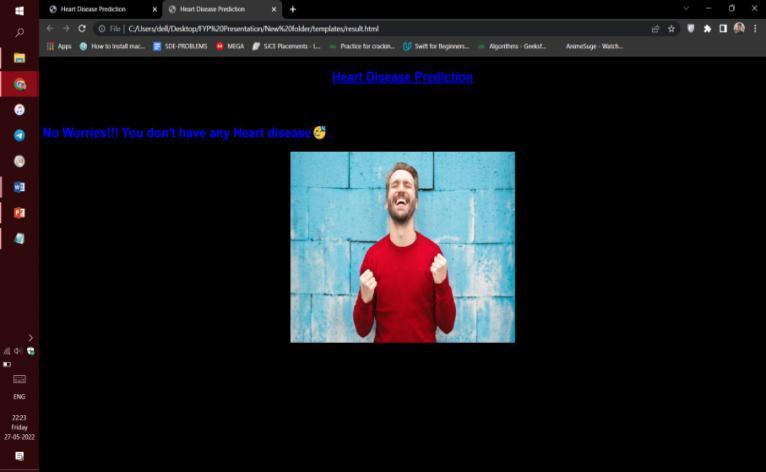
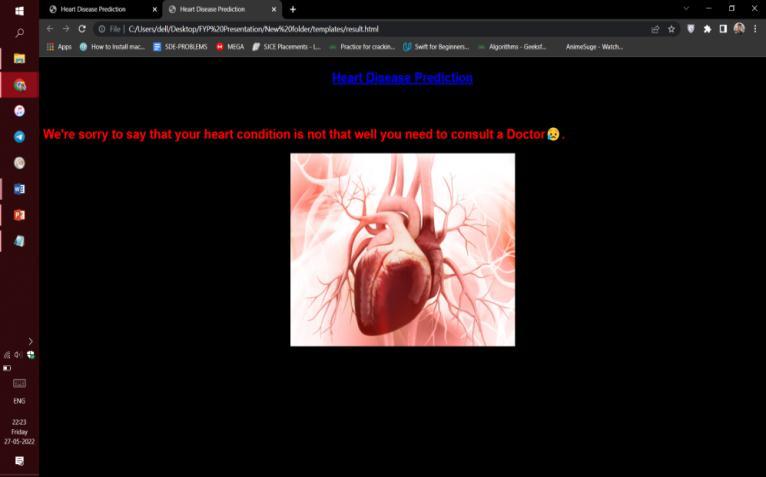
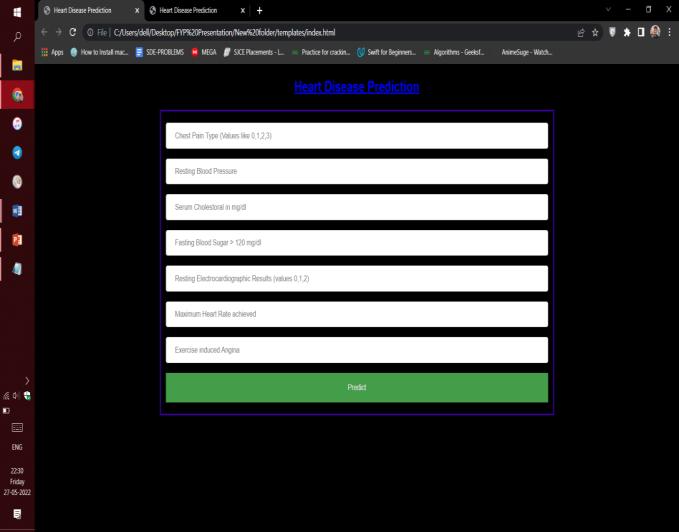
Thisappisdesignedtodetectwhetherthepatient hasheartdiseaseorhadsufferedfromaheartattackusing the data from blood tests, ECG reports, and general information.
Further the app can detect if the person is suffering from skin cancer using the image clicked by the user and further classify the type of skin cancer. This app helps in lifesavingandfastdiagnosesofskincancer
2. LITERATURE SURVEY
IntheworkdonebyThomasJ.andPrincyR.Tin2016, “Human Heart Disease Prediction System using Data Mining Techniques"[4], two classifiers KNN and ID3 were used wherein KNN approach outperformed the ID3 approach in terms of accuracy by having accuracy of 80.6%.Butthisworkhasthelimitationofselectionoffalse attributesandthereisnoreal timeprediction.
In the work of Ahmed F. Otoom in 2015 titled “Real Time Monitoring of Patients with Coronary Artery Disease”[5],pulsesensorisusedformonitoringtheheart rate and sends it wirelessly to a mobile device via an arduino microcontroller, three classifiers as BayesNet, SVM, and FT are used where in SVM is the most accurate with88.3%accuracytobuildthemodel.
Inthepapertitled“EstimationofPredictionforGetting HeartDiseaseUsingLogisticRegressionModelofMachine Learning”, Montu Saw, Tarun Saxena, Sanjana Kaithwas, Rahul Yadav, Nidhi Lal [6] have applied Naive Bayes and Logistic Regression and have compared the results. They have concluded that logistic regression gives the highest accuracy of 86.88% and has outperformed other model likeNaiveBayeswithaccuracy86.
In the paper titled “Design and Development of Real Time Heart Disease Prediction System for Elderly People Using Machine Learning by Viswanath Reddy and Guttappa Sajjan” [1] have worked collectively to create a uniquesystemandthatcanhavethemonitoringaswellas predicting the disease at the early stage. They have implementedvariousmachinelearningalgorithmssuchas Support Vector Machine, Decision Tree Model , Random Forest and compared the results which shows that SVM gives the highest accuracy of 85.71 has outperformed all othermodelslikeDecisionTreeModelhavinganaccuracy of83.92andRandomForestwithaccuracy84.61.
In the paper titled ‘Heart Disease Prediction System UsingRandomForest’,YeshvendraSingh,NikhilSinhaand Sanjay Kumar Singh [7] have exploited the non linear tendencyofheartdiseasedatasettoapplyRandomForest. They have concluded that Random Forest gives an accuracy of 85.81%. By the proposed algorithm for heart diseaseprediction,manylivescouldbesavedinthefuture.
International Research Journal of Engineering and Technology (IRJET) e ISSN: 2395 0056
Volume: 09 Issue: 07 | July 2022 www.irjet.net p ISSN: 2395 0072
Inthework“Anintelligentformonitoringskindisease” done by Pollap D[8], has proposed a method of clustering image using navi for classification. They have used the SIFTmethodfordetectionofkeypointsintheimage.After that they have used CNN and SVM for classification and segmentation. They have an accuracy of 84% and a precisionof82%.
In the work “Segmentation and classification of skin lesions for disease diagnosis” [9] done by Sumitra, has proposed a method for detection of disease by using the combination of SVM and KNN algorithms. They used segmentation and classification methodology to get the accuracyof61%.
In the work done by Menzis, frequency and morphologic characteristics of invasive melanomas lackingspecificsurfacemicroscopicfeatureshasproposed SVM classifier based model for identification of melanomas. They used color feature and texture feature extractiontogetaccuracyof75%[4].
We limited our review to skin lesion classification methods.Inparticular,methodsthatapplyaCNNonlyfor lesion segmentation or for the classification of dermatoscopic patterns as in Demyanov et al [10][3] are notconsideredinthispaper.
Furthermore, only papers that show a sufficient scientific proceeding are included in this review. This latter criterion includes presenting the approaches in an understandable manner and discussing the results sufficiently.
3. PROPOSED WORK
An integrated android health application is built with the followingfunctionalities.
● HeartDiseasePredictionSystemusingML
● SkinCancerClassificationusingDeepLearning
● Tracking and notifying about real time Covid 19 vaccineavailability.
The technology that is being used to build the mobile application is React Native. React Native is a JavaScript framework for writing real, natively rendering mobile applications for iOS and Android. It’s based on React, Facebook’s JavaScript library for building user interfaces, but instead of targeting the browser, it targets mobile platforms. In other words: web developers can now write mobile applications that look and feel truly “native,” all from the comfort of a JavaScript library that we already knowandlove.
To implement the ML feature for heart disease detection and skin cancer detection, we have used information such as blood tests report, ECG reports, and generalinformation
To consider the skin cancer detection feature the images that were used in the dataset are taken from Kagglewhichisanonlinecommunityofdatascientistsand machinelearningpractitioners
Table 1:Modulesintheapp
Module Name Statement of the Objective Resource Utilized
Vaccination availability Toprovideusers, informationabout availabilityofvaccine dosesintheparticular district/cityorareawith givenpincodeandthe agegroupona particulardate.
Heartdisease prediction Todetectwhetherthe patienthasheartdisease orhadsufferedfroma heartattackusingthe datafrombloodtests, ECGreports,andgeneral information.
Skincancer prediction Todetectifthepersonis sufferingfromskin cancerusingtheimage clickedbytheuserand furtherclassifythetype ofskincancer.
3.1.1 Vaccine Availability
React Native
Variousmachine learning algorithmslike SVM,Naïve Bayes,Random forest,Simple Logistic,ANN.
Google Colab, Convolution NeuralNetwork withkeras tensorflow
The application would use the data from the government run API provider and the filtering is done basedonthepincodeandselectingacombinationofstate anddistrict.Thedatecanbeselectedfromthedatepicker and the age category using the radio buttons. As the vaccines are recognized only for 18+ age groups, we will havethecategoriesof 1) 18 44
International Research Journal of Engineering and Technology (IRJET) e ISSN: 2395 0056
Volume: 09 Issue: 07 | July 2022 www.irjet.net p ISSN: 2395 0072
Onsuccessfulsearch,thecenters'listisdisplayedwith eachcard havinga togglebuttonatthecornerwhichwill addthecenterintothewishlist.Clickingthecardwilltake ustothepagewhereitshowsthecompleteaddressofthe
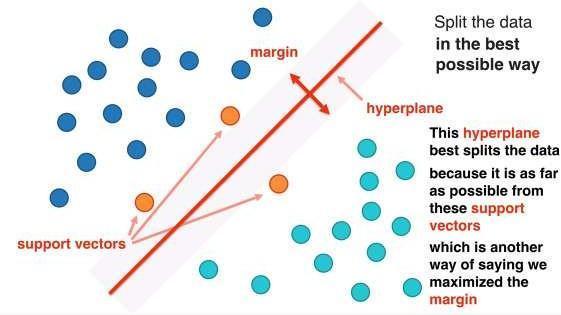
margin between two classes. The vectors that define the hyperplane are the support vectors. Usage of the SVM for data set classification has its own advantages and disadvantages.Medicaldatasetscanbenon linearofhigh dimensionality by observing properties. It is clear that SVMwouldbeoneofthefavoritechoicesforclassification
ItisclearthatSVMwouldbeoneofthefavoritechoices forclassification.SomeoftheadvantagestoselecttheSVM forclassificationchoice..Firstly,regularizationparameters whichavoidproblemofoverfittingwhichoneofthemajor challenges is in decision tree and Kernel tree is used to avoid the expert knowledge through the knowledge of kernel
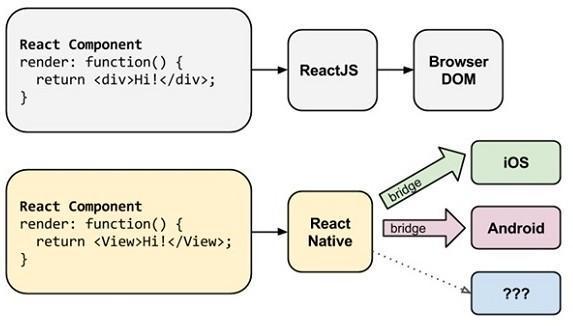
Fig 1:WorkingmodelofReactNative
Vaccination center, the number of doses available, age group allowed, approx. distance from the location of the user to the center. The direction button will lead us to google maps navigation to the vaccination center. The users have the access to the notification control center where the alerts/ notifications can be switched to on/off. The user has the privilege to select whether the app should fetch details of all the centers in the pin code/district to give alerts or the centers in the wish list which can be customized by using the toggle button. The frequency of alerts (fetching details) and the sleep time canbecustomizedusingthisactioncenterusingtheslider component.Oncethealertsaretoggledon,thedevicewill automatically fetch the details according to the preferencesandfrequencyset.
3.1.2 Heart Disease Prediction
Machine learning is all about developing mathematical,computational, and statistical methodologies for finding patterns in and extracting insightfromdata.Theaimofmachinelearningresearchin healthcare is not, of course, to replace human doctors or nurses, but rather to supplement and provide support where humans struggle. By doing precisely what humans can’t, namely processing huge amounts of data quickly, machine learning methods can both improve the quality andconsistencyofcareonalargescale.
Support Vector Machine (SVM): An SVM performs classificationbyfindingthehyperplanethatmaximizesthe
Fig -2:classificationforheartdiseaseprediction
3.1.3 Skin Cancer Prediction
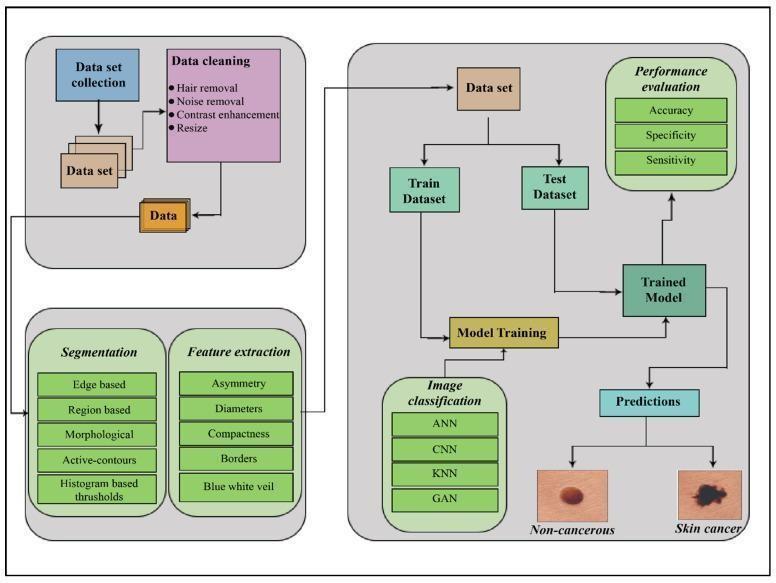
Skin cancer is the most common human malignancy, is primarily diagnosed visually, beginning with an initial clinicalscreeningandfollowedpotentiallybydermoscopic analysis, a biopsy and histopathological examination. Automated classification of skin lesions using images is a challenging task owing to the fine grained variability in theappearanceofskinlesions.
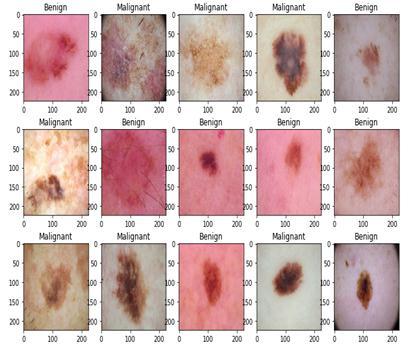
The dataset is taken from the ISIC (International Skin Image Collaboration) Archive. It consists of 1800 pictures of benign moles and 1497 pictures of malignant classified moles.Thepictureshaveallbeenresizedtolowresolution (224x224x3) RGB. The task of this kernel is to create a model, which can classify a mole visually into benign and malignant which corresponds to the type of cancer. It detects two different classes of skin cancer i.e Benign and Malignant
Inthiskernelwewilltrytodetecttwodifferentclassesof moles using Convolution Neural Network with keras tensorflow in backend and then analyze the result to see howthemodelcanbeusefulinapracticalscenario.
Fig 3:Skincancerprediction.
4. SNAPSHOTS OF RESULTS
Fig 7: Resultantimagesof skincancerpredictionsystem
5. CONCLUSIONS
Manymedicalapplicationsforsmartphoneshavebeen developed and widely used by health professionals and patients.Theuseofsmartphonesisgettingmoreattention in healthcare day by day. We have developed an Integrated Health Application to create a convenient and easy to useapplicationforusers.Inourintegratedappwe have aimed at Tracking and notifying about real time Covid 19 vaccine availability along with Heart Disease PredictionSystemusingMachineLearningalgorithmsand Skin Cancer Classification using Deep Learning algorithm. The results obtained are proved to be of more than 90% accuracy.
ACKNOWLEDGEMENT
It gives us immense pleasure to write an acknowledgement to this project, a contribution of all the people who helped to realize it. We extend our deep
International Research Journal of Engineering and Technology (IRJET) e ISSN: 2395 0056
Volume: 09 Issue: 07 | July 2022 www.irjet.net p ISSN: 2395 0072
regards to Dr. S.B. Kivade, Honourable Principal of JSS Science and Technology University, for providing an excellent environment for our education and his encouragementthroughoutourstayincollege.
We would like to convey our heartfelt thanks to our HOD,Dr.M.P.Pushpalatha,forgivingustheopportunityto embark on this topic. We would like to thank our project guide, Prof.Divakara N for their invaluable guidance and enthusiastic assistance and for providing us support and constructivesuggestionsforthebettermentoftheproject, withoutwhichthisprojectwouldnothavebeenpossible.
Weappreciatethetimelyhelpandkindcooperationof our lecturers, other staff members of the department and our seniors, with whom we have come up all the way during our project work without whose support this project would not have been a success. Finally, we would liketothankourfriendsforprovidingnumerousinsightful suggestions. We also convey our sincere thanks to all thosewhohavecontributedtothislearningopportunityat everystepofthisproject.
REFERENCES
[1] Viswanath Reddy and Guttappa Sajjan, “Design and Development of Real Time Heart Disease Prediction System for Elderly People Using Machine Learning”, August2019.
[2] Davide Chicco and Giuseppe Jurman, “Machine learning can predict survival of patients with heart failure from serum creatinine and ejection fraction alone”, in the journal of Chicco and Jurman BMC MedicalInformaticsandDecisionMaking,03February 2020.
[3] Titus Josef Brinke et al, “Skin Cancer Classification using Convolutional Neural Networks: Systematic Review” (Preprint), Journal of Medical Internet Research (http://www.jmir.org), 17.10.2018. August 2018.
[4] Diwakar Gautam and Mushtaq Ahmed “Melanoma DetectionandClassificationUsingSVMBasedDecision Support System”, Conference Paper. December 2015 DOI:10.1109/INDICON.2015.7443447
[5] Ahmed F. Otoom, Ahmed Kefaye, Mohammad Ashour, Yousef Shanti, and Mohammad Al Majali , “Real Time MonitoringofPatientswithCoronaryArteryDisease”, International Journal of Future Computer and Communication,Vol.4,No.3,June2015
[6] Montu Saw, Tarun Saxena, Sanjana Kaithwas, Rahul Yadav,NidhiLal.“EstimationofPredictionforGetting Heart Disease Using Logistic Regression Model of
Machine Learning”, International Conference on ComputerCommunicationandInformatics(ICCCI)
[7] Yeshvendra Singh, Nikhil Sinha and Sanjay Kumar Singh, ‘Heart Disease Prediction System Using Random Forest’, International Conference on Advances in Computing and Data Sciences, July 2017,DOI:10.1007/978 981 10 5427 3_63
[8] Dawid Połap , Alicja Winnicka, Kalina Serwata, Karolina K˛esik and Marcin Wo´zniak, “An intelligent formonitoringskindisease”,Sensors2018,18,2552
[9] R.Sumithra,Mahamad,Suhil and D.S.Guru, “Segmentation and classification of skin lesions for disease diagnosis”, International Conference on Advanced Computing Technologies and Applications (ICACTA2015)
[10] Demyanov et al, “Classification of dermoscopy patterns using deep convolutional neural networks”, IEEE 13th International Symposium on Biomedical Imaging,2016