Critical Success Factors and Strategies for Sub-contractorManagement in Infrastructure Projects
Akhilesh GandhiAssistant Professor, Jaypee University of Information Technology ***

Abstract With complexities involved in construction projects continuously on a rise, the role of subcontractors has become crucial for the successful execution of these projects. This paper tries to examine the current subcontractor management system adopted by general contractors. A case study approach was adopted for the sameand3projects baseduponcontract value are selected. In the second phase, throughliterature review and expert opinions, critical factors affecting the performance of subcontractors were identified and rankedbased on their relative importance. Lastly, interviews with experts working as industry leaders were conducted to understand thevariousstrategieswhichcanbeadoptedto improvethe performanceofsubcontractorsinaproject.
Key Words: Vendor Management, Supply Chain Management, Construction Management, Sub contractor Management.
1. INTRODUCTION
Each construction project possesses a unique characteristicintermsofengineeringandconstruction.To deal with the arising complexities of projects, general contractors must either develop in house expertise for each construction activity or sub let the work to a sub contractor. The option of sub contracting generally emerges to be more profitable and sustainable in the market. While the general contractor is responsible for the overall success or failure, sub contractors are deployedtoperformspecifictasksunderthesupervision of the general contractor without any obligation to the client. In countries like Hong Kong, United Kingdom researchers have arrived at a consensus that sub contracting of activities in a project helps the general contractorstoreducethecostandresourcesrequired[1]. However,sub contracting,incertaincaseshasalsoproved to befatal in the success of a project. According to [2] , poor subcontractor performance is a major reason for delaysand poor quality of work in construction projects. In Malaysia and UAE, poor subcontracting is found to be amongthetopfivereasonscontributingtoprojectdelays [3]. With global spending in the construction sector projected to reach $17.5 Trillion by 2030, it becomes important for the general contractors to maximize the performance of sub contractors in a project. In order to achieve the same general contractors, need to focus on factors or uncertainties that might impact the
performance of a sub contractor. Along this line, the objectiveofthisstudyisto:
a. To understand the sub contractor management systemadoptedbygeneralcontractorsinconstruction projects.
b. Identifythecriticalfactorsaffectingperformanceofsub contractorsinconstructionprojects.
c. Tostaticallyanalysetheidentifiedfactorsandrankthe factors based upon their impact on sub contractor performance.
d. Toidentifythestrategieswhichcanbeadoptedinthe industry to counter the challenges encountered in managementofsub contractors.
2. RESEARCH METHODOLOGY
A mixed research methodology was adopted to conductthe study. The study was conducted in four phases. Firstly, a literature review was conducted to identify the factor’s affecting performance of sub contractors in construction projects.Inthesecondphase,aqualitativeresearchtechnique was adopted to understand the applicability of identified factors. In this direction, fiveinfrastructure projects were shortlisted. The criteria for selection of projects are mentionedbelow:
1. The Project has major amount of work being carriedoutbysub contractor
Value of the project is greater than 500 Cr.In the third phase of the study, interviews were conducted with the relevant professionals from the projects. The objective of these interviews was to understand the sub contractor management system adopted by the stakeholders and applicability of the identified factors in context of Indian construction industry. (Patton, 2002) suggested that sample size inqualitative research should be determined bytheconceptofsaturationandcanbelimitedtobetween five to fifty interviews depending upon the interview content. In the present study to avoid biased results from the interviews representatives from the side of General contractor, Sub contractor and Client were interviewed. Saturation was observed in the Tenth interview, further onemoreinterviewwascarriedout.4 General contractors, 4 Subcontractors, and 3 clients were interviewed. The
Volume:09Issue: 07| July 2022 www.irjet.net p-ISSN:2395-0072
selection was made based on position in the organization and experience of theindividualinproject management.Theinterviewswerecarried out personally and the duration of each interview varied from 45 minutesto1hour.
Further to quantitatively assess the identified factors, a questionnaireapproachwasadopted.Thequestionnaire designedforthisstudyhad2sections.1stsectionincluded questions related to demographic information of the respondent. The 2nd section of the questionnaire included questions related to identifiedfactors affecting performance of subcontractors in a project.Theexperts were asked to rate the impact of a factor on the performanceofsub contractoronascaleof1 5.Thescale wasdefinedasfollows:
Table 1:Definitionofratingscaleadoptedinthe study
Rating Meaning
1:VeryLow
The given factor has a negligible impact onperformanceofthesub contractorin theproject.
2:Low The given factor has a slightly significant impact on performanceofthe sub contractorintheproject.
3:Moderate The given factor has a significant impactonperformanceofthesub contractorintheproject.
4:High
The given factor has a remarkable impact on performance of the sub contractorintheproject.
5:VeryHigh
Thegivenfactorhasaconsequential impact on performance of the sub contractorintheproject.
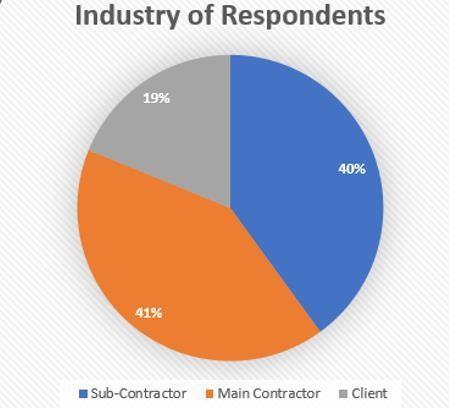
In total 150 questionnaires were floated, and 88 responseswerereceivedfromindustryprofessionals.
Demographic information about respondents is summarizedbelow:
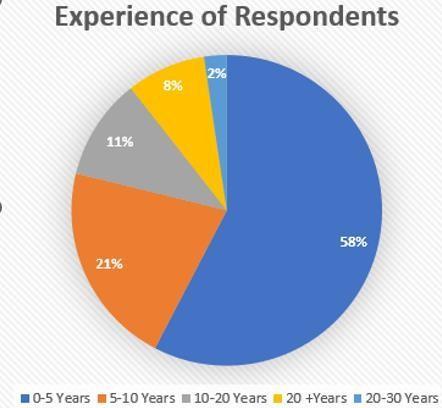
Figure 1: Demographicinformationabout respondents
The data collected was analyzed in MS Excel and Python. The RII (Relative Importance index) method was used to rank the factors affecting the subcontractor’s performance. The relationship for computing RII is depictedbelow:
∑W/(A*N)
∑W = The weighting given to each factor by the respondent.
A= Thehighestweight N= SampleNumber
International Research Journal of Engineering and Technology (IRJET)
e-ISSN: 2395-0056
Volume:09Issue: 07| July 2022 www.irjet.net p-ISSN:2395-0072
To check the internal consistency of the data, the Cronbach Alpha test was conducted. Alpha = 0.85 was obtained. The relation between Coefficient of Cronbach alphaandReliabilitylevelofdataissummarizedbelow:
Table 2: RelationbetweenCronbachAlphaand ReliabilityLevelofthe data
Coefficient of Cronbach Alpha
ReliabilityLevel
Morethan 90 Excellent
0.80 0.89 Good
0.70 0.79 Acceptable
0.60 0.69 Questionable
0.50 0.59 Poor
Lessthan0.49 Unacceptable
Further, to understand the variation betweenresponses received from Sub-Contractors and Main- Contractors, two variance test was conducted. The hypothesis assumedforTwovariancetestsarementionedbelow:-
Null Hypothesis: General contractor and SubContractorhadsamenotionforagivenfactor.
Alternate Hypothesis: General contractor and SubContractorhadadifferentnotionforagivenfactor.
For all the factors shortlisted in the study, the f value obtained in two variance tests was within permissible limits to accept the null hypothesis with a 95% confidence interval. In the last phase of the study, structured interviews were conducted with professionalsfromleadingconstructionfirmstoidentify the strategies that can be adopted to nullify these challenges.
2. LITERATURE REVIEW
When a general contractor is awarded a project, the first step is to decide the packages in the project which must be outsourced. So as to support general contractors in their selection of packages, [6] devised a decisionsupportsystemtoidentifytheworks thatmust be subcontracted based upon the given constraints (Maximum units of work that can be assigned to a subcontractor). Attempting to understand the existing subcontractor management processes adopted by general contractors to manage subcontractors working isaproject,[7]conductedastudy,ultimatelyidentifying strategies for mitigating the issues encountered in sub-
contractor management. The study concluded that relevant pre-qualification criteria, warning systems for sub-contractor performance can be viable solutions for
the same. [8] conducted research to understand the perception of general contractors towards development oflong-termrelationswithSub-contractors.Theresearch concluded
to
achieve the same include open communication, top management commitment, and proportionate risk distribution. Further,[9] identified conflicts between
that competitive advantage in the market is a major factor that promotes establishment of long terms relations between the general contractor and subcontractor. Thekeystrategiesthatcan beadopted individual personalities as a major challenge for efficient sub-contractor management in construction industry. Extendingtheresearchonthisline[10]developedamodel based upon social exchangetheory,examining the relation betweenjustice perception ofasubcontractor in previous works with a particular general contractor and their willingness to corporate inpresent job. [11] identifiedthat lackofintegrityrespectand fairness, and unwillingness to negotiate the risk and price as the major factors for prevalence of poor relationship between general contractorsandgeneral
contractors.Addressingtheissueof non-compliancetocontractualclausesbySubcontractorsin the United Kingdom [12] conducted thematic interviews withsub-
contractors.Thefindingsoftheseinterviewsledto theconclusion that subcontractors generally have limited knowledgeaboutthecontractualclausestheyareentering into. Thus, in addition to understanding the pricing of contract,thetopmanagementofsubcontractorsmustalso focusuponthecontractualclauses.
Based on the literature review conducted, the factors identifiedinthestudyarelistedbelow:-
Factor Source
Sub Contractor Selection process (Li,Weifang,2018); (AshrafM.ElazouniandFikry G.Metwally,2000)
Sub ContractorBidPrice (Li,Weifang,2018)
DistributionofRisk Between General contractor and Sub Contractor
Cash Flow Management of Sub Contractor
Impact of Regular Performance Monitoring of Sub Contractor
The ambiguous contractual agreement between Sub contractor and General contractor
(Loosemore Martina, Lim Benson, 2021); (Assbeihat J.M,2019)
(Loosemore Martina, Lim Benson, 2021); (Jianga, 2014)
(Temitope Seun Omotayo et.al ,2022),(Arditi,2005)
(Temitope Seun Omotayo et. al ,2022) ; (LIM, Patrick XW ZOU, BensonT.H.,2014)
Table-3:FactorsIdentifiedfromLiteratureReview
International Research Journal of Engineering and Technology (IRJET) e-ISSN: 2395-0056
Volume:09Issue: 07| July 2022 www.irjet.net p-ISSN:2395-0072
3. Case Study
A detailed review of sub-contract documents and interviews with multiple stakeholders involved in the projects selected for case studies were conducted to understandhowsub-contractorsaremanagedinaproject.
Factor Rank RII Mean
Sub contractor bid price 1 0.7106 3.55
Impact of regular performance monitoring of Sub contractor. 2 0.6988 3.49
Sub contractor selection process 2 0.6988 3.49
Distribution of risk between General contractor and Sub contractor. 3 0.6541 3.27
Cash Flow management of Sub contractor 4 0.6424 3.21
Award phase: The identified sub-contractors are askedto share their company profile, turnover information,and relevant information for pre- qualification criteria evaluation. Detailed drawings, BOQ, designs and site related details are shared with sub-contractors. Multiple rounds of negotiations and technical evaluation offers received from sub- contractors in carried out. Based upon the score in prequalificationcriteria,methodologyof theworkand
Pre-Award Phase : Detailed discussions are carried out within various stakeholders of the general contractor to understand the major benefits and consequences of subletting a particular package and not doing the works inhouse. In coordination with theproject team a detailed scope matrix, resource requirement and a prequalification criterion for the works is prepared. Further market research is carried out to identify the major sub-contractors carrying thesimilarworks. most importantly the final price received, work is awarded to the suitable sub-contractor and LOIis
Execution phase: In this phase, kick off meeting is conducted between the site team of general contractor and sub-contractor to ascertain the work plan and mobilization schedule for the work. Bills for the works certified by the general contractor are booked and submitted to the clients for further certification and invoicing. Regular review meetings between the top management of both the stakeholders are carried out
The same has been summarized below in a phase-wise manner. issued. to tracktheprogressofthework.
Closure phase: In this phase, final certification of the sub-contractor’s work is done, the sub-contractor is issued completion certificate, maintenance of the finished services as per the contract document is carried out by the sub-contractor. All the retentions and other withheld amounts are released as per the agreed schedule.
4. RESULTS
5.1 RelativeImportanceIndex Test:-
As per the responses received to the questionnaire, RII
was calculated to understand the relative importanceofthe factors.
The ambiguous contractual agreement between Sub contractor and General contractor
5 0.6400 3.20
Table-4:ResultforRII value
5.2TwoVariance Test
In addition to RII value, to understand the variance betweennotionsofsubcontractor’sandgeneralcontractor aboutaparticularfactor,twovariancetestwasconducted. Theresultsofthesamearetabulatedbelow:-
Factor
Calculated F Value F(5%) F(95%)
Sub ContractorBidPrice 0.84 1.81 0.54
Impact of Regular PerformanceMonitoringof Sub Contractor
1.39 1.81 0.54
Sub Contractor Selection process 1.09 1.81 0.54
Distribution of Risk Between General contractor and Sub Contractor
0.93 1.81 0.54
Cash Flow Management of Sub Contractor 0.87 1.81 0.54
Clarity of contractual agreement between Sub contractor and General contractor
0.89 1.81 0.54
Table-5:Resultfor TwoVariance Test
International Research Journal of Engineering and Technology (IRJET)
e-ISSN: 2395-0056
Volume:09Issue: 07| July 2022 www.irjet.net p-ISSN:2395-0072
Fvaluecorrespondingto5%and95%weretakenfromthe relevant chart. The F value for the given factor was calculatedbytheformula:-
Variance of Sub-Contractor Responses / Variance Main Contactor Responses
From the above table, as the f value lies between the permissible interval of 95% confidence limit, it can be inferred that Main-Contractors and Sub-Contractors have asimilarnotionforeveryfactoridentified.
5. DISCUSSIONS
1. Sub-ContractorBidPrice
,discussions with industry professionals revealed that general contractors had a stringent prequalification criterion for selecting subcontractors, especiallyforspecializedworks.Inordertoassess
the
financial and technical capabilities of a subcontractor, general contractors generally conducted a rigorous review of submitted documents and performance in similar works. However, in the case of routineworksinaproject
like mix transportation, aggregate production etc,general contractors weremore reliant on localcontractors due to which pre-qualification criteriawereoftensacrificed.Insuchcasesbid price was themaincriterionforawardingthesubcontract.
A subcontractor’s ability to execute the work within the stipulated time and desired level of qualitydepends upon the price at which the firm acquires the job. Sometimeswithanexpectationof the
profits from following contracts, sub-contractor might underbidfora given contract and fail to execute it. In order to avoid such peculiar situations, general contractorsmustseta threshold price and not award the project below the same. Further, the general contractors shouldrestrainfromresortingtounethicalpracticeslike bid shopping during finalization of the contract. Although in the initial stage, it might improve the profitmarginsintheproject,inlongrunitwillhurt
quality of work, ruining the reputation of all the stakeholders involved. In line with the above facts, Sub-contractor bid price had an RII value of 0.7106and was ranked as the most important factor affectingtheperformanceofthesub-contractor.
2.
Regular performance monitoring of SubContractor
In large-scale construction projects, performance monitoring of sub-contractors working at a construction site is a challenging task and often a source of conflict between both parties. (Amin Mahmoudi, 2022) With an RII of 0.6988, regular performance monitoring emerged as the secondmost important factor in this study. In order toeffectively deal with this issue, various researchersand industry professionals have stressed using drones for capturing real-time information from the project site. Further to ensure that desired level of progress, regular meetings between stakeholders involvedareaviablesolution.
3. Sub-contractorselection process
A rigorous sub-contractor selection process can prove to be successful in mitigating the risk associated with execution of the work. As per the
responses received, the Sub-Contractor selection process had an RII score of 0.7106. Further
The distribution of risk and obligations between the general contractor and sub-contractor generally depends upon the contracting strategy adopted in the project. Scoring 0.6511 on RII scale, this factor was ranked as the fourth most important in the study. Previous studies revealed that contract clauses were designed to take advantage of the sub-contractor by shifting the riskinto their scope. A review of various sub-contract documents validated the above fact. In mostofthecontract agreements, the local and financial risks were in the scope of the sub-contractor, without a proper mechanism for mitigation. Further, the various clauses like the scope of work, payment schedule, etc., were ambiguous and lacked clarity. Although during the executionphaseoftheproject,allthe stakeholders jointly resolved issues encountered, such arrangements were spontaneous and unplanned, resemblingto
4. Distribution of risk between SubContractor and Generalcontractor:exchangeofservices.
5. CashFlowManagement:-
Asthecostofcapitalincreasesinthemarket,cashflow management is one of the major issues beingfaced bythe stakeholders involved in constructionprojects. The clients havenowshiftedfrommonthlybillingmodeofpayment to milestone- based payment in a project.Though this has motivated the general contractors toexecute the works on a fast-track basis, on the other side it has created a significant cash lag. The general contractor generally adopts pay when paid and pay if paid strategies for billing of sub-contractor. This creates a peculiar situation for sub-contractors with 30-40% of their equity stuck up in a project. In the projects selected for study, numerous cases were observed where the sub-contractor didn’t receive payment as per the agreed schedule. The interviewswith various sub-contractors revealed that the payment cycle for an executed work spansbetween 45 60 days. In some cases, the performance bonds of subcontractors were also not released after the completionoftheworks.
International Research Journal of Engineering and Technology (IRJET) e ISSN: 2395 0056
Volume:09Issue: 07| July 2022 www.irjet.net p ISSN:2395 0072
6. Ambiguous contractual agreement between Sub-contractor and General contractor
A review of various sub-contract documentsrevealed that contractual agreements between general contractors and sub-contractors generallylack clarityin terms of the scope of work andobligations of boththe parties. With an RII value of 0.6541, this factor emerged as the fourth most important factor affecting theperformanceofsub- contractors. Experts involved in the study stressed the fact that ambiguity of contractual clausesoftenleadsto disputes among the stakeholders, ultimatelydelayingtheprogressoftheproject.Toaddress thisissue,various expertsagreedthatstandardcontract documents must be established by the general contractors with the contract document containingtwo parts, one including the general conditions and part two including the special site-specificconditionsofthe work.Further,with the complexityof projectson arise, variousresearchersinpasthavesuggested that clauses related to amendment of orders and management of claims in a project must be formulated in consultation withlegalexpertsinaproject.
7. STRATEGIES TO BE INCORPORATED IN TRADITIONAL SUB-CONTRACTOR MANAGEMENT FRAMEWORK:-
Inordertoidentifystrategiesforfactorsidentifiedinthe study, interviews with industry leaders and consultants were conducted. These led to the identification of following strategies for improving sub- contractors’ performanceinthelifecycleofaproject.
1. Region-wise vendor redeployment, vendor consolidation: -
The strategy of region-wise vendor redeploymentand vendor consolidation has been successfully adopted by generalcontractors intheprocurementof raw materials. Vendorconsolidation referstoaprocessinwhichallthe vendors offering aparticularmaterial/equipmentinthe given region are shortlisted. Vendor Redeployment refers to deploying the same vendor for the supply of a particularmaterial/serviceatmultiplesites.Thegeneral contractorsshouldshortlistsomegood-performingsubcontractorsbaseduponasetofpre-qualificationcriteria. Once the Sub-contractor has satisfied the Prequalification criteria, when arequirement for service is identified,thegeneralcontractorshalldirectlyapproach these sub- contractors for the services instead of searching the market again. The review of case studies revealed a high rate of vendor redeployment in case of purchase items but in the case of sub-contracting, the rate of vendor redeployment wasvery low. Discussion with the experts from the general contractor side revealedthatredeployinga
particular sub-contractor for similar work at another project is attributed to his,willingnessandcapacity to executethework.
2. Negotiation ofPayment terms: -
During the finalization of contract, both the parties must understand the short-term and long terms implication of delayed payments on the project. To minimize the paymentrisk,thesub-contractorsandgeneralcontractors mustensurethatthepaymenttermsagreedinthecontract are adhered to strictly. In order to lure the general contractors for timely release of payments, dynamic discountsonnetpayablemustbeincludedinthepayment terms. The prices of the contracts must be negotiated basedonconceptssuch asDaysalesoutstanding.Iftheday salesoutstandingishigherthaninitiallyagreedbyboththe parties, the total value of the contract must also increase proportionatelyandviceversamustalsobeapplicable.Also, in order to improve the cash position in contractsvarious options like mobilization payment, and lower retained percentagescanbebeneficialinimprovingprojectfinances andmaximizingthefinalcashbalance.
3. Inclusion of performance-based incentives in thecontracts:-
Most of the experts agreed that to motivate the subcontractors, performance-based incentiveclauses must be introduced in the contract documents. These incentives can be in form of monetary incentives like Cost plus incentive fees, share-in-savings- incentive, and nonmonetary such as an automatic extension of contracts in caseof services. The strategy of monetary incentives was utilizedinoneprojectselectedasa casestudyandyielded successful results. The sub-contractorcompletedthegiven scope of work one week aheadof the scheduled date of completion.Toutilizesucharrangements effectively more researchneedstobecarriedoutintermsofunderstanding the typeof incentive to be used and the extent to which theseincentivesmustbepassedonalongthesupplychain.
8. CONCLUSION
The main objective of the study was to understand the traditional sub-contractor management strategy which is currentlybeingadoptedforexecutionofprojectsandvarious challengesencountered.Itcanbeconcludedthatthereisa wide spread of sub-contracting in construction industry. But the sub-contractor management strategies being utilized by various stakeholders are not being able to deliver the expectedresult. The sub-contractor selection process in notregulated through any statutory body. Lack ofstandardizationincontractualtermsandconditionshas ledtoexploitationofsub-contractorsinvariouscases.The pace at which sub-contractors execute the works has not beenabletomatchtherequirementsofclientsandgeneral contractors.Cashflowmanagementhasalsoemergedasone
International Research Journal of Engineering and Technology (IRJET)
e-ISSN: 2395-0056
Volume:09Issue: 07| July 2022 www.irjet.net p-ISSN:2395-0072
the critical issue in traditional sub contractor managementsetup.Toovercomealltheseissuesvarious strategies which must be integrated with traditional sub contractor management framework were identified anddiscussedindetailwithexperts.Theutilizationofthese strategies can prove to be effective in improving the overall relationship between the stakeholders and enhancingtheperformanceofsubcontractors.
REFERENCES
1. Arditi, 2005. Issues in sub contracting practice. Journal of construction engineering and management
2. Choudhry1,R.M.,JimmieW.Hinze,M.,Arshad3,M. & Gabriel4, a. H. F., 2012. Sub contracting parctices in construction industry of pakistan. Journal of Construction Engineering and Management.
3. Abisugab,2016. “Effect of path goal leadership styles on the commitment of employees on construction projects”. International Journal of ConstructionManagement.
4. El Kholy, A. M., 2019. A new technique for subcontractor selection by adopting choosing by advantages. International Journal of Construction Management
5. Hailu, H.A.,2017.Determinants ofSubcontracting Performance in road Construction projects.. International Journal ofScientific Engineering and Research(IJSER).
6. Ashraf M. Elazouni and Fikry G. Metwally. (2000). Decision Support System for Subcontracting Construction Works. Journal of Construction EngineeringandManagement ,191 200.
7. Li, Weifang. (2018). The Study on Sub contract ManagementinEPCEngineering.
8. LIM, P. X. Z. a. B. T., 2014. An Emperical StudyIn Subcontracotr Selection and Long -TermAlliance Relationship Between Main - Contractor And Subcontractor. International Journal of ConstructionManagement.
9. H. Randolph Thomas, Flynn, Christopher J. (2011). Fundamentals of Sub Contractor management.ASCE.
10. Liu,Jun Ying, Yang, Pengfei, Xia,Bo, Skitmore,Martin . (2017). Effect of perceived justice on subcontractor willingness to cooperate: The mediating role of relationshipvalue.ASCE.
11. LoosemoreMartina,LimBenson.(2021).Relationship quality in construction projects: A subcontractor perspective of principle contractor relationship. InternationalJournalofProjectManagement
12. Temitope Seun Omotayo, Oskar Danvers Watson, Adekunle Sabitu Oyegoke . (2022). Subcontractor trustissuesonpaymentand valuationpracticesinUK private projects. Journal of Financial Management of PropertyandConstruction.
13. Marshamll, 2000. Partneringinconstruction:acritical review of issues, problems and dilemmas,”. ConstructionManagementandEconomics.
14. Assbeihat,J.M.,2019.ReasonsbehindSub contractor faiulre in construction projects.. International Journal ofCivilEngineeringandTechnology(IJCIET).
15. CreedS.J.Eom,P.,SeokH.Yun,P.&andJoonH.Paek,P., 2008. Subcontractor Evaluation and Management Framework for Strategic Partnering. Journal of ConstructionEngineeringandManagement
16. DimitriosRobertIStamatiou,K.A.K.S.T.P.S. G. &. I. T., 2019. A process reference model forclaims management in construction supply chains: the contractors’ perspective. International Journal of ConstructionManagement.
17. Jammal.M, 2018. Reasons behind sub contractor default in construction projects..International journal ofcivilengineeringandmanagement.
18. Jianga, 2014. Negotiating Construction Contracts through Practical Cash Flow Planning and Analysis Model. International Journal of Construction Management.
19. Will hughes, Incentives in constrution contracts.. CIB worldcongress2007.