International Research Journal of Engineering and Technology (IRJET) e ISSN: 2395 0056

Volume: 09 Issue: 07 | July 2022 www.irjet.net p ISSN: 2395 0072
International Research Journal of Engineering and Technology (IRJET) e ISSN: 2395 0056
Volume: 09 Issue: 07 | July 2022 www.irjet.net p ISSN: 2395 0072
1AssistantProfessor,Dept.ofECE, Global Academy of Technology, Bengaluru, India 2345Student, ECE, Global Academy of Technology, Bengaluru, India ***
Abstract There are around 15 million blind people in India, and the unfortunate fact is that 75% of these cases were curable at certain point of time. In India, there are 10,000 patients for every doctor. Numerous eye conditions, including trachoma, corneal ulcers, and cataracts, among others, can impair vision. According to studies, early stage disorders that go untreated are the main causes of blindness in India. The advancement of these eye diseases can only be stopped if they are appropriately diagnosed at an early stage. These eye diseases have a wide range of visually discernible symptoms. To accurately diagnose eye diseases, it is requiredtoanalyze a wide range of symptoms. Utilizing digital image processing methods like segmentation and morphology as well as deep learning methods like convolutionneuralnetwork, we propose a unique method to give an automated eye disease identification model using visuallyobservable symptoms. Four eye diseases, namely crossed eyes, bulging eyes, cataracts, uveitis and conjunctivitis are analyzed and categorized using the proposed method. The suggested deep neural network model aids in the early detection of the existence of eye disorders. If required, the model prompts patients to seek out an ophthalmologist for screening purposes
Key Words: Deep Learning, Convolutional Neural Network, Deep Neural Network, Cataracts, Bulged eyes, Crossed eyes, Uveitis and Conjunctivitis.
Eyes are essential part of human life, each and every personrelyontheeyestoseeandsensetheworldaround them. One of the most vital senses is sight because it accounts for 80% of all information, wetake in. By taking propercareofeyes,wewilllowertheriskofbecomingblind and losing vision, while also keeping an eye out for any developingeye conditionslikeglaucomaandcataracts Most peopleexperienceeyeissuesatsomepointoftime.Someof theeyeissuesareminorandsimpletocureathomewhich will go away on their own, other major eye issues need assistancefromtheexpertdoctors Whentheseeyediseases are accurately diagnosed at an early stage, only then the progressionoftheseeyediseasescanbestopped.Theseeye diseaseshaveawiderangeofvisuallydiscerniblesymptoms. Toaccuratelydiagnoseeyeillnesses,itisrequiredtoanalyse a wide range of symptoms. In this paper, our proposed modelanalysesandclassifieseyediseasesnamelycataracts, crossedeyes,bulgingeyes,uveitisandconjunctivitis.
Manyeyeconditions,includingtrachoma,cataracts,and corneal ulcers, can impair vision. Only when these eye illnesses are effectively diagnosed at an early stage can progression be stopped. These eye illnesses have a wide range of visually discernible symptoms. To accurately diagnoseeyeillnesses,itisrequiredtoanalyzeawiderange of symptoms. Therefore, utilizing machine learning techniqueslikedeepconvolutionneuralnetwork(DCNN)and supportvectormachine,paper[1]suggestedanovelstrategy in to create an automated eye illness recognition system using visually observable symptoms, from experimental findingsitisobservedthattheDCNNmodelperformsbetter thanSVMmodels.Inpaper[2]theauthorhaveusedadeep neural network model to discriminate between different diseases like diabetic retinopathy, which aids in the early detection of glaucoma and diabetic retinopathy, and high resolution retina images taken under a variety of imaging settings. In terms of screening Eye Disease Identification usingDeepLearning,itmaypromptpatientstocontactan ophthalmologist. The created model has a lower level of complexityandachievedanaccuracyof80%.Theauthorof the paper [3] developed a method for automatically classifyinganyretinalfundusimageashealthyorsickusinga deeplearningmodel.TheycreatedasystemnamedLCDNet usingCNNthatwasabletodothebinaryclassification.
Two sources of retinal fundus pictures were used to construct a total of eight testing datasets. Using existing datasets, image preprocessing methods, deep learning models,andperformanceevaluationcriteria,theauthorof the paper [4] developed a model for the automated identificationof diabetic eye illness.Itincludes worksthat usedTL,builtDLnetworkarchitecture,andusedacombined DL and ML approach in terms of classification algorithms. Frommedicalphotos,wemaydeducethatCNNisnowthe most popular deep neural network, especially for the identificationofdiabeticeyeillnessandthediagnosisofother pathological indications. The effectiveness of different currentmodels,includingneuralnetworksanddeeplearning algorithms, in detecting eye disease has been examined in theresearchwork[5].Theprocessofidentifyingeyediseases using retinal images is broken down into several smaller processes, including feature extraction, classification, and picturepre processing.Thisstudyprovidesanoverviewof deep learning, its algorithms, the operation of convolution neural networks, and its applications to image processing, machine learning, and deep learning techniques that are utilizedforretinalimage basedeyediseaseidentification.
International Research Journal of Engineering and Technology (IRJET) e ISSN: 2395 0056
Volume: 09 Issue: 07 | July 2022 www.irjet.net p ISSN: 2395 0072
For quick diagnosis, medical health systems have been focusingonartificialintelligencesolutions.Tomakemachine learning more accurate and dependable by taking into accountdifferentfeatures,healthdatamuststillberecorded inaconsistentformat.Inordertomakeiteasierformachine learning algorithms to anticipate the diagnosis of diseases based on symptoms, a generic framework for recording diagnosticdatainaninternationalstandardformatmustbe developed.[6]Theauthorhasdevelopedaworkablesolution forthisandtakenattemptstoassureerror freedataentering bycreatingauser friendlyinterface.Inaddition,avarietyof machinelearningtechniques,suchasDecisionTree,Random Forest,NaiveBayes,andNeuralNetworkalgorithms,were usedtoanalyzepatientdatabasedonavarietyofvariables, suchasage,medicalhistory,andclinicalobservations.When compared to more sophisticated techniques like neural networksandthenaiveBayesalgorithm,therandomforest and decision tree algorithms' prediction rate is more than 90%becauseofa structureddataarrangement. Intelligent machinelearningtechniquesareemployedintheproposed study[7]tocategorizethevarioustypesofeyediseasesusing ophthalmology data gathered from patients of the Mecca hospital in Sudan. The severity of the eye that occurred during the research is predicted using three machine learningtechniques:NaveBayesian,SVM,andJ48decision tree.J48decisiontreemodeloutperformsNaiveBayesianand SVMinclassifyingneweyediseasepatientswithanaccuracy of98.75percent.Theapplicationofvariousimageprocessing (Image Acquisition, Image Segmentation, Image Normalization, Feature Extraction and Matching) and machinelearning(NB,KNN,SVM,DCT,HMM,AUCandPCA approaches)techniquesforthedetectionofeyediseasesis describedintheauthor'sreview[8]onImageProcessingand MachineLearningTechniquesforEyeDiseaseDetectionand Classification using a system. With the use of image processinganddataminingtechniques,thesuggestedsystem can detect and recognize eye diseases. The authors of the reporthavefocusedtheirresearchonapplyingAItoscreen fordiabeticeyedisease.Theyhaveprovidedanoverviewof thedevelopmentandprogressofusingAIandDLtechnology fordiabeticeyediseasescreening,aswellasthedifficulties currently facing DL implementation in screening programmesandtheconversionofDLresearchintopractical clinicalscreeningapplicationsinacommunitysetting.They havecometotheconclusionthatusingAIandDLtechnology, human intelligence can be supplemented to enhance decision making and operational procedures. Nearly the perfecttaskforAIinhealthcareisscreeningforDR.Withthe hope of increasing the effectiveness and accessibility of screening programmes and so preventing sight loss and blindnessfromthisdeadlydisease,AIwillinevitablybecome pervasiveandvitalforscreeninginthefuture.
Datashowsthat,sincethecurrentcenturypeoplearound theworldhaveahigherlikelihoodofhavingdiabetesasthey age, which ultimately plays a bigger role in causing eye issuesanddiseases.
Inthepresentscenario,anytypeofirritationsinanypart ofthebodycanbedescribedtogetinstantdetailsregarding it from google (basically for non medical purposes) but, when it comes to the human eye unless there is a vision problem,peopletendtoneglectotherirritationorchanges intheeyeuntilitbecomesanemergency.Probablereason forthisismainlyduetothenon availabilityofaparticular application made solely to detect the early stages of eye diseases and warn the user with the complete details regarding the same. Our model resolves this issue by guidingtheendusertotesthisowneyetogetthedetailsof theeyediseaseandthepresentconditionofhiseye
To build a deep learning model which classifies betweennormaleyeandadiseasedeye.
Toinformtheuserabouteye relatedproblemsand disordersviaasimpleinterface.
Theproposedmodelwouldbeabletoguidetheusers to know their eye condition (for specified eye diseases namely crossed eye, bulged eye, cataracts, uveitisandconjunctivitis)
The model shares the details of the nearby eye doctorstotheusetogettheireyecheck up.
Image processing can be divided into several classes, including "image compression," "image upgrade," and "reclamationandmeasurementextraction."Ithelpstoreduce theamountofmemoryneededtostoreasophisticatedimage. Theimagecanbestolen.Thephotographsmaybediscarded duetoissueswiththedigitizingprocessandotherfactors. Imageenhancementtechniquescanbeusedtofixaneglected image.Aftertestingandapprovingtheinformation,wenext utilized this model's preparation method after doing an informational collection assortment, information resizing, information planning, and information expansion. In this study,wecombinedourowndesignedCNNarchitecturewith theimageprocessingcapability.
Convolutionalnetworksareatypeofsophisticatedneural network.Itwascalculatedusingdeeplearning.Thewaythis computationisdoneisthatthemodel caninitiallytakean input image and then assign significance to various argumentsorpointsofviewinthatimagesothatthemachine canchoosetodivideoneclassfromtheother.Prepossessing is this model's main requirement. CNN's layout includes network representations of neurons found in the human brain. Additionally, 2D structures of information pictures have specific desirable positions. Here, slope based augmentationisused.Thereareseverallayersinthismodel, includingconvolutionalandsubsamplinglayers.
International Research Journal of Engineering and Technology (IRJET) e ISSN: 2395 0056
Volume: 09 Issue: 07 | July 2022 www.irjet.net p ISSN: 2395 0072
Inthis paper,wewill discuss5differenteyeconditions: conjunctivitis, cataract, uveitis, bulging eyes, and crossed eyes.TheKagglewebsiteandasmallportionoftheinternet wereusedtogatherthedatasetforthedisorder’scataract, bulging, and crossed eyes. Datasets for uveitis and conjunctivitishavealsobeengatheredonline,albeitwitha localoptometrist'sassistance
To avoid overfitting, we expanded our informational collection. In order to expand our significant dataset and motivate us to group our model, we added to our real informational collection using five methods. 1. Make a 90 degreeturn2.Makea90 degreeturnShading3.4.Asalt and peppergrind5.HorizontalFlip
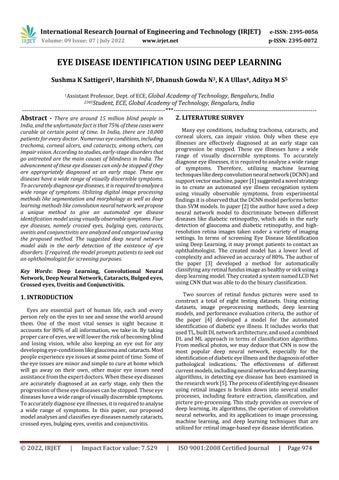
Fig 1:ProposedModel
Fig 2:TrainingProcess
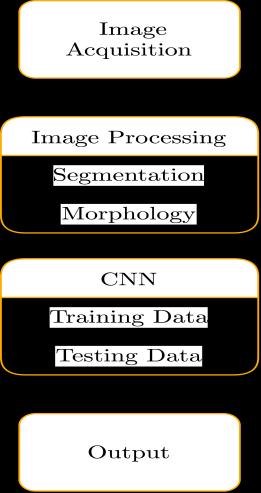
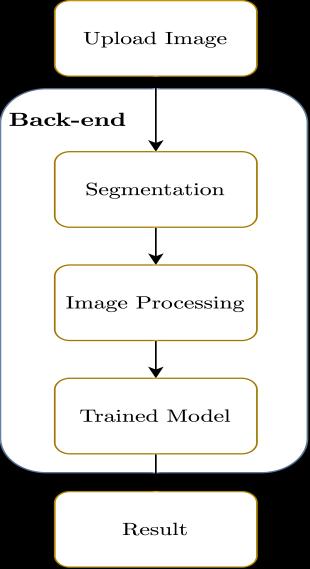
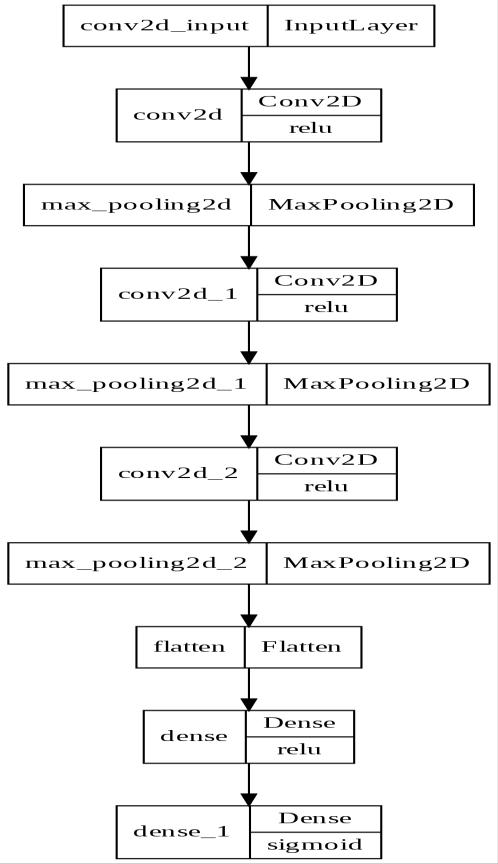
Fig -3:SoftwareFlowDiagram
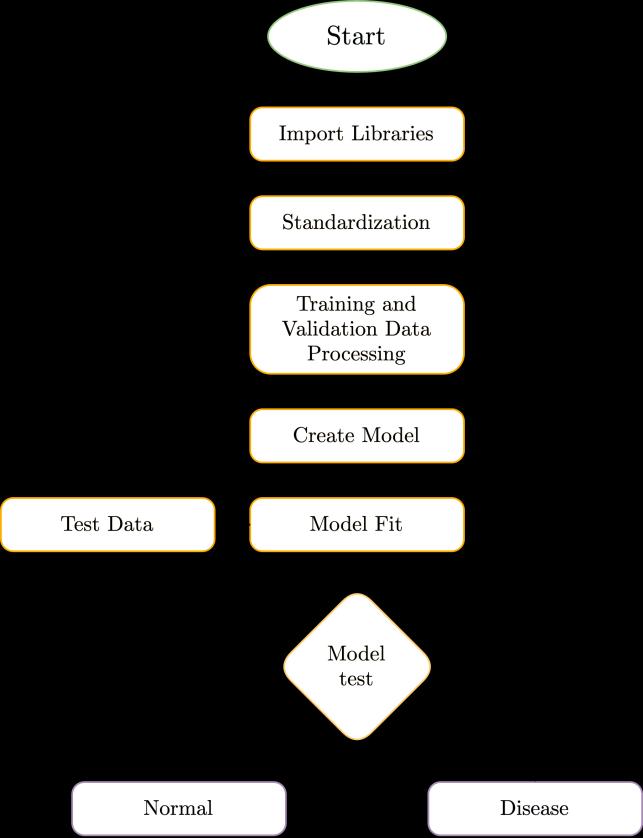
Fig 4:ModelArchitecture
2022, IRJET | Impact Factor value: 7.529 | ISO 9001:2008 Certified Journal |
International Research Journal of Engineering and Technology (IRJET) e ISSN: 2395 0056
Volume: 09 Issue: 07 | July 2022 www.irjet.net p ISSN: 2395 0072
Allofthephotoswereinadifferentmeasurementwhenwe firststartedcollectingthem.Fortheirheight,width,andsize, ourinformationalindexisvaried.Inanyevent,forcreating and testing the informational index, our profound neural classifierrequiresacorrespondinginformationalindex.The pixelswerethereforesetto200X200.
Our model has nine layers as shown in fig.4. Three convolutionallayersarealsopresent:
Thefirstlayerhasanactivationfunctionof"linear" and16 33filters.
Table-1:ModelAccuracy
Eye Configuration Accuracy in % SingleEye 96.00 TwoEyes 92.31
As
96%
The second layer has 32 3 3 filters, and the activationfunctionis"linear”.
Thethirdlayerhas64 33filters,andtheactivation functionis"linear”.
Our model is put together using the Adam optimizer. Eightypercent ofourtrainingdataset isused for training, whiletheremainingtwentypercent isusedforvalidation. Ourtrainingdatasethas1200photosinit.Wemaytherefore statethatthereare960photographsinthetrainingsetsand 240 images in the validation sets. We trained the model using30epochs,withabatchsizeof50forourclassifier.
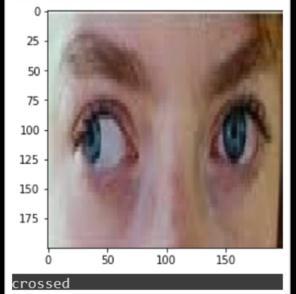
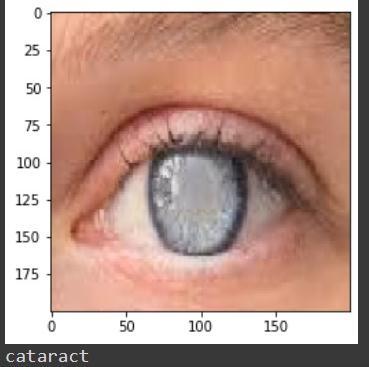
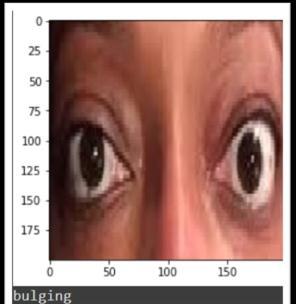
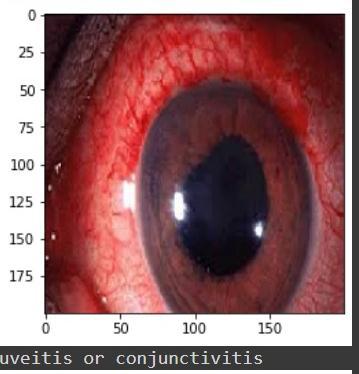
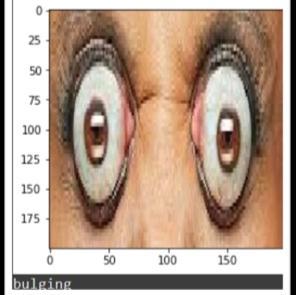
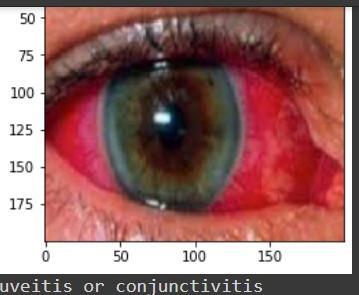
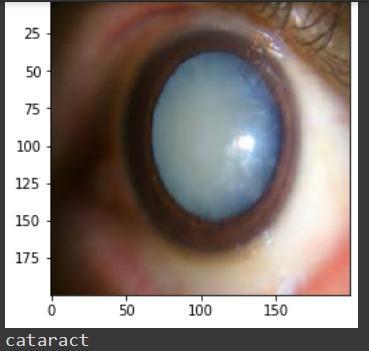
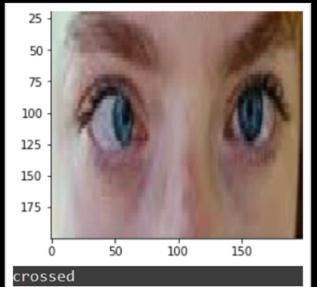
For this model we are comparing different classes of diseaseslikecrossedeyes,bulgingeyes,uveitis/conjunctivitis andcataract.Thetrainingisdoneforsingle eyeandtwo eye images using two separate models. One model predicts diseasesnamelycrossedeyeandbulgingeyeusingtwo eye images as in fig 5 and fig 6. The other model predicts diseaseslikecataractandconjunctivitis/uveitisusingsingle eyeimagesasinfig 7andfig 8
Fig 5:ModelPredictionofCrossedeye
There are various models developed for eye disease detectionintherecentyears.Inthispaper,wehaveusedthe deep neural networks along with some core libraries like OpenCV, keras, TensorFlow, pandas, NumPy. We are successfullyabletoachieveallourobjectives.
• Deeplearningmodelwhichclassifiesbetweennormal eyeandadiseasedeyehasbeensuccessfullybuilt.
International Research Journal of Engineering and Technology (IRJET) e ISSN: 2395 0056
Volume: 09 Issue: 07 | July 2022 www.irjet.net p ISSN: 2395 0072
• Themodelwillbeabletoguidetheuserstoknowtheir eye condition (for specified eye diseases namely crossedeye,bulgedeye,conjunctivitisandcataract).
• Themodeliscosteffectiveandhassimpleinterface.
• Themodelsharesthedetailsofthenearbyeyedoctors totheusetogettheireyecheck up.
Infuture,wecancreateaAppandwebbasedapplication for a customized Deep Learning model that diagnoses externallyobservableeyeissues/diseasesfromanuploaded eyepicture.
[1] Akram A, & Debnath, R. (2020). “An automated eye disease recognition system fromvisualcontent of facial images using machine learning techniques” Turkish Journal of Electrical Engineering and Computer Science,28(2),917 932.
[2] Prasad, K., Sajith, P. S., Neema, M., Madhu, L., & Priya, P. N. (2019, October). “Multiple eye disease detection using Deep Neural Network”. InTENCON 2019 2019IEEERegion10Conference(TENCON) (pp.2148 2153). IEEE.
[3] Jain,L.,Murthy, H.S.,Patel,C.,&Bansal,D.(2018, December). “Retinal eyedisease detection using deep learning” In 2018 Fourteenth International ConferenceonInformationProcessing(ICINPRO) (pp.1 6).IEEE.
[4] Sarki, R., Ahmed, K., Wang, H., & Zhang, Y. (2020). “Automatic detection of diabetic eye disease through deep learning using fundus images: A survey”.IEEE Access, 8, 151133 151149.
[5] Rajyaguru,V.,Vithalani,C.,&Thanki,R.(2020). “A literature review:various learning techniques and its applications for eye disease identification using retinal images”. InternationalJournalofInformation Technology,1 12.
[6] Malik, S., Kanwal, N., Asghar, M. N., Sadiq, M. A. A., Karamat, I., & Fleury, M. (2019). “ Data driven approach for eye disease classification with machine learning” 9(14), 2789.
[7] Fageeri,S.O.,Ahmed,S.M.M.,Almubarak,S.A.,& Mu'azu, A. A. (2017, January). “Eye refractive error classification using machine learning techniques” In 2017 International Conference on Communication, Control, Computing and Electronics Engineering (ICCCCEE) (pp. 1 6). IEEE.
[8] Umesh, L., Mrunalini, M., & Shinde, S. (2016). “ Review of image processingand machine learning techniques for eye disease detection and classification” International Research Journal of Engineering and Technology, 3(3), 547 551.
[9] Cheung,C.Y.,Tang,F.,Ting,D.S.W.,Tan,G.S.W.,& Wong, T. Y. (2019). “Artificial intelligence in diabetic eye disease screening” The Asia Pacific Journal of Ophthalmology,8(2), 158 164.
2022, IRJET | Impact Factor value: 7.529 | ISO 9001:2008 Certified Journal