International Research Journal of Engineering and Technology (IRJET) e ISSN:2395 0056

Volume:09Issue:06| June2022 www.irjet.net p ISSN:2395 0072
International Research Journal of Engineering and Technology (IRJET) e ISSN:2395 0056
Volume:09Issue:06| June2022 www.irjet.net p ISSN:2395 0072
1,
Shraddha chavan2
1P.G. Student, Town & country planning, 2 Assistant Professor, Town & country Planning, School Of engineering & technology, Sandip University Nashik, Maharashtra ***
Abstract The slums spread in urban communities is the outcome of the disruption and downside of the metropolitan framework, which is adequately to paid all due respects to the monetarily weak segments to meet the sanctuary needs, which predominantly move to the city because of monetary reasons We do. Rehabilitation is an institutional change that involves shifting of an entire informal built environment to a formal housing structure. Rehabilitation needs due to lack of money people build temporary houses designing in very improper way creating unhygienic environment. Lacing in delivery quality for the inhabitants. While rehabilitation slum the main aspect while designing should be more towards increasing peoplestandardofliving.
The paper presents proposal for the area based development at Rajiv Nagar, Nashik. necessity of this paper to present Countries needs to see that the urban poor are dynamic operators and not just beneficiaries of progression. To raise the way of life and increment certainty dimension of slum tenants, Slum Rehabilitation is significant. To providing sense of hygiene, cleanliness and discipline. To increasing the healthy environment in the surrounding slum area. To make the slum free city and increase the city beautification.
Index Terms Slum, Redevelopment, Rehabilitation, Urbanization.
Making powerful metropolitan preparation because of urbanization is a significant issue for India today. Expanding populace combined with developing relocation from rustic regions is putting an immense weight on the nation's urban areas, currently confronted with poor and decayingfoundation;India'smetropolitanpopulaceis11% oftheworld'smetropolitanpopulaceandaspertheUnited Nationsgaugesitwillincrementto13percentby2030.
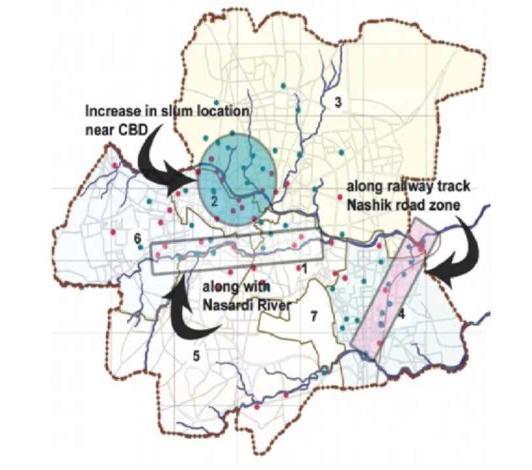
Withoutprecedentforthehistoricalbackdropofpopulace registration in the nation, Slum socioeconomics has been introduced based on genuine computation in the 2001 statistics. After definite review, it has been tracked down that the example of advancement of urban areas and the spreadofslumsshowsup.
Theslumoccupantsarecriticalalliesoftheheadwayofthe city by giving their organizations to the locals and affiliations. To get this more vulnerable segment to the norm of the overall population, It is vital to give them at any rate cover with sound climate. The responsibility of slumoccupantstothecityeconomy asmechanicaltrained professionals, building site laborers, homegrown worker, material pickers, vendors and wide extent of little scope trades is key to the city. Greater part of our industrialized metropolitanspecialistsisincompetentworkersprocuring low wages. Large numbers of them are utilized on impermanentpremise.Theycan'tbeartohaveRCChouses withalloffices.Thus,theyarecompelledtoliveinslums.
To study the various policy measures and programs initiatedbythegovernmentforSlumRehabilitation.
Tostudy the existing scenarioof slums of RajivNagar ofcityNashik.
ToprepareaproposalforSlumRehabilitationinRajiv Nagar.
Theinitialphaseinthereviewwastodistinguishtheissue definition, targets of the review and select the center regiontowork.Thiswasbetrailedbywritingsurveytoget the slum Scenario, effect of Slum Rehabilitation in India and Assessment of Slum Rehabilitation Scheme. Subsequent to distinguishing the issue definition and detailwritingstudy,forconcentrateonregionRajivNagar,
International Research Journal of Engineering and Technology (IRJET) e ISSN:2395 0056 Volume:09Issue:06| June2022 www.irjet.net p ISSN:2395 0072
Nashik is chosen. After determination of study region, different information assortment is done and that stage is isolated in two sorts 1. Direct Data which incorporates Preliminaryoverview,Detail Questionnaireandindividual meeting and 2. Recycled Data, information gathered Nashik Municipal Corporation (NMC) which incorporates guides and fundamental information of slums. From that point onward, Study of Slum Rehabilitation Policies and Preliminaryreviewofslumswillbeled.Whileforthefield information, slum occupant interview was done. Information assortment was trailed by information investigation in that Field information examination and Comparison of Slum Rehabilitation Policies of will be finished. Information examination followed by advancement of Proposal of Slum Rehabilitation for the reviewregion.
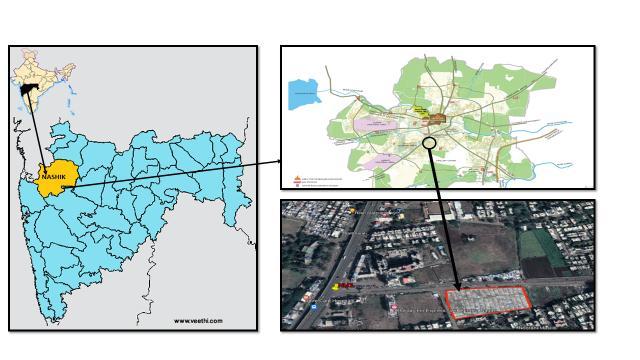
Nasik roughly 180 km from Mumbai by the National Highway No.3, that is Mumbai Agra Road which goes throughthegrewpieceofthecity.
Study area that called as Rajiv Nagar slum, Nashik around 2 ha (19504 meter square) and having 30m & 18m wide roads.Thisareasituatedjust100 200meterfromNational Highway 3. Thus it faces development pressures from all sides. Hence this area can be considered for slum Rehabilitation.
in situslumrehabilitation,throughwhichthegovernment hasdeviseda strategytoincentivizeprivatedevelopers to use land as a resource. The policy also includes a small slum up gradation component to involve beneficiary led individualhousingconstruction
ObjectiveofPMAYInorder toachievefollowingobjective, Central Government has launched a comprehensive mission“HousingforAllby2022”.Everyfamilywillhavea pucca housewithwaterconnection,toilet facilities,24 x 7 electricitysupplyandaccess.
Theprimarypurposeofthe sub missiononBasicServices to the Urban Poor (BSUP) will be on united progress of slums through work for providing housing, basic facilities and other civic services so as to give utilities to the urban poor.
This plan was formally introduced by Prime Minister ManmohanSinghon3December2005.
Aim of BSUP: BSUP expected to give essential administrations to urban poor in 63 of the biggest urban areasinIndiabypopulace
Up gradation and improvement of Urban Slum through development of infrastructure and housing activities like developmentofstreets,drains,streetlight,drinkingwater, publictoiletandbathetc.
Provide sufficient and satisfied quantity of water supply, sanitation,educationfacilities,healthcarecentres,housing and environmental enhancements through the making of maintainablesupportsystems.
Fig:Studyarealocation
PMAY(PradhanMantriAwasYojana):
In June 2015, the Cabinet of India approved the Housing forAllplan,withtheobjectivetoprovidehousingtoevery Indian household by 2022. It plans to include 300 major citiesinIndiainitsfirsttwophasesby2019.After2019,it plans to extend this scheme to remaining cities in India. One of the major components of the program is to utilize
Primarydata Secondarydata preliminary surveys Researchpaper,Journals questionnaire survey
Maps,DPMap,Cadfile
PersonalInterview Onlineportals
International Research Journal of Engineering and Technology (IRJET) e ISSN:2395 0056
Volume:09Issue:06| June2022 www.irjet.net p ISSN:2395 0072
Reasonofselectionofstudyarea:
Nasik roughly 180 km from Mumbai by the National Highway No.3, that is Mumbai Agra Road which goes throughthegrewpieceofthecity.
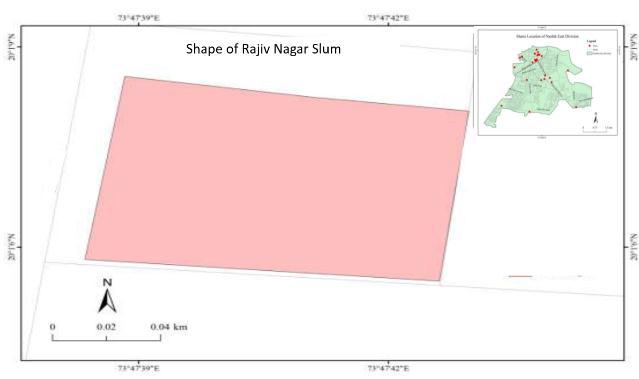
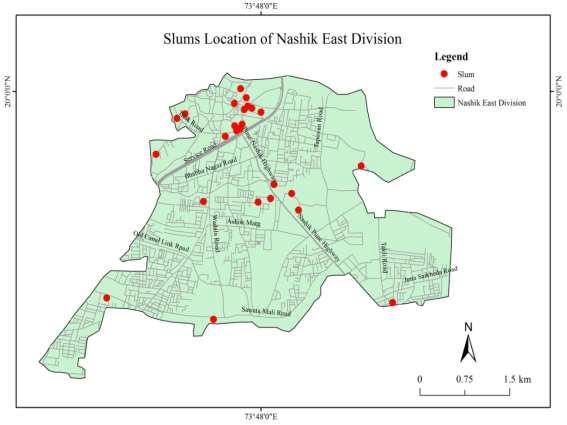
Study area that called as Rajiv Nagar slum, Nashik around 2 ha (19504 meter square) and having 30m & 18m wide roads.Thisareasituatedjust100 200meterfromNational Highway 3. Thus it faces development pressures from all sides. Hence this area can be considered for slum Rehabilitation.




NameofslumPocket RajivNagar Area(sq.m.) 19506
No.ofhousholds 510 Population 2450
Landownership Households are owners
IssuesidentifiedbyVisualsurveyare
Solid waste and garbage are thrown into water body and inopendrainwhichincreasesmosquitoesbreeding.
Overcrowded, substandard housing leads to spread of infection diseases, such as Dengue fever, pneumonia, CholeraandMalaria.
Water supplied only for a few hours per day and householddonothaveaproperwatertanktostorewater.
Due to poor maintenance of public toilets and chambers, thereisoftenblockageandbackflowinsoilpipe.
Poorventilationduetolackofwindows,congestedhouses andnarrowinternalroads.
International Research Journal of Engineering and Technology (IRJET) e ISSN:2395 0056
Volume:09Issue:06| June2022 www.irjet.net p ISSN:2395 0072
The PMAY is provide the slum redevelopment for the city bymakingthepartnershipstheprivatepartywhichwillbe the developer/ builder. The developer then developer haveto gain profit sohe will get landasmanyaspossible sothathecancontinuetheslumredevelopment.Theprofit gainbythedeveloper byredeveloptheslumarea insome areaandsomeareawillbeleftforthecommercialusedfor builderordevelopers.
In this case we have divided the whole slum area in two part as residential area and commercial area which will usedforshoppingandotherdailyneedpurchase.
The A type consist the 4 dwelling units per floor, which is maximum dwelling units can be provided in an affordable housing. The passage is provided is provided with the minimum of the 1.55m. The Building have the 1 lift and onecasestairwithtreadof 250mmandriserof150mm. thewholebuildingiskepttheminimumdimensiontokeep thebuiltuparealow
Proposedcarpetarea 28.90sq.m.
Proposedbuiltuparea 34sq.m
Livingroom 2.80X4.75
Kitchen 2.30X2.10
Bathroom 1.5X1.2
Toilet 1.0X1.2
Balcony 4.37X1.0
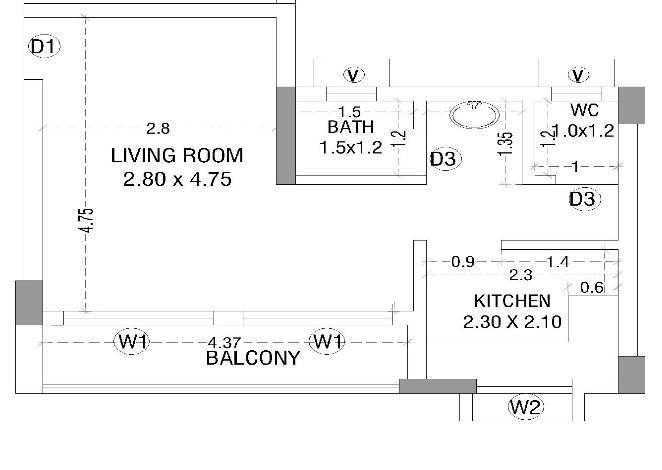
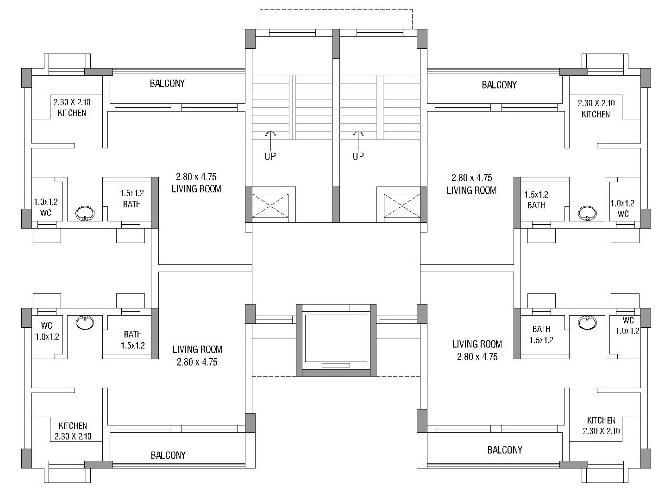
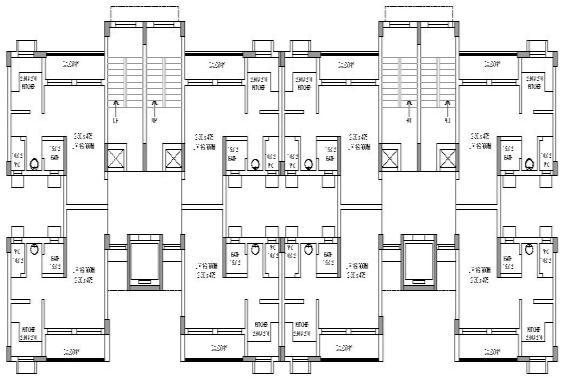
TheBtypeconsisttheonly8dwellingunitsperfloor.The other specification are just like the type A building units. BuildingBhaving6floorstotal.TheBuildingsareprovided with the parking level at ground level. The type A and B buildings are provided with the total built up area of the 346.5 m2 and 225 m2. The building are the in cluster accordingtotypeareAandBare6and6respectively.
International Research Journal of Engineering and Technology (IRJET) e ISSN:2395 0056 Volume:09Issue:06| June2022 www.irjet.net p ISSN:2395 0072
approach to the trouble. Within the future, same subject matter may be considered for various slum wallet of all urban areas, in the front of which there are numerous fundamental issues. A macro level look at of the city poor issimilarlyscopeoftheexamine.





Guidelinesandpracticesthatofferlow incomehouseholds with get right of entry to to fine houses and critical services want to be movement orientated, ahead wondering and sustainable. In these locations, fully sponsored, in situ slum redevelopment policy, like slum redevelopmentscheme,housingforall,ispossiblytohave similar fulfillment. PMAY offers long time period ownershiprightsandimprovesgetrightofentrytoformal land sources. For green implementation of city development, it'll require a strong partnership between governments, investors and personal developers to influencetheworldwideanddomesticqualityoflifestyles.
Area Covered under roads, 12%
Garden area, 10%
Utility, 10%
Building Unit Coverage, 52.70% Commerci al sale, 15.30%
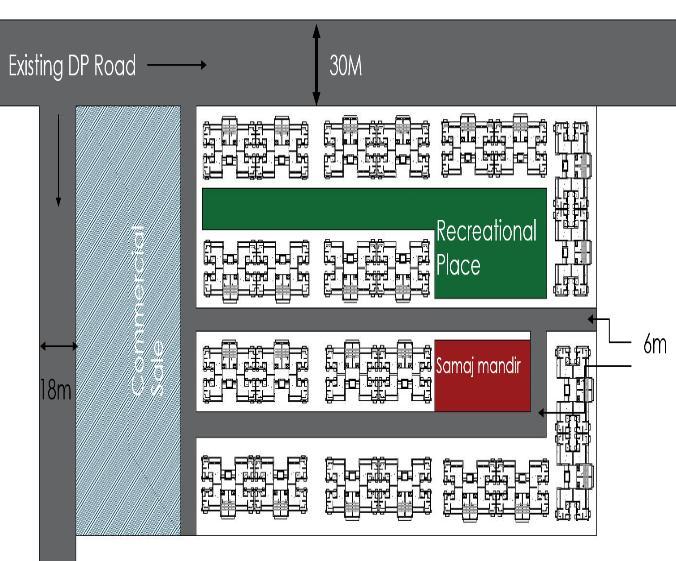
Itiscrucialtoimprovethestateofaffairsofslumsbecause everyone has the proper to stay within the wholesome environment with all simple offerings which is offered with the aid of the government and is also vital for standard development of the metropolis and country. For address this problem, it's miles very essential for governmentandpersonalbuilderstoworkinsidetheform ofateam,inadditiontothenewresearchertoattentionat the examine by way of maintaining such practical situations in thoughts so humans are greater concerned with slum residents and helped to manipulate it by using tacking first step. On this take a look at a small slum location has been taken into consideration but it affords
[1] Mukherjee, S. and Raut,o.,2017. Assessment of Slum Rehabilitation Scheme a Case Study of Pune, Maharashtra. JournalofAppliedmanagement Jidnyasa,9(1),pp.54 66.
[2] PatelAchal,S.andPadhya,H.J.,2014.Rehabilitationof Slum:ACaseStudyofWestZoneofSuratCity.
[3] Shankar, B. and Vasanthi, S., 2015. Impact of Slum Rehabilitation Project in Banglore City: A Case Study of Pantharapalya. International Journal of Engineering and InnovativeTechnologyVolume,4.
[4] S.KumarSwami,2017. GrowthofSlumPopulation in India.InstituteofTownPlannersIndiaJournal
[5] Goswami,S.andManna,S.,2013.Urbanpoorlivingin slums: A case study of Raipur city in India. Global Journal ofHuman SocialScienceResearch.
[6] Jitendra Kumar,2014. Slums In India: A Focus On Metropolitan Cities. International Journal of development researchVol.4,pp.388 393.
[7] Abrams, C (1964) Man’s Struggle for Shelter in an UrbanizingWorld.MITPress,Cambridge,MA.
[8] Appadurai, A (2000) Spectral housing and urban cleansing: notes on millennial Mumbai. Public Culture 12, 627 651.
[9] Bolay, J (2006) Slums and urban development: questions on society and globalisation. The European JournalofDevelopmentResearch18,284 298.
[10] Brenner, N and Theodore, N (eds.) (2002) Spaces of Neoliberalism: Urban Restructuring in North America and WesternEurope.Blackwell,Oxford.
[11] Clinard,MB (1966) Slums and Community Development: Experiments in Self help. The Free Press, NewYork.
[12] Cities Alliance (2003) The Challenge of Scale Nationwide Upgrading. Cities without Slums 2003 Annual Report.
[13] Das, P K (2003) Slums: the continuing struggle for housing.InBombayandMumbai:TheCityinTransition,S PatelandJMasselos(eds.),pp.207 234.OxfordUniversity Press,NewDelhi.
[14] Davis, M (2006) Planet of Slums. Verso, New York. Deshpande, S (2004) Slums of Mumbai: crying for bottoms up approach. In Mumbai City Development Strategies (eds.), pp. 13 44. Indian Merchants’ Chamber EconomicResearchandTrainingFoundation,Mumbai.
[15]D’Monte,D(2002)RippingtheFabric:TheDecline of MumbaianditsMills.OxfordUniversityPress,NewDelhi.
[16] Elwood, S (2006) Beyond cooptation or resistance: urban spatial politics, community organizations, and GIS based spatial narratives. Annals of the Association of AmericanGeographers96,323 341.
[17]EPW(1 22 2005).EPWEditorial:HousingDemolition Drive.EconomicandPoliticalWeekly,January22,2005.
[18] Government of India (1988) Report of the National Commission on Urbanisation, vol. II. Ministry of Urban Development,NewDelhi.
[19] Grant, R and Nijman, J (2002) Globalization and the corporate geography ofcitiesintheless developed world. Annals of the Association of American Geographers 92, 320 340.
[20]Grant,RandNijman,J(2004)Therescalingofuneven development in Ghana and India. Tijdschrift voor EconomischeenSocialeGeografie95,461 481.
International Research Journal of Engineering and Technology (IRJET) e ISSN:2395 0056 Volume:09Issue:06| June2022 www.irjet.net p ISSN:2395 0072 © 2022, IRJET | Impact Factor value: 7.529 | ISO 9001:2008 Certified Journal | Page2800