International Research Journal of Engineering and Technology (IRJET) e ISSN: 2395 0056

Volume: 09 Issue: 06 | Jun 2022 www.irjet.net p ISSN: 2395 0072

International Research Journal of Engineering and Technology (IRJET) e ISSN: 2395 0056
Volume: 09 Issue: 06 | Jun 2022 www.irjet.net p ISSN: 2395 0072
[1] PG Student, Master of Structural Engineering Deogiri Institute of Engineering and Management Studies, Aurangabad, Maharashtra
[2] Prof. Civil Engineering Department Deogiri Institute osf Engineering and Management Studies, Aurangabad, Maharashtra ***
Abstract The use of plastic in our life is at his peak but due to the non degradable properties of plastic waste as well as unsustainable use and disposal methods such as plastic waste managed with three common methods which is recycling, landfilling, incineration. these methods not giving impact in reducing the plastic waste due to all this things pollution is increasing and it has become very serious problem in front of world. In this project research we have studied the properties and behavior of the concrete which made by using plastic coarse aggregate and GFRP bar. Plastic Aggregate is made from HDPE type of Plastic and we have replaced it partially in percentage of 0%, 5%, 7.5% and 10% Then we have analyzed and observe the behavior of compressive strength and Flexural strength of concrete. In This experiment we have checked and evaluate that how much percentage of plastic coarse aggregate can replace to get more compressive strength. And GFRP bars is use to instead of normal steel to evaluate behavior of flexural strength.
Key Words: GFRP Bar, Plastic Coarse Aggregate (PCA)HDPE plastic helps in reducing concrete cost, land fill cost, energy saving and protection of environment from pollution. The low cost, light weight and high plasticity qualities of plastic materials make them widely used in variousfieldsoftheworld,andprovidegreatconvenience forpeople’slives.However,duetothestablephysicaland chemical structure, plastic waste may not be decomposed in the natural environment for tens to hundreds of years and it is often treated by landfill and incineration, which hascausedseriousdamagetotheecologicalenvironment. Therefore, the method of recycling waste plastic not only acts eco friendly, but also costs less on raw materials and improves economic efficiency. In the field of civil engineering, structures constructed by tradition concrete materials with quasi brittle characteristics often show a brittle failure when external load cannot be born. As a result of the good ductility of waste plastic, the replacement of a part of aggregates with waste plastic granulesforconcretepreparationcannotonlyreducethe pressureonenvironmentalpollution,butalsoimprovethe ductility of concrete and reduce the cost of concrete
casting. Therefore, there is a good prospect to combine tradition concrete with plastic granules in engineering constructionTheGFRPbarsindicatedgoodbondbehavior to concrete, mainly due to high ribs on the bar surface. Corrosion of steel reinforcement leads to cracking of concrete and thus reduces its durability life GFRP bars displayed a viable solution to the corrosion problem. These bars are suitable for corrosive environment in several structures’ applications. To get effective and non corroding reinforcement GFRP bars are most important. For lightweight concrete structural elements, the relatively more flexible, than steel, GFRP bars provide realistic reinforcement and allow constructing load bearingelementsInthisanalysisthemainmotoistoknow that how much increase in the flexural strength using GFRP bars and normal steel with partial replacement of fineaggregatebyHDPEgranules.
The use of plastic waste as a replacement os coarse aggregate is become popular topics in the construction technic The use of plastic waste in construction helps to reduce the use of natural aggregate, which has become one of the important concerns. Many researchers has taken efforts to examine the benefits and power of using different types of plastic waste such as PET, HDPE, LDPE, PP and PVC in concrete. A so much of studies have been conducted on different uses of plastic aggregate for example for bricks production in the pavementandformakingofcoarseaggregate
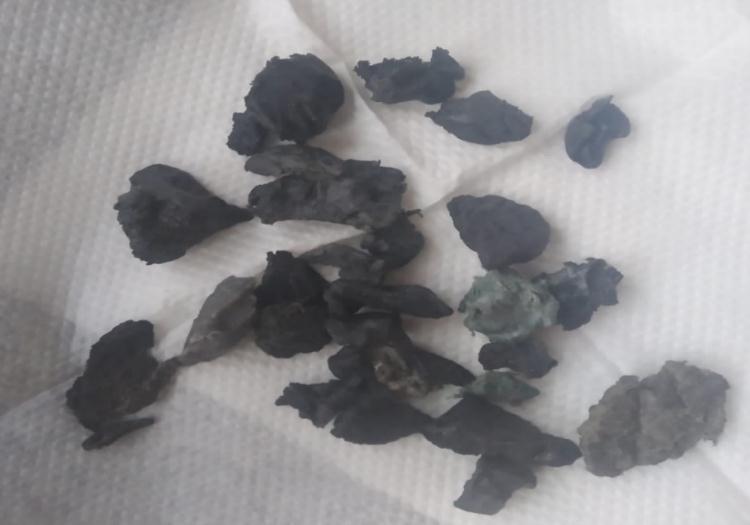
In this study we have use Plastic aggregates are madefromlocallyavailableplastic whichheatedandmelt it down and then we have made cube of it then we crush, them in aggregates size 12mm to 20mm. HDPE plastic gives,Goodchemicalresistance,lightweight,highdensity, High tensile strength, Excellent rigidity, due to these properties.plasticisgoodreplacementfortheaggregate.
International Research Journal of Engineering and Technology (IRJET) e ISSN: 2395 0056
Volume: 09 Issue: 06 | Jun 2022 www.irjet.net p ISSN: 2395 0072
In experiment We have used M30 grade of concrete and we are done weight batching of coarse aggregatethequantityofmaterialascement,sand,coarse aggregate, plastic aggregate required as per there proportionforthereplacementofcoarseaggregatebythe plastic coarse aggregate of in the percentage of 0%, 5%, 7.5%,10%.
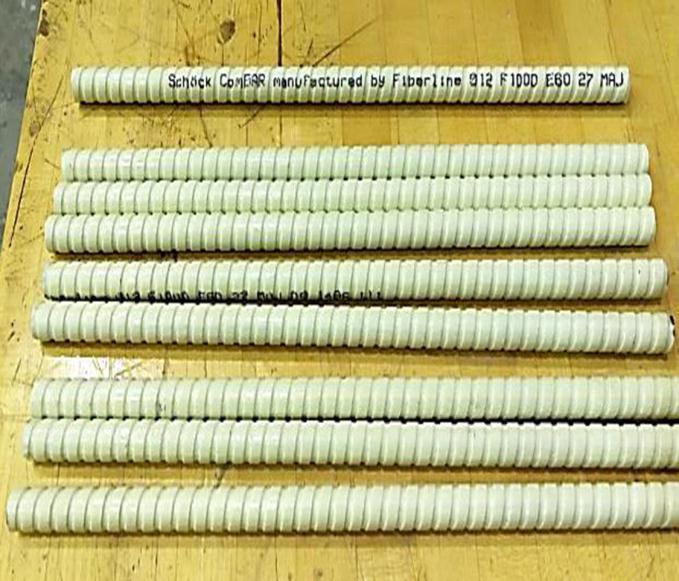
Reinforced concrete is very commonly use material in the construction such as, road, airport construction, bridges, buildings etc. Due to increasing in demand of reinforced concrete. Corrosion in reinforcementismostlycausesinbuildings.Therefore,the application of any other materials which replace the steel can considered as important alternative. Now, Glass fiber reinforced polymer bars is promising and very effective replacement for steel which increase life of reinforced concrete structures exposed to severely environment Glass Fiber Reinforced Plastic rebar is provided good resultsincorrosionresistance.GFRPbarsarecomposedof glassfiberswithathermosettingresinandproccedusinga pultrusionprocess.Itsadvantagesincludehighstiffnessto weight ratio, high longitudinal strength, tensile strength, corrosion resistance and light weight, resist chemical attack and electromagnetic neutrality for this reason we areusingGFRPbarinthisexcrement.
wehavesixcastedcubesforthecompressiontest with weight batching of plastic aggregate. Containing the plastic aggregate if 0%, 5%, 7.5%, 10% And six beam of each proportion of plastic aggregate of 5%, 7.5%, 10% of usingtwonumberof8mmGFRPbarattopandtwobarat bottom of the beam named it Mix 2, Mix3, Mix4 respectively which shown in following table 2 with addition to this we have casted six beams which reinforced with 8 mm diameter TMT bars of two number as main reinforcement and two number as hanger bars withconcretecontaining0%plasticaggregateandnamed it as mix 1 which mention in the table 2 As per standard we have use stirrups of 8mm TMT bar with spacing of 100mminallthebeams.Theclearcoverof25mmistaken.
Tests conducted on these concretes include compressive strength and flexural tensile Tests were conducted test at the age of 7 and 28 days on 3 specimen of each proportion and the results at each testing age are reportedasanaverage.Themoldswerecoatedwithoil to ensurethatnowaterescapedduringfillingandtoprevent adhesion of concrete. Concrete casting was accomplished inthreelayersEachlayerwascompactedusingavibrating table for 1 15 min until no air bubbles emerged from the surfaceoftheconcretemold.
The mix was designed of concrete is made as per IS 10262:2009 for M30 grade concrete with 0.4 water cement ratio. Concrete mixes are prepared by partial replacement of natural Aggregates by plastic aggregates with different percentages (0%, 05%, 7.5%, 10%) respectively for every mix. The materials of each mix are given in table 1 for the casting of cube and in table 2 for thecastingofbeam.
Sr. No. Mix Cement (kg) F.A. (kg) N.C. A (kg) P. A (kg)
01 Mix1 10.11 15.4 30.00 00
02 Mix2 10.11 15.4 28.50 1.50
03 Mix3 10.11 15.4 27.75 2.25
04 Mix4 10.11 15.4 27.00 3.00
Fig.2GFRPBar.
Table1.MixProportionforsixcubes
International Research Journal of Engineering and Technology (IRJET) e ISSN: 2395 0056
Sr. No. Mix Cement (kg) F.A. (kg) N.C. A (kg) P. A (kg)
01 Mix1 13.96 18.48 37.00 00
02 Mix2 13.96 18.48 35.10 1.90
03 Mix3 13.96 18.48 34.30 2.80
04 Mix4 13.96 18.48 33.30 3.70
Table2.MixProportionforsixcubes
Thesizesofmoldasperiscodeandtheplacingof reinforcement in beam is mentioned below. Concrete is produced with all material as mention above and replacement of normal coarse aggregate by the 0%, 5%, 7.5% and 10% of HDPE plastic as coarse aggregate. Six cubes of each proportion are casted and tested at 7 days and28 days. the size of onecube is150 mmx 150 mmx 150 mm were cast in accordance to relevant standard for testing of compression test then the 6 beam of each proportion of size 100mm X 100mm X 500mm as per IS 516 1959forthetestingofflexuralstrengthofConcrete.
Portable tab water is used for preparation of specimensandcuringofspecimens.
wehaveusedOrdinaryPortlandCementgrade53 cement for preparation of the concrete. OPC 53 grade cement is used to obtain higher strength with lesserquantityofcementcontent.cementof53 grade wasusedasitsatisfiedtherequirements
Initialsettingtime 25min. Finalsettingtime. 240min
Compressive strength
3days 32.3 ⁄ 7days 41.9 ⁄ 28days 59.5 ⁄ Fineness(90umsieve) 1.7% Standardconsistency 31.5%
The aggregates passing through 4.75 mm is termed as fine aggregates. The Sand we used for experimental program was locally available river sand.
The specific gravity of fine aggregate was found to be 2.638.
Coarse aggregates manly involving to the strength of the concrete.ThecoarseaggregateisLocallyavailableandthe sizeofaggregateispassingthrough20mmsieveasasame timeretainedin12.5mmsieveusedinpresentwork
Specificgravity 2.836 Waterabsorption 1.06% AggregateImpactvalue 12.4 SurfaceMoisture Nil
Table
8mmTMTsteel barof gradefe500isuseinthebeam asmain&distributionsteel. Andthestirrupusedinbeam isalsomadeupof8mmsteelbar.
Density 7850kg/m3 UltimateTensileStrength 545N/mm2. YieldStrength 500N/mm2. Young’sModulusofElasticity 200GPa PercentageElongation >12
Table5.Propertiesof8mmTMTbar
An experimental Glass Fiber Reinforced Plastic (GFRP)has emerged as promising alternative to conventional steel with excellent results in terms of corrosionresistance.
Tensilestrength(MPa) >1000 Modulusofelasticity(GPa) >60
TransverseShearStrength(MPa) 220 Bondstrengthtoconcrete(MPa) >20 Density(Kg/m3) 2100
Table6.PropertiesofGFRPBar
GFRPbarsareusuallycomposedofglassfibersreinforced with a thermosetting resin and manufactured using a pultrusion process. Its advantages include high longitudinalstrengthandtensilestrength,highstiffnessto weight ratio, resistance to corrosion and chemical attack, lightweight, controllable thermal expansion and damping characteristicsandelectromagneticneutrality.
Volume: 09 Issue: 06 | Jun 2022 www.irjet.net p ISSN: 2395 0072 © 2022, IRJET | Impact Factor value: 7.529 | ISO 9001:2008 Certified Journal | Page2787
International Research Journal of Engineering and Technology (IRJET) e ISSN: 2395 0056
Volume: 09 Issue: 06 | Jun 2022 www.irjet.net p ISSN: 2395 0072
we have use HDPE plastic as it gives high density, Light weight, Good chemical resistance, High tensile strength, Excellent rigidity, Low creep due to these properties’ plastic is good replacement for the aggregate. It is used in a variety of applications. Plastic toys, liquid containers, milk and cream bottles, detergent and cleaner bottle and thousands of consumer goods are made out of HDPE.
Specificgravity 0.96 Waterabsorption 0.57 Tensilestrength 27.58N/mm2
Flexuralmodulusofelasticity 1379.31N/mm2 Density 940Kg/M3
The results for the compressive strength are shown inFig.7andTable4.Thetestwastakenoutconformingto IS 516 1959 to achieve compressive strength of concrete attheageof7daysand28days.
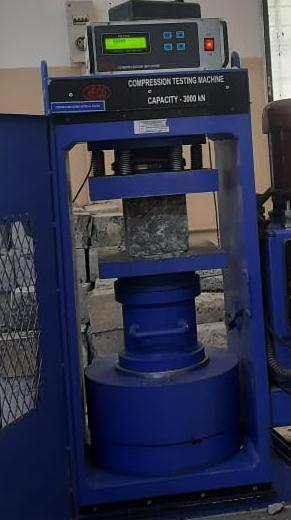
The cubes were loaded and observed the data using CompressionTestingMachine(CTM).Thetestingmachine standard is based on ASTM. The testing machine is the digital compression testing machine of sufficient capacity for the tests and capable of applying the load at the rate specify.
The permissible error for calibration of testing machine shall be not greater than ± 2% of the maximum load.Thespecimenshall beplacedinthemachineinsuch a way that the load can applied to opposite sides of the cubes, as a same time not to the top and bottom and is showninFig.3.Theaxisofthespecimenshallbecarefully arranged with center of the seated late; no need packing betweenthefacesofthetestspecimenandthesteel plate of the testing machine. The load should apply without shock
Fig3.CompressionTestingMachin Mix
Compressive Strength N/mm2
7 Days 28 Days Conational Concrete 18.90 27.11
5%PCA 15.00 18.67 7.5%PCA 3.50 16.40 10%PCA 10.11 12.74
The compressive strength is calculated from the failure load divided by the cross sectional area resisting the load. The compressive strength results are given in above table. we can see that strength of concrete goes on decreasingasweincreasetheplasticaggregateinconcrete the magnitude of maximum compressive strength was observed at 5% replacement The compressive strength for samples content 5% of HDPE plastic is lower than the control but still acceptable because it reaches the target strength of M30 grade concrete at the end period of curing. For the samples content 7.5% of HDPE, the development of their strength is same as 10% but it does notreachthetargetstrengthatage28days.
From graph and table of result obtained by this experiment it is understood that this kind of concrete is not suitable for structural element. But this is suitable for Plain Cement Concrete (PCC) works like roadwork, pavement, floor slab etc. Hence, plastic aggregate can be usedasanalternativeinPCCworksandhence,theplastic wastecanbemanaged.
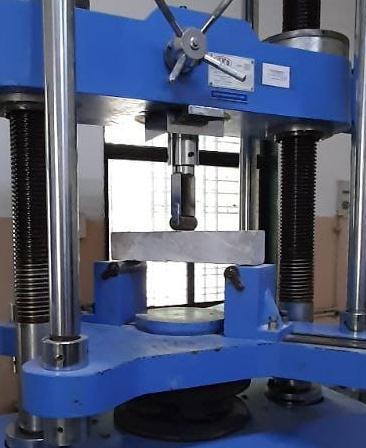
Allthebeamswerecastandkeptinacuringtank for 28 days. The beams of 500 mm length were simply supported with an effective span of 400 mm. one point loadswereappliedatacenterofthebeamstocreatepure bendingatthemiddleportionofthebeams.Adistribution beam was placed to the bottom end of the actuator for application of one point loads on the concrete beam specimens. beams reinforced with TMT and GFRP bars withplasticaggregateunderstaticloading.
The result obtains for this experiment the beams contain 8mm TMT bar and 0% PCA (Mix 1 in table) test resultsincludecrackinitiationloadandthecorresponding deflection.theaveragecrackimitationloadis18.80KNand corresponding deflection 5mm on 7 days testing. then after 28 Days the average crack imitation load for the beamsis27.50KNandaveragedeflectionis5.50mm.








The beams contain 8mm GFRP bar and 5% PCA (Mix 2 in table) test results show the average crack imitationloadis20KNandcorrespondingdeflection5mm on 7 days testing. then after 28 Days the average crack imitation load for the beams is 25.90KN and average deflectionis5.30mm.
Specimen Name Mix
Average crack initiation load 28 Days (KN) Avg. Load (kg)
Average crack initiation load 7 Days (KN)
Deflection (mm) Avg. Load (kg)
Deflection (mm)
Mix1 18.80 5.0 27.70 5.5
Mix2 20.00 5.0 25.90 5.3
Mix3 14.70 4.0 18.20 4.0 Mix4 13.80 4.0 17.80 4.0
The beams contain 8mm GFRPbarand 7.5% PCA (Mix 3 in table) test results show the average crack imitation load is 14.70KN and corresponding deflection 4mm on 7 days testing. then after 28 Days the average crackimitationloadforthebeamsis18.20KNandaverage deflectionis4.0mm.
International Research Journal of Engineering and Technology (IRJET) e ISSN: 2395 0056
Volume: 09 Issue: 06 | Jun 2022 www.irjet.net p ISSN: 2395 0072
6. Wecangetthelow costmaterialswhichwouldhelpto resolve some solid waste problems and reduce environment pollution by using this we can save the naturalresourcesforsomeextend.
7. This type of partial replacement of plastic waste aggregateincoarseaggregateissuitableforPCC road works,pavement,floorslabandothernon structural members but should be avoided in load bearing structures.
8. From the above experimental results, it was analyzed that plastic can be used as an alternative material for coarse aggregate, thereby reducing coarse aggregate consumptionanditiseconomical.
ItwasobservedThat theflexural strengthof theconcrete with the addition of recycled plastic aggregate is decreased linearly with the increasing plastic proportions andit wasobservedthat theconcrete madewith 5% PCA have the flexural strengths ranging between 3.5 and 4.5 mpa.
1. The compressive strength of concrete is increased up to certain percentage (i.e., up to 5%) and then drastically decreases with an increase in the percentageofPCA.
2. For5%plasticreplacementincoarseaggregate,there is 27.5% reduction in compressive strength, for 7.5% replacement,thereiscompressive36.4%reductionin strength and for 10% plastic replacement, there is 49.1%reductionincompressivestrength.
3. Flexuralstrengthofbeamcontainingplasticaggregate is less than the strength of the normal concrete beam butthatisuptothemarkandcanbeacceptable.
4. We get maximum Flexural strength at beam contain 5% plastic aggregate but that strength is lesser then thebeamwhichtestedwithnormalconcrete.
5. Flexuralstrengthofbeamgoesonincreasinguptothe certain limit of replacement of PCA and after that addingofeachpercentageofplasticaggregate,wecan clearlyobservethatthereisdropdownintheflexural strengthofbeam.
This Seminar Project work has been carried out for the academicrequirementsofDr.BATUUniversity, Loner, for the completion of Masters in technology of Structural Engineering. I sincerely thanks to my guide Prof. R. S. PATIL (Prof. At Civil Dept.), Dr. G.R. GANDHE (HOD Civil Dept.), Dr. Ulhas Shiurkar (Principal and, Director of Deogiri Institute of Engineering and Management Studies, Aurangabad), for the guidance technical support and unendingencouragement.
Last but not list I would like to thank my family member for their moral support, encouragement and for their love. I dedicate my work to each and every one of them.
Nur Hanis Zulkernain Utilization of plastic waste as aggregateinconstructionmaterials:Areview
Allan Manalo a,* , Ginghis Maranan a , Brahim Benmokraneb, PatriceCousinb,OmarAlajarmeha , Wahid Ferdous a , Ray Liang c , Gangarao Hota (2020): Comparative durability of GFRP composite reinforcingbarsinconcreteandinsimulatedconcrete environments Brahim Benmokrane a,⇑ , Salaheldin Mousa b,c , Khaled Mohamed d , Mahmoud Sayed Ahmed (2020) : Physical, mechanical, and durability characteristics of newly developed thermoplastic GFRP bars for reinforcingconcretestructure S. Suriya a,⇑ , M. Madhan Kumar b (2020) : strength studies on FRC with partial replacement of plastic wasteascoarseaggregate Ramachandra Murthy⁎ ,Vishnuvardhan, Gandhi (2020) : Performance of concrete beams reinforced withGFRPbarsundermonotonicloading
International Research Journal of Engineering and Technology (IRJET) e ISSN: 2395 0056
Brahim Safi a,⇑ , Mohammed Saidi a , Djamila Aboutaleb a , Madani Maallem (2013) : The use of plastic waste as fine aggregate in the self compacting mortars:Effectonphysicalandmechanicalproperties
T.S.J. Edmund et a, Sun Zhuowen and Pang Waste plasticaspartialreplacementforaggregates
E. Gudonis,1* R. Kacianauskas,2 V. Gribniak,1,2 A. Weber,3R.Jakubovskis,: mechanicalpropertiesofthe bondbetweengfrpreinforcingbarsandconcrete
Nur Liza Rahim1,a, Shamshinar Salehuddin1,b, Norlia Mohamad Ibrahim1,c Roshazita Che Amat1,d and Mohd Faizal Ab Jalil (2013): use of Plastic Waste (High Density Polyethylene) In Concrete Mixture as AggregateReplacement

Mr. Mahesh Bhagwanrao Shinde M TECHinStructuralEngineering, PGStudent,Departmentof Civil Engineering DeogiriInstituteofEngineeringand ManagementStudies,Aurangabad Maharashtra,India E mailaddress: Shindem11195@gmail.com
Volume: 09 Issue: 06 | Jun 2022 www.irjet.net p ISSN: 2395 0072 © 2022, IRJET | Impact Factor value: 7.529 | ISO 9001:2008 Certified Journal