International Research Journal of Engineering and Technology (IRJET) e ISSN: 2395 0056

Volume: 09 Issue: 06 | Jun 2022 www.irjet.net p ISSN: 2395 0072
International Research Journal of Engineering and Technology (IRJET) e ISSN: 2395 0056
Volume: 09 Issue: 06 | Jun 2022 www.irjet.net p ISSN: 2395 0072
1Master of Technology, Civil Engineering, Lucknow Institute of Technology, Lucknow, India 2Assistant Professor, Civil Engineering Department, Lucknow Institute of Technology, Lucknow, India ***
Abstract A core region exists in almost every Indian city. The core areas are frequently densely populated, crowded locations with limited openspace.Theyhaveahighpopulation density and are also tied to the city's historical past. These core districts are deteriorating for a variety of causes,andthis deterioration is now presentingadangertothecities'heritage value. The fast changing lifestyle of the residentsoftheregion, changes in the economics of individuals living in core areas, neglect by local developing authorities, and a lack of connectivity with newly built sections of the city areonlyafew of the reasons for this deterioration. The heritage zone frequently encircles the core portions of cities, separating them from the newly constructed regions. The clogged roadways that link the city's key districts make them inaccessible to the general public.
To maintain the rich legacy of such locations for future generations, there is a great need to connect the heritagecore regions with the main metropolis. The study article aims to find a solution for the regeneration and conservation of core regions using mass transportation fast systems.
Key Words: Mass Rapid System, Lucknow, public transportation.UrbanArea.
Indiaisacountrywithahistorydatingbackover7,000years. Indiahasseveralcitiesthatareamongthecountry'soldest. Whentherewerenomotorisedvehicles ontheland,these antiquecitieswerebuilt.Indiahasgrowninpracticallyevery industry in the last several years. The government's liberalisation programme has had a good impact on the country'seconomicsituation.People'slifestyleshavebegun tochangeata rapidpaceastheireconomiccircumstances have improved. Today, the country's ever increasing populationposesasignificanttransportationburden.Inthe lastthreedecades,acountrythatwasformerlyfamedforits agriculturaldominancehasbeguntoseeincreasingrural to urbanmigration.Thesizeofurbancentresisgrowing,which ishurtingthedensityofthecoreportionsofpracticallyallof thecountry'scities.Thecountryiscurrentlyataforkinthe road,witharichculturalpastononehandandtheprospect of future development on the other owing to economic growth. People are relocating out of the core regions as a result of economic and technological growth, and existing land uses are being changed into inaccessible commercial districts.Wediscoverthathistoricresidentialsettlementsare beingturnedintowholesalecommercialcentresinpractically
all cities. This change in land use and mutilation of residential clusters in core regions affects not only the architecturalheritagebutalsotheintangibleculturallegacy ofthesecoreplaces,whichislinkedtothepeoplewholive there. The absence of functioning public transportation infrastructure has made it difficult to link the city's core districts with newly built neighbourhoods. The striking contrastbetweennewlybuiltdistrictsandneglectedcitycore parts,cloggedroadwaysanddeterioratingcoreareas,allhave asignificantimpactonthetouristbusiness.
The Ministry of Urban Development, the Government of India'spredictionforthe nextfewyearsshowsa startling increaseinthenumberofmotorvehiclesinIndia.
WiththeexpandingnumberofcarsinLucknowandacross thecountry,it'smorevitalthanevertoassessthecurrent situation in terms of road traffic carrying capacity in the comingyears.Inreality,practicallyeverycityinIndiawitha populationofmorethanamillionpeoplenowhasasevere transportationchallenge.Therateofpopulationincreasein metropolitan regions, as well as continual migration from rural to urban areas, is exacerbating the situation. Due to rising urbanisation, population expansion, and economic development, practically all Indian cities will confront a seriouspublictransportationcrisis.
According to the report, residents living in Indian cities' urban districts have seen a significant increase in their economicstanding.Theseeconomicchangeshavenotgone unnoticed in the heart of the city.According to polls, the numberofmotorisedcarspossessedbypersonslivingin cities has increased by a factor of ten. The percentage increase in the road network owing to restricted carriageways in cities has lagged far behind the pace of expansion in the population and number of motorised vehiclesinrecentdecades.Thegrowthoftheeconomyin urban areas has been a primary driver of rural to urban migration.
India has had rapid economic growth since 1991 when it implementedaliberalisationstrategy.Today,thecountryis one of the world's fastest expanding economies. As the economyimproves,sodoespeople'sdesiretogetbehindthe wheel.Indiahasnotbeensparedfromthephenomenon.Easy auto loans, as well as an increase in the number of small segment vehicles and two wheelers on the market, have
International Research Journal of Engineering and Technology (IRJET) e ISSN: 2395 0056
Volume: 09 Issue: 06 | Jun 2022 www.irjet.net p ISSN: 2395 0072
enticed city dwellers to purchase at least one vehicle per household. The comparison of population growth, vehicle numbers,androadlengthinthecountryrevealsadisparity and explains why metropolitan areas are becoming increasinglycongested.
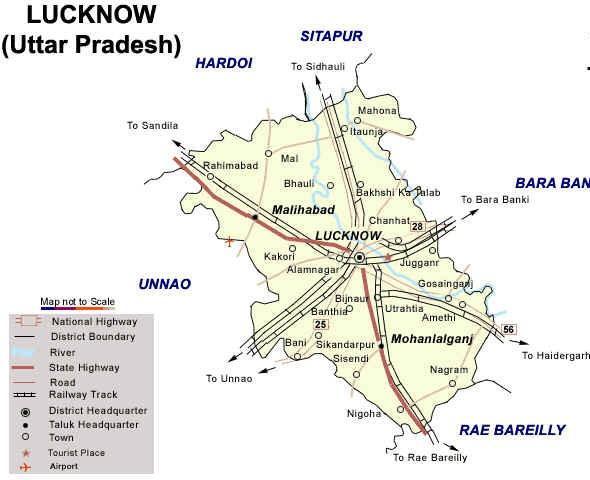
Lucknow has expandedacrossa 25 kilometre radius, with the General Post Office in Hazratganj serving as the focal point (refer to figure 1). The town's primary office and commercial complexes are located in the heart of the city, necessitating daily journeys. There isn't much room to expand the present public transportation system, which includes public buses, three wheeler tempos, and private automobiles,giventhestateofthemainhighwaysfromnorth to south and east to west. Lucknow's recent growth has resultedinalargeincreaseintransportationdemandaswell as a major increase in the number of vehicles. However, transportation infrastructure has not kept pace, and as a result, it is woefully inadequate. The City's roadways and parkingspaceshavegrownverycrowded,especiallyduring peak hours, since the number of registered vehicles has increasedbyroughly40,000vehicleseachyearoverthelast decade.
transportation, which has added to the pressure on the roadways of practically all Indian cities. According to the rites and UP State Transport Department research, the numberofautomobilesinLucknowincreasesbyabout16 per cent every year, indicating a significant need for new transportationinfrastructure.
The fundamental three characteristics frequently cause an increase in the number of cars on the road. Population expansion,urbanisation,andeconomicgrowthareallfactors inthedevelopmentofalocation.InIndia,havingacarisalso linkedtoaperson'ssocialposition.Asaresultofeconomic expansion, the number of automobiles on the road has increaseddramatically.Almosteverycarmanufacturerinthe world istargeting India asa potential market for new and sophisticatedautomobilestoday.
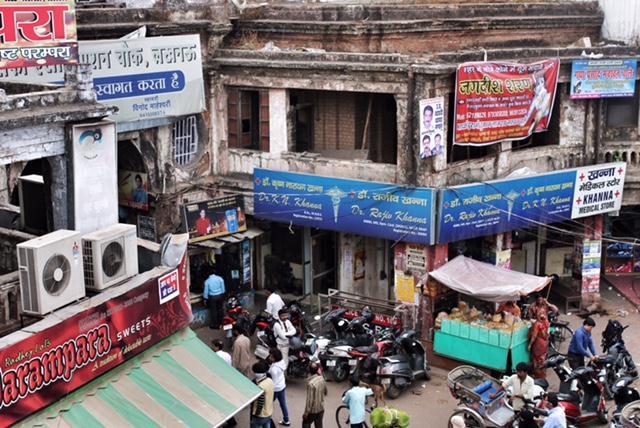
ThecurrentsituationintheChowkareashopsdemonstrates how they have failed to compete with fast moving new technologyandhavebeenpushedoutoftherapidlygrowing city.Thenarrowlanes,lackofconnectivity,andlackofproper publictransportationareaffectingnotonlytourismbutalso commercialactivitiesinthecoreareas.
According to studies and polls, Chowk is undergoing significant change, not just in terms of material but also intangiblehistory.Accordingtosurveys,thecoreregionhas undergoneanalmost30%alteration.Peoplehavebegunto migrateoutfromthecity'scentralsectionsandintothecity's newlyconstructedareas.Peoplewholiveinthecoreareas frequentlycomplainthatthecoreareasareoverlycrowded anddisconnectedfromnewlybuiltneighbourhoods.Duetoa paucityofparkingspotsinthecentraldistricts,inhabitants' changing lifestyles sometimes limit their ability to retain four wheelers.
It'simportanttorememberthatthecoreportionsofIndian citiesdatebacktoatimewhentherewerenomotorisedcars ontheroadways.Asaresult,thepercentageofroadsinthe coreareasofcitiesisfrequentlymuchlowerthantheareas left in newly developed areas. Because of the composite environment,theratioofroadwaysinthecoresectionswas alsolower,andstreetswerenarrower,keepingthestreets coolerduringthehotsummermonths.
Figure 1: Source: Lucknow.nic.in.
In the previous two decades, the city's population has increasedbyafactoroften.Thepopulationgrowthrateof Lucknow,accordingtothemasterplan,rangesfrom3.51to 4.37 per cent, with a population density of 67 people per hectare.Thecityisknownforbeingalow rise,low density metropoliswithplentyofopenspaceandflora.
In the previous twenty years, the city's population has increased by a factor of ten, a key sign of a country's economicsuccess.Thisisalsoattributabletotheincreased speedwithwhichcitiesarebecomingmoreurbanised.There has also been a rise in the number of people using public
Delhiisanothercitywiththenearlysametypeofproblems but on a more magnified scale. The present population of Delhiisabout16.75millionwithahighrateofruraltourban migration cases and a decadal population growth rate of about 21.15%. The last few decades have seen major congestiononDelhiRoadsandariseinthenumberofroad accidents. Delhi has a mix of areas ranging from the congestedOldDelhitotheLutyensNewDelhi.Delhitillthe timeDelhiMetroRailCorporationstarteditsfunctioning,the Delhiroadswerealwayschokedwithhightraffic.Delhihad itshistoriccitycentreatChandniChowkandtheCityCentre
© 2022, IRJET | Impact Factor value: 7.529 | ISO 9001:2008 Certified Journal | Page2749
International Research Journal of Engineering and Technology (IRJET) e ISSN: 2395 0056
Volume: 09 Issue: 06 | Jun 2022 www.irjet.net p ISSN: 2395 0072
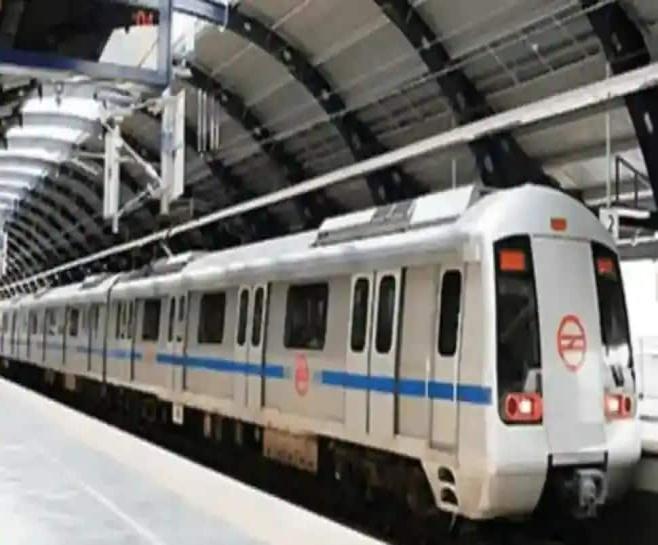
fortheNewDelhiatConnaughtPlace(RajivChowk).Delhi grewwithamultinuclearapproachandamuchsmallerDistt. Centres were developed at Nehru Place, Janakpuri, Saket, GreenPark,LaxmiNagaretc.Thedistancebetweenallthe districtcentresandthetrafficontheconnectingroadswas oneofthereasonswhymanyoftheseDistrictCentrescould not function properly refer to figure 2). Delhi shows an annualgrowthrateofnearly7%inthenumberofvehicles ontheroads.DelhiMetroRailCorporation(DMRC)hastried to solve the problem of Delhi traffic to a great extent. Not onlyhasitconnectedtheoldtothenewareasofthecitybut hasalsobroughtallthecommercialcentresclosertoeach other.DelhiMetrohasemergedasacost effectivesolution for urban transportation. The Delhi Metro with its 280 carriagestransports650,000passengersdailyandsiphons 1.5 million commuter trips each day off the roads. “The resultis1,650fewerbusesontheroads.Onecannotethat nearly70%oftherevenueofDelhiMetroRailCorporation comesfromoperationalsources(ticketsales)andtherest fromnon operationalonessuchasadvertisingandproperty development. Thus metro has been successful in not only givingacushiontotheincreasingtrafficofDelhibuthasalso helpedinconnectingtheoldpartsofthecitytothenewer developedones.DMRChascomeasahandytooltoreduce theconstanttransformationoftheresidentialhamletsofthe oldChandniChowkareathustherebyreducingthenumber of out migration cases. Metro has connected the two differentareaswiththehelpoftechnology.
Thesurveyconductedshowsthatnearly30%ofthepeople in the core area have either their workplace or their residences more than 4Km away from this place. It is indicative that people belonging to the core areas have started migrating to better developed areas. The survey indicatesthatmostofthepeoplelivinginthecoreareaown atwo wheelerandfewevenownfour wheelerautomobiles. Nearly30%ofboththeresidentialclustersandtheshopsin themainshoppingstreetarerentedtonewpeopleandthe originalownersandinhabitantshavemigratedouttomore openandnewerareas.Thustheresidentialareasareslowly convertingtocommercialhubsandgodowns.Withtheout migration ofthe original inhabitants, the new people who are occupying the buildings are from different cultural backgrounds. Rapid changes are occurring in the architecturalcharacterofoldcitycores.Theout migrationof original inhabitants is affecting not just the tangible built characterbutalsotheintangibleculturalvaluesofthecore areaofChowk.Surveyrevealsthattraffic,services,parking, waste management etc. have always been an issue in the corecityareas.Lackofproperpublictransport,thenarrow streetsandconnectivitymakethecoreareainaccessiblefor thetouriststhusaffectingtheinhabitantseconomically.Lack of proper connectivity is also affecting the small scale craftsmenwhowerethebackboneoftheculturalheritage. As per the survey, many of the original residents are not awareoftheheritagevalueoftheplaceandthisisoneofthe reasonsfortheirwillingnessforthetransformation.
Thesurveyconductedinthecoreareaofchowkwasdoneto understandtheextentoftransformationthathashappened in Chowk and to understand the reasons for the transformation.Thesurveyrevealsthatnearly27%ofthe totaloldbuildingshavebeenreplacedbymodernstructures.
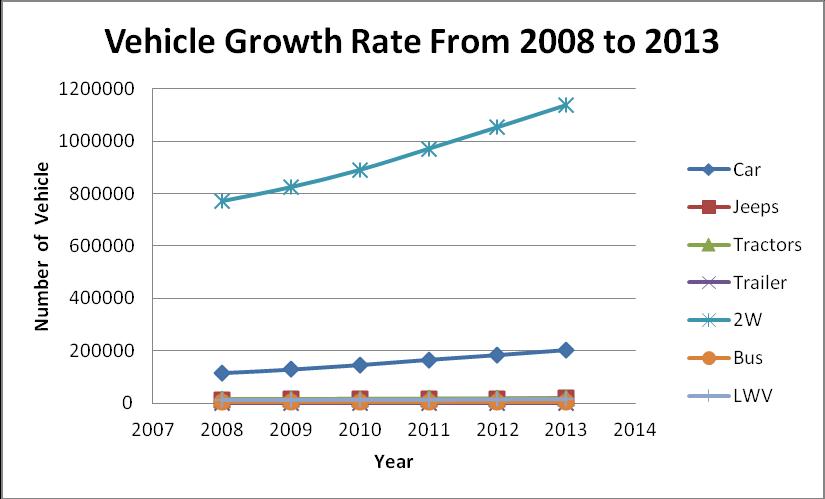
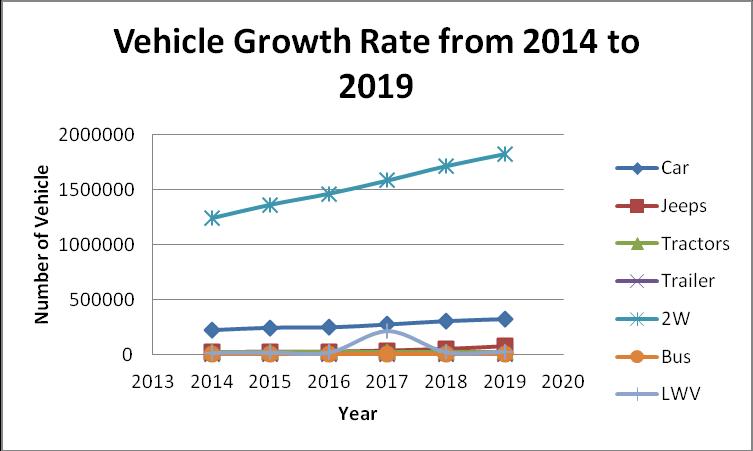
ThegrowthrateofthevehicleintheLucknowisgivenbelow intheformofthegraph,Anddataonthevehiclegrowthis takenfromthewebsitewww.ceicdata.com.Thedataofthe vehiclefrom2008to2019.
International Research Journal of Engineering and Technology (IRJET) e ISSN: 2395 0056
Volume: 09 Issue: 06 | Jun 2022 www.irjet.net p ISSN: 2395 0072
substantially,duetotheincreaseinpopulationasaresultof bothnaturalgrowth&migrationfromruralareas&smaller towns. Availability of motorized transport, increases in household income & increases in commercial & industrial activitieshavefurtheraddedtotransportdemand.Inmany cases,thedemandhasoutstrippedtheroadcapacities.Asthe citiesgrowinsize,theno.ofcirculartripson roadsystems goesup.Ithastobenotedthatsmallercitiescannotaffordto cateronlytoprivatemodesoftransportationsuchascars& scootersorbikes.
After analysing the survey, we found that the volume of traffic is increasing day by day in the Chawk area near AminabadandNakhaash.Tosolvethehightrafficvolume, need to divide the traffic into four parts because the maximum volume of the trafficisduetothetwo wheeler, Cars,Auto,andErickshaws.
Figure 4: Vehicle Growth in Lucknow from 2008 to 2013.
Thesecondgraphofthevehiclegrowthfrom2014to2019is givenbelow:
Stopthisfour vehicleatadifferentlocation.OrBan Thecar entry as well as E rickshaws and auto in the Chawk Area becausethesedevelopedhightrafficvolumeinthechowk.
[1] National urban transport policy document, 2014www.itdp.in/wpcontent/ uploads/2014/11/NUTP 2014.pdf.(Accessedon1stSeptember,2017).
[2]P.ShrivastavaandM.Mahony“ModellingAnIntegrated Public Transportation System A Case Study In Dublin, Ireland” Journal of European Transport, vol. 41, pp 1 19, 2009.
[3]P.ShrivastavaandDhingraL.“OperationalIntegrationOf SuburbanRailwayAndPublicBuses CaseStudyOfMumbai” Journal Of Transportation Engineering, vol. 132, no. 6, pp 518 522,2006.
Figure-5: Vehicle Growth in Lucknow from 2014 to 2019
ThepopulationofIndiaisgrowingatafastpaceandsoisthe rateofurbanizationinthecountry.Todaythecountryhas more than 40 metropolitan cities. While researches show that the ideal modal share of public transport should be around70%,however,itisintunewithonly35% 40%in India’s metro cities. Thus with a nearly 70% share of privatelyownedvehiclesandagrowingrateofurbanization, allthemetropolitancitiesaremovingtowardsajam packed situation.Thiswillnotonlyincreasethepollutionlevelinthe citiesbutwillalsoaffecttheeconomyofthecities.Thecore areaswillbecomeunreachable.Peoplefromthecoreareas willmigrateoutforgreenerpastures.Thistransformation willaffectthetourismindustry.Overthelastfewdecades, the transport demand in most Indian cities has increased
[4] N. Monteiro, R. J. F. Rosseti, P. Campos and Z. Kokkinogenis “A Framework For a Multimodal TransportationNetwork:AnAgentBasedModelApproach”, Elsevier, Transportation Research Procedia,vol.4, pp213 227,2014.
[5] J. Yu; G.L. Chang, W. Ma and X. Yang “Locating Urban TransitHubs:MulticriteriaModelandCaseStudyinChina” Journal of Transportation Engineering, ASCE, vol. 137, pp 944 952,2011.
[6] J. L. Rosenberg and A. M. Esnard “Applying a Hybrid Scoring Methodology to Transit Site Selection” Journal of Urban Planning and Development, vol. 134, no. 4, pp. 180 186,2008.
[7] J. Camargo Perez; R. Jairo, M. Torres, H. Martha, C. Ramlrez “Multicriteria Decision Making For Locating Multimodal Transfer Nodes In Passenger Transport
© 2022, IRJET | Impact Factor value: 7.529 | ISO 9001:2008 Certified Journal | Page2751
International Research Journal of Engineering and Technology (IRJET) e ISSN: 2395 0056
Volume: 09 Issue: 06 | Jun 2022 www.irjet.net p ISSN: 2395 0072
Systems” International Conference on Systems, Man, and Cybernetics,IEEE,pp718 723,2013.
[8] Z. Wang, Y. Chen, and Y.Y. Mao “Development of a Planning Method for Coordinating a Public Transport NetworkwiththeLocationofTransferTerminals” Journalof Integrated Transportation Systems,
ICCTP,ASCE,pp2530 2539,2010.
[9] P. Wu, Y. Chen, G. Zhang, W. Wu “The Coordination Evaluation Research For Multimodal Public Transport System” Journal of IntegratedTransportationSystems,ICCTP, ASCE,pp2515 2521,2010.
[10]M.Kumar,P.Sarkar,andM.Errampalli“Developmentof FuzzyLogicBasedModeChoiceModelConsideringVarious Public Transport Policy Options” International Journal for Traffic and Transportation Engineering, vol.3,no.4,pp408 425,2013.
[11] C. Minal, and R. Shekhar, “Mode Choice Analysis: The Data, Models and Future Ahead” International Journal for Traffic and Transport Engineering, vol.4,no.3,pp269 285, 2014.
[12]D.Sarkar,andP.Kamdar“ApplicationofSimulationin EvaluationofTravelTimePerformanceofBusRapidTransit System,Ahmedabad” Journal of Institution of Engineers, vol. 92,pp.9 13,2011.
[13]A.Sarkar,A.Mane,andS.Arkatkar“StudyofModalShift toBusRapidTransit(BRT)InDevelopingCountry:ACase Study In India” Int. 94th Annual Transportation Research Board Meeting, Washington D.C, 2014.
© 2022, IRJET | Impact Factor value: 7.529 | ISO 9001:2008 Certified Journal | Page2752