International Research Journal of Engineering and Technology (IRJET) e-ISSN: 2395-0056

Volume: 09 Issue: 06 | Jun 2022 www.irjet.net p-ISSN: 2395-0072
International Research Journal of Engineering and Technology (IRJET) e-ISSN: 2395-0056
Volume: 09 Issue: 06 | Jun 2022 www.irjet.net p-ISSN: 2395-0072
1Post Graduate Student, Department of Civil Engineering, KJ College of Engineering & Management Research, Pune 411048, India
2Associate Professor, Department of Civil Engineering, KJ College of Engineering & Management Research, Pune 411048, India ***
ABSTRACT This research work presents the progressive collapse analysis of RCC building for blast and seismic loading. The term progressive collapse defined as the ultimate failure or proportionately large failure of a portion of a structure due to spread of a local failure from element to element throughout the structure. Progressive collapse analysis is performed on low rise for G+4, medium rise for G+17 and high rise for G+22 building and its validation in accordance with General Services Administration 2013 Guidelines, to check Demand Capacity Ratio of a respective structure. The response of RCC framed structure under blast and seismic loading is checked in this work. Regular framed structures of G+4, G+17,G+22 are designed and analyzed using Staad proV8i SS5.Time history analysis method is used for progressive collapse analysis. Columns are removed to initiate the progressive collapse. The Elcentro data is used for sesmic time history analysis and for blast analysis time history load is calculated as per IS 4991.Natural frequency, storey drift ,base shear ,vertical displacement before and after column removal are calculated and Demand Capacity ratio is checked .The obtained DCR values shows that columns are safe for low rise(DCR is 1.5)and high rise building(DCR is1.9) and for medium rise G+17 building (DCR is 2.8)collapsed element has been redesigned and additional reinforcement is required to limit the DCR within the acceptance criteria, in order to save partially stable structure.
Keywords: Progressive Collapse,Demand capacity ratio, column removal, blast and seismic loading,Staad pro
Explosiveloadingincidentshavebecomeaseriousproblemthatmustbeaddressedquitefrequently.Manybuildings thatcouldbeloadedbyexplosiveincidentsaremomentresistantframeseitherconcreteorsteelstructures,andtheir behavior under blast loads is of great interest. Besides the immediate and localized blast effects, one must consider the serious consequences associated with progressive collapse that could affect people and property. Progressive collapse occurs when a structure has its loading pattern, or boundary conditions, changed such that structural elements are loaded beyond their capacity and fail in the past, structures designed to withstand normal load conditions were over designed, and have usually been capable of tolerating some abnormal loads. Modern building design and construction practices enabled one to build lighter and more optimized structural systems with considerably lower over design characteristics. Essential techniques for increasing the capacity of a building to provideprotectionagainstexplosiveandseismic effectsshallbediscussedbothwithanarchitecturalandstructural approach. Damage to the assets, loss of life and social panic are factors that have to be minimized if the threat of terroristactioncannotbestopped.Designingthestructurestobefullyblastresistantisnotarealisticandeconomical option, however current engineering and architectural knowledge can enhance the new and existing buildings to mitigatetheeffectsofanexplosionsandseismicactivities.
To Study progressive collapse analysis Of RCClow, medium and high rise building during progressive collapse with blastandseismicloadingusingstaadpro.
To perform progressive collapse analysis on low, medium and high rise building and its validation in accordancewithGSA2013.
TocheckResponseofRCCframestructureunderblastandseismicloading.
© 2022, IRJET | Impact Factor value: 7.529 | ISO 9001:2008 Certified Journal | Page2597
International Research Journal of Engineering and Technology (IRJET) e-ISSN: 2395-0056
Volume: 09 Issue: 06 | Jun 2022 www.irjet.net p-ISSN: 2395-0072
To check c/d ratio of low rise building, high rise building for different earthquake zones in according with GSA2013
Toanalysethetimeofcollapseofbuilding.
Anexplosionoccurswhenagas,liquidorsolidmaterialgoesthrougharapidchemicalreaction.Whentheexplosion occurs, gas products of the reaction are formed at a very high temperature and pressure at the source. These high pressuregassesexpandrapidlyintothesurroundingareaandablastwaveisformed.Anexplosionisarapidrelease of stored energy characterized by a bright flash and an audible blast. Part of the energy is released as thermal radiation (flash) and part is coupled into the air as air blast and into the soil (ground) as ground shock, both as radiallyexpandingshockwaves.
Dynamic analysis using the time history analysis calculates the underground structure responses at discrete time steps using discretized record of synthetic time history as base motion. If three or more time history analyses are performed,onlythemaximum responsesoftheparameterofinterestareselected.Timehistoryanalysisisthestudy of the dynamic response of the structure at every addition of time, when its base is exposed to a particular ground motion.
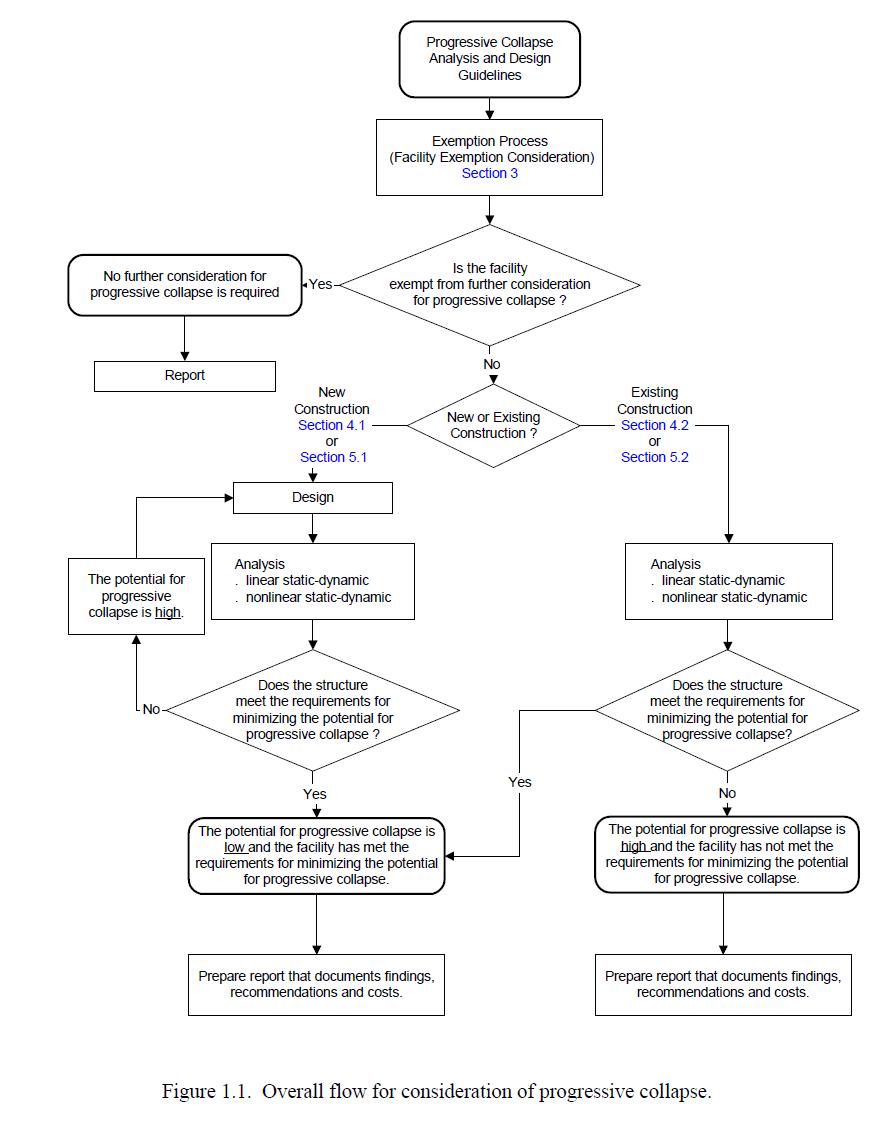
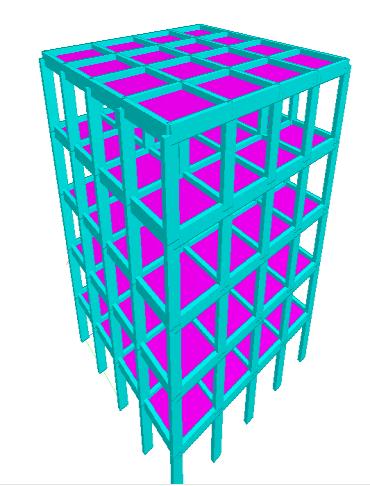
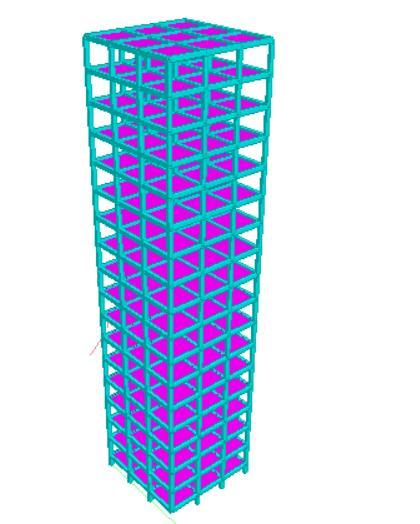
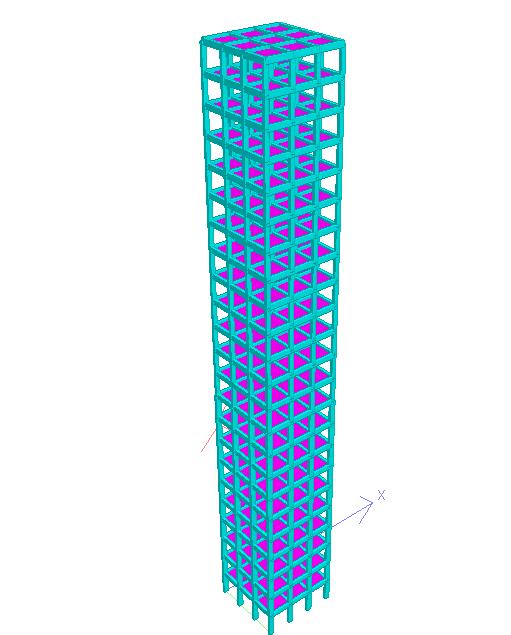
ThespaceframebuildingismodeledinSTAAD Pro.Thebeamsandcolumnsaremodeledasbeamelementsandthe slabismodeledasaplateelement
© 2022, IRJET | Impact Factor value: 7.529 | ISO 9001:2008 Certified Journal | Page2598
Specification G+4 G+17 G+22
BeamSize 230*500mm 230X500mm 230X500mm
SlabThickness:150mm StoreyHeight:3m Gradeofconcrete:M25
Explosive type: C4 type of explosive
Column Size 230*600mm
Column up to fourth floor Size:230X450mm
Columnuptofourthfloorto seventh floor Size: 230 X 420mm
Column up to seventh floor to tenth floor Size: 230 X400mm
Columnupeleventhfloorto seventeen floors: 230 X 380mm
Column up to fourth floor Size:230X450mm
Columnuptofourthfloorto seventh floor Size: 230 X 420mm
Column up to seventh floor to tenth floor Size: 230 X400mm
Columnupeleventhfloorto twenty second floor: 230 X 380mm
SlabThickness 150mm 150 m 150mm
StoreyHeight 3m 3m 3m
Gradeofconcrete M25 M25 M25
International Research Journal of Engineering and Technology (IRJET) e-ISSN: 2395-0056
Volume: 09 Issue: 06 | Jun 2022 www.irjet.net p-ISSN: 2395-0072
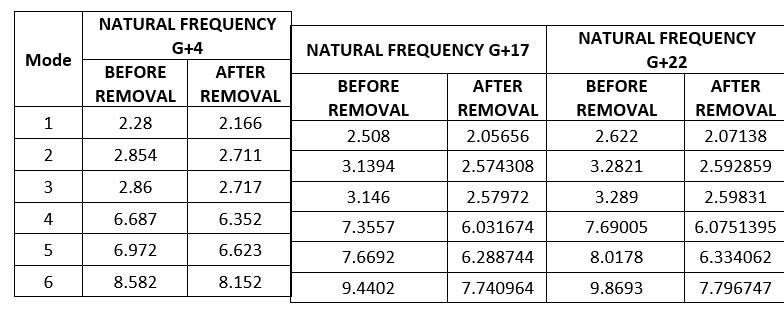
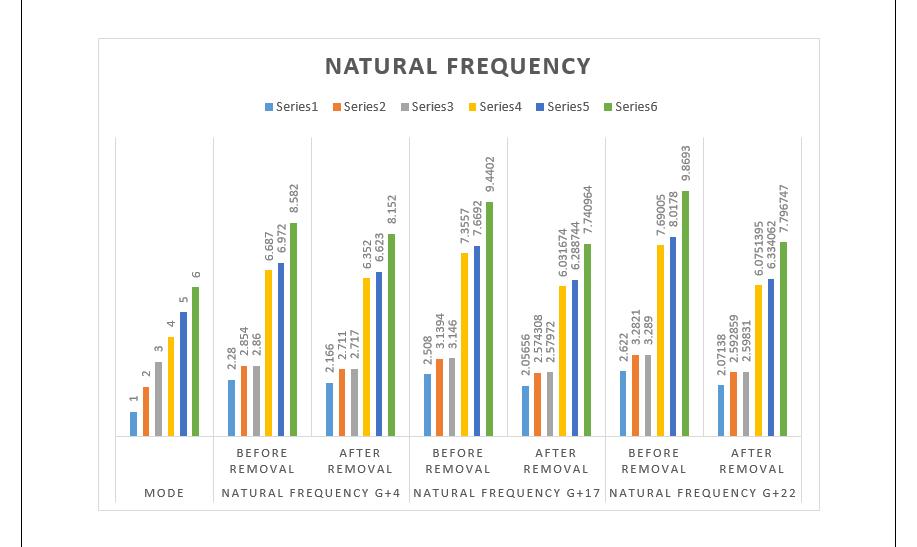
4.1 Progressive collapse analysis for G+4 building with blast loading results is as follows Table 2:Natural Frequency Hz NATURAL FREQUENCY Mode BEFORE REMOVAL AFTER REMOVAL 1 2.280 2.166 2 2.854 2.711 3 2.860 2.717 4 6.687 6.352 5 6.972 6.623 6 8.582 8.152
NATURAL FREQUENCY
0 0.1 0.2 0.3 0.4 0.5 0 2 4 6 8 N AT U RAL FRE QUE N CY MODE SHAPE
NATURAL FREQUENCY NATURAL FREQUENCY
Fig.4.Natural frequency Vs Mode shapes FromtheabovegraphtheNaturalfrequencyofframebeforeremovalofcolumnisgreaterthanafterremoval. Table 3:Time period TIME PERIOD Mode BEFORE REMOVAL AFTER REMOVAL 1 0.439 0.41705 2 0.35 0.3325 3 0.35 0.3325 4 0.15 0.1425 5 0.143 0.13585 6 0.117 0.11115
© 2022, IRJET | Impact Factor value: 7.529 | ISO 9001:2008 Certified Journal | Page2600
International Research Journal of Engineering and Technology (IRJET) e-ISSN: 2395-0056
Volume: 09 Issue: 06 | Jun 2022 www.irjet.net p-ISSN: 2395-0072
T IME P E RIOD
0 0.5 0 2 4 6 8
TIME PERIOD TIME PERIOD
FromtheabovegraphtheTimePeriodofframebeforeremovalofcolumnisgreaterthanafterremoval
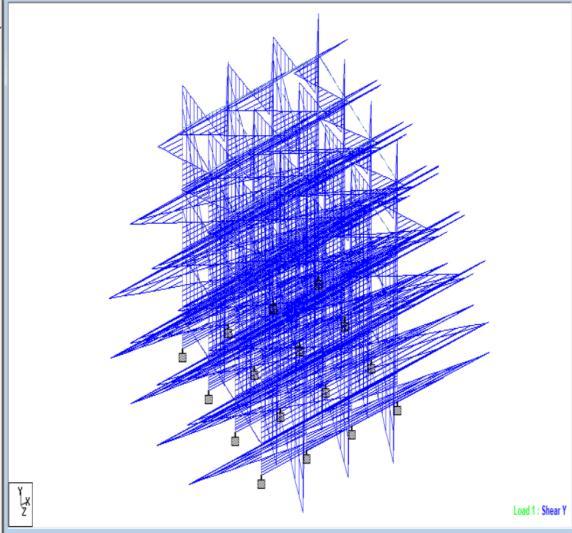
Fig.6.1 Bending moment diagram before Fig.6.2Bending moment diagram after removal of column removal of column
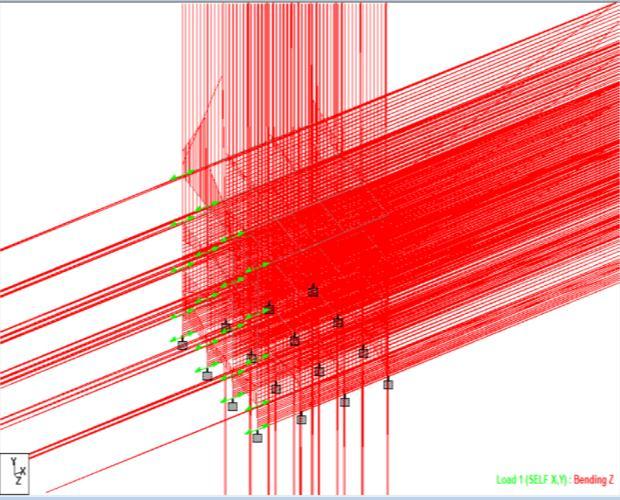
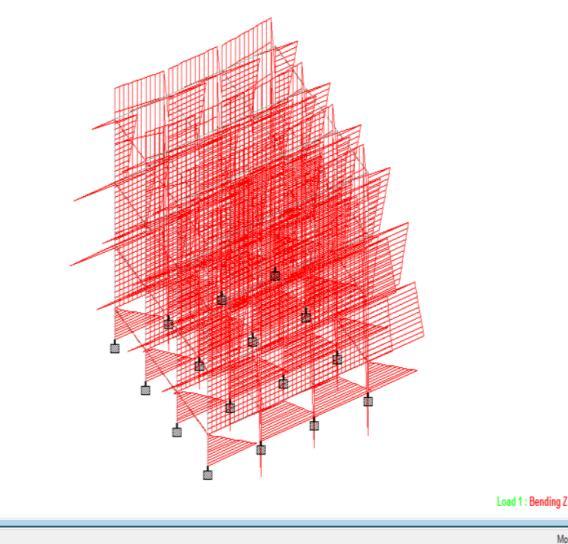
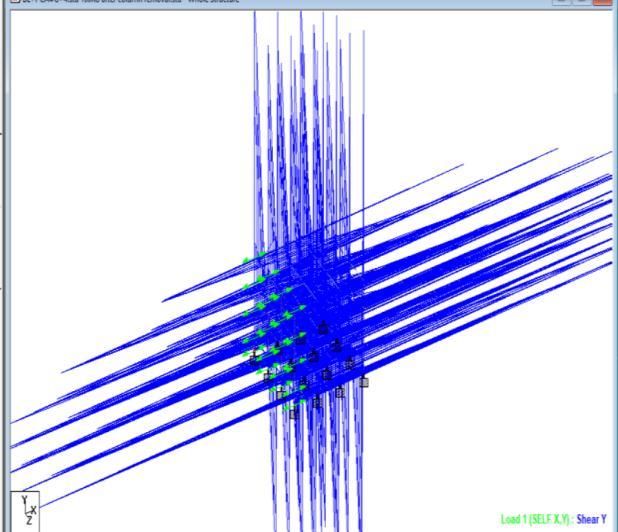
Fig.6.3Shear force diagram before Fig.6.4 Shear force diagram after removal of column removal of column
© 2022, IRJET | Impact Factor value: 7.529 | ISO 9001:2008 Certified Journal | Page2601
International Research Journal of Engineering and Technology (IRJET) e-ISSN: 2395-0056
Volume: 09 Issue: 06 | Jun 2022 www.irjet.net p-ISSN: 2395-0072
4.2 G+4 Building Storey Drift, Base Shear and Displacement
Table 4: Storey drift
Storeyno. RCCframe Beforeremovalofcolumn Afterremovalofcolumn 0 0 0 1 1.54 1.54 2 6.16 6.17 3 13.87 13.89 4 24.66 24.7 5 34.35 34.4
0 50 0 2 4 6 S TORE Y D R IF T STOREY NO.
Before removal of column
Fig. 6.5 Drift in X direction FromtheabovegraphtheDriftinXdirectionbeforeremovalofcolumnisupto34.35andafterremovalisupto34.4 ,DriftinXdirectionafterremovalgreaterthanbeforeremoval.
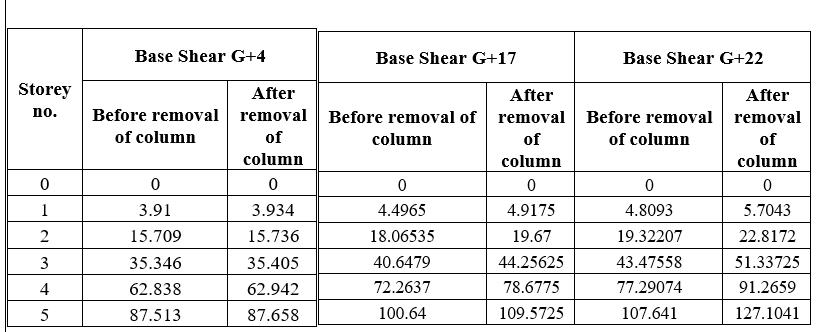
Table 5 : Base shear Storeyno. RCCframe Beforeremovalof column Afterremovalof column 0 0 0 1 3.91 3.934 2 15.709 15.736 3 35.346 35.405 4 62.838 62.942 5 87.513 87.658
© 2022, IRJET | Impact Factor value: 7.529 | ISO 9001:2008 Certified Journal | Page2602
International Research Journal of Engineering and Technology (IRJET) e-ISSN: 2395-0056
Volume: 09 Issue: 06 | Jun 2022 www.irjet.net p-ISSN: 2395-0072
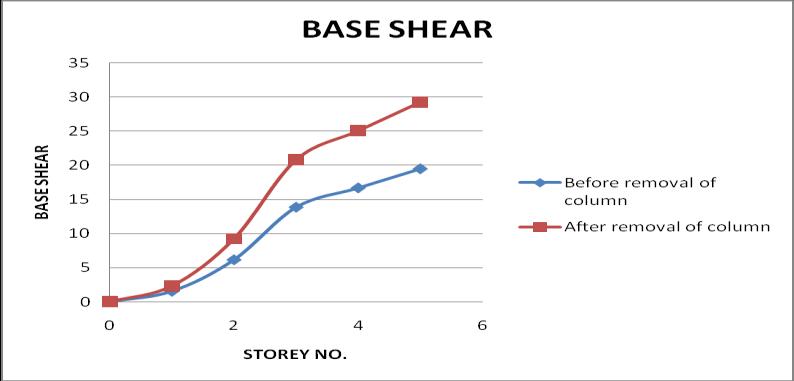
FromtheabovegraphtheBaseshearinXdirectionbeforeremovalofcolumnisupto87.513andafterremovalisup to87.658,BaseshearinXdirectionafterremovalgreaterthanbeforeremoval.
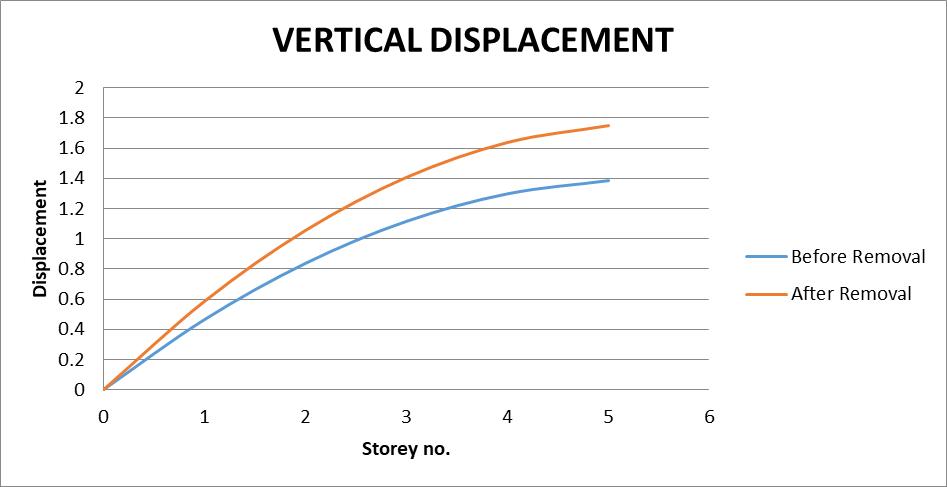
Storeyno.
RCCframe Beforeremovalofcolumn Afterremovalofcolumn 0 0 0 1 0.464 0.585 2 0.836 1.054 3 1.114 1.405 4 1.296 1.636 5 1.383 1.747
FromtheabovegraphtheDisplacementinXdirection,beforeremovalofcolumnisupto1.383andafterremovalis upto1.747,BaseshearinXdirectionafterremovalgreaterthanbeforeremoval.
© 2022, IRJET | Impact Factor value: 7.529 | ISO 9001:2008 Certified Journal | Page2603
e-ISSN: 2395-0056
Volume: 09 Issue: 06 | Jun 2022 www.irjet.net p-ISSN: 2395-0072
4.3.Combined results of all models:
Series1 Series2 Series3 Series4 Series5 Series6
Table 7:StoreyDrift 0 0 0 0 0 0 0 1 1.54 1.54 1.77 1 1.97 12 1.92 5 2.07 9 2 6.16 6.17 7.08 4 7.89 76 7.7 8.32 95 3 13.8 7 13.8 9 15.9 505 17.7 792 17.3 375 18.7 515 4 24.6 6 24.7 28.3 59 31.61 6 30.8 25 33.3 45 5
34.3 5 34.4 39.5 025 44.0 32 42.9 375 46.4 4
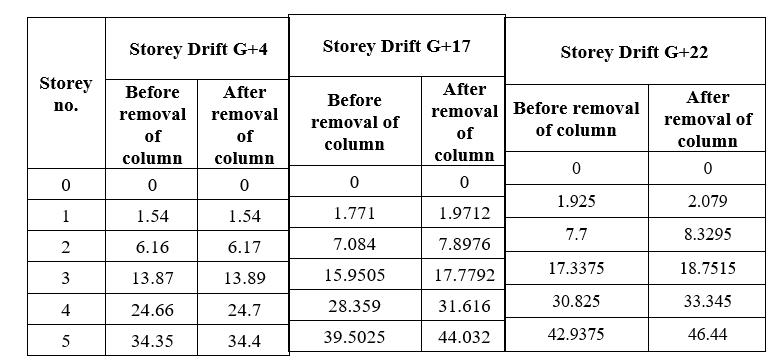
BEFORE REMOVAL OF COLUMN AFTER REMOVAL OF COLUMN BEFORE REMOVAL OF COLUMN AFTER REMOVAL OF COLUMN BEFORE REMOVAL OF COLUMN AFTER REMOVAL OF COLUMN STOREY NO. STOREY DRIFT G+4 STOREY DRIFT G+17 STOREY DRIFT G+22
© 2022, IRJET | Impact Factor value: 7.529 | ISO 9001:2008 Certified Journal | Page2604
International Research Journal of Engineering and Technology (IRJET) e-ISSN: 2395-0056
Volume: 09 Issue: 06 | Jun 2022 www.irjet.net p-ISSN: 2395-0072
MODEL G+4 G+17 G+22
DCR
TIME PERIOD
NATURAL FREQUENCY
VERTICAL DISPLACEMENT
STOREY DRIFT
BASE SHEAR
COMPARATIVE ANALYSIS OF ALL STOREYS G+22 G+17 G+4
0 20 40 60 80 100 120 140 160 180 200
BASE SHEAR 87.513 174.753 186.91 STOREY DRIFT 34.35 68.58 74.55 VERTICAL DISPLACEMENT 1.747 2.5 3.1 NATURAL FREQUENCY 8.582 9.44 9.86 TIME PERIOD 0.117 0.105 0.101 DCR 1.5 2.88 1.9 Dcr ratio for earthquake time history analysis
MODEL G+4 G+17 G+22
BASE SHEAR 51.37 149.326 155.29 STOREY DRIFT 26 13 23 VERTICAL DISPLACEMENT 7.4 20 36.7 NATURAL FREQUENCY 4.017 1.749 1.34
TIME PERIOD 2.5 5.72 7.6 DCR 1.5 2.11 1.4
© 2022, IRJET | Impact Factor value: 7.529 | ISO 9001:2008 Certified Journal | Page2606
International Research Journal of Engineering and Technology (IRJET) e-ISSN: 2395-0056
Volume: 09 Issue: 06 | Jun 2022 www.irjet.net p-ISSN: 2395-0072
STOREY DRIFT
BASE SHEAR
0 20 40 60 80 100 120 140 160 180
InthispaperDCRvalue,storydrift,BaseShear,Timeperiod,naturalfrequencyiscomparedforG+4,G+17,G+22for earthquakeanalysisandblastloadanalysis.Forearthquakeanalysisthecolumnfromextremelefti.e.plinthlevelfirst columnisremovedandit’sobservedthatlowriseandhighriseissafe.Howeverforblastloadanalysisthecolumns formaximumloadisremovedandit’sobservedthatlowriseandhighriseissafesameasearthquake.
From non linear dynamic analysis of building subjected to blast load before column removal and after column followingconclusionsaredrawn.
1. Columnremovalshavesignificanteffectonblastperformanceofbuildings.
2. ForG+4 100kg TNT, due to column removal thereis 40.82%,36.10% &27.83%increase in displacement, velocityandaccelerationrespectively.
3. ForG+4 200kg TNT, due to column removal thereis 44.96%,32.87% &23.03%increase in displacement, velocityandaccelerationrespectively.
4. ForG+4300kgTNT,duetocolumn removalthereis44.44%,31.6%&21.558%increaseindisplacement, velocityandaccelerationrespectively.
5. ForG+4400kgTNT,duetocolumnremovalthereis44.186%,31.24%&21.51%increaseindisplacement, velocityandaccelerationrespectively.
6. ForG+17100kgTNT,duetocolumnremovalthereis17.82%,16.25%&14.23%increaseindisplacement, velocityandaccelerationrespectively.
7. For G+17 200 kg TNT, due to column removal there is 18.92%, 17.1% & 15.5% increase in displacement, velocityandaccelerationrespectively.
8. For G+17 300 kg TNT, due to column removal there is 19.4%, 18.2% & 21.58% increase in displacement, velocityandaccelerationrespectively.
9. For G+17 400 kg TNT, due to column removal there is 21.2%, 19.4% & 22.4% increase in displacement, velocityandaccelerationrespectively.
© 2022, IRJET | Impact Factor value: 7.529 | ISO 9001:2008 Certified Journal | Page2607
International Research Journal of Engineering and Technology (IRJET) e-ISSN: 2395-0056
Volume: 09 Issue: 06 | Jun 2022 www.irjet.net p-ISSN: 2395-0072
10. ForG+22100kgTNT,duetocolumnremovalthereis15.20%,15.30%&13.15%increaseindisplacement, velocityandaccelerationrespectively.
11. ForG+22200kgTNT,duetocolumnremovalthereis17.84%,15.63%&14.25%increaseindisplacement, velocityandaccelerationrespectively.
12. ForG+22300kgTNT,duetocolumnremovalthereis18.54%,16.59%&20.35%increaseindisplacement, velocityandaccelerationrespectively.
13. ForG+22400kgTNT,duetocolumnremovalthereis20.26%,17.56%&21.35%increaseindisplacement, velocityandaccelerationrespectively.
14. DCRratio inallcasesexceedsby2hencesectionsneedtoberedesignedconsideringblastload
15. Whilecomparingbaseshear,storeydriftandverticaldisplacementtheamplitudeduetoremovalofcolumn increased by 25 30% for shear, storey drift and vertical displacement because stiffness of structure decreasedduetoremovalofcolumn
Forlowrisebuildingthedifferenceaftercolumnremovalismorethanthatofhighrisebuildingashighrisebuilding willhavemorestiffness
InthefurtherstudytheDCRvaluewillberevisedformediumrisebuildingi.e.G+17,theDCRvaluecanbedecreased byincreasingsteel,revisingsectionsorchangingdesign
1. YaraM.Mahmoud,MahaM.Hassan,SherifA.Mourad,HeshamS.Sayed‘Assessmentofprogressivecollapse ofsteelstructuresunderseismicloads’2018
2. RoholaRahnavarda, FaramarzFathiZadehFardb, Ali Hosseinic, Mohamed Suleimand ‘Nonlinear analysis on progressivecollapseoftallsteelcompositeBuildings’2018
3. YashJain1,Dr.V.D.Patil2‘AssessmentofProgressiveCollapseforaMulti StoreyRCFramedStructureusing LinearStaticAnalysisTechnique’Volume60Number3 June2018
4. Y.A. Al Salloum a, H. Abbas a, T.H. Almusallam a, T. Ngo b, P. Mendis b ‘Progressive collapse analysis of a typicalRChigh risetower’2018
5. RinshaC1,BijuMathew2‘Progressivecollapseanalysisofsteelframestructures’Volume:04Issue:05| May 2017
6. Ramon Codina, Daniel Ambrosini, Fernanda de Borbona ‘Alternatives to prevent progressive collapse protectingreinforcedconcretecolumnssubjectedtonearfieldblastloading’2017
7. Ahmed Elshaer, Hatem Mostafa, and Hamed Salem ‘Progressive Collapse Assessment of Multistory ReinforcedConcreteStructuresSubjectedToSeismicActions’2016
© 2022, IRJET | Impact Factor value: 7.529 | ISO 9001:2008 Certified Journal | Page2608