International Research Journal of Engineering and Technology (IRJET) e ISSN:2395 0056

Volume: 09 Issue: 06 | June 2022 www.irjet.net p ISSN:2395 0072
International Research Journal of Engineering and Technology (IRJET) e ISSN:2395 0056
Volume: 09 Issue: 06 | June 2022 www.irjet.net p ISSN:2395 0072
1Pramod Katkar, 2Shubham Salunkhe, 3Prasad Katle, 4Omkar Lohar, 5Aditya Patil, 6Shubham Lokhande, 7Hemant H. Badal. 123456Student ,SSIET’s B.Tech College Ghogaon,karad,Maharashtra, India. 7Faculty, SSIET’s B.Tech College Ghogaon,Karad, Maharashtra, india. ***
ABSTRACT:
Urbanizationleadtoatremendousgenerationofstrongwasteanddischargeofthesewastesubstancesgrewtobea importantproblem.Dumpingandlandfillingofstrong wasteleadstoenvironmental degradationi.efloor water infection thruleaching,whichoutcomesinsoilairpollutionandadditionallyimpactonhumanhealth.Inlatestyears,theutilization ofstrongwasteasbecomegreaterpossibletorecyclethepreciousfabricandlimitthequantityofstrongwaste,different pollutantsanddumpingcost.Thispaperissituationtoreuseandrecyclethereachablestablewastegeneratedfrompaint industry.Todiscoverasocio economic,eco friendlysolution,wastetrashcanberecycledforthecoachingofbricks,which preserveacleanerenvironment.Theelevatedquestforsustainableandeco friendlysubstancesincivilbuildingworks.It isusefultograntsustainableandpossiblesolutioninthedevelopmentfield.
The massive requirement has been positioned on the building industry, specifically in the last decade due to extensiveamplifyinairpollutionwhichmotiveachronicscarcityofconstructingresources.Oneabsolutepossibilityisthe use of municipal strong waste and agriculture waste as a building material. Bricks are viewed to be one of the most tremendous ancient building substances in the building industry. Due to the increase in population a fast increase in the demandfordevelopmentbuildingsubstanceshasoccurred.Inordertomeettheneedsoftheincreasinghousingdemand, thereisanexponentialneedforthemanufacturingofmasonrybricks. Theimmoderateusageoftheearthsubstancesthat are utilized for production of fired bricks consequences in huge depletion of the natural resources and also high power consumption.Useofmunicipalstablewasteandagriculturewasteinbricksextraordinarilyreducestheproportionofclay in bricks through supplying suitable strength. The traditional substances which are predominantly used in construction process, such as concrete kind bricks, hollow type blocks, strong blocks, pavement type blocks and flooring tiles are generatedfromthealreadypresentnaturallyavailableresource
Objectives:
• Tominimizewaste.
• Toprepareecobrickswhichissuitableforenvironment
• Toreducepollution.
• Toovercometheagriculturewasteandmunicipalsolidwasteproblems.
• Thestrengthofecobricksismorethanconventionalbricks.
• Toreducethequantityofclaywithnaturalwastematerial.
Atpreliminarystage,thesoil and wasteistakeninproportionandmixeditindrystatethenaddwaterinitand mixitproperlyandputitfor24hrs.
After24hrs.thebricksaremouldedwiththehelpofmouldofinsidedimensions19cm*9cm*9cm.
After moulding process the bricks contain some amount of moisture in it. So drying is to be done for avoiding crackswhileburning.
Volume: 09 Issue: 06 | June 2022 www.irjet.net p ISSN:2395 0072
Dryingisdoneintwostages,upto3daysthebricksisdryingbyhackprocessandafter3daysofbrickshack,the bricksislaidinstacksupto3to10daysdependinguponclimaticcondition.
Aftertheprocessofmouldinganddryingbricksareburntinkilnstoimparthardness,strengthtothebricksand makesthemdenseanddurable
After the burning of bricks, the kiln is allowed to cool down gradually for at least 7 days and the bricks are the takenout.
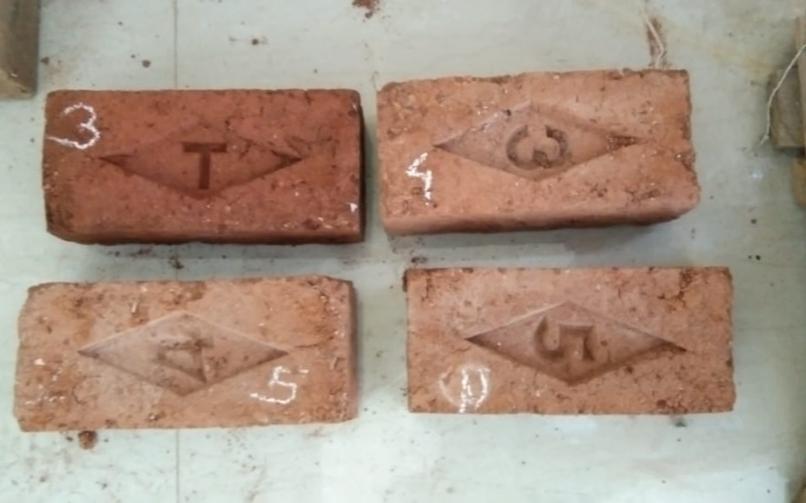
FinallyEcobricksisobtained.
Fig 1. Plastic Waste
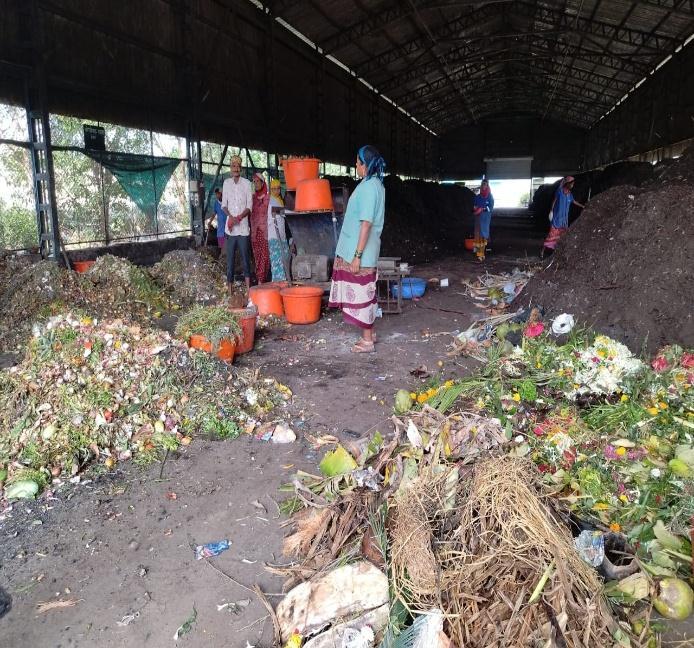
Fig 2.Agricultural Waste
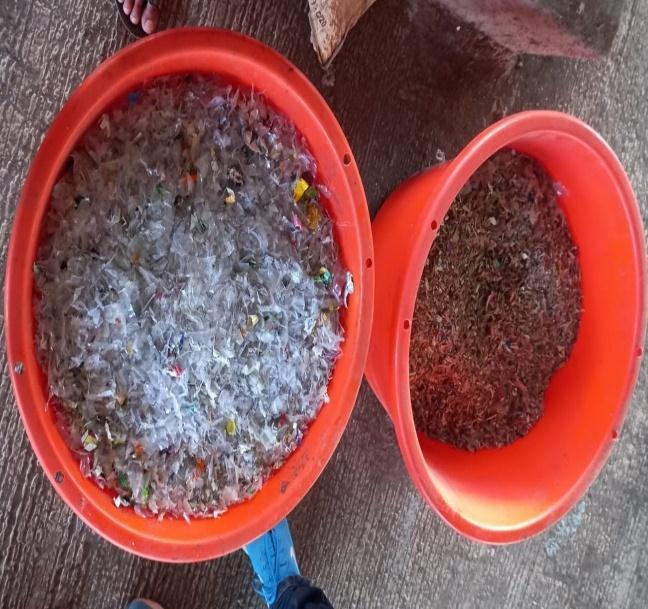
Fig 3. Eco Bricks
Volume: 09 Issue: 06 | June 2022 www.irjet.net p ISSN:2395 0072
Material Selection and its Properties:
For manufacturing Eco bricks, soil, plastic waste, solid & agricultural waste, bagasse and water is essential material.Hereincaseofordinarybricksplasticwaste andsolidwasteisnotusedandonotherhandinEcobricksplastic wasteandsolidwasteisused
Soil : Bricksaremainlymadefromsoil.Soilbricksrequireasoilwithclayandsandcombinationofnotlessthan50%by weight. The three major types of soil found in India are Alluvial soil, Black cotton soil and Red soil. Alluvial soilcontains around 20% to 30% clay and are good for brick making. The black cotton soil needs to be blended with other additives beforebeingused.Redsoilsdonotmakegoodbricksduetotheircoarseandlowplasticity.
Waste Plastic : whichcontainsoneormorenumberofpolymershavinglargemolecularweight.Solidinitsfinishedstate orsamestatewillmanufacturingorprocessingintofinishedarticlesisknownasPlastic.Wastemanagementinrespectto plastic can be done by recycling. If they are not recycled then they will become big pollutant to the environment as they notdecomposeeasilyandalsonotallowthewatertopercolatetothesoilandtheyarealsopoisonous.Thisplasticwaste canberecycledandwhichareusedformakingEcoBricks.
Municipal Solid Waste and Agricultural Waste : Municipal solid waste is any non liquid waste that is created by an individual person, household, small business or institution. Agricultural waste is a waste produced as a result of various agriculturaloperations.
Material quantity : Forthiswetakencomparativestudytogetbetterandsatisfactoryresultsbyusingdifferent material forvariablemixturelikesoil,plasticwaste,agriculturalwaste,etc.
% of Soil % of Solid Waste No of Bricks 70 30 15 80 20 15 90 10 15 (Waterisusedinsuitableproportionguidedbyexperiencedlaboursonkiln) RESULT AND DISCUSSION:
International Research Journal of Engineering and Technology (IRJET) e ISSN:2395 0056
Volume: 09 Issue: 06 | June 2022 www.irjet.net p ISSN:2395 0072
An analysis of the above results shows that, for adding 10% waste in the brick gives higher compressive strength with respect to conventional brick & other. After increasing the waste in the brick, the compressive strength decreases gradually.
( Theremainingtesthavebeentakenbuttheyhavenotbeenmentionedinpaper.)
Conclusion:
AEcobrickconsistsofrecycledfabricandconsequentlycostislowcomparedtoconventionalbricks
Ecobrickscanbeeasilymoldedintoanyshape,bricksareanawfullotlesscomplicatedforanybodytoraiseto anypreferredheightandverypropersurfacefinishcanbeachieved.
The weight of this brick is nearly 2/3rd of conventional clay brick. Due to less weight of these bricks, the total deadloadofthebuildingwillbereduced.
Thesebricksaredoubtlesslyidealclothforearthquakeproneareasastheyarelight weightandflexible.
Theenergyofecobricksismorethanconventionalbricks
Advantages:
Compressivepoweriscorrectadequateforordinaryconstruction.
Verylowupkeeppriceisrequired
Differentorientationsandsizesgivedifferentfloortextures.
Producesmuchlessenvironmentalairpollutionatsomestageinmanufacturingprocess.
The foremost gain of Eco brick is that they transform some thing that would have been dangerous to the environmentintosomefactorthatbenefitsneighborhoodcommunities
Ecobricksassist preventhazardousmaterial for being burntor endingup in theocean. When plasticisburnt, it emitsCO2growingcarbonemissionsandcontributingtoglobalwarming.
Reference:
Figaredo,AndreaTreasa,andMaryDhanya."DevelopmentofSustainable BrickMaterialsIncorporatingAgro Wastes:AnOverview."Development5.11(2018).
YasodhaT."Agro industrialwastesasSustainableResourcefortheproductionofbricks."(2018)
Prof. J. S. Lambe and Prof. R. S. Chougule . "A Pilot scale study on use of Municipal Solid Waste in making of bricks"
VIJAYARAGAVAN,R.,andS.MULLAINATHAN."ProductionofBrickMaterialsfromMunicipalSolidWasteAsh."
Raj, S. Madan, et al. "An experimental study on the strength and characteristics of eco bricks from garbage dump."InternationalJournalofLatestTechnologyinEngineering,Management&AppliedScience(2018).
Saini,Akshita,andAbhinavAggarwal."Eco:Friendlybricks.
Shaker, Alaa A., and Ali Ahmed Mohammed. "Manufacturing of Bricks in the Past, in the Present and in the Future: A state of the Art Review." International Journal of Advances in Applied Sciences (IJAAS) 2.3 (2013): 145 156.
International Research Journal of Engineering and Technology (IRJET) e ISSN:2395 0056
Volume: 09 Issue: 06 | June 2022 www.irjet.net p ISSN:2395 0072
Sahu,ManishKumar,LokeshSingh,andSuchiNagChoudhary."Criticalreviewonbricks."InternationalJournal ofEngineeringandManagementResearch(IJEMR)6.5(2016):80 88.
Roushdy, M. H. "Ceramic Tiles Production from Cullet and Agricultural Wastes Obtained from Wheat and SugarcaneCultivation."WSEASTransactionsonEnvironmentandDevelopment17(2021):429 435.