OCR DETECTION AND BIOMETRIC AUTHENTICATED CREDIT CARD PAYMENT SYSTEM.
Adesh Shinde, Suraj Pilaware, Ashutosh Garud, Murtza Merchant.Dept of Information Technology, JSCOE, Savitribai Phule Pune University, Pune, Maharashtra, India. ***

Abstract: The number of personnel using online transaction methods has made tremendous growth over the last few years so we need a safe place to complete the same. To authenticate and confirm online transactions, we recommend employing biometric authentication. As a result, consumers save time by reducing a multi step method to a single step. Toenabledevicestodetectvisualsignalsusingawebcam,simplifytheoperationofmanuallyenteringthedetailsofthe cardintendedforOCR. Device users are ordinary people who are frustrated by the extra time spent on the internet. The present authorization system uses an OTP that is difficult to recover. We have developed a Python backbone that would simulate the system billing process and the OTP system billing procedure. We utilised it to see if users enjoyed the new method of payment verification and to seek feedback on how to enhance the product. We describe a project that could makeinternetpaymentspossiblewithoutanyadditionalhurdles.
CreditcardcompanieshavenosecurityfeaturesotherthanOTP(one timepassword)andCVV. Ifthisprogramdoesitsjob withoutanyproblem,creditcardanddebitcardcompaniescanusethisprogramtoreducethefraudofonlinetransaction.
Keywords: Dataset, CNN(Convolutional Neural Network),Django ,Fido Authenticator, OCR Architecture.
1. INTRODUCTION
When utilising e commerce sites, we all face issues with OTP (One time Password) generation, the most common of which are obsolete OTP, prior OTP generation, OTP theft,andmore.Abignumberofcustomerspreferonline transactions due to the growing number of credit card/debit card holders and the convenience of online transactions. Banks also play a vital role in ensuring that transactions are completed and that consumers can withdraw funds as needed. This also contributes to the term"DigitalIndia."
Despite the fact that credit/debit card firms provide CVV securityandbanksprovideOTPprotection,thereisstilla high risk of fraud at high pricing. This could lead to a sense of unease when conducting online transactions.
As a result, we created a system to try to resolve the situation.Usingafingerprintauthenticationapproachand OCR for credit/debit card text identification. Millions of people's lives are directly or indirectly impacted by the digital store industry in the E commerce sector. With the current architecture, this particular area can be easily exploited. This has the potential to transform the lives of everyone linked to the network. E commerce has exploded in popularity over the previous decade. As a result, it is critical to construct digital storefronts for businesses with additional protection so that they can earn safely in this online market, as traditional e commerceisnotassecureorassimpleforsmallbusiness ownerstoestablishtheironlinepresence.Toimprovethe overallefficiencyoftheE commercesector,featuressuch
as traceability, detectability, tracking, verification, and accountabilityshouldbeincluded.
REQUIREMENT SPECIFICATION AND ANALYSIS
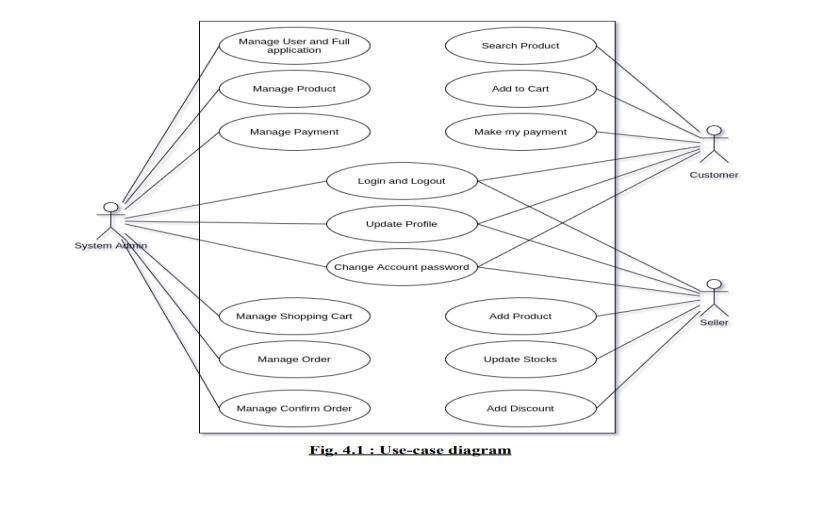
To enhance the approach of the traditional payment systemusingFingerprintAuthenticationandCredit/Debit Card OCR detection and cutting a multi step process into a one step process, therefore, saves consumer time. To enable devices to detect visual signals using a webcam, simplifytheoperationof manuallyenteringthedetails of thecardintendedforOCR.
Volume: 09 Issue: 06 | June 2022 www.irjet.net p ISSN:2395 0072
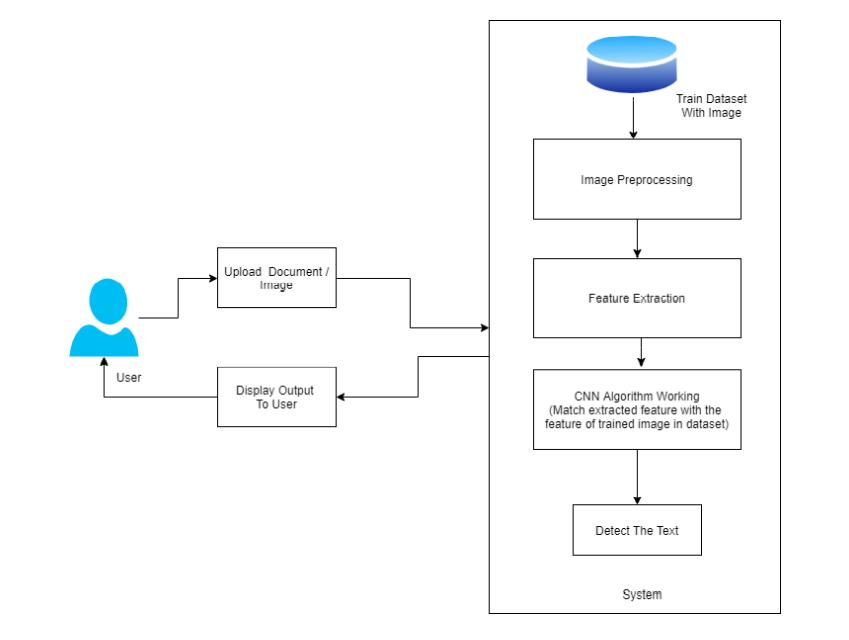
OCR ARCHITECTURE
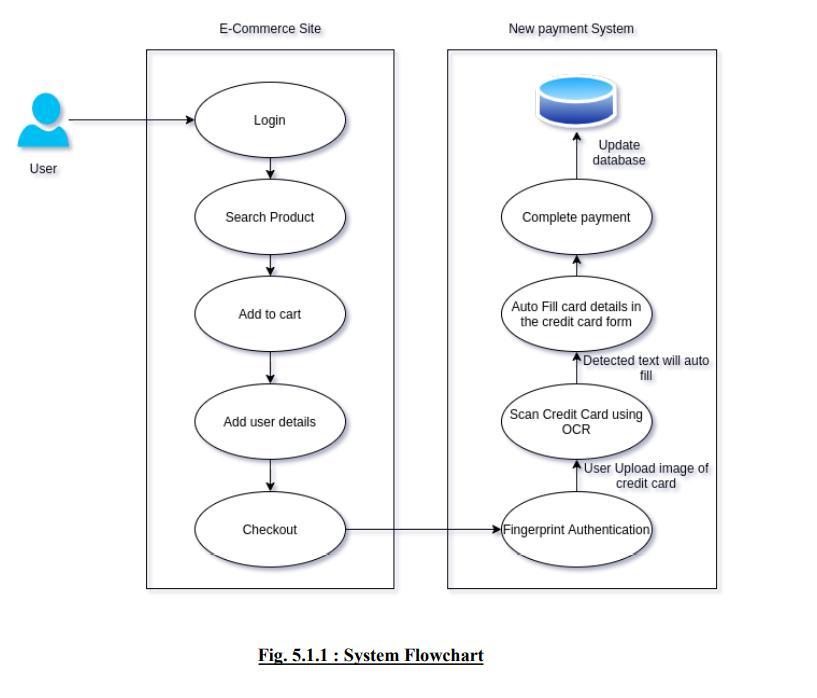
Thecoreobjectivesofthisprojectare:
1. Create a Payment system where weauthenticate users usingfingerprintScanner.
2.Simplifythefunctionofmanuallyenteringthedetailsof the card intended for OCR to enable devices to detect visualsignalsusingawebcam.
3.Protectthedataauthenticity.
4.Speedupthetransaction.
5. Design of payment system to avoid single point of failure.
6. Increasing Security for credit/debit card companies as theyjusthaveOTPandCVVastheirsecuritysystem.
PROPOSED METHODOLOGY
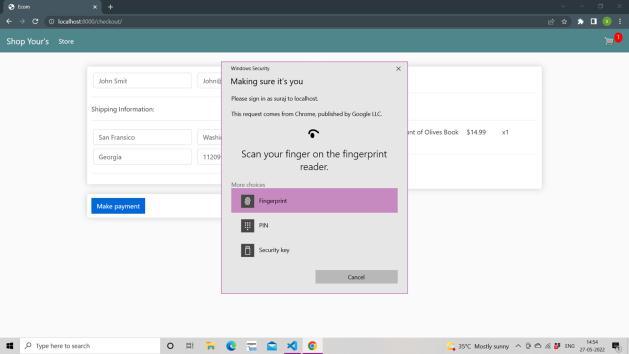
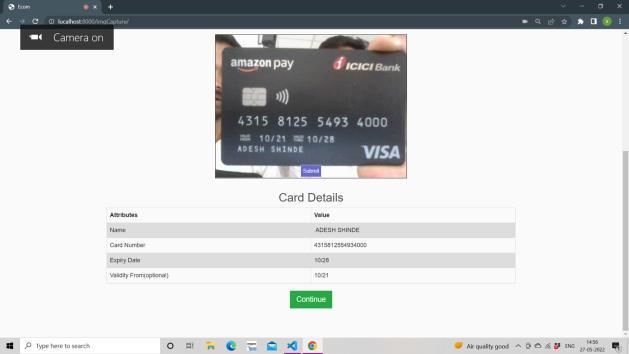
Credit and debit cards are widely utilised in modern society. These days people also choose to use a credit/debit card to do a large number of online transactions.However,oneofthemostprevalentfraudsis some terrible things. According to a recent poll, India is the most targeted country in the world, ranking third. In India,over2lakh+onlinefraudscamshavebeenreported in the last two years. Traditional credit/debit card security is CVV and OTP (One Time Password) authentication However, this security is based on fingerprint .authentication. When a credit/debit card is placedinfrontofthecamera,theappropriateinformation is immediately input in the form. In card verification, we use the google cloud vision API, then fingerprint authenticationwehaveusednavigator.credentials.
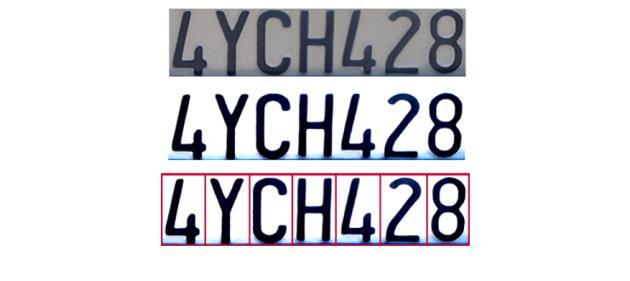
Pre processing is the first thing an OCR model does with an image. Depending on the model, this can mean a variety of things, but the image is essentially changed to make it as easy to read as feasible. Rotating the text, straightening it, eliminating any background graphics, making the background as white as possible, and darkeningthetextifitisn'talreadydarkareallexamples ofpre processing.
International Research Journal of Engineering and Technology (IRJET) e ISSN:2395 0056
Volume: 09 Issue: 06 | June 2022 www.irjet.net p ISSN:2395 0072
Afterthen,theOCRbeginstheprocessofrecognisingeach character,whichcanbedoneinavarietyofways.
Oneapproachispatternrecognition.Thisisaccomplished by first detecting lines of black pixels separated by rows ofwhitepixels.
Individualcharactersarethenexaminedinthesameway, withtheblackpixelsinbetweencolumnsofwhitepixels.
Each character is represented as a binary matrix, with whitepixelsrepresenting0sandblackpixelsrepresenting ones. The distance between the matrix's centre and the farthest pixel is calculated using the distance formula. Thisisusedasaradiustomakeacircle,anditdividesthe circle into subsections, each of which is compared to a databaseofcharacterstofindthebestmatch.
FINGERPRINT AUTHENTICATION
ARCHITECTURE
While two factor authentication was formerly the industry standard,theFIDO and World WideConsortium (W3C) WebAuthN standards are paving the way for modernpassword freebrowsing.
This open standard, developed with the help of IT heavyweights like Google andMicrosoft, providesa more convenient and secure authentication experience than traditional2FAauthenticationsolutions.
Singular Key, as a dependable multi factor authentication serviceprovider,allowsyoutogiveyourclientstheoption of using current authenticators such as Windows Hello, Biometrics, or Security Keys for frictionless online connections,engagements,andtransactions.
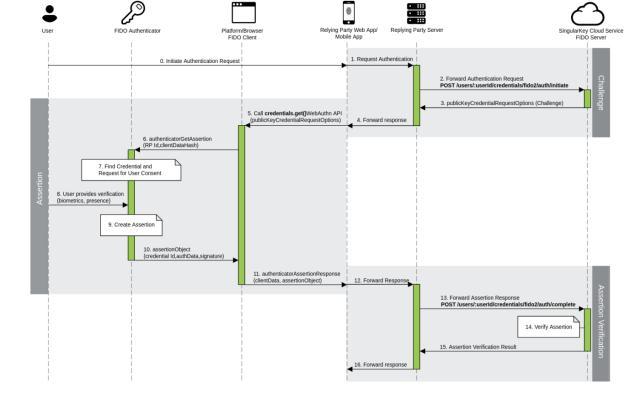
You may add strong authentication to improve security and overall user experience with a few code changes on your application's login page with Singular Key's FIDO certifiedAuthentication Service.TheWebAuthnsequence diagrams and steps shown below walk you through an end to end flow for registering a FIDO credential and authenticationusingaFIDOcredential.


Detailsstep:
1.UserinitiatesAuthenticationRequest 2.RPAppforwardsRequest 3.WebAuthnAuthenticationInitiateRequest 4.WebAuthnAuthenticationInitiateResponse 5.RPServerresponsetoRPApp 6.InvokeWebAuthCredentials.Get()API 7.Assertion 8.WebAuthnCredentials.Get()APIResponse 9.RPAppforwardsAssertionResponse 10.WebAuthnAuthenticationCompleteRequest 11.AssertionVerification 12.WebAuthnAuthenticationCompleteResponse 13. RP Server creates session and responds back to RP App.
IMPLEMENTATION
CONCLUSION
We have developed a security model for credit card verification using webcam and fingerprint authentication to provide high security that helps reduce online transactionfraud.Theproposedsystemisintegratedwith a one way security module, fingerprint verification, that can only be accessed by an authorized user to protect users from online transactions. This initiative will aid in the promotion of internet transactions. This project can be used in future by Credit/Debit Card companies increasing their security in the system and also we can
add more layers of security in the system using Face RecognitionoranyBiometricSecuritywhichinturnmake the system more secure. We can also add more powerful models in our system and make our system more robust andfraudproof.

REFERENCES
1. Amit Kumar et al, / (IJCSIT) International Journal of Computer Science and Information Technologies, Vol. 6 (6), 2015, 5080 5084 “Multimodal Biometric System in Securee TransactioninSmartPhone”
2. Namita Jain, Vikrant Mukkawar, Mahesh Jadhav, Prof. Shruti Sekra. “Survey on Online Transaction using Face Recognition”
3. Asma Shaikh, Aditi Mhadgut, Apurva Prasad, Bhagyashree Shinde, Rohan Pandita. “Two way Credit CardAuthenticationwithFacerecognitionusingwebcam”
4. Shuo Wang and Jing Liu , Department of Biomedical Engineering, School of Medicine, Tsinghua University, P. R.China “ Biometrics on Mobile Phone ” www.intechopen.com
5. Informatica Economică vol. 13, no. 1/2009 “ Biometric SecurityforCellPhones”
6.NimalanSolayappanandShahramLatifi,Departmentof Electrical engineering, University of Nevada at Las Vegas, USA,“ASurveyofUnimodalBiometricMethods”
7.International Conference on Telecommunication Technology and Applications, Kounoudes et al., 2006, Voice Biometric Authentication for Enhancing Internet Service Security, pp. 1020 1025, with permission from IEEE.
8. G. Williams, “More than a pretty face”, Biometrics and martCard Tokens. SANSInstitute reading room,2002, pp. 1 16.
9. A. K. Jain, K. Nandakumar, U. Uludag, and X. Lu, “Multimodal Biometrics”, from Augmenting Face With Other Cues, in W.Zhao,and R. Chellappa, (eds) Face Processing: Advanced Modelling and Methods, Elsevier, NewYork,2006.pp.675 705.Recognition”,inProceeding
10. J.P. Campbell, D.A. Reynolds, and R.B. Dunn, “Fusing HighAndLowLevelFeaturesforpeaker
11.J.Ortega Garcia,J.Bigun,D.Reynolds,andJ.Gonzalez Rodriguez, “Authentication Gets Personal With Biometrics”, in IEEE Signal Processing Magazine, Vol. 21, 2004,pp.50 62.
International Research Journal of Engineering and Technology (IRJET) e ISSN:2395 0056
Volume: 09 Issue: 06 | June 2022 www.irjet.net p ISSN:2395 0072
12. A.K. Jain, A. Ross, and S. Prabhakar, “An Introduction To Biometric Recognition”, in IEEE Transactions on Circuits and Systems for Video Technology, Vol. 14, No.1, 2004,pp.4 20
13. Mohamed Abdolahi, majid mohamadi, mehdi jafary 2013. Multimodal Biometric system Fusion Using Fingerprint and Iris with Fuzzy Logic. IJSCE ISSN: 2231 2307,Volume 2,Issue 6,January2013.
14. Fan Yang and Baofeng Ma. 2007. A new mixed mode biometricsinformationfusionbased onfingerprint,hand geometry and palmprint. In Image and Graphics, 2007. ICIG 2007. Fourth International Conference on, pages 689 693.IEEE
APPENDICES
Base Papers
T. Chumwatana and W. Rattana umnuaychai, "Using OCR Framework and Information Extraction for Thai DocumentsDigitization,"20219thInternationalElectrical EngineeringCongress.
Amit Kumar et al, / (IJCSIT) International Journal of Computer Science and Information Technologies, Vol. 6 (6), 2015, 5080 5084 “Multimodal Biometric System in Securee TransactioninSmartPhone”
I. Anuradha, C. Liyanage, H. Wijayawardhana and R. Weerasinghe, "Deep Learning Based Sinhala Optical Character Recognition (OCR)," 2020 20th International Conference on Advances in ICT for Emerging Regions (ICTer),2020
AsmaShaikh,AditiMhadgut,ApurvaPrasad,Bhagyashree Shinde, Rohan Pandita. “Two way Credit Card AuthenticationwithFacerecognitionusingwebcam”