International Research Journal of Engineering and Technology (IRJET) e-ISSN: 2395-0056

Volume: 09 Issue: 06 | Jun 2022 www.irjet.net p-ISSN: 2395-0072
PRODUCTION OF ECO-BRICK FROM INDUSTRIAL WASTES
Thabsheera K K1, Rana Rahman M2
1M Tech student, Dept. of Civil Engineering, KMCT College of Engineering for women, Kerala, India
2Asst. Professor, Dept. of Civil Engineering, KMCT College of Engineering for women, Kerala, India ***
Abstract - Production of eco friendly bricks from industrial wastes has been investigated in this project. A partial replacement of clay is obtained by adding of industrial wastes like waste water treatment (WWT) sludge, and ash with the admixtures of lime and NaOH. By using these admixtures alkali activation process is occurred and a chemical reaction takes place between alumino sililicate materials and the alkali activator. The product formed after this reaction is the alumino silicate hydrate gel. They have cementing and binding properties. So in this method of brick manufacturing process, there is no burning process is needed. And the cost of casting can be reduced. By the utilization of industrial wastes and the exclusion of kiln burning, this method is an environmental friendly. A sustainable method of construction is obtained by this technique.
Key Words: bricks, sludge, Boiler ash, alkali activation technology, compressive strength, water absorption
1. INTRODUCTION
Wastematerialsgeneratedfrommanyindustries,treatment plantsetc.arecreateamajorenvironmentalproblem. The primeobjectiveofthewastemanagementistodiminishthe amount of unwanted materials and to prevent potential health and environmental hazards. The wastes generated around the industries are difficult to dispose. The conventional methods of waste disposal like incineration, landfilling,dumpingtothewaterresourcesisnotsuitableto the environment. They create pollution on that area. So a suitablemethodofwastedisposalisanessentialthing. For this, reuse the waste materials from industries to the constructionofothermaterialsinasustainablemannerisa bestmethod.
Houseisadreamforeveryperson,butthecostofhousingis highandwhichisnoteasyforanaveragepeople.Toaddress this situation, study on the low cost building material is essential. Brick are building components composed of inorganicnonmetallicmaterials. Thereforethesludgeand boilerashdevelopedfromthedifferenttreatmentplantsand withsomeadmixtureslikelime(CaO)andsodiumhydroxide (NaOH) as alkaline activator are suitable for the brick manufacturingasapartialreplacementof soil.Thecostof making bricks is reducing by using these materials and which limit the problems of industries for the disposal of wastesgenerated.Thisisalsoreducingtheenvironmental problemslikeCO2emissionsbytheun burntprocessand unlimiteduseoftopfertilesoil.
1.1 Objective of the work
Tolimitextractionoftopfertilesoil
Toreducetheconstructioncostanddevelopa carbonneutralbuilding material
Todetermineasustainablemethodofwaste disposalbyutilizationofthewastesinbrick makingprocess
Tocomparethedurability,efficiency,strengthand othercharacteristicsoftheecobrickwithavailable typesofbricks
Tolimittheharmfulgasemissionswhileburning
1.2 Scope of the work
Itreducesthecontaminationofwastesnearthe treatmentandboilerplants
Itreducesthepollutionofenvironment
Thebrickisusedasabuildingmaterial
Costeffectiveconstructionisprovided
Energysavingispracticed
Sustainabledevelopmentofthebuilding
2. METHODOLOGY
2.1 Raw Materials Collection
Therawmaterialsfortheproductionofbrickarecollected fromvarioussites.Theyareclaysoil,sludge,boilerash,lime, sodiumhydroxide,wateretc.
2.1.1 Clay Soil
Clayisatypeoffinegrainednaturalsoilthatcontainsclay mineralssuchassilica,alumina,manganese,ironetc. When addingwatertheyexhibitplasticproperty.Thebestsuited soilformakingofbrickisthesiltedclayorweatheredclay. Because, these soils have sufficient strength and cohesion property.Thesoilistakenfromthewall techbricksiteat Areacode.
2.1.2 Sludge
Sludgeisabyproductofalltreatmentplants.Thedisposalof sludge is a facing problem of the industries. The conventionaldisposalmethodslike,incineration,landfilling, dumpingtowaterresourcesisharmfultotheenvironment.
© 2022, IRJET | Impact Factor value: 7.529 | ISO 9001:2008 Certified Journal | Page1446
International Research Journal of Engineering and Technology (IRJET) e ISSN: 2395 0056
Volume: 09 Issue: 06 | Jun 2022 www.irjet.net p ISSN: 2395 0072
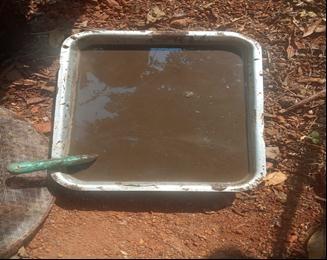
For this study, the sludge is collected from the different sewagetreatmentplantsinMalappuram. Thissludgeisan aerobicsludgewithdarkishcolour.
2.1.4 Admixtures
Lime and NaOH are used as admixtures. By using these admixtures alkali activation process is occurred and a chemical reaction takes place between alumino sililicate materialsandthealkaliactivator.
2.2 Casting process
2.2.1 Preparation of the Raw Materials
In this step the soil is excavated and then laid on leveled ground.Thenthesoiliscleanedbyremovingimpuritiessuch asvegetationmatter,stonesorpebblesetc.Afterremoving impuritiesitisprovidedtoweatherforfewdays.Thenafter dryingtheyarepowderedandsievedthrough300µmsieve. Sludge, ash etc. are also dried, powdered and sieved in similarmanner,beforemixing.
2.2.2 Mixing
2.1.3 Boiler Ash
Fig 1:Sludge
Boiler ash is the bottom ash, which is a part of non combustibleproductofthefiringprocess.Thisisgetfrom powerplant,boiler,furnace,incineratoretc.Theyaregrey colourpowderedform.For thisresearch,the boilerash is collected from the paper mill located at Kavanoor, in Malappuramdistrict.
Alltherawmaterialswithrequiredproportionsaremixed together with adding sufficient amount of water to get uniformmixture.Thenthemixtureiskeptfor2to4hours. Afterthattheyareagainmixedbyaddingwater.Themixing wasdonemanually. Thetable 1showstheamountofeach materialtakeninpercentage.
Table -1:PercentageofRawmaterialsadded
Brick Clay % Sludge % Boiler ash%
NaOH %
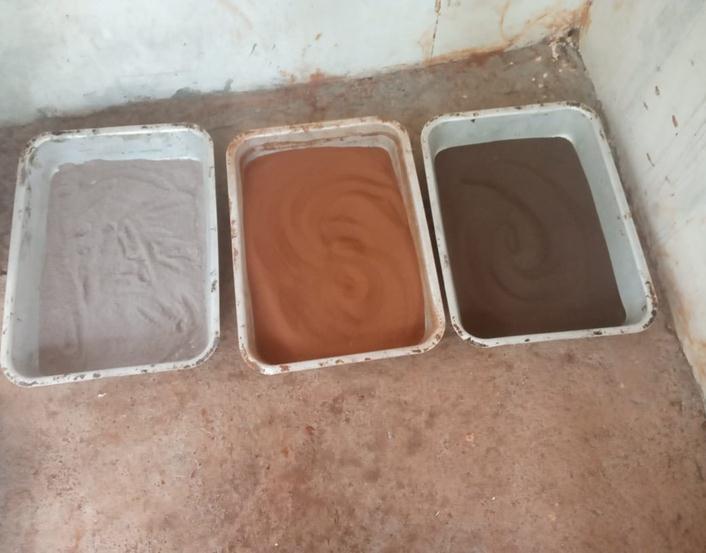
Fig -2:SievedBoilerAsh,SoilandSludge
2.2.3 Moulding
Aftermixingthematerialswillbepressedintothemouldand thenbricksareplacedonwoodenpalletsandwillbekeptas itisfortwodays.Beforefilling,themouldshouldbecleaned, oiled with sand along the sides to easy unmoulding. The mouldusedforthisstudyisthewoodenmouldwithsize19x 9x9cm.
2.2.4 Curing
Afterremovingthemould,thebricksaretransportedintoan openspaceandtheyarecuredfor10to14days.Curingis
International Research Journal of Engineering and Technology (IRJET) e ISSN: 2395 0056
done for the complete setting of the brick. The water for curingshouldbefreefromimpurities.
2.2.5 Drying
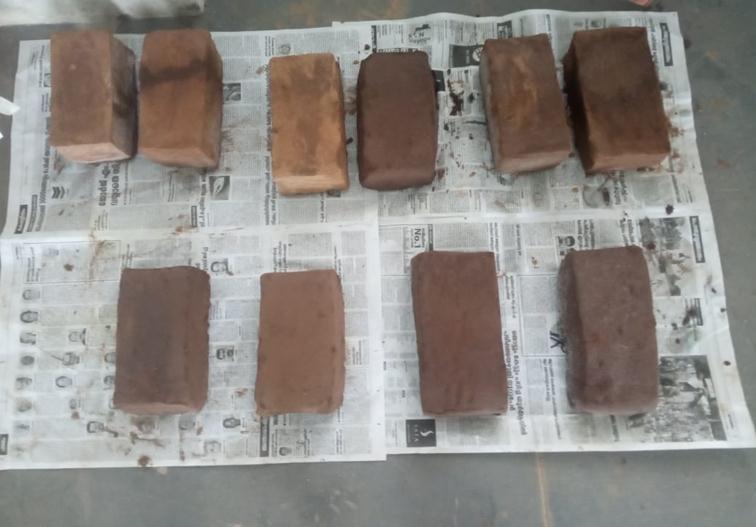
The bricks are allowed to dry till they are left with 5 to 7 percentmoisturecontent.Thedryingperiodusuallyvaries from 7 to 10 days. Then they are oven dried. This is maintainedinovenfor100to150degreeCelsiusfor24to48 hours.
Waterabsorptionbythebrickspecimenisgivenbythe formula,
W=M2 M1 X100 M1
2.3.3 Hardness Test
The hardness of bricks generally implies the resistance of bricks to scratch. For this test, the brick is scratched with sharp tool. If the scratching does not leave behind any impressiononthebrick,itisconsideredasahardbrick.
2.3.4 Soundness Test
SoundnessTestAsoundnesstestonbricksiscarriedoutto determine the nature of bricks when subjected to sudden impact. For this test two bricks are taken out of stack of bricks. The bricks are then crash against each other. If it emits a clear metallic ringing sound; the brick is of good quality.
2.3.5 Impact Test
Intheimpacttestofthebricks,thebrickisallowedtodrop flatfromaheightof1meterontheground.Afterfallingthe brick on the ground it should not break into pieces. If the brickgetscrackedorcrushedintopiecesthen,itindicates thebestqualityofthebrick
2.3.6 Efflorescence Test
2.3 Tests Performed
Differentlabtestsarecarriedoutforfindingefficiencyand strengthoftheecobrick.Theyareasfollows:
2.3.1 Compressive Strength Test
Placethespecimenpreparedwithflatfaceshorizontaland mortarfilledfacesupwardsbetweentwosheetsandcarefully centeredbetweenplatesoftestingmachine.Itisensuredthat the load is at uniformly Then apply a load at a rate of 14 N/mm2(or140kgf/cm2)perminutetillfailureoccurs. Note themaximumloadatbreakingandrepeattheprocedurefor gettingconcordantvalue
CompressivestrengthinN/mm2=MaximumloadatfailureinN Areaofthebedspaceinmm2
2.3.2 Water Absorption Test
Theabsorptiontestisthetypeoftestconductedonbricksto determine the moisture absorbed by the bricks when subjectedtoextremeconditions.Theabsorptiontestcanbe used as an indicator of the durability properties of bricks suchasquality,degreeofburningandbehaviourofbricksin weathering.
Agoodbrickshouldbefreefromsolublesalts.Thepresence of soluble salts in the bricks leads to efflorescence on the brickstherebydecreasingthequalityofbricks.
2.3.7 Shape and Size Test
Tomaintainuniformityintheconstruction,thebricksmust beofpropershapeanduniformsize.Agoodbrickmusthave agoodandrectangularshapewithsharpedges.
3. RESULTS AND DISCUSSION
Differenttypesoftestsarecarriedoutfordeterminingthe performanceofeco brick.Andtheseresultsarecomparedto theperformanceoflocallyavailablebricks.
3.1 Results of Tests on Brick
The tests on bricks are done by using three bricks for an experiment and an average value is calculated. The tests performedonbricksare:
Volume: 09 Issue: 06 | Jun 2022 www.irjet.net p ISSN: 2395 0072 © 2022, IRJET | Impact Factor value: 7.529 | ISO 9001:2008 Certified Journal |
International Research Journal of Engineering and Technology (IRJET) e ISSN: 2395 0056
Volume: 09 Issue: 06 | Jun 2022 www.irjet.net p ISSN: 2395 0072
3.1.1 Compressive Strength Test
Table 2givesthecompressivestrengthtestvaluesofcasted brick specimens with varying percentages of clay, sludge, ash,lime,NaOHetc.
Table 2: Compressivestrengthofvariousbrickspecimen
SL NO. BRICKDESIGNATION CRUSHING STRENGTH (N/mm2)
1. Brickspecimenwith100%clay 3.0
2. Brickspecimenwith80%clay 3.5
3. Brickspecimenwith70%clay 6.2
4. Brickspecimenwith60%clay 10.8
5. Brickspecimenwith50%clay 12.4
6. Brickspecimenwith40%clay 12.0
The bricks available in the market have a compressive strengthofdifferentvalues.Theordinarybrickmadebyclay haveacompressivestrengthof13N/mm2whiletested.And the Auto claved Aerated Concrete (AAC) blocks have a compressivestrengthof4.65N/mm2.Sobycomparingthese values eco bricks have higher compressive strength than AACblocksandnearertotheordinarybricks.
AsperISspecificationthebrickbroughtfrommarkethave compressivestrengthsimilartofirstclassbrickandhavinga classdesignationof12.5.Thesecanbeusedforconstruction purposes.Fromtheaboveresultitisclearthatbrickwith50 %clayhavemaximumcompressivestrengthandisusedfor constructionwork.
3.1.2 Water Absorption Test
Waterabsorptionisanimportanttestonbrickspecimen. Table 3 shows the effects of water absorption test for different specimen of casted brick and these values are comparedwithbricksavailableinmarkets.
Table 3 Waterabsorptionofvariousbrickspecimen
SL NO. BRICKDESIGNATION WATER ABSORPTION (%)
1. Brickspecimenwith100%clay 22.81
2. Brickspecimenwith80%clay 20.70 3. Brickspecimenwith70%clay 20.13 4. Brickspecimenwith60%clay 17.26 5. Brickspecimenwith50%clay 12.71 6. Brickspecimenwith40%clay 10.98
COMPRESSIVE STRENGTH TEST
Basedontheabovetableagraphisplottedwithbrickhaving variousclaypercentageonXaxisandcompressivestrength onYaxis. 0
10 0% clay 80% clay 70% clay 60% clay 50% clay 40% clay Compressive strength N/mm2
5
Brick designation
Chart 1:CompressionTestonBrick
Chart 1showsthevariationofcompressivestrengthvalues on brick having varying clay percentage with industrial wastes.Inthistestthecastedspecimen ofbrick shows an increasingpatternuptobrickwith50%ofreplacementof clay.
Fromtheabovetableagraphisplottedforwaterabsorption ofbrickvariouspercentageofclayandindustrialwastes. 0 5 10 15 20 25
Water absorption (%)
WATER ABSORPTION TEST
0% clay 80% clay 70% clay 60% clay 50% clay 40% clay
Brick designation
Chart -2:WaterAbsorptionTestonBrick
Chart 2showsthevariationofwaterabsorptionondifferent classesofbrick.Fromtheseresults,itshowsthatmaximum waterabsorptionisat0%andthevalueisdecreasingwith increasing the waste materials. The ordinary brick have waterabsorptionof14.25%.
2022, IRJET | Impact Factor value: 7.529 | ISO 9001:2008 Certified Journal
International Research Journal of Engineering and Technology (IRJET) e ISSN: 2395 0056
Volume: 09 Issue: 06 | Jun 2022 www.irjet.net p ISSN: 2395 0072
As per IS specification, for first class bricks the water absorption should be less than15%. The brick made with 50%and40%clayshavethevaluelessthan15%.Sothey canbeusedforconstructionworks.
3.1.3 Efflorescence Test
Table 4showstheobservationsforefflorescencetest. Fromtheseresultsitisfindthataslightefflorescenceis observedformorethan50%wastematerialsused.So thesebricksareonlyusedforminorworks.
Table 4 Efflorescenceofvariousbrickspecimen
SLNO. BRICKDESIGNATION
EFFLORESCENCE
1. Brickspecimenwith100% clay Nil
2. Brickspecimenwith80% clay Nil
3. Brickspecimenwith70% clay Nil
4. Brickspecimenwith60% clay Nil
5. Brickspecimenwith50% clay Nil
6. Brickspecimenwith40% clay Slight
3.1.4 Hardness Test
Table 5showstheresultsofhardnesstestoncastedbrick specimen. By using the finger nail the hardness is tested. Fromthesetestallbricksarehard.Andtheycanbeusedfor constructionworks
Table -5 Hardnessofvariousbrickspecimen
SLNO. BRICKDESIGNATION HARDNESS
1. Brickspecimenwith100%clay Hard
2. Brickspecimenwith80%clay Hard
3. Brickspecimenwith70%clay Hard 4. Brickspecimenwith60%clay Hard 5. Brickspecimenwith50%clay Hard
6. Brickspecimenwith40%clay Hard
CONCLUSION
Eco friendly brick manufacturing is completely needed to overcometheconservationofnon renewableresources.This projecthelpstominimizethedepletionoftopfertilesoilof theformablelandbyutilizingindustrialwaste.Withtheuse ofalkaliactivationtechnology,theeffectofcarbondioxide emissionintotheEnvironmentalwascompletelyreduced. By performing different lab tests on brick specimen each type of brick was different values depending on the percentageofwastematerialsadded.Thetestsconductedon brick are the compression test, water absorption test, efflorescencetest,hardnesstest,etc.Fromthesetestswecan find that 50 % clay and 50 % waste materials are more suitableformakingeco brick.Theoptimumvalueisgetting forthattypeofbrick.Thosetypesofbricksarecomeunder the first class brick and which is suitable for major constructionworks.
REFERENCES
[1] AakashSureshPawar,DevendraBhimraoGarud,(2014) "EngineeringPropertiesof ClayBrickswithuseofFly Ash",InternationalJournalofResearchinEngineering andTechnology,Vol.03
[2] AhsanHabib,Ms.RaziaBegum,Md.AbdusSalam,(2015) "Effect of stone dust on the mechanical properties of adobe brick", International Journal of Innovative Science,Engineering&Technology,Vol.2No.9.
[3] Alaa A. Shakir, SivakumarNaganathan, Kamal Nasharuddin Mustapha, (2017) “Properties of bricks made using fly ash, quarry dust and billet scale", ConstructionandBuildingMaterials.
[4] Angel Daniel Munoz Guzman and María Giovanna TrottaMunno, (2018) "Design of a Brick with Sound Absorption Properties Based on Plastic Waste & Sawdust",IEEEAccess,Vol.03.
[5] ApurvaKulkarni,SamruddhaRaje,MamtaRajgor,(2018) "Bagasse Ash as an effective replacement in Fly Ash Bricks",InternationalJournalofEngineeringTrendsand Technology(IJETT),Vol.4No.10.
[6] AratiShetkar, NageshHanche, Shashishankar, (2016) “Experimental StudiesonFlyAshBasedLimeBricks", InternationalJournalofRecentAdvancesinEngineering &Technology(IJRAET),Vol.4,No.7.
[7] B. Padmapriya, Mrs.K.Pandeeswari. M.E (2020) “Experimental Investigation on the Properties of Concrete with Carbon Black and PET", International JournalofAdvancedResearch,Vol.4,No.4
International Research Journal of Engineering and Technology (IRJET) e ISSN: 2395 0056
Volume: 09 Issue: 06 | Jun 2022 www.irjet.net p ISSN: 2395 0072
[8] D. Rajput, S.S. Bhagade, S.P. Raut, R.V. Ralegaonkar, Sachin A. Mandavgane (2019) "Reuse of cotton and recycle paper mill waste as building material", ConstructionandBuildingMaterials,Vol.124,Elsevier.
[9] D.Eliche Quesada,M.A.Felipe Sesé,J.A.López Pérez, A. Infantes Molina (2016) “Characterization and evaluationofricehuskashandwoodashinsustainable clay matrix bricks", Ceramics International, Vo. l 43, Elsevier.
[10] Dr.G.Chitra,P.VetriSelvi,Dr.D.Vijayalakshmi,(2019) "CarbonBlackasanAdditiveinConventionalConcrete", International Journal of Emerging Technology and AdvancedEngineering,Vol.4,SpecialIssue3.
[11] E.Sodupe Ortega,E.Fraile Garcia,J.Ferreiro Cabello,A. Sanz Garcia, (2019) "Evaluation of crumb rubber as aggregateforautomatedmanufacturingofrubberized long hollow blocks and bricks", Construction and BuildingMaterials.
[12] GauravGoel, Ajay S Kalamdhad, (2017) "An investigation on use of paper mill sludge in brick manufacturing", Construction and Building Materials, Vol.148,Elsevier.
[13] GauravkumarP.Barot,(2014)"StudyonUtilizationof Waste Material for Construction Brick", Journal of InternationalAcademicResearchforMultidisciplinary, Vol.2,No.5.
[14] H. H. M. Darweesh and M. G. El Meligy, (2017) "Non ConventionalLightWeightClayBricksfromHomraand KraftPulpWastes",JournalofChemistryandMaterials Research,Vol.1(4).
2022, IRJET | Impact Factor value: 7.529 | ISO 9001:2008 Certified Journal