International Research Journal of Engineering and Technology (IRJET) e ISSN:2395 0056

Volume: 09 Issue: 06 | June 2022 www.irjet.net p ISSN:2395 0072
International Research Journal of Engineering and Technology (IRJET) e ISSN:2395 0056
Volume: 09 Issue: 06 | June 2022 www.irjet.net p ISSN:2395 0072
Sagar Dalal1, Prasad Pophalkar2
1Sagar Dalal MIT School of Engineering, Pune 2Prasad Pophalkar MIT School of Engineering, Pune
3Prof. Dr. Nitish Das , Dept. of Computer Science & Engineering, MIT School of Engineering, MIT ADT University, Pune, Maharashtra, India ***
Abstract The use of social media is widespread and it is ordinary for society of variable ages to have an account on social media platforms. Misuse of social media profiles has become quite easy for the same reason.. Cyberbullying or bullying through social media websites have been an ongoing issue that has been raised with the creation of social media. Since it has adverse effects on people’s psychological behavior and mental health , timely detection and prevention of social media bullying is a very important factor in the world of the internet. Machine learning and Deep learning are the typical approaches adopted for cyberbully detection. In this research paper, we take a dataset containing tweets from the popular social media website Twitter to find texts that are possible cases of bullying. We create a hybrid bully detection system named Stacking Algorithm by merging three ML algorithms K Nearest Neighbor (KNN), Support Vector Machine (SVM) and Random Forest (RF) to detect cyberbully texts in an accurate manner. The texts are checked and classified into three categories Not Bullying, Racism and Sexism. We also include a section of Convolutional Neural Network (CNN) which identifies the bully texts accurately. A GUI is designed to display the accuracy percentage of the hybrid system as well as CNN . The accuracy measures of the two systems are evaluated, and it is determined that CNN produces a more precise estimate than the Stacking Algorithm.
Key Words: Cyberbullying, Social Media, Machine Learning,DeepLearning
Cyberbullyingcanbecalledbullyingorharassmentacross digital media , mobile phones, laptops, and PCs are examplesofsuchmediums..Socialmediabullyingrefersto the bullying or harassment through websites like YouTube, Twitter, Facebook and Instagram. It involves sharingpersonaldataregardingsomebodyacrosstheweb, posting hateful or abusive comments, accusations, threatening and hateful words, and so on . This issue is common among teenagers. However, with the speedy increase within the use of social media by older folks, social media harassment has become a typical downside
among folks notwithstanding age. During a recent survey conducted, 47% young people, Children, kids, Youngsters have been receiving frightful comments in their social media profiles and 62% percent people are sent frightful personalmessages.Despitethefactthattherearemethods forreportingbullyingallegations,91%ofthosewhodidso indicatedthatnoactionwastaken.. Social mediabullying victims bear mental state problems therefore it's necessary to develop a system that may discover bullying accurately and exactly. Many researchers are tired of this field principally victimizing machine learning and deep learning techniques. Random Forest, Support Vector Machine,NaiveBayes,andKNNaresomeofthemostoften usedMLalgorithms.
Similarly, we used Convolutional Neural Network (CNN) , adeeplearningapproachadoptedtodetectcyberbullying. In previous works related to the topic, several attempts have been made to improve the existing algorithms through different methods. One such method is introducing new features to the algorithm used. Personal details of a user in social media, their popularity, number of followers and following etc. are few examples of features. These features have been mixed and matched in different ways to enhance precision of the algorithm and to find the combination of features that produces best precision. Also, several studies were conducted to compare the performance of different ML algorithms and itcouldbeconcludedthatSVMisthebesttechniqueoutof all. Along with consideration of textual cyberbullying, visualcyberbullyingwasalsostudied.CNNisanalgorithm suitableforfindingbullyingthroughimagesorvideos.But very few attempts have been made to experiment in this fieldandthereisstilllotsofscopetoimproveinthisarea. Other attempts mainly included bully detection in languages other than English such as Dutch, Bangla etc. and attempts to use the same algorithm in different languages.
In machine learning, there is a Training Dataset and Testing Dataset. In this research, a dataset is taken from the social media website Twitter. The data which is in an unstructured form is cleaned by correcting spelling
International Research Journal of Engineering and Technology (IRJET) e ISSN:2395 0056
Volume: 09 Issue: 06 | June 2022 www.irjet.net p ISSN:2395 0072
mistakes, removing stop words and forming tokens of words. 80% of that data is used to train the algorithm while 20% data helps to test the algorithm. The output of this research categorizes data into three, namely, non bully,racismandsexism.Whenextractingdatafromsocial media it may contain a mixture of words and characters such as special characters, words in different languages and alphanumeric characters. The data is mostly unstructured. This makes it difficult for traditional bully detection methods to detect bully texts precisely. Therefore, machine learning has emerged as the best approach to detect social media bullying as it is an automatic detection method. Hence, we propose a system which combines the top three ML algorithms SVM, RF and NB to form a hybrid algorithm called Stacking algorithm.Also,ananalysisisdoneusingCNNtocheckthe accuracyinpredictingbullytexts.Thedataisfirstfedinto CNN. It produces a Confusion matrix which shows the accuracy percentage of texts in each of the three categories. It also displays a text box where you can manually enter any data from the dataset to see the categorytowhichitbelongsto.AfterCNNisrun,Stacking Algorithm starts to run and it follows the same steps to displaythenumberoftweetsfallingunderthecategories. Hence,theaimofthisresearchisto:
1. To study data from Twitter and provide accurate cyberbullying prediction, create a mix of algorithms that incorporatesthetop3machinelearningalgorithms.
2. To assess how accurate the hybrid system is in making predictions,compareittothecurrentCNNalgorithm.
As per the findings of a study conducted by (Jang, et al., 2019)it'sclearthatCNNwillfollow2formsofapproaches OnehotEncoder and Wordtovec for generation of vectors. The results of trials done by (Jang, et al., 2019) showed that wordtovec improves the system's overall accuracy whencomparedtoonehotencoder.Asa result,wordtovec isthemostpopularchoiceforthisthesis.
According to the results of a similar study between CNN andKNN algorithmsconducted by(Yin,etal.,2017),RNN surpassesCNNwhenitcomestoawiderangeoftasks,but CNN results square measure higher with key phrase detectionanddiscussionbasedmostlysentences,whichis precisely the type of work that will be performed during thisthesis.Asaresult,thethesismayemployCNNrulesto analyzeactivitysentiment.
Cyberbullying detection incorporates a speedily growing literature, despite the fact that research addressing bullying square measure derived back to the beginning of 2010. The extensive literature in this topic may be
classified into different types: content based detection, user baseddetection,andnetwork basedsensing.
Oneofthefirsttocombatcyberbullyingonsocialmediais, where a framework was designed to integrate Twitter streaming API for aggregating tweets and categorizing them given the content. Their work used elements of sentiment analysis and harassment identification. Tweets are classed as beneficial or harmful in the first part, then aspositivecontainingbullyingmaterial,positivewhilenot including bullying content, negative having bullying content, and negative while not bullying content. For categorization purposes, Nave mathematician was used, which resulted in a very high accuracy (70 percent ). Another subsequent investigation used applied mathematicsmetrics,specifically(TFIDF)and(LDA),with topic models to uncover connections in documents. Hey did not, however, consider just applied mathematics metrics, but also extracted content possibilities such as: harmful words and pronouns. Alternative researchers continued to explore cyberbullying detection from a content based standpoint, but they added new alternativessuchasanemotionsymbolandahieroglyphic lexicon. Their method was put to the test by exploiting numerous learning algorithms, including Nave mathematician,SVM,andJfortyeight.Thebestresultwas obtained with SVM, which achieved an accuracy of eighty one percent. Another analysis provided an example techniquethatorganization members mayusetomonitor social networking sites and identify bullying instances. The subsequent strategy depended on capturing bullying phrases and keeping them in a massive quantity of data, thereforeusingTwitterAPItocatchtweetsandcomparing their content to the harassment content captured previously.Despitethepotentialrevolutionarystrategyin their work, this example system has yet to be implemented.
Many academics assumed that user data like age and the number of tweets sent may signal a person's capacity to harm others. The detection approach used user data such asthenumberoftweetssent,thenumberoffollowers,and the number of followers. Their combined options user based Associate in Nursing others resulted in accurate forecasts with an accuracyof 85%. Similarly, they include auser'sageasafeatureinadditiontoauser'shistoryasa feature. They believe thatif a userhas been bulliedinthe past, he will be more likely to be bullied again. They looked at the impact of introducing user options and discovered that it improves five hitter recall.User based choices were also introduced, where user gender and age were added to the set of features. The concept was that
International Research Journal of Engineering and Technology (IRJET) e ISSN:2395 0056
Volume: 09 Issue: 06 | June 2022 www.irjet.net p ISSN:2395 0072
various genders speak different languages and people of different ages write in diverse styles. Furthermore, the user location was included as a completely new user feature.
Thesocialorganizationofusersisaninterestingapproach todetectingcyberbullying.Drawingthenetworkstructure andetymologizingalternativesfromthegrapharethefirst steps. They focused on deriving etymologies from social mediaalternatives.
Diagrams of connections The number of nodes indicates how big the community is, and the number of edges indicates how connected it is. Another study focusing on network based possibilities has been discovered. They employed a graphical interface called (Gephi) to do their work.
The bullying postings were backed by the property. Then theylookedintotheroleoftheparticipantsinthebullying, whethertheyweretargetsorattackers.
[1]RuiZhaoandKezhiMao proposedasfollows:
They implemented a brand new illustration learning approach that had been developed specifically to address thisissue.TheSemantic EnhancedMarginalizedDenoising AutoEncoder (smSDA) is a linguistics expansion of the popular stacked denoising autoencoder deep learning model. The linguistics extension includes linguistics dropout noise and scantness restrictions, with the linguistics dropout noise supporting domain information aswellasthewordembeddingapproach.Thismethodcan learn a strong and discriminative text illustration by utilizingthehiddenfeaturestructureofbullyingdata.This study aids in the understanding of denoising and autoencoding,andsoproventobebeneficialforthemore cost effectivedisplayofdata.
[2]ElahehRaisiandBertHuangproposedasfollows:
An unsteady supervised machine learning strategy for inferring user roles in harassment based bullying as well as novel bullying word markers. The educational rule takes into account structure and concludes that users are more likely to bully and be exploited. The rule uses an outsized, unlabeled corpus of social media interactions to extract bullying roles of users and extra vocabulary indicators of bullying, and it also uses an outsized, unlabeled corpus of social media interactions to extract bullying roles of users and extra vocabulary indicators of bullying. Every social encounter is assessed to see if it is bullying supported by the model. The UN agency takes
part and supports the language used, and it attempts to optimize the agreement between these projections, i.e. participant vocabulary consistency (PVC).Through this paper the role of PVC is studied and also the data associatedwiththedetectionofthebullyingrolesofusers islearned.
[3]P.Zhou proposedasfollows:
An Attention Based two way Long STM Networks (Att BLSTM)tocapturetheforemostvitallinguisticsdatainan exceedingly large sentence. The experimental results on the SemEval 2010 relation classification task show that this technique outperforms most of the prevailing ways, with solely word vectors. This paper proposes a unique neuralnetworkAtt BLSTMforrelationclassification.This model doesn’t utilize any options derived from lexical resources or natural language processing systems. The contributionofthispaperisvictimizationBLSTMwithAN attentionmechanism,whichmightmechanicallytargetthe words that have a decisive result on classification, to capture the foremost vital se prophetical data in an exceedingly sentence, while not victimizing further information and natural language processing systems. Through this paper the BLSTM paying attention to neural networksandoptionsofBLSTMtoclassifytheinfoalotof accuratelyisstudied.
[4]N.Srivastavaproposedasfollows:
Explains the dropout approach. Dropout increases neural network performance on supervised learning tasks in vision, speech recognition, document classification, and procedural biology, according to the report, with progressive outcomes on numerous benchmark data sources.Thekeyplanistohaphazardlydropunits(along with their connections) from the neural network throughout coaching. Throughout coaching, dropout samples from Associate in Nursing exponential range of various “thinned” networks are taken. At take a look at time,theresultofaveragingthepredictionsofthesedilute networks will be therefore approximated by merely employing a singular untinned network that has lesser weights. This considerably reduces overfitting and offers majorenhancementsoveralternativeregularizationways. Thispaperhelpstograspthebenefitsandusesofdropout. theconsequencesofdropoutwillbestudied.
[5]A.Conneauproposedasfollows:
The fundamental plan of ConvNets is to contemplate feature extraction and classification united conjointly trained tasks. This paper presents a replacement design (VD CNN) for a text process that operates directly at the character level and uses solely tiny convolutions and poolingoperations.Thepapershowsthattheeffectuation ofthismodelwillincreasewiththedeeperlevel,signupto
International Research Journal of Engineering and Technology (IRJET) e ISSN:2395 0056
Volume: 09 Issue: 06 | June 2022 www.irjet.net p ISSN:2395 0072
twenty nine convolutional layers, and report enhancements over the progressive on many public text classification tasks. ConvNets square measure chiefly custom made for laptop vision owing to the integrative structure of a picture. Characters combine to form n grams,stems,words,phrases,andsentences,amongother things.Thisstudyexplains howtousedeepconvolutional networks for text categorization and the advantages they haveoverRNNandLSTM.
[6]S.Bhoirproposedasfollows:
A comparison of different word embedding methods, includingSeamlessbagofwords,Skipgrams,Glove(Global Vectors for word representation), and Hellinger PCA, was presented (Principal part Analysis). On entirely different criteria, the models are evaluated. Performance is measuredintermsofthequantityofcoachingdata,abasic summary, and the relationship between context and targeted phrases, memory utilization, the supported predictor employed, and the influence of changes in spatiality. The process of word embedding converts text into numbers. This transformation has two important properties: spatiality reduction for cost effective visualization and discourse similarity for communicative representations. Thus, this paper proves helpful to grasp the advantages of assorted word embedding models and also the comparison between them therefore on choosing themosteffectivemodel.
[7]E.Raisiproposedasfollows:
The participant vocabulary consistent model was presented as a debile supervised strategy for understanding the responsibilities of people on social media in harassment cyberbullying as well as the likelihood of language signals being used in such cyberbullying. Because the PVC's training process incorporatesthestructureofthecommunicationnetwork, it will find instances of apparent bullying as well as novel bullying indications. It assesses PVC on all social media platforms with each quantitative and analytical data collection. The weekly supervised method extrapolates from weak signs to find possible bullying episodes in the news.AfterthatthediscernibleinformationfromSMP’sis formalized. There's a model designed that checks for the completespeechcommunicationbetweenthetwopersons victimization the designed score and victim score. This model needs no additional area on the far side for the storage of vectors and data. Thus, this paper helps in learningthePVCtechnique.
[8]H.Zengproposedasfollows:
To explore learning factors, a mental picture approach withfourconnectedperspectiveswasused.Becauseofthe neural standard, AlexNet is used in this investigation. In
order to improve the coaching approach, we need to encourage the understanding of how the model parameters change from lower to greater accuracy. The two major obstacles to understanding the relationship between model parameters and performance, namely measurability and interpretability, have been overcome. Thefourreadsthatthesystemprovidesareareaunitspec view, distinction distribution read, convolution operation readandperformancecomparisonread.Allthefourviews combined facilitate to grasp the insight of CNN clearly. numerous parameters and activation values between 2 CNNsnapshotsareaunitevaluatedsupported theTFlearn framework. Because the coaching method of CNN results in an outsized variety of factors over time, this leads to remittent performance. This paper helps to look at the educationalmethodofCNN.
[9]V.N.Kumarproposedasfollows:
For proper learning, appropriate content illustration is critical. This study uses a naive mathematician as a classifierforcontentclassificationinemailapplications.It dealswiththeclassificationofspamtermsafteramessage is received and processed using feature set extraction methods, where feature chances are obtained. For the precision problem, NB and SVM are examined. The message is simply categorized as cyberbullying in this report. By grouping massage, the denoised worth of each wordiscomputed.Thesystemisalertedbythissystem.It employs a word embedding approach to mechanically get thebullyingcharacter.Interfaceplanning,trainingdataset, categorization, and analysis of twitter messages are some of the modules used in this work . Robust illustration and learning of text messages are crucial for a standardized detection system. The best methodology for the information extraction is internet primarily based mining technology.
[10]AndrewM.DalandQuocV.Leproposedasfollows:
A paradigm for guided sequence learning victimization CNN and LSTM. Semi supervised learning is a blend of supervised and unsupervised learning in which the unclassifiedinformationis usedtoseewhetheritmayaid with the generalization of future supervised models. The article suggests that LSTM RNN is more useful than CNN and RNN for the purpose of information training when using the proposed technique. The sequence autoencoder is employed here to reconstruct the input sequence itself i.e. the initial sequence. This paper uses LSTM thanks to bound edges like maintaining data ordering. This paper checksthesemi supervisedtechniqueon5benchmarksto see the results of victimization LSTM because of the coachingtechnique.ThispaperprovesthatCNN LSTMisa higher technique than standard CNN and provides higher results than the previous ways for coaching unlabeled information.
International Research Journal of Engineering and Technology (IRJET) e ISSN:2395 0056
Volume: 09 Issue: 06 | June 2022 www.irjet.net p ISSN:2395 0072
[11]K.Duanproposedasfollows:
Explainseachone versus allandone versus oneclassifier in the SoftMax combination for multicategory classification. This study discusses how to expand the binary classification approach for multi category classification efficiently . The paper conjointly explains that the majority common approaches to multi category classification are unit binary classifiers based mostly strategies like “one versus all” and “one versus one” that solvesthemulticategoryclassificationdownside.Theone versus all methodology is sometimes enforced employing a “winner takes all” strategy. Whereas the one versus all methodology is sometimes enforced victimization liquid ecstasy wins vote strategy here the multicategory classification methodology is outlined victimization these 2 classifiers through a SoftMax operation. posteriori chances obtained from the mixture area unit accustomed do multicategory classification. This paper helps perceive the benefits of multicategory classification and conjointly strategies to implement that victimization 2 strategies thoroughly.
[12]Q.Liproposedasfollows:
A novel technique to tweet sentiment categorization mistreatment SSWE and WTFM manufacture categories supported the weight theme and text negation and a replacement text classification methodology. The tactic hereisevidencedtobehigherthantheSSWEandNuclear Regulatory Commission techniques. During this the sentiment of tweets is polarized into three sorts. The paper suggests the SSWE word embedding formula for information illustration because it additionally will affect sentiment classification. The WTFM has a pair of options i.e.negationfeatureandalsothetf.idf wordconsideration theme. Within the model here (SSWE + WTFM) the four options of WTFM concatenated with SSWE. The SSWE captures the linguistics and syntactical options and mistreatstheinitialn grampolarityoftweets;itpredictsa 2 dimensionalvector(f0,f1).
[13]A.EIAdelProposedasfollows:
Deep Convolutional Neural Networks square measure used for the dropout and layer skipping. There's a key advantage: fast thanks to figure the feature mistreatment quickbetawaveremodel.Thepurposeintelligentdropout methodology.is based on a unit is potency and not indiscriminately elect.it is potential to classify the image mistreatmenteconomicalunitofearlierlayerandskipthe all hidden layer from the output layer. This paper proves thattheFWTisthebestorit'sextractingthefeatureofthe inputimage.
[14]S.Zhaiproposedasfollows:
Investigated and forecasted the context of search based online advertising. We utilize a repeating neural network to translate each query and add to real valued vectors so thatthe relevance ofa specificcombinationmay beeasily determined. We assign a distinct attention value to each wordpositionbasedonitspurposeandrelevance.During this, the vector output of a sequence is generated by a weighted ad of the RNN's hidden state at each word according to their attention score. This research demonstrates how the RNN allows North American nations to model word sequences, which are demonstrated to be very important in properly capturing themeaningsofaseries.
[15]I.Raidproposedasfollows:
Explained development and advancement of technology additionally to transportation a positive impact and conjointly introduced new issues once used unsuitably. Typically this can be often observed as law breaking. one in every law breaking is being spirited at the instant is cyberbullying. Social media is one in every of the for the event of cyberbullying .The analysis was administered victimizationmethodofdataprocessingTherearevarious processes such as data collection, preprocessing, TF IDF, weighting, information validation, and classification using anaïvemathematicalclassifier.ThispaperprovesthatTF IDF weighted and validates information victimization crossvalidationandsowillclassification.
[16]K.Sahayproposedasfollows:
Explains how online bullying and aggressiveness towards social media users has exploded in recent years. It affects about half of all young netizens, and the ongoing application of insult detection victimization machine learning and language communication processes has a terrible recall rate. The assessment experimenting with completely different work methods results in a robust methodology for extracting text, user experimenting with completely different work methods results in a strong methodologyfor extracting text, user addingcertain ways to spot and classify bullying within the text by analyzing and network based attributes learning the properties of cyberbullying and aggressors and what features distinguish them for normal users the information processing and machine learning a This study demonstrates coaching in ML models using supervised learning.
International Research Journal of Engineering and Technology (IRJET) e ISSN:2395 0056
Volume: 09 Issue: 06 | June 2022 www.irjet.net p ISSN:2395 0072
The section can discuss the steps taken whereas developing the system to observe cyber bullying for twitter. This section also will discuss varied tools and packagesusedfordevelopingthesystem.
Thealgorithmthatwasutilizedtocreatethepaper:
·Stackingensemble(K NearestNeighbor+SupportVector Machine+RandomForest)
·ConvolutionneuralNetwork(CNN).
The study may utilize a CNN methodology and a stacking ensembletofindanyharassmentemotiongiftinanytweet fromTwitter.
StackingEnsemble(Rocca,2019):
Because it involves many algorithms acting on the same dataset, stacking might be considered a hybrid style of machinelearning algorithmic rule. Stacking is made up of two levels of classifiers. the meta classifier as well as the bottomlevelclassifiersOnacomputerfile,thelowestlevel classifiersarepermittedtofunctioninparallelandoneby one.Thebottomlevelclassifier'sfindingsaresentintothe meta level classifier as input. The meta level, or ultimate classifier, that supports the received input predicts the final outcomes. In the case of a stacking algorithmic rule, many classifiers care about one input, reinforcing the model's correctness. Any disadvantages caused by one model'soutputmaybeovercomebytheresultsofanother model.Finally,thefinal level classifierseliminateall prior mistakesandimproveoverallaccuracy.
CNN(ConvolutionNeuralNetwork)(SHARMA,2018):
CNNisatypeofneuralnetworkthatisbuiltonnumerous filters and rules. Learnable filters are the type of filters that can be learned. The filters, as well as the learnable filtersgift,areoftheperfect size.Thesefiltersareapplied to every input file. While the information is being processed, each of the filters operates on it. Strides is a filter operation that computes the real number between the weights of the filters and the patch out from the receptivefield.
Aconvolutionneuralnetworkhasthefollowinglayers:
·Inputlayer
·Convolutionlayer
·Activationfunctionlayer
·Poollayer
·Fullyconnectedlayer
ProposedEvaluation:
A confusion matrix, AUC ROC Curve, precision, recall, and f1 score worth may be included in the outcome for each formula.Thesecalculationscanfacilitateacorrectanalysis ofresultsobtainedbyeveryformulawell.
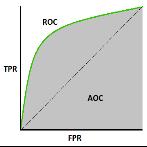
AUC ROCCurve:
AUC ROC Curve conjointly referred to as Separability curve.Itrepresentsthedegreeofdisjuncturebetweenthe givenknowledge points.Theloweritsworththehigher is theclassification.
ConfusionMatrix:
Once the data set is entered into a formula, it will handle the count of False Positives, False Negatives, True Positives,andTrueNegatives.
All these inputs can facilitate Pine Tree State to use the dataset to do a comparative analysis of algorithms. These valuescanfacilitatetheinvestigationofwhichalgorithmic program performs well during which department. For instance, that algorithmic program has higher accuracy, thatalgorithmicprogramconsistsoflowfalsepositiveand false negative. we'll conjointly see if or not hybrid algorithms will have higher results than the opposite algorithms.We'llverifywhetherornotvictimizationspark framework over Hadoop generates any performance increaseoftheprocess.
In this analysis, we will compare the algorithms used by hybrid assembly and neural network algorithms in order to determine which type of machine learning strategy is most suited to solving the problem of cyberbullying on social media. We've noticed that CNN based neural networks operate better or perform better than other neuralnetworks.Accordingtotheliteraturestudy,several supervisedmachinelearningtechniquesareusedtocreate sub classifiersforstackingmethods.Wecaninferfromthe data analysis and comparison research done for each
International Research Journal of Engineering and Technology (IRJET) e ISSN:2395 0056
Volume: 09 Issue: 06 | June 2022 www.irjet.net p ISSN:2395 0072
algorithm listed in the result section that stacking based machine learning techniques are superior to neural network based approaches for detecting harassment or bullyingonsocialmediaplatforms.Theaccuracyobtained for stacking is around 83 percent, whereas the accuracy acquiredfor theConvolutionNeural Network is nearly 80 percent.
[1] “Text classification using convolutional neural networks.(2017).
[2] Kerastutorialdeep learninginpython.
[3] B. Sri Nandhinia, J. (2015). “Online social network bullyingdetectionusingintelligencetechniques.
[4] K.Dinakar,R.R.andLieberman,H.(2011). “Modeling thedetectionoftextualcyberbullying.
[5] K. Reynolds, A. K. and Edwards, L. (2011). “Using machinelearningtodetectcyberbullying.
[6] Mohammed Ali Al garadi*, Kasturi Dewi Varathan, S. D.R.(2016).
[7] “Cybercrimedetectioninonlinecommunications:The experimental case of cyberbullying detection in the twitternetwork.
[8] Rui Zhao, Anna Zhao, K. M. “Automatic detection of cyberbullying on social networks based on bullying features.
[9] V. Nahar, X. L. and Pang, C. (2013). “An effective approachforcyberbullyingdetection.
[10] Whittaker, E.,. K. R. M. (2015). “Cyberbullying via socialmedia.
[11] Archer(2018)B.SriNandhinia(2015)MohammedAli Algaradi*(2016)
[12] RuiZhao(RuiZhao)K.DinakarandLieberman(2011) K.ReynoldsandEdwards(2011)Whittaker(2015)V. NaharandPang(2013)lin(2017)
[13] Tweet classification of sentimental analysis using kerasinpython
[14] Deep Learning for detecting cyberbullying across socialmediaplatformsbySAgarwalAAwekar.
[15] Detecting state of aggression in sentence By R potapova
[16] HatespeechdetectiononFacebook(Blog)
[17] AnalyticsVidya(WebsiteforpythonandCNN)
[18] S. Salawu, Y. He, and J. Lumsden, “Approaches to AutomatedDetectionofCyberbullying :ASurvey,”vol. 3045,no.c,pp.1 20,2017.
[19] T. Wu, S. Liu, J. Zhang, and Y. Xiang, “Twitter spam detection based on deep learning,” Proc. Australas. Comput.Sci.WeekMulticonference ACSW‟17,pp.1 8,2017.