International Research Journal of Engineering and Technology (IRJET) e-ISSN: 2395-0056

Volume: 09 Issue: 06 | Jun 2022 www.irjet.net p-ISSN: 2395-0072
International Research Journal of Engineering and Technology (IRJET) e-ISSN: 2395-0056
Volume: 09 Issue: 06 | Jun 2022 www.irjet.net p-ISSN: 2395-0072
Ankitha R1, Chiranthan S2, Harshith S3, Kasam Gurudatha4 , Mrs. Reshma E K5
1,2,3,4 UG Students BE, Department of Civil Engineering, DSCE, Bengaluru, Karnataka, India) (5Professor, Department of Civil Engineering, DSCE, Bengaluru, Karnataka, India) ***
Abstract Waste management is a vital issue the world is experiencing. Glass waste and iron ore ash are non degradable and harmful to the earth at disposal as landfills. Concrete block is a masonry unit used for various construction purposes. Production of these units involves the emission of CO2 on the extraction of natural resources, which affects the environment. Alternate materials substitute for natural aggregates to maintain a greener environment. This review paper presents the manufacturing process of concrete block with the partial replacement of fine aggregate with glass waste and partial replacement of cement with iron ash. The main aim is to produce concrete blocks without compromising the strength, durability and comfort, and elegance of materials. Performance study includes the strength characteristics, and quality of concrete toobtaina cost effectiveproduct.
Key Words: Concrete block, greener environment, iron ore tailings, glass waste, ultrasonic pulse velocity.
Technologies are changing with time as the world is progressing. Development in technologies is enabling businesses to process in various dimensions. India is a rapidly developing country. The development of infrastructure is in danger. As technology advances, so do the forms and techniques of development. IS: 2185 (Part 1): 2005 gives the information about hollow concrete blocks. Having a closed or open cavity these hollow concreteblockscanbeusedtobuildload bearingandnon load bearing walls. Environmental concerns and health dangers associated with the construction industry have beenbroughttotheattentionofboththegovernmentand environmental groups. Aggregates, sand, clinker, and fuel intheformofresourcesareallutilizedbythecementand concrete industry. The large portion of waste generated from industries and agricultural works is a result of fuel combustion,slag,flyash,andlarge scalemanufactureofa range of products. These wastes, which are produced in large quantities, can cause contamination and dispersion of substances such as manganese, mercury, etc, if not disposed of properly, particularly when deposited in dumps, mines, and bodies of water. Their use in concrete productionisaprimeillustrationofparallelrecyclingand reusing. Growth in the human population and the
challenges of globalization cause the scarcity of raw materialsneededintheconstructionindustry. Thetaskof converting industrial waste into useful construction material is a challenge to engineers of this generation. A structured recycling program helps people to obtain recycled construction materials [7]. The cement industry makes up around 6% of all CO2 emissions in the environment. The primary goal of this research is to investigate the effects of partial cement substitution withiron ore tailings The flotation process produces a coarse tailing consisting primarily of SiO2 with minor concentrations of iron oxide, hydroxide, and kaolinite, with an average particle size of 150 microns. In terms of mineralogy,themajorityofcoarsetailingsarequartzwith minor concentrations of hematite and goethite The primarygoalofthisresearchistoinvestigatetheeffectsof partial substitution of cement with iron ash and partial replacement of fine aggregate with glass waste on the characteristicsofconcreteblocks.
To study the characteristics of recycled materials (Glass).
Tostudytheperformanceofconcreteblock.
Tostudythecostanalysis.
For the specimens, the researchers just used Portland Pozzolanic Cement (Type IP), which is widely used in the field today. They were manually crushed and sieved after cleaning to achieve particle size consistency. The researchers useda Class A mix (1:2:4 ratio) of cement, sand, and gravel. Recycled bottles were crushed and used to replace some percent of sand (25%, 50%, 75%, and 100%), and a control combination was also available. On the7th,14th,21st,and28th days ofcuring,threespecimens wereselectedfromeachmixture6”x12”cylindrical molds and examined for compressive strength using UTM. Crushed samples were sieved according to ASTM standards to ensure that the cullet size was less than 2.0mm but more than 0.0625mm. The study is more concernedwiththeimpactofusingrecycledbottlesasfine aggregatesthanwiththecharacteristicsoftheaggregate.
International Research Journal of Engineering and Technology (IRJET) e ISSN: 2395 0056
Volume: 09 Issue: 06 | Jun 2022 www.irjet.net p ISSN: 2395 0072
The water cement ratio is reduced when recycled glass bottles are used as an alternative fine aggregate in concretemix,dependingontheamountpresentinthemix. The use of recycled bottles as fine aggregate reduces the concrete’sunitweight.Theuseofrecycledbottlesasafine aggregate substitute for structural components like as columns,beamsandsuspendedslabsisnotrecommended.
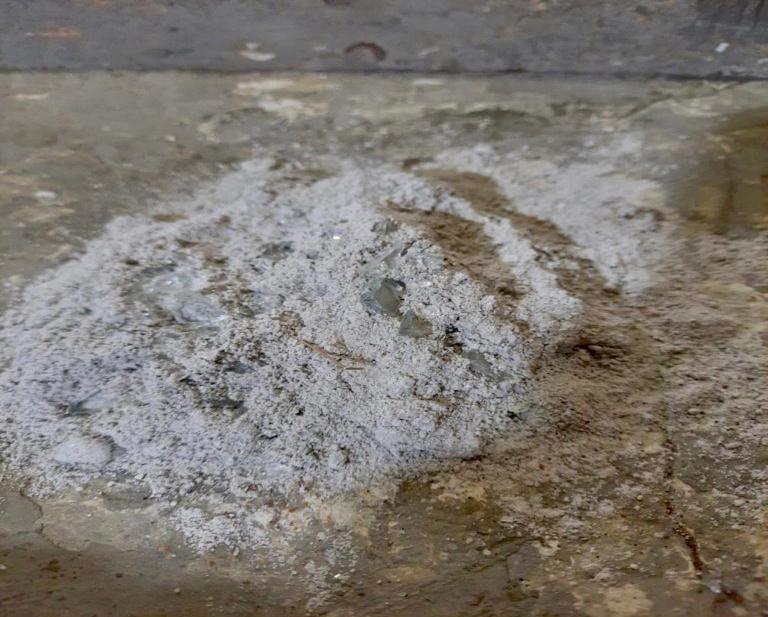
Whenfineaggregateisreplacedwith10%glasswaste,the compressive strength at 7 days is shown to rise by approximately 47.75 percent on average. However, at the same replacement level, the increase in compressive strengthat28daysisjust3.30%.Whenwasteglassisused as a fine aggregate substitute, 28 day’s strength is observed to increase moderately up to 20% replacement level.
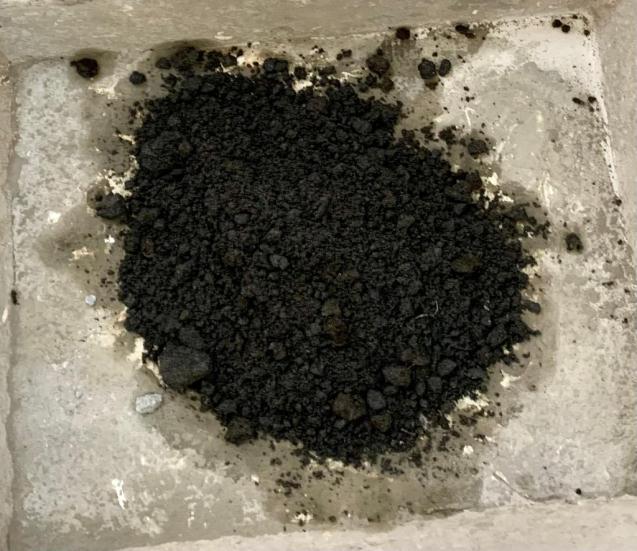
As the ratio of IOT grow’s, the workability of the mix decreases, necessitating the usage of super plasticizers. The maximum compressive strength is 40% IOT replacement, which is higher than the reference mix (NC) andotherreplacementpercentages.
Thehollowconcreteblocksareclassifiedintogrades:
Grade A Load bearing bricks having a block density greaterthan1500kg/m3
Grade B-Load bearingbrickswithblockdensitiesranging from1100to1500kg/m3[15]
Cement:53gradeordinaryPortlandcementconformingto IS12269.
FineAggregate:
M SandpassISsieve2.36mmretainedon150micron. Glass powder passing IS sieve 2.36mm retained on 150micron.
CoarseAggregate:Passing20mmretainedon12.5mm.
SpecificGravityofmaterialsisdeterminedusing
IS2720 Part3.
International Research Journal of Engineering and Technology (IRJET) e ISSN: 2395 0056
Volume: 09 Issue: 06 | Jun 2022 www.irjet.net p ISSN: 2395 0072
2.1 Concrete Mix Proportion:
M20grade ofconcrete was designed asper theIScode of practice (IS 10262(2009)) and the quantity of the constituentmaterialsusedforthemixingaregivenbelow:
Cement=407kg/m3
Water=147.7liters
FineAggregate=828.25kg/m3
CoarseAggregate=1119.01kg/m3
W/Cratio=0.4
Mix Proportion 1:1:9:2.6
0%, 5%, 10%, 15% of Iron ore ash by weight is replaced withCementand30%ofGlasswastepowderbyweightis replaced with Fine aggregates in all mix proportions mentionedbelow.
Concrete Mix Proportion Mix Identity
Cement100% NC
Cement100%+IOT0% Mix1
Cement95%+IOT5%, Mix2
Cement90%+IOT10% Mix3
Cement85%+IOT 15% Mix4
Table 2: Concrete Mix Identity
*IOT Iron oretailings(Ash)
The block specimen where tested in Compression Testing Machine as given in annexure3 after specified curing periodof28daysfordifferentpercentofIOTreplacement Mix1 (0%IOT, 30%GW), Mix2(5%IOT, 30%GW), Mix3 (10%IOT, 30%GW) and Mix4 (15%IOT, 30%GW) and for normal concrete mix. The compressive strength and FlexuralStrengthafterrespectivecuringperiodsarenoted inTable:
Composition
Compressive strength (N/mm2) Flexural strength (N/mm2) NC 21.17 3.22 Mix1 22.43 3.31 Mix2 23.55 3.39 Mix3 28.09 3.71 Mix4 24.98 3.49
Table 3: Compressive Strength & Flexural Strength for 28days
International Research Journal of Engineering and Technology (IRJET) e ISSN: 2395 0056
Volume: 09 Issue: 06 | Jun 2022 www.irjet.net p ISSN: 2395 0072
The UPV direct method is used to examine the quality of concrete according to IS: 13311(Part 1) 1992. The time it takesforanultrasonicpulsetotravelthroughtheconcrete being tested is measured using this method. When the concrete quality is good in terms od density, consistency, homogeneity, and other factors, a higher velocity is achieved. The basic formula for calculating pulse velocity isasfollows:
Pulse velocity= Composition Pulse velocity(km/s) Grading
NC 4.25 GOOD Mix1 4.40 GOOD Mix2 4.33 GOOD Mix3 4.42 GOOD Mix4 4.42 GOOD
Table 4: Interpretations of Present UPV Results
The dynamic Young’s Modulus of Elasticity (E) can be calculated using pulse velocity and dynamic Poisson’s Ratio(µ)usingtheIS:13311 Part1 1992.
E= [ρ(1+µ) (1 2µ)/(1 µ)] ×V2
E=Young’sModulusinN/mm2
ρ=DensityonConcreteinkg/m3
µ=Poisson’sRatio=0.15
V=PulseVelocityinm/s
The E values calculated using the above equation is given below:
Type of mix Pulse velocity(m/s) E value MPa NC 4250 410550.00 Mix1 4400 440041.41 Mix2 4330 426151.46 Mix3 4420 444050.88 Mix4 4410 442043.87
Table 5: E value obtained from UPV Results
From the above results it is to be concluded that Mix3 (10%IOT+30%GW)hasobtainedmorestrengththanNC and to compare the cost between conventional M20 concreteblocktoMix3CostAnalysisisdone:
MIX 3
Material Weight(kg) Cost/kg (Rs) Overall cost (Rs)
Cement 4.7 7.6 35.72 Fine Aggregate 6.95 1.3 9.04 Coarse aggregate 13.61 1.1 14.97 Total 59.73
Table
NC
Material Weight(kg) Cost/kg (Rs) Overall cost (Rs)
Cement 5.23 7.6 39.748
Fine Aggregate 9.94 1.3 12.922 Coarse aggregate 13.61 1.1 14.971 Total 67.641
Table 7: Cost Analysis for Reference Mix NC
The following conclusion are drawn from tests conducted on materials to examine characteristics and testing on hardened concrete to determine strength propertiessuchascompressiveandflexural.:
1. With increase in percentage of IOT workability of the mixisreduces
2. Replacement of 10% IOT with 30% of recycled glass waste gives maximum compressive strength and flexural strength which is more than reference mix (NC)andotherreplacementmixpercentages.
3. Mix3(10%IOT)replacementshowshigherresistance toelasticdeformationthanreferencemix(NC).
International Research Journal of Engineering and Technology (IRJET) e ISSN: 2395 0056
Volume: 09 Issue: 06 | Jun 2022 www.irjet.net p ISSN: 2395 0072
4. From the cost analysis IOT and recycled glass waste replacements reduces the price of the concrete brick by10%approximately.
5. Further research on Mix 3 can be carried to use it for loadbearingstructures.
[1] Tomas U.Ganiron Jr “Use of Recycled Glass Bottles as Fine Aggregates in Concrete Mixture” International Journal of Advanced Science and Technology Vol.61.(2013)pp.17 28.
[2] C.Vijayaraghavan, Jijo James and S.marithangam “Cost Effective Bricks in Construction:A Performance Study” International Journal of Applied Engineering Research ISSN0973 4562Vol4Number3(2009)pp.327 334.
[3]S.P.Gautam,VikasSrivastava andV.C. Agarwal “Use of glass wastes as fine aggregate in Concrete” J. Acad. Indus. Res. Vol.1(6)November2012ISSN:2278 5213
[4] Karla Gorospe, Emad Booya, Ph.D, Adeyemi Adesina, S.M.ASCE and Sreekanta Das, Ph.D. “Durability Properties of Mortar Overlays with Glass Aggregates” Structures Congress2020pp.251 259.
[5] Manish Kumar Sahu, Lokesh Singh “Critical Review on types of bricks type8: Concrete bricks” International Journal of Mechanical And Production Engineering, ISSN: 2320 2092,Volume 5,Issue 11,Nov. 2017
[6]Sherif Yehia,KareemHelal,AnaamAbusharkh, Amani Zaher and Hiba Istaitiyeh “ Strength and Durability Evaluation of Recycled Aggregate Concrete” International Journal of Concrete Structures and Materials Vol.9, No2 , pp.219 239,June2015.
[7] Awetehgn Tuaum, Stanley Shitote and Walter Oyawa “Experimental Study of Self Compacting Mortar Incorporating Recycled Glass Aggregate” MDPI 26 JAN 2018.
[8] Bassam A. Taych, Doha M. Al Saffar “Utilization of WasteIron/powderasFineAggregateinCementMortar” IJERTJune2018
[9] Md Jihad Miah, Md Kawsar Ali, Suvash Chandra Paul, Adewumi John Babafemi, Sih Ying Kong, Branko Šavija “Effect of Recycled Iron Powder as Fine Aggregate on the Mechanical, Durability, and High Temperature BehaviorofMortars”MDPIMarch2020.
[10] Moussa Anan Largeau,Raphael Mutuku,Joseph Thuo “Effect of Iron Powder (Fe2O3) on Strength, Workability, and Porosity of the Binary Blended Concrete” Vol.8 No.4, December2018
[11]XiaoyanHuang,RaviRanade,andVictorC.Li,F.ASCE“ Feasibility Study of Developing Green ECC Using Iron Ore Tailings Powder as Cement Replacement” JOURNAL OF MATERIALSINCIVILENGINEERING©ASCE/JULY2013
[12]BNSkandaKumar,SuhasR,SantoshUttamShet,JM Srishaila “UTILIZATION OF IRON ORE TAILINGS AS REPLACEMENT TO FINE AGGREGATES IN CEMENT CONCRETE PAVEMENTS” Volume: 03 Issue: 07 | Jul 2014 IRJET
[13] C Vijaya Raghavan, Jijo James and S. Marithangam “Cost Effective Bricks in Construction: A Performance Study”Volume4Number3(2009)IJAER