International Research Journal of Engineering and Technology (IRJET) e ISSN:2395 0056

Volume: 09 Issue: 06 | June 2022 www.irjet.net p ISSN:2395 0072
International Research Journal of Engineering and Technology (IRJET) e ISSN:2395 0056
Volume: 09 Issue: 06 | June 2022 www.irjet.net p ISSN:2395 0072
1M. Tech Scholar 2Assistant Professor, 1Civil Engineering, Sri Sai College of Engineering and Technology Badhani, Pathankot ***
ABSTRACT:- Concrete is the most widely used man made construction material in the world. It is obtained by mixing cement materials, water and aggregates, and sometimes admixtures in required proportions. The mixture when placed in forms and allowed to cure hardens into a rock like mass known as concrete. The hardening is caused by chemical reaction between water and cement and continues for a long time, and consequently the concrete grows stronger with age. Coconut Shell is an agricultural waste and is available in very large quantities throughout the tropical countries of the world. Moreover, coconut is becoming an important agricultural product for tropical countries around the world as a new source of energy biofuel. Previously, coconut shell was burnet as a means of solid waste disposal which contributed significantly to CO2 and methane emission. Sugar cane is a natural Plant Fibre, which is collected from Sugarcane Plant. Mainly Sugarcane Fibre is called “Bagasse”. Bagasse is a fibrous material that’s remains after sugarcane is crushed to exact their juice from sugarcane. It is dry pulp residue left after the extraction of juice from sugarcane. Certain materials of mineral origin are also added to concrete to enhance their strength and durability properties of concrete materials such as Coconut Shell Ash and other by product like Sugarcane Fiber. Coconut Shell Ash and Sugarcane Fiber can be used in a combination as supplementary cementitious material as partial replacement of cement and Fine aggregate. 3% Sugarcane Fiber with 15% Coconut Shell Ash (G3) gives 32% increase in compressive strength which is 55N/mm2 of this newly modified concrete in comparison with conventional concrete of M25 grade which is optimum amongst other combinations within 28 Days. 3% Sugarcane Fibre with 15% Coconut Shell Ash (G3) gives increases in Tensile strength which is 5.45N/mm2 within 28 Days alternatively. 3% Sugarcane Fiber with 15% Coconut Shell Ash (G3) gives increases in Flexural strength which is 6.44N/mm2 within 28 Days alternatively. Percentage increase in Coconut Shell Ash results in decrease of strength parameters i.e. combination having 5%, 10%, 15%, 20%and 25% of Coconut Shell Ash gives less increase in results for this mix proportion.
Index Terms: Coconut Shell Ash, Sugarcane Fiber, Compressive strength, Tensile Strength, Flexural Strength, Specific gravity, Concrete, Cement.
Concrete is the most widely used man made construction material in the world. It is obtained by mixing cement materials, waterandaggregates,andsometimesadmixturesinrequiredproportions.Themixturewhenplacedinformsandallowedto cure hardens into a rock like mass known as concrete. The hardening is caused by chemical reaction between water and cementandcontinuesforalongtime,andconsequentlytheconcretegrowsstrongerwithage.Concreteisgenerallyclassified as a normal strength concrete, high strength concrete and ultra high strength concrete etc. As per Indian standard a recommended method of mix design denotes the boundary of 35Mpa between Normal strength concrete and high strength concrete but as per international forum, the high strength concrete label was applied to concrete having strength above 40MPa.Nowithavebeen roseto55MPaasperIS 456 2000.Thestrength, durabilityandothercharacteristicsofa concrete dependuponthepropertiesofitsingredients,ontheproportionofmix,themethodofcompactionandothercontrolsduring placing, compactionandcuring.Thekeytoproducinga strong,durableanduniformconcretei.e.high performanceconcrete lies in careful control of its basic and process components i.e. cement, aggregate, water, chemical admixtures and other supplementarycementingmaterials.Certainmaterialsofmineraloriginarealsoaddedtoconcreteto enhancetheirstrength anddurabilitypropertiesofconcretematerialssuchasCoconutShellashandSugarcanefiber.
International Research Journal of Engineering and Technology (IRJET) e ISSN:2395 0056
Volume: 09 Issue: 06 | June 2022 www.irjet.net p ISSN:2395 0072
Following materials are used for studying the mechanical properties of Concrete for this studyuse agricultural waste, eco friendlymaterial.Materialstobeusedareasfollows:
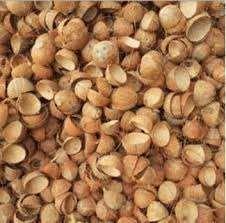
CoconutShellisanagriculturalwasteandisavailableinverylargequantitiesthroughoutthe tropicalcountriesoftheworld. Moreover,coconutisbecominganimportantagriculturalproduct fortropicalcountriesaroundtheworldasanewsourceof energybiofuel[1].Previously,coconutshell was burnet as a means of solid waste disposal which contributed significantly to CO2 andmethaneemission[1].Howeverasthecostoffueloil,naturalgasandelectricitysupplyhasincreased andbecome erratic,coconutshellhascometoberegardedassourceoffuelrather thanrefuse.Presently,theNigeriacoconutshellisused asasourceoffuelfortheboilers,and residualcoconutshellisdisposedofasgravelforPlantationroadsmaintenance.Black smithsalsobuythecoconutshellmaterialintheircastingandforgingoperation[1].
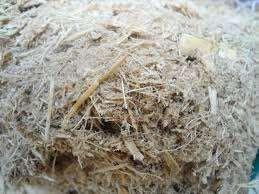
The coconut shell was grinded to form coconut shell powder; the powder was packed in graphitecrucible and fired in electricresistancefurnaceattemperatureof1300oCtoformcoconutshellash. Sugar cane is a natural Plant Fibre, which is collected from Sugarcane Plant. Mainly Sugarcane Fibre is called “Bagasse”. Bagasse is a fibrous material that’s remains after sugarcane is crushed to exact their juice from sugarcane. It is dry pulp residueleftaftertheextractionofjuicefromsugarcane.About30to32%ofbagasseisproducedfrom1tonofsugarcane.Since bagasse is a by product of the cane sugar industry, the quantity of production is in line with the quantity of sugarcane produced. Bagasse is the fibrous residue of the cane stalk left after crushing and extraction of juice.Itconsistsoffibre,water and relativelysmall quantities of soluble solids mostlysugar. Sugarcane Fiber is a fiber of natural origin obtained from the fiber rich parts of the plant. Sugarcane Fibers come in a variety of grades and have a wide range of applications in the food industry. Sugarcane Fiber has a high fiber content of at least 99.0%. Bagasse also is used to produce composites of natural fibers.Compositeisamixtureofdispersedparticlesheldtogetherbyabondingagentofinorganicororganicororganicorigin. Somecompositesof natural fibersareusedbytheautomobileindustry,fortextile, forconstruction materials,withinorganic andorganicmatricesandmorerecently,recycledcompositesmadeofnaturalfibresarebondedwiththermoplasticpolymers.
International Research Journal of Engineering and Technology (IRJET) e ISSN:2395 0056
Volume: 09 Issue: 06 | June 2022 www.irjet.net p ISSN:2395 0072
M25 grade concrete mix design as proposed for controlled concrete based on “Indianstandard concrete mix proportioning(IS10262:2009)”shallbedesignedusingavailablenaturalaggregates.
Materialselectionandtestingofcement,coarseaggregates,andfineaggregates.
Thevaryingpercentage ofCoconutShellAshandSugarcaneFibreaddedtodevelopthefibrereinforcedconcrete.
Testingofrheologicalpropertiesofconcretewithslumptest.
PreparationoftestsamplestogovernhardenedpropertiesFibrereinforcedconcrete.
tested
100×100×100mm cubes (set of 3 for control mix as well as for various additions of fibers) for compressive strength determinationarecasted.Sototalno.of126cubeswerecastedfor
100×200mm cylinders (set of 3 for each) are casted for testing split tensile strength. So total no. of 126 cylinders were castedfortested.
PondCuringofallsamplesisdoneafter24hoursof cast andtestingof all samplesisdoneat28days.
Testingofspecimen’sforcompressivestrength,flexuralstrengthasperIndianstandardguidelines.
Analysisandconclusionofresultsshownbyvariousexperiments.
The consistency of Sugarcane fibre reinforced concrete for each mix group has been determined using the slump test in accordanceto IS: 1199 1959.Thetestresultsforworkabilityoffibremixatadditionpercentageof3%ofpolypropyleneand 5%to25% ofsteelfibre.
International Research Journal of Engineering and Technology (IRJET) e ISSN:2395 0056
Volume: 09 Issue: 06 | June 2022 www.irjet.net p ISSN:2395 0072
Table No. 1 SlumpValuesofConcreteMix
Mix Group Addition percentage of Sugarcane (%) Replacement of coconut shell ash Slump (mm) R 0 0 75 G1 3 5 65 G2 3 10 65 G3 3 15 62 G4 3 20 57 G5 3 25 55
The compressive strength of concrete is of greater importance as compared to other strength properties, as concrete can be consideredasoneofthestrongestbuildingmaterialthatisused moreoftenincompression.Thecompressivestrengthtesting wascarriedoutfordifferentmixgroupoffibrereinforcedconcreteat7days,14daysand28daysasper IS: 516 1959.MixR representsthe reference mix.MixG1 istheconcrete reinforced with3%SCF and5% CSA,mixG2 contains3% SCF and10% CSA,mixG3 contains3%SCFand15%CSA,mixG4 contains3%SCFand20%CSAandmixG5 contains3%SCFand25%CSA.
Table 2: CompressiveStrengthofConcreteMixfor7days,14daysand28days
Mix groups Sugarcane fibre (%) Coconut Shell Ash (%) Compressive strength at 7days (N/mm2)
Compressive strength at 14days (N/mm2)
Compressive strength at 28days (N/mm2) R 0 0 32.5 45 50 G1 3 5 32.5 45 50 G2 3 10 33.8 46.8 52 G3 3 15 35.75 49.5 55 G4 3 20 32.5 45 50 G5 3 25 29.25 40.5 45
The split tensile strength of concrete is one of the basic and important properties. Splitting tensile strength test on concrete cylinderspecimen(100×200mm)isamethodtodeterminethetensilestrengthofconcrete.Concretebeingaweakmaterialin tensionduetoitsbrittlenaturedoesnotresistthedirecttension.Testresultsofsplittensilestrengthtestattheageof7days, 14days and28days as per IS: 5816-1999 Concrete made with 3% SAF and15%CSA(i.e.mixG3)showedmaximumsplit tensilestrengthamongallotherconcretesamples.
International Research Journal of Engineering and Technology (IRJET) e ISSN:2395 0056
Volume: 09 Issue: 06 | June 2022 www.irjet.net p ISSN:2395 0072
Table 3: SplitTensileStrength
Mix groups Polypropylene fibre (%) Steel fibre (%)
Split tensile strength (N/mm2) for 7 days
Split tensile strength (N/mm2) for 14 days
Split tensile strength (N/mm2) for 28 days
R 0 0 2.71 3.7 4.93 G1 3 5 2.695 3.67 4.90 G2 3 10 2.887 3.94 5.25 G3 3 15 2.997 4.09 5.45 G4 3 20 2.19 2.98 3.98 G5 3 25 2.01 2.75 3.66
The Flexural strength of concrete is one of the basic and important properties. Flexuralstrength test on concrete specimen (150×150mm)isamethodtodeterminetheFlexuralstrengthofconcrete. Concrete being a weak material in tension due to its brittlenaturedoesnotresistthedirecttension.Testresultsofsplittensilestrengthtestattheageof28daysasper IS: 5816 1999 is given in the Table 4.4. These values are graphically presented in Fig 4.4, which shows the variation in Flexural strength of plain concrete and fibre reinforced concrete. Concrete made with 3% SAF and 15% CSA (i.e. mix G3) showed maximumsplittensilestrengthamongallotherconcretesamples.
Table 4 FlexuralStrength
Mix groups Polypropylene fibre (%)
Steel fibre (%)
Flexural strength of concrete for 7 days (N/mm2)
Flexural strength of concrete for 14 days (N/mm2)
Flexural strengthof concrete for 28 days (N/mm2)
R 0 0 4.88 5.49 6.1 G1 3 5 4.9 5.51 6.12 G2 3 10 4.98 5.61 6.23 G3 3 15 5.15 5.79 6.44 G4 3 20 5.05 5.69 6.32 G5 3 25 4.82 5.42 6.02
Test result shows that as the fibre content increases slump decreases, addition of Sugarcane fibre slightly increases internalparticlefrictionwhichresultsinreductionofslumpvalue.Ratherthedecreaseofslumpstillliesintherangeof50 75mm.
International Research Journal of Engineering and Technology (IRJET) e ISSN:2395 0056
Volume: 09 Issue: 06 | June 2022 www.irjet.net p ISSN:2395 0072
ItcanbeconcludedthatConcreteMixrequiresslightlymorequantityofchemicaladmixturetomakeitworkableenough.
Asthepercentageoffibrecontentincreases,thecompressivestrengthofspecimens alsoincreasesuptosomeextent.Mix reinforced with 3% SCF and 15% CSA has the optimum value of compressive strength. Afterward the compressive strengthdecreasesgradually.
Asthe percentageof fibrecontent increases the split tensilestrength ofspecimens alsoincreases up tosome extent.Mix reinforcedwith3%SCFand15%CSAhastheoptimumvalueofsplittensilestrength.AfterwardtheSplittensile strength decreasesgradually.
As the percentage of fibre content increases the Flexural strength of specimens also increases up to some extent. Mix reinforced with 3% SCF and 15% CSA has the optimum value of Flexural strength. Afterward the Flexural strength decreasesgradually.
For
Asthetemperaturelevelincreasestheresidualcompressivestrengthdecreases.
Addition of fibre has the positive effect on residual compressive strength. MixG3reinforcedwith(3%SCF+15% CSA)showstheoptimumvalue.
There is no significant difference between the residual compressive strength ofthespecimensheatedinthe temperaturerangeof400˚Cand600˚C.
Explosivespellingdoesn’toccurinanyspecimenatanytemperaturelevel.
Heatingdurationof1houralsoreflectsalmostsimilarresultsascomparedto30minutesheating.
Somehairlinecracks andedgespelling wereobserved whenthespecimens areheatedatmaximumtemperaturelevelof 600˚Cfor1hour.
As the temperature increases the residual compressive strength decreases for boththeheatingperiodof30minutesand 1hour.
ConcretemixG3 reinforcedwith3%SCFand15%CSAshowsthemaximumvalueofresidualsplittensilestrength.
UPV measurements carried out on heated concrete cubes show reduction ofvelocityfrom4.54km/sto3.44km/swith theincreaseintemperaturefrom0˚Cto600˚C.
International Research Journal of Engineering and Technology (IRJET) e ISSN:2395 0056
The reduction in the pulse velocity in Concrete mixes that contained SCF andCSA was significantlyhigher than normal concretemixforalladditionalratios.
As per the prediction, the total percentage of weight loss of the specimen increases as the exposure temperature increases.
The average range of variation is 0.3% to 4.3% for the temperature range from 200 to 600˚C when the specimens are heatedfor30minutesand2.1%to5%whenthespecimensareheatedfor1hour.
Fromthefigure31and32itisclearthatdurationof heatinghasasignificantimpactonweightofconcrete.
The visual inspection of the surface of specimens after subjecting to high temperature and thermally shocked cooling regimeshownovisiblecrackingor spallingonthesamplesinthe200 400˚Ctemperaturerange.Onlyasmallamountof spallingandhairlinecracksat600˚Cwereobservedonsomespecimens.
A light pinkish color was observed when the specimens were heated at 600˚C at its maximumtemperaturelevel for30 minutesand1hour.
Volume: 09 Issue: 06 | June 2022 www.irjet.net p ISSN:2395 0072 © 2022, IRJET | Impact Factor value: 7.529 | ISO 9001:2008 Certified Journal | Page881
[1] Bamgboye A. Isaac and Jekayinfa .S. O (2006) “Energy Consumption Pattern in Coconut rocessing Operations” Agricultural Engineering International: the CIGR Journal Manuscript EE 05013.Vol.VIII.
[2] ASleman,SShahidan,A.J.Nasir,M.S.Senin,S.S.MohdZuki,M.HwanIbrabin,R Deraman,F SKhalidandATSAzhar (2006)“Propertiesofconcretecontainingcoconutshellpowder(CSP)afiller” Moderials Science & Engineering 271
[3] M.J Ghazali, C.H. Azhari, S. Abdullah & M.Z. omar (2008) “Characterisatoin of natural fibres (Sugarcane bagasse) in cementcomposites” Proceeding of the World Congress on Engineering volumeII
[4] P.B.Madakson,D.S.yawasandA.Apasi“CharacterizationofcoconutshellashforAutomativeapplication” International Journal of Engineering Science and Technology (IJEST),Volume04,Issue03,March2012
[5] Utsev, J. T., Taku, J. k. (2012) “Coconut Shell Ash as partial Replacement of eridinary potal Cement in Concrete Production” International Journal of Scientific & Technology Reserarch volume1,Issue8
[6] Vignesh Kumar, Nagarajan, S. Aruna Devi, S.P. Manohari, M. Maria Santha “Experimental study on Partial replacement ofcement withcoconutshell inconcrete”International Journal of Science and Research (IJSR),Volume3, Issue3,March2014
[7] Lalit Kumar, Kamal Kumar Pandey and Sabir Khan “Use of Coconut Shell ash as aggregate” International Journal of Research inEngineering and Social Science,Volume 07,Issue02,February2017
[8] A.S. Lemon (2017) “An experimeuted study on concrete using coconut shell ash & EGG shell powder” South Asian journal of Engineering & Technology Volume3,Issue7
[9] R Ranjith kumar, R Maherdran, S Gokul Nathan, D. Sathya, K. Thamanai kannam (2017) “An experimeuted study on concreteusingcoconutshellash&EGGshellpowder” South Asian journal of Engineering & Technology Volume3, Issue 7
International Research Journal of Engineering and Technology (IRJET) e ISSN:2395 0056 Volume: 09 Issue: 06 | June 2022 www.irjet.net p ISSN:2395 0072
[10] Mr. V.P. Kumbhar, Mr. S.S. Pawar (2018) “Comparative analysis of Coconut Shell Concrete to traditional concrete” Invention Journal of Research Technology in Engineering and Management (IJRTEM),Volume2,Issue6(2018)
[11] Anviti Bhartiya and Manish Dubey (2018) “Replacement of Cement with Coconut Shellash and egg shell powder for preparation of fresh concrete” International Research Journal of Engineering and Technology (IRJET), Volume 05, Issue06,June2018
[12] Matheus R. Cabral, Erika Y. Nakanish ,valdemir dos Santos, joahnn H. palacios, stephane Gadbout, Holmor Savastano junior, juliano fiorelli (2018) “Evaluation of Pre treatmentefficiencyon sugarcane bagasse fibres for the production of cementcomposite” Archives of Civil and Mechanical Engineering
[13] NurulNabilahIsmail,NorHaruriraOthman,GohWanInnMuhamnadShaberySainudin (2019)“Physical&Mechanical propatiesofconcretecontaininggreenMussel (Pernaviridis)ShellAshasanadmixture” Materis Science & Engineering 601
[14] Sankal sharma & Dr. D B Baijiwala (2017) “Abrasion and drop weight impact resistanceof coconut shell ash concrete” Intanaltional Journal of Civil Engineering and Technology (IJCIET)vol8,issue2february2017
[15] M.L.Gambhir“ConcreteTechnology”
[16] IS:456(2000)PlainandReinforcedConcrete