International Research Journal of Engineering and Technology (IRJET) e ISSN:2395 0056

Volume: 09 Issue: 05 | May 2022 www.irjet.net p ISSN:2395 0072
International Research Journal of Engineering and Technology (IRJET) e ISSN:2395 0056
Volume: 09 Issue: 05 | May 2022 www.irjet.net p ISSN:2395 0072
1,3Assistant Professor (SG), Department of Food Technology, Nehru Institute of Technology, Coimbatore, India 2Principal, Chendhuran College of Engineering & Technology, Pudukkottai, India 4Assistant Professor (SG), Department of Aeronautical Engineering, Nehru Institute of Technology, Coimbatore, India ***
Abstract - Fused Deposition Modeling is a solid based additive manufacturing process which is being extensively used in manufacturing of prototypes and functional parts for different applications such as aerospace , automotive , biomedical , prosthetics , Dental and many more. The process utilizes a solid filament which gets extruded through a heated nozzle and gets deposited over a heated or non heated bed in a layer by layer fashion to reach the completed final part. The present work provides a detailed exploration about the functioning of the process and also the diverse composite filament materials available in the commercial market for different applications and also the filaments developed by researchers all over the world to pursue research to have an insight about the potential of such filaments to become end use parts. The review acts as tool for the budding researchers to understand the diverse composite filaments available with fused deposition modeling.
Keywords Additive Manufacturing, Fused Deposition Modeling, PLA, Carbon Fiber
Productmanufacturingisanimportantphaseinanyindustryasthedesignedanddevelopedproductisonewhichmeets the expectation of a customer and also ensures the sustainability of the industry in the market. Numerous manufacturing techniques have evolved in the past decades and each one of them has provided their best outcome to the industrial practionersatdifferenttimelines.Thecontinuous improvementintechnologyhasdegradedtheexisting methodandcreated revolution in product manufacturing through major technological breakthroughs. The major notable drawbacks associated withconventionalmanufacturingofproductsforalongtimeare relyinguponcostlymachines,highlyskilledlabour,effective cutting tool, efficient lubrication for heat dissipation, preparation of detailed process plan, higher lead times. The current industrialscenarioischangingfromdecadetodecadewithsubstantialamountofresearchcarriedoutbyresearchersallover the world to curb or eliminate such drawbacks but still the research is underway. Additive Manufacturing (AM) is a term refers to a group of manufacturing process which creates the object by means of adding layers one over the another. The evolution of addtitve manufacturing has created many viable methods of creating products for diverse discipline with lesser amountofwasteandlowskilledlabourforce. ThebasicprinciplethatdrivesnearlyallAMmachinesisthecreationofvirtual solidmodelthenbreakingthissolidmodelinto2Dcrosssectionsandfeedingthisbrokendatatothemachineforthecreation offinalparts[1].
The different additive manufacturing process that are in industrial practice may be classified based upon the type of material used and methodology for converting the raw material into finished product. Based upon the form of raw material adopteditmaybeclassifiedassolid,liquidandpowderbasedtechniques.TheexpiryofpatentsfiledtowardsthedifferentAM processhasgotexpiredanditturnedthemindsofindustrialists,researchersandscientiststopracticeproductmanufacturing in an unconventional way. Fused Deposition Modeling (FDM) is one of the solid based additive manufacturing process introducedbyStratasysinlate1980’swhichhasthecapabilitytoproducepartsintheformofprototypesandfunctionalparts bythefusionofathinfilamentthroughaheatednozzleanddepositingthefusedlayeronaheatedornonheatedbedinalayer bylayerfashion.Theprocesshasdifferentmaterialoptionssuchasthermoplastics,ceramics,compositematerialsanddayby day ne materials have been developed through extensive research to suit the needs of different industries. FDM finds applicationindiversedomainssuchasaerospace,automotive,defense,marineandarchitectural.The partsproducedthrough FDM process have certain disadvantages such as lacking mechanical properties, poor surface characteristics and longer production time. The existence of such disadvantages limited the adoption of FDM process. Day by day researchers and scientists in the field of fused deposition modelling are conducting unstoppable research in bringing out new filaments and
International Research Journal of Engineering and Technology (IRJET) e ISSN:2395 0056
Volume: 09 Issue: 05 | May 2022 www.irjet.net p ISSN:2395 0072
optimal FDM parameter findings tocater the needsof different domains whichcanpossesssuperior mechanical properties , enhancedsurfacecharcateristicsandlesserproductiontime.
Thecommerciallyavailablefilamentshavebeenadoptedforexaminingitspotentialinmatchingthedemandsforcreating prototpes and functional parts. Common filaments such as Acronitrile Butadiene Styrene (ABS) ,Polylactic Acid (PLA),PolyethyleneTerethalate GlycolModified(PETG),HighImpactPolystyrene(HIPS) ,Polcarbonate(PC) andcomposite filaments made out such as carbon fibre reinforced PLA , ABS ,PC/ABS belnd and many more are currently available in the market. Mohammed Raffic et.al [2] has conducted the experimental investigation on HIPS material to evalaue the flexural strengthbyvaryingtheinputparameterthroughtaguchi’sexperimentaldesignandtheauthorshaveidentifeidthattheinfill densityisthemostdominatfcatoraffcetingalltheresponsesconsidered.GaneshBabuet.al[3]hasstudiedabouttheinflence ofFDMparametersoverthefatiguestrength,printingtimeofABSmaterialbyvaryingtheinputfactorssuchaslayerheight, infill densityand printingspeed Theauthorshaveanalysedthe experimental datasetusingANOVA,grey relational analysis and reported that layer thickness is the highly significant factor affceting both the reposnes and printing speed has less significance.Numerousresearchhasbeencarriedoutusingboththeindividualandcompositefilamnetsforunderstandingit’s potentialtobeasuitablecandiadatefornumerousengineeringapplications.
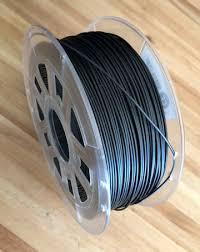
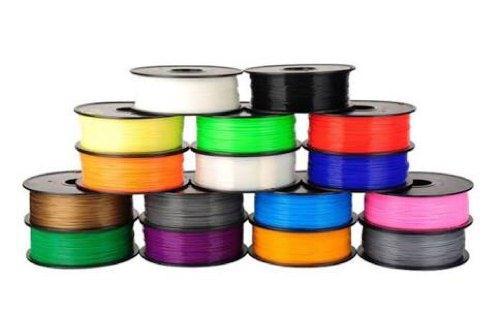
AfilamentisintheformofthinwireactuallyextrudedthroughheatednozzleinFDMmachineinordertodepositoverthe bedoneovertheanothertoreachtheendusepart.Thecommerciallyavailablefilamentsareintwodifferent diameterssuch as 1.75mm and 2.85mm. The most preferable diameter of the filament used for the production and experimental purpose is foundtobe1.75mmdiameter.Thefilamentproducedactuallycomesinspoolswithdifferentweightvaluessuchas0.5kgand 1Kgfortheendusers Thefilamentmanufacturingconsistsaseriesofstepswhichhastobefollowedinasystematicway.The dimensionalaccuracyofthefilament,surfacesmoothnessandroundnessarefewmajorparameterswhichare highlyfocussed whilemanufacturinga filament.Themanufacturingoffilamentiscarriedoutina filament extruderwhichactuallyconsistsa hopperforfeedingtherawmaterialsintheformofplasticpelletsintoabarrelwhichconsistsascrewrod.Thetemperatureof the barrel is set according to the type of filament to be manufactured and the processed plastic pellets inside the barrel is extruded through the nozzle section of the extruder. The manufactured filament is rolled in a spool based upon the requirement.Themanufacturedfilamentsmaybecoloredbasedupontherequirementoftheend part.Thefigure1(a)and(b) shows the commercially available PLA filament in different colours and Carbon fibre reinforced PLA in black colour The manufacturedfilamentcomesalongwiththeinformationaboutits mechanical,physical,chemicalandelectricalpropertiesas perthestandardtestingmethods.
The selection of a filament for a product depends upon numerous factors such as strength of the printed final part, dimensional accuracy, surface finish required , flexibility , solubility , requirement of heated bed , difficulty in printing, availability of different colors and apart from that the filament properties such as mechanical , physical , electrical and chemicalarealsoconsidered. Theothermajorfactorwhichneedstobeconsideredwhileselecting thefilamentisthetypeof
International Research Journal of Engineering and Technology (IRJET) e ISSN:2395 0056 Volume: 09 Issue: 05 | May 2022 www.irjet.net p ISSN:2395 0072
machineusedformakingthefinalpart.FilamentssuchasABS,PLA,HIPSandPCmaybeprintedbyusingdesktopmachines, butforprintingthefilamentssuchasPEEKandothercompositefilamentsindustrialFDMmachinesarerequired.Excondeet.al [4] has applied multi criteria decision making technique ELECTRE for finding the optimum materials for manufacturing a redesignedbreadboard Theauthorshaveconsideredsixdifferentmaterials suchasVirginLDPE,VirginHDPE,VirginPET, Virgin PP , recycled HDPE and recycled PET for the material selection process . The material properties such as melting temperature, glass transition temperature, melt flow index, coefficient of thermal expansion and material cost. The authors havereportedthatrecycledPETmaterialisthemostsuitableoneformakingtheredesignedbreadboardasithasoutranked with other materials considered in the study. Table 1 shows the few commercial FDM filaments available in the market and theirpotentialapplications.
Acompositematerialisacombinationoftwodifferentmaterialswithvaryingpropertiescombinedtogetherthrough astandardmethodtoprovidebetterphysical,mechanicalandotherrelatedpropertieswith aconsiderableenhancement.The FDM filaments that are available in the market are mostly common filaments made out of single material which finds applications in making of prototypes and very few functional parts. The mechanical properties of the parts manufactured through single material FDM filaments possess lacking mechanical properties in comparison to their counterpart injection moulded plastic parts which actually makes them as the least suitable candidate for engineering applications. In the commercial market very few composite filaments such as carbon fibre reinforced PLA, carbon fibre reinforced ABS and PC/ABS blend. Researchers all over the world has created their own composite filaments to unveil their potential for functional engineering applications by varying the proportion of the reinforcement, by differing the reinforcing phase of the compositematerial.
CelineBadouardet.al[5]consideredthreedifferentmatrixphasematerialssuchasPLLA,PBATandPBSforcreating compositefilament byusingflaxfibresasthereinforcingphasetounderstandthepotentialof varyingthecomposition.The authors have prepared pellets made out of both the matrix and reinforcing phase materials to convert them as filaments of diameter 2.85mm.The composite filaments produced are further printed in the form of tensile testing specimens to evaluate their tensile strength. The authors have reported that the selection of matrix phase for the composite has shown a considerable change in the final properties of both the injected and printed tensile testing specimen. The authors have concludedthatPBATisfoundtobethemostsuitablematrixphasematerialamongothermatrixphasecandidates. Mindaugas Bulota andTatiana Budtova [6]studiedaboutthemorphologyandmechanical propertiesofcompositefilamentsmadewith PLA as matrix material and Algae as the reinforcing material in three different colors such as green , red and brown. The
International Research Journal of Engineering and Technology (IRJET) e ISSN:2395 0056 Volume: 09 Issue: 05 | May 2022 www.irjet.net p ISSN:2395 0072
composite filaments were prepared by using melt mixing method by varying the size of algae ranging below 50µm and between 200µm and 400µm. The algae concentration has been varied from 2 to 40%. The authors have studied about three differentaspectssuchasalgaemorphology,compositionandsurfacepropertiesTheauthorshaveconductedtensiletestingof the prepared composite material with algae as the filler material has reported that the tensile mechanical characteristics of composites decreased with increase in algae concentration and the young’s modulus of composites with 40wt% algae concentrationexceededthevalueofneatPLA. Aumnateet.al[7]fabricatedcompositefilamentswithABSasthematrixphase andgraphemeoxideasthereinforcingphasetotesttheirpotentialfordifferentapplicationsthrough3DprintingTheauthors have prepared the filament through two different methods such as dry mixing and solvent mixing method The authors have studiedthemechanicalpropertiesoftheprintedcompositefilamentandreportedthat theadditionof2wt%graphemeoxide with ABS has shown considerable improvement in mechanical properties of ABS The authors have also reported that the filament prepared through dry mixing method failed to print due to the aggregation of grapheme oxide leading to clogging while printing. Prabaha sikder et.al[8] developed composite filaments for the manufacturing of orthopedic and dental implants by considering polyether ether ketone as the matrix phase and amorphous magnesium phosphate as the reinforcementphase. Theauthorshave observed thatthereinforcing phaseconsidered havevery good dispersion withthe matrix phase and they have conducted various tests such as thermogravimetric analysis , rheological analysisto understand the effect of adding reinforcing phase with PEEK . The authors have reported that the addition of amorphous magnesium phosphatewithPEEKisfoundtobeasuitablecandidateformanufacturingimplants. Umitceviket.al[9]performedadetailed reviewaboutthevariousresearchworkcarriedoutby usingmetalpolymercompositematerialindifferentapplications.The Authors have reported that the addition of metallic elements with plastics does not ensure improvement in mechanical propertiesoftheendpart.Thomasdistleret.al [10]producedFDMcompositefilamentmadewithPLAandBioactiveglassfor the manufacturing of scaffolds. The authors have reported that the filaments containing bioglass exhibited bioactivity and it can be used in the applications of bone tissue engineering due to the increased osteogenic differentiation triggered in the manufactured scaffolds. Kazi et.al [11] analyzed the presence of chopped carbon fibre in short form with ABS as the matrix phasethroughvariousanalysissuchasthermogravimetricanalysis,differentialscanningcalorimetry andthermomechanical analysis to understand the thermophyscial properties of both Neat and carbon fibre reinforced ABS material. Dechuan Hua et.al [12] manufactured composite filaments made out of PLA and multi wall carbon nano tubes for the application of soft roboticsthroughfuseddepositionmodelingtodevelopanexcellentphotothermalmaterialsuitabletoactasactuators.Ester. M.Palmero[13]producedmetalliccompositefilamentsusingtwodifferentmetallicelementssuchasaluminiumandstainless steel with ABS material. The authors have studied about the filling factor of the metallic elements and reported that smaller particle size and higher size distribution have facilitated the fabrication of continuous filament. Mohd et.al [14] presented a detailed review about the fabrication of composite filament for biomedical applications. The authors have insisted for the optimization study for input process parameters, in vitro and in vivo study of the developed composite filaments need to be studied for manufacturing biomedical scaffolds. Zuoimin lei et.al [15] developed highly electrical conductive composite filaments using conductive silver pastes and polyvinyl butyral for the applications in Printed Circuit Board , RFID and electronicpaper.Fromtheliteraturesurveycarriedoutitcanbethoroughlyunderstoodthattheareaofcompositefilaments are increasing in a rapid manner due to their potential to acts as suitable candidates for applications such as biomedical, dental,aerospace,automotiveandconductiveelectriccircuits.
Theconcludingremarksofthepresentstudyareoutlinedherewith
1. Adoptionofnaturalfibresasreinforcementisfastlygrowingintheareaof3Dprintingfilaments
2. The presence of reinforcement has shown both positive and adverse effects over the mechanical properties of the materialstudied.
3. The fibre reinforcement characteristics such as orientation , thickness , length and the way of dispersion has strong effectoverthemeasuredmechanicalpropertiessuchastensilestrength,young’smodulus
4. Development of bio based composite filaments for fused deposition modeling is another interesting research area gainingmomentumcurrently.
International Research Journal of Engineering and Technology (IRJET) e ISSN:2395 0056
Volume: 09 Issue: 05 | May 2022 www.irjet.net p ISSN:2395 0072
5. The development of new composite filaments are focused towards the applications of medical , dental , electric circuitsandprogressingatfasterrate.
6. For the development composite filaments optimization study may be carried out in order to identify the potential parametersettingtoenhancethedesiredpropertiesofthefinalpart.
7. Moderntechniquessuchasmachinelearninganddeeplearningmaybeincorporatedwiththeexperimentaldatasetto unleashthehiddenpotentialofcompositefilamentstosuitthemasappropriatecandidatesfordiverseapplications.
8. Apartfromnaturalfibres,additionofmetallicelementsasreinforcingphasealsoconsideredinmanyresearchstudies
9. Comparing to petroleum based plastics in making composite filaments plastics made from natural resources which arebiodegradablelikePLAaremostlyconsidered.
10. More research opportunities are available in the area of optimizing the FDM process parameters for composite filamentswithnaturalandmetallicreinforcements.
[1] S.VyavahareandS.Teraiya,“Fuseddepositionmodelling :areview,”vol.1,no.June2019,pp.176 201,2020
[2] N.MohammedRaffic,K.GaneshBabu,S.Selvakumar,andS.Radhakrishnan,“ExperimentalInvestigationonthe Effect of Fused Deposition Modelling Parameters for HIPS Material by Experimental Design and MRO Techniques,” IOP Conference Series: Materials Science and Engineering,vol.988,no.1,2020.
[3] N. M. Raffic, K. G. Babu, A. Kumaran, and G. R. Kiran, “Parametric Optimization Study of ABS Material Using FDM TechniqueforFatigueLifePrediction,”vol.6,no.11,pp.4 11,2018.
[4] M. K. J. E. Exconde, J. A. A. Co, J. Z. Manapat, and E. R. Magdaluyo, “Materials selection of 3D printing filament and utilizationofrecycledpolyethyleneterephthalate(PET)inaredesignedbreadboard,” Procedia CIRP,vol.84,pp.28 32, 2019.
[5] C.Badouard,F.Traon,C.Denoual,C.Mayer Laigle,G.Paës,andA.Bourmaud,“Exploringmechanicalpropertiesoffully compostableflaxreinforcedcompositefilamentsfor3Dprintingapplications,” Industrial Crops and Products,vol.135, no.April,pp.246 250,2019.
[6] M.BulotaandT.Budtova,“PLA/algaecomposites:Morphologyandmechanicalproperties,” Composites Part A: Applied Science and Manufacturing,vol.73,pp.109 115,2015.
[7] C. Aumnate, A. Pongwisuthiruchte, P. Pattananuwat, and P. Potiyaraj, “Fabrication of ABS/Graphene oxide composite filament for fused filament fabrication (FFF) 3D Printing,” Advances in Materials Science and Engineering, vol. 2018, 2018.
[8] K. Z. Kantorski, M. W. Liberatore, M. C. Bottino, and S. B. Bhaduri, “Bioactive amorphous magnesium phosphate polyetheretherketonecompositefilamentsfor3Dprinting,” Dental Materials,2020.
[9] Ü. Çevik and M. Kam, “A Review Study on Mechanical Properties of Obtained Products by FDM Method and Metal/PolymerCompositeFilamentProduction,” Journal of Nanomaterials,vol.2020,2020.
[10] T. Distler et al., “Polymer Bioactive Glass Composite Filaments for 3D Scaffold Manufacturing by Fused Deposition Modeling: Fabrication and Characterization,” Frontiers in Bioengineering and Biotechnology, vol. 8, no. June, pp. 1 17, 2020.
International Research Journal of Engineering and Technology (IRJET) e ISSN:2395 0056 Volume: 09 Issue: 05 | May 2022 www.irjet.net p ISSN:2395 0072
[11] K. M. M. Billah, F. A. R. Lorenzana, N. L. Martinez, S. Chacon, R. B. Wicker, and D. Espalin, “Thermal analysis of thermoplastic materials filled with chopped fiber for large area 3D printing,” Solid Freeform Fabrication 2019: Proceedings of the 30th Annual International Solid Freeform Fabrication Symposium An Additive Manufacturing Conference, SFF 2019,no.August,pp.892 898,2019.
[12] D. Hua et al., “3D printing of shape changing composites for constructing flexible paper based photothermal bilayer actuators,” Journal of Materials Chemistry C,vol.6,no.8,pp.2123 2131,2018.
[13] E. M. Palmero et al., “Composites based on metallic particles and tuned filling factor for 3D printing by Fused DepositionModeling,” Composites Part A: Applied Science and Manufacturing,vol.124,no.June,p.105497,2019.
[14] N.A.S.MohdPu’ad,R.H.AbdulHaq,H.MohdNoh,H.Z.Abdullah,M.I.Idris,andT.C.Lee,“Reviewonthefabricationof fused deposition modelling (FDM) composite filament for biomedical applications,” Materials Today: Proceedings, vol. 29,no.November2018,pp.228 232,2019.
[15] Z. Lei et al., “Fabrication of highly electrical conductive composite filaments for 3D printing circuits,” Journal of Materials Science,vol.53,no.20,pp.14495 14505,2018.