International Research Journal of Engineering and Technology (IRJET) e ISSN:2395 0056

Volume: 09 Issue: 05 | May 2022 www.irjet.net p ISSN:2395 0072
International Research Journal of Engineering and Technology (IRJET) e ISSN:2395 0056
Volume: 09 Issue: 05 | May 2022 www.irjet.net p ISSN:2395 0072
1M.Tech. (Civil) Construction Engineering and Management, BVM Engineering College, Vallabh Vidyanagar, Gujarat
2Assistant Professor, Civil Engineering Department, Darshan Institute of Engineering and Technology, Rajkot, Gujarat
3Associate Professor, PG Coordinator Construction Engineering and Management, Civil Engineering Department, BVM Engineering College, Vallabh Vidyanagar, Gujarat ***
Abstract One of the most essential components of concrete is cement. Cement is responsible for the majority of the properties of concrete. Cement is made by heating argillaceous and calcareous materials to a high temperature. A significant amount of CO2 is released into the atmosphere during this process. The decrease in cement consumption will lower the cost of concrete while simultaneously lowering CO2 emissions. Carbon dioxide levelsfromconcrete manufacturehavecontributedfor5% of worldwide total carbon emissions. At the same time, the number of industrial waste produced grows year after year. Copper slag, a non toxic and non hazardous waste material, has recently attracted experts' curiosity as a building material. This work primarily reviews recent relevant literature, critically examines copper slag performance, and considers the influence of partial substitute of copper slag on effectiveness. Copper slag waste is a common byproduct of the copper industry. The mechanical properties of concrete are investigated when fine aggregate is partly substituted with copper slag and cement partly substituted with dolomite powder in this review paper. This review includes a complete observational research on compression, split tensile and flexuralstrength testafter 28days. Fromliteraturereview it was found that utilizing copper slag as substituted partly for sand up to 40% and dolomite powder substituted partly for cement between 5% 10% improved the concrete's mechanical qualities. According to the environmental effect analysis, using copper slag as a partial substitute can lessen the environmental impact andconcretecostscanbereducedbyusingdolomite
Keywords: Copper slag, dolomite powder, Aggregate, Concrete, Strength, Durability, Environmental impact.
Concretehasalonglifespanaswellastoughstructure.It has become the most extensively used building material
in recent years. Cement manufacture produces a substantial amount of CO2, which contributes to greenhouse emissions. Cement is produced by calcining argillaceousandcalcareousrocksatahightemperature. During this process, a significant amount of CO2 is emitted into the atmosphere. India is the second largest cementproducerintheworld.Manufacturingonetonof cement is predicted to emit 0.8 tons of carbon dioxide. Reduction in cement consumption lowers the cost of concrete while simultaneously lowering carbon dioxide emissions. Since the beginning of the twentieth century, people have become increasingly concerned about pollution, the greenhouse effect, and other environmental challenges. As a result, the influence of cementontheenvironmentshouldnotbeneglected.[7]
Dolomite powder, produced by grinding sedimentary rockthatyieldsthemineraldolostone,can beutilizedas partial substitute for cement in concrete. Dolomite powder shares some physical properties with cement. DolomiteisacalciummagnesiumcarbonateCaMg(CO3)2 mineral. Dolomite is a mineral that forms rocks and is known for its high wet ability and dispensability. Dolomite has a high resistance to weathering. Dolomite isapopularbuildingmaterialbecauseofitshighdensity andsurfacehardness.[13]
Year after year, amount of natural resources converted to industrial trash grows. In terms of sustainable development, reusing industrial byproducts is the safe and cost effective solution. Over the last decade, there hasbeenasurgeininterestinthestudyofcopperslagin concrete. These research have shown that copper slag hasshowntobeausefulmaterialforincreasingconcrete performance.
The use of copper slag improves the properties of concrete and reduces the cost of reconstruction. Furthermore, the cement sector is one of the largest emitters of carbon dioxide. Copper slag can be added to
International Research Journal of Engineering and Technology (IRJET) e ISSN:2395 0056
Volume: 09 Issue: 05 | May 2022 www.irjet.net p ISSN:2395 0072
cement basedmaterialstoreducethequantityofcement used in concrete production, helping to meet resource conservation and environmental goals. It is clear that, copper slag is clean material. Excessive grinding, on the other hand, will degrade the characteristics of the concrete, resulting in bleeding or a lengthy setting time. Furthermore, the impact of copper slag on the mechanical properties of a partial concrete substitute was investigated. For sustainability, copper slag can be usedasasubstitute.[9]
Followingaretheneedofstudy:
1. Theutilizationofcopperslaginconcreteproduction will help to address future fine aggregate shortage issues.
2. It will provide partial solutions for copper slag disposal.
3. Dolomite powder will aid in the development of sustainable infrastructure, reducing environmental risks.
4. Dolomite lowers construction costs by lowering the costofconcrete.
Belowarethestudy'sobjectives:
1. Investigatingtheuseofdolomitepowderandcopper slagtoimproveconcreteproperties.
2. To determine the optimal dosage of dolomite powderwithcopperslagforbestresults.
3. To calculate and compare the compressive strength of concrete with different dolomite powder and copper slag dosages. To create an environmentally friendlyandlow costbuildingmaterial.
Bystudyingliteraturereviewfromvariousauthorssome wereconcludedwhicharefollows:
Arivalagan et al. (2013) Findoutthatwhentheamount of copper slag in the mix grows up to 40%, the compressivestrengthoftheconcreteincreases,butthen declines dramatically due to increases in free water content in the mix. An overabundance of free water in
mixes containing copper slag causes bleeding and segregation in concrete. As a result, the strength of the concrete is lowered. With 40% copper slag substitution, the greatest compressive strength was reported to be around 35.11N/mm2. When compared to the control mix, the compressive strength has improved by more than 30%. When 100% of the sand is replaced with copperslag,thecompressivestrengthis20MPa [2]
Chavan et al. (2013) conductedacompressivestrength test on M25 grade concrete with a 40% substitution of copperslag,whichresultedinacompressivestrengthof 43MPa versus 30.36MPa for the control mixture. When comparedto thecontrol mix,thestrengthhasincreased by about 41.66% after 28 days. Mixtures with 100% copper slag replacement had the lowest compressive strength of 25.14MPa, which is roughly 3.9 percent less thanthecontrolmix'sstrength.[13]
Madheswaran et al. (2014) He discovered that when 50% copper slag was substituted, the compressive strengthwasaround42MPa,comparedto34MPaforthe normal mix. The strength rose by almost 19% as compared to the control mix. According to the findings, thehighestlimitforsandreplacementbyCopperslagin standardconcretegradesis50%,andtheupperlimitfor highstrengthconcreteis75%.[4]
Pranshu et al. (2015) determinethatat28days,a40% substitution of copper slag for M30 grade of concrete yielded the highest compressive strength, which was found to be around 46MPacompared to 32MPa for the normal mix. When compared to the normal mix at 28 days,thistranslatestoanearly43%increaseinstrength. [16]
Patnaik et al. (2015) Discoveredthatbyreplacingupto 40% of the sand in concrete with copper slag, the compressive strength of the concrete was increased. At 28 and 90 days, M20 Grade Mix Concrete (40 percent copper slag replacement) had compressive strengths of 41N/mm2 and 55 N/mm2, respectively, compared to 36N/mm2 and 44 N/mm2 for the control mixture. The compressive strength of M30 grade concrete with 40% replacement with copper slag was 47 N/mm² and 57 N/mm²at28and 90days, respectively, compared to 41 N/mm² and 51 N/mm² for the control mixture. When compared to Sand, Copper Slag has lesser water absorption capability. Because of the lower water absorption capability, there is more free water in the system,resultinginadropincompressivestrength.[3]
M.V.Patil et al. (2016) carried out research on M30 grade concrete mix. The compressive strength of cubes withdifferentcopperslagcontentasasubstituteforfine aggregate at 7, 28, and 56 days curing time. The results show an increasing profile up to 40% copper slag
International Research Journal of Engineering and Technology (IRJET) e ISSN:2395 0056
Volume: 09 Issue: 05 | May 2022 www.irjet.net p ISSN:2395 0072
substitution, and then a decreasing as more copper slag was substituted. The highest compressive strength was obtained at 40% copper slag replacement, which was around 35MPacompared to 25MPa for the control mix. This means that strength increased by nearly 42% compared to the control mix after 7 days. The concrete with 100% copper slag substitution had the lowest compressive strength of 23MPa, which was nearly 6.64 percentlowerthanthecontrolmix.[9]
Arivalagan et al. (2013) Split tensile strength was determined by testing 18 cylindrical specimens. Both compressive strength and tensile strengths of concrete behaved similarly. The results demonstrate that when the amount of copper slag added up to 40%, the split tensile strength value decreases but remains over 40% whencomparedtothenormalmix.[2]
Patnaik et al. (2015) CarryoutsplittensiletestonM20 and M30 grade of concrete mix. The split tensile of M20 grade of concrete with 40% substitution of copper slag was 2.2 N/mm² and 2.6N/mm², respectively, compared to 2.2N/mm² and 2.3N/mm² for the control mix at 28 and90days.The28 dayand90 daysplittensileofM30 gradeofconcretemixwith40%copperslagsubstitution was 3N/mm² and 3.7N/mm², respectively, compared to 2.9N/mm² and 3.3N/mm² for the control mix. The results demonstrate that the Copper slag mixed at 40% in concrete mix has higher split tensile strength at the endof28dayand90daytimepointswhencomparedto normal mix. It was also discovered that when Copper slag mix concrete is compared to normal mix, the early strengthgainislower.BothM20andM30concretewere foundtohavethischaracteristic.[3]
Patil et al. (2015) Discovered that tensile and compressive strength acted in the same way. When compared to the control mix, the split tensile strength improvesasthecopperslagquantitygrowsuptoa20% addition; after that, the split tensile strength number declinessomewhatbutremainsgreaterthan60%.[9]
Pranshu et al. (2015) Determines that the highest tensilestrengthwasreachedbysubstituting40%copper slagforthecontrolmixtureat28days,whichwasfound to be around 9.5MPacompared to 7.24MPa for the controlmixture.Whencomparedtothecontrolmixat28 days, this suggests that the strength has increased by over31%.[16]
Anwar et al. (2018) Conducted experimental investigation on M40 grade concrete, sand was partly substituted with 40% of copper slag and cement was partly substituted with Silica Fume from 5 15%. This study provides a detailed observational study on split
tensile strength at 28 day. When 40% substitution of copper slag is done, the split tensile increase by 9.8% comparedtothecontrolmix.[1]
Arivalagan et al. (2013) Conduct test for flexural strength on eighteen beams, under two point loading conditions. The bending moment causes compressive stressattopof beamandtensionatbottomofbeam.In tension, the beam breaks. Flexural strength was 25N/mm² at 40% replacement, which is 33% higher thanthecontrolmix.[2]
Chavan et al. (2013) Found that flexural strength of concrete is greater than the normal mix for all percentage replacements of sand by copper slag. When sandissubstitutedwithcopperslagat20%,theflexural strength increases by 14%. Also, flexural strength is higherforall%substitutesthanfordesignmix.[13]
T.Ch.Madhavi et al. (2015) The flexural strength increased with increasing copper slag content up to 40%, but after that, the strength began to decrease. Whencompared toa standardmix,the flexural strength increasesby26.3%.[17]
Pranshu et al. (2015) Finds highest flexural strength after 28 days which was achieved with a 40% substitution of copper slag, which was found to be around 4.6MPacompared to 3.7MPa for the normal mix. This means the strength has increased by nearly 25% comparedtothecontrolmixafter28days.[16]
Patnaik et al. (2015) Conducted flexural strength test onM20andM30gradeconcretemix.On28daysand90 days,theflexuralstrengthofM20gradeofconcrete was 4.7N/mm² and 5.7N/mm², respectively, compared to 4.4N/mm² and 5.3N/mm² for the normal mix. The 28 days and 90 days flexural strength for M30 grade of concrete with substitution of 40% copper slag were 5.3N/mm² and 6.4N/mm², respectively, compared to 4.9N/mm² and 5.8N/mm² for the control mix. The results show that at 28 and 90 days, Copper slag mixed with substitution of 40% copper slag, concrete has higherflexuralstrengththannormalconcretemix.[3]
Bhavagna et al. (2017) Castedprisms ofsize 150mm x 150mm x 150mm for various proportions of 20%, 30%, 40%, and 50% for M30 grade concrete mix. At the beginning, the strength gradually increased, and at 40% replacement of copper slag, the strength was highest, and as the percentage of copper slag increased further by40%,strengthdecreases.[14]
Anwar et al. (2018) Conducted test on M40 concrete, thesandwaspartlysubstitutedwith40%ofcopperslag
International Research Journal of Engineering and Technology (IRJET) e ISSN:2395 0056
Volume: 09 Issue: 05 | May 2022 www.irjet.net p ISSN:2395 0072
and cement with silica fumes from 5 15%. Author examinesflexuralstrengthattheendof28daysindetail. As40percentcopperslagwasreplaced,flexuralstrength roseby8.7%whencomparedtothecontrolmix.[1]
Balakrishnan et al. (2013) Investigate the effects of dolomite powder as a substitute for cement and fly ash in self compacting concrete. The maximal compressive strengthofacombinationincludingflyashanddolomite powder(12.5%flyashand12.5%dolomitepowder)asa 25%substitutewasdeterminedtobe50N/mm².[6]
Deepthi et al. (2016) Obtainthemaximumcompressive strength containing 30% tile aggregate + 10% dolomite. The maximum strength was 35N/mm² after tests on variousmixdesigns.[5]
Kumar et al. (2017) Discovers that replacing cement with dolomite powder improves concrete strength. The optimalcementsubstituteproportionwithdolomitewas discovered to be 5%, and the highest enhancement in 28th day compression strength was discovered to be 5.8%atthispartialreplacement.At5%replacement,the highest compressive strength was determined to be 31N/mm2 [7]
Sugathan et al. (2017) Carried out research work on copper slag mechanical characteristics. According to the findings,compressivestrengthishighestwhendolomite powder is added at 7.5%, and further addition reduces compressivestrength.[15]
Bhusare et al. (2019) Discoveredthatidealsubstitution percentageofcementwithdolomitepowderis10%,and the extreme improvement in the 28th day compression strengthis10.4%atthissubstitutionlevel.[11]
Dhamne et al. (2019) Discovered that compressive strength is increased by adding dolomite up to 10% of the wt of cement, and that any further substitution of dolomite reduces compressive strength. At 10% substitution, the compressive strength obtained is 44.7N/mm², which is 13% higher than the control mix. [12]
Sugathan et al. (2017) Investigated the effects of M sand (manufacturing sand) and dolomite on various concrete characteristics were investigated. The effect of dolomite on concrete formed from manufacturing sand at varied replacement percentages of 0 percent, 5 percent, 7.5 percent, 10 percent, and 15 percent with
cementwasdiscovered.Atacementreplacementlevelof 7.5percentbydolomite,thespecimen'shighestsplitting tensilewasdiscovered.[15]
Indira et al. (2017) Experiments were conducted to study the effect of dolomite as a cement substitute in concrete. Dolomite was used to replace cement at varying ratios of 0%, 5%, 10%, 15%, and 20%.The tensile strength of 5%, 10 %, 15%, and 20% dolomite was enhanced by 30.3, 53.48, 58.13, and 48.53% respectively.[8]
Bhusare et al. (2019) Didanexperimentalexamination on M30 grade concrete and discovered that the best replacementlevel forsplit tensile strengthis5%, andat this substitution, the % improvement in split tensile is 7.5%.[11]
Dhamne et al. (2019) Conduct research on the mechanical properties of dolomite in concrete mix the obtained results show that the addition of dolomite increases split tensile strength by 10%, which was partially substituted by the wt of cement, and that any further addition of dolomite resulted in the split tensile decreasing. The split tensile obtained at 10% replacementis3.5N/mm²,whichis9.7%higherthanthe normalmix.[12]
2.2.3.
Preethi et al. (2015) Conduct research into the characteristicsofconcreteutilizingdolomiteasacement replacement. The effective replacement values for dolomite in concrete mixtures were determined to be 5 percent, 10 percent, 15 percent, and 20 percent. With a 10% substitution, the author discovered that substituting cement binder with dolomite enhances flexurestrengthby17.78%.[10]
Kumar et al. (2017) Replaces cement with dolomite powder, which has been shown to increase concrete strength. In the various mixes, dolomite was used to replace0%to20%(5%interval)ofthebindingmaterial cement. The optimal cement substitution percentage with dolomite was discovered to be 5%, and at this substitution, the highest increase in 28th day flexural strengthwasdiscoveredtobe2.7%.At5%replacement, themaximumflexuralstrengthwas8.6N/mm².[7]
Indira et al. (2017) Conduct research to determine the impact of dolomite quarry waste as a cement and sand replacement in concrete. In the following quantities, dolomite was utilized to replace cement and sand: 0%, 5%, 10%, 15%, and 20%, respectively. The use of dolomite as cement in concrete was shown to increase flexurestrengthby15%,howevertherewasareduction at 20%. The maximum flexure strength of 9.7MPa was
International Research Journal of Engineering and Technology (IRJET) e ISSN:2395 0056
Volume: 09 Issue: 05 | May 2022 www.irjet.net p ISSN:2395 0072
discovered when 10% of the cement binder and river sandwerereplacedwithdolomitequarrywaste.[8]
Bhusare et al. (2019) Determinethat,forM30concrete theidealsubstitutionofcementwithdolomitewasfound to be 5%, and at this substitution, the extreme increase in flexural strength was found to be 8.5% at the end of 28days.[11]
3. Properties of dolomite and copper slag
Table 1:Chemicalpropertiesofcopperslag
FerricOxide Fe2O3 51.6
SiliconDioxide SiO2 38.7
CalciumOxide CaO 2.2
MagnesiumOxide MgO 1.26
AluminumOxide Al2O3 2.88
Copper Cu 0.68 Zinc Zn 0.31 Lead Pb LT0.01 Chloride Cl LT0.01 Otheroxide LT0.01 PH 7.2
Table 2: Physicalpropertiesofcopperslag
Appearance WhitePowder Grade 500finemesh Moisturecontent Nil SpecificGravity 2.85
Table 3: Chemicalpropertiesofdolomite
CHEMICAL CONSTITUENTS
CalciumOxide CaO 52.48
MagnesiumOxide MgO 35.23
FerricOxide Fe2O3 0.29
SiliconDioxide SiO2 3.32
AluminumOxide Al2O3 0.19
PotassiumOxide K2O LT0.01 Otheroxide LT0.01 LossofIgnitionLOI 42.99 PH 6.9
Table 4: Physicalpropertiesofdolomite
Appearance Black,Glassy GranuleShape Angular,SharpEdges, MultiFaced Specific Gravity 3.51
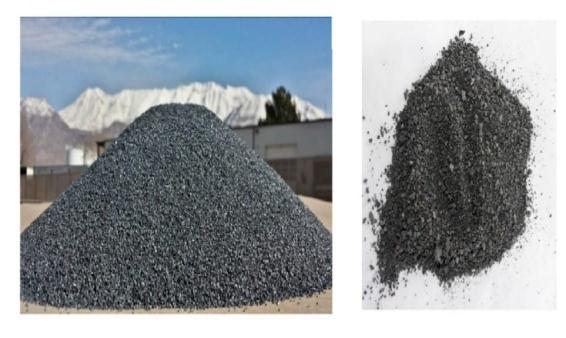
Figure 1: Copperslagparticles
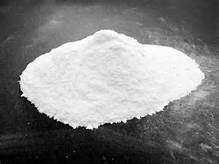
Figure 2: Dolomitepowder
International Research Journal of Engineering and Technology (IRJET) e ISSN:2395 0056
Volume: 09 Issue: 05 | May 2022 www.irjet.net p ISSN:2395 0072
Followingaretheconclusionsfromthereviewstudy:
1. Dolomite, when used as a cement substitute, increases the mechanical strength of the cement. According to the findings of the literature review, dolomite waste could be used to replace 5 10% of thecementinordertoachieveeffectiveresults.
2. The addition of dolomite waste as a substitute for cement in concrete increases the compressive, flexure, and split tensile strength up to a certain limit. Concrete's mechanical properties improve as itsmicrostructureimproves.
3. Incorporating coarse copper slag improves the mechanical properties of concrete. This is probably due to properties of the copper slag and the strong bond between the copper slag aggregate and the cementpaste.
4. Due to the required quantity of calcium oxide concentration in copper slag, replacing fine aggregate with copper slag improves compressive strengthofconventionalconcreteupto40%.
5. Copper slag, a waste by product of the copper industry, can be utilized beneficially as aggregate in concrete mix, as evidenced by the improvement in mechanicalqualitiesofconcretesusingcopperslag.
As a result of various research investigations, it can be determined that using copper slag in concrete saves money by reducing the use of natural resources and, more importantly, by reducing environmental dangers causedbythemassivedumpingofcopperslagindustrial waste. Dolomite's restricted use in concrete has tremendous promise for sustainable and greener production.
[1]Anwarand S.Ahmad, “anexperimental investigation on strength behavior of concrete by partial replacementoffineaggregatewithcopperslagand cementwithsilicafume,”2018
[2] Arivalagan, “Experimental study on the flexural behavior of reinforced concrete beams as replacement of copper slag as fine aggregate,” 2013.
[3] B. Patnaik, “Strength and durability properties of copper slag admixed concrete,” International journal of research in engineering and technology,
vol. 04, no. 13, pp. 158 166, feb. 2015, doi: 10.15623/ijret.2015.0413027.
[4] C.K. Madheswaran, P.S. Ambily and N. P. Rajamane, “Studies on use of copper slag as replacement material for river sand in building constructions,” Journaloftheinstitutionofengineers(india):series a, vol. 95, no. 3, pp. 169 177, sep. 2014, doi: 10.1007/s40030 014 0084 9.
[5] Deepthi, “Study on compressive strength of concrete with dolomite powder and crushed tiles,” International journal of innovative research in science, engineering and technology (an ISO, vol. 3297, no. 9, 2007, doi: 10.15680/ijirset.2016.0509158.
[6] D. S. Balakrishnan, “Workability and strength characteristics of self compacting concrete containing fly ash and dolomite powder,” American journalofengineeringresearch(AJER),no.2,pp.43 47,2013
[7] L. R. Kumar, J. Kiran, and P. Rangarajan, “Properties of concrete incorporate dolomite powder,” IOSR journal of mechanical and civil engineering, vol. 14, no. 02, pp. 78 80, mar. 2017, doi: 10.9790/1684 1402027880.
[8]M.Indira,“Studyonreplacementforcementandfine aggregates using eco sand,” International journal of civil engineering and technology, vol. 8, no. 4, pp. 846 854,2017.
[9]M.V.PatilandY.D.Patil,“Effectsofcopperslagassand replacement in concrete.”International journal of engineeringandtechnology.
[10] Preethi. “Effect of replacement of cement with dolomite powder on the mechanical properties of concrete.” International journal of innovative science,engineering&technology.
[11] Prof. Vijaykumar. P. Bhusare, “Experimental study of effect on concrete properties with partial replacement of cement with dolomite powder,” International journal for research in applied science and engineering technology, vol. 7, no. 10, pp. 536 542, oct. 2019, doi: 10.22214/ijraset.2019.10080.
[12] P. Dhamne, S. Nimbhore, P. B. Nagarnaik, “Experimental investigation on replacement of cement in concrete partially by using dolomite powder.” International Journal of Trend in ScientificResearchandDevelopment,Issue4(issn 2349 5162),”2019.
International Research Journal of Engineering and Technology (IRJET) e ISSN:2395 0056
Volume: 09 Issue: 05 | May 2022 www.irjet.net p ISSN:2395 0072
[13] R. R. Chavanand, D. B. Kulkarni, “Performance of copper slag on strength properties as partial replace of fine aggregate in concrete mix design.”International journal of advanced engineeringresearchandstudies
[14]SaiBhavagnaandG.Lalitha,“Experimentalstudyon concrete (M30) by partial replacement of fine aggregate with copper slag.” International journal of civil engineering and technology (IJCIET), vol. 8, no. 1, pp. 1031 1038, 2017, article id: ijciet_08_01_122.
[15] Sugathan, “Experimental investigation on partial replacement of cement with dolomite powder,” International journal of innovative research in science, engineering and technology (an ISO, vol. 3297,2007,doi:10.15680/ijirset.2017.0607041.
[16] S.Pranshu, “Experimental study on mechanical properties of M30 concrete with partial replacement of cement and fine aggregate with silica fume and copper slag.” IJRET: International journal of research in engineering and technology, 04.
[17] T.Ch.Madhavi,“Effect of copper slag on the mechanical strengths of concrete.” International journalofchemtechresearch.