International Research Journal of Engineering and Technology (IRJET) e ISSN:2395 0056

Volume: 09 Issue: 05 | May 2022 www.irjet.net p ISSN:2395 0072
International Research Journal of Engineering and Technology (IRJET) e ISSN:2395 0056
Volume: 09 Issue: 05 | May 2022 www.irjet.net p ISSN:2395 0072
Abinaya R1, Pragadeeswaran E2 , Mr. Sudhakar G3
1,2Dept of Information Technology, Sri Sai Ranganathan engineering college, Coimbatore, Tamil Nadu, India
3Asst professor, Head of the Dept Computer science engineering and Information Technology, Sri Sai Ranganathan Engineering College, Coimbatore. Tamil Nadu, India ***
Abstract Emergency medical service (EMS)are of great importance to saving people’s lives from emergent accidents and diseases by efficiently picking up patients using ambulances. We propose a data driven real time ambulance redeployment approach that redeploys an ambulance to a proper station it becomes available, so as to optimize the transporting capability of an EMS system. Many possibility that EMS cannot be accessible by the patients because it went for another destination and not making the closest EMS to dispatch. The crucial moments in dispatching an ambulance correctly with the least response time in case of trains or other threatening situations will contribute and determine patient survival. The performance of our real time approach is evaluated by a discrete event simulation developed for a large real dataset and compared with two approaches. EMS are concerned with providing maximum possible coverage in the service area.
Key Words: Emergency medical services, ambulance redeployment, data and knowledge management
Crisis Medical Services assume fundamental parts in saving individuals' lives in urban communities from rising mishaps and illnesses, through proficiently getting patients, leading in site medicines for patients and moving patients to clinicsOnceanEMSframeworkhasbeenlaidout,itsmovingabilityaltogetherdepends onthedispatchingandredeployment systemofambulances[2].Nonetheless,asconcentratedinpastwritings,Forexample,whenanEMSdemandcomes,whether thereareaccessibleambulancesinstationsclosebythesolicitationaltogetherreliesupontheredeploymentconsequencesof pastambulances.weproposetoconsideressentiallytheaccompanyinginformation.D1:thequantityofaccessibleambulances at each station. For an emergency vehicle station, the less accessible ambulances it contains, the more essential for the EMS focustoredeploytheongoingaccessibleemergencyvehiclea1tothisstation. D2:thequantityofEMSdemandsclosebyeach station in the future. D3: the topographical area of every emergency vehicle statioD4: the movement time for the ongoing accessibleemergencyvehicletoarriveateveryemergencyvehicle station.D5:thesituationwithotherinvolvedambulances. To manage this issue, in this paper, we propose an information driven constant rescue vehicle redeployment approach [4] whichcannaturallyconsiderthepreviouslymentionedD1 D10.Inparticular,wehavecommitmentsasfollows.Forexample, when an EMS demand comes, whether there are accessible ambulances in stations close by the solicitation fundamentally reliesupontheredeploymentconsequencesofpastambulances.
The proposedrescuevehicleredeploymentapproachcanwell integrateall connectedinformation previously mentioned D1 D5 into the continuous redeployment of ambulances. Exhaustively, to manage the different information, our proposed approach comprises of two phases, a wellbeing time sensitive desperation file and an idea matching calculation. After an emergencyvehiclebecomeaccessible,theinitialstepistogetallconnectedinformation,forexampletheD1 D5.Then,atthat point, to redeploy the rescue vehicle and to well think about D1 D10, our move toward comprises of two phases: the Safety TimeBasedUrgencyIndexwhat'smore,theOptimalMatchingAlgorithm.
Safety Time Based Urgency Index:weproposeamethod(i.e.asafetytime basedurgencyindex)toorganicallyincorporateD1 D5intotheurgencydegreeofeachstationgentthestation.Foreachstation,weapplyagradientdescendalgorithmtolearnits thresholdµjsuchthatthegeographicallocationofeachstationcanbewellconsideredforcalculatingtheD*.Underthealready devisedurgencyindexhandoptimalmatchingalgorithmO(seebelow),thetransportingcapabilitygofanEMSsystemcanbe seen as a function of each station threshold µj i.e. g (µ1, · · · , µJ ). Then, we can use a gradient descend algorithm to learn stationdiscriminativethresholdsforstationsin ordertooptimizethetransportingcapability.Notethatnjisknowabletoan EMScenterandthatλjisanestimatedvalue.
International Research Journal of Engineering and Technology (IRJET) e ISSN:2395 0056
Optimal Matching Algorithm: After obtaining D* (using the devised safety time based urgency) D4, and D5, we propose an optimal matching algorithm O to find a proper station for the ambulance which has just become available. Our optimal matchingalgorithmfurthercontainstwostages:thestationselectionandthetraveltimeminimization.Thesecondstageisto match the ambulances in A with the selected |A r | stations, aiming to minimize the overall travel time needed for each ambulancetoreachthestationmatched.Fromthematchingresult,wecangetthestation(i.e.the redeploymentresult)forthe currentavailableambulance.
D1:thenumberofavailableambulancesateachstation.
D2:thenumberofEMSrequests.
D3:thenumberofEMSrequestsnearbyeachstationinthefuture
D4:thetravelthecurrentavailableambulance
D5:thetravelthecurrentavailableambulancetoreacheachambulancestation
D6:thetraveltothecurrentlocationcanbedisplayedtotheambulance
D7:thestatusofoccupiedambulances
D8:thestatusofotheroccupiedambulances
D9:thedispatchingtimeforambulances
D10:thestatustobecompleteddeploymentofambulance
EMS Request:AnEMSrequest rq fromapatientisatuple,ifthestation sj istheneareststationtotherequest,intermsof the travel time ofambulanceson road networks EmergencyMedicalService(EMS)isabranchofemergencyservicesdedicatedto providingout of hospital acutemedical careand/ortransporttodefinitivecare,to patientswithillnessesandinjurieswhich thepatient,orthemedicalpractitioner,believesconstitutesamedicalemergency.
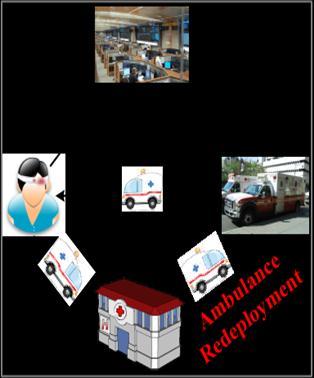
Ambulance Station:WedenotethetotalnumberofambulancestationsinanEMSsystemby J EmergencyMedicalService(EMS)isprovidedbyavarietyofindividuals,usingavarietyofmethods.Tosomeextent,theseare determinedbycountryandlocale,witheachindividualcountryhavingitsown'approach'tohowEMSshouldbeprovided,and by whom. In some parts of Europe, for example, legislation insists that efforts at providing Advanced Life Support (ALS) services must be physician led, while others permit some elements of that skill set to specially trained nurses, but have no paramedics.Elsewhere,asinNorthThisismostlikelyaCasualtyatahospitaloranotherplacewherephysiciansareavailable. The term Emergency Medical Service (EMS) evolved to reflect a change from a simple transportation system (ambulance
Volume: 09 Issue: 05 | May 2022 www.irjet.net p ISSN:2395 0072 © 2022, IRJET | Impact Factor value: 7.529 | ISO 9001:2008 Certified Journal | Page3462
International Research Journal of Engineering and Technology (IRJET) e ISSN:2395 0056
service)toasysteminwhichactualmedicalcareoccurredinadditiontotransportation.Insomedevelopingregions,theterm isnotused,ormaybeusedinaccurately,sincetheserviceinquestiondoesnotprovidetreatmenttothepatients,butonly the provisionoftransporttothepointofcare.
In this paper, hereinafter, we utilize addendum q for an EMS demand, addendum j for an emergency vehicle station, and membershipforarescuevehicle

The moving ability of an EMS framework can be characterized in numerous ways, for example the typical pickup season of EMSdemands[2],[7], theproportionofEMSdemands withpickuptimesinsidea given time edge(for example 10minutes) [16],andsoforth[17].Inthiswork,weutilizethetypicalpickupseasonofpatientstomeantheshippingcapacityofanEMS framework, leaving others as the measurements in our assessment (see Section 5.3). Officially, the shipping capacity is signifiedbygandisfiguredoutas (1) whereQisthequantityofEMSdemandsshowingupinquiteawhileperiod(forexampleonemonth).
our methodology comprises of two phases: the Safety Time Based Urgency Index and the Optimal Matching Algorithm. Beneath,wedetailthefundamentalthoughtofthewellbeingtimesensitivedirenessfileandtheidealmatchingcalculation.
2.1 Safety Time-Based Urgency Index: asshowninFigure2,afterobtainingthecurrentstatus(n j, λ j, µj)ofeachstation s j (I .e.D1,D2,D3,D4andD5),weproposeamethod(i.e.asafetytime basedurgencyindex)toorganicallyincorporateD1 D5into theurgencydegreeofeachstation s j (D*).Specifically,given n j and λ j,wefirstdefinethe safety time ofstation s j asthelength oftimeafterwhichstation s j will
Foreachstation s j,weapplyagradientdescendalgorithmtolearnitsthreshold µj suchthatthegeographicallocationofeach stationcanbewellconsideredforcalculatingtheD*.
2.2 Optimal Matching Algorithm: asillustratedinFigure2,afterobtainingD*(usingthedevisedsafetytime basedurgency index), D4, and D5, we propose an optimal matching algorithm O to find a proper station for the ambulance which has just become available. A set of ambulances containing the MS ambulances and the current available ambulance. Our optimal matchingalgorithmfurthercontainstwostages:the station selection andthe travel time minimization
(Safetytimeurgencyindex)weproposeanoptimalmatchingalgorithmOtofindaproperstationfortheambulancewhichhas just become available. Let’s denote A r as a set of ambulances containing the MS ambulances and the current available ambulance.Ouroptimalmatchingalgorithmfurthercontainstwostages:the station selection andthe travel time minimization
TimeintervaloftwoconsecutiverequestsNumberofrequeststhissegmentistointegratetheacquiredD*,D4,andD5intothe redeploymentoftheongoingaccessiblerescuevehicle.Towardsthisend,weproposeanidealmatchingcalculation.
Volume: 09 Issue: 05 | May 2022 www.irjet.net p ISSN:2395 0072 © 2022, IRJET | Impact Factor value: 7.529 | ISO 9001:2008 Certified Journal | Page3463
International Research Journal of Engineering and Technology (IRJET) e ISSN:2395 0056
Volume: 09 Issue: 05 | May 2022 www.irjet.net p ISSN:2395 0072








Fig2:TheoptimalmatchingalgorithmtoincorporateD*TheoptimalmatchingalgorithmtoincorporateD*,D4,andD5
3.1 EMS request records; EMSrequestrecordsareobtainedfromOctober1toNovember21,2014,i.e.totally51days.Each EMSrequestcontainsatimestampandageographicallocation(i.e.alatitudeandalongitude).Intotal,thereare23,549EMS requestsappeared in the51 days.Thatis,on average,in Coimbatorecity there are around462EMS requestseveryday,and around20EMSrequestseveryhour.

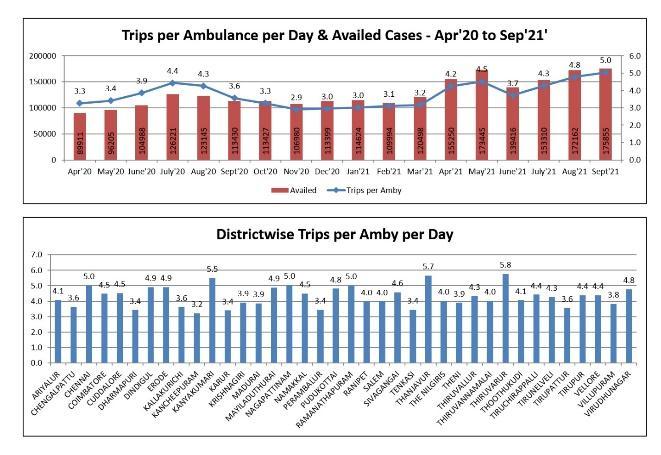
According to vehicles accidents by the Government and private buses have been reduced by ( ) 63.88% and ( ) 66.92 % respectively comparing the previous year up to Nov 2020.. Accordingly, Death by Government /Private buses have been reduced by ( ) 64.81% and ( ) 65.19% respectively when comparing to previous year up to Nov 2021. The death by two wheelerswasdropped by( )18.12percent whencomparedtoprevious yearNov2021. From theabovetable itrevealsthat duringNov2020themostnumberofaccidentsoccursinStateHighways(33.91%)followedbyNational Highways(32.21%), otherdistrictroads21.31%andothervillageroads12.57%.AccordingtoDeath,DeathoccursinNationalHighways(39.27%) andStateHighways(29.34%)inTamilNadu.
International Research Journal of Engineering and Technology (IRJET) e ISSN:2395 0056
Volume: 09 Issue: 05 | May 2022 www.irjet.net p ISSN:2395 0072
Fig4:GPStrajectoriesofambulances
Fig5:Ambulancestationsandhospitals
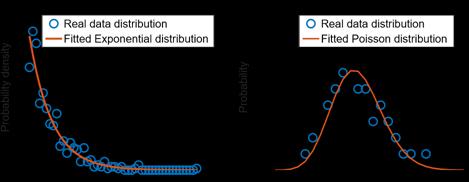
Incoimbatorecity,thereexist538ambulancestations3and750hospitals,towhichambulanceswilltransportpatients. We also collect 51 days of the GPS trajectories of ambulances in coimbatore city. According to this data and EMS request record data, we can obtain the length of time that ambulances spend at scene and at hospital the length of time that ambulances spend at scene and at hospital can be fitted as Exponential distributions, being exp(00834) and exp(02260), respectively.
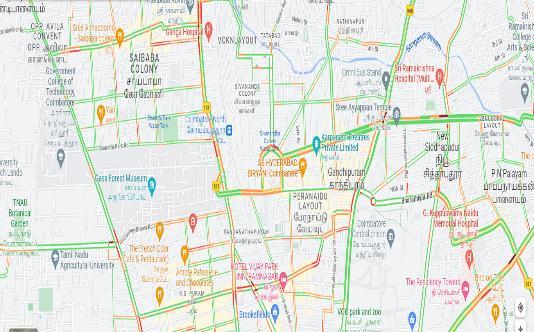
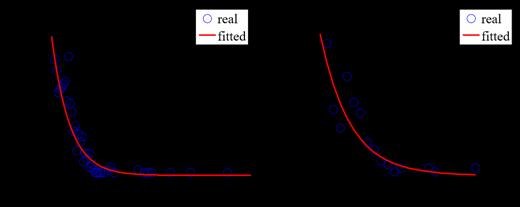
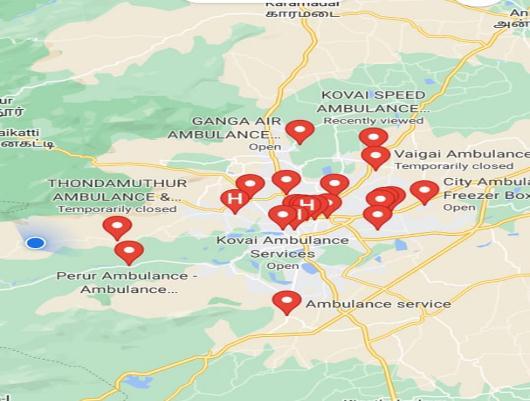
Chart 1:Thelengthoftimethatambulancesspendatsceneandatahospitalinreal
Tobetterevaluatetheeffectivenessofourreal timeambulanceredeploymentmethod,wecompareourredeploymentmethod withmanystate of the artbaselinemethods.
© 2022, IRJET | Impact Factor value: 7.529 | ISO 9001:2008 Certified Journal | Page3465
International Research Journal of Engineering and Technology (IRJET) e ISSN:2395 0056

• B1: RS.RSmethodrandomlyselectsastation,afteranambulancebecomesavailable.
• B2: NS.NSmethodredeploysthecurrentavailableambulancetotheneareststationintermsoftraveltime.
• B3: LS.LSmethodredeploysthecurrentavailableambulancetothestationwiththeleastavailableambulances.
• B4: ERTM [7].ERTMmethodisastaticambulanceredeploymentmethod.
• B5: MEXCLP [3].MEXCLPmethodisastaticmethod,too.MEXCLPmethodaimsatmaximizingtheexpectedcoverage ofstations.
Somecountriescloselyregulatetheindustry(andmayrequireanyoneworkingonanambulancetobequalifiedtoasetlevel), whereasothersallowquitewidedifferencesbetweentypesofoperator.
a) Government Ambulance Service Operating separately from (although alongside) the fire and police service of the area, theseambulancesarefundedbylocal,provincialornationalgovernment.Insomecountries,theseonlytendtobefoundinbig cities,whereasincountriessuchasU.K.,almostallemergencyambulancesarepartofanationalhealthsystem.
b)FireorPoliceLinkedService IncountriessuchastheU.S.A.,Japan,andFrance;ambulancescanbeoperatedbythelocal fireorpoliceservice.
c) Volunteer Ambulance Service Charities or non profit and patient transport function. They may be linked to a voluntary fireservice,withvolunteersprovidingbothservices.
d) Private Ambulance Service Normal commercial companies with paid employees, but often on contract to the local or nationalgovernment.Privatecompaniesmayprovideonlythepatienttransportelementsofambulancecare
e) Combined Emergency Service these are full service emergency service agencies, which may be found in places such as airports.Theirkeyfeatureisthatallpersonnelaretrainednotonlyinambulance(EMT)care,butasafirefighterandapeace officer(policefunction).
e) Hospital Based Service Hospitals may provide their own ambulance service as a service to the community, or where ambulancecareisunreliableorchargeable.Theirusewouldbedependentonusingtheservicesoftheprovidinghospital.
f) Company Ambulance Many large factories and other industrial centers such as chemical plants, oil refineries, breweries and distilleries have ambulance services provided by employers as a means of protecting their interests and the welfare of theirstaff.
Volume: 09 Issue: 05 | May 2022 www.irjet.net p ISSN:2395 0072 © 2022, IRJET | Impact Factor value: 7.529 | ISO 9001:2008 Certified Journal | Page3466
International Research Journal of Engineering and Technology (IRJET) e ISSN:2395 0056
Volume: 09 Issue: 05 | May 2022 www.irjet.net p ISSN:2395 0072
Inourwork,weproposeawellbeingtimesensitiveearnestnessrecordforeachstation.Inpastwrittenworks,writers normally utilize the negligible inclusion [5] the peripheral expected inclusion [3], [4], the activity esteem [2], or the minimal expectedpickuptimetomeasureeachstation'scriticalness.Consequentlyrelegatingtheemergencyvehicletothesolicitation client.
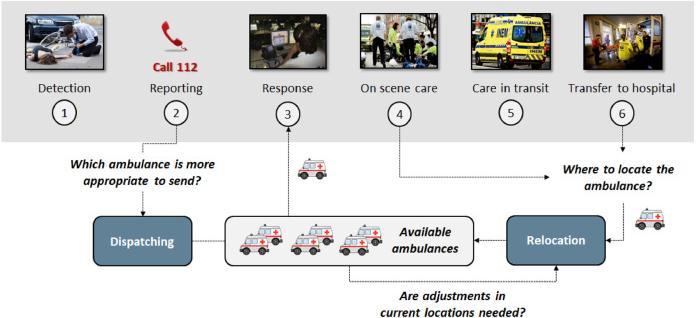
Number of adjacent EMS demand from now on and geological area into the earnestness level of this station. Which can integrate each stations with the movement season of the current ambulance to arrive at each station and the situation with otherstation
AmbulanceLocationandAmbulanceDispatching The rescuevehicledispatchingissueistodispatcha rescuevehicleto geta patient, after the patient sends an EMS solicitation to the EMS community. The dispatching technique proposed in work [1] decreasestheproportionofEMSdemandswithpickuptimesthroughoutagiventimeedge,butthestrategylikewisetoagreat extentexpandsthetypicalpickupseasonofpatients.Alongtheselines,theemergencyvehicleredeploymentissueturnsoutto be significantly more significant. In the event that ambulances can be very much redeployed, for every EMS demand, the closeststationcanbewithaccessibleambulances,thebasepickuptime.
Therescuevehicleredeploymentissueistoredeployanemergencyvehicletoastationafteritopensup.Fortheemergency vehicle redeployment issue, related works can be partitioned into three classes. The first is the static emergency vehicle redeployment strategy [3], [7], [17]. The static techniques initially select a base (home) station for every emergency vehicle, and afterward when an emergency vehicle opens up, it is straightforwardly redeployed to its base station. Obviously, static strategiescan'tcatchthetime differingstatusofanEMSframework,includingthespatialandtransientappearanceexampleof EMS demands, the progressively evolving status (for example direness) of stations, and the dynamical status of ambulances (countingtheongoingaccessibleemergencyvehicleandotherinvolvedambulances).
Inourwork,weproposeawellbeingtimesensitiveearnestnessrecordforeachstation.Inwhichcanmeasurestations' desperationdegreesallthemorepreciselyandisgainfultofurtherdevelopingtheshippingcapacityofanEMSframework.
In this paper, we fostered a constant rescue vehicle redeployment approach which redeploys a rescue vehicle to a legitimate emergency vehicle station after it opens up. Utilizing our redeployment approach, the moving capacity of an EMS frameworkinacitycanbeessentiallygottentothenextlevel.Inparticular,asindicatedbyourtrialresults,whenthequantity ofabsoluteambulancesis50,contrastingandmanycuttingedgerescuevehicleredeploymentdrawsnear,ourredeployment approachcansave∼4minutesEMSframeworkscanmorereadilysaveindividuals'livesfromrisingmishapsandinfections.
International Research Journal of Engineering and Technology (IRJET) e ISSN:2395 0056
Volume: 09 Issue: 05 | May 2022 www.irjet.net p ISSN:2395 0072
Dependentuponanextraimperativetoholdthemostextremeconceivableinclusionresultfromtheprimarymodel. While the ROA makes a choice about the following area of recently inactive rescue vehicle at each assistance culmination occasion redeploymentchoicesinregardstositemergencyvehicleshouldbesettledonateverydecisionappearanceoccasion.
TheongoinginclusionAccordingtotheframeworkstateisprocessedintimeintricacyprecedingrunningtheadvancement models.
[1]C.J.Jagtenberg,S.Bhulai,andR.D.vanderMei,“Optimalambulancedispatching,” Operations Research for Health Care,vol. 248,pp.269 291,March2017.
[2] V. Schmid, “Solving the dynamic ambulance relocation and dispatching problem using approximate dynamic programming,” European Journal of Operational Research,vol.219,no.3,pp.611 621,April2012
[3] C. Jagtenberg, S. Bhulai, and R. van der Mei, “An efficient heuristic for real time ambulance redeployment,” Operations Research for Health Care,vol.4,pp.27 35,2015.
[4]B.S.Westgate,D.B.Woodard,D.S.Matteson,andS.G.Henderson,“Large networktraveltimedistributionestimationfor ambulances,” European Journal of Operational Research,vol.252,pp.322 333,2016.
[5] R. J. Hyndman, R. A. Ahmed, G. Athanasopoulos, and H. L. Shang, “Optimal combination forecasts for hierarchical time series,” Computational Statistics & Data Analysis,vol.55,no.9,pp.2579 2589,May2011.
[6]A.Y.Chen,T.Lu,M.H.Ma,andW.Sun,“Demandforecastusingdataanalyticsforthepreallocationof ambulances,” IEEE J. Biomedical and Health Informatics,vol.20,no.4,pp.1178 1187,July2016.
[7] R. J. Hyndman, R. A. Ahmed, G. Athanasopoulos, and H. L. Shang, “Optimal combination forecasts for hierarchical time series,” Computational Statistics & Data Analysis,vol.55,no.9,pp.2579 2589,May2011.
[8] D. Wang, J. Zhang, W. Cao, J. Li, and Y. Zheng, “When will you arrive? estimating travel time based on deep neural networks,”in Proceedings of the Thirty- Second AAAI Conference on Artificial Intelligence,February2018