International Research Journal of Engineering and Technology (IRJET) e ISSN: 2395 0056

Volume: 09 Issue: 05 | May 2022 www.irjet.net p ISSN: 2395 0072
International Research Journal of Engineering and Technology (IRJET) e ISSN: 2395 0056
Volume: 09 Issue: 05 | May 2022 www.irjet.net p ISSN: 2395 0072
Priya1, Prof. Sangeeta Thakur2
1Student Master of Technology, Department of Electronics and Communication Engineering SIRDA Group of Institution H.P. Technical University Hamirpur India. 2Asst. Professor, Department of Electronics and Communication Engineering SIRDA Group of Institution H.P. India ***
Abstract: WSNs are made up of small, low cost, low power multifunctional nodes that are linked together to effectively aggregate & transmit information to a sink. Cluster basedtechniquesemployClusterHeads(CHs)to efficientlyorganizeWSNsfordataaggregationandenergy savings.Beforedeliveringdatatoasink,aCHgathersdata from cluster nodes and aggregates/compresses it. However,thenode'sincreaseddutycausesahigherenergy drain, resulting in uneven network degradation. LEACH (LowEnergyAdaptiveClusteringHierarchy)compensates forthisbyprobabilisticallyrotatingCHrolesamongnodes with energy above a predetermined threshold. Because optimal data aggregation with efficient energy savings cannotbeaccomplishedinpolynomialtime,CHselectionin WSNisNP Hard. Inthisstudy,amodifiedfireflyheuristic, synchronousfireflymethod,ispresentedtoincreasethe system performance. Extensive simulation reveals the suggestedtechniquetooperatewellcomparedtoLEACH andenergy efficienthierarchicalclustering.
Keywords: Internet of Things (IOT), WSN, Energy efficiency,Fireflyalgorithm.
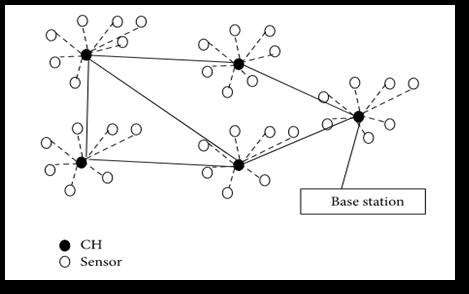
WirelessSensorNetworks(WSNs)arewidelyusedinboth civilianandmilitarysettings.Targettracking,surveillance, naturaldisastertracking,biomedicalapplications,habitat monitoring, and building management systems have all leveraged it [1]. Sensor nodes in natural disasters sense anddetecttheirsurroundingsinordertopredictdisasters. Sensorsurgicalimplantsareusedinbiologicaldevicesto evaluateapatient'shealth.Sensorsadhocdeployedina volcanic area detect earthquakes/eruptions in seismic sensing [2]. WSN nodes use non rechargeable energy storagedevices, batteryreplacementisoftennotfeasible. As a result, energy efficiency is a major concern, and implementing power efficient procedures is vital for extending sensor life [3]. WSNs generally use sensors to monitor specific areas, gather data, send it to a base station (BS). Figure 1 depicts a typical WSN that is organizedhierarchically.Tosaveenergyinahierarchical system, some nodes selected based on the objective functionactasClusterHeads(CH)&aggregatedatafrom
alloftheirneighbors.TheCHthensendsthedatatotheBS, reducingnetworkoverheads,savingenergyineverynode.
Figure 1: WSN architecture[3]
Despitetypicalsystems,WSNshavetheirownsetofdesign &resourcelimitations,suchasrestrictedenergy,shorter transmission ranges, limited bandwidth, and minimal processing capability in nodes. The size of the network varies depending on the deployment scheme and the environment. Data aggregation, which is the method of gettingdatafromvarioussensors,fusingtheinformation, reducing redundant transmission, is one of the most significant operations in WSN. In data aggregation, hierarchicalapproacheshaveproventobequiteeffective.
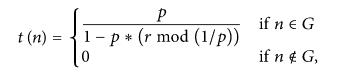
LEACHusesCHtorandomizenoderotation,distributing energyloadevenlybetweennetworksensors.TheLEACH approachworksontheprinciplethatnodesbecomeCHon a regular basis, with 2 steps for each time. Cluster construction comes first, regarding the data communication[4].Everynodechoosesarandominteger &matchesittothresholdvaluesduringclustercreation.It ispickedasCHifthenumberissmallerthan;otherwise,it remainsaregularnodeinthatround.Thecriterionisset by
International Research Journal of Engineering and Technology (IRJET) e ISSN: 2395 0056
Volume: 09 Issue: 05 | May 2022 www.irjet.net p ISSN: 2395 0072
where p is the percentage of the Cluster Heads over all nodes. istheroundnumber. Gisthesetofnodesthathave notbeenCHinthe 1/pfirst rounds.
Thefireflyheuristicwasusedtoconductresearchinthis study.Anew fireflyheuristic issuggestedtocircumvent thelocalminimumissue.Thefireflyheuristicisfocusedon the brightness of fireflies' light. Because the objective functionisrelatedtotheintensityoflightgenerated,low intensityfirefliesareattractedtohigher intensityfireflies. Inthisstudy,ahybridfireflyalgorithm,synchronousfirefly algorithm, is presented based on (i)Ranked sexual reproductioncapabilityofchosenfireflies,(ii)thefireflies formed bythisapproachhavingthebestgenesfrom the rankedfireflies.
The suggested technique has the following benefits: (i)faster convergence, and (ii) prevention of many local optima.
Thispaperisorganizedasfollows:SectionIIdescribesthe literaturesurveyofproposedwork.SectionIIIillustrates the proposed objectives and Section IV shows the experimental results obtained by using the proposed approach.Finally,thepaperconcludeswithSectionV.
Behera et al.,[6] development of the current SEPthat integrates a threshold based CHselection for a heterogeneous environment.Thethresholdensures that energyisdistributeduniformlyamongmemberaswellas CHnodes. To allocate the network load evenly, SNare classified into 3 types: normal, intermediate, as well as developed,basedontheirinitialenergysupply.According to the simulation outcomes, the suggested approach outperformsSEPaswellasDEECproceduresby 300percentinclusterformationaswellas56percentin throughput.
Narottama et al.,[7] proposedanewmethodofrotating theCH avoid reducetheloadontheclusterheadinterms of power consumption. Clustering technology, a modern approachtoD2Dcommunication,isexpectedtoreducethe powerusageofdevices.However,thismethodcancreatea significant energy load on the CH, which can lead to a seriousimbalanceintheratioofenergyconsumedbythe head to the cluster members. The authors performed several simulations to showed the superiority of cluster headrotation.Resultsshowthatrotatingtheclusterhead offers a better power balance (1.25:1 for CH:CM) contrasted to the standard clustering method (3:1 for CH:CM).Thetotalpowerconsumptionwhenrotatingthe CH is also 75% lower than with standard clustering methods.
Abushiba et al.,[8] CH leachhasbeensuggested.Authors presentstructuresandstrategies,aswellasassessthem.
Analyticalresearch&simulationswereusedtoassessits effectiveness. The assessment was based on the most important WSN indicators, including energy efficiency (energy consumption) and network longevity. The suggested CH leach uses less energy than LEACH and DEEC, according to the evaluation and comparison with existingsolutions.WhileCH leachimprovesentiresystem longevityby91percentand43percentoverLEACHand DEECprocedures,etc.
Behera et al.,[9] concentratesonanaccurateChelection approach thatturnstheCHlocationbetweenmanynodes that have a faster speed than others. To select the next group of CH for the system that is suitable for IoT apps like environmentalobserving,smartcities,&devices,the technique calculates remaining energy, power consumption, and an average value of CH. Based on simulationresults,thedifferentversionoutperformsthe LEACHapproachbyincreasingthroughput 60%,lifetime 66%,RE 64%.
Kumar et al.,[10]Theuseofopportunismtransmissionsin compartmentaldesign basedclustersizeoptimizationis introduced.Thereisasensibleenhancementof6%and8% in average power usage for the compartmental designwhencontrasted totheincrementalaswellaslog designs,inboth.Thevisiblelightsignalisdiscoveredtobe 13% more effective than both the WiFi & acoustic messages. Furthermore, there is a benefit to only evaluatingthesecondordertermoftheTaylorseries.The currentdesignservesasafoundationforfutureworkon recommendationsystems,malicioussensoridentification aswellaslocalization,theSGDtechniqueinahugeWSN, andtheCramér Raoboundforvariableprediction.
Mishra et al.,[11] proposedanEE ECHSapproachbased on the RE of sensor nodes. Results are performed to evaluate the performance of ECHS. The outcomes show thatthesuggestedECHScanprovidebetterperformance thantheexistingapproaches.
Prasath et al.,[12] RidgeMethodCHSelection(RMCHS)is anewsynchronoustransittechniquethatchooseseffective CHsfor the sensor nodes. RMCHS employs a new Synchronous transit method to account for CH homogeneitywhenbalancingclusters.Whencomparedto well known LEACH algorithms, RMCHS clearly outperformsthemintermsofresidualenergy,throughput, livingnodes,anddeadnodes.
The authors in the existing scheme have worked by consideringLEACHasbasicprotocolandimproveditby making modification to the way the cluster heads are
International Research Journal of Engineering and Technology (IRJET) e ISSN: 2395 0056
Volume: 09 Issue: 05 | May 2022 www.irjet.net p ISSN: 2395 0072
electedinthenetwork.Theyelecttheclusterheadsbased onremainingenergyofthenodesinthenetwork. Also,the datatransmissionfromclusterheadstothebasestationis doneusingsinglehopcommunication.
These two steps have separated drawbacks: first the selectionoftheclusterheadignoreotherparameterssuch asproximityofthenodefrombasestationorlocationof the node in the network etc. These parameters must be considered to optimally select the cluster heads in the network.Also,thedatatransmission,whendoneviasingle hopcommunicationmethod,consumesmoreenergyinthe network;itcanbechangedtomultihopcommunication.
Objectives:
1.Tostudyvarioustechniquesthatworktooptimizethe energyconsumptioninWSNs.
2.Tooptimizetheclusterheadselectionmethodanddata transmission method in the existing scheme using bio inspiredtechnique.
3.ToimplementtheproposedworkinMATLAB.
4. To compare the performance of the proposed and existingworkbasedonnumberofalivenodes,numberof dead nodes, residual energy and throughput of the network.
Theproposedclusterheadselectionmethodwillbedone usingfireflyoptimization.Itisthemethodderivedfromthe behavioroffireflieswhichgetattractedtotheotherflies basedontheamountoflightemittedbythem.Theamount oflight/brightnessisusuallycomputedbyattractiveness factor.Intheproposedwork,theoptimalclusterheadwill betheonethathashigherattractivenessascomparedto theothernodes.Theattractivenesswillbecomputedusing thefitnessfunctionofthenodes;thefitnessfunctionwill depend upon the energy and position of the node with respecttobasestation.
Oncetheclusterheadshavebeenselectedoptimally,these willformclusterswithothernodesinthenetwork.After clusterformation,thememberswillaggregatetheirdataat clusterheads.Theseheadswillnowhavetoforwarddata tothebasestation.Insteadofsendingthedatatothebase stationdirectly,wewillusemultihopcommunicationin which the cluster heads will forward the data to base stationviaotherclusterhead;therelayclusterheadwillin turnwill beselectedbasedonfireflyoptimizationagain. Here the attractiveness of the nodes will be computed basedonproximityoftheheadfromthebasestation.
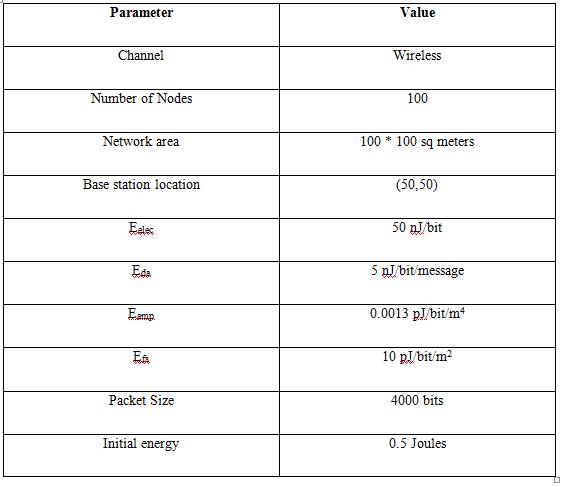
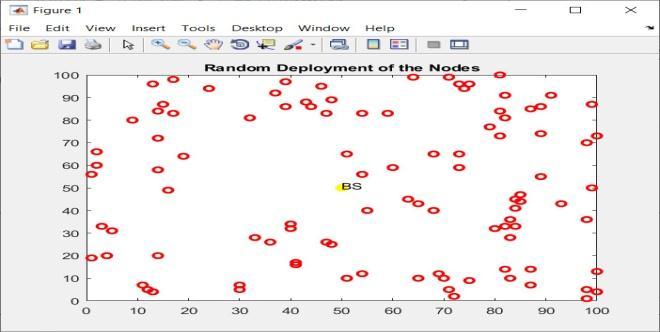
The proposed work as well as existing work were simulated in MATLAB. The simulation was conducted in network area of 100 sq meters and a total of 100 nodes were randomly deployed in the network. The various simulationparametersusedforthesimulationaregivenin thetablebelow:
Theparametersusedtoanalyzedtheperformanceofthe networkwerenumberofalivenodes,no.Ofdeadnodes, average residual energy and throughput (i.e. number of packets sent to the base station). While number of alive nodes determine the lifetime of the network, the throughput defines the number of packets sent by the nodestothebasestation.
Theabovefigureshowsthenodesrandomlydeployedin thenetwork.Thenodesaredeployedintheregionof100* 100sqmeters.Thebasestationislocationat50,50.These nodes generate the random number and forms cluster head.
International Research Journal of Engineering and Technology (IRJET) e ISSN: 2395 0056
Volume: 09 Issue: 05 | May 2022 www.irjet.net p ISSN: 2395 0072
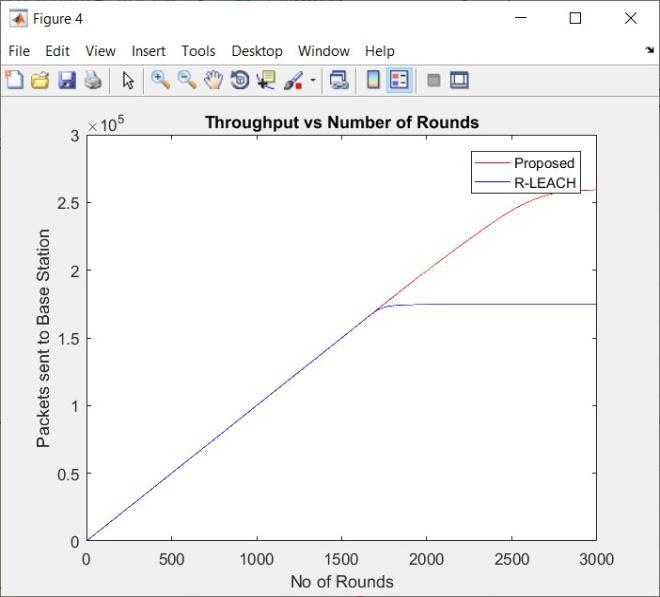
This graph shows the throughput of the network under boththeschemes.Theproposedschemehashighervalue ofthroughputsincethenetworkwasliveformorenumber ofrounds,somorenumberofpacketsweretransmittedto the base station. The number of packets sent to base stationwas259435withtheproposedscheme.Withthe Existingscheme,throughputis174727whichmeanstotal no. of packets received by base station is174727 when network was simulated for existing scheme. Basically, nodesaregettingdeadlatelyinproposedschemedueto whichmorepacketsarereceivedbybasestation.
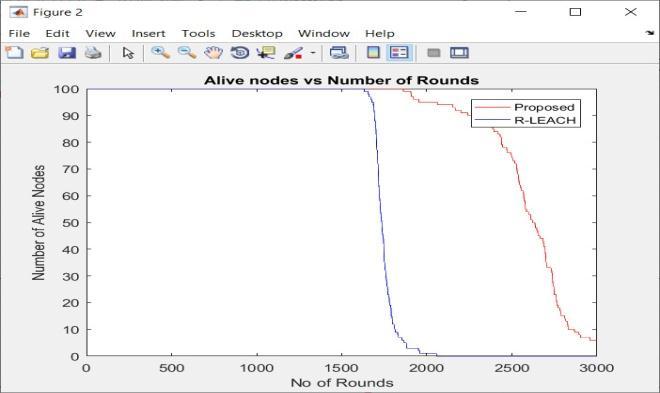
Thisgraphshowsthenumberofnodesaliveinthenetwork against number of rounds for both the schemes. This indicatesbetternetworklifetime.Clusterheadselectionin theproposedschemeisbasedonfireflyalgorithminwhich fitnessfunctionofthenodeiscomputeddependingupon energy and distance of the node with respect to base station.Therefore,performanceintheproposedschemeis betterthanexistingscheme.
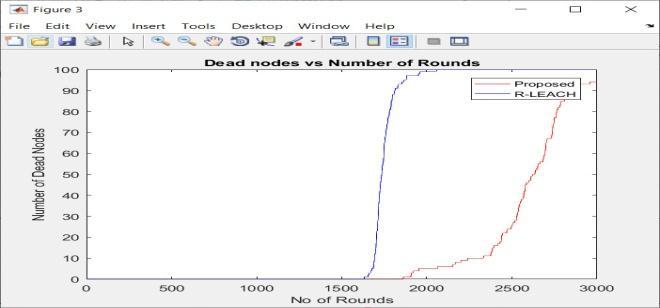
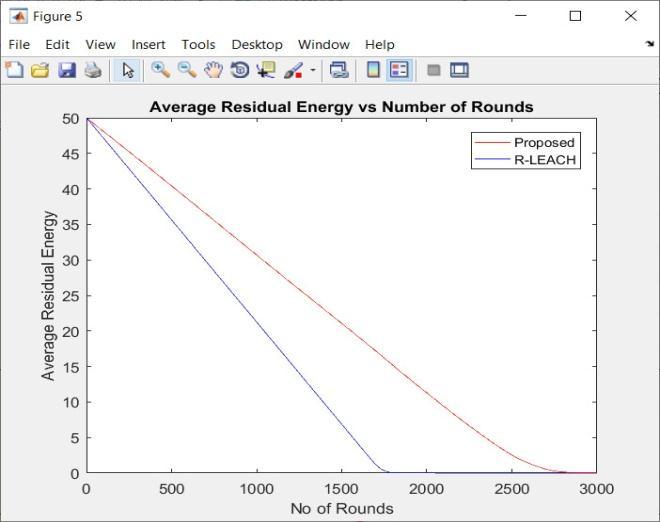
This graph shows the number of nodes dead in the networkagainstnumberofroundsforboththeschemes. Thefirstnodeofnetworkundertheexistingschemegot deadattheendof1633roundandlastnodegotdeadat theendof2056round.whereaswiththeproposedscheme, The first node of network got dead at the end of 1861 round. In the proposed scheme 6 nodes are alive after simulation of 3000 rounds that indicates network is not fullydead.
Average Residual Energy: Packet transmission to base station is done using multi hop communication. Firefly optimization is also applied in this phase in order to achievebetterperformanceandminimizingenergyusage.
Inthispaper,anovelfirefly basedclusteringmethodfor selectingClusterHeadin WSNswassuggested.Theuser mustsupplyprobabilityforusewithathresholdfunction intheLEACHmethodtoevaluatedifanodewillacquireda
International Research Journal of Engineering and Technology (IRJET) e ISSN: 2395 0056
CH or not, resulting in an NP issue. The best fireflies selectedusingtournamentselectionareallowedtoadopt among themselves via crossover and mutation in the suggestedhybridfireflyalgorithm.Thesuggestedstrategy allowsforfasterconvergencewhilealsoavoidingseveral local optima. The suggested approach's efficiency in reducingpacket loss rate is demonstrated bysimulation outcomes. The proposed hybrid firefly method also extended the network's lifespan. Future work couldbe carriedouttoinvestigatetheimpactonincreasingspecific qualityofserviceparameter.
[1] J. Yick, B. Mukherjee, and D. Ghosal, “Analysis of a prediction based mobility adaptive tracking algorithm,” inProceedings of the 2nd International Conference on Broadband Networks (BROADNETS '05), pp. 809 816, IEEE,October2005.
[2] K. Lorincz, D. J. Malan, T. R. F., “Sensor networks for emergencyresponse:challengesandopportunities”,IEEE PervasiveComputing,vol.3,no.4,pp.16 23,2004.
[3]G. Wener Allen, K. Lorincz, M. , “Deploying a wireless sensor network on an active volcano,”IEEE Internet Computing,vol.10,no.2,pp.18 25,2006.
[4]V.B.Thakar,“Performanceevaluation&augmentation of LEACH using a novel clustering hierarchy”, InternationalJournalofDarshanInstituteonEngineering Research&EmergingTechnologies,vol.1,no.1,2012.
[5]K.Hussain,A.H.Abdullah,K.M.Awan,F.Ahsan,andA. Hussain, “Cluster head election schemes for WSN and MANET:asurvey,” World Applied Sciences Journal,vol.23, no.5,pp.611 620,2013.
[6]Behera,T.M.,Mohapatra,S.K.,Samal,U.C.,Khan,M.S., Daneshmand, M., & Gandomi, A. H., I SEP: An Improved Routing Protocol for Heterogeneous WSN for IoT Based Environmental Monitoring”, IEEE Internet of Things Journal,Vol.7,No.1,pp.710 717,2020.
[7] Narottama,B.,Fahmi,A.,Syihabuddin,B.,&Isa,A.J., “Cluster head rotation: a proposed method for energy efficiency in d2d communication”, IEEE International Conference on Communication, Networks and Satellite (COMNESTAT),2015.
[8]Abushiba,W.,Johnson,P.,Alharthi,S.,&Wright,C.,“An energyefficientandadaptiveclusteringforwirelesssensor network (CH leach) using leach protocol”, 13th International Computer Engineering Conference (ICENCO),2017.
[9]Behera,T.M.,Mohapatra,S.K.,Samal,U.C.,Khan,M.S., Daneshmand,M.,&Gandomi,A.H.,“ResidualEnergyBased
Cluster headSelectioninWSNsforIoTApplication”,IEEE InternetofThingsJournal,1 1,2019.
[10]Kumar,S.,“CompartmentalModelingofOpportunistic Signals for Energy Efficient Optimal Clustering in WSN”, IEEE Communications Letters, Vol. 22, No. 1, pp. 173 176,2018.
[11]Mishra,M.,Panigrahi,C.R.,Pati,B.,&Sarkar,J.,“ECHS: An energy aware cluster head selection algorithm in WirelessSensorNetworks”, InternationalConferenceon ManandMachineInterfacing(MAMI),2015.
[12]Prasath,K.A.,&Shankar,T.,“RMCHS:Ridgemethod basedclusterheadselectionforenergyefficientclustering hierarchyprotocolinWSN”, InternationalConferenceon Smart Technologies and Management for Computing, Communication, Controls, Energy and Materials (ICSTM),2015.
Volume: 09 Issue: 05 | May 2022 www.irjet.net p ISSN: 2395 0072 © 2022, IRJET | Impact Factor value: 7.529 | ISO 9001:2008 Certified Journal