International Research Journal of Engineering and Technology (IRJET) e ISSN:2395 0056

Volume: 09 Issue: 05 | May 2022 www.irjet.net p ISSN:2395 0072
International Research Journal of Engineering and Technology (IRJET) e ISSN:2395 0056
Volume: 09 Issue: 05 | May 2022 www.irjet.net p ISSN:2395 0072
Vishal Sardar¹, Sharwary Zade², Shabdagandha Tambe³,
Prof.
Sayyed⁵ ¹’²’³’´Student of B.E(Civil), JSPM’s RSCOE, Pune, Maharashtra, India 411033. µProfessor, Department of civil engineering, JSPM’s RSCOE, Pune, Maharashtra, India 411033. ***
Abstract In India, bricks are particularly composed up of clay, and are usually produced in conventional, unorganized small scale industries. Bricks are crucial building material and approximately 250 billion bricks are yearly produced via manner of the industries. pink clay bricks making consumes larger amount of clay which results in top soil removal and land degradation. huge regions of lands are destroyed every year mainly in growing nations because of collection of soil from an intensity of about 1 to two m fromagricultural land.
on this paper Fly ash, GGBS, Sugarcane Bagasse were used in production of Bricks. the prevailing contain offers an in depth description on the experimental investigation at the compressive strength and physical properties of the Sugarcane Bagasse and GGBS. The brick residences together with compressive strength, water absorption, acid resistance and efflorescence take a look at hadbeen accomplishedon the check specimens.
Key Words (Fly Ash, Sugarcane Bagasse, Ground Granulated Blast Slag, Compressive Strength)
The requirement of energy for the growing international locations mainly vicinity is fulfilled from the combustion of coal. The disposal of the growing quantities of thermal waste from coal fired thermal electricity plant life is growing every day, this disposal of the thermal waste is named as fly ash, which consists of the non flamable mineral a part of coal consumed in a coal fuelled strength plant and the powdery waste remained as residue from the diverse plant life and factories. Fly ash is powder substance received from the dust creditors inside the electric strength plant life that use coal as fuel. Fly ash is furnished free of value to entrepreneurs. GGBS changed into found inside the form of powder from iron wastes. this could motive environmental troubles and making disposal issues at the disposal net websites, this had been modified in to beneficial useful resource and used for making bricks. The charge and different residences of the bricks are
equalized to the ordinary bricks. The houses of the synthetic brick have compromised with the normal brick. This looks at involves the addition of GGBS with clay inside the fired bricks.
[1]VanreykatelcarriedoutaComparativehaveahavea lookatofClayBrickswithGGBSandLateriteSoil.inthis have a look at used a trade technique to decrease the quantityofclayisthruincludingthewastematerialslike GGBS and laterite soil. GGBS changed into introduced in four%, 8%, 12%, 16%. Laterite soil is a soil with excessive clay content material. It carries minerals like kaoliniteandelite.toimprovethehousesandelectricity ofclaybricks,lateritesoilisbrought. Lateritesoiladded in 5%, 10%, 15% and 20%. The 15 % of laterite soil introduced to clay bricks have become located pinnacle of the road bring about complete electricity to the most fulfilling percent of Laterite soil GGBS had been brought in various percentage had been analysed. eight% GGBS, and 15% laterite soil have been one after the other deliveredtoclaybricksoffershighercompressivepower and higher result. Water absorption increases with addition of materials and thermal conductivity shows a loweringstylewithincreaseinfabricaddition.
[2] Divahar at el carried out the experimental study on brick manufacturing with partially replacement of clay with GGBS. In this paper GGBS was partially replaced with clay into brick. Clay, lime and GGBS were the materials used to manufacture the bricks. There were different proportion of bricks were studied such as 0%, 5%,10%,15%,20%,25%and30%.Intheresultsstrength and stability was increased and reduced the brick production cost. And also, good quality of bricks produced from proportion of slag, lime and sand mixture.
[3] Indrajith at el conducted a study on properties of brickmadewithflyashandgranulatedblastfurnaceslag (GGBS).Inthisstudybrickcontainsflyashasthesource materialofbricks.Alsousedfineaggregate(M sand).M
International Research Journal of Engineering and Technology (IRJET) e ISSN:2395 0056
Volume: 09 Issue: 05 | May 2022 www.irjet.net p ISSN:2395 0072
sand grading zone was 2 of IS 383 1970 was used. Also used alkaline activated solution for the activation of polymorphism reaction. Sodium hydroxide and sodium silicate as activator. In the results water absorption of bricksshowabsorption up to6%. Compressivestrength of brick ratio fly ash: GGBS is 75:25 shows highest strengthinthispaper.
[4]Kumuthaatelfinishedexperimentalinvestigationfly ash Bricks incorporating M sand and GGBS. Brick becamemadewiththeusefulresourceofusingclothlike fly ash, granulated blast furnace slag (GGBS) and synthetic sand(M sand). The motive of this check changed into to apply waste fabric efficiently thinking aboutthat GGBSand flyash isindustrial waste. The test ends up done with the aid of using taken numerous percentages of material and houses of cloth and bricks arestudiedthrusportingoutnumeroustestslikeweight, comprehensive power and water absorption take a look atassteadywithIndianpopular.
[5] Jonathan at el Conducted the study on the Development of Unfired Clay Building Materials for BuildingConstruction.
[6] Malhotra at el conducted an experimental study the development of bricks from GGBS, result obtained that the slag lime sand bricks can be manufactured beneficiallyinthevicinityofironandsteelplants.
[7] Mathew at el experimentally analysed on the DevelopmentofCoalAshGGBSbasedgeopolymerbricks.
They concluded that the parameter which had the highest influence on strength of the mix was binder percentage.
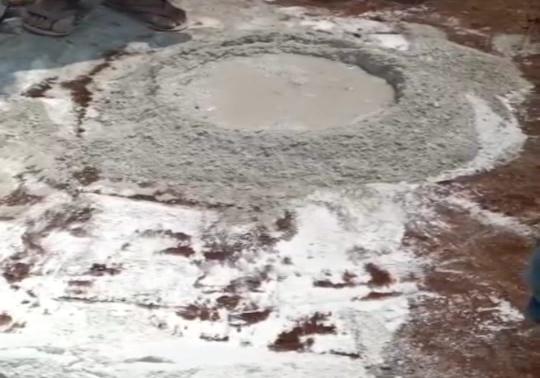
● Fly Ash after burning of coal or lignite inside the boilers. Fly Ash is that portion of ash that's accrued from the ash ponds. backside ash is that portion of
ash which may be amassed from the lowest part of theboilers.Thetraitsofflyashprimarilybasedupon the quality of lignite or coal and the performance of boilers.
● Sugarcane Bagasse Bagasse is a residue obtained from the burning of bagasse in sugar generating factories. Bagasse is the mobile fibrous waste derivativeaftertheextractionofthesugarjuicefrom cane turbines. it is currently used as a bio gas and within the manufacture of pulp and paper merchandiseandbuildingmaterials.
● GGBS It changed into obtained by way of quenching molten iron slag from a blast furnace in water or stream. they're off white in shade. specific gravityofGGBSchangedintoobtainedas2.89.
● Clay Clays are plastic due to their water content material and become difficult, brittle and non plastic upon drying or firing. Geologic clay deposits areinparticularcomposedofphyllosilicateminerals containing variable quantities of water trapped within the mineral shape. depending on the content materialofthesoil,claycanseeminnumeroushues, fromwhitetostupidgreyorbrowntoadeeporange purple.
Table 1: CompositionofBrick1(B1)
FlyAsh 30% SugarcaneBagasse 15% GGBS 20% Clay 35%
Table 2: CompositionofBrick2 (B2)
FlyAsh 35% SugarcaneBagasse 10% GGBS 25% Clay 30%
Table 3: CompositionofBrick3 (B3)
FlyAsh 25% SugarcaneBagasse 12% GGBS 23% Clay 40%
International Research Journal of Engineering and Technology (IRJET) e ISSN:2395 0056
Volume: 09 Issue: 05 | May 2022 www.irjet.net p ISSN:2395 0072
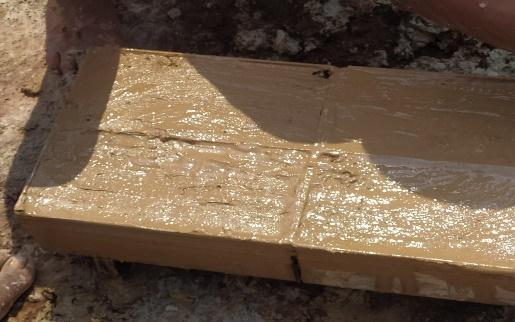
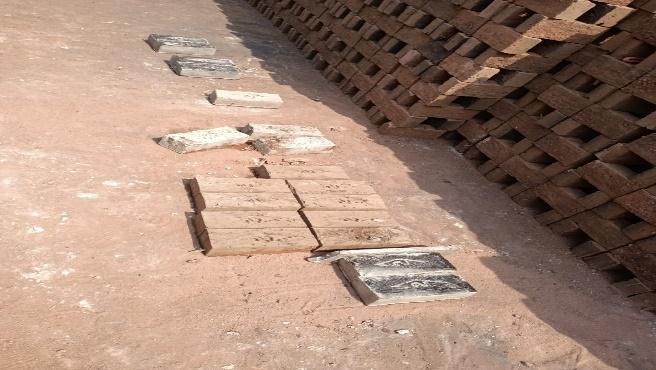
Fly ash (20 30%), Sugarcane Bagasse (7 10%), GGBS (20 25%) and Clay (40 50%) every mix percentage is manually feed into a pan mixer where water is introduced to the desired share for homogeneous mixing.Aftermixing,thecombinationisbrought aboutbeltconveyortofeedintoautomaticbrickmaking systemwherethebricksarepressedautomatically.Then the bricks are positioned on wood pallets and set aside as it's far for two days, there once they are water cured for 10 15 days. The bricks are looked after and examined at 7th and 14th from the day of manufacturing. every brick has been casted for nominal length of 190mm×190mm×90mm.
1 2. Length, form and colour takealookat inthistakealookatrandomlyaccumulated18bricksare stakedalonglengthwise,widthwiseandtopcleverafter which the ones are measured to recognise the variation of sizes as in step with standard. Bricks are intently consideredtotestifitsedgesaresharpandstraightand uniforminshape.anawesomepleasant brick musthave brilliantanduniformshadeallthrough.
3. Soundness takealookattwobricksareheldviaeach palms and struck with one another. If the bricks give clean steel ringing sound and do not ruin then the ones aretruequalitybricks.
4.Water Absorption takealookatonthistakealookat bricks are weighed in dry situation and allow them to immersedinclean waterfor24hours.After24hoursof immersion the ones are taken out from water and wipe out with fabric. Then brick is weighed in moist circumstance. The distinction between weights is the water absorbed by means of brick. the share of water absorption is then calculated. The less water absorbed byusingbricktheextraitsfirst class.properlyfinebrick would not take in more than 20% water of its personal weight.
5.In Hardness check ascratchismadeonbricksurface withatoughcomponent.Ifthatdoesnotleaveanyeffect onbrickthenthatisgoodfirst ratebrick.




6. Compressive energy check isdonetounderstandthe compressive electricity of brick. it's also referred to as crushing energy of brick. generally, five specimens of bricks are taken to laboratory for testing and examined oneaftertheother.inthistestabrickspecimenisplaced on crushing system and implemented strain until it breaks. The ultimate strain at which brick is overwhelmed is taken into consideration. All 5 brick specimens are tested one at a time and common end resultistakenasbrick'scompressive/crushingstrength.
To recognise the high quality of bricks following 8 assessments has been executed. In those tests a few are performed in laboratory and the relaxation are on discipline.
International Research Journal of Engineering and Technology (IRJET) e ISSN:2395 0056
Volume: 09 Issue: 05 | May 2022 www.irjet.net p ISSN:2395 0072
Table 6
Brick Compressive Strength (P/A) inN/mm2 Average
● Water Absorption
Thewaterabsorptionofbrickiscalculatedusingformula (1) W=(M2 M1/M1)x100………(1). Where, M1= Dried specimen weight cooled at room temperature. M2=Immersedspecimenweightafter24hours.
Table 5
Brick WaterAbsorption% Average
B1 17.31 17.31 17.02 17.60 B2 16.8 16.43 16.05 16.4 B3 18.5 18.13 18.02 17.91
● Compressive Strength
The Compressive strength has been calculated by using following formula (2) and using Compression Testing Machine.
Compressive Strength of Bricks = Maximum Load at Failure(N)/Averageareaofbedface(mm2)…….(2)
B1 4.4 4.2 4 4.2 B2 4.3 4.5 4.7 4.5 B3 4 4.03 3.9 4.2
I. A better measure through an innovative constructionfabricisformedviathesestudies
II. Modified clay bricks show boom in compressive strength upto a selected percentage, past that point compressivestrengthdecreases.
III. Thislooksatallowsinconvertingthenon treasured bagasseashintobricksandmakesitprecious.
IV. The water absorption of bricks shows water absorption 16% to 18% whereas the normal clay bricksitwillbearound20%waterabsorption.
V. The bricks can be used for framed structures and compoundwallsascompressivestrengthis4N/mm2 to4.5N/mm2.
[1]AlesterJosephVanreyk,Asst.Prof.,Toc HInstituteof Science and Technology, Ernakulam, India. A ComparativeStudyofClayBrickswithGGBSandLaterite Soil International Journal for Research in Engineering Application & Management (IJREAM) ISSN: 2454 9150 Vol 04,Issue 02,May2018.
[2]R.Divahar,S.P.Sangeetha,P.S.AravindRaj,S.Ispara Xavier (2020) Bricks Manufacturing With Partial Replacement Of Clay With ggbs international journal of scientific & technology research volume 9, issue 02, February.
International Research Journal of Engineering and Technology (IRJET) e ISSN:2395 0056 Volume: 09 Issue: 05 | May 2022 www.irjet.net p ISSN:2395 0072
[3] Lavanya B, Preet D Kuriya, Suganesh S, Indrajith R andRameshBabuChokkalingam,KalasalingamAcademy of Research and Education, Krishnankoil, India Properties of geopolymer bricks made with flyash and GGBS,ICMSMT2020.
[4] Dr.R.Kumutha, Dr.K.Vijai, S.Noor Nasifa, M.Nivedhidha and R.Mukila Preethi3 Experimental Investigation on Fly Ash Bricks Incorporating M Sand andGGBSInternationalJournalofConstructiveResearch inCivilEngineering(IJCRCE)Volume4,Issue2,2018,PP 1 6ISSN2454 8693.
[5] Jonathan E Oti, (2010) The Development of Unfired Clay Building Materials for Sustainable Building Construction.
[6] S.K. Malhotra and S. I Tehri, (1995) Development of bricks from granulated blast furnace slag, Central BuildingResearchInstitute,Roorkee.
[7] Bennet Jose Mathew, Sudhakar M, Dr. C Natarajan, (2013) Development of Coal Ash GGBS based geopolymerbricks,Vol.2No.5.