International Research Journal of Engineering and Technology (IRJET) e ISSN: 2395 0056

Volume: 09 Issue: 05 | May 2022 www.irjet.net p ISSN: 2395 0072
International Research Journal of Engineering and Technology (IRJET) e ISSN: 2395 0056
Volume: 09 Issue: 05 | May 2022 www.irjet.net p ISSN: 2395 0072
Department of Civil Engineering, University of Nigeria, Nsukka. Nigeria. ***
Abstract - InNigeria,theconstructionindustrycontributes over 3% of the annual gross domestic product and is the fourth highest employer of labour. Despite the contributions and huge potentials of the Nigerian construction industry, inadequateattentionispaidtoitsabilitytodrivetheNigerian economy. Interestingly, development and embedment of managerial skills and competencies (SC) are vital for the industry to succeed and thrive. However, several factors are responsible for the slow pace of the development and embedment of the SC required in managing engineering and construction. This study identified and extensively discussed thesechallengesthroughareviewofliteratureanddatafrom the industry. Data was sourced from 155 completed and usable survey questionnaires and 30 semi structured interviews with registered and licensed engineering and construction professionals practicing in both private and publicsectors.Participantsweredrawnfromthemembership database of the Nigeria Society of Engineers. Knowledge sharing, commitment, corruption, and sponsorship were among the identified and robustly discussed challenges. That employers with government incentives should be fully responsible for sponsoring skills and competencies development through a transparent, profiled, merit based system were part of the recommendations to assuage these challenges
the Building Collapse Prevention Guild (BCPG), Akinola Georgeaspublishedby(PremiumTimes,2019).
Simply, construction is the development and delivery of infrastructuresandservicesthatsupporttheenvironment and economy (Muya et al. 2006). Organised construction arguablybeganintheearly1940sinNigeriaandhasbeen dominated largely by foreign companies with lots of imported resources as opposed to the use of local alternatives(NigeriaBureauofStatistics,2017).Reasonably, poor quality of materials and human resources were identifiedbyOwolabietal.(2014)asthemainchallengesin the industry. The human resource aspect includes knowledge, skills, and competencies of the practitioners. Incompetentconstructionprofessionalswereamajorcause ofpoorconstructionqualityasallegedbythepresidentof
From the BCPG survey, only 10% of construction sites in Nigeria are managed by well trained professionals. Unfortunately, the other 90% are in the hands of quacks (Punch,2019).Interestingly,theCouncilfortheRegulation ofEngineeringinNigeria (COREN)Act,2018 asamended, defines quacks as everyone but practitioners of the engineeringprofessionwhoareregisteredwithCORENand who promote and update their SC through continuous certified professional education and trainings. Hence, COREN registered engineers and managers who do not continuouslyupdatetheirSCareunprofessionalandquacks. Muya et al. (2006) noted that the effectiveness of the industryhighlydependsonthequalityoftheworkforcethat it educates and develops. Consequently, as established by Wangetal.(2019),poordevelopmentandapplicationofSC isoneoftheprincipalcausesofunsatisfactoryperformance in qualityand safety issues inthe industry. Therefore, SC contribute to the performance of the engineering and constructionindustryanditsexpectedsuccess(Almatrooshi etal.2016).So,thereexistsastrongconnectionbetweenSC development and quality delivery in the management of engineering and construction. Interestingly, there are several approaches to developing and embedding SC, but Zhuetal.(2017)insistthateffectivedevelopmentofSCis through “learning by doing” and “apprenticeship”. Subsequently,engineers’andmanagers’SCdevelopmentand embedmentcanbeacquiredthroughexperientialeducation aided by mentorship. Bessen (2015) emphasises this learningapproachastechnologyleadsindustrialrevolutions.
Inthecontextofthisstudy,SCdevelopmentandembedment refers to continuous certified professional education, training and practices. Secondly, Onyia (2019) and Alexander (2020) identified and categorised decision making,teambuilding,communication,programmedesign, motivation, programme maintenances, delegation of responsibilities, supervision of others, quality control and assurance,employeetraining,H&SinthetoptwentySCin engineeringandconstructionmanagement.Althoughseveral factorsresistthedevelopmentandembedmentoftheseSC around the world (DeBerry Spence and Elliot, 2012), but attainmentandreward,commitmentandloyalty,education andknowledge sharing,fundingandsponsorship,ethicsand
International Research Journal of Engineering and Technology (IRJET) e ISSN: 2395 0056
Volume: 09 Issue: 05 | May 2022 www.irjet.net p ISSN: 2395 0072
corruption,infrastructuresandstandardswereidentifiedas challengesthatimpedethedevelopingandembeddingSCin theNCI.Understandingtheirinfluencesandpeculiaritiesto theNCIisaprerequisiteforaddressingthem.
A significant challenge has been how to measure and demonstrate workers’ skills and competencies attainment beforeengagingorassigningtaskstothem(Noeetal.2017). Most SC frameworks lack guidance on expected and basic standardsofperformancefortheseskillsand behaviorsin workers as they progress through different stages of their trainingsanddevelopment(RiebeandJackson,2014).Asfor employability,SCtypicallycomprisesasignificantproportion of worker selection criteria; workers themselves must not only appreciate the SC they have acquired but also communicateanddemonstratetoemployershowtheymeet expectedlevelsofdevelopmentrequiredofthem(Riebeand Jackson,2014).Itismostproductiveifemployerscanassess thelevelofworkers’SCwithoutgoingthroughtheworkers. Morestudiesneedtoenableorganisationstodeterminethe exact level of workers’ SC. Itis productive to measureand monitor SC of management members through their commitment,thevaluestheyadd,andtheattitudetheybring tothejob(Noeetal.2017).Thisisalsohowrewardsareset everywhere.
Unfortunately, professionalism and best practices are rarely encouraged or rewarded in the NCI, and this discouragesSCdevelopment.Untrainedworkers(quacks)are hiredinsteadofexpertsonthealtaroffavoritism,cuttingcost and avoiding the responsibility of training (Ogunyomi and Bruning,2016).
According to Martin and Nicholls (1987), an individual’s commitmentisthewillingnesstocontributemuchmoreto the organisation than the prescribed obligation. Similarly, Tagaza and Wilson (2004) found that the enthusiasm of managersoranyotherconstructionprofessionalsisdirectly proportional to their results and performance. Therefore, motivationandcommitmentarecriticaltoSCdevelopment (Okorie&Musonda,2020).Butthen,TaofeeqandAdeleke (2019)revealedthatresistancetochangeisexpressedinthe managers’reluctancetosticktoneworganisationalroutines and develop the required SC. Lack of commitment and loyalty were also found to be a problem because some managers suffered from work exhaustion (Freedy and Hobfoll,2017).Engineers’andmanagers'exhaustionfrom mental fatigue, activity levels and motivations vary significantlyatdifferenttimes,whichcomplicatessystematic developmentofmanagerialandsupervisorySC(Freedyand Hobfoll,2017).Interestamongstengineersandmanagersin anyformoftrainingtheyaretoundergoisveryimportant
(Cheche et al. 2019). For instance, workers’ resistance to upgrading their traditional practices has been the most criticalchallengefacedbytrainersandorganisationsbefore and during trainings (Hwang and Ng, 2013). NCI also representsotherAfricancountrieswheremarketforcesare veryweak,addingtothechallengeofemployersnothaving intellectual rights over their human capital (Muya et al. 2006).
It was Hwanga and Ng (2013) that discovered that managerswithlowlevelsofeducationfeellessvaluedthan their well educated counterparts. And warned that if not well addressed, it could affect their learning and development.Moreover,lowleveloffoundationaleducation is the main challenge in learning and knowledge development(Viswanathanetal.2010).Althoughthetimeit takes to finish a degree in engineering, construction or projectmanagementisdiscouraging.theshortestoneisthe masters programme, which takes at least two years in Nigerian academies. Secondary to this is the high cost of qualityeducationinNigeria,asthereisnofunctionalstudent loan structure (Ahmed, 2015). Although the Council of RegisteredBuildersofNigeriaascitedbyJimohetal.(2017) confirmedthatasmallconstructionsitecanbemanagedand supervisedbyatradeorforemanwhodoesnothavetertiary education.Asasupportstrategy,organisationsenroltheir managers and supervisors in regular short term courses annually (Dave et al. 2016), the lack of foundational educationremainsachallengetotheirSCdevelopmentand embedment.
Furthermore, Arif et al. (2017) identified lack of a knowledge sharing orientation championed by visionary leadership at the top of the industry, as a huge challenge with the development of construction skills and competencies. The Continuous Knowledge Transfer of EuropeanPatentOfficerecommendedthatknowledgeisa continuous development and should be built on (Schombacher et al. 2016). The loss for engineering and constructionmanagers,organisations,andtheentireNCIis immeasurable, as knowledge that could have been transferredorsharedislosttodeathsandretirements.The NigerianBuildingCollapsePreventionGuildPresident,Mr. GeorgeAkinola,agrees;hestatedinhisrecommendationsas published in Premium Times (2019) that there is urgent needforthepromotionofSCsharingandtransfers.
Funding and sponsorship is another challenge associated with developing and embedding SC in the construction industry (Hong et al. 2018). Employers are reluctant to contributetothesponsorship.Therefore,Muyaetal.(2006) believe that government should finance and sponsor SC developmentinsub SaharanAfrica.Theyfurtherrevealed
International Research Journal of Engineering and Technology (IRJET) e ISSN: 2395 0056
Volume: 09 Issue: 05 | May 2022 www.irjet.net p ISSN: 2395 0072
thatmanygovernmentsinAfricahaveneitherthecapability nor the interest in financing or sponsoring the resources requiredtodevelopandimprovetheirnationalSCbase.This position is rather unpopular in the NCI, as discussed in section4.4.
Largely, African countries struggle with SC development, hamperedbypaucityoffundingandsponsorship.Thisisa majorcontributortothereputationforpoorperformance, and responsible for damages to the NCI, where recent newsflashes of the incessant building collapses appear regularlyacross Nigeria (Thisday,2019;Vanguard,2019). Eventually,Gitau’s(2018)studyrevealedtwothings:First, trainingaffectstherecruitingofskilledconstructionworkers in Kenya. Second, the Kenyan government has started investing adequate resources for training construction professionals,henceconstructionfirmshavejoinedandare nowalsoinvestinginbuildingtheiremployees’skills.Agreat collaborationhasemergedbetweentheKenyangovernment, construction companies, and employees “…to anchor the learningenvironmenttotheworkingenvironment”.
The Oxford Dictionary defines ethics as “Moral principles that govern a person’s behaviour or the conducting of an activity”. Ethics is the set of principles that directs an individual’sbehaviourandconduct.AssimplyputbyLeigh (2013), ethics is an individual values application which begins where the law ends. Though there are diverse definitionsofethics,allarecorrectiflinkedtothesethree main factors: Morals the principles of right and wrong behaviour;Principles thebeliefsgoverningourbehaviour; andBehaviour theactsorconductofaperson.Thiswas whyPaulNash,pastpresidentoftheCharteredInstituteof BuildingCIOB(2019),emphasizedthattobeaprofessional in construction and the built environment is to be ethical. Ethics covers the following areas: corruption, bribery, procurement,workers’rights,conflictofinterest,collusion, andcorporatesocialresponsibilities(CIOB,2019).Andsince ethics is about individual behaviour, the CIOB (2019) identifiedchildhoodupbringing,beliefs,culture,values,later lifeexperiences,andinteractionwithothersasfactorsthat influenceethics.
Construction is the most corrupt industry in the world accordingtoOwusuetal.(2019).Corruptioninconstruction is the misappropriation of delegated authority, which impedes performance of construction processes. It occurs whenconstructionprofessionalsexecutenegativedecisions forulteriorinterests. Thoughcorruptionhasbeenclassified in terms of demand and supply, Owusu et al. (2019) confirmed a third classification, which they referred to as “condoners”.Thecondonersareprofessionalswhoneither demand nor supply but overlook and are reluctant to
discourage corruption. Corruption in construction occurs because of poor construction ethics. Shan et al. (2020) revealedthatimmoralityisthemostcriticalandinfluential factor of construction corruption, followed by opacity, unfairness,proceduralviolation,andcontractualviolation. TheInternationalFederationofConsultingEngineers(FIDIC, 2016)hadopinedthatcorruptionoccursatdifferentstages, suchasrecruitment,training,decision making,supervision, tenderevaluation,paymentcertificateissuance,etc.
Almosttwodecadesago,ShalleyaandGilson(2004)singled out failure to modernize training as responsible for skill shortages,higherprices,andpoorerqualityoutput.Thereis along termtrendinindustrialchangethatrelatescloselyto SCandtraining.Fluctuationsinoutputandsmallersizeand specializationofprojectsmakeitdifficultforindividualfirms to plan labour requirements (DeCenzo et al. 2016). Moreover,frequentlyshort termcompetitivepressureslead topoachingofskilledlabourandactasafurtherdisincentive totraining(Section4.2).Forthesereasons,fewconstruction firms have SC development plans. However, Hou et al. (2017) stated that onsite trainings offered by some construction organisations and associations were very limitedandtrainingfacilitiesthathavebeenestablishedare farfromsufficientforthegrowingstandardofconstruction professionalsforindustryexpansion.AccordingtoMuyaet al. (2006), the training infrastructures available in most Africancountrieshavesufferedseveredilapidationandare notfitformoderntrainingpurposes.Thus,thereisneedfor asupervisedinvestmentandcreativenessinengineeringand constructionmanagementSCdevelopmentandembedment intheNCI.
There isa lack ofsolid governmentsupportto implement andenforceregulationsaccordingtoKaufmann(2017).No effectivemechanismthatcompelledconstructionemployers to fund the SC development of their workers in Africa. Zambia andNigeria sharesimilarpolicies withChina on a certain percentage of project budgets being allocated for onsiteSCbeforethestartofconstructionprojects(Sunetal. 2017).AccordingtoBhattacharyya’s(2010)report,mostof thepoliciesandregulationsareneithereffectivelyenforced nor updated. Understanding government policies and institutionalized standards related to engineering and constructionmanagementisvital(HwangaandNg,2013). The same is stated in the COREN Act (2018), but implementation remains a problem in the NCI. But governmentpoliticalinterferenceisunacceptable,because asputbyKaufmann(2017),itkillsbestpractices.
International Research Journal of Engineering and Technology (IRJET) e ISSN: 2395 0056
Volume: 09 Issue: 05 | May 2022 www.irjet.net p ISSN: 2395 0072
Athoroughliteraturereviewidentifiedthesechallenges,and thedatagatheredfromprofessionalsintheNCIenabledus tocategorizethesechallengesinorderoftheirsimilarities and occurrence in the NCI. These data were sourced from 155 completed and usable survey questionnaires and 30 semi structured interviews with practitioners in the NCI. Thismixed methodwasadoptedtorevealinformationand empiricalsizeofthearguments.Similarly,asthisstudyseeks to identify and address all the challenges with SC development, semi structured interviews allowed the participants to respond to well crafted and follow up questionswhichdrewoutalltheevidences.Thisremainsthe mostsuitableapproachtodatagathering.Theparticipants are both private and public sector practitioners duly registeredandlicensedbytheCouncilfortheRegulationof EngineeringinNigeria(COREN)andwererandomlydrawn from the membership database of the Nigerian Society of Engineers (NSE) Headquarters in Abuja, the capital of Nigeria and there are 56,327 registered engineering personnelinNigeria(Odigure,2020).
1 Nature of respondents’ organization Construction Specialist 82.6% General Contractor 17.4%
2 Respondents career structure and number of positions held
1 43.3% 2 35.4% 3 12.6 4 8.7%
3 Gender of respondents Male 99.3% Female 0.7%
1:
MANAGEMENT LEVELS IN THENCEI SiteEngineers/Managers (SEM) ProjectEngineers/ Managers (PEM)
QUESTIONAIRE
StratificationoftheNSEmembershipdatabaseasshownin Chart1revealsthattherealitiesinpracticeattheNCIconcur withtheDonaldsonetal.(2013)study,whichshowsthatat management level, most organizations and industries’ structures are pyramidal. Figure 1 shows that 48.4% of participantsinthesurveyweresiteengineersandmanagers (SEM:linemanagers),32.3%ofparticipantswerereported asprojectengineersandmanagers(PEM:middlemanagers), while only 19.3% were project executive directors (PED: senior managers). The data generated from the questionnaires were analyzed using SPSS, while the participants’ responses during interviews were presented andthenanalyzedintext.Thisisimportanttodrawoutand presenttherawdepthofsentimentsandemotionsthatthis topicgenerates.
Theevidencegatheredfromtheinterviewsrevealedsome motivationalchallengesassociatedwithSCdevelopmentand embedment.Someinterviewparticipantsidentified“lackof reward (promotions) after being trained” as one of them. They argued that where there is no recognition, no responsibility,andnoprofessionalorcareerbenefitsforan upgrade,thenwhatisthejustification?Anotherparticipant linkedthischallengetolowadherencetotheethicintheNCI:
“Bestpracticeisnotencouraged;welltrainedpersonnel arenotassignedresponsibilitiesinareasoftheirexpertisein the industry. Many seek and encourage the services of unskilled and untrained workers in the industry, so why wouldanyonebothertodeveloporimprovetheirSCinan industry that does not patronize skilled and trained professionals?”
TherevelationofthisparticipantsupportstheRiebeand Jackson(2014)positionthatlackofestablishedstandardsfor measuringSCattainmentisahugechallengetodevelopment of engineers and managers. Best practice for the NCI is assigningtaskstomeasureanddeterminedtheSCattainment ofengineersanddocumentthemintheSCprofile.TheNCI
International Research Journal of Engineering and Technology (IRJET) e ISSN: 2395 0056
Volume: 09 Issue: 05 | May 2022 www.irjet.net p ISSN: 2395 0072
prioritizesapplicableSCtomeasureSCattainment(Noeetal. 2017).Ontheissueofreward,oneparticipantstressed:
“…the reward system is weak; most construction engineersandmanagersareunderpaidandunder motivated. Many employers subscribe to the use of contract staffing, which is cheaper, but then they deliver cheap and substandard practices as they lack expertise, structured rewards,andmotivation.Thisorientationforcesmostofthe youngengineerstofocusonfinancialbenefitsofconstruction instead of quality experience and development. The poor reward system makes engineers and managers’ compromise.”
ItisevidentthatthecurrentrewardsystemintheNCIneither encourages nor motivates engineers and managers to developtheirSC.AsstatedbyOgunyomiandBruning(2016), this lacklustre attitude towards SC development and embedmenthasdirect,negativeimpactonprojectoutcomes.
Thisqualitativedatarevealedtheexistinglackofinterestin SC development as according to some interviewees: “Unwillingnessonthepartoftheemployer,theyjustwantto makeprofits.”“Unwillingnessonthepartoftheemployees; they want to save money.” On the employees, another intervieweeprovidedmoreinsight.“Someengineersfeelthey are too busy to enroll in SC development courses.” These engineers are so busy with earning that they ignore opportunitiestodevelopandimprovetheSCrequirementsof their roles and hence lack the ability to evolve with the industry.Checheetal.(2019)seethisasagenuinechallenge, asinterestisvitaltoSCdevelopment.Andthereisalsothe challenge and concern of losing staff to a competitor after trainingtheengineersandmanagers.Ashighlightedbyan interviewee,“Thereistheriskoflosingatrainedstaffafter fundingthetrainings.”Aftertheorganisationshavemadethe investment,thereisahighriskthattheirnewlydeveloped engineersandmanagerscouldbesnatchedbycompetitors withadequatefinancialpower.Thisdiscouragesemployers from funding any significant SC development for their employees. One interviewee, who is an executive director with a private engineering and construction management firm,reactedwithaquestion.“Whatguaranteedowehave that after investing this huge amount in SC training and development, that they [employees] will not move to our competitors when offered higher pay?” This is a valid and widespreadconcernamongemployers.Andtheemployment historyofengineersandmanagersintheNCIvalidatesthis concern, as figure two revealed that 58% of the survey respondents have spent less than five years in their respectiveorganisations.SEMconstitute100%and76%of engineers with less than one year and less than five year experiences respectively at their current positions. While PEMare24%and97%ofengineersthatare6 10yearsand 11 15yearsexperiencesrespectively.PEDmakeup3%of6 10 years, 100% of 11 15 years and 100% of 20years and aboverespectively.
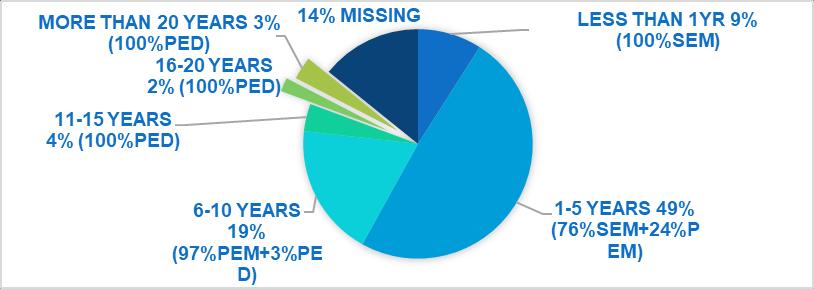
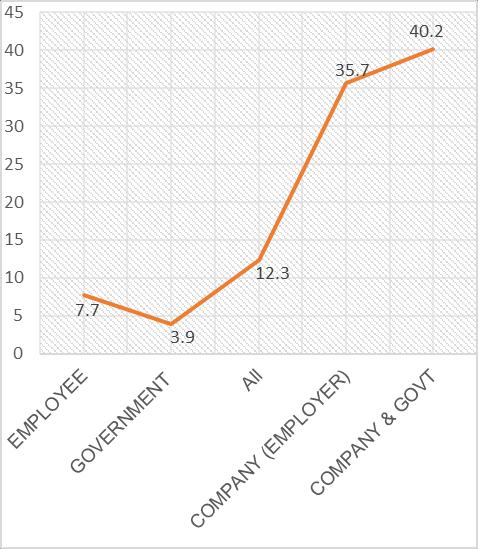
Chart 2 establishes this risk, as the questionnaire results revealthatengineersareconstantlyseekingnewandmore rewardingopportunitiesoutsidetheircurrentorganisations, confirmingtheresistantattitudetocommitmentasreported by Taofeeq and Adeleke (2019). The implication for engineersandmanagersisthatemployerswillcontinueto shyawayfromcommittingtoSCdevelopmentuntilthereis an established commitment and loyalty on the part of the employees.AsCOREN(2019)requiresaprofessionaltobe registered and licensed and to commit to continuous professional development, Chart 3 shows that the NCI practitionersbelievethatthesponsorshipofSCdevelopment and embedment should come from the employer, with supportfromgovernment
FromquantitativeresultpresentedinChart3,just7.7%of respondentswanttoself sponsortheirSCdevelopment,and sole government sponsorship is at the lowest part of the curve, 3.9%. Interestingly, Nigerian engineers considers themselvesmoreeffectivesolesponsorsthangovernment. Thecurvemadeasignificantriseto12.3%whenemployers werebroughtinaspartof“All”. 35.7%oftherespondents preferred the employing “Company” as sole sponsor of SC development, while 40.2% wants the company, with the supportofgovernment,toberesponsibleforSCdevelopment and embedment. A sum of the views for both “company”, “government”,andbothsponsorswillhitahighercurveat 79.8%,whichisobviouslysignificant.TheCORENAct(2018) detailed one of government roles in SC development thus: “TheMinistershall,subjecttotheapprovalofthePresident, give necessary inducement to private industries providing adequate training facilities to engineers, engineering technologists, technicians and craftsmen in training.” The implicationisthatemployers,government,HRmanagers,and trainingproviderswillneedtofocusonsecuringsponsorship ofSCdevelopmentfromemployersandgovernmentandnot theemployees.ThisisacontrasttoZambia,wereMuyaetal. (2006)reportedthatthegovernment,notemployers,directly sponsors trainings. Unfortunately, the engineering and construction employers in Nigeria are yet to consider SC development a worthy investment, as they are more interested in maximizing profits on every project. One intervieweenoted:
International Research Journal of Engineering and Technology (IRJET) e ISSN: 2395 0056
Volume: 09 Issue: 05 | May 2022 www.irjet.net p ISSN: 2395 0072
“Thislackofemployers’willtocommitresourcestoSC development reflects concerns that when employees are trained, they tend to attract higher opportunities from competitivecompanies.Andmanyemployersareignorantof the risk of working with under trained engineers and managersintheNCI.”
The current culture of inadequate commitment and loyaltyofboththeemployersandemployeesisunsustainable for developing and embedding SC in NCI. This means that “funding and sponsorship are a huge challenge for some engineersandmanagerswillingtobetrained,”aspointedby interviewee. Consequently, funding and sponsorship will remainachallengetoSCdevelopmentandembedmentuntil the“inducement”foremployerstosponsorSCdevelopment asenshrinedintheCORENAct(2018)isenforcedandthe risk of employers losing their developed professionals is significantlymanaged.
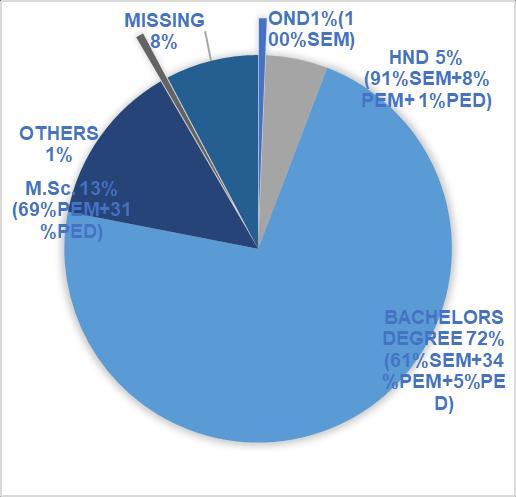
The survey conducted for this study looked into the educationalbackgroundsoftheconstructionengineersand managers in Nigeria, and it shows that on educational qualification, number of engineers with Higher National Diploma(HND)certificationwas5%withSEMconstituting 91%,PEMat8%andPED1%.Themostcommonisbachelor degreeat72%,withSEMconstituting61%,PEMat34%and PEDat5%respectively.Master’sdegreewasfairlypopularat 13%secondtobachelordegrees.WithPEMconstituting69%, andPED31%oftheengineersinthiscategoryofeducation. Adding1%ofothersand1%ofOrdinaryNationalDiploma (OND) certification produces a total of 92% tertiary educationgraduateswiththeother8%recordedasmissing. ThisresultimpliesthatengineersandmanagersintheNCI arewelleducated;anoverwhelmingmajorityhaveobtained their first and foundational degrees. This result is only for engineersanddoesnotrepresenttheeducational level for theentireNCI.Understandably,obtainingatertiarydegreeis aprequalificationformembershipintheNigeriaSocietyof Engineers,whosedatabasewasusedforthissurvey;using that of the National Association of Engineering Craftsmen (NAEC)will definitelyreflecta differentreality. Thisstudy supports the Abidoye and Chan (2016) and Inuwa et al. (2015)findingsthatNCIhaswelleducatedmanagers.Thisis significantprogressandanotabledifferencefromalmosttwo decadesago,whenKoivula andPaunonen‐Ilmonen(2001) discovered that then, managers and supervisors had low levelsofeducation,whichhinderedthedevelopmentofSC. Arguably,thisprogressmaybesignificantforprofessionals likeengineers,architects,andsurveyors,butitdoesnotapply toallsupervisors,foremen,andcraftsmen(Kamaruddeenet
International Research Journal of Engineering and Technology (IRJET) e ISSN: 2395 0056
Volume: 09 Issue: 05 | May 2022 www.irjet.net p ISSN: 2395 0072
al. 2019). But the high educational level for engineers and managers implies that learning and development of managementSCintheNCIwillbeeffective(Griffioenetal. 2018), since there exists a link between learning and development,andtheformerdependsonthelatter.
Unfortunately, evidence from this study suggests that the level of educational qualifications of management professionals in the NCI does not meet the knowledge sharing culture expected of the industry. According to an interviewparticipant,“Transferandretentionofknowledge is very poor in engineering and construction. Employees retireorleavetheorganizationwithoutproperlytransferring andembeddingtheirSCtoactiveworkers.”Aviewsharedby allthe30interviewees.Thisdemonstratestheopinionthat there is lack of proper and structured knowledge transfer betweenexperiencedandcompetentandfresherengineers andmanagers.Accordingtooneoftheinterviewparticipants, “The knowledge, skills and experiences of the senior managersretirewiththem,whilethenextgenerationstarts from the avoidable struggling stages to build their own experiences.”Theimplicationofaweakknowledge sharing culture is obvious and can be traced to the current poor performance of the NCI (Section 2.3). Errors are repeated, andtimeandresourcesthatwouldhavegoneintoinnovation and creativity are spent learning old and, in some cases, obsoletelessonsthatshouldhavebeensharedormentored internally.
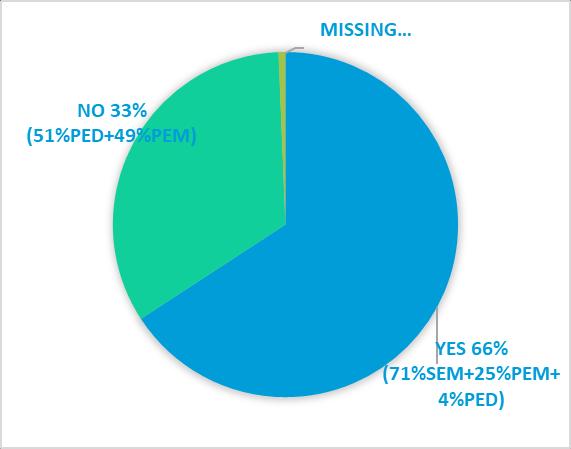
Nigerianengineersfairlydisagreedontheirviewsofwhether SCdevelopmentisexpensiveornot.Fromfigurefive,andas stratifiedinChart1,outofthe66%thatviewitasexpensive, 71%areSEM,25%arePEMwhile4%arePED.Whileoutof the33%ofengineersthatviewitasnotexpensive,51%are PED,49%arePEM.
Thisquantitativeresultwassupportedbytheopinionsofthe intervieweeswhoidentifiedthehighcostoftrainingasone ofthemajorchallengestoSCdevelopmentandembedment: “Cost of training and upgrading of SC is expensive.” “Trainingsareexpensiveandlacktherequiredfunding.” ThisimpliesthatinsistingthatemployeessponsortheirSC development and embedment will likely yield no desired result,asmanyofthemregarditasprohibitivelyexpensive anddifficult.AsCalderon(2017)stated,whensomethingis expensive, it is difficult. The research participants strengthened their position by further exonerating themselvesfromfundingtheirSCdevelopment:“Astraining is cost intensive, getting engineers to focus on capacity building instead of monetary values is the challenge.” Compounding the challenges, there also exists “lack of appetite and interest from the employers” as reported by anotherparticipant. Toexploretheroleoftheemployers, more opinions were added: “Employers should fund SC development,butthen,mostemployersdonottrainbecause ofthecostsassociatedwithtraining.”Anotherinterviewee, while explaining the seriousness of this challenge, added, “MostNigeriancompaniesshyawayfromspendingmoney onSCdevelopment;also,someemployerswon’tevenallow youtotaketimeofftodothetraining.”Asisevidentfrom these responses, employers and employees’ value other prioritiesaheadofSCdevelopmentandembedment. Notably, the responsibility of funding and sponsoring SC developmentandembedmenthasbeensignificantlyshifted totheemployerswithsomegovernmentsupportasshown in Chart 1, where a total of 79.8% respondents from the surveyvalidatedthisview.Oneoftheintervieweesaddedto the government role discussed in Section 4.3 thus: “Governmentshouldsubsidizeandregulatecostoftrainings to enable the companies to train their staff.” When the intervieweeswereaskedifthecostoftrainingwaswithin theircompany’sbudget,onereplied,“Yes.Yes.Trainingsthat are not part of NSE trainings are being paid by our company.” This position was shared by all 30 interview participants.Unfortunately,theexistinglackofstrategyon howtomakeemployerssponsortheSCdevelopmentoftheir engineers and managers means lower numbers of skilled and competent engineers and managers in the NCI. Nonetheless, 100% of the participants of this study supported the Wang et al. (2019) findings that SC developmentdirectlyinfluencesprojectoutcomes.
Concerning ethics, an interviewee averred, “Unethical contractors mean no room for training of engineers, managers,andsupervisorsworkingontheproject.”Another interviewee revealed, “Greedy contractors do not want to spendtheapprovedpercentageontrainingfortheengineers andmanagersengagedonpublicprojects.” Thismeansthat unethicalpracticeandcorruptiondirectlyundercuttraining budgetsofpublicconstructionprojectsinNigeria.Another
International Research Journal of Engineering and Technology (IRJET) e ISSN: 2395 0056
Volume: 09 Issue: 05 | May 2022 www.irjet.net p ISSN: 2395 0072
participant upheld the view that “corruption is a big challenge;takealookattheUK,[where]therearetrainings to prepare the worker for every assigned task or project, unlikeinNigeria,wheretrainingisajamboree.”
Where training exists, the process of selecting trainees is usuallymiredincorruption.Anintervieweepointedoutthe challengeas“lackofaccurateprioritizingofpersonneltobe trained by employers”. Another participant described the lackofmeritocracy:“Lackofintegrityisaproblem.Qualified personnelarejettisonedforassociatesofdecision makers becauseofpersonalinterestsandcorruption.”Theseulterior interestsweredefinedbyaninterviewee,whoisadeputy director in the federal ministry in charge of construction relateddevelopmentsinNigeria: “Corruptionisoneofthemajorchallengesthathindersthe developmentofSC.Theright(qualified)peoplearenotgiven therightopportunities;rather,thereareconstantcasesof tribalism, nepotism, favoritism, and unethical practices. Budgets for trainings are carted away for personal aggrandizement.Recruitmentandnominationforjobsand training are based on strong family and social ties not on professional qualifications.Inmost cases,your state,local council of origin, religious and political affiliation play far moreimportantrolesthanyourprofessionalqualification, skills,orcompetencies.”
The implication for the NCI is that the training selection process lacks the required quality, and thus, the training outcomes lack the desired quality required to positively impact the industry. Also, a participant recounted, “Corruptioninthedisbursementofthefundsallocatedfor trainings in government agencies leads to embezzlement, whileprivateorganisationsdivertbudgetfortrainingsinto otherpriorities.”Theparticipantswentfurthertorevealhow the code of conduct for public and private employees has beenshovedasideformoreselfishfinancialrewards.This was the exact situation Shan et al. (2020) described and warnedagainst.ItimpliesthattheselectionprocessforSC developmentintheNCIisneithertransparentnorbasedon merit,andtherebyverifyingthecorruptionlabelidentified by Owusu et al. (2019). And then, some organisations outsourcetaskstoavoidtheirresponsibilities(Ikediashiand Aigbavboa,2019).
Thecontributionsfrominterviewparticipantsrevealedthat “Nigeriansareunabletofundbettertrainingequipmentand tools like advanced countries. The trainings available are inadequate,notcomprehensiveinNigeria.”Thispointstothe quality of trainings delivered in the NCI. A participant provided more insight, “There is also lack of framework, guidelines, specialized professionals, resourceful trainers, reliable internet and conducive training facilities. The existingfewareveryexpensive.”Inaddition,aninterviewee highlighted the lack of qualified trainers. “There are no specialized and recognized professional trainers who are
researching to gain current and future local insight and understandingoftheneedsoftheindustry.”
By“specialized”and“recognized”,theintervieweemeantno experts who are recognized, licensed, and monitored by COREN or other professional institutions. This breeds substandardtrainersaspointedoutbyanotherinterviewee: “Theresourcepersonnelareusuallynotwell versedinthe subject. The trainers sometimes are engaged for reasons other than their competencies.” For this reason, most organisationssortanddeveloptheirowninternaltraining guidelines, which rarely meets the needs of the engineers andmanagersandtheuniquenessoftheNCI.Emphasizing theneedtotailortrainingtoindividualsandindustries,an intervieweeexplained,“Humanintelligencedoesn’tfunction atthesamelevel,sotrainingsintheNCIshouldbepractical [outcome based],aspeopledon’teasilyforgetexperiences.”
ThelackofcomprehensiveguidelinesforSCdevelopmentin theNCImeansnostandardforSCmanagement.
“Poor legal framework, policies failure, and weak implementations of policies” were also identified by an intervieweeaschallengestoSCdevelopment.Theinternal policiestowardSCdevelopmentareobsoleteandneedtobe reviewed.Aparticipantnotedthepracticeof“selectingstaff throughnepotismratherthanmeritocracy,therebymaking othersfeeltheywillneitherberecognizednorapplytheirSC postdevelopment.”Throughouttheinterview,participants constantly highlighted the corruption in recruitment and selectionpoliciesintheNCI(Section4.5).Corruptcultures are excusable in some organisations because there are no robustgovernmentregulationsnorenforcement(Kaufmann, 2017).Theconcernswithunethicalselectionofpersonnel for training suggest the selection of the wrong cadre of workers,andthereareconsequencestotrainingunqualified engineers.
According to an interviewee, SC development in the NCI illustrates“lackofgovernmentregulationsandenforcement of standards”. Another participant warned against this: “There should be strong implementation policy not just policies on paper but on the ground.” They imply that professionalorganisationslikeNSEandCORENshouldlead theNCIinformingandenforcingpoliciesandstandardsthat affecttheengineeringandconstructionindustryinNigeria. The COREN Act (2018) as amended, which received presidentialapprovalinMarch2019,empowersCORENto enforce engineering and construction related policies in Nigeria(COREN,2019). Thisnewlaw,ifwellapplied,could reducepoorpracticeintheNCI.Twenty sevenofthethirty interviewed engineers and managers emphasized the inadequateawarenessaroundSCdevelopment.Awareness significantly helps to demonstrate the importance of SC developmentandembedment.
International Research Journal of Engineering and Technology (IRJET) e ISSN: 2395 0056
Volume: 09 Issue: 05 | May 2022 www.irjet.net p ISSN: 2395 0072
Theintroductorysectionofthispaperestablishedthestrong connectionbetweenSCdevelopment,quackeryandquality deliveryinthemanagementofengineeringandconstruction. PractitionersintheNCIengageintasksandresponsibilities outside their specialization. Yet, strong advocacy and law existintheNCItodiscouragequackery.Thisstudyidentified and presented the challenges associated with the development and embedment of SC for engineering and constructionmanagementinNigeria,whichare:attainment and reward, commitment and loyalty, education and knowledge sharingculture,fundingandsponsorship,ethics andcorruption,infrastructuresandstandards. Not enough has been written about dealing with these current challenges in Nigeria. And there is lack of appropriate reward and proper measurement of SC attainment. Also, transparency and a merit based assessment model should be encouraged in the NCI. Professionals who have attained any relevant SC developmentshouldberecognizedandrewardedthrough promotions.Promotionsandfurtherdevelopmentshouldbe based on qualifications. In addition, SC profile should be developedand maintained by employersandprofessional institutions. Then, COREN registry and annual practicing licences should reflect the annual SC updates of all professionals by recognized trainers to enable SC measurement in the NCI. Additionally, COREN needs to develop training standards with the globally recognized, outcome basededucationmodelandalltrainersshouldbe registeredandmonitoredbyCOREN. AsSCdevelopmentintheNCIisexpensive,allstakeholders’ commitmentandloyaltyarevital.Thismeansthatengineers andmanagersshouldalwaysdemonstratestrongdesirefor learning. As no professional is too engaged to learn, since learning is at the core of professionalism in the NCI. Also, enabled by government through tangible incentives, employersshouldberesponsibleforfundingandsponsoring SC development and embedment in the NCI. Importantly, engineersandmanagersshouldshowunderstandingandbe willing to ensure that their employers benefit from sponsoringtheirSCdevelopment.CORENandNSEwillneed tostipulatetheminimumnumberofmonthsanengineerwill commit to an employer when the latter sponsors the SC developmentoftheformer.Also,thereshouldbecriteriafor reimbursementandsettlement.
ThedevelopedSCmustbesharedtobetrulyembedded.The good news is that engineers and managers of engineering and construction are well educated, and foundational educationisvitalforadditionallearning.Consequently,itis easier today to further train engineers than it ever was before, as most engineers have developed solid learning abilityfromtheirfoundationaleducation.COREN,NSE,and employers must now advocate, initiate, and entrench a robust mentorship and knowledge sharing culture in the industry.Thiscanbedonebyfirstincorporatingthisculture
in their respective codes of ethics and engineering. More effortsshouldbemadetocheckallformsofcorruptioninthe practice,asitendangersthedevelopmentoftheengineering profession.Finally,governmentshouldseekthevalidationof theNCIbeforeadoptingpolicyfortheindustry.Awareness campaigns are needed in the NCI to embed the culture of continuous professional development in managers of engineeringandconstructionprojectsinNigeria.
[1] Abidoye, R. B., & Chan, A. P. (2016), Critical determinants of residential property value: professionals’ perspective. Journal of Facilities Management,vol.14(3),pp.283 300.
[2] Ahmed,S.(2015),Publicandprivatehighereducation financinginNigeria. EuropeanScientificJournal,ESJ, vol.11(7).
[3] AlexanderEjiroOmoraka(2020)Aprincipalcomponent analysis of supply chain management skills for the Nigerianconstructionindustry,InternationalJournalof Construction Management, DOI: 10.1080/15623599.2020.1797984
[4] Almatrooshi, B., Singh, S. K., & Farouk, S. (2016), Determinants of organizational performance: a proposed framework. International Journal of ProductivityandPerformanceManagement,vol.65(6), pp.844 859.
[5] Arif,M.,AlZubi,M.,Gupta,A.D.,Egbu,C.,Walton,R.O.,& Islam,R.(2017),Knowledgesharingmaturitymodelfor Jordanian construction sector. Engineering, ConstructionandArchitecturalManagement,vol.24(1), pp.170 188.
[6] Bessen,J.(2015).Learningbydoing:therealconnection betweeninnovation,wages,andwealth.YaleUniversity Press.
[7] Bhattacharyya,S.(2010),Shapingasustainableenergy futureforIndia:Managementchallenges,EnergyPolicy, vol.38(8),pp.4173 4185
[8] Calderon,F.(2017),ClimateAction:AnOpportunitythe Global Economy Cannot Afford to Pass up. Brown J. WorldAff.,vol.24,pp.39.
[9] Cheche, S. G., Muathe, S. M. A. & Maina, S. M. (2019), Employee Engagement, Demographic Characteristics and Performance of State Research and Training Corporations in Kenya, IUP Journal of Organizational Behavior,vol.18(1),pp.55 70.
[10] Dave,B.,Kubler,S.,Främling,K.,& Koskela,L.(2016), Opportunities for enhanced lean construction management using Internet of Things standards. Automationinconstruction,vol.61,pp.86 97.
[11] DeCenzo,D.A.,Robbins,S. P.,&Verhulst,S.L.(2016), FundamentalsofHumanResourceManagement,Binder ReadyVersion.JohnWiley&Sons.
[12] Gitau, A. (2018), An Investigation on The Challenges FacingConstructionFirmsinRecruitingSkilledArtisans inKenya(Doctoraldissertation).
[13] Griffioen, D. M. E., Doppenberg, J. J., & Oostdam, R. J. (2018),Aremoreablestudentsinhighereducationless easytosatisfy?HigherEducation,vol.75(5),891 907.
International Research Journal of Engineering and Technology (IRJET) e ISSN: 2395 0056
Volume: 09 Issue: 05 | May 2022 www.irjet.net p ISSN: 2395 0072
[14] Freedy, J., & Hobfoll, S. E. (2017), Conservation of resources:Ageneralstresstheoryappliedtoburnout.In Professionalburnoutpp.115 129
[15] Hong,J.,Shen,G.Q.,Li,Z.,Zhang,B.,&Zhang,W.(2018), Barriers to promoting prefabricated construction in China: A cost benefit analysis. Journal of cleaner production,vol.172,pp.649 660.
[16] Hwang, B & Ng, W (2013) Project management knowledge and skills for green construction: OvercomingchallengesInternational,JournalofProject Managementvol.31(2),pp.272 284
[17] Ikediashi,D.,&Aigbavboa,C.(2019)Outsourcingasa strategyforfacilitiesmanagementprovisioninNigerian universities. International Journal of Construction Management, vol.19(4), pp.281 290. https://doi.org/10.1080/15623599.2018.1435235
[18] Inuwa,I.I.,NapoleonDanielUsman,N.D.,&Dantong,J. S.(2015)Theeffectsofunethicalprofessionalpractice onconstructionprojectsperformanceinNigeria.African JournalofAppliedResearch(AJAR)
[19] Jimoh, R., Oyewobi, L., Suleiman, S., & Isa, R. (2017), Influence of supervision on labour productivity on constructionsitesinAbuja Nigeria.IndependentJournal ofManagement&Production,vol.8(1).
[20] Kamaruddeen,A.M.,Hamdan,A.H.,&Wahi,W.(2019), FACTORS INFLUENCING JOB SATISFACTION AMONG CONSTRUCTION SITE ARTISANS IN NORTHERN MALAYSIA.e Bangi,vol.16(3).
[21] Kaufmann,W.(2017),Goingbythebook:Theproblem ofregulatoryunreasonableness.Routledge.
[22] Koivula, M. & Paunonen‐ilmonen, M. (2001), Ward sisters'objectivesindevelopingnursingandproblems with development, Journal of Nursing Management, vol.9(5),pp.287 294
[23] Muya, M., Price, A. D., & Edum‐Fotwe, F. T. (2006), Overviewoffundingforconstructioncraftskillstraining in Sub‐Saharan Africa: a case study of Zambia. Construction Management and Economics, vol.24(2), pp.197 208.
[24] Noe,R.A.,Hollenbeck,J.R.,Gerhart,B.,&Wright,P.M. (2017), Human resource management: Gaining a competitive advantage. New York, NY: McGraw Hill Education.
[25] Odigure, J. (2020), Implementation of Outcome Based Education (OBE) in Nigerian Universities. COREN webinar meeting on OBE, 8/9/2020 https://us02web.zoom.us/meeting/register/tZ0uceyoq TkpEtysVTv6kEd7N48FtlUTu94K
[26] Ogunyomi,P.,&Bruning,N.S.(2016),Humanresource managementandorganisationalperformanceofsmall and medium enterprises (SMEs) in Nigeria. The InternationalJournalofHumanResourceManagement, vol.27(6),pp.612 634.
[27] Okorie,V.N.,&Musonda,I.(2020),Aninvestigationon supervisor’s ability and competency to conduct constructionsitehealthandsafetyinductiontrainingin Nigeria. International Journal of Construction Management, vol.20(5), pp.357 366. https://doi.org/10.1080/15623599.2018.1531808
[28] Onyia, U. (2019), Improving the supervisory and managerial skills and competences required in
construction management in Nigeria, PhD Thesis, London South Bank University. https://openresearch.lsbu.ac.uk/item/883y8
[29] Owolabi,J.D.,Amusan,L.M.,Oloke,C.O.,Olusanya,O., Tunji Olayeni,P.F.,Dele,O.,&Omuh,I.O.(2014),Causes andeffectofdelayonprojectconstructiondeliverytime. International Journal of Education and Research, vol.2(4), pp.197 208. http://eprints.covenantuniversity.edu.ng/6199/#.WR7 B FXyupo
[30] Owusu, E. K., Chan, A. P. C., & Shan, M. (2019), Causal Factors of Corruption in Construction Project Management: An Overview. Science & Engineering Ethics,vol.25(1),pp.1.
[31] PremiumTimes(2019)Howtocurbincessantbuilding collapse in Lagos Experts, March 13, 2019, https://www.premiumtimesng.com/regional/ssouth west/322202 how to curb incessant building collapse in lagos experts.html
[32] Riebe, L & Jackson, D (2014) The Use of Rubrics in Benchmarking and Assessing Employability Skills, JournalofManagementEducation,vol.38(3),pp.319 344
[33] Shan, M., Le, Y., Yiu, K. T. W., Chan, A. P. C., & Hu, Y. (2020), Investigating the Underlying Factors of CorruptioninthePublicConstructionSector:Evidence from China. SCIENCE AND ENGINEERING ETHICS, vol.23(6),pp.1643 1666.
[34] Schombacher, et al (2016), Continuous Knowledge Transfer Apragmaticapproachtoknowledgesharingin theEuropeanPatentOffice.WorldPatentInformation, vol.47,pp.1 11.
[35] Shalleya, C. & Gilson, L. (2004), What leaders need to know:Areviewofsocialandcontextualfactorsthatcan foster or hinder creativity, Leadership Quarterly, vol.15(1),pp.33 53
[36] Sun, J.D., Wang, X.C. & Shen, L.F. (2017), “Chinese construction workers’ behaviour towards attending vocational skills trainings: evolutionary game theory with government participation”, Journal of Difference Equations and Applications, Vol. 23 Nos 1/2,pp. 468 485.
[37] Taofeeq, D. M., & Adeleke, A. Q. (2019), Factor's InfluencingContractorsRiskAttitudeintheMalaysian ConstructionIndustry.JournalofConstructionBusiness andManagement,vol.3(2),pp.59 67.
[38] TheCouncilfortheRegulationofEngineeringinNigeria (2019), COREN makes fresh move against quack engineers,www.dailytrust.com.ng/coren makes fresh move against quack engineers.html
[39] Thisday Newspaper (2019), Preventing Building Collapse in Nigeria, https://www.thisdaylive.com/index.php/2019/03/23/ preventing building collapse in nigeria/ [40] Vanguard Newspaper (2019), Why construction industry performed poorly in 2018 NIOB ON JANUARY 2, 2019 https://www.vanguardngr.com/2019/01/why construction industry performed poorly in 2018 niob/ [41] Viswanathan, M., Rosa, J. A., & Ruth, J. A. (2010), Exchangesinmarketingsystems:thecaseofsubsistence
International Research Journal of Engineering and Technology (IRJET) e ISSN: 2395 0056
Volume: 09 Issue: 05 | May 2022 www.irjet.net p ISSN: 2395 0072
consumer merchants in Chennai, India. Journal of marketing,vol.74(3),pp.1 17.
[42] Wang, N., Ma, M., Wu, G., Liu, Y., Gong, Z., & Chen, X. (2019). Conflicts concerning construction projects underthechallengeofcleanerproduction casestudyon government funded projects. Journal of Cleaner Production,vol.225,pp.664 674.
[43] Wang, X., Wang, X. & Huang, Y. (2019), Chinese constructionworkerreluctancetowardvocationalskill training,JournalofEngineering,DesignandTechnology, Vol.17No.1,pp.155 171
[44] Zhu,H.,Feng,J.,Wang,M.andXu,F.(2017),“Sustaining regional advantages in manufacturing: skill accumulation of rural urban migrant workers in the coastalareaofChina”,Sustainability,Vol.9No.1,pp.1 23.