International Research Journal of Engineering and Technology (IRJET)

Volume: 09 Issue: 05 | May 2022 www.irjet.net
e ISSN:2395 0056
p ISSN:2395 0072
International Research Journal of Engineering and Technology (IRJET)
Volume: 09 Issue: 05 | May 2022 www.irjet.net
e ISSN:2395 0056
p ISSN:2395 0072
Manik Verma1 , Harshit Agarwal2 , Ishant3 , Keshav Singh4
1Dept. of mechanical Engineering, Delhi Technological University, Delhi, India2Dept. of mechanical Engineering, Delhi Technological University, Delhi, India3Dept. of mechanical Engineering, Delhi Technological University, Delhi, India4Dept. of mechanical Engineering, Delhi Technological University, Delhi, India
***
Abstract The process of delivering items directly from a vendor to a customer is known as hyperlocal delivery. It's the activityin whicha courieragent picks upthingsfromavendorand then delivers them directly to the customer's address.
In India, the hyperlocal delivery industry has been growing inrecent years. Consumers prefer to have their groceries and other goods delivered to their homes after covid, thus the increase has been particularly rapid. As a result of the increased demand, the hyperlocal delivery area has become quite competitive, with businesses attempting to win market share by reducing delivery times. Delivery apps such as zeptonow guarantee delivery in under 10 minutes.
Through this research paper, We aim to forecast the demand of groceries and goods depending on the location of people primarily driven by geographies and further aim to reduce delivery time by optimizing delivery path.
Key Words: Hyperlocaldelivery,supplychain,deliveryoptimization
Hyperlocal Companies fall under a specific category of E commerce. The E commerce segment is divided into 4 major segments
DifferentverticalsofE CommerceIndustry
Vertical Example AggregatorPlatforms Zomato,Flipkart
B2BE commerce Alibaba,Udaan
B2CRetailerPlatform Amazon
Hyperlocal Ecommerce Grofers, Big Basket, Dunzo, Swiggy, Instamart
Forthepurposeofthisstudy,wewillfocusontheSupplyChainof HyperlocalE commercesegmentasitisoneofthemost importantandtalkedaboutsegmentsinthecurrentscenario.
Based on a study by Bengaluru based market research firmRedSeer:In India, the total potential market for quick e commerceis$45billion,withmetropolitanareasdrivingthe sectoronthebacksofmiddle to high incomeconsumers.India being one of the most essential markets worldwide isexpected to lead the e commerce industry in the upcomingfuture which is also the reason for such high competition inIndia amongst major e commerce industry giants. Apart from this, previous decade and this decade is alsoseeing lots of new startups which are creating revolutionary impact inthe quick e commerceindustry.
Theprocessofdeliveringitemsdirectlyfromavendortoacustomerisknownashyperlocaldelivery.It'stheactivityinwhich a courier agent picks up things from a vendor in nearby proximity and then delivers them directly to the customer's address.
TheCOVID 19epidemicpushedeveryverticalandindustrytogodigitalovernight,resultinginthequickriseofhyperlocal delivery models in the logistics sector. Hyperlocal delivery players stepped forward to help businesses adapt to digital solutions and continue operating during the lockout in order to meet customers' needs. Furthermore, customers' busy
© 2022, IRJET | Impact Factor value: 7.529 | ISO 9001:2008
International Research Journal of Engineering and Technology (IRJET)
Volume: 09 Issue: 05 | May 2022 www.irjet.net
e ISSN:2395 0056
p ISSN:2395 0072
lifestylesandthedesiretohaveeverythingdeliveredtotheirhomeshaveaidedtheexpansionofhyperlocaldeliveryfirms intheindustry.
Hyperlocal delivery are making inroads into Tier II and III cities,in addition to urban areas. These delivery approaches are overcomingeveryobstacleinthewayofthesector'sgrowth,includingomnichannele commerceissues.
In2021,52% oftheconsumers receivedoneormorethan1orderinoneweekfromonlinegroceryretailers.InIndia,the number is poised between 9 11% and as the mobileinternetpenetration is going higher and mean income level is also increasing,thedemandofgoodsthroughhyperlocaldeliverystartupsisgoingtoincreaseexponentially.
Theconceptofhyperlocalbusinesscameintothemainstreamafter2010butthehyperlocalasaconceptwasnotnewtothe world.
Hyperlocalbusinessesaredesignedinsuchawaythattheyleveragetheexistingresourceswithinparticulargeographyand use technology to enable people to use their services. Though technology is a great enabler, the supply chain is hugely dependentonthemanualworkforcepresentinwarehouses,deliveryunitsetc.
Thesebusinessesactasmediatorsbetweentheusersandexistinglocalresourceslikegrocerystores,spasetc.
HyperlocalE commerceisbroadlyclassifiedintotwocategories:
HyperlocalDelivery
Hyperlocaldeliveryisreferred to when the e commerce platformprovidesreadytouse items
HyperlocalService
Hyperlocal Service is referred when an aggregator platform providesa certainkindof service inalocalisedarea
Hyperlocal Delivery startups follow a very simple supply chain on the large scale. Depending on the geographical conditions, consumer preferences, demand for products etc.,hyperlocal delivery startups can have supply chain models. TherearethreemajortypesofSupplyChainModels:
1. Inventory Led Model In this model, the hyperlocal delivery company sets up small logisticcenters/warehousesto fulfill orders of a particularzone. Setting up of warehouses ensures the availability of larger stocks of products in demandand timely delivery to the customers. This ensurescost effectiveness and optimized delivery speed.Inthe inventory led model, there is an internal supplychain that works. Internally, the goods are procured from different companies which are packed and shipped then as per order. The logistics and goods both belong to the player in the inventory ledmodel.Blinkitiscurrentlyfollowingthis model.
2. Aggregator Model Inthis model,thehyperlocal deliveryplayeraggregatesdifferentlocalplayers onlineandfulfills the orders bysettingupitssupplychain. This model is very similar to Zomato’s model. inthe aggregatormodel,the companyfixatesitsexpertiseonsettingupasupplychainandleaves the retail part. This model is successful in some areaswherethelocalplayershaveastrongpresence.
3. Hybrid Model Thismodelisamixofhybridandaggregatemodels.Dependingonthezoneanddemand,thecompany decidestohaveawarehouseforaddressingmajordemandandthenthevariabledemandissolvedthroughanaggregate model.Thismodel saves the logistical costs of setting upwarehouses.TheLogistical Supplychainis still managedby thecompany.
© 2022, IRJET | Impact Factor value: 7.529 | ISO 9001:2008 Certified Journal
e
Volume: 09 Issue: 05 | May 2022 www.irjet.net
2395
p ISSN:2395 0072
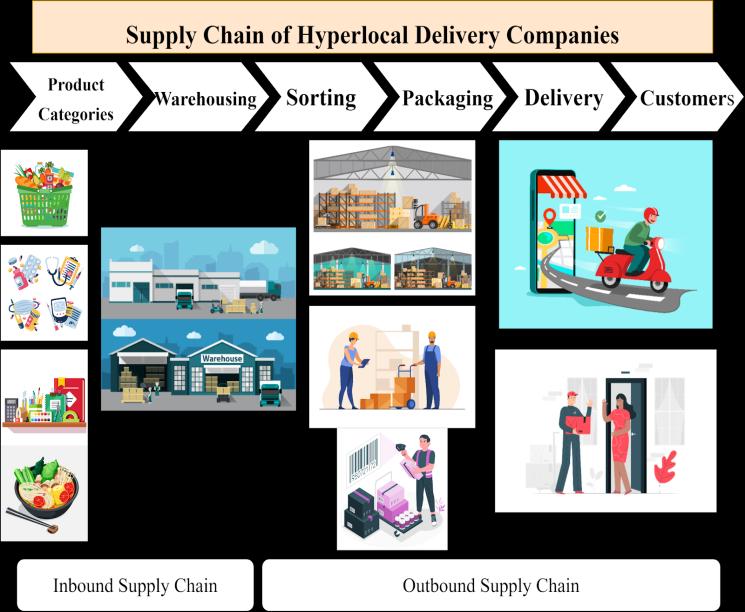
Pic1:SupplyChainofHyperlocalDeliverystartups
1. Increased Internet penetration:Internetpenetrationhasbeenincreasingworldwideandsimilarlyhasbeenincreasing atarapidpaceinIndiaaswell.Indiaisexpectedtohave900Millionactiveinternetusersbytheendof2025.Thishas beenabigboostforHyperlocaldeliverystartupssinceinternetistheenablerofsuchmarkets
2. Mainstream Adoption of Aggregator platforms: Some of MNC’s working on aggregator model have become very popularinIndialikeAmazon,Flipkart,Zomato,Olaetc.tonameafew.These companieshavenowbecomehousehold namesduetowhichaggregatormodelinhyperlocalmarketisalsorapidlygainingtractionandbecomingpopularday byday.
3. Growing Urban Population: 35% of India’s total population is expected to reside in Urban areas by the end of 2025 which would increase the demand for such companies as India’s urban population spends very little time in purchasing groceries and by such hyperlocal startups, they cangetthedesiredgroceries deliveredaccordingtotheir convenience.
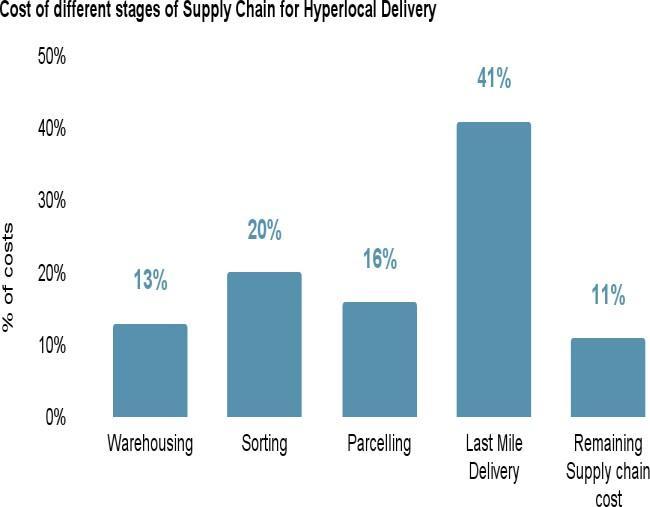
1. Last mile delivery is the biggest cost driver in the supply chain: Inordertobeprofitable,thecompanieshavetobe cost efficient and currently last mile delivery isone the biggest cost incurring process, attributing to almost 41% of the costsoutofthetotalcosts.
LastMiledeliverycostisattributedduetofollowingreasons:
a) FastDeliverydoesn’tallowthelogisticpartnertoaggregateordersandthendeliver.
b) Costoffuelforthedeliveryriderduetoshortdrivingdistanceandoftenlyclosedways
c) Paymentofdeliverypartnersandcostsincurredintheirinsurance.
International Research Journal of Engineering and Technology (IRJET)
Volume: 09 Issue: 05 | May 2022 www.irjet.net
e ISSN:2395 0056
p ISSN:2395 0072
Source: Capgemini Research Institute, Last mile deliveryexecutivesurvey
2. Inability to gauge right Demand: Many of the productsstockedbyhyperlocaldeliverystartupsareperishable.Since they are unable to gauge the right demand, they end up stocking more which leads to corrosion of items hencecausing losses.Alongsidethis,incasetheyunderestimatethedemandtheymightbenotabletodeliveroptimallyanditemswouldbe shownstockoutirrespectiveofthedemand.
Tosolveforinboundandoutboundsupplychainchallengesofthehyperlocaldeliverystartup.
1. InboundSupplychainchallengescanbeaddressedbyforecastingthedemandaccordingtothezone,seasonsetc.
2. OutboundSupplychainchallengescanbeaddressedbysolvedbyaddressingthecostproblemofthesupplychain.
Inshort,ourobjectivesareto:
DemandForecastingforHyperlocaldeliverystartups
Deliveryoptimization
The demand for various items order through hyperlocaldelivery applications has been gauged by collecting the data of 3000individualsresidinginandaroundRohini,Delhi.
Delivery optimization is the process of determining the shortest possible routes to reach a location. With hyperlocal deliveryservicestryingtominimizethe deliverytime togainmarketshare,deliveryoptimizationisthe need ofthehour. Thatiswhythismethodologyisgainingpopularityinthehyperlocaldeliveryindustry.
Deliveryoptimizationreducesthetimespentontravellingtherebyreducingtheincurredcostintheprocess.
Thisisdoneintwoways:
A. By keeping the in-demand products in such a sorting order that they are easily accessible to the sorting counter
Methodology:
Toreducethesortingtime,theitemsshouldbestackedinsuchawaythatthemostin demandproducts/categoriesshould bekeptfirstinsortingorderfollowedbysequentialdemand.
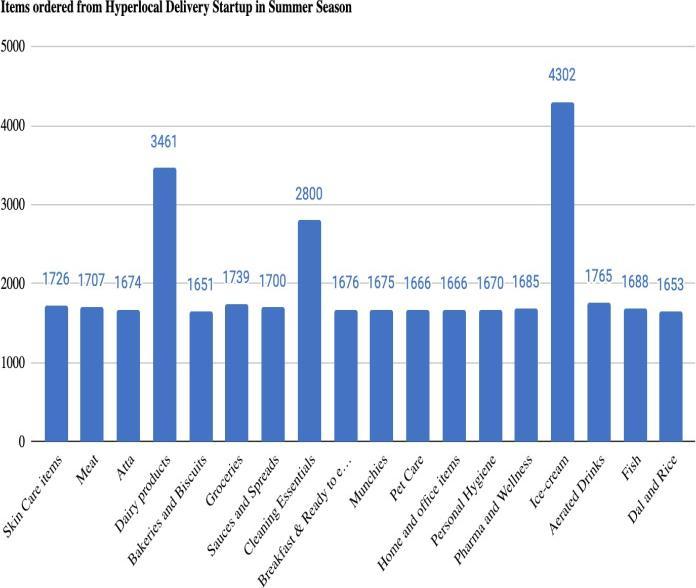
Since thedemandfor different categoriesof products varies withseasons, the sequencingvariesaccording to season. To gauge the demand for different categories of products, we collected data set of around 3000 individualsresiding near Rohiniandofficecomplexesandanalysedthedatatofindthemostin demandproductsindifferentseasons.
© 2022, IRJET | Impact Factor value: 7.529 | ISO 9001:2008 Certified Journal
Page255
International Research Journal of Engineering and Technology (IRJET)
Volume: 09 Issue: 05 | May 2022 www.irjet.net
e ISSN:2395 0056
p ISSN:2395 0072
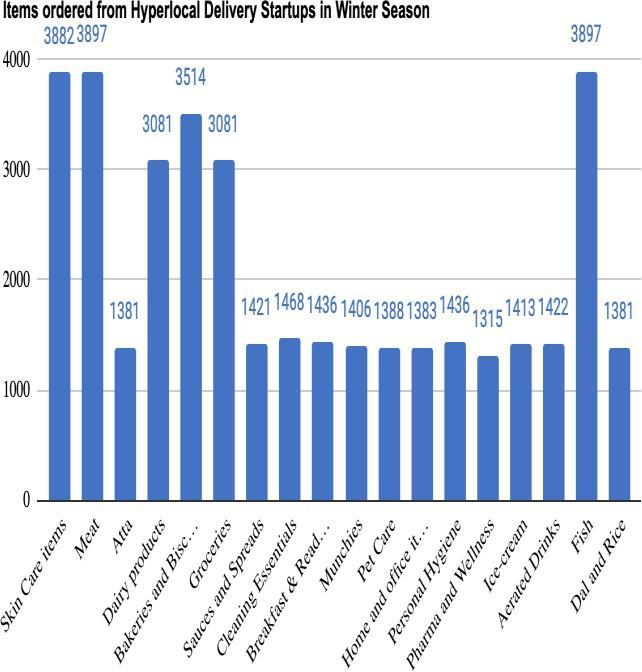
Inorderto collectthedata, weshareda google form with15categories ofproducts toselect fromand allowed peopleto selectmultiplecategoriesaccordingtodifferentseasons.
Results:
Inwinterseason,themostin demandproductswereSkinCareItems,Fish,Meatandtheyshouldbegivenfirst priorityin stackingorderfollowedbyBakeryproducts,groceriesandDairyproducts.
Similarly, in summer season, the most in demand productswere Ice Cream, Dairy products and cleaning essentials and theyshouldbegivenstackingpriorityinwarehousesofcompaniestoreducethesortingtimeandincreaseefficiency.
B. By reducing the time taken by the deliveryrider in delivering the goods
The hyperlocal delivery partners generally have to deliver multiple orders (in most cases 2 3) after picking the order items from the warehouse. Our aim is to minimize the timetaken for the delivery partner to deliver all the items to the
© 2022,
| Impact Factor value: 7.529 |
9001:2008
International
Journal of Engineering and Technology (IRJET)
Volume: 09 Issue: 05 | May 2022 www.irjet.net
e ISSN:2395 0056
p ISSN:2395 0072
respectivebuyersandreturntothewarehouseforthenextsetofdeliveriesalongwithensuringthesafetyoftheriders.To optimize the time, the delivery partner would beprovided with the optimal route to follow in order to complete the deliveries in the minimum possible time. Thealgorithm that would be used is the travelling salesman algorithm. This algorithmisdiscussedinthenextsection.
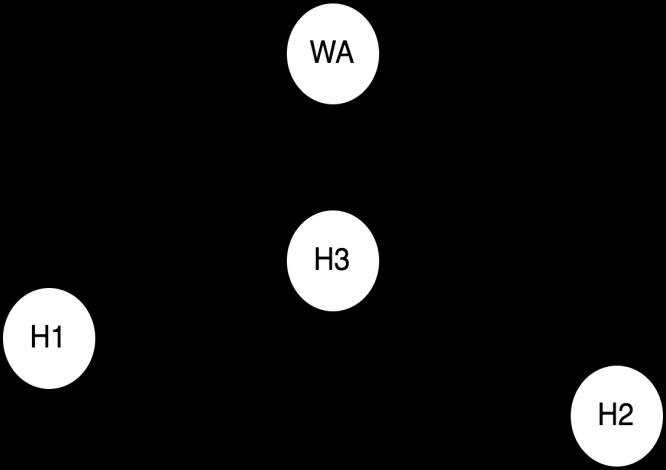
Thefigureshowsasituationthatthedriver partnerwouldencounteronadailybasis.Thepartnerhastotakethegoodsto be delivered from the warehouse (marked as WA) to the destinations (marked as H1, H2, H3). The algorithm would calculatetheexpectedtimeitwouldtakeforthedrivertocompleteallthedeliveriesusingallthe possiblecombinations( 3! Combinations are possible in this case) and the path that requires the least possible time would be shown to the deliverypartneronhisapp.
Thisalgorithmwouldnotonlyhelptoreducethetimetodeliverandthecostsincurredbutalsoatthesametimeensurethe safetyofthedriversasthe expectedtimeof arrival canbe exactlyshowntothebuyerandthedriver partnerwouldnot havetobeinahurrytodeliverorders.
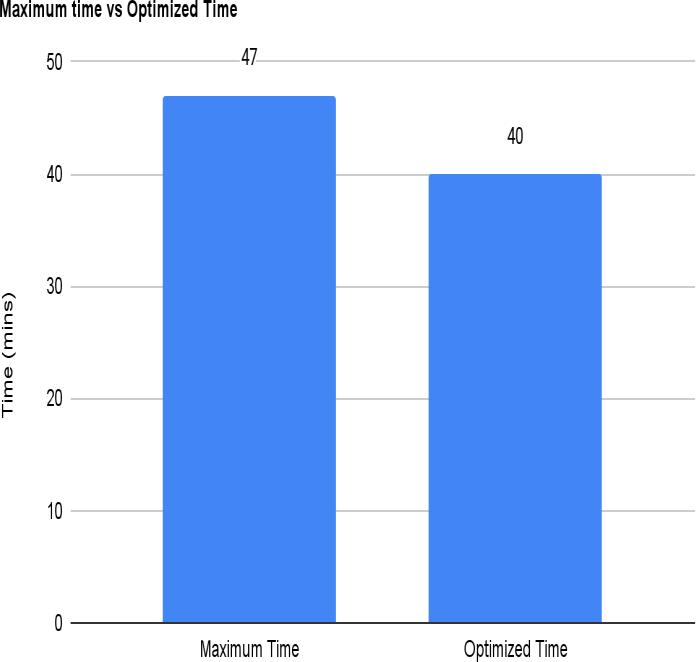
Inthefigure,wecanseethatthedriver partnerwouldtakethemaximumtime(47minutes)ifhefollowstheroute(WA H3 H1 H2 WA)andtheminimumtime (40minutes)ifhetakestheroute(WA H1 H3 H2 WA).So,thedriver would save 7 minutes in one round trip if he follows the path suggested by the algorithm. The graph below diagrammaticallyshowsthetimesavedbyusingthisalgorithm.
International Research Journal of Engineering and Technology (IRJET)
Volume: 09 Issue: 05 | May 2022 www.irjet.net
e ISSN:2395 0056
p ISSN:2395 0072
Accordingtotheresearchconductedandalgorithmappliedtheresultandconclusionisoptimizeddelivery timecameout tobelessthanmaximumtimeby7minutesandalsothefuelconsumptionwillbelessandsafetyprecautionswereensured
India is currently drawing investment in hyperlocal startups across a multitude of sectors, including grocery, pharmaceuticals,andlogistics.Suchenterprisestypicallyrespondtoclient demandsquickly,normallyinlessthanan hour, owing to the development of logistical capacities enabled by technology advancements. Given the inherent restrictionsonmobilityandphysicalaccessibilitythatnowtheCOVID 19epidemichasimposed,theemergence ofsuchservicesisaccelerating.
Nowadayspeopleoftenordergroceriesonline.Sometimestheremightbeacasewhenaparticulargroceryitemisnot availableatthestore,inthatscenario thedelivery guy mayhavetoshopatothergrocerystores,whichcancausethe deliveryto bedelayed. This problemcan be solvedwiththeuseofInternetofThings(IoT).Thedelivery guydoesnot havetovisitonestoreafteranotherifwecancreateaplatformwhichcan integratethepartnergroceryretailersand equiptheirpremiseswithIoTsensors.
Predictive logistics isamethodofanticipatingandsatisfyingsupplychainrequirementsbeforetheyexist.Whileitis currentlybeingexploredmainlywithindustriesthattransportabignumberofthings,modesthyperlocaldeliverymay becomepossibleinthenearfuture.Deeplearningadvancesandthecollectingofmassivevolumesofdataaboutclient requestsmaybeenoughtocreateapredictivesystemthatcansupplyordersbeforetheyareneeded.
Optimizationinadaptivepathplanningisanothertechniquetoreducethecostofhyperlocaldeliverywhileincreasing profitmargins.Becauseofitsuniversality,thistechniqueappearstobemorepromising.Machinelearningmightbethe means of providing route optimization solutions. Its effectiveness in supply chain optimization andfood delivery has alreadybeenproven.
Drones for local delivery might be a viable alternative that could disrupt the hyperlocal delivery market. Drones, unlike delivery robots, are unaffected by road surface condition and are capable of delivering items in shorter time constraints. Consider the following scenario: a consumer placed an order. A warehouse's machines quickly begin preparinganorder,andadroneisreadytodeliverittoyourhome. However,itispossiblethatsomethingevenmore spectacularmayoccurinthefuture.
[1] Rupesh Siyodia,Dr. Ramkishen Yelmanchilli, ”Challengesand Constraint in Supply Chain Management for Hyperlocal DeliveryBusinessinIndia”,SIMSRGLOBALSCMCONFERENCE,2016
[2] PravinSuryawanshi,PankajDuttaPhD,VarunL,ShaileshJ.,DeepakG,“Sustainableandresilienceplanningforthe supplychainofonlinehyperlocalgroceryservices”,Elsevier,2021
[3] PranavKhatri,AnshulRanjan,“AnEffectiveApproachofHyperlocalbasedServicesinSmartCities”,IRJET,2020
[4] AshishArora, SurabhiSingh,“Sustainabilityissuesinfreshfruggies:hyperlocal fruits andvegetablesdelivery model”, EMERALDEMERGINGMARKETSCASESTUDIES,2018
[5]Bapna,Aanchal,“OnlinegrocerymarketinIndia”,IndianInstituteofmanagementBanglore”,2016
[6] AnanyaShetty,AmanSharma,ArchitKhedekar,ArpanMundra,AryamanGoswami,”Analyzingthehyperlocaldelivery businessmodelusingoperationsresearchtechniques”,IJARIIT,2021