International Research Journal of Engineering and Technology (IRJET) e ISSN: 2395 0056
Volume: 09 Issue: 05 | May 2022 www.irjet.net p ISSN: 2395 0072
International Research Journal of Engineering and Technology (IRJET) e ISSN: 2395 0056
Volume: 09 Issue: 05 | May 2022 www.irjet.net p ISSN: 2395 0072
1, 2PG Scholar, Department of Computer Applications and Research Centre, Sarah Tucker College (Autonomous), Tirunelveli, Tamil Nadu, India
3Associate Professor, Department of Computer Applications and Research Centre, Sarah Tucker College (Autonomous), Tirunelveli, Tamil Nadu, India
4Assistant Professor, Department of Computer Applications and Research Centre, Sarah Tucker College (Autonomous), Tirunelveli, Tamil Nadu, India ***
Abstract Dataminingtechniquesmayassistinclosingthe knowledge gap in higher education. The data mining process aidsintheimprovementofeducationalefficiency.Toincrease student accomplishment, data mining techniques such as classification, association rule mining, clustering, prediction, and so on are applied. It aids in the management of their life cycle and the course selection. Classification is a crucial data mining process that may be used to great advantage in educational data. The implementation of a classification algorithm in education data mining is the topic of this research.Thecomparisonresearchwascarriedoutinorderto forecast a student's academic achievement based on socioeconomic variables, previous test marks, and other factors connected to student performance. The experiment used the J48, Nave Bayes, Bayes Net, Back Propagation Network, and Radial Basis Function Network classification algorithms. The Radial Basis Function Network properly classified 100% of the instances, which is a high percentage when compared to other classifiers.
Key Words: RBF Network, Naïve Bayes, Multilayer Perceptron, J48 algorithm, Educational Data Mining, Classification,WEKA
The application of the data mining method to educational dataisknownaseducationaldatamining(EDM).AnEDM's goalistoexamineeducationaldatainordertoenhancethe performance of teachers, students, and educational institutions. For the benefit of learners, EDM blends computationaltheory,databasemanagement,andmachine learning.Becauseeducationissovitalineverycommunity, data mining researchers concentrate on EDM, which has evolvedasastudysubjectinrecentyears.Dataoneducation hasbeengatheredfromnumerouseducationalsurveysand school records, and data mining techniques like categorization may be used to enhance academic achievement.Oneofthemostimportantrequirementsfor successfuleducationisstudentperformance.Dataminingis required in education for the benefit of students and academics.Educationaldataminingisasetofapproachesfor
extracting new information from educational data, which may be used to better anticipate student behaviour, academic achievement, and topic interest, among other things[1 3].Figure1illustratestheeducationaldatamining system.
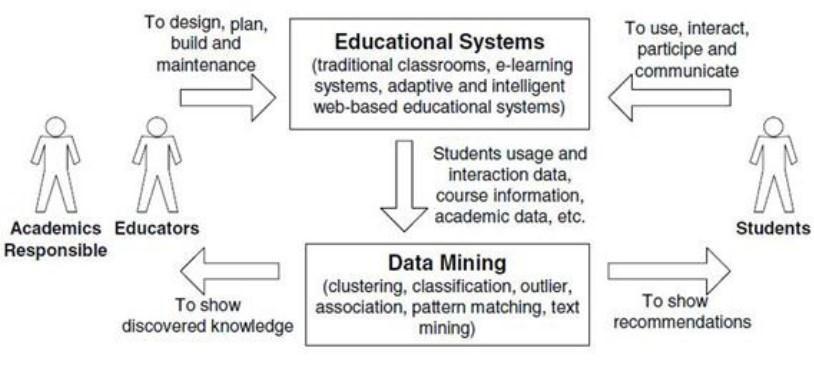
ThefigureabovedepictstherequirementforEDM.InEDM, allformsofeducationareconsiderededucationalsystems, including conventional classrooms, E learning systems, intelligent and adaptable web based educational systems, and so on. As an input to the data mining process, task relevant data is supplied. During the data mining process, youmaychooseatask specificdata miningapproach.The informationandpatternsgeneratedbydataminingareused bystudents,academics,andeducators.Thismechanismmay beusedtomakestudentrecommendations.Academicsand educatorssoughttoenhancetheeducationalsysteminorder toincreasestudentperformance.Theinformationgathered may be used to enhance the educational system through organizingcourses,academicactivities,andstudentuse[2 5].
The academic institution must be able to forecast student academic achievement in order to increase student performance.Educationaldatamininghasthepotentialto help predict student success. As a result, educational data mining researchers assisted in the development of supervised learning approaches for predicting student
2022, IRJET | Impact Factor value: 7.529 | ISO 9001:2008 Certified Journal

International Research Journal of Engineering and Technology (IRJET) e ISSN: 2395 0056
Volume: 09 Issue: 05 | May 2022 www.irjet.net p ISSN: 2395 0072
performance.Thissectionwillprovideaquickoverviewof the categorization techniques used to forecast student performance.
Forthepredictionofstudentperformance,Kabakchieva[6] used the decision tree, Bayesian classification, closest neighbour, and two rule learners (OneR and JRip). The decisiontreeclassifier(J48)isthemostaccurate(withthe greatest overall accuracy), followed by the rule learner (JRip)andthek NNclassifier.TheBayesclassifiersaren'tas goodastheothers.However,alloftheexaminedclassifiers haveanoverallaccuracyoflessthan70%,indicatingthatthe errorrateislargeandthepredictionsareunreliable.
Norlida et al. [7] used a data mining approach to predict engineeringstudentperformance.Thestudent'ssuccesswas predictedandclassified usingtheCumulativeGrade Point (CGPA).ThisresearchprovidedanoverviewofNeuro fuzzy categorization.
Al Saleem et al. [8] built a performance prediction model basedonpriorstudents'academicrecordsandestablished categorizationprocedures.Themodelwasconstructedusing decision tree classifications such as ID3 and J48. With the integrationofthismodelandrecommendersystem,itmay assiststudentsincourseselectionbasedontheirgraduating students'grades.
Fortheextractionofvaluableinformation,Devasiaetal.[9] usedtheNaveBayesianminingapproach.Theexperiment used a database of 700 students with 19 characteristics. NaveBayesianclassificationwasshowntobemoreaccurate thanRegression,DecisionTrees,andNeuralNetworks.
For the prediction of a student's academic achievement, Hamsa et al. [10] used a decision tree and a fuzzy genetic algorithm. These models were evaluated using internal marks,sessionalmarks,andadmissionscores.Theconcept divides pupils into two groups: safe and risk. When compared to a fuzzy genetic algorithm, the data demonstratesthatdecisiontreesidentifymorestudentsin thedangergroup.
Daudetal.[11]providedastrategyforforecastingstudent performance using advanced learning analytics. The expendituresofthefamilyandthepersonalinformationof the students were evaluated in this research. The experimentalstudyusedthesupportvectormachine,C4.5, ClassificationandRegressionTree(CART),BayesNetwork, andNaveBayesmethods.Theresultsrevealthatthesupport vectoroutperformstheotherfeaturesetsinuse.Theresults also show that Bayes Network and Nave Bayes classifiers outperformC4.5andCARTinmostcases.
Thisdocumentistemplate.Weaskthatauthorsfollowsome simpleguidelines.Inessence,weaskyoutomakeyourpaper
lookexactlylikethisdocument.Theeasiestwaytodothisis simplytodownloadthetemplate,andreplace(copy paste) thecontentwithyourownmaterial.Numberthereference itemsconsecutivelyinsquarebrackets(e.g.[1]). However, the authors name can be used along with the reference number in the running text. The order of reference in the runningtextshouldmatchwiththelistofreferencesatthe endofthepaper.
TheUCImachinelearningrepositoryprovidedthestudent performance data set. School reports and questionnaires were used to compile the data collection. There are 32 characteristics in total in the data set. The data attributes include a student's first, second, and final grades, demographic information such as age and gender, student address type (urban or rural), social information such as mother's and father's educations, and school related informationsuchasstudytime,extra educationalsupport, andextrapaidclasses.
The machine learning task of supervised learning is to learnfromapreviouslyknownclassdataset,oftenknownas labelled training data set. The training data set includes a collectionofinputqualitiesaswellastheircorresponding outputvalues.Theclassifiermodelisbuiltbyanalysingthe trainingdatasetandthenusedtocategorizefreshsamples with unknown class labels or desired output values. The approachfordeterminingclasslabelsforunknownexamples isenabledbyanidealscenario.Forthelearningprocessto simplify from the training data to unseen scenarios, a realisticapproachisnecessary.J48,BayesNet,NaveBayes, Multilayer Perceptron, and Radial Basis Function classification algorithms were utilized in this research to compare and evaluate these approaches for predicting studentperformance.
J48 is an ID3 extension. Accounting for missing values, decision tree pruning, continuous attribute value ranges, rulegeneration,andotherfeaturesareincludedinJ48.J48is an open source Java implementation of the WEKA data miningtool.
BayesianNetworks(BN)areaprobabilisticclassification approachalsoknownasbeliefnetworks.Adirectedacyclic graph or tree plus a collection of conditional probability distributions make up this system. Given the observable evidences, the purpose is to determine the posterior conditionalprobabilitydistributionofeachofthepotential unseen causes. The provisional chance on each node is computedfirst,followedbytheformationofaBN.Thebest assumptioninBayesNetisthatallattributesarenominal, that no missing values exist, and that such values are replacedglobally.
International Research Journal of Engineering and Technology (IRJET) e ISSN: 2395 0056
Volume: 09 Issue: 05 | May 2022 www.irjet.net p ISSN: 2395 0072
Models that give class labels to issue occurrences, represented as vectors of feature values, using the Nave Bayes(NB)approach.Itisafamilyoftechniquesfortraining suchclassifiersbasedonthesameprinciple:allnaiveBayes classifiers assume that the value of one feature is independentofthevalueofanyotherfeature,giventheclass variable.
AMultilayerPerceptron(MLP)isakindofartificialneural networkthatuseslayerstoprocessinformation.Thereareat leastthreelayersofnodesinaMultilayerPerceptron.Each node,withtheexceptionoftheinputnodes,isaneuronwith a nonlinear activation function. Back propagation is a supervisedlearningapproachusedbyMLPduringtraining. A Multilayer Perceptron is distinguished from a Linear Perceptronbyitsnumerouslayersandnon linearactivation. It can differentiate non linearly separable data. Back propagationnetwork(BPN),amultilayerperceptrondesign, wasemployedinthisinvestigation.
Eachhiddenunitimplementsaradialactivationfunction, andeachoutputunitimplementsaweightedsumofhidden unitoutputs.RBFNetwork(RBFN)wasalsoconstructed,in whichtheprocessisbasedonanormalizedGaussianradial basisfunctionnetwork[3].
CNNsarepowerfulimageprocessing,artificialintelligence (AI)thatusedeeplearningtoperformbothgenerativeand descriptive tasks, often using machine vison that includes image and video recognition, along with recommender systems and natural language processing (NLP). A neural networkisasystemofhardwareand/orsoftwarepatterned after the operation of neurons in the human brain. Traditional neural networks are not ideal for image processing and must be fed images in reduced resolution pieces.CNNhavetheir“neurons”arrangedmorelikethose ofthefrontallobe,thearearesponsibleforprocessingvisual stimuliinhumansandotheranimals.Thelayersofneurons arearrangedinsuchawayastocovertheentirevisualfield avoiding the piecemeal image processing problem of traditionalneuralnetworks.ACNNusesasystemmuchlike amultilayerperceptionthathasbeendesignedforreduced processingrequirements.ThelayersofaCNNconsistofan inputlayer,anoutputlayerandahiddenlayerthatincludes multipleconvolutionallayers,poolinglayers,fullyconnected layersandnormalizationlayers.Theremovaloflimitations andincreaseinefficiencyforimageprocessingresultsina systemthatisfarmoreeffective,simplertotrainslimitedfor imageprocessingandnaturallanguageprocessing.
Table -1: TheperformanceComparisonforvariousclassifiers
Method/Parameters
J48 NB BN BPN RBF
CorrectlyclassifiedInstances(%) 74.94 75.19 78.73 95.19 100
IncorrectlyclassifiedInstances(%) 25.06 24.81 21.26 04.81 0
Kappastatistic 0.72 0.72 0.76 0.94 1
Meanabsoluteerror 0.036 0.037 0.0319 0.0069 0.0001
Rootmeansquarederror 0.1341 0.133 0.1235 0.0583 0.0014
Relativeabsoluteerror(%) 37.26 38.87 33.03 7.16 0.0832
Rootrelativesquarederror(%) 61.09 60.59 56.26 26.55 0.6467
TotalNumberofInstances 395 395 395 395 395
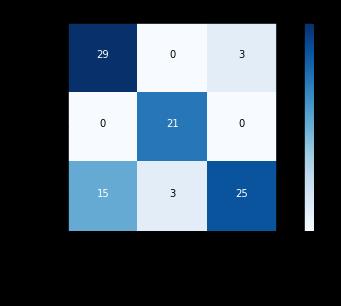
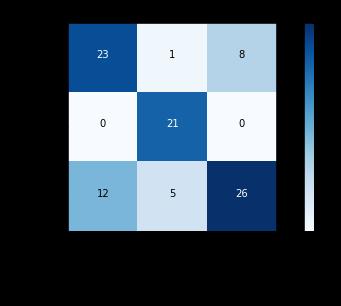
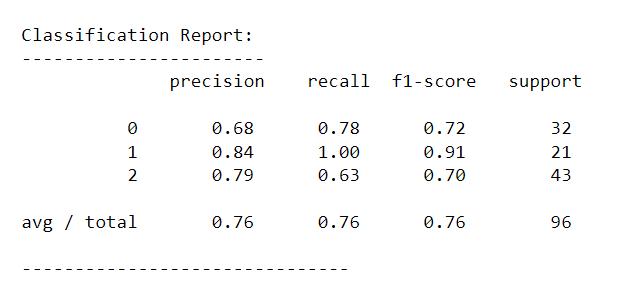
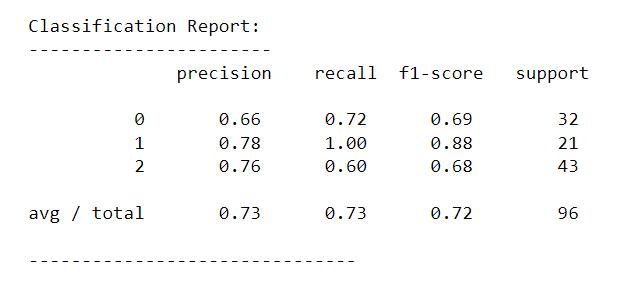
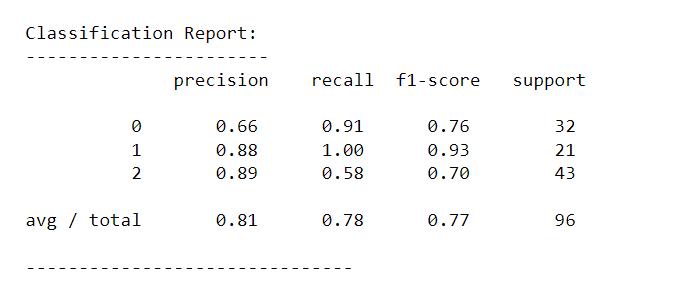
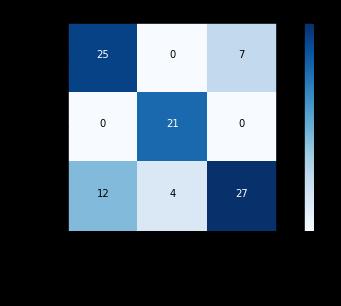
ThecomparisonresearchwascarriedoutusingWekaand the student performance data set. There are 32 characteristicsinthestudentperformancedatacollection. Age, sex, mother and father education status, study time, extracurricular activities, health, and other performance indicator variables were used to train the model, and the finalgradewasusedasapredictorclass.Theperformanceof severalclassificationmethodsisshownintable1.
Intermsofaccuratelyidentifiedinstances,theBPNandRBF classifiersfaredbetter,with95.19percentand100percent, respectively.J48,NB,andBNproperlyidentifiedinstances are 74.94 percent, 75.19 percent, and 78.73 percent, respectively, and these algorithms perform poorly when comparedtoBPNandRBF.
International Research Journal of Engineering and Technology (IRJET) e ISSN: 2395 0056
Volume: 09 Issue: 05 | May 2022 www.irjet.net p ISSN: 2395 0072
International Research Journal of Engineering and Technology (IRJET) e ISSN: 2395 0056
Volume: 09 Issue: 05 | May 2022 www.irjet.net p ISSN: 2395 0072
This study describes education data mining and applies classificationapproachestostudentperformance.Thereare several classification approaches, however it is crucial to choose which classification technique will be used on the data in order to improve student academic performance. Variouscategorizationtechniqueswereinvestigatedinthis research. RBF and BPN classification were shown to be superioralgorithmsforpredictingstudentperformanceina comparative study based on accuracy % in this area. To summarize,thisarticlewillgiveaninsightfullookatcurrent solutionsforstudentperformancecategorization.Thismay give students with self assistance and anticipate achievement based on social, educational, and previous performance.Furthermore,suchamethodassiststeachers andacademicinstitutionsinassessingstudentperformance priortothefinaltestandtakingrequiredremedialaction.
[1] Romero,C.andVentura,S.,“EducationalDataMining:A Review of the State of the Art,” IEEE Transactions on Systems,Man,andCybernetics,PartC(Applicationsand Reviews), vol. 40, 2010, pp. 601 618, doi: 10.1109/TSMCC.2010.2053532.
[2] Dutt, A., Ismail, M. A. and Herawan, T., “A Systematic ReviewonEducationalDataMining,”IEEEAccess,vol.5, 2017, pp. 15991 16005, doi: 10.1109/ACCESS.2017.2654247
[3] Hota, H. S., Sharma, L. K. and Pavani, S., “Fuzzy topsis method applied for ranking of teacher in higher education,”SpringerIntelligentComputing,Networking and Informatics, 2014, pp. 1225 1232. doi: https://doi.org/10.1007/978 81 322 1665 0_127.
[4] David, L. M. and Carlos E. G., “Data Mining to Study Academic Performance of Students of a Tertiary Institute,” American Journal of Educational Research, vol.2,2014,pp.713 726,doi:10.12691/education 2 9 3
[5] Romero,C.andVentura,S.,“Educationaldatamining:A survey from 1995 to 2005,” Expert Systems with Applications,vol.33,Dec.2007,pp.135 146
[6] Kabakchieva, D., “Predicting student performance by using data mining methods for classification, CyberneticsandInformationTechnologies,”Cybernetics andInformationTechnologies,vol.13,2013,pp.61 72, doi:10.2478/cait 2013 0006
[7] Norlida,B.,Usamah,M.andPauziah,M.A.,“Educational data mining for prediction and classification of engineering students’ achievement,” IEEE 7th International Conference on Engineering Education (ICEED),2015.
[8] Kachwala, T. and Sharma, L.K., “Comparative Study of supervised learning in customer relationship management,” International Journal of Computer EngineeringandTechnology,vol.8,2017,pp.77 82
[9] Kaur, P., Singh, M. and Singh, G., “Classification and Prediction Based Data Mining Algorithms to Predict SlowLearnersinEducationSector,”ProcediaComputer Science, vol. 57, 2015, pp. 500 508, doi: https://doi.org/10.1016/j.procs.2015.07.372
[10] Kotwiantis, S. B., “Supervised machine learning: A reviewofclassification,”Informatica,vol.31,2007,pp. 249 268.
[11] Frank E., Hall M. A., and Witten I. H., “The WEKA Workbench.OnlineAppendixforDataMining:Practical Machine Learning Tools and Techniques,” Morgan Kaufmann,FourthEdition,2016
2022, IRJET | Impact Factor value: 7.529 | ISO 9001:2008 Certified Journal