
Numerical Study of Friction Stir Welding on Different Aluminum with Different Profile Pin: A Review

Page 1

International Research Journal of Engineering and Technology (IRJET)

e-ISSN: 2395-0056

Volume: 09 Issue: 05 | May 2022

p-ISSN: 2395-0072

www.irjet.net

Numerical Study of Friction Stir Welding on Different Aluminum with Different Profile Pin: A Review Amjad Abbas1, Dr. Sanjay Kumar Gupta2 1Master

of Technology, Production Engineering, MUIT, Lucknow, India Professor, Mechanical Engineering, MUIT Lucknow, India ---------------------------------------------------------------------***--------------------------------------------------------------------2Assistant

Abstract - In this review paper, friction stir welding of

geometries, welding of dissimilar materials, tool material selection, development of tool materials, tool design [3].

Key Words: friction stir welding, aluminum sheet, pin

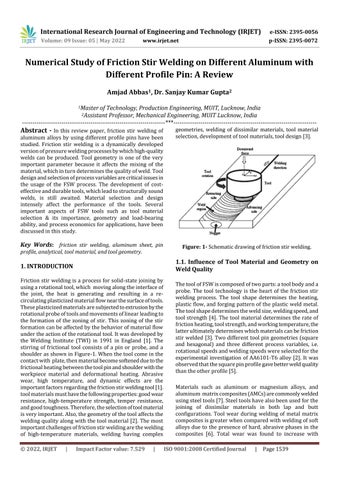
Figure: 1- Schematic drawing of friction stir welding.

aluminum alloys by using different profile pins have been studied. Friction stir welding is a dynamically developed version of pressure welding processes by which high-quality welds can be produced. Tool geometry is one of the very important parameter because it affects the mixing of the material, which in turn determines the quality of weld. Tool design and selection of process variables are critical issues in the usage of the FSW process. The development of costeffective and durable tools, which lead to structurally sound welds, is still awaited. Material selection and design intensely affect the performance of the tools. Several important aspects of FSW tools such as tool material selection & its importance, geometry and load-bearing ability, and process economics for applications, have been discussed in this study. profile, analytical, tool material, and tool geometry.

1.1. Influence of Tool Material and Geometry on Weld Quality

1. INTRODUCTION Friction stir welding is a process for solid-state joining by using a rotational tool, which moving along the interface of the joint, the heat is generating and resulting in a recirculating plasticized material flow near the surface of tools. These plasticized materials are subjected to extrusion by the rotational probe of tools and movements of linear leading to the formation of the zoning of stir. This zoning of the stir formation can be affected by the behavior of material flow under the action of the rotational tool. It was developed by the Welding Institute (TWI) in 1991 in England [1]. The stirring of frictional tool consists of a pin or probe, and a shoulder as shown in Figure-1. When the tool come in the contact with plate, then material become softened due to the frictional heating between the tool pin and shoulder with the workpiece material and deformational heating. Abrasive wear, high temperature, and dynamic effects are the important factors regarding the friction stir welding tool [1]. tool materials must have the following properties: good wear resistance, high-temperature strength, temper resistance, and good toughness. Therefore, the selection of tool material is very important. Also, the geometry of the tool affects the welding quality along with the tool material [2]. The most important challenges of friction stir welding are the welding of high-temperature materials, welding having complex © 2022, IRJET

|

Impact Factor value: 7.529

|

The tool of FSW is composed of two parts: a tool body and a probe. The tool technology is the heart of the friction stir welding process. The tool shape determines the heating, plastic flow, and forging pattern of the plastic weld metal. The tool shape determines the weld size, welding speed, and tool strength [4]. The tool material determines the rate of friction heating, tool strength, and working temperature, the latter ultimately determines which materials can be friction stir welded [3]. Two different tool pin geometries (square and hexagonal) and three different process variables, i.e. rotational speeds and welding speeds were selected for the experimental investigation of AA6101-T6 alloy [2]. It was observed that the square pin profile gave better weld quality than the other profile [5]. Materials such as aluminum or magnesium alloys, and aluminum matrix composites (AMCs) are commonly welded using steel tools [7]. Steel tools have also been used for the joining of dissimilar materials in both lap and butt configurations. Tool wear during welding of metal matrix composites is greater when compared with welding of soft alloys due to the presence of hard, abrasive phases in the composites [6]. Total wear was found to increase with ISO 9001:2008 Certified Journal

|

Page 1539


Turn static files into dynamic content formats.
Create a flipbook