International Research Journal of Engineering and Technology (IRJET)

Volume: 09 Issue: 04 | Apr 2022 www.irjet.net
e ISSN: 2395 0056
p ISSN: 2395 0072
ASSESSING THE IMPACT OF PUNE METRO ON REAL ESTATE MARKET
Ar. Prachi Praveen Kurle1 , Ar. Asawari Sohani2
1Research Scholar, S.Y.M.arch Dr.D.Y.Patil College of Architecture
2Professor, D.Y.Patil College of Architecture Akurdi,Pune
***
Abstract - The purpose of this research is to examine the changes in land use and land values along the planned metro corridor and metro station, as well as to determine the characteristics that influence the magnitude of the increase in land value, deals and investigate their positive and negative consequences. The assessment of the study's correct objective procedure, which includes a description of the personality of the study area, methods used in sample selection and data collecting, and the analytical instruments utilised, is divided into four stages: The research problems were first formulated, which was done with the assistance of a survey of the literature. The study only takes into account residential land usage.The project's consequences will only be studied for one corridor, Vanaz to Ramwadi. Due to a lack of data, certain factors, such as slum land rates, median household incomes, and so on, cannot be analysed in the context of the case study.
Key Words: PuneMetro,RealEstateValues,Landuse,FAR, FSI,AdditionalStampDuty.
1. INTRODUCTION
Rapidurbanisation,aswitnessedtoday,canhaveanegative impact on all three aspects, causing economic, social, and environmental harm if not well controlled. Well planned urbanisation,ontheotherhand,canmaximisethebenefitsof agglomerationwhileminimisingasmanynegativeimpacts aspossible.
As previously stated, the greatest demand for sustainable urbanandtransportationplanningisfoundinmiddle and low income countries, which are the world's fastest urbanisingregions.Becauseoftherelativelylowerlevelsof development, specific efforts must be made to improve understandingofurbandynamicsintheselocations,aswell astobetterplanforsustainableintegrationoflanduseand transportation, so that the negative impacts of haphazard urbangrowtharereduced.
Thereislittledoubtthatbetteraccesstophysical,economic, and social infrastructure has resulted in positive externalitiesforIndia'sdevelopment.Indiancitiesareseeing anongoingspiral ofhabitatsgrowing onperiurban areas that lack infrastructure yet are home to populations that cannot afford homes in the metropolis and commute to employmentwithincorecitiesusingunsustainablemodesof transportation.
The interaction between urban spatial structure and transportationnetworkwithinacitycaneitherpromoteor hamperthecity'seconomicproductivityandqualityoflife. Without a doubt, urbanization has enabled residents' economic mobility through the concentration of jobs, technology,healthcare,education,andinformation.
1.1 METRO RAIL TRANSIT'S EFFECT ON LAND VALUES
Metro Rail Transit serves critical economic, social, and environmental functions, and it may generate positive externalities that influence residential property values (RPVs)inrealestatemarkets.Lessemphasishasbeenplaced oninvestigatingtheeffectsfromboththegeographicaland temporalperspectives.
Therearetwotypesofeffectsofmetrostationsonproperty value.Oneisapositiveexternality,whichinvolvesimproving the property'slocation,lowering transportation costs,and increasinghomeprices.Theotherisanegativeexternality, such as noise and a cluttered environment produced by greater population movement, which predicts a drop in propertyprices.
1.2ATTRIBUTES IMPACTINGPROPERTY VALUESIN THE METRO STRETCH
Thetraitsthatprovidevaluetoaproductorserviceare referredtoasvaluedrivers.
This chapter will provide an overview of the various independentanddependent metrofeaturesthatinfluence thecostofresidentialhomes.
Therearetwotypesoffeatures(variables)thatinfluence house prices: temporal attributes and spatial attributes. Spatial features that take space dimension qualities into account. The dimension of time is considered in temporal qualities,andresearchiscentredonthebeforeandafterofa certainoccurrence.
Thesurfaceareaofthehouse,aswellasitsage,built up and unbuilt up portions of the property, the number of rooms, and the number of bathrooms, are all continuous variables.Dummyvariablesareusedtoindicatetheother physical characteristics of the dwelling, such as its monumentstatus,theavailabilityofagasheater,etc.
© 2022, IRJET | Impact Factor value: 7.529 | ISO 9001:2008 Certified Journal
International Research Journal of Engineering and Technology (IRJET)
Volume: 09 Issue: 04 | Apr 2022 www.irjet.net
Attributes of Space
1.Propertysize
2.Neighbourhooddevelopmentasaresultofthemetro
3.Thedistancefromthemetro
4.Greateraccessibilityasaresultofthemetro
5.Metroparkingfacility
6.Exchange
7.Ridershipisnumberseven.
8.Metro relatedannoyance
9.Criminalactivityinthemetroarea
10.Congestioninthemetroarea
11.Metrolast mileconnectivity
Temporal characteristics
1.MetroProjectAnnouncement
1.MetroProjectAnnouncement
3.Metrooperations
1.3. PUNE METRO PROJECT
PuneisthesecondmostpopulouscityinMaharashtraand India'sninthmostpopulouscity.Twomunicipalcorporations (oneofwhichisPune)andthreecantonmentscomprisethe metropolitanregion. PuneMetroisathree lineurbanMassRapidTransitSystem (MRTS) being built in Pune, Maharashtra by Maharashtra MetroRailCorporationLimited(Maha Metro)andthePune MetropolitanRegionDevelopmentAuthority(PMRDA).The MaharashtraMetroRailCorporationLimited(MAHAMETRO) isaSpecialPurposeVehicle(SPV)jointlycontrolledbythe GovernmentsofIndiaandMaharashtra.
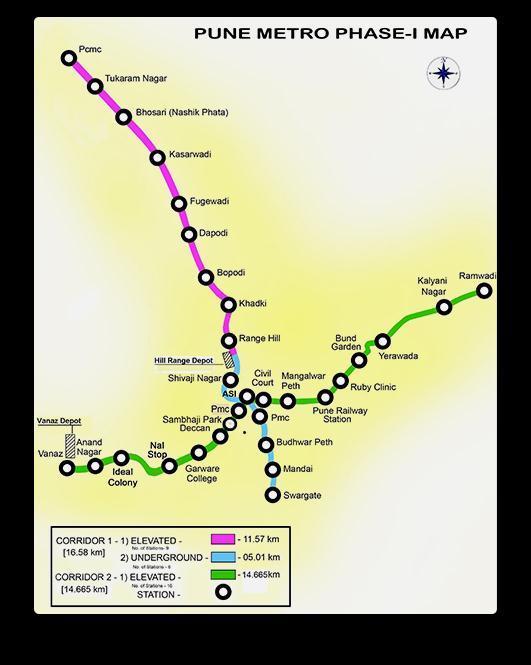
MAHA METRO has suggested two Pune Metro alignments. Lineone,fromPimpritoSwargate(with14Metrostations), is16.589kilometreslong,whereasLinetwo,fromVanazto Ramwadi(with16Metrostations),is14.665kilometreslong. TheproposedmetrorouteforLine2runsalongsomeofthe mainhighwaysinthecity,includingPaudRoad,KarveRoad, BundGardenRoad,andtheAhmednagarPuneHighway.All three lines will connect at the Civil Court interchange station'snodalstation.
1.4. NEED OF THIS STUDY
Aforecastingvaluationmodelthatcanassesstheworthof realestatepropertyalongtheMetroroutecanhelpinvestors forecastwhenandwheretoforecastalongthelengthofthe corridor.Accordingtoeconomictheories,theadvantagesof various infrastructure and public transportation services willbecapitalisedwholeorpartiallyintolandandhousing.. Despite these assumptions, no consistent association between residential property prices and proximity to transportationlineshasbeenproven.Therelianceonpublic transportationinIndianmetropolitanregionsissubstantial.
Factor value: 7.529
e ISSN: 2395 0056
p ISSN: 2395 0072
Passengers in major urban settings may be far more sensitivetosubtlechangesinpublictransportationservices thanthoseininternationalsituations.
1.5. AIM
Thegoalofthisstudyistoexaminethechangeinlanduse and land values along the proposed metro corridor and metro station, as well as to identify and study the characteristicsthatdeterminethemagnitudeofincreasein landvalues.
1.6. METHODOLOGY
The research technique and study design are critical components of research. A proper technique, as well as a descriptionofthetopicarea'snatureandprocessesthatare used,mustbeusedtoanalysethestudy'saim.Employedin the selection of samples, data collection, and analysis the followingfourstagesdefinetheanalyticaltoolsused: The research problems were first formulated, which was done with the assistance of a survey of the literature The review of literature aided in obtain a thorough understanding of the transportation sector scenario MaharashtraandthePunedistrictaretwodistrictsinIndia. This aided in understanding the state of transportation infrastructures, as well as the efforts taken to address challengesinthissectorandtheneedtoimprovethecurrent situation.
In the second stage, a more in depth study of various literatures was conducted in order to comprehend the concept, elements and parameters taken into account to analysethechangeinlandvaluesandlandusesowingtothe proposedmetrocorridor,andstatisticalmethodstoconduct suchanalysis.
Theareawassurveyedinthethirdstage,andastudyofthe area'scharacterwasperformedalongsideanexaminationof the obtained data. This survey data analysis found the drivers impacting real estate values, which were subsequently used in the hedonic regression model to evaluatethefutureinfluenceofthePuneMetroProject. In this scenario, the study area is divided into three buffer zones.BufferAislocatedupto200metresfromthemetro station,BufferBislocatedbetween200and350metres,and BufferBislocatedbetween350and500metres.
Thefourthstageentailsidentifyingtheissuesafteranalysing thedataandprovidingsolutionstoovercomethem,aswell as the proposals. The effects of the project will only be investigated for one corridor, Ramwadi to Vanaz Metro. Certain factors, such as land rates in slum areas, median household incomes, and so on, cannot be evaluated in the contextofthecasestudyduetoalackofdata.
International Research Journal of Engineering and Technology (IRJET)
Volume: 09 Issue: 04 | Apr 2022 www.irjet.net
2. STUDY AREA
The study area is one of the Metro Corridor 2 terminal stations,theVanaz RamwadiCorridor.Themetrorouteis highlightedinDarkgreenColorinFig1.Theresearcharea consists of the end station Vanaz depot and a 500 meter radiusaroundit. Data was collected and analysed in this 500 meter buffer zonesurroundingtheVanazMetroStation.Wards10and11 areincludedinthestudyarea.
Fig 1:Corridor2
Sorce: https://www.pngkit.com/downpic/u2w7y3q8o0t4u2e6_pune metro route map/
3. RESULTS
e ISSN: 2395 0056
p ISSN: 2395 0072
Chart1:Propertyrates.
2017 2021
Chart 2:ReadyReckonerRate
Pimple
2013 2017
Pimple
Office land Shop
International
Journal of Engineering and Technology (IRJET)
Volume: 09 Issue: 04 | Apr 2022 www.irjet.net
Chart 3. ReadyreckonerRatesfor2021
Accordingtothestudy,theaveragegrowthinthe'residential / industrial' rate is 63.69 percent. Similarly, the average increase in 'offices' rate is 55.59 percent. The average increaseinthe'land'rateis59.87percent,whiletheaverage increase in the 'shop' rate is 49.65 percent. The proposed Pune metro will have a mixed effect on the real estate market of Pimpri Chinchwad, with some regions experiencinganincreaseinratesandothersexperiencinga fallinrates.
Followingthecollectingofalloftheabove mentioneddata,it is integrated with GIS and global mapper software for analysis.
4. CASE STUDY
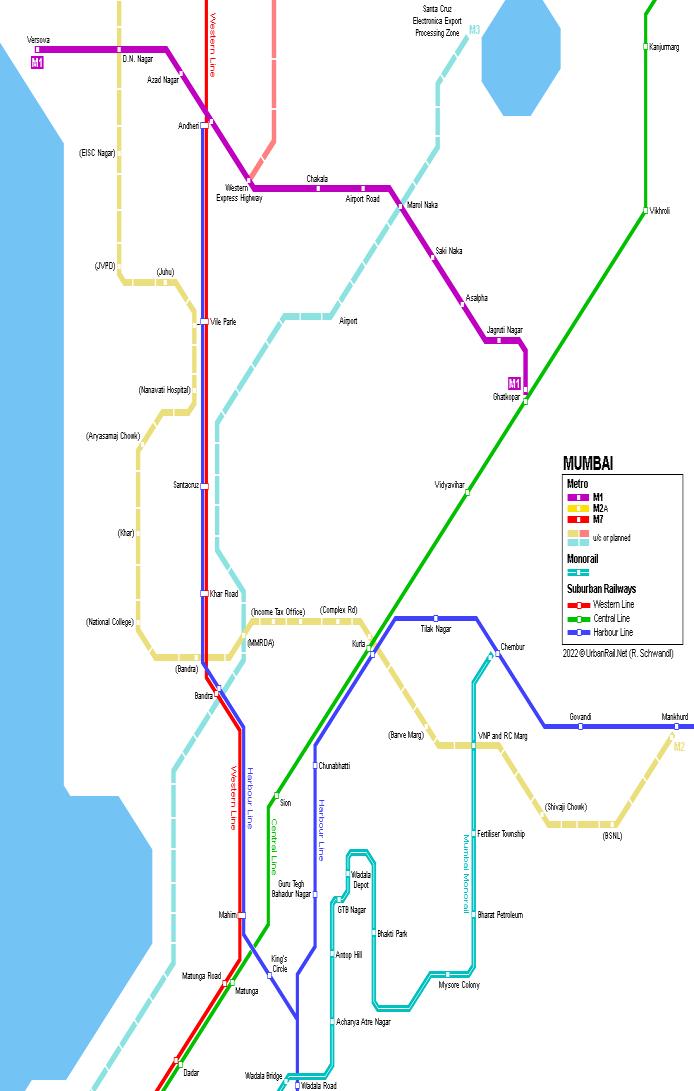
ThestateofMaharashtrawasoneofthefirsttoexperiment withland basedfiscalinstruments,withMumbaibeingone of the first cities to implement them. Several projects, including the building of the Bandra Kurla Complex, the Kalyan Growth Centre, public parking (CR2) at Nariman Point, and several city skywalks, have incorporated value captureaspartoftheirexecution. In a more contemporary example, the development of Mumbai Metro routes and the monorail length from Chembur to Wadala included value capture measures to produce additional financial resources. The Maharashtra governmenthasalsoapprovedtheimplementationofvalue capturemethodsforthenewmetrolines,whichinclude:• additionalFSIonpaymentofpremiumupto500mfromrail line;and50%premiumtoMMRDA.
e ISSN: 2395 0056
p ISSN: 2395 0072
•AdditionalFSIonpaymentofpremiumupto500mfrom railline;50%premiumtoMMRDA
•100%increaseofDev.Charges;100%shareto MMRDA
•1%cessonStampDutyonalltransactions,100%share to MMRDA
(Source: Mumbai Metropolitan Region Development Authority)
Asidefromthese,allearningsfromcommercialdevelopment ofvehicledepots,aswellasadvertisingandparkingfees,will be handed exclusively to the Development Authority (MMRDA).
TheGovernmenthasalsoapprovedtheestablishmentofan UrbanTransportFundinMMRDAtocollectVCFincomefor thispurpose.Thedevelopmentmodelsutilisedforthemetro linesdifferinthatthefirstmetrolinewasbuiltandoperated onaPPPmodelwithReliance,whilsttherestofthemetro lines are planned and being built by an SPV: the Mumbai MetroRailCorporationLimited(MMRCL).
Fig 2.Mumbairailnetwork.
Source:
International Research Journal of Engineering and Technology (IRJET)
Volume: 09 Issue: 04 | Apr 2022 www.irjet.net
4. CONCLUSIONS
Accordingtothestatisticalanalysis,thepropertyvalueofa residentialpropertyvarieswiththedistancefromtheMetro station.Infrastructuredevelopmenthasthebiggestinfluence inthefirst200metresfromthemetrostationandsteadily increasesthereafter.Thiscanbeexplainedbyissuessuchas noisepollution,heavycommuting,andsoon.Factorssuchas dumpinggroundsandslumneighborhood’snearresidential housestendtohaveadetrimentalimpactonpropertyvalue. Theviewneartheresidentialpropertyhasabeneficialbut minor impact on the residential property values when comparedtootheraspects.
According to the hedonic regression study, the value of a residential property first declines, then climbs from a distanceof200metres,andthenslightlyreducesfrom350m 500m. As a result, the value of residential property is proportional to its distance from the metro station. As a result,thedegreeofimpactreduceswithincreasingdistance.
ACKNOWLEDGEMENT
I would like to express my very great appreciation to Ar. Asawari Sohani for her valuable and constructive suggestions during the planning and development of this research work. Her willingness to give her time so generouslyhasbeenverymuchappreciated.


IwouldalsoliketothankthePuneMetroofwhomtheCase studywasdone.
REFERENCES
[1] Ali,Hasim,Abidin(2019).Monitoringthebuiltuparea transformationusingUrbanIndex
[2] TekKshetri,(2018).NDVI,BU,NDBICalculationusing Landsat7,8.Geoinformatics
[3] Brunsdon, C., Fotheringham, S., & Charlton, M., (1998). “Geographically Weighted Regression ModellingSpatialNon Stationarity,”Journal oftheRoyalStatisticalSociety, SeriesD:TheStatistician,47,431 443.
[4] Enghttps://www.punemetrorail.org/
[5] REVISEDCITYDEVELOPMENTPLANFORPUNE 2041, MAHARASHTRA,UNDERJNNURM
[6] The Report of Draft Development Plan of Pune Metropolitan Region, prepared and published u/s section 26 of Maharashtra & Regional Town Planning Act, 1966 vide notice dated 2nd August 2021 in GovernmentGazette,PuneDivision
[7] STUDY OF EMERGING TRENDS IN INDIAN RESIDENTIAL REAL ESTATE MARKET WITH REFERENCETOPUNESukritBasu
BIOGRAPHIES
2nd
IRJET
e ISSN: 2395 0056
p ISSN: 2395 0072
Ar.PrachiPraveenKurle.Has completedB.archin2019from Pune university. Currently pursuingM.archinconstruction management from Pune University.
Prof.Asawari Sohani. Is currently professor in Dr.D.Y.Patil College of Architecture.
Impact Factor value: 7.529
9001:2008