A Study on Helicopter Mechanism
Professor, Department of Mechanical Engineering, Guru Nanak Institute of Technology, Ibrahimpatnam, R.R. Dist 501506, India
of
Engineering, Guru Nanak Institute of Technology, Ibrahimpatnam, R.R. Dist 501506, India

Abstract - An assessment and the significant target of the venture is to break down the helicopter components. The edges are designed like aero foils (plane wings with a bended profile) so they create lift as they turn. Every cutting edge can turn about a padding pivot as it turns. Vertical pitch joins push the sharp edges all over, making them turn as they pivot. The pitch joins cross all over as per the point of the swash plates. The rotor pole (a focal pivot associated with the motor by utilizing the transmission) makes the entire sharp edge get together turn. There are two super shaft stream motors, one on one or the other part of the rotors. Assuming that one motor comes up short, there needs to in any case be sufficient energy from the other motor to securely land the helicopter. A scope of methods has been created, and most of the applications have been for cases that require a little computational area (like aero foils) or a simple streamlined assessment, (for example, cases the spot activity is upgraded for a solitary static condition). In the first endeavor at the improvement of rotors, the computational liquid elements (CDF) strategies utilized had been streamlined.
Key Words: Aerofoils, CFD, Rotor, Rotor Mechanism
1. INTRODUCTION
In the mid twentieth hundred years, a couple of trying creators turned into the fantasy into truth by means of planninganddevelopingflyingmachinesthatinallactuality satisfied their names. Everybody knows the tale of the Wrightsiblingsandtheircelebratedtripallthroughthehills ofKittyHawk,N.C.,soweprobablywon'tharphereontheir achievementsorhowplaneswork.Allthingsbeingequal,we needtozeroinonalesspopularcharacter IgorSikorsky andhisinnovativeandjudiciousoftheongoinghelicopter: aplanebanishingwingsthataccomplishverticaldeparture fromtherevolutionofupwardblades.[1]
Thehelicopterconsideringitsinnovationduringthe1930s has been a ludicrousness to the machine. Furthermore, whichistoflyallover,inreverseandforward,bothways. ThenotableU.S.broadcastwriterHarryReasonerreferenced thisclearmysteryina1971discourseheconveyedaboutthe utilizationofhelicoptersintheVietnamstruggle.Thepilot needstoacceptthreeaspectsandoughttoutilizeeachpalm andeverylegcontinuallytosafeguardahelicopterintheair. Steering a helicopter requires a striking arrangement of
instructingandability,aspleasantlyasrelentlessinterestin the machine an airplane with the guide of its inclination needstofly.Ahelicopterdoesnownothaveanydesiretofly. Itiskeptupwithintheairutilizingascopeofpowersand controls working contrary to each other, and in the event thatthereisanyaggravationinthisrefinedequilibrium,the helicopterquitsflying,immediatelyandshockingly.Thereis nosuchthingasacoastinghelicopter.[2]
2. HISTORY OF HELICOPTER
The primary logical composition of the rules that at last prompted the fruitful helicopter came in 1843 from Sir GeorgeCayley,whoislikewiseviewedbyalotofpeopleas thedadoffixed wingflight.
Inthemid 1900s,IgorIvanovitchSikorskyandBorisYur'ev autonomously started to plan and construct vertical lift machinesinCzaristRussia.By1909,enlivenedbycraftedby CornuandotherFrenchpilots,Sikorskyhadconstructeda nonpilotedcoaxialhelicoptermodel.
Thehistoricalbackdropofverticalflightstartedassoonas around400CE;thereareverifiablereferencestoaChinese kite that involved a rotational wing as a wellspring of lift. Duringthelastoptionpartofthefifteenthcentury,Leonardo daVincimadedrawingsofahelicopterthatutilizedatwisting airscrewtoacquirelift.
Themainlogicalworkoftherulesthateventuallyprompted thefruitfulhelicoptercamein1843fromSirGeorgeCayley, whoisadditionallyviewedbyalotofpeopleasthedadof fixed wingflight.[3]
In1907thereweretwohugestridesforward.OnSeptember 29, the Breguet siblings, Louis and Jacques, under the directionofthephysiologistandaeronauticspioneerCharles RichetmadeashorttripintheirGyroplaneNo.1,controlled bya45 torquemotor.TheGyroplanehadaspiderweb like edgeandfourarrangementsofrotors.Thedirectedairplane liftedstartingfromtheearlieststageatallnessofaroundtwo feet,yetitwasfastenedandnotunderanyinfluence.Breguet proceededtoturnintoapopularnameinFrenchaeronautics, andintimeLouisgotbacktoeffectiveworkinhelicopters.
Afterward,inNovember,theircompatriotPaulCornu,who wasabikecreatorliketheWrightsiblings,accomplisheda
Jaya Sriram
Jayanth Reddy
Gangadhar Raju
R. Kanakaraju
freetripofaround20secondslength,arrivingatastatureof onefootinatwin rotormakefueledbya24 strengthmotor.
OnDecember18,1922,amind bogglinghelicopterplanned byGeorgedeBothezatfortheU.S.ArmedforceAirForcetook offthegroundforsomewhatundertwominutes,underleast control.
possibly the most compelling helicopter on the planetand beganapatterntowardstream fueledhelicoptersallover.[4]
3. LITERATURE REVIEW
Ahelicopterisakindofrotorcraftinwhichliftandpushare provided by evenly turning rotors. This permits the helicopter to take off and land vertically effectively, to be that as it may, and to fly forward, in reverse, and horizontally.Thesepropertiespermitthehelicoptertousein blockedordisconnectedregionswherefixed wingairplanes andmanytypesofshorttake offandlandingorshorttake offandverticalhandlingAhelicopterisakindofrotorcraft inwhichliftandpushareprovidedbyalevelplaneturning rotors. This permits the helicopter to take off and land upward,drift,andflyforward,inreverseandhorizontally.
In France, Argentine designer Raúl Pateras Pescara, who planned a few helicopters during the 1920s and '30s that appliedcyclicpitchcontroland,assumingthemotorfizzled, rotorautorotation,setastraight linedistancerecordonApril 18,1924,of736meters(2,415feet).ThatveryyearinFrance onMay4,ÉtienneOehmichenlaidoutadistancerecordfor helicoptersbyflyingacircleofakilometer’slength.
In Spain in the earlier year,on January 9, 1923, Juan dela Ciervamadethemainfruitfultripofanautogiro.Anautogiro works on an unexpected guideline in comparison to a helicopter.Itsrotorisn'tcontrolledhoweveracquiresliftby itsmechanicalturnastheautogiropushesaheadthroughthe air.
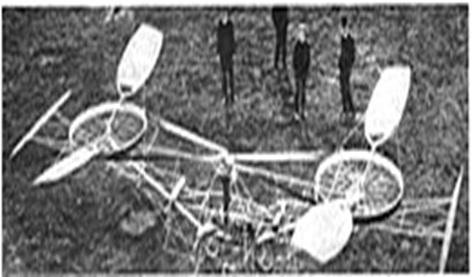
After World War II the business utilization of helicopters grewquicklyinnumerousjobs,includingputtingoutfires, police work, farming yield splashing, mosquito control, clinicalclearing,andconveyingmailandtravelers
Theextendingmarketcarriedextracontendersintothefield, each with various ways to deal with the issue of vertical flight.oneofthemainhelicoptersever,fusingaverbalized, gyro balanced out, two cutting edge rotor. Forthcoming PiaseckimadethePiaseckiHelicopterCorporation;itsplans includedacoupleofrotorideas.
Inaregularairplane,theforceoftheflymotorwasutilized principallyforspeedingup.Inthehelicopter,thepushofthe flyturbinemustbecaughtbyagearboxthatwouldturnthe rotor. The stream motor enjoyed many benefits for the helicopter it was more modest, weighed under a cylinder motorofsimilarpower,hadundeniablylessvibration,and utilized more affordable fuel. The French SNCA S.E. 3130 AlouetteIImadeitsfirsttriponMarch12,1955,fueledbya TurbomecaArtousteIIturbinemotor.Itquicklybecamequite
Albeitmostpriorplansutilizedmorethanonefundamental rotor, the setup of a solitary principal rotor joined by an upwardenemyofforcetailrotorhasturnedintothemost well knownhelicopterarrangement.Notwithstanding,twin principal rotor helicopters in one or the other couple or cross over rotors arrangements, are in some cases being usedbecauseoftheirmoreprominentpayloadlimitthanthe mono rotor plan, and coaxial rotor, slant rotor, and compound helicopters are additionally all flying today. Quadrotorhelicopterswerespearheadedassoonas1907in Franceandalongsidedifferentsortsofmulticoptershave beengrownforthemostpartforparticularapplicationslike robots.
The sharp edge pre wind has been concentrated impressively and broadly utilized in the rotor sharp edge plan to accomplish better execution in hang and further flight.Theimpactofdynamicsharpedgeshapeapproaches includingaerofoiltransforming,edgebend,variablerotor speed,andvariablerotorcompassoncopterrotorexecution hasbeenexamined.ThemostagentreviewistheATR,which has tried hang and a further trip to show vibration and sound decrease utilizing open circle and unlimited circle control. Different investigations use multi consonant incitationthatcomprisesdifferentcontrolfactors.
Ahelicopter'sprimaryrotororrotorframeworkistheblend ofarotationalwingandacontrolframeworkthatcreatesthe streamlinedliftforcethatupholdstheheavinessofthehelo and the push that balances streamlined haul in sending flight.AnActiveTwistRotor(ATR)isbeingproducedforthe approaching execution of individual edge control for vibration and sound decrease in helos. The rotor cutting edge is vitally wound by direct strain incitation utilizing dynamic fibre blends (AFC). 3D models are planned and separated in CATIA and Ansys. Juan de la Cierva's rotor cutting edge is the premise of the most multi bladed helo rotorframeworks.ArthurYoung'sstabilizerbarwasutilized ina fewBell andHillerchoppermodelsduringthe1930s. Alphonse Pénaud's coaxial rotor model chopper toys enlivenedtheWrightsiblingstodreamofflight.[5]
3.1 Parts of Helicopter and Function
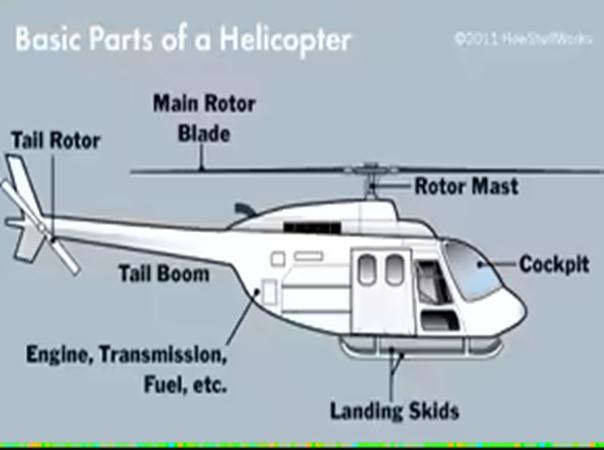
Main Rotor Blade: The main rotor blade performs the samefunctionasanairplane'swings,providingLiftasthe blades rotate lift being one of the critical aerodynamic forces that keeps aircraft aloft. A pilot can affect lift by changingtherotor'srevolutionsperminute(rpm)orbits
Angle Of Attack: which refers to the angle of the rotary winginrelationtotheoncomingwind.
Stabilizer: - The stabilizer bar sits above and across the main rotor blade. Its weight and turn hose undesirable vibrationsintheprincipalrotor,assistingwithsettlingthe art in all flight conditions. Arthur Young, the gent who plannedtheBell47helicopter,iscreditedwithdesigningthe stabilizerbar.
4. A helicopterhas fourcontrols /Controlling Flight
Ahelicopterhasfourprimaryflightcontrols: a.Cyclic b.Collective c.Antitorquepedals` d.Throttle
Cyclic
The cyclic control is typically situated between the pilot's legsandisordinarilycalledthe"cyclicstick"oressentially "cyclic." On most helicopters, the cyclic is like a joystick; notwithstanding,RobinsonhelicoptershaveremarkableT barcycliccontrolframeworks.
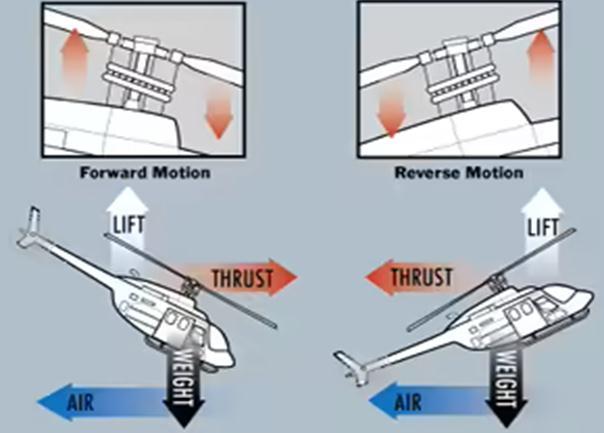
Thecontrolisknownasthecyclicinlightofthefactthatit can differ the pitch of the rotor cutting edges all through every upset of the fundamental rotor framework (i.e., through each pattern of turn) to foster inconsistent lift (push).Theoutcomeistoshifttherotorplateinaspecific bearing, bringing about the helicopter moving that way. Assumingthatthepilotpushesthecyclicforward,therotor circle slants forward, and the rotor delivers a push in the forwardheading.Assumingthepilotpushesthecyclicaside, therotorcircleslantstothatsideanddeliverspushthatway, makingthehelicopterdriftsideways.
Collective
4. IDENTIFICATION AND MODELING OF A MODEL SCALE HELICOPTER
First rulebaseddisplayingapproach,extensiveinformation about rotorcraft flight elements is expected to get the administeringconditions,andfar reachingflightapprovals and model refinements are essential before adequate precisionisachieved.Allthingsconsidered,inthehelicopter localarea,adisplayingstrategyinlightofframeworkIDhas been created and effectively utilized with full scale helicopters. The actual burden is joined to the rotor shaft overawaveringpivotinanunder swungdesign,lessening theCoriolispowersandtherelatedin planeedgemovement. The wavering movement is likewise controlled by an elastomerdamper/spring.Thisslackcreatesasecondabout thehelicopter'sfocalpointofgravityinversetotherollingor pitchingcourseandcorrespondingtotherollingorpitching rate. A more modest rotor has a more modest rotor time consistentτ;inthismanner,foragivenpitchorrollrate,it willslacklessandsubsequentlyproducelessdamping.The frameworkIDstepsaretobeperformedforsomerandom airplane.[6]
Thecollectivepitchcontrol,orgroup,issituatedontheleft half of the pilot's seat with a pilot chose variable rubbing control toforestall accidental development. Thecollective changesthepitchpointofalltheprimaryrotorcuttingedges allinall(i.e.,allsimultaneously)andfreelyoftheirpositions.
Antitorque Pedals
Theantitorquepedalsaresituatedsimilarlysituatedasthe rudderpedalsinafixed wingairplaneandfillacomparable need,tobespecifictocontrolthebearinginwhichthenose of the airplane is pointed. Use of the pedal in a provided guidance changes the pitch of the tail rotor sharp edges, expandingordecreasingthepushcreatedbythetailrotor, makingthenoseyawtowardtheappliedpedal.Thepedals preciselychangethepitchofthetailrotor,modifyinghow muchpushcreated.
Throttle
Helicopterrotorsareintendedtoworkataparticularrpm. Thechokecontrolsthepowerdeliveredbythemotor,which is associated with the rotor by a transmission. The motivation behind the choke is to keep up with sufficient
5. Material selection
The airframe, or key construction, of a helicopter, can be made of one or the other metal or natural composite materials,orablendofthetwo.Betterexecutionnecessities will lean the planner to incline toward composites with a highersolidarityto weightproportion,frequentlyepoxy(a pitch)builtupwithglass,aramid(asolid,adaptablenylon fiber),orcarbonfiber.Regularly,acompositepartcomprises ofmanylayersoffiber impregnatedpitches,clungtoshapea smoothboard.Cylindricalandsheetmetalfoundationsare typically made of aluminum, however treated steel or titanium are here and there utilized in regions subject to higherpressureorhotness.Toworkwithbowingduringthe assemblingsystem,theprimarytubingisfrequentlyloaded upwithliquidsodiumsilicate.Ahelicopter'srevolvingwing cutting edges are typically made of fiber supported gum, whichmightbeadhesively reinforced withan outer sheet metallayertosafeguardedges.Thehelicopter'swindscreen andwindowsareshapedofpolycarbonatesheeting.
6. The Future
Fabricating cycles and strategies will keep on changing becauseoftheneedtodecreasecostsandthepresentationof newmaterials.Computerizationmightadditionallyworkon quality(andlowerworkcosts).PCswillturnouttobemore significant in further developing plans, carrying out plan changes,andlesseninghowmuchdeskworkmade,utilized, and put away for every helicopter fabricated. Besides, the utilizationofrobotstowindfiber,wraptape,andspotfiber will allow fuselage designs to be made of less, more coordinated pieces. As far as materials, progressed, high strength thermoplastic tars guarantee more noteworthy effectobstructionandrepairabilitythancurrenttensestlike epoxy and polyimide. Metallic composites, for example, aluminum built up with boron fiber, or magnesium supportedwithsiliconcarbideparticles,likewiseguarantee highersolidarityto weightproportionsforbasicparts,for
example, transmission cases while holding the hotness oppositionbenefitofmetalovernaturalmaterials.
7. CONCLUSIONS
Helicopters have, beyond a shadow of a doubt, been a distinct advantage in the adaptability of airplane and trip overallforhumankind.
Helicopters are workhorses of the aeronautics world that have changed the existences of nations and networks by givingfiascoalleviationtoregionsthatweredifficulttoreach todifferenttypesoftransport.
Their adaptability has permitted the helicopter to be adjusted and adjusted to many capacities that far outperformed the first and for the most part military applicationforthisairplane.
Thehelicopterhasturnedintoavitalairplanethatnumerous areas of our general public and industry have come to dependonasastaplepieceofhardwarethatnoothersortof vehiclecancoordinate
REFERENCES
[1] Whittle,Richard."It’sABird!It’sAPlane!No,It’sAircraft ThatFlyLikeaBird!Archived2015 05 01attheWayback Machine" Breaking Defense,12January2015.Accessed:17 January2015.
[2] https://www.ijsr.net/get_abstract.php?paper_id=SUB15 7239
[3] https://www.britannica.com/technology/helicopter
[4] https://itlimszsis.meil.pw.edu.pl//pomoce/WTLK/ENG /Sup/A_History_of_Helicopter_Flight.pdf
[5] https://science.howstuffworks.com/transport/flight/m odern/helicopter.htm
[6] https://en.wikipedia.org/wiki/Helicopter_rotor#Twin_r otors
[7] https://upload.wikimedia.org/wikipedia/commons/thu mb/f/fa/HE2G8.jpg/260px HE2G8.jpg
[8] https://media.hswstatic.com/eyJidWNrZXQiOiJjb250ZW 50Lmhzd3N0YXRpYy5jb20iLCJrZXkiOiJnaWZcL2hlbGljb3B0 ZXItYmFzaWMtcGFydHMuZ2lmIiwiZWRpdHMiOnsicmVzaX plIjp7IndpZHRoIjoyOTB9LCJ0b0Zvcm1hdCI6ImF2aWYifX0=
[9] https://media.hswstatic.com/eyJidWNrZXQiOiJjb250ZW 50Lmhzd3N0YXRpYy5jb20iLCJrZXkiOiJnaWZcL2hlbGljb3B0 ZXItZmx5LmdpZiIsImVkaXRzIjp7InJlc2l6ZSI6eyJ3aWR0aCI6 MjkwfSwidG9Gb3JtYXQiOiJhdmlmIn19
BIOGRAPHIES
JAYANTH REDDY PINGILI, UG Student,DepartmentofMechanical Engineering,GuruNanakInstitute of Technology, Ibrahimpatnam, R.R.Dist 501506,India
GANGDHAR RAJU PEDDAMALLA, UG Student, Department of Mechanical Engineering, Guru Nanak Institute of Technology, Ibrahimpatnam,R.R.Dist 501506, India

RACHAKONDA KANAKARAJU, UG Student, Department of Mechanical Engineering, Guru NanakInstituteofTechnology, Ibrahimpatnam, R.R. Dist 501506,India