
Predicting Autism Spectrum Disorder using Supervised Learning Algorithms
R.NandiniUG student, Department Of Computer Science And Engineering, GITAM School of Technology, Visakhapatnam campus, India.
Assistant Professor, Department Of Computer Science And Engineering, GITAM School of Technology, Visakhapatnam campus, Andhra Pradesh, India.

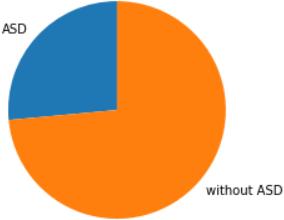
Abstract Autism Spectrum Disorder (ASD) is one of the most rapidly rising diagnoses in the field of developmental disabilities. Behavioral characteristics, including social, sensory, and motor elements, are used to diagnose autism spectrum disorder. Families and individuals concerned about ASD traits in themselves or their relatives should consult their family physician. So, using ten enquiries, we looked at the behavioural pattern to see if the person had been diagnosed with autism or not. We have a total of 704 records, of which 189 were found to be autistic, accounting for around 26.85% of the total. From the total 20% of the records were utilised to train the algorithm, with the rest being used to test it. The algorithms used were random forests (RF), AdaBoost (Ada), and the Support Vector Machine (SVM) algorithm. These algorithms were used to find the accuracy of the dataset.
Key Words: Autism Spectrum Disorder, ASD, Machine Learning, Data Analysis, Flask Application.
1. INTRODUCTION
Autism spectrum disorder (ASD) is a lifelong neurodevelopmental disorder marked by social communicationandinteractiondifficulties. ASDisarapidly growing problem in today's world, affecting people of all ages.Earlyidentificationofthisneurologicalconditioncan helpkeepthesubject'smentalandphysicalhealthingood shape.Detection ofASD ischallenging due tothefactthat there are various different mental diseases with few symptoms that are quite similar to those with ASD symptoms,makingthisatoughendeavour.
Autismisontheriseallacrosstheworld,andit’sspreading atanenormousspeed.Somepeoplewiththisdisordercan liveontheirown,whileothersmayrequirepermanentcare and help. Autism diagnosis takes too long and is very expensive.Thesymptomsofthisconditioncanbeginasearly as three years old and can last a lifetime. Although it is impossibletocompletelyhealapatientsufferingfromthis condition,theconsequencescanbemitigatedforaperiodof timeifthesignsarediscoveredearly.
InordertominimizethesymptomsofASDandimprovethe qualityoflifeofthoseaffected,earlydetectionandtreatment areessential.However,nomedicaltestthatcanaccurately
diagnose autism. The goal of this project is to develop a machinelearningmodelthatcanpredictautism.Themodel canbeusedtopredictautismtraitsinanyagegroup.
The remaining part of the paper is as follows. The second sectionofthepapergoesoverpreviousresearchinthisfield. ThemethodologyispresentedinSectionIII.Theproposed system'sdetailedimplementationisdiscussedinSectionIV, andthefeaturebuiltisanalyzedinSectionV.Theproposed algorithmwasbrieflydiscussedinSectionVIandhowitwas integrated into a flask application. Finally, Section VII summarises the paper's research contributions, research limitations,andfutureplanstodeveloponthisresearch.
2. LITERATURE REVIEW
Thecourseofearlyscreeningisn'textremelyreliableinlight ofthefactthatitdependsonaquestionnairethatguardians replyabouttheirward'swayofbehaving.Furthermore,these surveysregularlyproducemisleadingfalsepositives.Truth betold,ofthekidswhoseguardiansreportearlyindications ofASDonthepoll,just50%havethatdiagnosisaffirmedby anauthorisedASDclinician.Also,inlightofthefactthatthere arescarcelyanyauthorisedASDcliniciansqualifiedtocircle backtothemanyguardianswhoreportthroughASDthrough thepoll,thewaittimethatchildwillgetadiagnosiscouldbe well after the child's third birthday postponing treatment pastthecriticalwindowoftimetofurtherdevelopresultsfor child'swithASDpossibly.
I. M.S. Mythili, A.R. Mohammed Shanavas made use of classification techniques in their study on ASD. The objective of their research was to study the autism disorderandthevariouslevelsitexistsin.Inthisstudy the subject’s behavioural and social interactions were analysedwiththeuseofSVM,NeuralnetworkandFuzzy techniqueswithWEKAtools.
II.WallmadeuseofAlternatingDecisionTrees(ADTree)to reducethetimetakestoscreenanddetectASDtraitsina subject in an effort to make the diagnosis procedure significantly faster. They observed higher levels of accuracy with a data of 891 individuals by using a revised ADI R method. Although the test failed to accuratelypredictASDinvaryingagegroupssincethe
withintheage
A searching method was proposed by A. Kosimchi, V.Suchat,M.DudaandD.P.Walloverthesetoftraitsin Autismprediction.TheauthorsusedaMLapproachin thisstudyfortheevaluationoftheclinicaldiagnosisof ASD. This study employs 8 different ML algorithms to perform step by step backward recognition on 4540 sheets.
IV. Bone used a Support Vector Machine in their study, which included 1264 people with ASD traits and 462 people without ASD traits. In this study they obtained 89.2%percentsensitivityand59%specificity.
Fromtheprecedingsection,itisevidentthatdeeplearning based modelshave a great potentialto detect ASD inhumanpopulations. The majority ofworkscitedsofarhaverelied on traditional machine learning algorithms, whicharelimitedin terms of performance.Inthisstudy,multiplemachinelearningmodels werecomparedtoseewhichwasthemostefficient.
3. RESEARCH METHODOLOGY
Inthisdissertation,fivephasesareinvolved:datacollection, data pre processing, developing the prediction model, assessing the prediction model, and developing an application in Flask. The following subsectionsbrieflydescribeeachphase:
3.1 Data Collection:
The dataset for this study was gathered from the UCI Repository,whichisopentothepublic.DatasetName ASD Screening Data for Adult, Attribute Type continuous and binary, Number of Instances 704. There are sixteen characteristics in the dataset, which are a combination of categoricalandnumericaldataofwhichinclude:Question1 10,Age,Gender,ifthepersonbornwithjaundice,AnyFamily memberwithASD,whoiscompletingthetest,andClass.The AQ 10 screening questions cover a variety of domains, includingattentionswitching,imagination,communication, andsocialinteraction.Thequestionsaregradedusingaone pointscoringsystemforeachofthetenquestions.Oneach question,theusermightearn0or1pointdependingontheir response.
NumberofDataset
3.2 Data Pre processing
DataPre processingisforremovingoutliersandnoiseinthe rawdata and makesit availablefor training the model. In simple way, Data Pre processing is the major step in the project evaluation to obtain the best accuracy. Thus, raw dataisconvertedintosomethingusableandunderstandable. Real worlddataisfrequentlypartialandinaccuratebecause itcontainsmanyerrorsandoutliers.Severalmethodsareto handle data, such as handling incomplete data, outlier analysis, data reduction, and discretization. The missing valuesinthesedatasetsweresolved usingtheimputation method.
3.3 Developing the prediction model
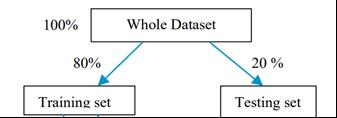
Considering an 80:20 ratio, the complete dataset is categorizedintotrainingsetandtestingsetrespectivelyas perrequirements.Inthewakeofimplementingseveraltypes ofsupervisedlearningsystemssuchasrandomforests(RF), SVM, and AdaBoost, a system to predict ASD could be put intoplace.
3.4 Evaluating the prediction model
Inadditiontoassessingaccuracy,sensitivity,specificityand precision, the proposed model was also tested using the leave one outstrategyontheAQ 10dataset.Aspartofthe validation process, field observations were conducted at variousplacesusingformstocollectover189ASDcasesand 515caseswithoutASDfromaspecialeducationinstitutefor peoplewithspecialneeds.
3.5 Developing a flask application
the end, a flask application has been developed specificallyforthegeneralpublic.Theuseranswersclosed endedquestionstoreceivearesultwith
toautism
4. DEVELOPING THE PREDICTION MODEL
Data was split into two portions, one to train on and the othertoteston:80:20.Fortraining,80%ofthedataisused, andfortesting,20%isused.Algorithmswerecreated,and their accuracy was tested to generate autism trait predictions.RandomforestisusedforimplementingtheASD predictive system after completing several types of supervised learning, including random forests (RF), SVM, AdaBoost.
Initially, the SVM algorithm was used to predict an individual'sautismtraits.RandomForestwasimplemented for further improvement. Finally, the Random Forest classifier was tweaked to improve results, and the best results were obtained using the AdaBoost algorithm. The followingarethe3algorithmsused:
4.1 Prediction model based on SVM
ASVMmodel(Supportvector)ismachinelearningmethod usedfor regression and classification that study andexamines data. SVM is a supervised learning method whichdivides the data intotwo groups based on the hyperplaneNdimension.Nrepresentsthetotalofdifferent featuresusedtoclassifythedatapoints.
4.2 Prediction model based on Random Forest
The best predictors from a subset of predictors chosen at randomareusedtospliteachnodeinarandomforest.This seeminglyparadoxicalmethodoutperformsotherclassifiers suchasSVM,andneuralnetworks.RandomForestclassifier was used to improve the model's accuracy. The algorithm canbedividedintotwostepsinthiscaseaswell:producing randomforestandclassifyingtestdata.
4.3 Prediction model based on AdaBoost
OneofseveralboostingalgorithmsAdaBoostisfirstboosting algorithm in solving practices. It is used to merge several "weakclassifiers"intoone"strongclassifier." Weakclassifiersareintroducedonebyoneandtrainedona weighteddataset.Aftercreatingapredeterminednumberof weaklearners(auserparameter),theprocessisrepeated until the training dataset cannot be improved anymore. AdaBoostisfrequentlyreferredtoasthebestout of the box classifier(withdecisiontreesastheweaklearners).
5. EVALUATING THE PREDICTION MODEL
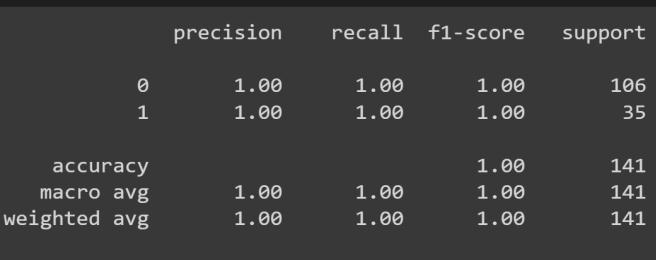
TheresultsoftheAdaBoostAlgorithm
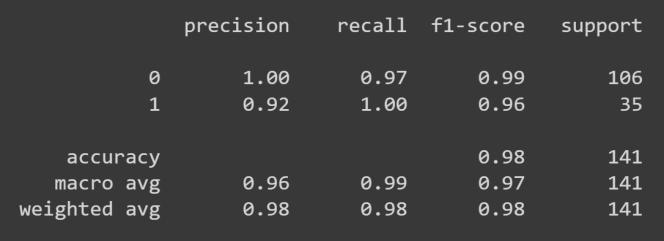
Theresultsof theRandomForestAlgorithm
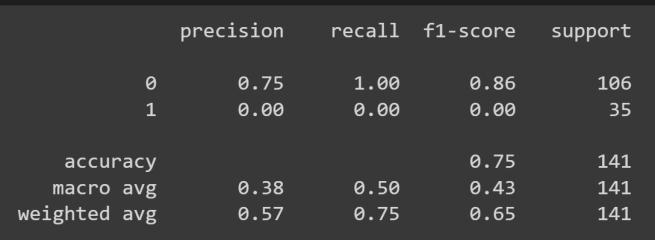
Theprecision,recall,supportandf1 scoreoftherandom forestsalgorithmareshownintheabovefigure.
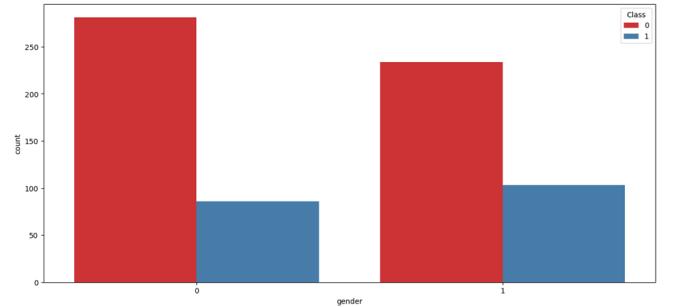
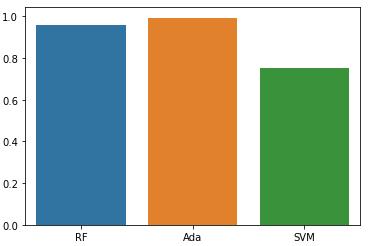
AdaBoostalgorithmofferstheadvantageofpredictingmore accurateresultsandhasbetterperformancethanthecurrent framework.Theabove bargraphrepresentsthewhetherthe personisautisticornotwithrespecttothegender TheresultsoftheSVMAlgorithm
6. DEVELOPING THE FLASK APPLICATION
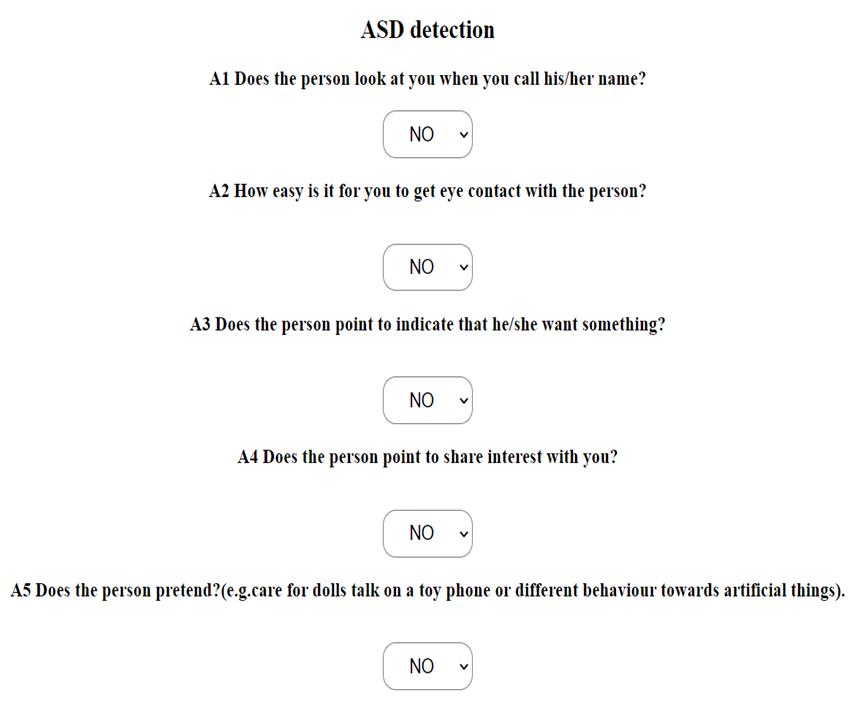
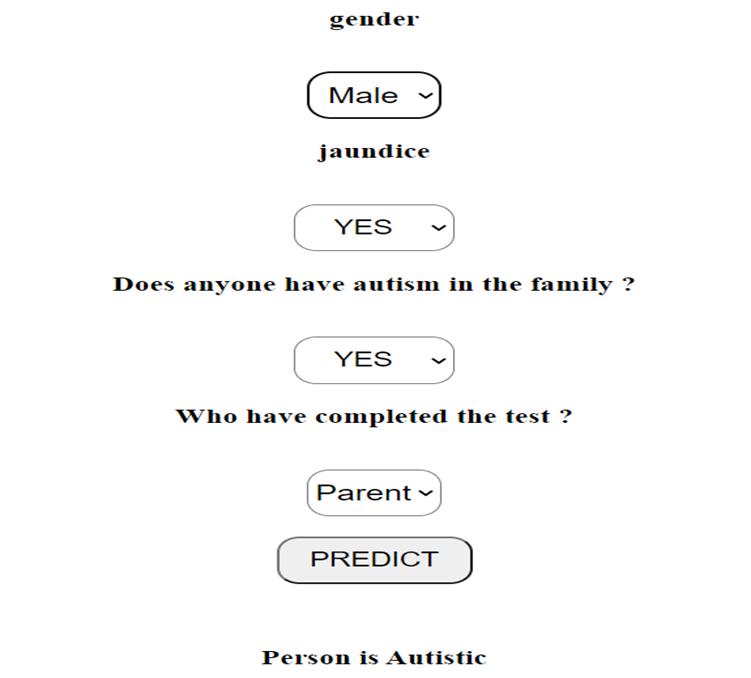
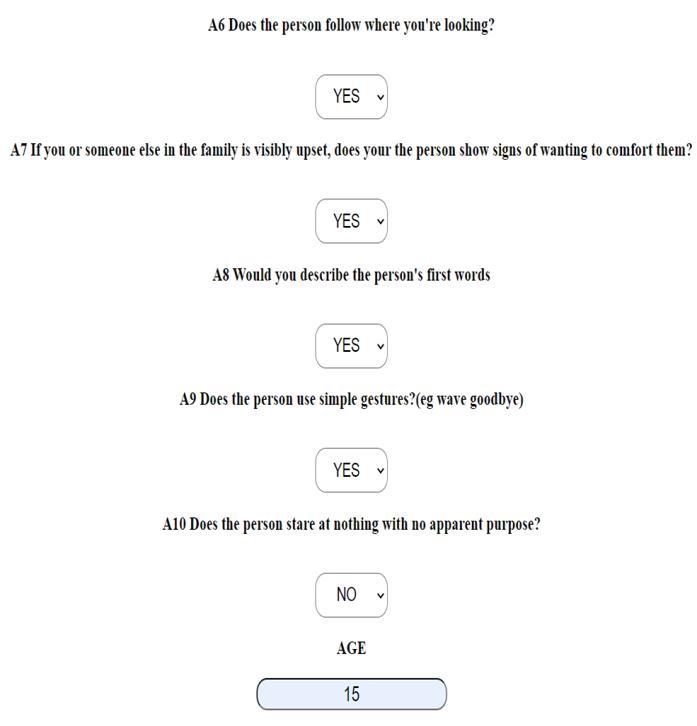
Inordertomaketheapplicationuser friendly,theRandom Forestalgorithmwasintegratedwithflaskintoascreening web application Based on the AQ 10 characteristics and some other inputs, various questions were asked for differentagegroups.Accordingtotheinputtedanswersby the user, the application indicated whether the person is autisticornot
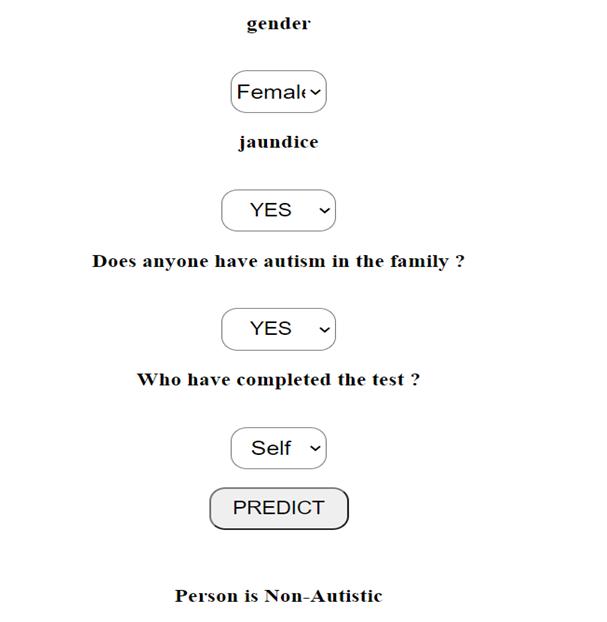
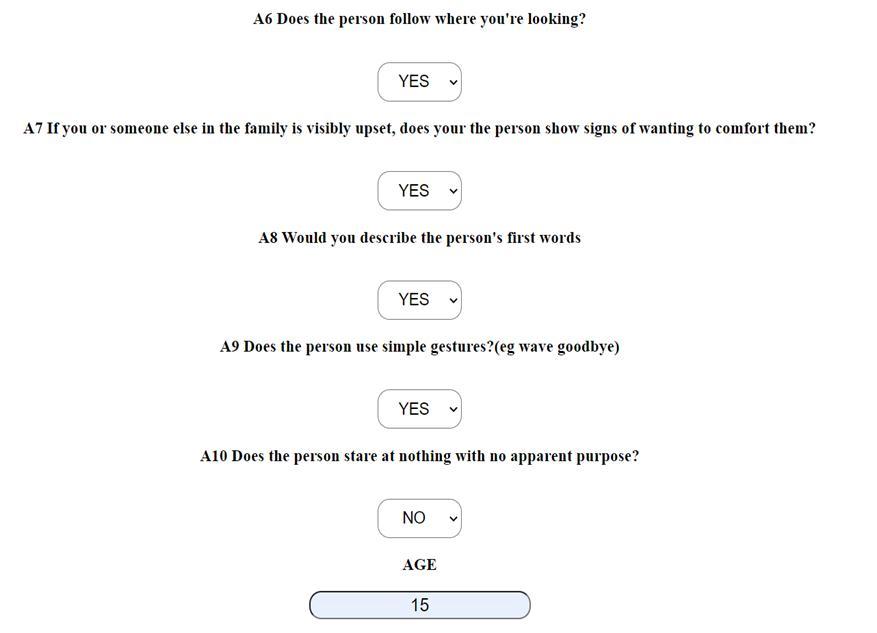
Testcase1:ObtainingpersonisNon Autistic:
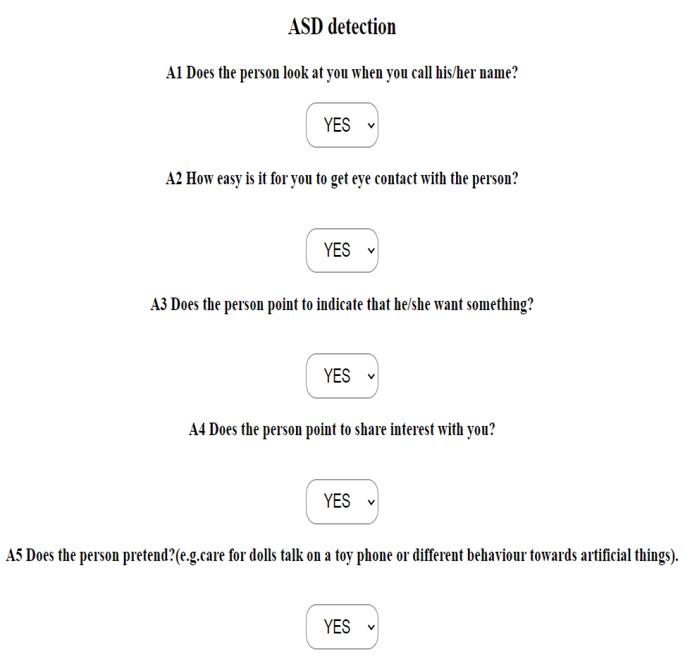
Testcase2:ObtainingpersonisAutistic:
7. DISCUSSIONS AND CONCLUSIONS
The dataset for this study was gathered from the UCI Repository,whichisopentothepublic.DatasetName ASD Screening Data for Adult, Attribute Type continuous and binary,NumberofInstances 704.Thedatasetincludes16 parameters,thefirst10questionscontainthebehavioural characteristicsofthepersonbasedoncommunicationand socialinteraction.Nextparametersaregender,age,person bornwithjaundice,anyfamilymembercontainingautism andwhocompletedthedataset.Thequestionsaregraded using a one point scoring system for each of the ten questions.Oneachquestion,theusermightearn0or1point depending on their response. The entire dataset has been dividedintotwosections,onefortrainingandtheotherfor testing,usingan80:20ratio.Algorithms werecreatedand theiraccuracywastestedinordertogenerateautismtrait predictions. With the adoption of many machine learning
algorithms such as RF, SVM, and AdaBoost. The implementationoftheASDpredictivesystemwasproposed usingrandomforest.UsingtheAQ10datasetandreal world data, the proposed predictive model was assessed for efficiency,specificity,andprecision.OntheAQ 10dataset, theleaveoneouttechniqueisusedtotesttheperformance of the suggested model. Using the AQ10 dataset and real worlddata,theproposedpredictivemodelwasassessedfor accuracy, correctness, validity, efficiency. A total of 704 recordswereexamined,with189beingidentifiedasautistic, accountingforaround26.85%ofthetotaland515records areidentifiedasnon autisticaccountingfor73.15%.
8. Limitations and Future Work
Thekeyconstraintoftheprojectistheabsenceofsufficient informationtodevelopthepredictionsystem.Ournextsteps willbetocollectmoredata fromarangeofresourcesand improve the efficiency of the proposedmachine learning classifier.
Inourfuture endeavors, wewouldliketoaddaudioasan outputtoour developed flask applicationtomakeit more reliableforusers.
9. REFERENCES
[1] A Study on Autism Spectrum Disorders using ClassificationTechniques.M.S.Mythili,A.R.Mohamed Shanavas
[2] M.Searchingforaminimalsetofbehaviorsforautism detection through feature selection based machine learning.JAKosmicki1 ,VSochat2 ,MDuda3 ,DPWall3
[3] N. S. Khan, M. H. Muaz, A. Kabir, and M. N. Islam, “Diabetespredictingmhealthapplicationusingmachine learning,”in2017IEEEInternationalWIEConferenceon Electrical and Computer Engineering (WIECON ECE). IEEE,2017,pp.237 240.
[4] D. P. Wall, R. Dally, R. Luyster, J. Y. Jung, and T. F. DeLuca, “Use of artificial intelligence to shorten the behavioraldiagnosisofautism,”PloSone,vol.7,no.8,p. e43855,2012.
[5] D.Bone,S.L.Bishop,M.P.Black,M.S.Goodwin,C.Lord, and S. S. Narayanan, “Use of machine learning to improveautismscreeninganddiagnosticinstruments: effectiveness,efficiency,andmulti instrumentfusion,” Journal of Child Psychology and Psychiatry, vol. 57, 2016.
[6] D. Bone, M. S. Goodwin, M. P. Black, C. C. Lee, K. Audhkhasi, and S. Narayanan, “Applying machine learning to facilitate autism diagnostics: pitfalls and promises,” Journal of autism and developmental disorders,vol.45,no.5,pp.1121 1136,2015
Use of machine learning to improve autism screening and diagnostic instruments: effectiveness, efficiency, and multi instrument fusion. Daniel Bone,1 Somer Bishop,2 Matthew P. Black,3 Matthew S. Goodwin,4 CatherineLord,5 andShrikanthS.Narayanan
[8] C. Allison, B. Auyeung, and S. Baron Cohen, “Toward brief“redflags”forautismscreening:theshortautism spectrumquotientandtheshortquantitativechecklist in 1,000 cases and 3,000 controls,” Journal of the American Academy of Child & Adolescent Psychiatry, vol.51,2012.
[9] F. Thabtah, “Autism spectrum disorder screening: machinelearningadaptationanddsm 5fulfillment,”in Proceedings of the 1st International Conference on MedicalandHealthInformatics2017.ACM,2017.
[10] F.HauckandN.Kliewer,“Machinelearningforautism diagnostics:Applyingsupportvectorclassification.”
[11] B. van den Bekerom, “Using machine learning for detectionofautismspectrumdisorder,”2017.