Volume: 09 Issue:
Engineering and Technology (IRJET)

| Apr 2022 www.irjet.net

Volume: 09 Issue:
Engineering and Technology (IRJET)
| Apr 2022 www.irjet.net
e ISSN: 2395 0056
ISSN: 2395 0072
Tushar Suvarna1 , Aditya Mali2 , Purushotham Panasa3, Sanmitra Kamble4, Mahalaxmi Palinje5
1,2,3,4B.E. Student, Dept. of Electronics and Telecommunication, Atharva College of Engineering, Mumbai, India
5Professor, Dept. of Electronics and Telecommunication, Atharva College of Engineering, Mumbai, India
***
Abstract Modern cities of today have developed multiple means of transportation including buses, trains, metros, etc. Now each public transport system has their own ticketing system and it becomes a hectic process for commuters to manage separate smart cards or apps for every transport medium. A smart approach is needed that integrates all these systems together and allows for a centralized system for all transportation mediums. Furthermore, in developing and under developed countries in any public transportation printed tickets are still in use, once the commuter reaches his/her destination, the ticket is of no use and is eventually thrown away leading to huge paper wastagewhicheventually leads to deforestation.
Key Words: RFID,publictransport,commuter,bus,ESP32, Node.js,MongoDB,IoT.
Thefollowingprojectisanupgradeforourpublictransport. Smart ticketing system for public transport is a project to bringalltheticketingmethodstoonesingleplatformorone singlecard.AsinglecardcanbetappedattheRFIDmachine and one needs to enter the travel details via the keypad provided after which the ticket will be sent on your smartphoneviaSMS.Aparticularappisdevelopedforthat hasa guardianorparental control whichcangiveyouthe locationofthecardholder,asafetyfeaturefortheusers.As alltheticketingmethodareunitedintoonesingleformthe queuelineswillalsohavedetractedtimefortickets.Asthe ticketsaree generatedthepaperusagewillalsotakeabig tolloffyoucanneverloseaticketandyouwillalwayshavea recordofwherehaveyoubeen.
Ourcurrentticketingsystemforpublic transportstilluses paperticketsexceptformetro.Recently,BESTstartedacard systemformonthly,quarterly,andyearlypasses. Butasper BESTadministrativesourcesthissystemhasbeenconceding loss since the past few years especially from the start of COVID 19 pandemic. Reason behind the failure is that commutershavetogotothespecificbusdepotstorecharge the card. At the end of every month there is a long queue outsidebusdepotstorefillthepass.AsCOVID 19situation startedinourcountryeverypublictransporthasconceded economicloss.BESThasconcededmorelossesinthistime
Factor
compared to the last 5 years and therefore most of BEST depotshaveshutthepasssystem.
In [1], Meet et. al. proposed a ticketing system for bus transportthatprovidedpassengerswithareal timelocation of the bus to save their time which would otherwise be wastedwhilewaitingforthebus.Also,thehugeamountof paperwastegeneratedbyprintedticketscanbeavoidedas their system provides tickets to passengers digitally. The analysiscreatedbasedonasimulationoftheirsystemcan helpthebusmanagementwithproperplanningofthebus schedule.Busmanagementcanusethisanalysistogenerate relevant data suchas thefrequency of passengers oneach day,peaktimesandthemostusedroutewhichwillhelpthem inplanningthebusscheduletofulfilpassenger'sdemandas wellasingeneratingrevenue.
In[2],Shreyaetal.proposedaSmartticketingsystemusing RFID to make bus journeys paperless. In the paper, they mention thatafter passengers reach their destinationthey throwtheticket,asitisofnouse.Toovercomethisissuethe authors proposed a system in which they used RFID microcontrollers ArduinounoandRaspberryPi.Thereader systemalongwiththeGPSmoduleisattachedattheentry andexit.Whenthepassengerenters,hehastotapthecardat the reader, the RFID reader reads the card and the GPS modulerecordstheexactcoordinateswherethepassenger boardedthebus.Atthedestinationthepassengerhastotap again,thenonthebasisofthedistancetravelledthefareis calculatedandthefarewillbedeductedfromtheRFIDcard.
In [3], Telugu et. al. proposed a ticketing system using microcontroller and IoT, demonstrated with a laboratory prototype.Thissystemcanbeusedtotravelinanymodeof transportationlikeBus, Trains,andMetrosusing onlyone smartcard.Thesystemistestedforfunctionslikedetecting andauthenticatingthesmartcardandforticketpurchasing. Also, it reduces the major source of financial loss due to printing of tickets on paper. The author also aimed to fabricate the system as an industry model and planned to extenditsapplicationtoanyauthenticatedtransportbilling system.
In [4], Pavan et al. proposed a bus ticketing system using RFID to digitalize the ticketing system which will be comfortable for passengers as well as workers and to overcome challenges such as security, unreliability and malfunctioningissues.Theautomatedticketingsystemwill be kept inside the bus. After tapping, the reader scans the cardanddisplaysthenameandtheboardinglocationwhich will be stored in the database. Then a 4 digit pin will be
9001:2008
Volume: 09 Issue: 04 | Apr 2022 www.irjet.net
asked. If the pin entered matches, then only the user is allowedtoaccessthecard.Afterthepinverification,theuser hastoenterboardinganddestinationpointsandthenumber of persons. After getting offat the destination the selected pointwillbechecked.Aftercheckingboardingandselected destination coordinates, the fare will be calculated and deductedfromthecardbalance.
In[5],Amanetal.proposedaBusTicketGenerationSystem whichisbasedonRFIDandIoT.Theirmaingoalistoreduce theconfusionaboutfaresandpaythecorrectamount.The project is implemented using an RFID card, Arduino and servomotor.Theauthorsexplainthattheticketgeneration willbekeptattheentranceofthebus.Thepassengerhasto tap the card on the reader and select the destination. The amount will be calculated and will be deducted from the balance.Afterdeduction,thebusdoorswillbeopenedfor30 seconds.Usingtheservomotorthedoorswillopenandclose. The Wi fi module is used for wireless transactions of data betweenthesystemandthedatabase.
In[6],Bhumiketal.madeabusticketingsystemusingRFID to avoid paper pollution and the money change causes quarrelsamong passengersand conductors. In addition to this,asthecrowdkeepsonincreasing,theconductorisnot abletomovethroughoutthebus7 10times.So,theauthors placedtheRFIDreadersattheentranceandexitofthebus TheuserhastoplacehisRFIDcardonthereaderandselect thesourceanddestination;theamountwillbedeductedand theavailablebalancewillbeshownonthedisplay.
In [7],Prafulla et. al.presented a fully automated, reliable, transparentandconvenientsystemforticketingwhereGPS wasusedforthedistancemeasurementandfarecalculation. They proposed a universal travel pass card that allows transportation on any route. Since fare calculation is done through proper distance measurement using GPS, fare is crystalclearandprovidesnoroomforconfusion.Theyalso createdadatabasefortravelerswhichcouldbeaccessedvia theinternetusingaUSBmodem.
e ISSN: 2395 0056
p ISSN: 2395 0072
NodeMCU ESP32
NodeMCU ESP32 consumes less power and it is less expensive than other microcontrollers. It comes with an inbuiltWi Fimoduleandhasadual modeBluetooth.Ithas integrated antenna switches, filters, power management modules, low noise receive amplifier and a RF balun. ExpressifSystemsisthecompanythatdevelopedtheESP32 and TSMC is the company that manufactures ESP32. With high speedcaches,theSRAMandtheexternalQSPIflashis accessed.IntheCPUcodespace,a16MBofexternalflashare memory mapped and an 8 bit, 16 bit and 32 bit access is supported.IntheCPUdataspace,an8MBofexternalSRAM arememorymappedandan8 bit,16 bitand32 bitaccessis supported.
RFIDReaderisnothingbutaRadioFrequencyreceiverand transmitterwhichreadandwriteinformationontoaRFID tag.RRC522isa13.56MHzRFIDcardReadermodule.Itisa verylow costreaderanditisbasedonMFRC522whichis veryeasytouseonlargevarietyofapplications.Thiscompact sizereadandwritechipisdesignedbyNXP.
A20x4LCDmeansitcandisplay20charactersperlineand there are 4 such lines and each of the characters are displayedina5x7pixelmatrix.Ithastworegisters,namely, dataandcommand.
I2C module consists of an integrated PCF8574 chip which converts I2C serial data to aligned data for the LCD display.Contrast on the LCD display can also be adjusted usingthismodule.
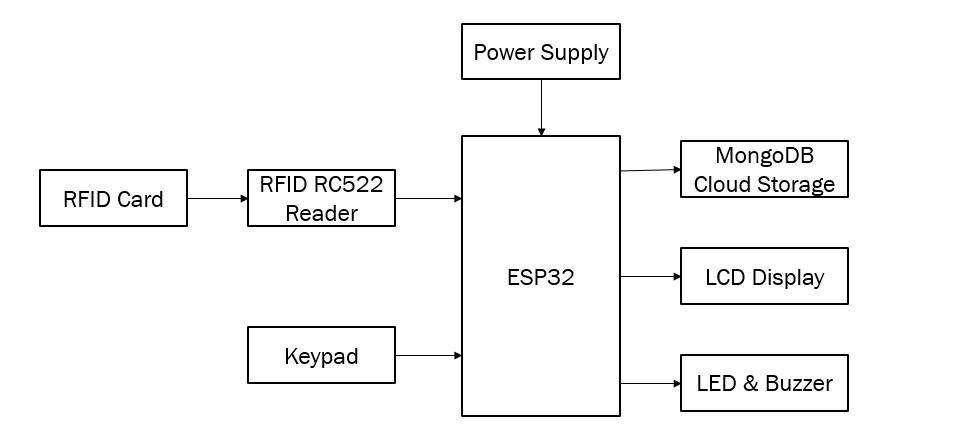
Ifwelink16buttonstothemicrocontroller,theneachbutton takes 1 GPIO pin. But with matrixkeypad, we only need 8 pins. The keys at each of the rows are connected to a pin calledROWpin,namely,R1,R2,R3,andR4
Node.jsisabackendJavaScriptruntimeenvironmentwhich runsontheV8engine.Itisanopensource;crossplatform JavaScript runtime environment that executes JavaScript codeoutsideawebbrowser.Node.jsrepresentsa"JavaScript everywhere"paradigmandadevelopmentaroundasingle programminglanguage,ratherthandifferentlanguagesfor serversideandclient sidescripts.
09
Express.js,abackendwebapplicationframeworkforNode.js is used for creating servers. It is an open source software under the MIT license, programmed for creating web applicationsandAPIs.
MongoDBisusedforcreatingandmanagingthedatabase.It isasourceavailablesemistructureddatabaseprogram.Itis developed by MongoDB Inc. and it is authorised under Server SidePublicLicense.
ReactNativeisusedforcreatingApps.Itisanopensource anduserinterfacesoftwareframework.Itdevelopedbythe FacebookInc.WecandevelopAppsforiOS,MacOS,Android, Android TV, Windows and UWP by using the React Frameworkalongwiththenativeplatformcapabilities.
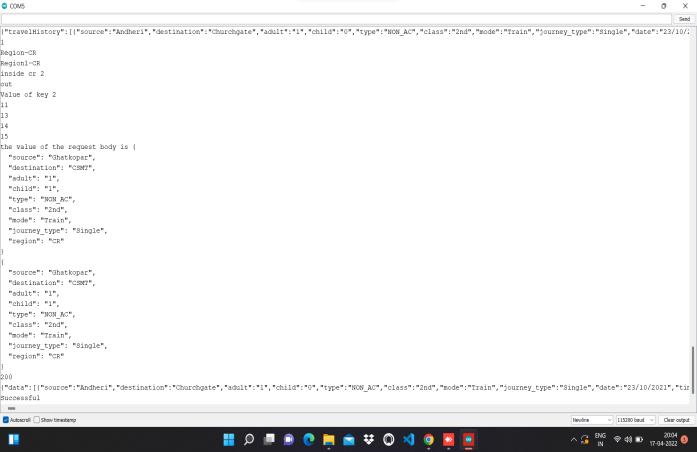
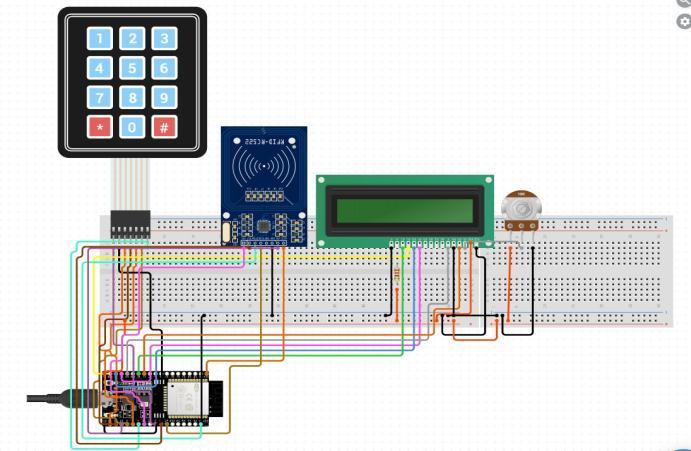
Rightsidepins
RFID
Keypadconnection:
LCDconnection:I2C,SCL D22,SDA D21,VCC 5V,GND GND
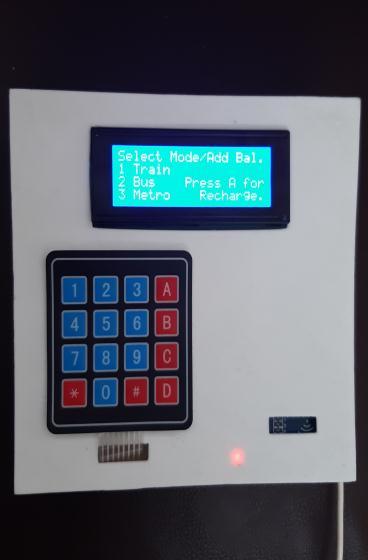
In the next 10 years, 3D printing technology will revolutionize manufacturing processes worldwide. This technologyhelpsinmakingthedeviceslightweightandeasy tohandle.Ourwholeticketingsystemisfixedin3Dprinted
(IRJET)
e ISSN: 2395 0056
p ISSN: 2395 0072
enclosuremadeofPLA(Polylacticacid)filament.PLAisoften compared with ABS plastic but the later one has an upper handinpreference.PLAplasticiseco friendlyandrequires lessenergytoprocessandmakesitbettertoutilize.
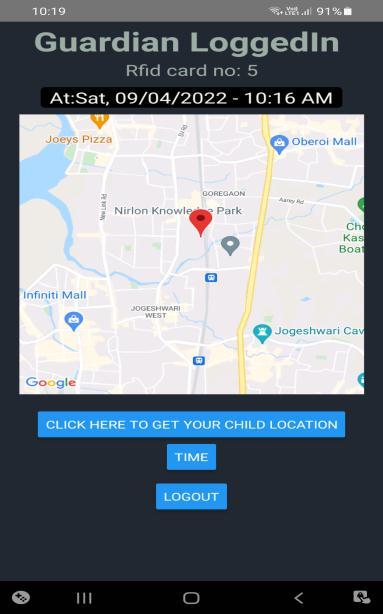
Theproposedsystemwithticketsbeinge generatedandsent to passenger via SMSeludes the daily problemsof printed tickets being of no use once the passenger reaches the destination,anditbeingeventuallythrownawayleadingto pollution.Also,anaddedfeatureoftheproposedsystemisan app with a parental guardian approach using which the commuter’s guardian can be alerted about his/her whereaboutsusingGPStracking.
Fig 3:Successfullypurchasedticketusingoursystem Fig 4:Hardwaresystemenclosedina3Dprinted enclosureThus, we were able to design and implement a smart ticketingsystemthatintegratesallpublictransportsystems togetherandallowsforasinglemastercardandacentralized systemforalltransportationmediums,ensuringaseamless ticketing experience for commuters and also ensuring the safetyandsecurityofcommuters.
Thispaperprovidessolutionforpassengersaswellas the transport system by making the ticketing system smart, ensuringaseamlessticketingexperience.Thissystemworks on NodeMCU ESP32 that comes with an integrated Wi Fi modulethatcostslesscomparedtoothermicrocontrollers thusreducingtheoverallcostoftheentiresystem.Theaim ofthispaperwastogiveabriefinformationaboutpaperless ticketingsystemforpublictransportthatintegratesallthe threemajormodesoftransports.
[1] MeetJShahDept.ofinformationTechnologySt.Francis Institute of Technology Mumbai, India meetshah133@gmail.com, Rajesh P Prasad Dept. of Information Technology St. Francis Institute of TechnologyMumbai,India,AashutoshSSinghDept.of Information Technology St. Francis Institute of TechnologyMumbai,India.
[2] Shreya Andhale, Nirmayee Dighe, Akanksha Kore,Darshana Gaikwad,Jayasudha Koti Dept. Electronics and Telecommunication Engg. St. Francis InstituteofTechnology,UniversityofMumbaiMumbai, India
and Technology (IRJET)
e ISSN: 2395 0056
ISSN: 2395 0072
[3] TeluguMaddileti,DepartmentofECM,SNIST,Telangana, India. R.K. Pongiannan, Dept. of EEE, SRMIST, Kancheepuram,Tamilnadu,India.V. KranthiSaiReddy, Department of ECM, SNIST, Telangana, India. V. Sai Jahnavi,DepartmentofECM,SNIST,Telangana,India.S. Prathima,DepartmentofECM,SNIST,Telangana,India
[4] Pavan Telluri, Sara deep Manam, Jayashree M Oli Department of Electronics and Communication Engineering,AmritaSchoolofEngineering,Bengaluru, AmritaVishwaVidyapeetham,India.
[5] Aman Kaushik1, Kumar Sanu2, Kajol Singh3, Aayush Raj4, Sumitra Kumari5 1Assistant Professor, AIT CSE, Chandigarh University, Mohali, Punjab, India 2,3,4,5Student,AIT CSE,ChandigarhUniversity,Mohali, Punjab,India
[6] Bhumik Patel Department of Computer Engineering, University, Mumbai, Palghar, India., Parthvi Pandey Department of Computer Engineering, University, Mumbai,Palghar,India,DurveshV. SonarDepartment ofComputerEngineering,University,Mumbai,Palghar, India, Tina D’abreo, Department of Computer Engineering,University,Mumbai.
[7] Prafulla P S Dept. ECE BGSIT, Nagpur, Kalavathin S N Dept. ECE BGSIT, Nagpur, Hema K J, UG student Dept. ECEBGSIT,Nagpur
[8] SunithaNandhini.A1,Sangeetha.G2,VidhyaJanani.J3 Assistant Professor,Department of Computer Science and Engineering,Sri Krishna College of Technology, Coimbatore.
[9] KarthikaJ,VarshanapriyaaS,SaiHaranS,SuriyaPrakash C AssistantProfessor,DepartmentofEEE,Sri Krishna CollegeofEngineering&Technology,Coimbatore,Tamil Nadu UG Student, Department of EEE, Sri Krishna CollegeofEngineering&Technology,Coimbatore,Tamil Nadu.
[10] ADr. V.Geetha,AssistantProfessorinCSEDepartment, SCSVMV Deemed to be University. Dr. C.K.Gomathy, Assistant Professor in CSE Department, SCSVMV Deemed to be UniversityNirnipreetham, UG Scholar CSE Department, SCSVMV Deemed to beUniversity Ponugotipavankumar, UG Scholar CSE Department, SCSVMVDeemed to be University.
[11] Varun Kaushik 7th semester, Electronics & CommunicationR.VCollegeofEngineeringBengaluru, India, Suhas P 7th semester, Electronics & CommunicationR.VCollegeofEngineeringBengaluru, India
[12] Dr.VinitKotak,“RFID basedbusticketingsystemusing androidandGTFS”,InternationalJournal ofAdvanced
Fig -5:Commuter’slocationaccessedbyguardianInternational Research Journal of Engineering and Technology (IRJET)
Volume: 09 Issue: 04 | Apr 2022 www.irjet.net
ResearchinComputerandCommunicationEngineering (IJARCCE)Vol.5,Issue3,March2016.
[13] V.Apsara,“RFIDbasedbusticketingsystemforPublic Transport System (PTS)”, International Journal of Industrial Electronics and Electrical Engineering (IJIEEE)Vol.4,Issue5,May2016.
[14] Mr. Mohammad Osman, “Enhancement of Public Transportationservicesusingwirelesstechnologieslike Zigbee, RFID, GSM and GPS”, International Journal of EngineeringTrendsandTechnology(IJETT)Vol.6,No. 7,December2013.
|
e ISSN: 2395 0056
p ISSN: 2395 0072
9001:2008