ISSN: 2395 0056
ISSN: 2395

ISSN: 2395 0056
ISSN: 2395
Aditya Singh1 , Akash Salvi2 , Kaushal Pawar3, Aayush Prabhu4 , Dnyaneshwar Bavkar5
1,2,3,4Computer Engineering, Terna Engineering College, Nerul, Maharashtra, India
5Assistant Professor, Dept. of Computer Engineering, Terna Engineering College, Nerul, Maharashtra, India

Abstract Blockchaintechnology anditsusecasedomains are growing rapidly due to the features and benefits offered over the existing systems. These features include decentralization,immutability,completetransparency,faster traceability,enhancedsecurityandtrust,automationwithout human involvement, and increased efficiency and speeds. These features are beneficial to many industries including supply chains, banking and financial sector, healthcare and pharmaceutical sector, governments, and insurance companies. The handling of patient records has been a recurrent issue in the healthcare sector as it is difficult to implement the right privacy and security measures in the existing systems. Data breaches, cyber attacks, and identity theft are major threats in today's digital environment, and existing solutions have proven ineffective at managing these challenges. The threat of a single point of failure also looms overtheexistingcentralizedsystems. Ourresearchintends to address concerns with existing systems for accessing, managing, and securing health record data and offer a blockchain basedalternativeforstoringandretrievinghealth information. Ethereum blockchain platform is used to implement the data structure of our system. We also discuss the trade offs in the adoption of blockchain technology.
Key Words:Blockchain,Solidity,IPFS,Healthcare,Smart Contracts, Ethereum, Decentralization, Secure transactions, Transparency
In recent years, medical practices have grown in prominence, with the primary goal of addressing ways to improve an individual's quality of life. In this data driven environment,informationsystemsarealsobecomingmore important, as they can improve access to healthcare and business. Users can easily access their data thanks to the rapiddevelopmentoftechnologieslikeinformationsystems andcloudcomputing.Usersaremorethanoftenconnected totheinternetwithalltheinformationtheyrequirebeinga clickaway.Thetraditionalhealthcaresystemismoredoctor centric.Allthemedicalreportsarestoredbythehealthcare institutionsormedicalprofessionalsintheformofphysical ordigitalfiles.Theseinstitutionsuseacentralizedrepository for storage which could become a cause for concern in maintainingprivacy,accessibility,andsecurity.
Inthehealthrecordmanagementsystem,informationfrom multiplesourceslikeprescriptions,medicalprognosis,and scans. This type of sensitive information is critical to patients’treatment.Currently,physicalfilerepositoriesand centralized databases are used to store this critical information.These methods arepronetoa singlepoint of failureissue.Anotherissueistheinter accessibilityofthese recordsasapatientmayvisitmultipledoctorsindifferent medical institutions and it may not be possible for two differententitiestosharethepatientrecords.Thesesystems shouldalsobetamper proofandonlyauthorizedindividuals should be able to access and change the records. The authorizedindividualsareusuallyfrommedicalinstitutions butthisbecomesareprivacyandsecurityissueindividuals arepronetoerrors.Maintainingatimelineofreportsisquite difficulttoachieveinthesesystems.Apersonalledgercould maintainatimelineofreportswhichwouldstreamlinethe processofdiagnosis.
The proposed solution to these problems is a blockchain basedelectronichealthrecordsystem.Ablockchainprovides features that could solve the existing issues in the health record systems. The proposed system is user centric and decentralized which also means no single institution is in chargeofmaintainingthesystem.Ablockchainisapublic database this is up to date and shared throughout many computer systems in a community. This increases the accessibilityandtransparencyofthesystem.Inthepersonal blockchain, the best recognized and identifiable set of members are explicitly admitted to the blockchain community.Thisreducesthepresenceofmaliciousactorsin thecommunity.Asthedataaresavedinablockchainthat's programmed to be permissioned, the information may be verysecureandguardedagainstanytriestotamperwithit. Theinformationmaybedecentralizedandcouldallowthe person to clean and rapidly get the right of entry to their personalinformation.Theblockchaincouldbeverystablein storinghealthcarepersonalfilesduetothefactifaperson attempts to tamper with one block, all of the different determine blocks need to be modified for this reason and complywiththis.Hackingablockchaincommunityisn'tany cleantask,itrequirestremendouscomputationalelectricity thatcanfailiftheinformationitselfisencrypted.Hencethe proposed systemcan providea viable solution forstoring thehealthrecordsofapatient.
9001:2008
Thecurrentsystemofsharingmedicalrecordsisassuchthat theyarefeasibleandcompatiblewithinaspecificinstitution only. They can use their private networks in which the patient documents can be circulated between different departments. But this situation is not always ideal as a patientdoeshaveunexpectedlychangingbehaviorwhenit comes to their health. It becomes a crucial necessity that suchreportsareinteroperableandformatsunderstoodby multipleinstitutionsparticipatinginthemedicallifecycleof apatient.Presentlymajorofhealthcaredatadependsonthe interactionbetweenthemedicalprofessionandthepatient, andlessimportanceisgiventothedataanalysispartforthe diagnosis.Thismakessuchprocedureslonganddifficultand is not welcoming to the patient. The presence of a complicatedmedical onboarding processalsodiscourages the participation or active check ups by people who then reachouttoinexperiencedandunprofessionalopinions.
The amount of data generated related to healthcare is massive and needs proper collection and management. Patients have multiple doctors and physicians and the medical reports are scattered and non standardized. In currentsystems,themedicalreportsrelyondoctor patient interactions,andthesereportsarescatteredacrossdifferent systemsmakingthedatalesssecureandlessreliable.Even now in some cases, medical institutions use handwritten reports and physical files for managing patient data. This method of data management is very unreliable as human mistakes happen while forming reports and files could be lost and misplaced in poorly managed file repositories. Properandtruthfulrecord keepingisrequiredalongwith compatibilityofdataacrossdifferentsystems.
Awhitepaperinearly2009,thenotionofblockchain began to garner public interest, resulting in the first extensiveapplicationofblockchain,adigitalcurrencyknown as Bitcoin[1]. They envisioned an online transactional systemthatwouldallowuserstosenddigitalcurrenciesto one another without the requirement of a financial intermediary. Peer to peer transactions enable decentralization,andalltransactionsarecryptographically hashedtoprovidehighlevelsofsecurity.Alltransactionsare recorded on a distributed ledger network, which ensures thattheyaretransparent.
Many blockchain based platforms for decentralized applicationsbegantoemergeasthepopularityofblockchain technologyanditspossibleusesexpanded,oneofwhichwas Ethereum[2]. Due to the rapid development enabled by blockchain platforms like Ethereum, the applications of blockchain beyond digital currency are diverse and ever growing.
Anelectronicmedicalrecordsystemthatmakestheuseof InterPlanetaryFileSystemtostoreandretrievedatawith
correspondinghashandencrypteddatafordecentralization andtheencryptedkeywordinformationofthemedicaldata is stored on the Ethereum blockchain[3]. This method of storage helps reduce the load on the blockchain as high frequencyaccesscanbestressful.Itismuchmoreefficientin termsoftheresourcesused tostoresuchlargeamountof datainInterPlanetaryFileSysteminsteadoftheblocksin theblockchain,asthemedicaldatacanhavelargesizedfiles forwhichablockchainisnotsuitableasastorageservice, insteaditshouldbeusedforrecordingthetransactionsand filelocations[4].
To mitigate the raised privacy concerns in existing and centralizedhealthrecordsystemsandtheneedforprivacy mechanismsinhealthrecordsystems,blockchainduetoits immutability and irreversibility is a potential solution for incorporatingprivacyandsecurityinhealthrecordsystems butitalsocomeswithitsdrawbacks[5].
ProposalsforaprivateblockchainbasedontheEthereum protocol, where sensors communicate with smart devices whichinvokesthesmartcontractsthatwriterecordsonthe blockchain were made[6]. This provides real time patient monitoringandkeepsasecurerecordofpatients’data.This also resolves the security problems related to sending notificationstothepatientinaHIPAA compliantmanner.
It becomes important for the patient to have the access controlovertheirhealthrecords.Suchproposalsweremade touseanEthereumblockchainsolutionthatwillusesmart contractstoensurethetrustfulandsecureaccessofdataby thepatientandotherconcernedentitiesinvolvedwiththe treatment[7].
There are already conducted systematic reviews of blockchain technology applications in the healthcare industry. In conclusion, a large number of healthcare application prototypes are being developed using the blockchainplatform,andthenumberofpublicationsinthis fieldhasincreasedinrecentyears.Blockchainisstillafield inwhichmoreresearchisneededtodetermineitsutilityin healthcare[8]. For a better use of the blockchain storage structurewhichprovidestheadvantageofimmutability,it canstorethemetadataofthefilesandofthestoredmedical datawhereasthemedicaldatafilesitselfcanbestoredwith thehelpofDistributedHashTablesasitoffersdecentralized storageanddistributiveprocessing[9].
There are some limitations which are identified in this solution for storing the records in such applications. It includesthecost effectiveimplementationofprocessingand storingdatawhichwillbeonthechainandissuesregarding the scaling of the blockchain system even on a public ledger[10].
The concept of blockchain revolves around the system of DistributedLedgertechnology Itisadecentralizedgrowing chainofblocksthatarelinkedtogether.Thenewblockchain architectureisapeer to peernetworkthatwasintroduced withBitcoinin2008.Programmaticallythesecryptographic functionsarecalledHashfunctions. Suchfunctionsaim to taketheinputofarbitrarylengthandgenerateanoutputof fixedlength.Therearedifferenttypesofhashfunctionsused indifferentblockchainarchitectures.Forinstance,tomakea collision resistant cryptographic hash function Merkle Damgårdhashfunctionisused.Apracticalexampleofsuch willbetheSHA 256usedforBitcoin.Anotherwayisusing Spongeconstruction,andtheexamplewouldbeSHA 3used forEthereum.
Theledgerinablockchaincanbereplicatedandmaintained. In an event where one copy is edited, it should trigger a chain reaction that causes the other copies to update simultaneously[11]. This eliminates the requirement for anyoneelsetovalidateifthetransactionoccurredornot.
Thepurposeofthedevelopmentoftheblockchainwouldbe aboutdevelopingatrustlesssystemwherewecanprogram our ethical and legal practices in the smart contract and storetherulesofoperationontheledger.Thiswillhelpto mitigatethedoubtofhumanerrorinfollowingthecodeof conduct and ethics while interacting with the system as everyonewillhavetocometoacommonconsensus.These problems are countered when a certain practice has the support of a large population and is peer reviewed. Blockchainultimatelyreferstoachainofconnectedblocks thatstoresinformationaboutalltheactionsandtransactions thatareoccurringonthenetworkonwhichtheblockchain exists. It will contain information on current transactions andthehistoryofoccurred transactionsaswell[12].Each block is linked to the previous one by a hash code, which maybegeneratedbythealgorithmsusedbytheplatform, some of which are discussed above, and a new block becomes a part of this chain as soon as it is created.
Blockchainnetworkscanusepublickeyinfrastructure,such as Bitcoin, which uses the users' private and public key addresses to authenticate the user from their network connectedwallets.Allinformationblocksarestoredindisc space called nodes, which keep records of all network transactions and check the authenticity of any occurring transaction[13].
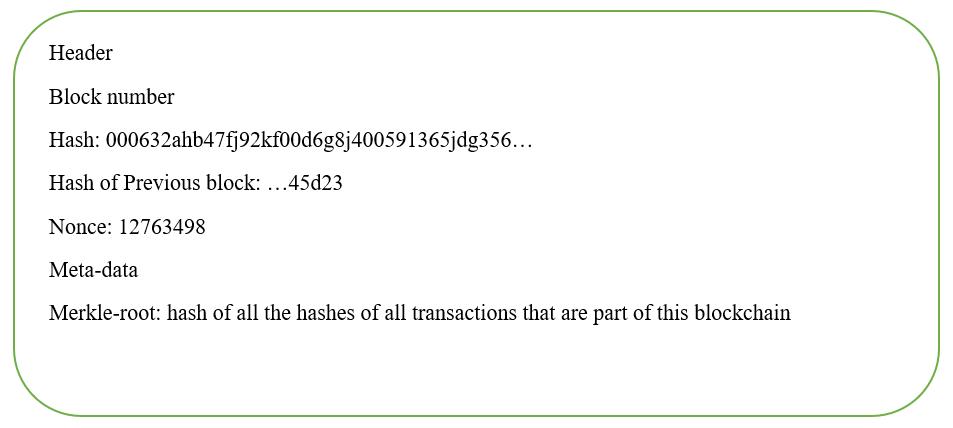
The transactions in the networks are chained with the previousblocktransactionsusingthehashofthepreceding block,andthisachievestheblockchain'simmutability[14].If an attacker tampers with the information stored in the blocksoverthenetwork,thelocalcopiesoftheblockswillno longerbevalidatedbecausethelinkingbridge,whichisthe
hash code, will be changed upon the execution of any transactiononthechainbythehashfunction.Inafurther development of the technology blockchain, second generation or blockchain 2.0 uses the concepts of smart contractswhicharejustscriptsofa codethatcanexecute itselfuponfulfilmentofacondition.Itishelpfulindomains of ownership, sharing data, and maintaining digital signatures. Blockchain uses the consensus mechanism to agreeonthetruestateofanode.

When data is added to the blockchain, it is encrypted, makingitimmutableanddifficulttodecipher.Itauthorizes transactionsusingapersonalidentificationkeyknownonly to the user. As a result, unlike current healthcare data technology, a healthcare provider would only be able to accessapatient'smedicaldataiftheyhadexplicitaccessto the blockchain record. Blockchain technology can keep patientinformationsafeandsecurewhileallowingthemto shareitwithanyserviceprovideroftheirchoice.Itensures the authenticity of anti counterfeiting techniques and providesproofofownershipofmedicalrecords.
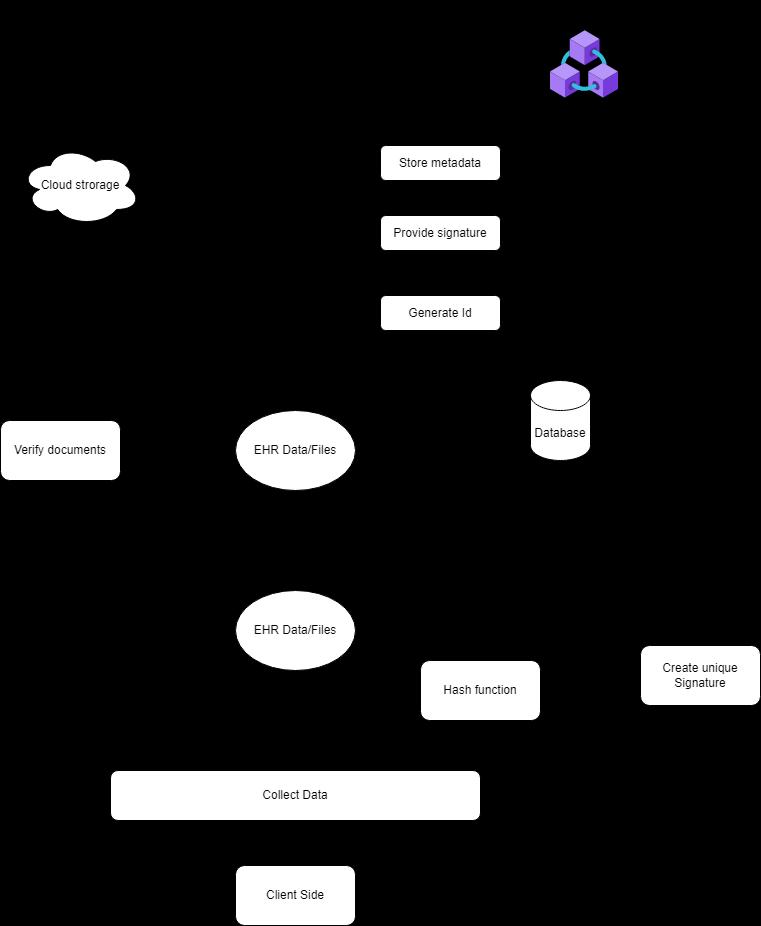
Users’signatureisusedtoensurethevalidityofthehealth datastored.Allhealthcaremetadatacanbestoredinasingle blockforaparticularpatient.Generally,theblockchainsare not suitable for storing large data files such as images or reportfileswhichcanaccompanytherestofthedata.So,to overcomethisa cloudstoragesystemstores thedata files andontheblockchainwecanstorethecorrespondinghash valuesormetadatapointingtotheaccessofaparticularfile.
Whenthenewdataiscreated,ahashvaluewillbecalculated correspondingtothegeneratedoruploadeddata.We will usethehashalgorithmcalledSHA 2.Withthepublickeyof
Fig 1:Blockchainstructure Fig 2:Blockdetailsthe owner to ensure the confidentiality of the records, metadata of the data is generated. This will help us to developasearchfunctionalitywhichcanbeusedtomapthe datafileswhichwillbestoredinthecloudsothatuserswith certain permissions can access those files just with the metadatawhichpointstothefileoncloud.Thiswaywedo notneedtostorethemassivefilesonthechainwhichfirstof all it is not optimized for and saves a lot of additional changingofdatatypes.Keysareprovidedtothepersonwho hasthepermissiontoaccessthesefiles.Aftertherecordfiles arestoredonthecloud,itsmappedhashvalueistakenand mappedtoageneratediduniquetotheassociateddatawith the hash value. A signature is generated for this data and then the metadata, hash values, ids and owners public address are stored in a block and appended to the blockchainnetwork.
Theuseisabletoget theaccessinformationof the health recordsfromthemetadatastoredintheblockchainwhichis associated with a data file on the cloud. Using the users’ signature to check the authenticity of the request and allowed permissions and decrypts the data on the cloud, effectivelygivingtheaccesstotherequestinguser.
Welayoutadecentralizedaccessedframeworkwiththeuse ofpermissionedblockchain generation withEthereumfor Health and medical data. It eliminates the critical dependence on centralized computing assets for storing, processing and gaining access. The ensuing structure can assistingrowingandpromotesustainableimplementations.
ISSN:
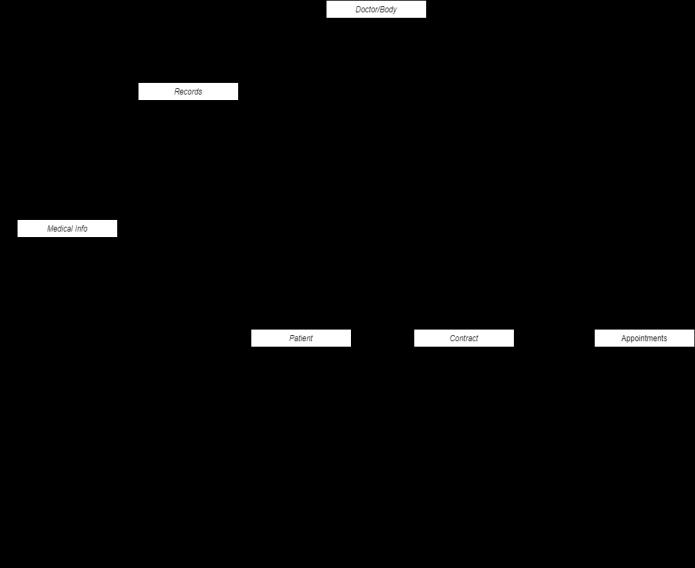
In the system there will be multiple datatypes which can storetheessentialinformationandprovidedcertainaccess tootherpartsofthesystem.Wecreatethedatastructurefor storingthedoctor’sinformation,patients’informationwhich includes the byte array of files where the hashes of the recordswillbestoredforapatient.Next,wealsohavethe address or public key array corresponding to the doctor’s profile in the patient structure. Similarly, the doctor’s structurewillhaveanaddressarraywhichwillcontainthe patient private keys so for the doctor to use. The file structurewillcontaincertainfieldssuchasfilename,type, hash and the metadata will be stored in the additional informationaboutafile.
Wemaptheaddressorthe publickeyofthepatienttoits corresponding doctor structure profile who is currently diagnosing the patient. Another mapping is made which mapsabyte32datatypewhichwillbethehashvalueofafile uploadedtothe“filesInfo”datastructurewhichcontainsthe metadata of the file records. Some more mappings are present in the contract which maps the public keys of the usertothepermissionsofaccesstofiles.Inthecontractwe firstexecuteaconstructorwheretheowneraddressissetto theaddresswhichiscurrentlyexecutingthecontract.
Usingmodifiers,weverifyiftheuserisaregistereddoctor oraregisteredpatientoriftheuserhasaccesstothefileor notandsomefunctionswhichcanonlybeexecutedbythe owner of the contract. They are helpful in checking if a functionisbeingexecutedbytherighttypeofuserorifsome predefinedconditionsmust bechecked beforemoving on. Thecontractprovidesthefunctionalitytosignupapatient andadoctor.Itcanprovidecertainaccesstothedoctorfor the files. The contract allows the patients to upload files whichare essential and requiredforthe medical services. Thesefunctionsarecalledtransactionalfunctionsaswhen suchfunctionsareexecutedbytheusercallingthecontract, the state of the contract is changed which causes the generation of a new block in the chain. Before saving the block,ithastobeverifiedonthechain.Thisisdonebyusing theproofofstakeconceptusedinblockchaintransactions.
Itisconsensusmodelwhichallowstheupdatingtheblocks inthechainsecurely.InEthereumwecanusetheProofof stake model for multiple users to reach a consensus on a particulartransactionwhichmakesitvalid.POSalgorithmis a development over the proof of work mechanism which doeshavehigh costimplications.
The contract can be used to check profiles of a patient or doctor.Wheneverthecontractstatechangesinanyway,a newblockiscreated.Somefunctionsdonotneedtochange the state of the current contract and hence there is no transactionsperformeduponcallingsuchfunctionsonthe contract.Intheclientsidetheuserisgivemultipleoptionsto check thepermissionlevel andaccessedfilesvia suchcall functiononthecontractlikegettingthefileinfoforapatient, doctorinformation.Whileaddingafileforapatient,thehash isreturnedusingthedatacollectedfromtheclientsideasan
Fig 3:DataflowdiagramEngineering and Technology (IRJET)
Volume: 09 Issue: 04 | Apr 2022 www.irjet.net
input. Keccak256 is a built in cryptographic function I Solidity,itwilltakeanynumberofinputsandconvertitinto a 32 byte hash. This is an irreversible operation as you cannotregaintheoriginaldatabyconvertingthehashvalue totheoriginalstringorbytearrayofdata.Thealgorithmis designed in such a way to prevent it from happening and breachingtheprivacyofusers.
Inthispaperablockchainbasedsolutionisapproachedfor upgrading the current existing methods for storing and accessingthe electronichealthcarerecords.Theproposed solution considers the requirements of the health record systemsandtheloopholescentralizedsystemswhicharein practice. Heavy consideration is given to preserve the privacyofthehealthrecordsaccordingtomedicalpractices followed and mentioned in associated research papers. A goodqualitysystemforstoringtherecordswhichprovides thenon tamperingarchitectureandrestrictedaccessbased on the permissions given to different parties is required where personal information is constantly under threat. Otherrequirementswhichpushedthedevelopmentofsuch systemsarethelimitedstorage,synchronizingthemedical records for multiple entities involved such as labs, pharmacies, hospitals, private medical professionals etc., Keeping the clear transaction logs for every change in the datatoimprovetransparencyofthesystem,andavoidinga centralpointoffailureusingadecentralizedsystem.
[1] Satoshi Nakamoto, 2008, "Bitcoin: A Peer to Peer ElectronicCashSystem" .
[2] Vitalik Buterin, 2014, “A NEXT GENERATION SMART CONTRACT & DECENTRALIZED APPLICATION PLATFORM”,EthereumWhitePaper.
2022, IRJET
e ISSN: 2395 0056
p ISSN: 2395 0072
[3] SunJ,RenL,WangS,YaoX,2020,“Ablockchain based frameworkforelectronicmedicalrecordssharingwith fine grained access control”, PLoS ONE 15(10): e0239946.
[4] Ayesh Shahnaz, Usman Qamar, Ayesha Khalid, 2019. "UsingBlockchainforElectronicHealthRecords",IEEE Access, Digital Object Identifier 10.1109/ACCESS.2019.2946373
[5] Thein Than Thwin, Sangsuree Vasupongayya, 2019, "Blockchain Based Access Control Model to Preserve PrivacyforPersonalHealthRecordSystems",Hindawi Security and Communication Networks Volume 2019, ArticleID8315614
[6] KristenN.Griggs,OlyaOssipova,ChristopherP.Kohlios, Alessandro N. Baccarini, Emily A. Howson, Thaier Hayajneh,2018."HealthcareBlockchainSystemUsing SmartContractsforSecureAutomatedRemotePatient Monitoring",Mobile&WirelessHealth
[7] Mohammad Moussa Madine, Ammar Ayman Battah, IbrarYaqoob,KhaledSalah,RajaJayaraman,YousofAl Hammadi, Sasa Pesic, Samer Ellahham, 2020, "Blockchain for Giving Patients Control Over Their Medical Records", IEEE Access Volume 8, 193102 193115
[8] Cornelius C. Agbo, Qusay H. Mahmoud and J. Mikael Eklund,2019."BlockchainTechnologyinHealthcare:A Systematic Review", Healthcare 2019, 7, 56; doi:10.3390/healthcare7020056.
[9] Saqib Ali, Guojun Wang, Bebo White, Roger Leslie Cottrell,2018,"ABlockchain basedDecentralizedData StorageandAccessFrameworkforPingER",201817th IEEE International Conference On Trust, Security And PrivacyInComputingAndCommunications/12thIEEE International Conference On Big Data Science And Engineering.
[10] Suveen Angraal, Harlan M. Krumholz, Wade L. Schulz, 2017. "Blockchain Technology Applications in Health Care", American Heart Association, Inc., DOI: 10.1161/CIRCOUTCOMES.117.003800
[11] IansitiM,LakhaniK,2017,“Thetruthaboutblockchain”, HarvardBusinessReview,2017Jan Feb.
[12] Khatoon, A.; Verma, P.; Southernwood, J.; Massey, B.; Corcoran,P.“BlockchaininEnergyEfficiency”:Potential ApplicationsandBenefits.Energies2019,12,3317
[13] Yli Huumo, J.; Ko, D.; Choi, S.; Park, S.; Smolander, K. “Whereiscurrentresearchonblockchaintechnology? Asystematicreview”:PLoSONE2016,11,e0163477
[14] Baliga, Arati. "Understanding blockchain consensus models."Persistent4(2017):1 14.
Impact Factor value: 7.529 | ISO 9001:2008 Certified Journal |
:EntityRelationshipDiagram