
09 Issue:
www.irjet.net

Technology (IRJET)
e ISSN: 2395 0056
ISSN: 2395 0072
Construction Management Techniques to Complete the Project within Time Period and Estimated Cost, Study on Residential and Commercial Building: A Review
Ankit Dharmaprakash Sawai1 , Sham Shivaji Lohar21M.E Student, Department of Civil Engineering, Construction Management, Imperial College of Engineering & Research, Wagholi Pune, India.
2Assistant Professor, Department of Civil Engineering, Imperial College of Engineering & Research, Wagholi Pune, India
***
Abstract ConstructionManagement is the art of directing and coordinating human and material resources throughout the life of a construction project using modern construction management strategies to achieve predetermined goals of scope, cost, time, and quality and participation satisfaction. This study created the need for Construction Management Techniques in the Indian construction industry which takes Pune in Maharashtra province as a residential and commercial building research. In this project what building management methods are used or used for the project. What works or not works to achieve time, cost and quality. In this residential building construction review Construction Management Strategies discussed in this study include the Gantt Chart, Microsoft Project planning(MSP)software,Work breakdown structure , Cost ProfitAnalysisandmuchmoreand features such as project size, project location, Client Type of Client Source, Complexity project, Strength of building materials, improper planning, material storage, Travel costs and maintenance etc. include factors that affect construction management strategies in a residential building project.
Key Words: Construction Management Techniques, Management Strategies, Planning techniques, Work BreakdownStructure,TimeManagement,Ganttchart.
1. INTRODUCTION
The world of project management is vast. It covers many industries and requires a range of skills. But the common threadthattiesthesevariousbehaviorstogetheristheway project managers use to get the job done. Project management strategies make project planning and managementeasierandmoreeffective.Theycanbeusedin anyproject,outsidethefieldorindustry.Theyarealsoused inconjunctionwithprojectmanagementsoftware,helpingto save time and reduce costs. There are many project management strategies, some project management strategiesareincludedinthisreport.Everyprojectmanager shouldknowhowtomanagetheirprojectsandguidethem tosuccessfulconclusions.ConstructionProjectManagement istheartofdirectingandcoordinatinghumanandmaterial resourcesthroughoutthelifeofaconstructionprojectusing
Factor value:
modern construction management strategies to achieve predetermined goals of scope, cost, time, quality and satisfaction of participation (Idoro and Patunola Ajayi, (2009). In contrast, general business executives and industrial companies take a broader view of greater operational continuity. However, there are enough similaritiesanddifferencesbetweenthetwosothatmodern managementmethodsdesignedforstandardmanagementfit theprojectmanagement.(Arnaboldiet.al,2004)
Therearemanyconstructionmanagementtechniquesinthe Indian construction industry, but which construction techniquesisbestfortheconstructionprojectisimportant tocompleteprojectintimeperiod,costandquality.Inthese review study of the construction of residential plus commercial building, some strategies are used like Gannt Chart (MSP) Microsoft project planning software, Work Breakdown structure, Program Evaluation and review technique (PERT), Critical path method (CPM) using these strategies,fromthesestrategieswhichisusefultoachieve theconstructioncostandqualityandthecompletionofthe projectwithintimeperiod.
1.1 Construction Project Management
AccordingtoOpara,(1986)projectmanagementprojectis theoverallplanning,co ordinationandcontrolmanagement ofaprojectfromstarttofinishaimedatmeetingcustomer needsinordertoproduceaviableandfullyviableproject. Construction Project Management is what applies to the constructionindustry(LewisJ.P(2007).Themostcommon responsibilitiesofconstructionmanagementAssociationof America (CMAA) fall under seven categories, Project managementPlanning,costmanagement,timemanagement, Quality Management, Contract Administration, Safety ManagementandCMProfessionalPracticewhichintegrates specific functions such as defining responsibilities and management structure of the project management team, planning and directing through project management, definingrolesandfunctionsanddevelopingprojectdesign andprojectidentificationcontracts.Arnaboldiet.al,(2004)
9001:2008
e ISSN: 2395 0056
ISSN: 2395 0072
1.2 Functions of Construction ProjectManagement
Constructionprojectmanagementtasksusuallyincludethe following
1. Clarification of project objectives and plans including scope,budgeting,planning,implementationrequirements, andselectionofprojectparticipants.
2. Increase efficient use of resources through staff procurement,equipmentandequipmentaccordingtoaset scheduleandschedule.
3. Implement a variety of operations through effective coordination and control planning, design, measurement, contractandconstructionthroughouttheprocess.
4.Thedevelopmentofeffectivecommunicationandconflict resolutionmechanismsbetweenvariousparticipants
2.0 REVIEW STUDY OF CONSTRUCTION PROJECT
The information is collected from the site which is “Le Skylark’’ A project by Sanjay Kakade group and the other residential building sit at Karvenagar Hingane Pune. The projectiscommercialandResidential.Thenetplotareaof theprojectis7354.6(sqm).AttheLeSkylarkProjectwhich constructionmanagementtechniquesareusedandIsThere isamaterialmanagement,Costcontrolmanagement,which typeofsoftwareusedforprojectplanningandScheduling, and time management and at these stage I collected constructionmanagementtechniqueswhichareusedonthe siteof“LeSkylark”Projectandothersites.
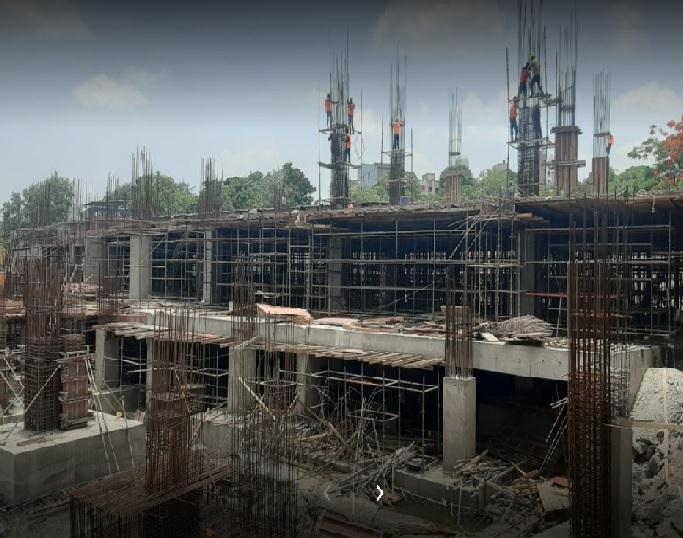
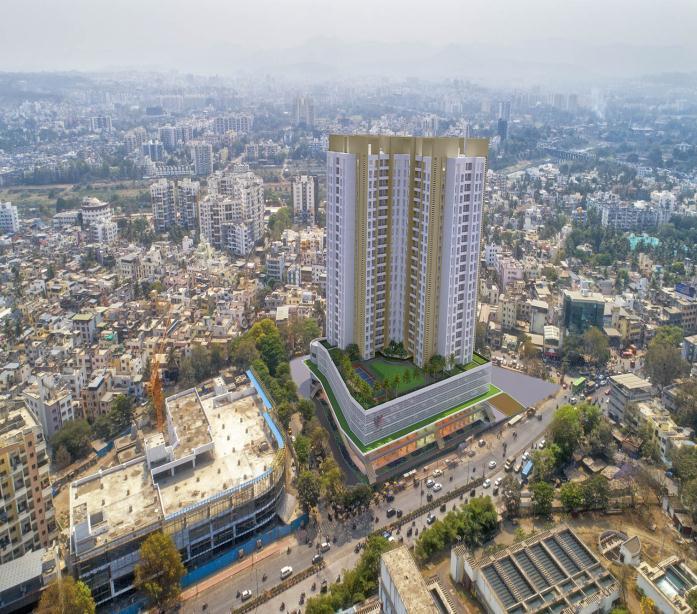
Table 1: LeSkylarkProjectDetails
2.1 Construction management techniques
In short, other innovative strategies share similar goals regarding Project delivery benefits such as fewer changes anddelaysduringconstruction,reducingprojectcostsanda growingnumberoffinalproduct.
1. Work Breakdown Structure (WBS)
Work Breakdown Structure (WBS) is concerned with the division of the project into individual manageable componentsandphasestructure.Suchastructuredefines thefunctionsthatcanbecompletedindependentlyofother functions,tofacilitateresourceallocation,theallocationof responsibilities and to evaluate and manage the project. Wysocki (2009) also noted that it is a reliable tool for definingworkpackagesandtodevelopandtrackcostand projectplan.WorkBreakdownStructure(WBS)providesa
Fig 1 : LeSkylarkProject Fig 2 :ConstructionworkofLeSkylarkProjectof Engineering and Technology (IRJET)
Volume: 09 Issue: 04 | Apr 2022 www.irjet.net
comprehensiveframework forthe overall development of the overall planning and control of the project and is the basis for dividing the work into a descriptive increase in which the Work Statement can be developed as well as technology,scheduleandworkcosts.hourlyreportingcan beestablished.(Abbasi&Al Mharmah,2000).
2. Gantt Chart
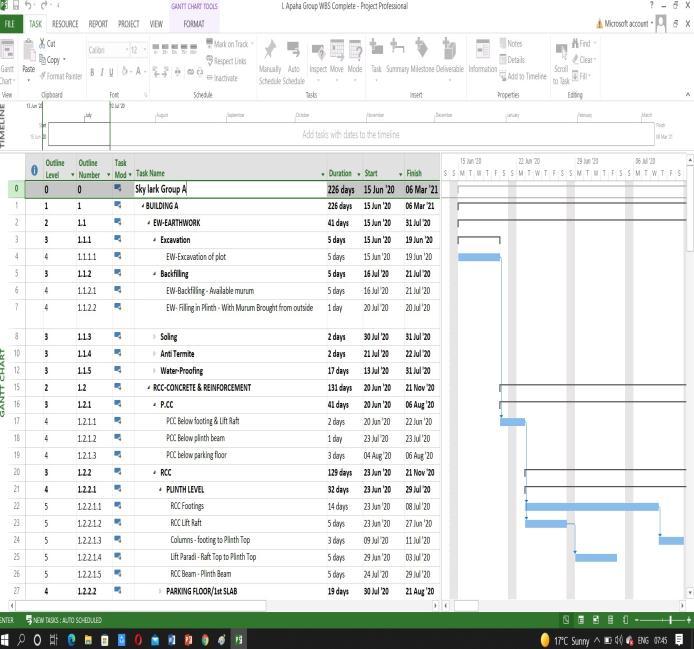
Gannetchartisa useful buildingmethodfor planningand organizing projects. Demonstrates a graphical representation of the duration of activities against the continuityoftime.ItwasfoundedbyHenryGanttin1915 with the aim of monitoring the continuation of projects. Ganttchartsareacommonwaytorepresentthestagesand activitiesofaWorkBreakdownStructure(WBS)projectthat can be understood by many audiences around the world (Wysocki, 2009). Gantt chart is a popular bar chart that displaysaprojectschedule.Ganttchartsshowstartandend datesandprojectsummaries.Tasksandsummariescover theclassificationframeworkofaproject.SomeGanttcharts alsoshowdependence(i.e.initialnetwork)
The Current Application of these Methods Today, the Ganttchartisacceptedasastandardprojectmanagement tool. This approach, through the use of many available desktopapplications,ismainlyusedbyconstructionproject managersandprojectplannersinprojectmanagement.Itis popular because it allows you to estimate how long a constructionprojectshouldtake,layoutaplan,helpmanage interdisciplinary tasks, determine necessary resources, monitorprogressandhelpdeterminehowtherepairwork canbedone.ithelptogettheprojectbackontrack.
e ISSN: 2395 0056
p ISSN: 2395 0072
3. Lean construction Management Technique
Leanconstructionmanagementisdifferentfromthecurrent standard practice because it has a clear set of delivery process objectives, aimed at improving customer performance at the construction project level, product design and process simultaneously, and using lifelong production control. of the project. In contrast, the current typeofproductionmanagementinconstructionisbasedon thesamework focusedapproachfoundinmassproduction andprojectmanagement.(Arnabodi,Azzone,&Savoldelhi, 2004)Aimstoimproveprojectperformancethroughwork; it is assumed that the customer value is identified in the construction. Production is controlled throughout the projectbybreakingtheprojectintopieces,i.e.designingand building,andthenplacingthosepiecesinlogicalsequence, measuringthetimeandresourcesneededtocompleteeach taskaswellastheproject.Eachpieceorworkisrecovered until it is issued or handed over to the task leader, supervisor or team manager. Control is considered as monitoringeachcontractoractivityagainstitsownschedule and budget assumptions (Arnabodi, Azzone, & Savoldelhi, 2004).Thisguessissummarizedintheprojectlevelreport. Ifareliableworkflowwastheresultofaqueuesettingthere isastatedpurpose.Jobsorchainsonacriticalrouteareleft behind,effortsarebeingmadetoreducethecostandtimeof theoffendingworkortochangetheworksequence.Ifthese measuresdonotsolvetheproblem,itisoftennecessaryto trade the cost of the schedule by working in the best sequencetomakeprogress.Focusingonjobshidesthewaste createdbetweenongoingjobswithunexpectedjobrelease andthearrivalofneededresources.
The benefits of a non foundation construction approach depend on the tools and methods used during the Implementation of any construction project. Based on the latter, the following Benefits of using soft construction principlesasreadbyO'Connor&Swain,2013
1. Improved project delivery performance in terms of value,quality,programmeandcost
2. Alignmentofallpartiestodeliveragainstanagreedset ofprojectobjectives
3. Improvedperformanceinsafety,quality,deliveryand cost
4. Provides a clear view of the best way to carry out a projectand/ortooperatebusiness
5. Processes in a way that seeks to maximise customer value
6. Improves predictability and productivity through all processes
7. Identifiesopportunitiesforpre fabricationtoaidon site productivity
International Research Journal of Engineering and Technology (IRJET)
Volume: 09 Issue: 04 | Apr 2022 www.irjet.net
8. Provides detailed information to help develop the currentbeststandardpracticetosupport
9. Productivity and reduce variability in methods and performance
10. Creatingstandardoperations(orjobdetails)withthose peoplewhocarryoutthework
11. Helps to develop ownership of identifying the best currentmethodandsupportscontinuousimprovement
3.0 Techniques used on site
Construction Management Techniques are used on Le Skylark Project are as Work Breakdown Structure (WBS), MicrosoftProject(MSP),Ganttchart
1.MaterialManagement
2.HumanResourceManagement
3.CostControlandManagement
4.Projectplanningandscheduling
5.SafetyManagement
6.TimeManagement
7.EquipmentandMachineManagement
8.RiskManagement
9.ContractAdministration
10.ResourcesManagement
Following factors Affecting Construction Management Techniques at the sites are size of the project, location of project,type ofclient,sourceof finance,complexityof the project, Vitality of the material, poor planning, Material shortageandcostofmaterialsandtransportation.
4.0 LITERATURE SURVEY
[1] Arnaboldi et.al (2004) Construction Project Management is what applies to the construction industry (LewisJ.P(2007).Quality,ContractManagement,Security ManagementandCMProfessionalPracticewhichintegrates specific functions such as defining responsibilities and management structure of the project management team, planning and directing through project management, definingrolesandfunctionsanddevelopingcommunication and project identification and design elements that may causeconflictsandclaims.
[2] Patel et.al (2008)Timemanagementmeanspersonal efforts to manage one's time. In Construction projects, it refers to building a schedule that can be met, and then managingtheworktoensurethatthishappens.ProjectTime Management in Construction can be termed schedule management (Patel 2008) However this is a powerful approach,especiallyforwhiteemployees,supervisorsand
e ISSN: 2395 0056
p ISSN: 2395 0072
managers. Significant time (hours during which all employeesmustbeonduty).Adaptabletime(hoursduring whichemployeesmaychangearrival anddeparturetime) Stressedworkingweek:
1.Workingthesamenumberofhoursbutafewdays/week
08hours05days
10hours05days
Thisseriesoftimetablesisatimemanagementconceptthat knowswhentowork,thetimeallotted foreachtasktobe doneandthetimetocooloff.(Stukenbruck&Zomorrodian, 1987)
[3] Enshassi et.al (2009) Overspendingisdefinedasthe actualcostoverrunsoverbudget.Anoverdoseisalsocalled anincreaseincosts,anincreaseincosts,orabudgetdeficit. Choudhry(2004)describedcostoverrunsasthedifference betweentheaveragecostofaprojectandtheactualcostof construction when completing commercial construction projects.InastudyofinfrastructureprojectsinNigeriaby OmoregieandRadford(2006),itwasfoundthatthemain contributing factors were cost fluctuations, funding and payments for completed works, ineffective contract management,scheduledelays,changesinlocation.condition, incorrect rate, shortage of building materials, delays in immigration,additionaloperations,changesinconstruction, subcontractorsanddesignatedsuppliers,adverseconditions such as weather, non compliance with contractual conditions,errorsandinconsistenciesincontractstatusand fraudpracticesSimilarly,VietnamLongetal.(2008)found thatthetop5mostimportantfactorsthatcontributetocost overruns in large scale project management are site managementand monitoring,lack ofproject management support, owner financial difficulties, contractor financial difficulties and design changes. Enshassi et al. (2009) conductedastudyinGazaandidentified10keyfactorsthat contributetorisingcosts.
Factors include rising commodity prices due to ongoing closure,delaysinconstruction,supplyofrawmaterialsand equipmentbycontractors,volatilebuildingmaterialscosts, local currency in relation to dollar value, project asset management by other suppliers. , barriers to unfinished business,pocketsandrelatedresources,lackofplanning/ cost savings during pre and post contract phases, developmentofgeneraldesignduringconstructionphases, designchangesandinaccuratevaluation.AstudybytheUK constructionindustry,OlawaleandSun(2010)identified21 majorfactorsthatcontributetocostoverrunsbystructural changes, risks and uncertainties associated with projects, improper evaluation of projects and time and costs, inefficiency of subcontractors, complex work, conflict of projectorganizations,disagreementsincontractdocuments, non compliancewithcontractdefinitions,inflation,funding andremuneration,lackofappropriatetrainingandproject manager information, low skilled staff, unpredictable
© 2022, IRJET | Impact Factor value: 7.529 | ISO 9001:2008 Certified Journal |
of Engineering and Technology (IRJET)
Volume: 09 Issue: 04 | Apr 2022 www.irjet.net
weather, dependence on foreigners, lack of appropriate resources. Software, unstable interest rate, currency / exchangerate,weaksystemsandcontrols,projectfraudand corruption and unstable government policies. Ameh et al. (2010) conducted a study of communication projects and showedthatthesevenmainfactorswerelackofcontractor experience, cost of materials, fluctuations in building materials, general construction changes, economic insecurity, interest rates charged by banks on loans were very high. High level, funding mechanisms and fraudulent practices.
[4] Choudhry et.al (2004) Overtime is defined as the extension of the period beyond the scheduled contracted terminationofacontractor(Kamingetal.1997).Choudhry (2004)andChan(2001),haveexplainedthattimepassesas thedifferencebetweentheactualcompletiontimeandthe estimated completion time. Project delays are those that causea projectcompletion dateto bedelayed(Al Gahtani andMohan2007).Manytime relatedfactorsvarywiththe typeofproject,location,sizeandscopeoftheproject.Time andcostincreasesarecommoninprojectsaroundtheworld. However,theseareespeciallydifficultindevelopinglands. Kamingetal.,(1997)identified11overduevariablesand7 overspendingvariablesthroughaquestionnairesurveyon themostrisingconstructionprojectsinIndonesia.Changes indesign,staffinefficiency,lackofadequateplanning,lackof building materials and inaccuracies of material standards are the five causes of overtime. Chan and Kumaraswamy (1997) reported five causes of observed delays in contractors,clientsandconsultantsinconstructionprojects in Hong Kong. The data was collected through a questionnairecomprising83delayfactors in eightphases and distributed to 400 local companies involved in constructionactivities.Basedonthe37%response,thefive mostimportantaspectsofdelaysidentifiedwerepoorsite management and monitoring, unexpected soil conditions, decision making delays, customer initiated variations and designchanges.Frimpongetal.(2003)conductedaseriesof questionnaires on Ghana's groundwater construction projects and identified 26 factors responsible for project delays and cost overruns. The Kendall concordance coefficient was used to assess the level of agreement between the owners, contractors and consultants and concludedthattherewasaminimumlevelofdisagreement. Aibinuandjagboro(2002)examinedtheeffectsofdelaysin the delivery of construction projects in Nigeria. The acceleration of site operations coupled with improved proprietary project management procedures and the inclusionofanappropriateemergencygrantinpre contract scale was recommended as a way to reduce the negative effectsofconstructiondelaysinNigeria.OdehandBattaineh (2002)havestudiedthecausesofdelaysintheconstruction oftraditionalcontractsinJordan.Researchshowsthatlabor productivity was the most important factor in contractor delays,insufficientcontractorexperience,yetitwasthemost importantdelayfactorforconsultants.Koushkietal.,(2005)
e ISSN: 2395 0056
p ISSN: 2395 0072
haveanalyzedtimeandcostestimatesandtheircauses.The threemaincausesofdelaysarechangingorders,theowner's financialconstraintsandtheowner'signorance.Alghbariet al., (2007) examined the causes of delays in construction projectsinMalaysia.
[5] Construction Project Quality Management
AsnotedbyPintoet.al(2005),onecauseofprojectfailureis thatqualityisneglectedorcompromisedinordertomeet firmdeadlines.Itdoesnothelpmuchtocompletetheproject ontime,butyoufindthatthedelivereditemwillnotwork properly. Quality Management included both quality assurance (planning to meet quality requirements) and quality control (steps taken to monitor results to ensure compliancewithrequirements).
[6]ConstructionProjectScopeManagementChanges inprojectscopeareoftenthethingsthat“kill”theproject. Scope management includes project authorization, developmentofbroadmanagementthatwilldefineproject boundaries, narrowly divide the work into manageable manageablecomponents,ensurethattheamountofplanned work is achieved and define broader transformation managementprocesses.(MullerandTurner,2007).
[7] Construction Project Human Resource Management Managing Mortal coffers is frequently overlookedinconstructionsystems.Itinvolvesrelatingthe people demanded to do the job, defining their places, liabilitiesand reportingconnections,gaining those people and treating them as they do the job. (White & Fortune, 2002)
[8] Construction Project Risk Management Communicationmanagementinvolvesplanning,executing and managing the acquisition and dissemination of all informationrelevanttotheneedsofallprojectstakeholders. This information will include project status, completed events that may affect other participants or projects and more.(White&Fortune,2002)
[9] Construction Project Risk Management Risk Management is a systematic process of identifying, evaluating, analyzing and responding to project risks. It includesmaximizingprofitsandpositiveeventoutcomesas wellasminimizingprofitsandnegativeeventoutcomeson projectobjectives.Thisisaveryimportantaspectofproject managementthatissometimesoverlookedbynewproject managers.(White&Fortune,2002)
5. CONCLUSION
Base on the results of the information carried out, Constructionmanagementtechniqueisinnodoubtamust useforeveryprofessionalsintheconstructionindustry.The construction management techniques however used as evident from the respondent professionals in the construction field include Gantt chart, Work breakdown
9001:2008
International Research Journal of Engineering and Technology (IRJET)
Volume: 09 Issue: 04 | Apr 2022 www.irjet.net
structure (WBS), Critical Path Method ( CPM), Line of Balance,LeanconstructionManagementTechnique,(MSP) MicrosoftprojectandlotofothersandfactorssuchasSizeof theproject,Locationoftheproject,TypeofClientSourceof finance,Complexityoftheproject,Vitalityofthematerials, Poorplanning,Materialsstorage,Costoftransportationand storage and so on constitute the factors affecting constructionManagementTechniquesatthesite.
However it is concluded that construction project managementactivitiesusuallyincludethefollowing:
1.Clarificationofprojectobjectivesandplansincluding scope, budgeting, planning, implementation requirements,andselectionofprojectparticipants.
2. Implement the various functions through proper coordinationandcontrolplanning,design,measurement, contractandconstructionthroughouttheprocess.
REFERENCES
[1.]AdedejiA.O(1989):Depreciationofproductionplanning strategies in the operation of Nigerian construction firms.
Journal of the Construction Contractors Association of Nigeria.13(1),3 24
[2] Idoro, G.I & Patunola Ajayi J.B. (2009) ‘Exploring MarketingStrategiesforProjectManagementintheNigerian ConstructionIndustry’.NordicJournalofSurveyingandReal EstateResearch,6(2).Pages25 36
[3] Opara N. (1986): Managing Building Management and Planning.ConstructionEconomics,12 15
[4] Patel, B.M (2008) ‘Project Management: Strategic financialplanning,evaluationandcontrol’.NewDelhi,Vikas PublishingHousePVTLtd.
[5]Abbasi,Y.G&AlMharmah(2000)‘ProjectManagement The implementation of the public sector in a developing country’InternationalJournalofProjectManagement,18(3), pp105 109
[6] Pinto, J.K (2007) Project Management: Profiting Competitive Profit, Upper Sddle River, NJ; Pearson Education.
[7] Stukenbrucj L.C and Zomorrodian, A (1987) ‘Project Management: Promise for Developing Countries’ Project Management,5(3),pp.167 175
[8]White,D&Fortune,J(2002)‘Currentpracticeinproject management a critical study’ International Journal of ProjectManagement,20(6).Pp.1 11.
[9] Westland A. (2003) ‘Project Management Life cycle’, London,KoganRageLimited.
e ISSN: 2395 0056
p ISSN: 2395 0072
[10] Nwachukwu C.C, Echeme, I.I and Okoli, M.N (2010) “ProjectManagementFactorIndexes;ObstacletoSuccessin ProjectImplementationintheDevelopingEconomySector ”EuropeanJournalofScientificResearch’JulyJulyISSN1450 216XVol.43.No.3,pp392 405UnitedKingdom.
[11] Muller, R & Turner, R. (2007) ‘Matching project manager leadership style with project type’. International ProjectManagementJournal,25(4),pp.21 32,DOI:10.1016 /j.ijproman.2006.04.003, Direct Science Website, [Online] .Available from: http://www.sciencedirect.com.ezproxy .liv.ac.uk
[12]HowellG.A.(1999)."WhatisLeanConstruction".Lean ConstructionInstitute.1 10
[13] S. Shanmugapriya (2013) An investigation of an important factor influencing time and cost overruns in Indian Construction Projects (ISSN 2250 2459, ISO 9001: 2008)
© 2022, IRJET | Impact Factor value: 7.529 | ISO 9001:2008 Certified Journal |